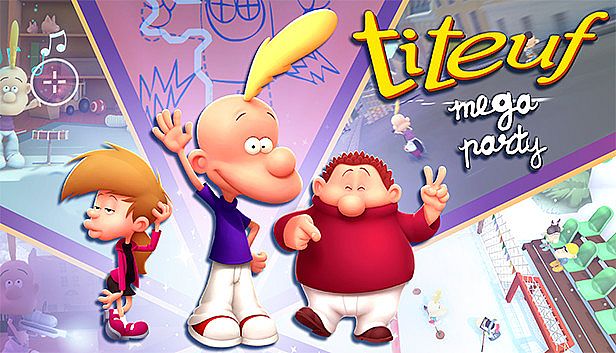
















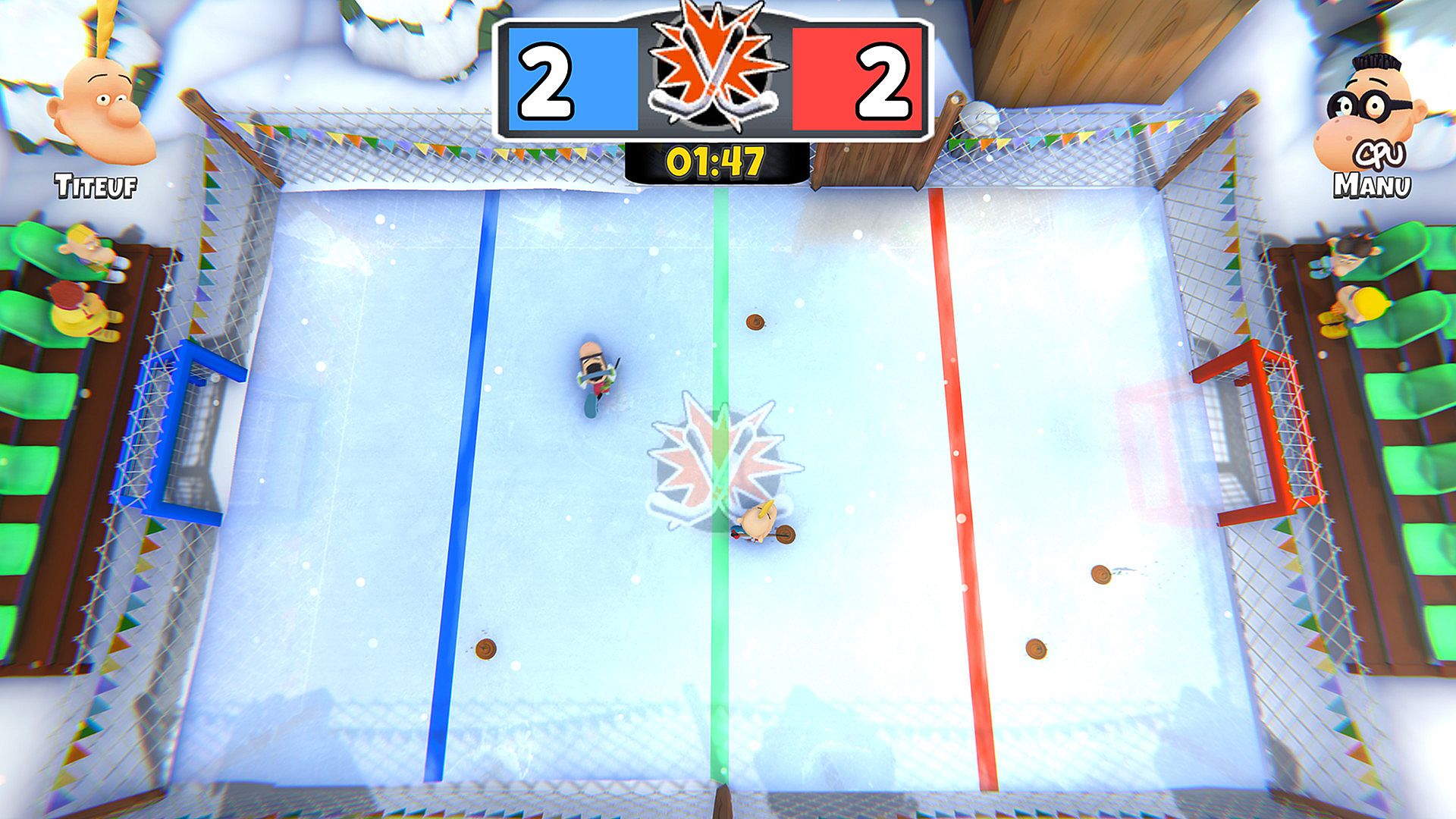
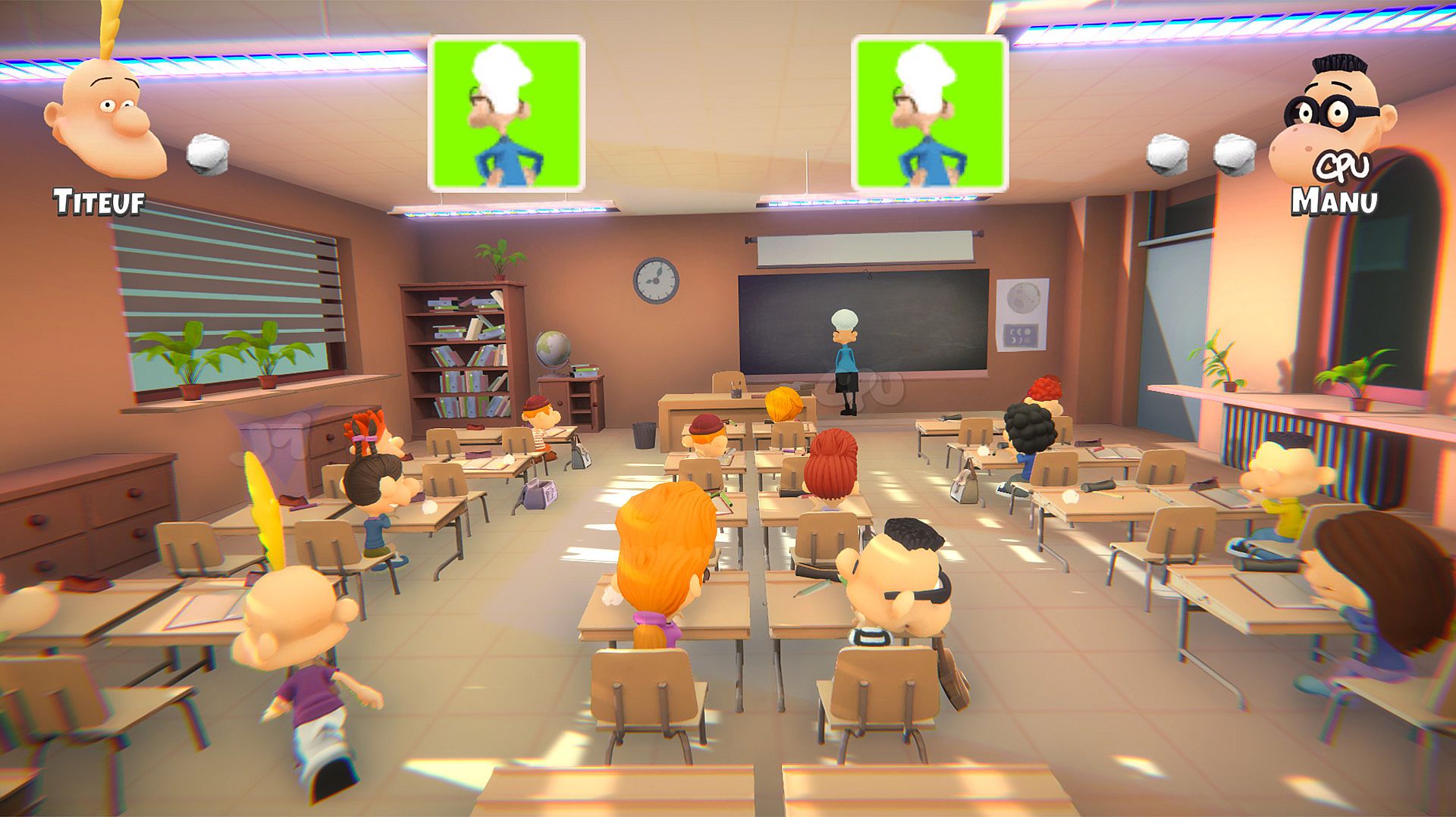
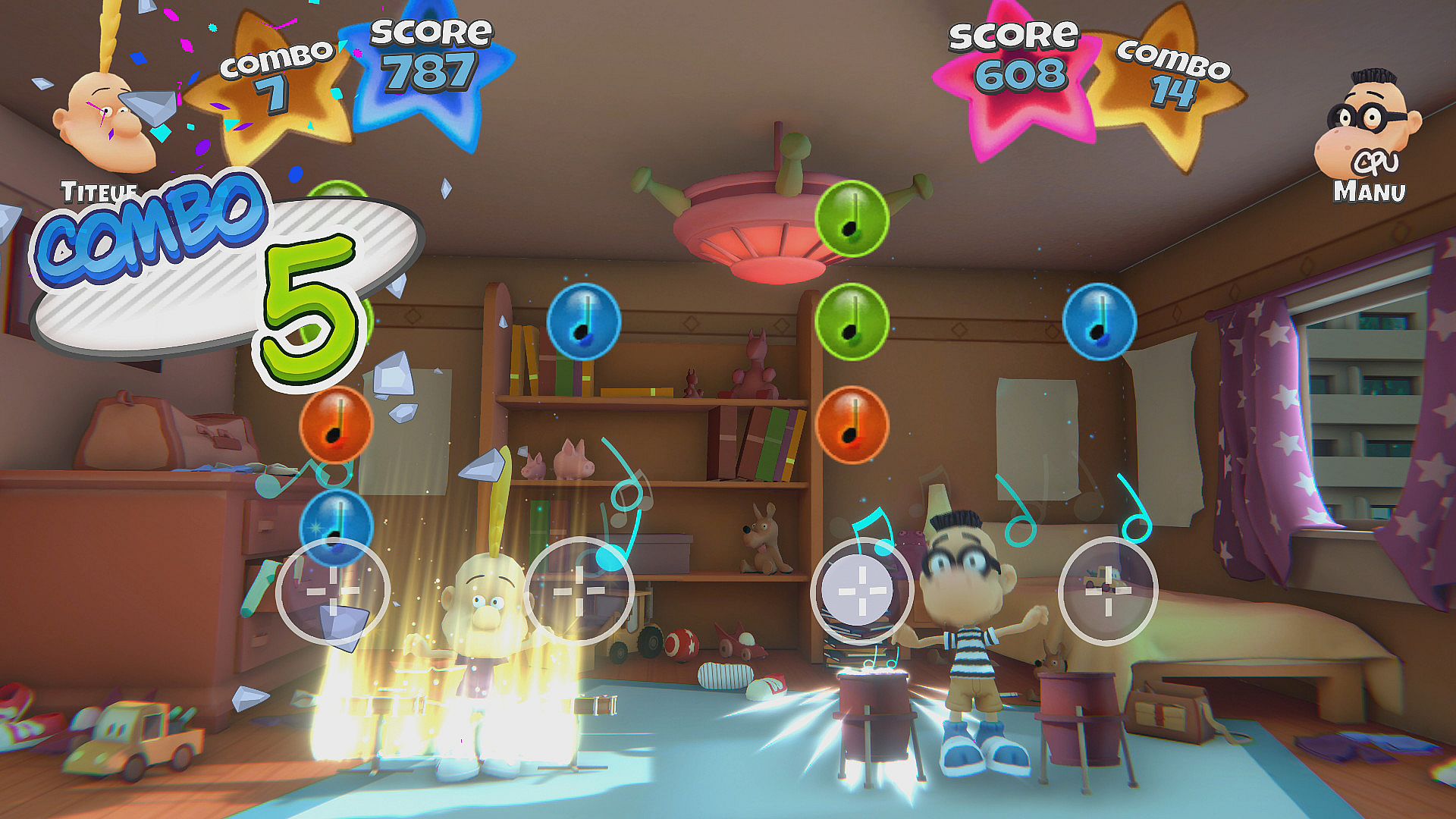
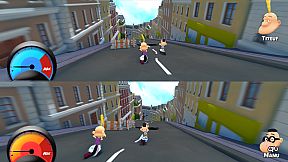
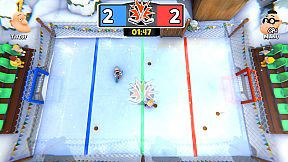
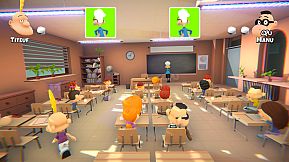
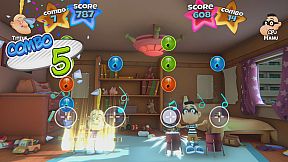
Titeuf: Mega Party is a casual adventure game built around a collection of more than forty minigames. Players take control of the mischievous Tootuff and his friends in a lighthearted effort to cause as much trouble as possible before school resumes. The central premise involves avoiding being cloned by behaving badly enough to fall out of favor with any hypothetical selectors, which leads directly into the series of challenges that form the core of the experience.
Gameplay
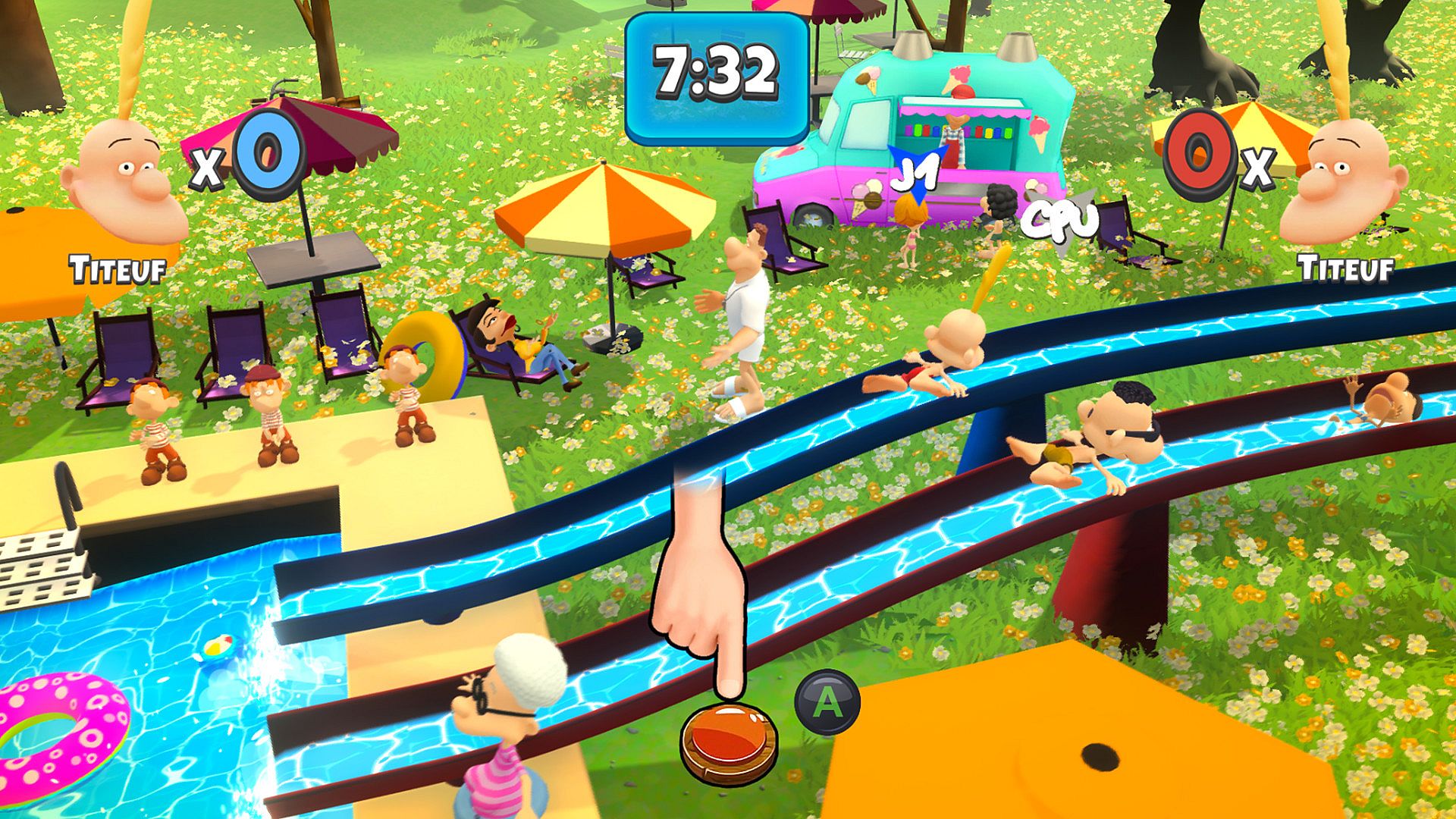
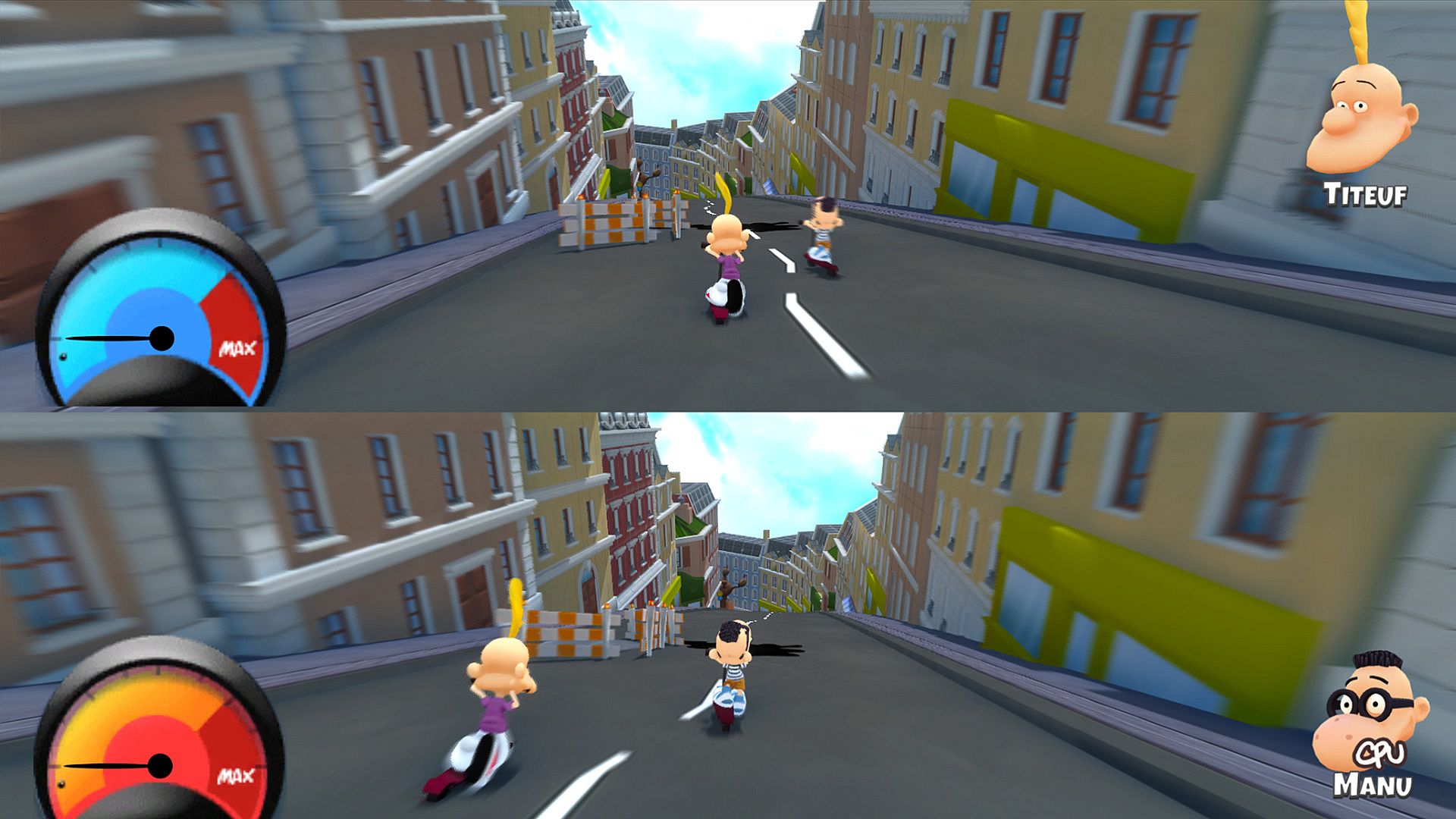
The game revolves around short, self-contained challenges that test quick reflexes, timing, and simple coordination. Most activities last only a minute or two and emphasize absurd, schoolyard-style antics drawn from the source comic. Controls remain straightforward in the majority of modes, relying on basic button presses or directional inputs to complete tasks such as racing, dodging, or performing silly actions.
A distinct set of advanced challenges restricts inputs further to heighten difficulty. Little Ace limits players to a single button, Super Ace uses only the directional keys, and Super Mega Ace combines both for the most demanding sequences. These variants appear only after substantial progress and cater to those seeking extra precision tests rather than casual play.
Progression ties into a meter that fills through successful mischief. Completing enough challenges in sequence unlocks new episodes and additional content without requiring complex leveling systems or resource management.
Game Modes
School Year serves as the primary single-player or two-player campaign. Participants select a character and work through three unlockable episodes filled with challenges. Clearing all tasks in an episode while maxing the progress meter grants access to the next section, creating a structured path through the full roster of activities.
Duels allow immediate access to any unlocked minigame for head-to-head competition against the computer or another local player. Up to two participants can jump in for quick matches without committing to longer sessions.
Mega Duels builds on the same pool by chaining a chosen number of challenges in succession. The player or team with the most victories at the end claims the overall win, supporting up to four local participants.
Duels of Death open only after reaching a high completion threshold in the main campaign. Randomly selected challenges pit multiple competitors against one another simultaneously, with victory going to whoever accumulates the most individual wins across the set. This mode also accommodates up to four players.
Mega Ace rounds out the options with three specialized challenge types reserved for the most skilled participants. These focus on the restricted control schemes mentioned earlier and again support up to four players in local sessions.
Multiplayer and Accessibility
All competitive modes emphasize local play on the same screen or device, making the title suitable for gatherings where friends share a single setup. No online connectivity features appear in the available information. The design keeps rules simple enough for younger players while the escalating difficulty in later modes provides replay value for groups that master the basics.
Unlock requirements create natural pacing. Newcomers start with School Year to familiarize themselves with the challenges before branching into faster duel formats or the more intense variants.
Is It Worth Playing?
Player feedback on Titeuf: Mega Party remains mixed, with roughly forty to forty-six percent of reviews expressing positive sentiment. Some appreciate the variety of minigames and the charm of the underlying comic characters, while others note technical issues and inconsistent quality across the challenge set. The game suits audiences already familiar with the Titeuf series or those seeking straightforward local party experiences with short, repeatable sessions.
Its strength lies in the breadth of forty-plus activities and the clear progression through modes that reward completion. Groups comfortable with local multiplayer and tolerant of juvenile humor will find the most consistent enjoyment. Those expecting polished production values or deeper systems may encounter limitations that reduce long-term appeal. The title stands as a niche option rather than a broad recommendation for every casual gamer.