








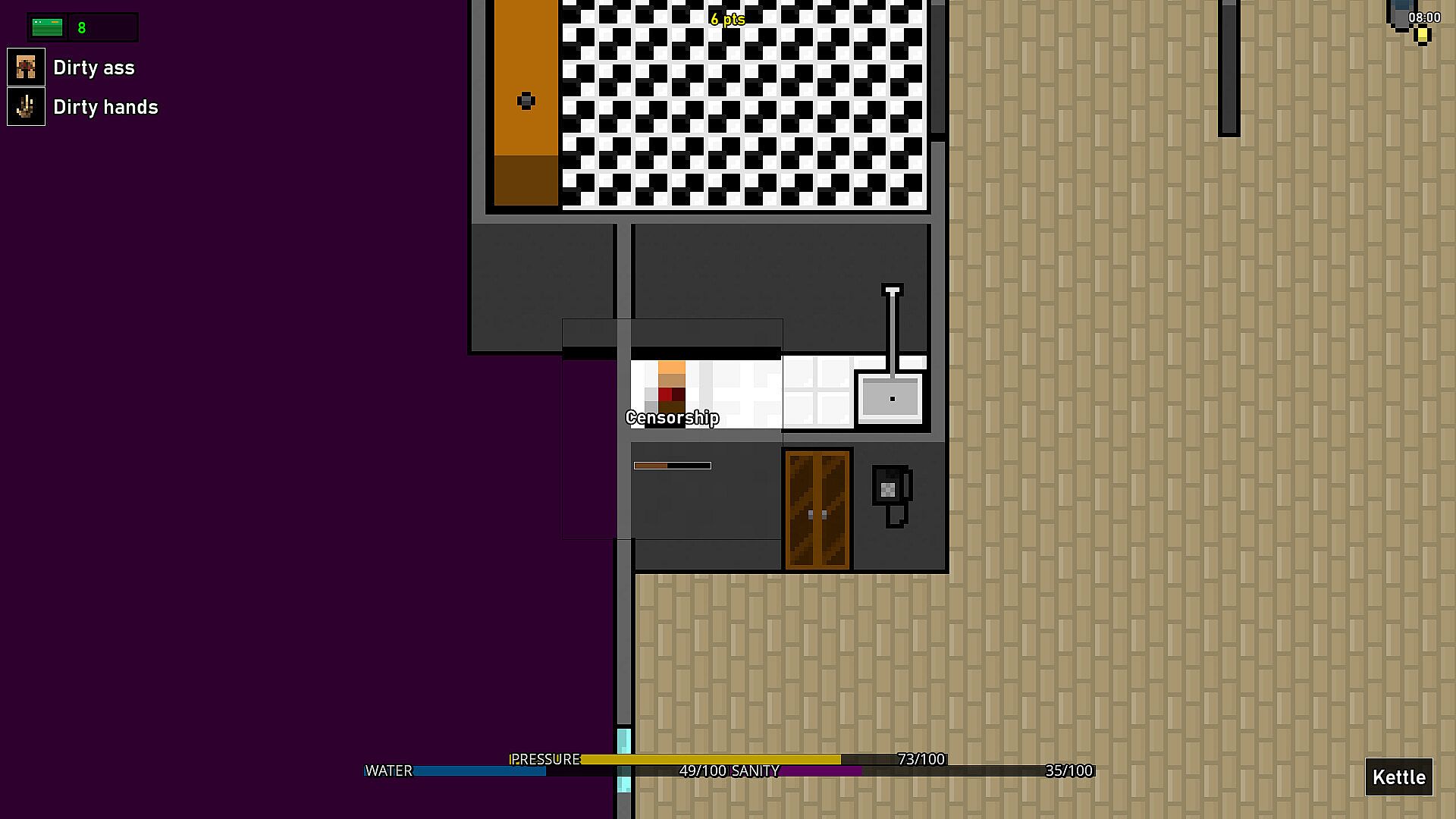
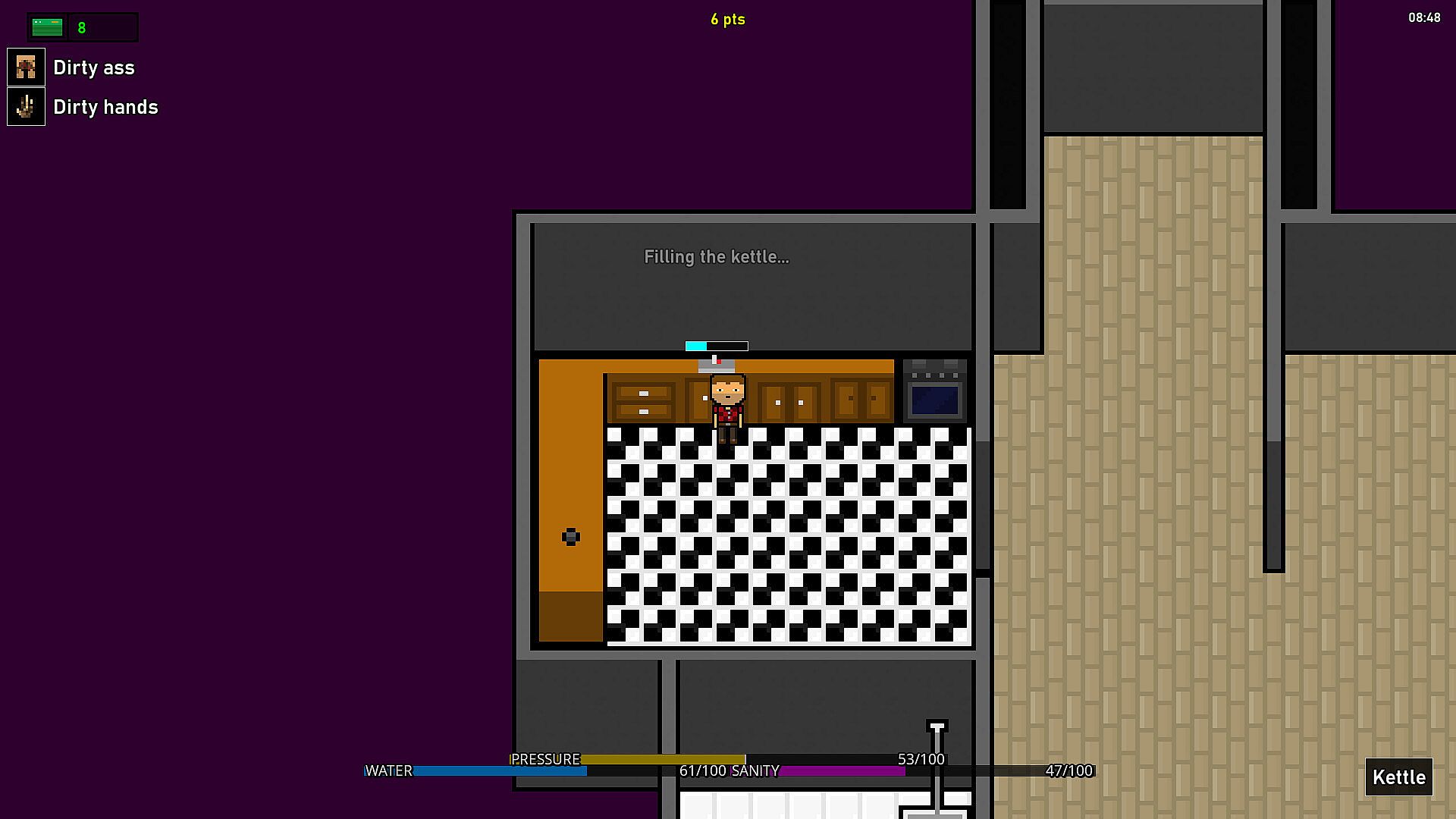
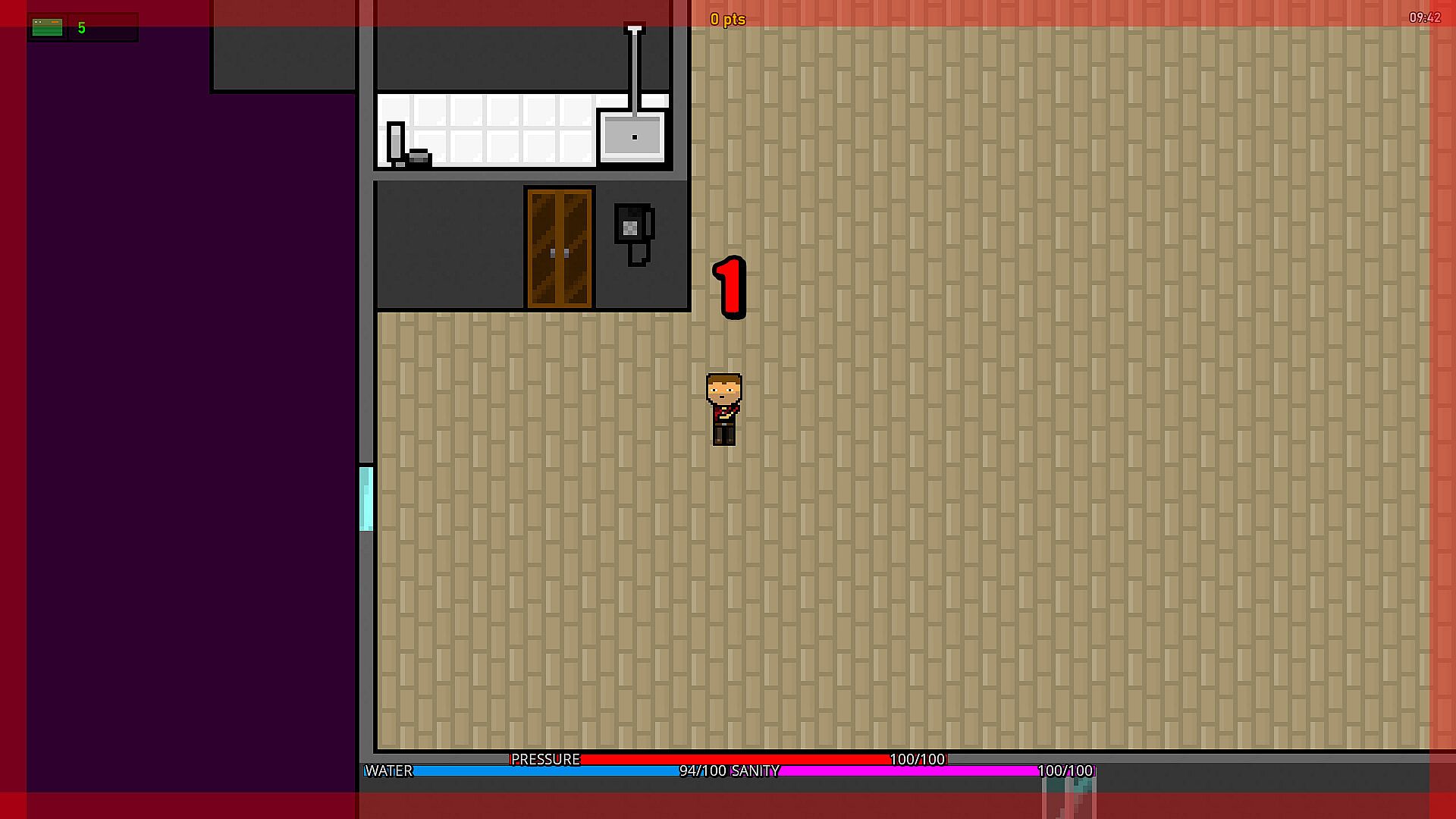
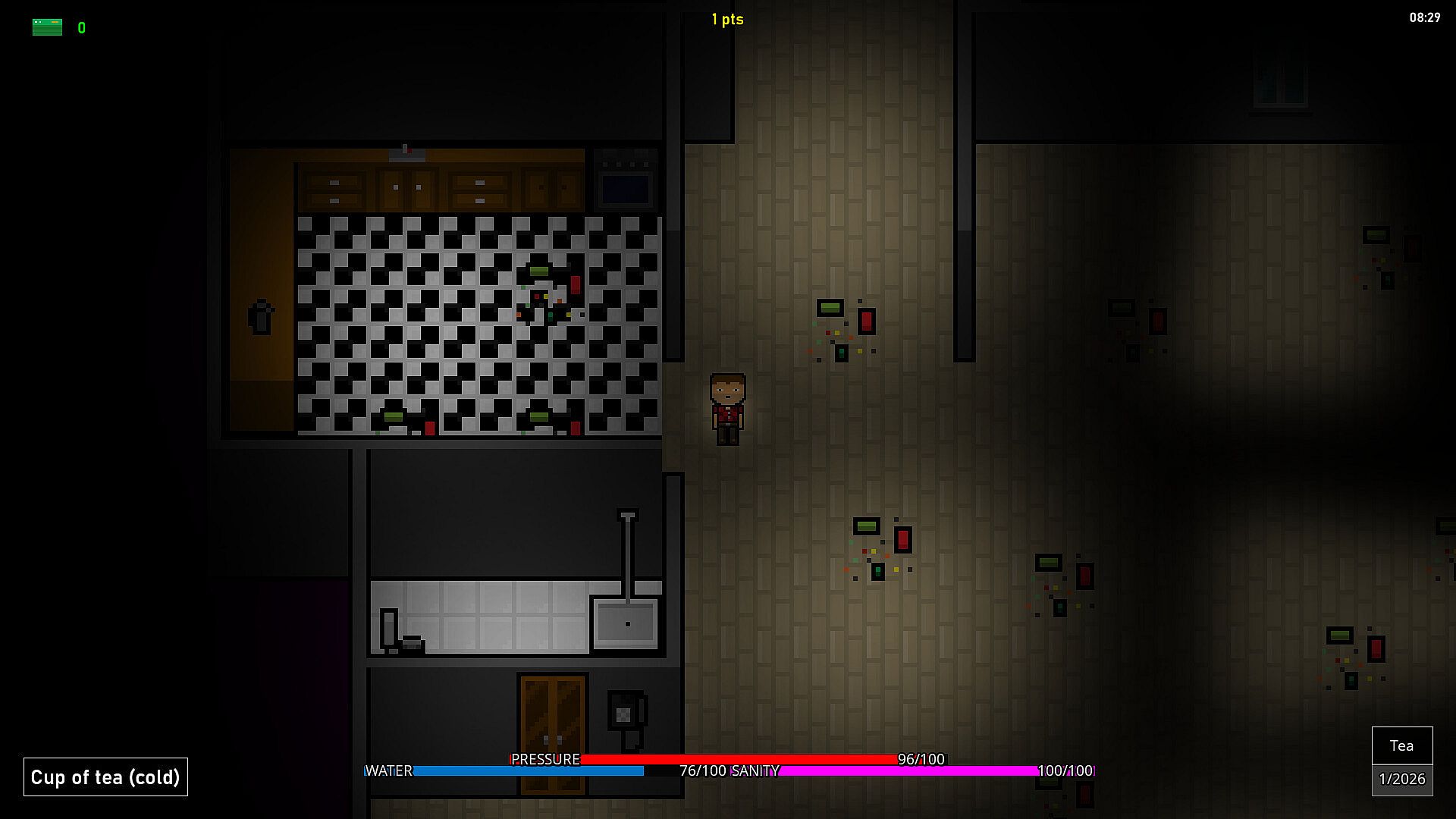
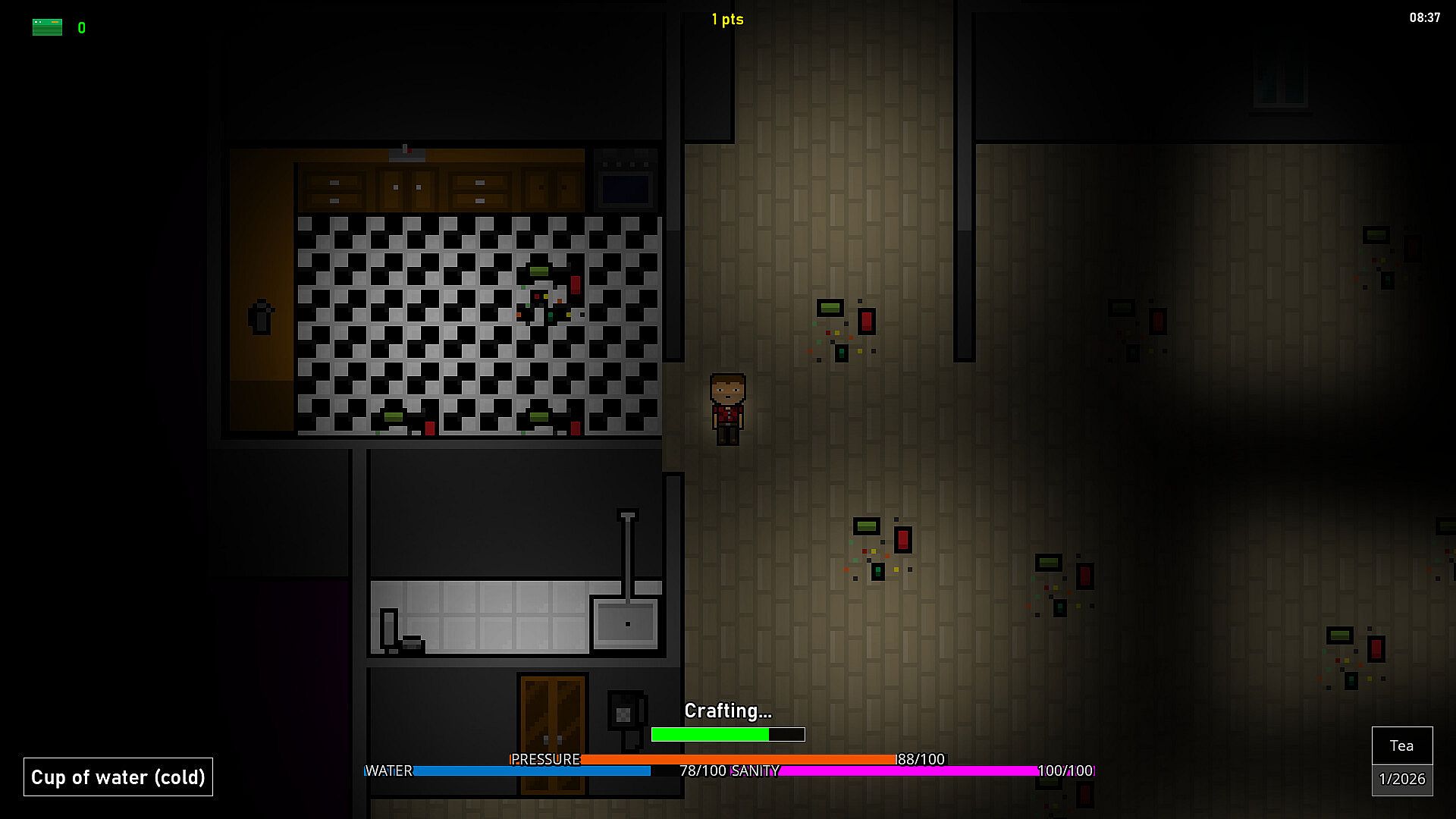
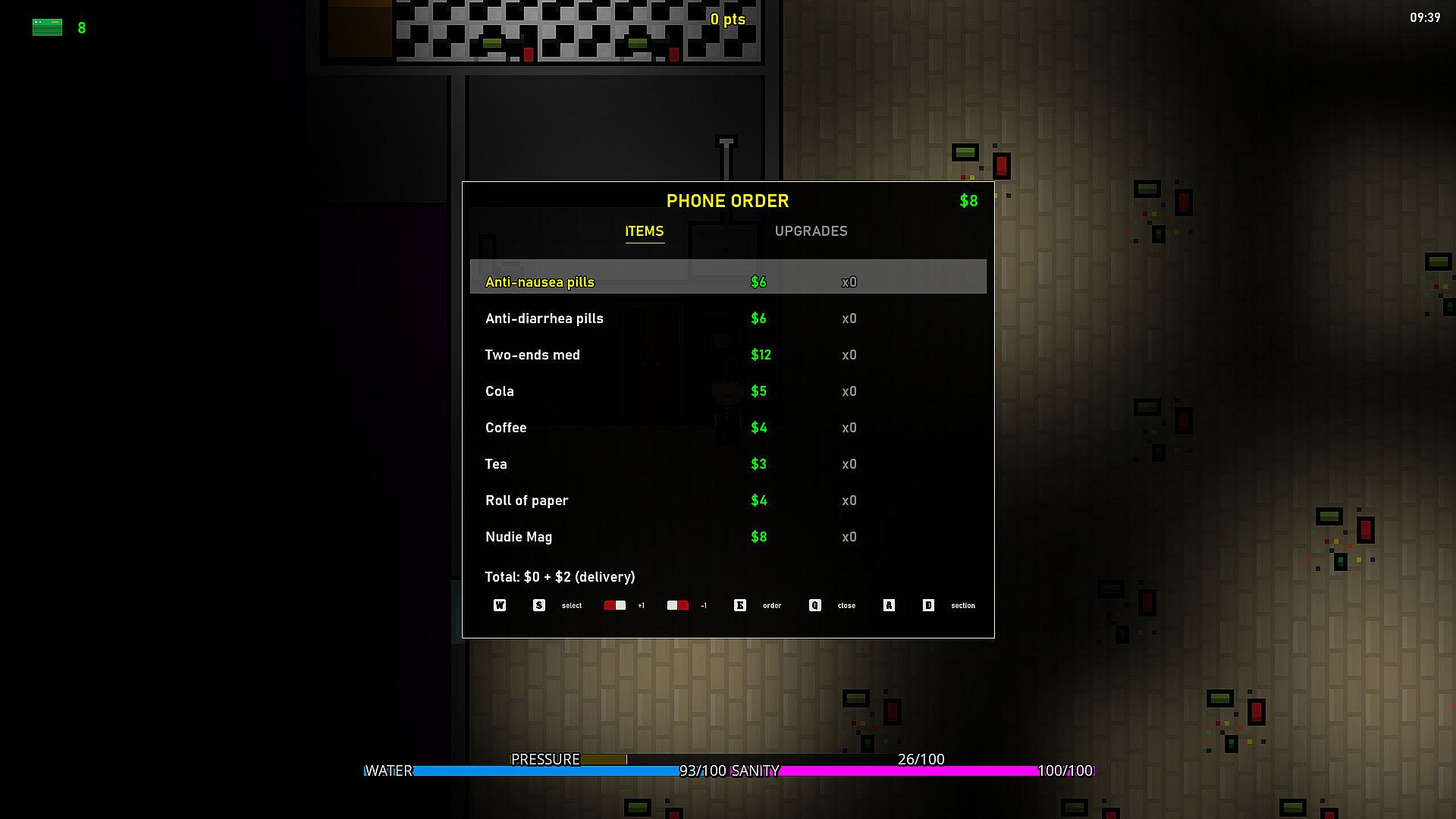
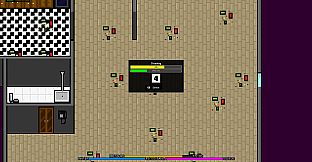
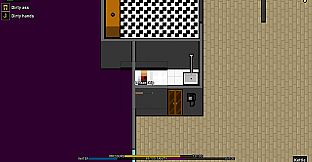
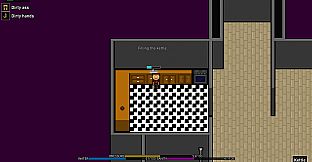
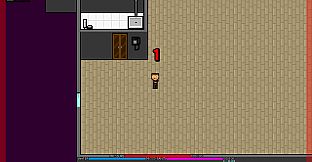
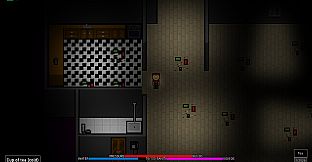
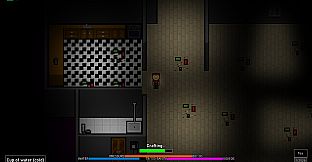
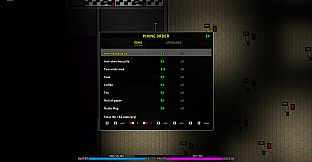
Toiletocalypse is an action simulation roguelike survival game set on PC where players take on the role of a handyman handling odd jobs in an apartment building while managing basic bodily needs. The core premise revolves around completing tasks for piecework pay during a shift, all while water levels, pressure, sanity, and stamina fluctuate in real time. Shifts last between ten and thirty minutes or longer, creating short bursts of intense management or extended crisis sessions. The game emphasizes resource juggling without an inventory system, relying instead on two hands for carrying, crafting, and working.
Gameplay
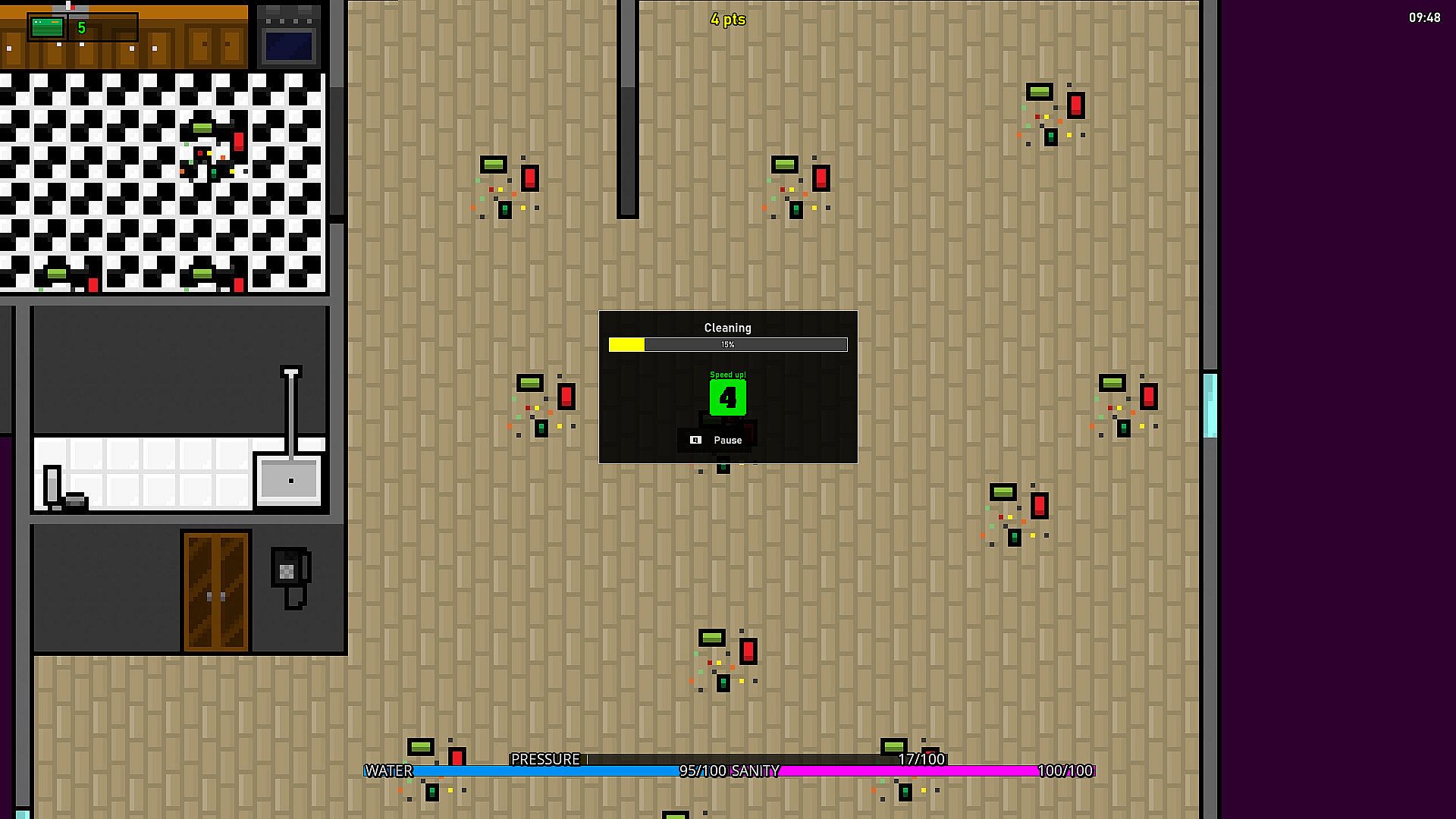
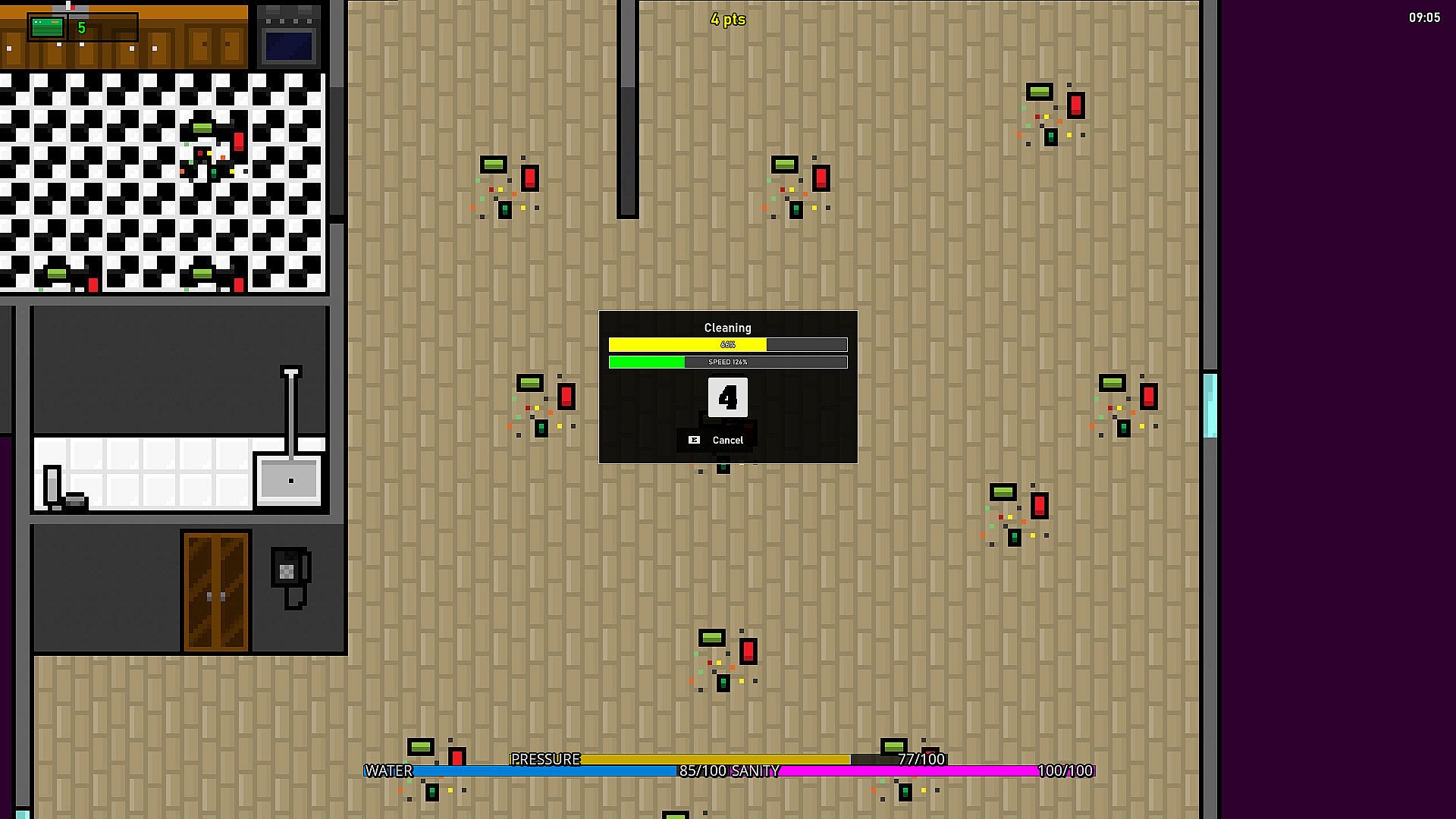
The loop centers on drinking water to control pressure, completing optional tasks like cleaning, mopping, or assembling furniture, and racing to the toilet before an accident occurs. Tasks can be rushed with quick-time events or abandoned entirely, though only finished jobs yield cash needed for survival across runs. Water serves as the primary currency and must be sourced from taps, stored in bottles or jars, boiled when power allows, or even used from the toilet in emergencies. Paper becomes a scarce resource for hygiene, and players must plan reserves carefully because building management can shut off the water supply at any moment.
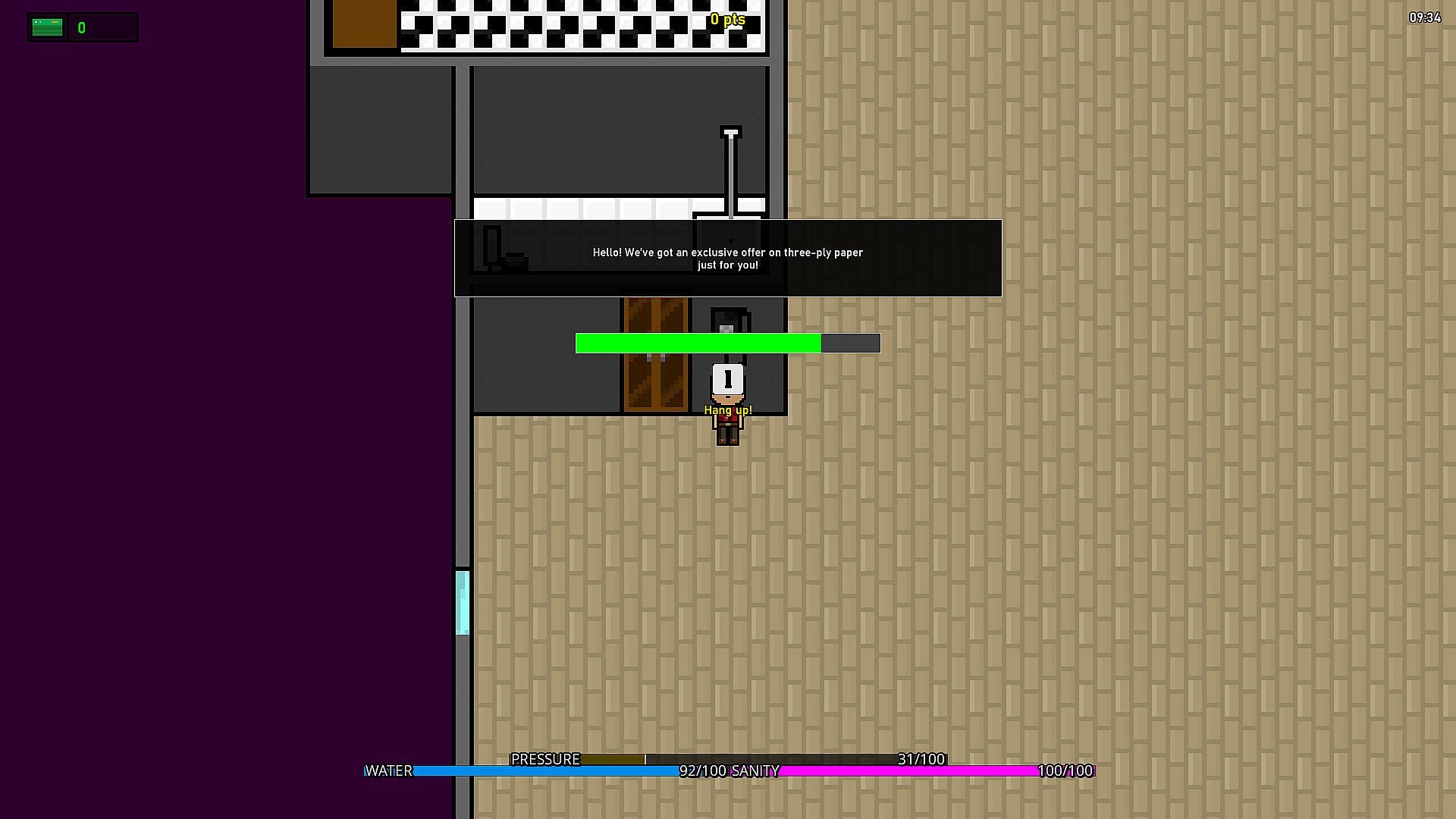
Item interaction happens directly with both hands, enabling on-the-fly crafting of useful combinations without pockets or menus. Random events interrupt shifts unpredictably, including power outages that require fuse repairs in the dark, telemarketer calls that drain sanity if ignored too long, turbo pressure spikes, and sudden water cutoffs with a thirty-second window to stockpile. Day and night cycles affect visibility, so spare bulbs prove essential for late shifts. Meds offer temporary relief but come with cooldowns, and some experimental pills introduce roulette-style risks. Full gamepad support allows comfortable play on controller.
Game Modes
Two distinct unlock systems govern progression between runs. Toiletocalypse mode delivers pure random rewards with an all-or-nothing structure that emphasizes high variance. Roguelike mode presents three card choices per unlock, with every third reward guaranteed as a random event that can introduce new challenges or tools. Both systems feed into a persistent points grind where completed shifts carry over earnings to unlock new starting items, medications, upgrades, and additional events. This structure supports repeated short sessions focused on optimization rather than a single linear story.
Core Systems and Progression
Multiple overlapping meters create constant tension. Water must be conserved and purified when possible, while pressure builds from drinking and requires timely relief. Sanity erodes from stress, unanswered calls, or poor decisions, and stamina limits how long tasks can continue. Crafting recipes discovered during shifts provide creative solutions, such as combining found objects for better water management or emergency relief. The absence of traditional inventory forces deliberate choices about what to carry and when to drop items. Points earned from shifts unlock permanent improvements that alter future runs, gradually expanding the pool of available tools and hazards.
Is It Worth Playing?
Toiletocalypse remains in Early Access with a planned full release in August 2026, allowing the developer to refine economy balance and event frequency based on player feedback. The game targets players who enjoy roguelike runs built around tight resource management and absurd survival scenarios rather than combat or exploration. Its short-to-medium shift length suits quick play sessions, and the dual unlock modes offer different risk profiles for those who prefer pure randomness or strategic selection. Without published review scores or large player counts available yet, the experience stands on its unique blend of simulation and roguelike elements for anyone drawn to unconventional management challenges. Those who appreciate systems-driven gameplay with persistent progression will find the most value in experimenting with different strategies across repeated shifts.












