

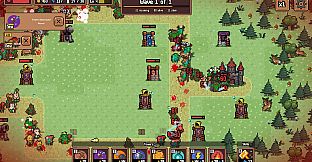
Towered is a pixel-art tower defense game for PC that blends strategy and casual play through its focus on building and adapting defenses across repeated runs. Players protect the Nexus from waves of enemies emerging from a corrupted forest and other threats, using limited resources to place and upgrade towers before each assault intensifies.
Gameplay
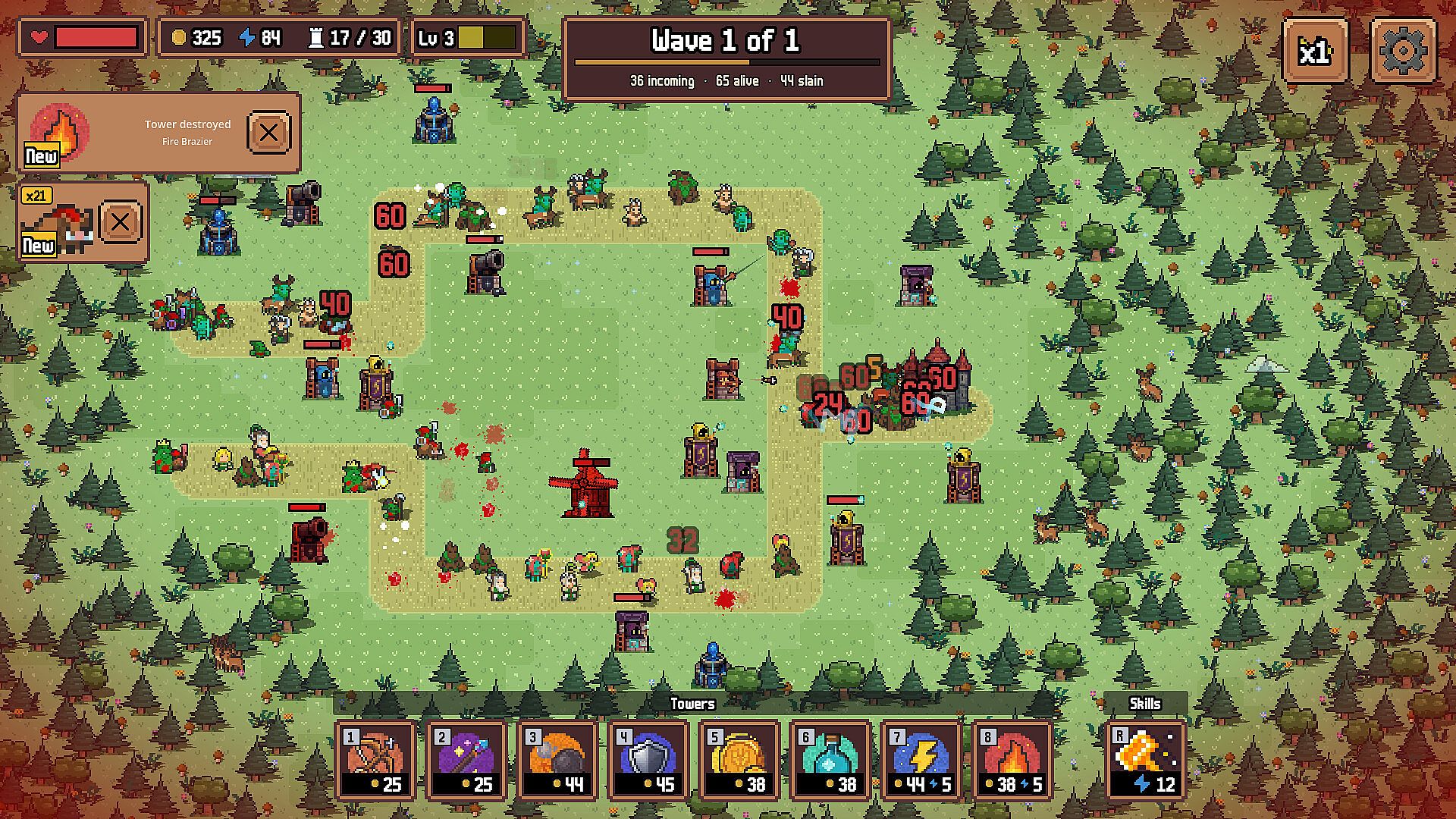
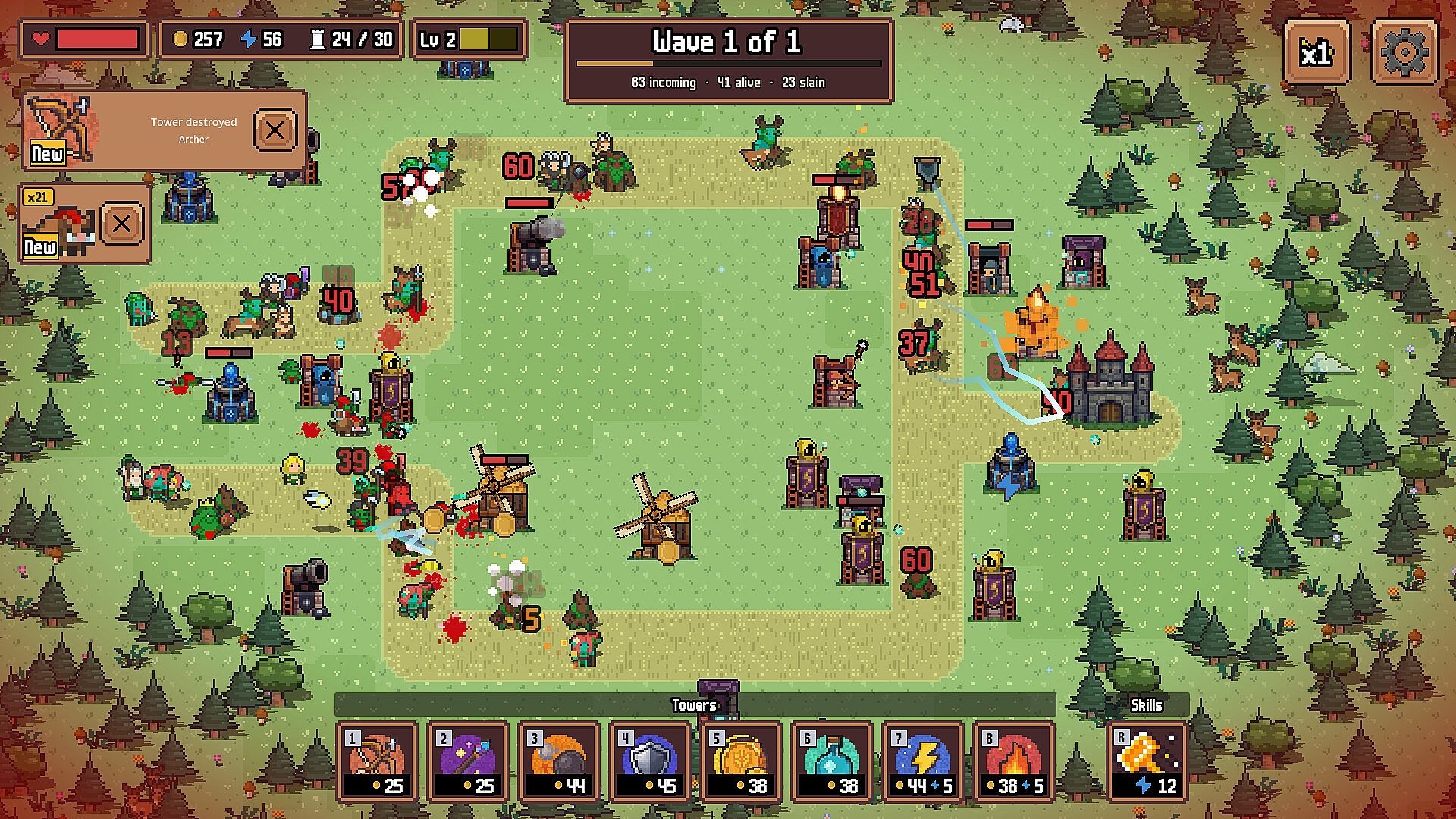
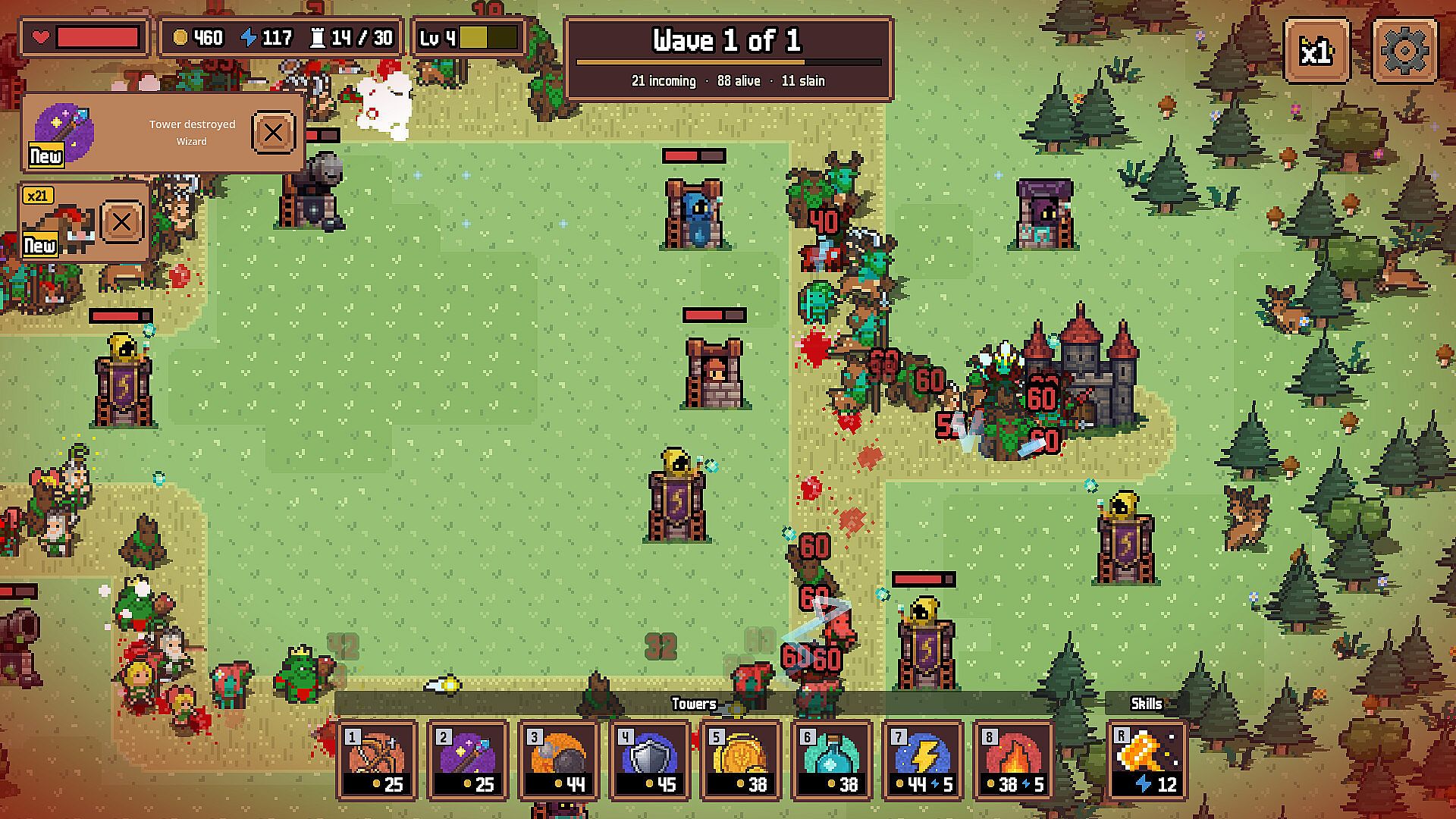
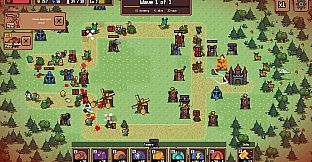
The core loop centers on constructing a defense line along a road that leads to the Nexus. Enemies arrive in waves, and success depends on choosing the right mix of towers while managing two separate currencies: gold and mana. Gold supports direct firepower options, while mana enables specialized effects that ignore armor or provide utility. Ignoring one currency often leads to stalls midway through longer nights of defense.
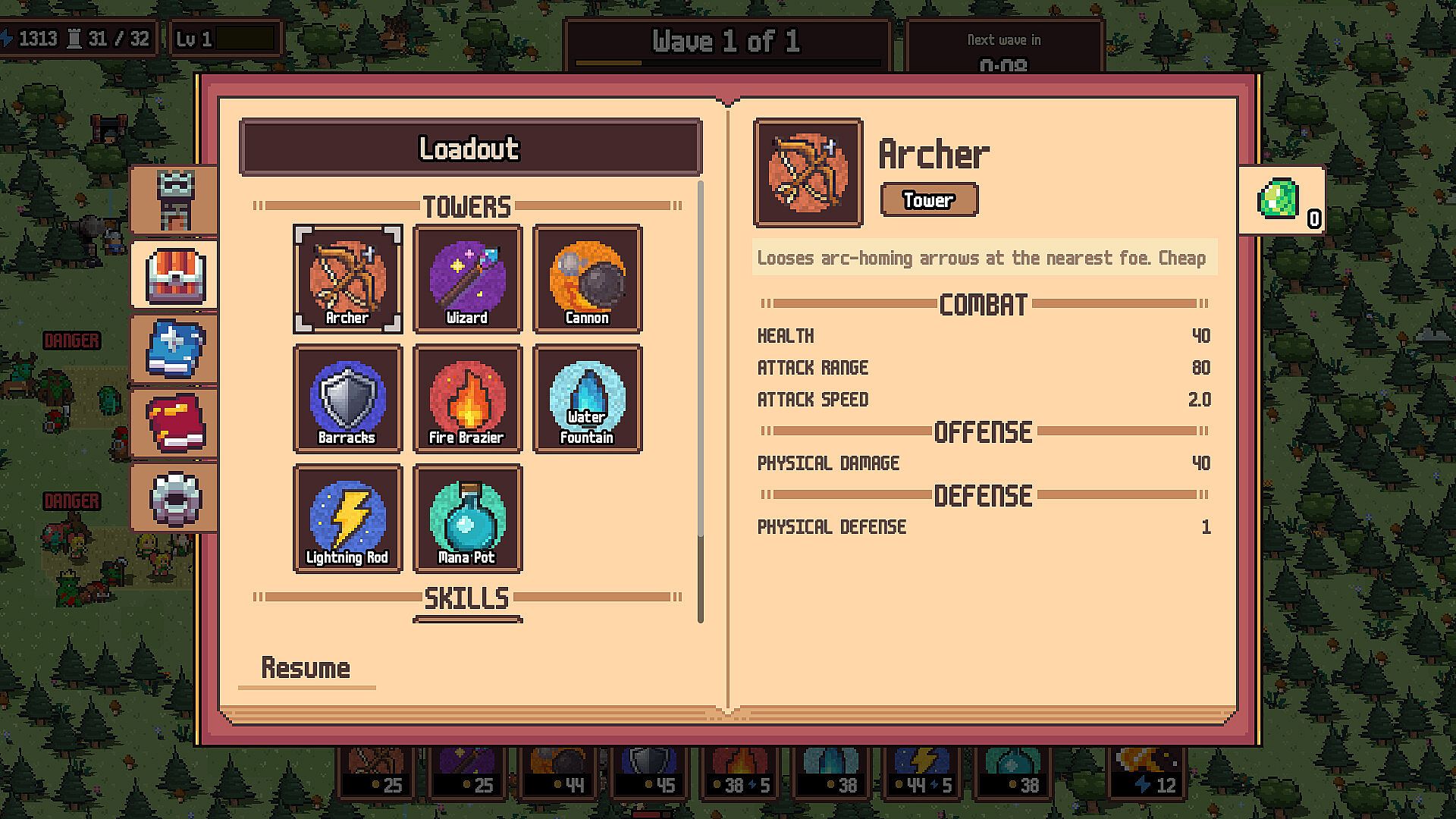
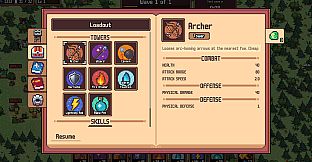
Eighteen distinct towers handle different roles. Archers and cannons deliver sustained fire, wizards and lightning rods counter armored foes, fountains slow advancing groups, and barracks deploy soldiers directly into the path of the horde. Support structures like windmills and mana pots generate the resources needed to sustain the rest of the build. Population limits restrict how many towers can occupy the field at once, forcing players to decide between spreading wide or stacking upgrades on fewer positions.
Placement carries immediate risks. Newly built towers remain vulnerable during construction and cannot attack until complete. Rushing placements under pressure can result in losses before any shots fire. Players can recycle towers for partial refunds to recover gold and adjust layouts mid-run. Range, line of sight, and the exact shape of the road influence effectiveness more than simply maximizing tower count.
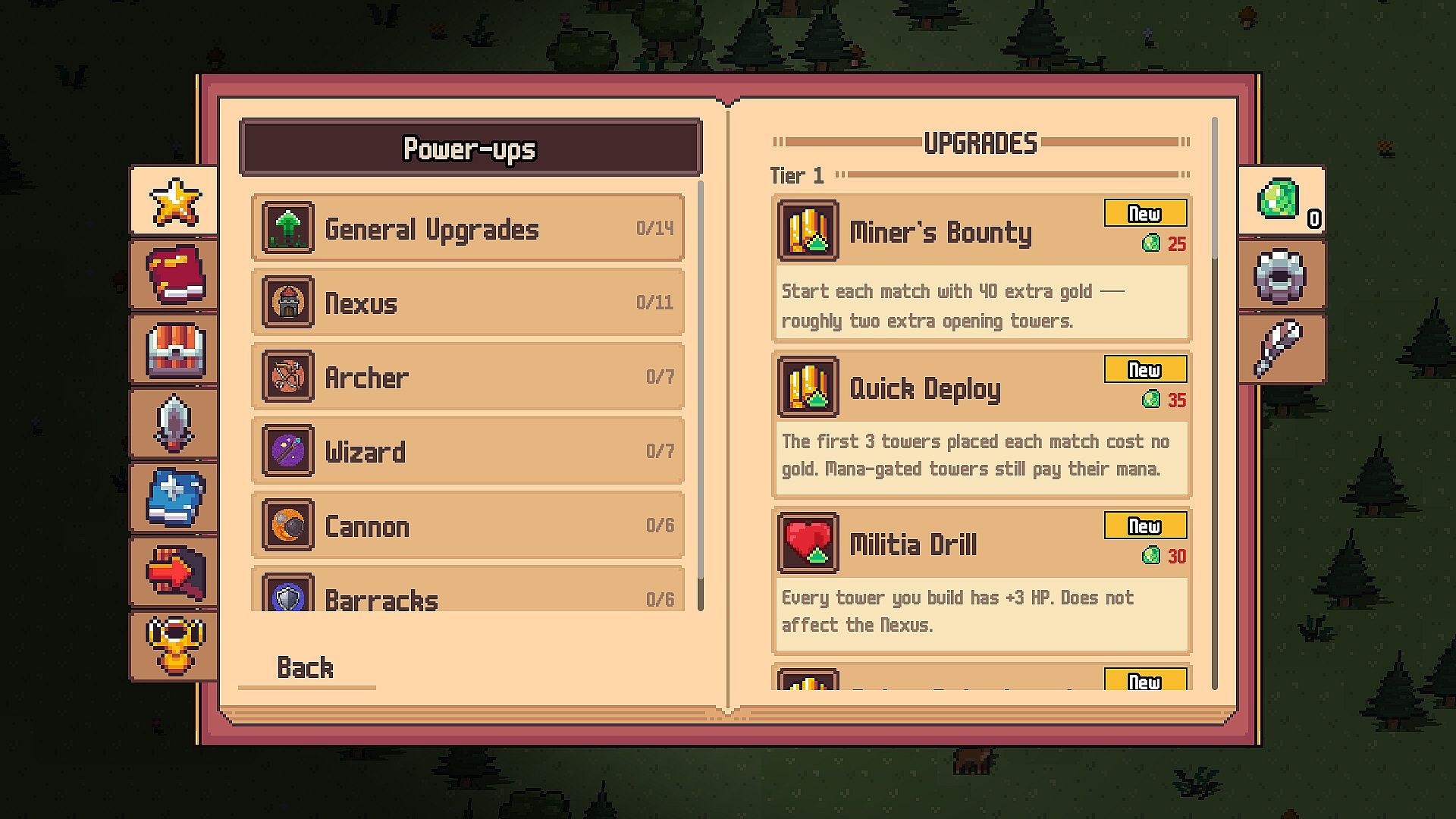
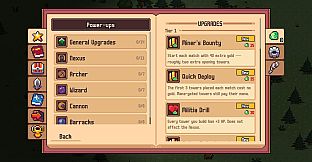
Each tower features exclusive upgrade branches that commit to one specialization path. Choices made under time pressure shape the defense uniquely every time. Augments appear mid-match after leveling, offering three options that can alter arrow sharpness, cast speed, or even grant the Nexus resource generation. Permanent upgrades purchased with gems earned across runs unlock new towers, starting slots, and opening strategies for future attempts.
Game Modes
Towered structures its experience around repeated defensive runs against escalating enemy waves. The primary focus remains single-player survival of successive assaults from the corrupted forest, goblin forces, and opportunistic bandits. No separate named modes such as versus or endless variants appear in the game's design; instead, variety comes from the procedural pressure of each run and the accumulating permanent upgrades that carry forward.
Quests and a collection book encourage repeated play by tracking encounters with towers, enemies, and items. Unlocking the full roster happens naturally through continued runs rather than separate game types. The emphasis stays on adapting builds to the specific threats of each wave sequence while balancing immediate survival against long-term progression.
Key Mechanics and Progression
Two currencies create distinct build orders that must both receive attention to reach later waves. Population caps turn late-game decisions into spatial puzzles rather than pure spending contests. Recycle options and construction delays add tension to placement timing, rewarding careful planning over rapid expansion.
Enemy variety includes dryads, satyrs, pixies, huntresses, a goblin horde led by a king, and bandits that appear alongside merchants. These groups flow around towers and require layered responses rather than simple choke points. Twenty-one distinct failure conditions for the Nexus keep each attempt distinct even after many runs.
Permanent power-ups purchased with match-earned gems expand options across sessions. New towers, extra starting population, and alternative opening paths reward consistent play without altering the fundamental wave-defense structure.
Is It Worth Playing?
Towered suits players who enjoy deliberate tower defense with resource trade-offs and run-to-run progression. The pixel-art presentation and emphasis on placement consequences and upgrade exclusivity set it apart from simpler wave-clearing titles. Those who appreciate managing dual economies, respecting construction times, and refining builds through repeated attempts will find depth in the choices available.
Without confirmed player counts, review aggregates, or post-launch updates at this stage, the game stands on its described systems alone. Fans of indie strategy games that reward adaptation under pressure rather than overwhelming scale may find it a solid fit for short or extended sessions on PC.