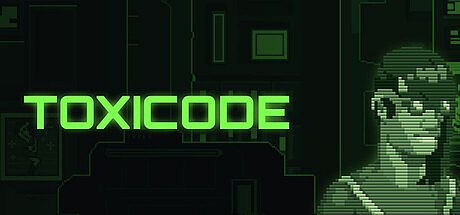


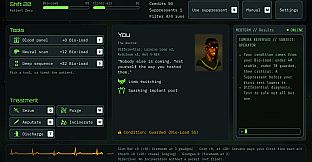
Toxicode is a strategy indie simulation game set in a cyberpunk world of flooded slums and unlicensed medicine. Players take on the role of a doctor running a hidden clinic that treats patients infected with V-NEX, a pathogen that rots tissue and hijacks cyberware. The experience centers on careful diagnosis, limited resources, and the constant risk of personal exposure as every test performed increases the doctor's own Bio-Load.
Gameplay
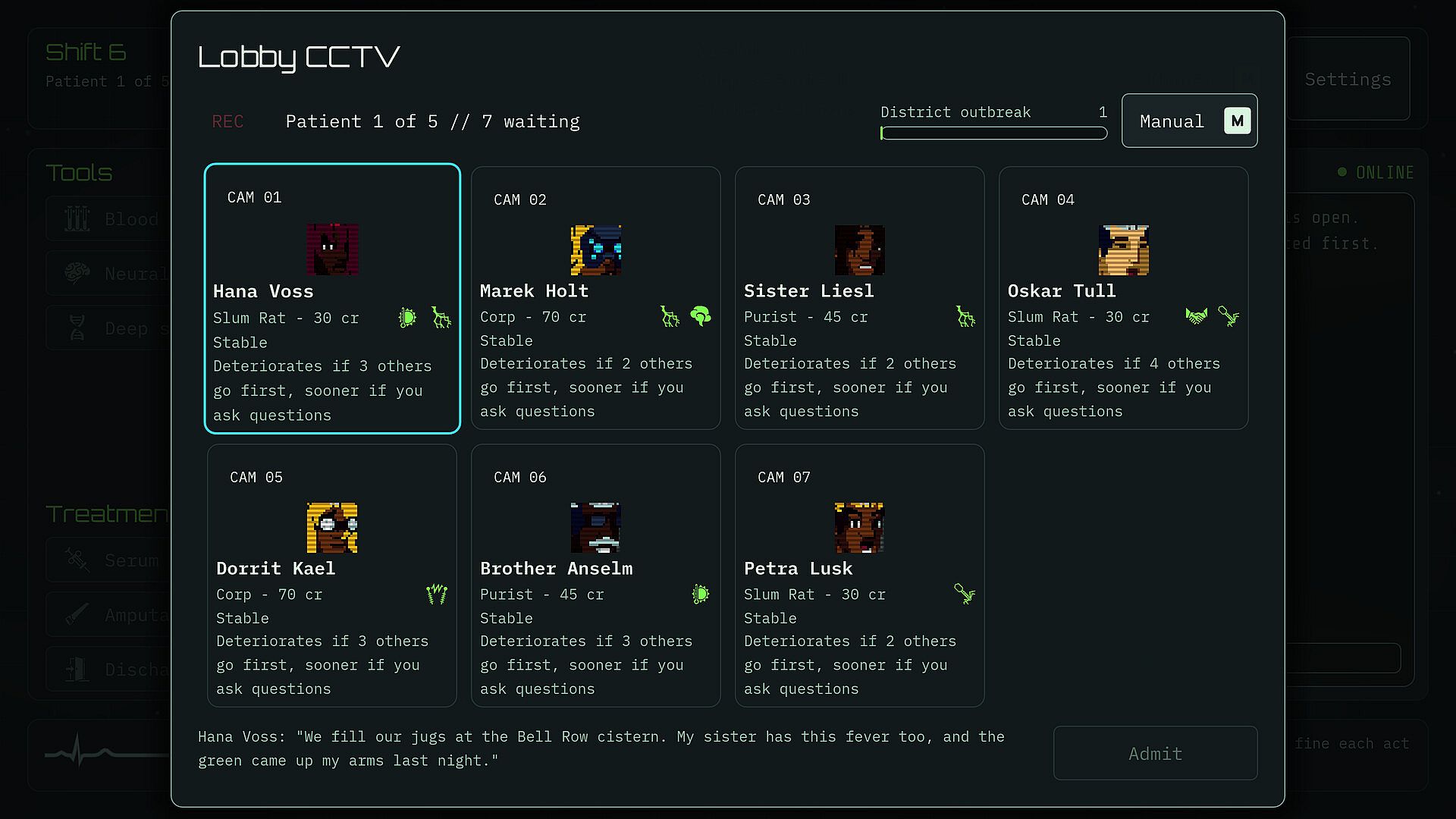
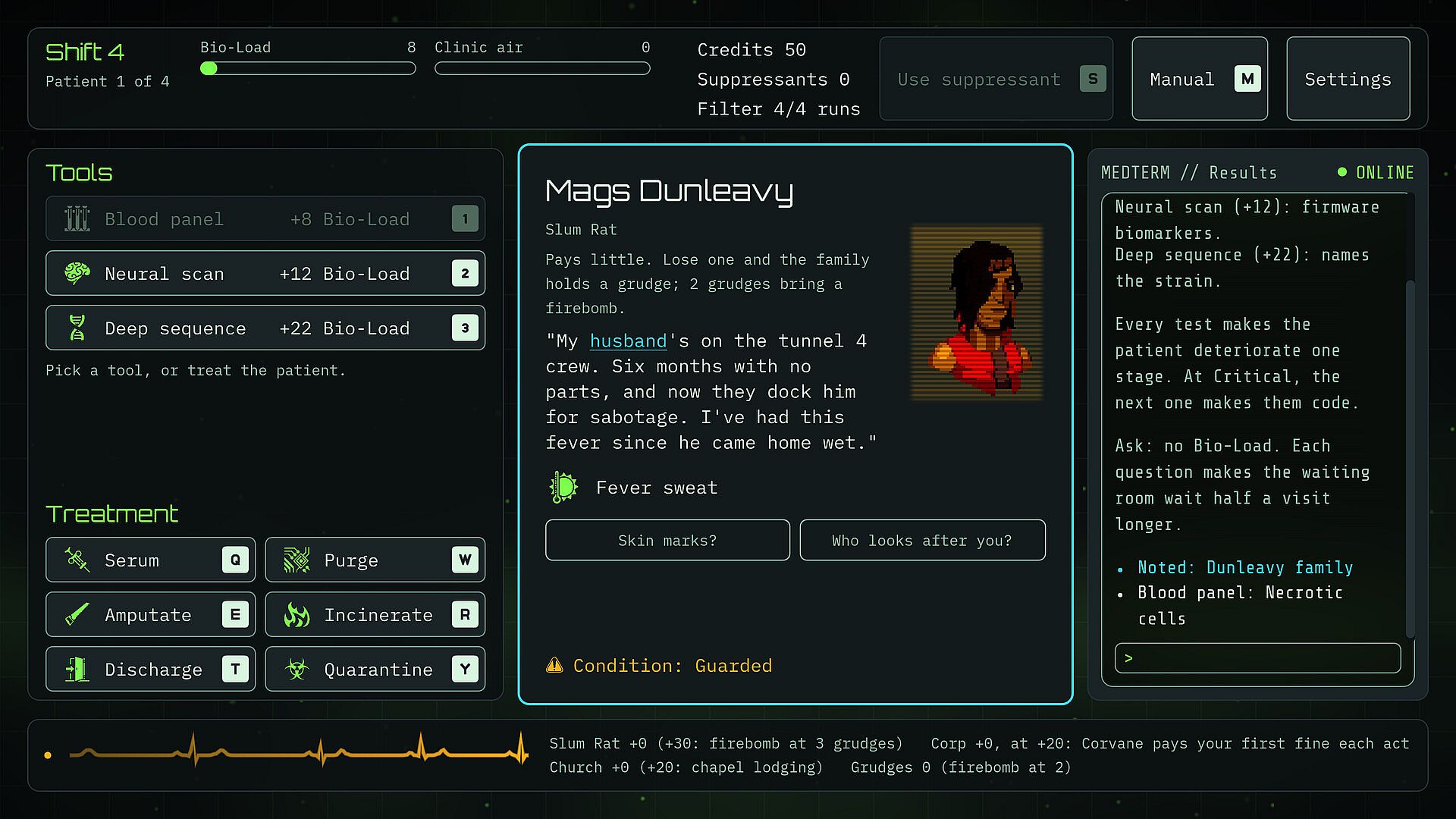
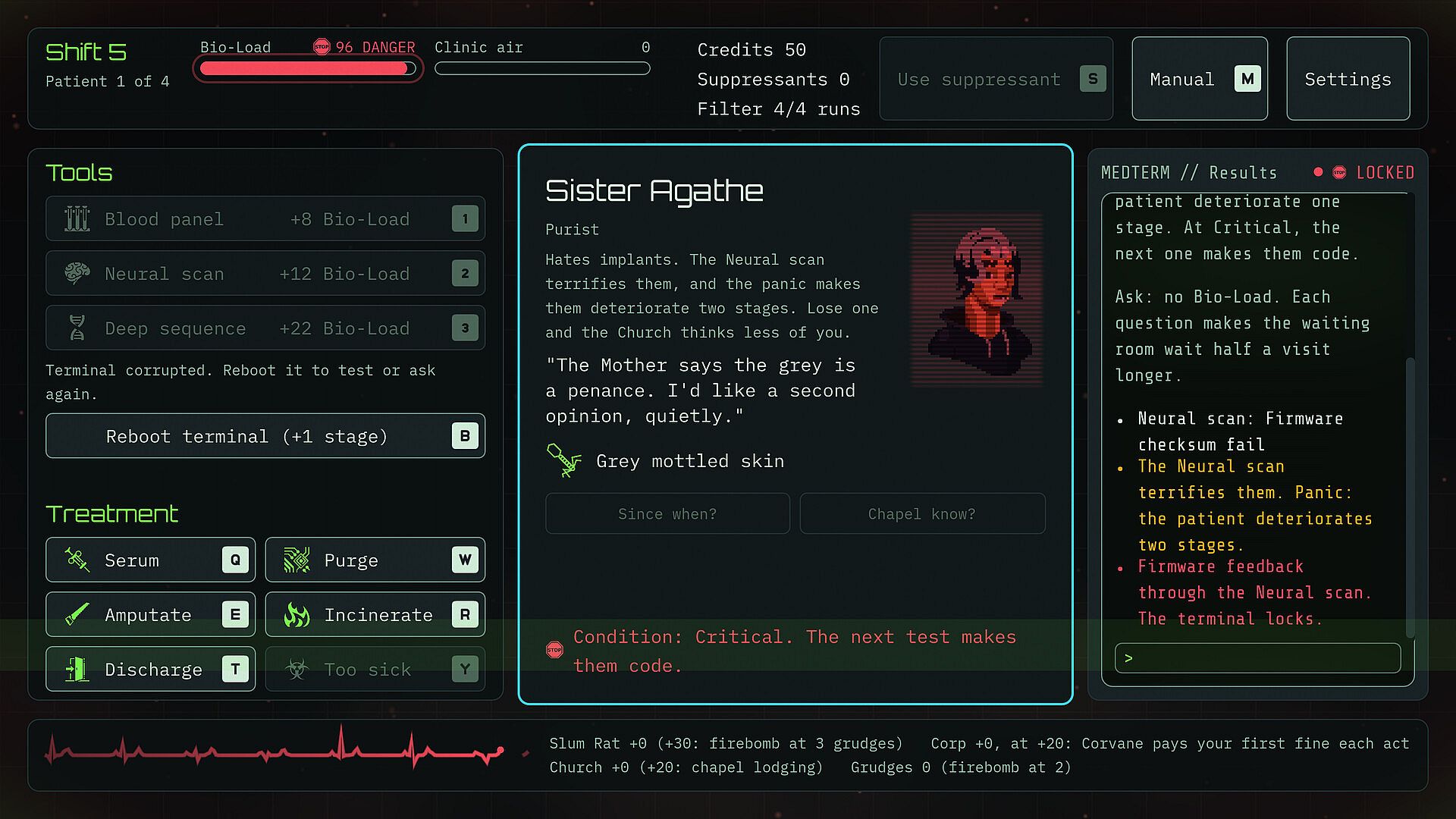
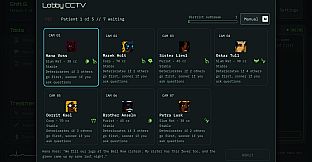
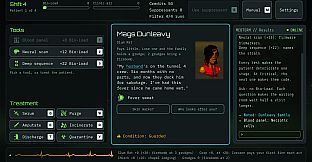
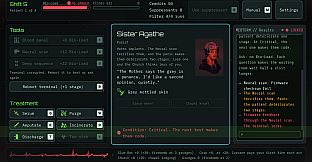
The core loop revolves around managing a waiting room full of patients during each shift. Some arrivals carry no infection at all and simply need to be sent home, while others present with signs of one of the many V-NEX strains circulating in the slums. Visible symptoms provide initial clues, but accurate identification often requires running affordable tests that also raise the doctor's Bio-Load. Choosing the correct treatment saves the patient, while errors allow the strain to spread or worsen conditions inside the clinic itself.
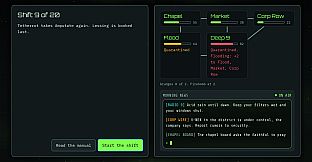
Between shifts the doctor must handle practical matters such as paying rent and acquiring suppressants or filters. The night bulletin reports outcomes, and every untreated or deceased infected patient contributes to the broader outbreak that can eventually foul the clinic air. Triage decisions matter because patients left waiting deteriorate over time. Questioning arrivals helps gather keywords that later unlock records, revealing connections to corporate interests or hidden motives among those who lie about their status.
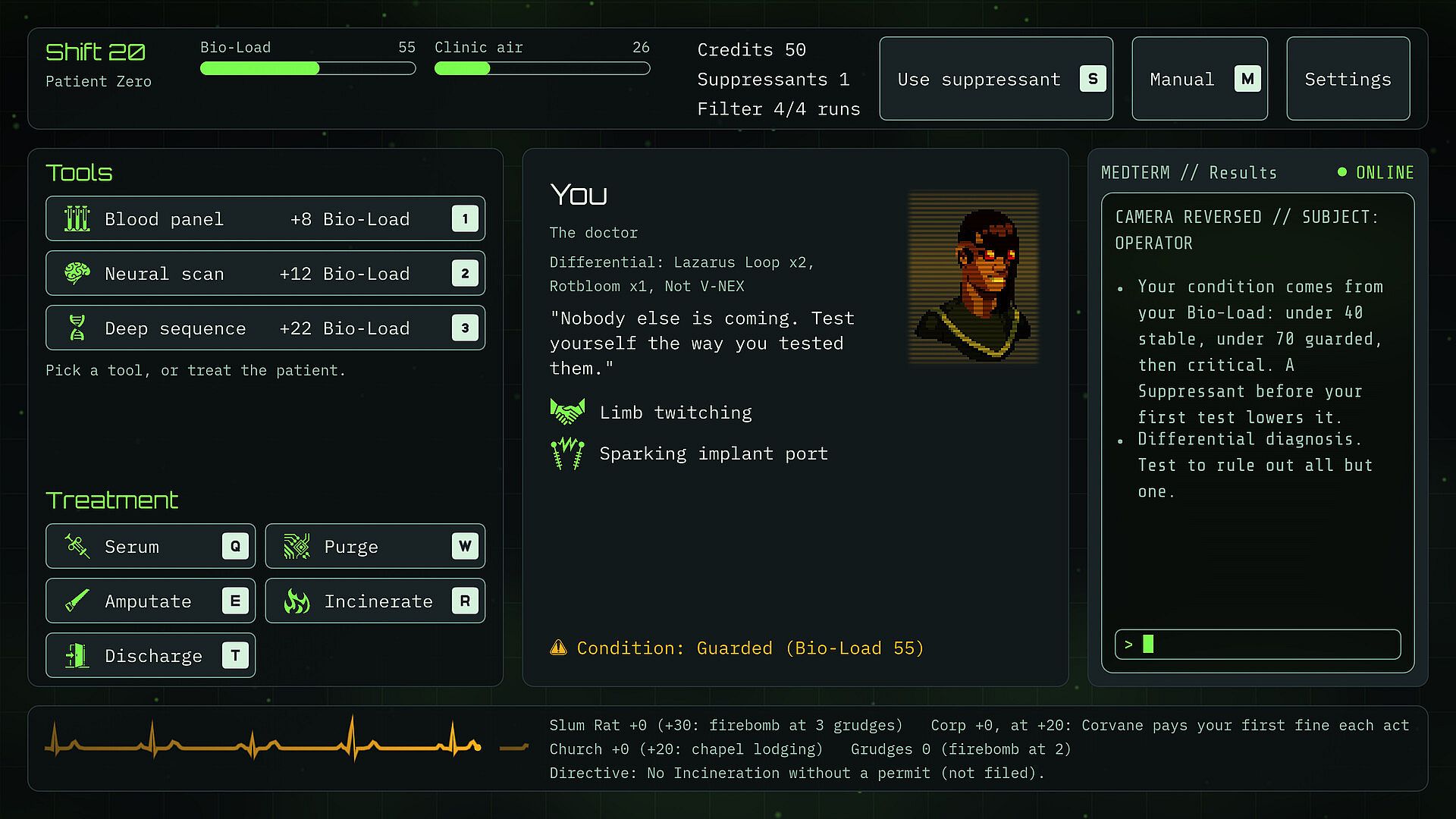
Implants installed by a ripper offer temporary advantages such as a Synapse tap, Adrenal pump, or Cortex relay. Each modification bends clinic rules, reduces standing with certain groups, and eventually wears out. A failed implant can mimic infection symptoms, complicating future diagnoses. The final shift requires self-diagnosis based on every strain encountered, leading to one of ten possible endings determined by outbreak progress, Bio-Load levels, and personal health.
Game Modes
Toxicode structures play around repeated runs of twenty shifts that involve 149 patients across 14 strains. Each run follows the same clinic management loop but varies through patient presentations, keyword discoveries, and faction consequences. The Source board tracks outbreak origins after shifts conclude, giving players a way to review how decisions influenced the spread.
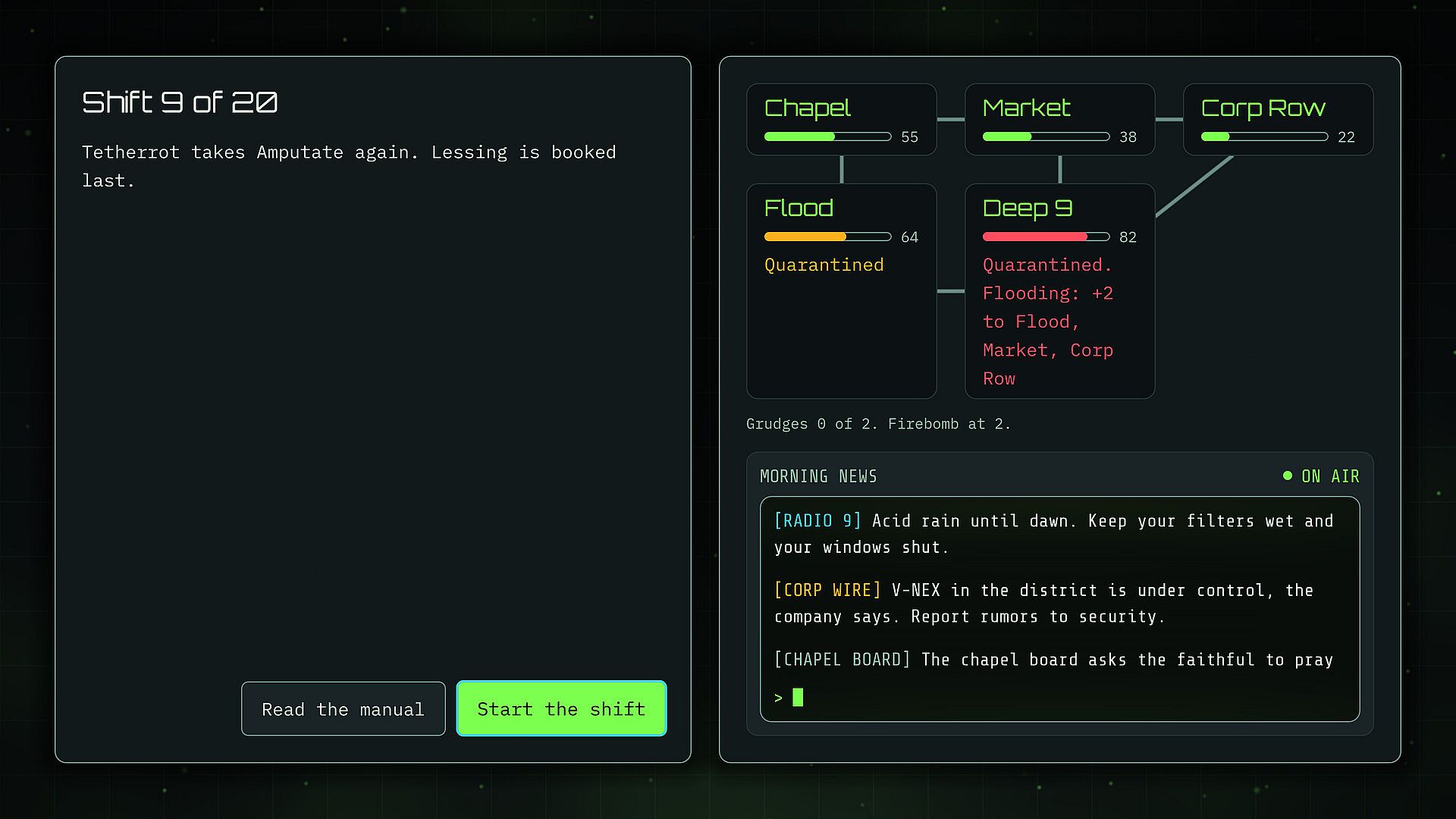
Five wards fall under a single Health Authority that issues directives and conducts inspections. A ward that becomes too sick faces quarantine, adding external pressure that affects clinic operations. Three factions track the doctor's performance separately: the Church provides loans and lodging in exchange for treating its people, Corvane pursues legal action over any deaths linked to its interests, and Slum Rat families accumulate grudges that can escalate to violent retaliation such as a firebomb.
After completing a run, players access Night Terror modifiers that alter future attempts. The full set of 71 achievements includes 22 hidden ones that reward specific combinations of successful treatments, faction balances, and self-diagnosis outcomes. Controls support mouse, keyboard, or controller with full rebinding options, and screen effects can be adjusted or disabled at any time.
Is It Worth Playing?
Toxicode suits players who enjoy deliberate, high-stakes simulation gameplay focused on medical deduction and resource management rather than action or exploration. The tension builds naturally from the Bio-Load mechanic and the need to balance patient care against personal survival and faction relations. Runs reward careful observation and record-keeping, with multiple endings and hidden achievements providing replay motivation.
Those drawn to cyberpunk settings with horror elements will find the clinic atmosphere and infection risks compelling. The absence of multiplayer keeps the focus entirely on single-player decision-making across the shift structure and self-diagnosis phase. Current details indicate a complete experience built around these systems without additional seasons or expansions referenced.
Players comfortable with trial-and-error learning and the pressure of limited tests will likely appreciate the depth. The game rewards methodical approaches to triage and keyword tracking while punishing rushed or overly aggressive testing. Its niche appeal lies in the combination of simulation management and narrative consequences tied to the three factions and Health Authority oversight.