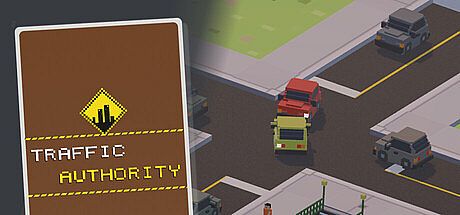


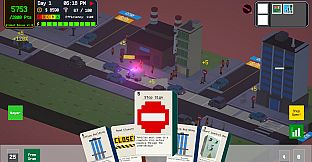
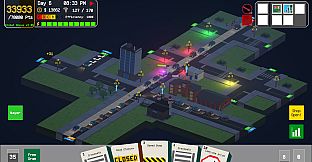
Traffic Authority is a strategy, indie, RPG, and simulation title for PC in which players take on the role of chief traffic controller in a bustling city. The experience centers on managing constant vehicle and pedestrian flow while responding to disruptions, all in pursuit of higher scores through efficient infrastructure decisions.
Gameplay
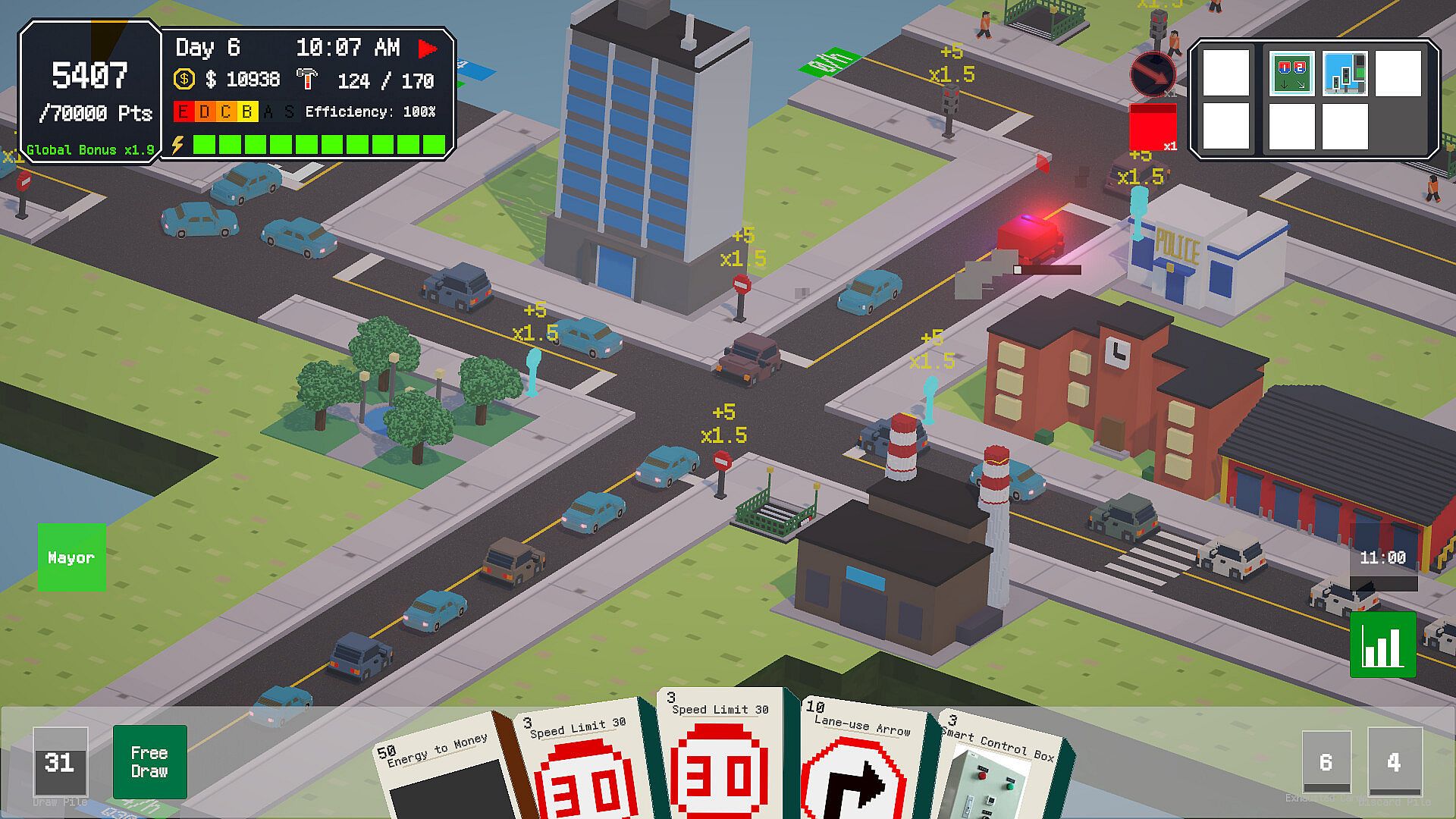
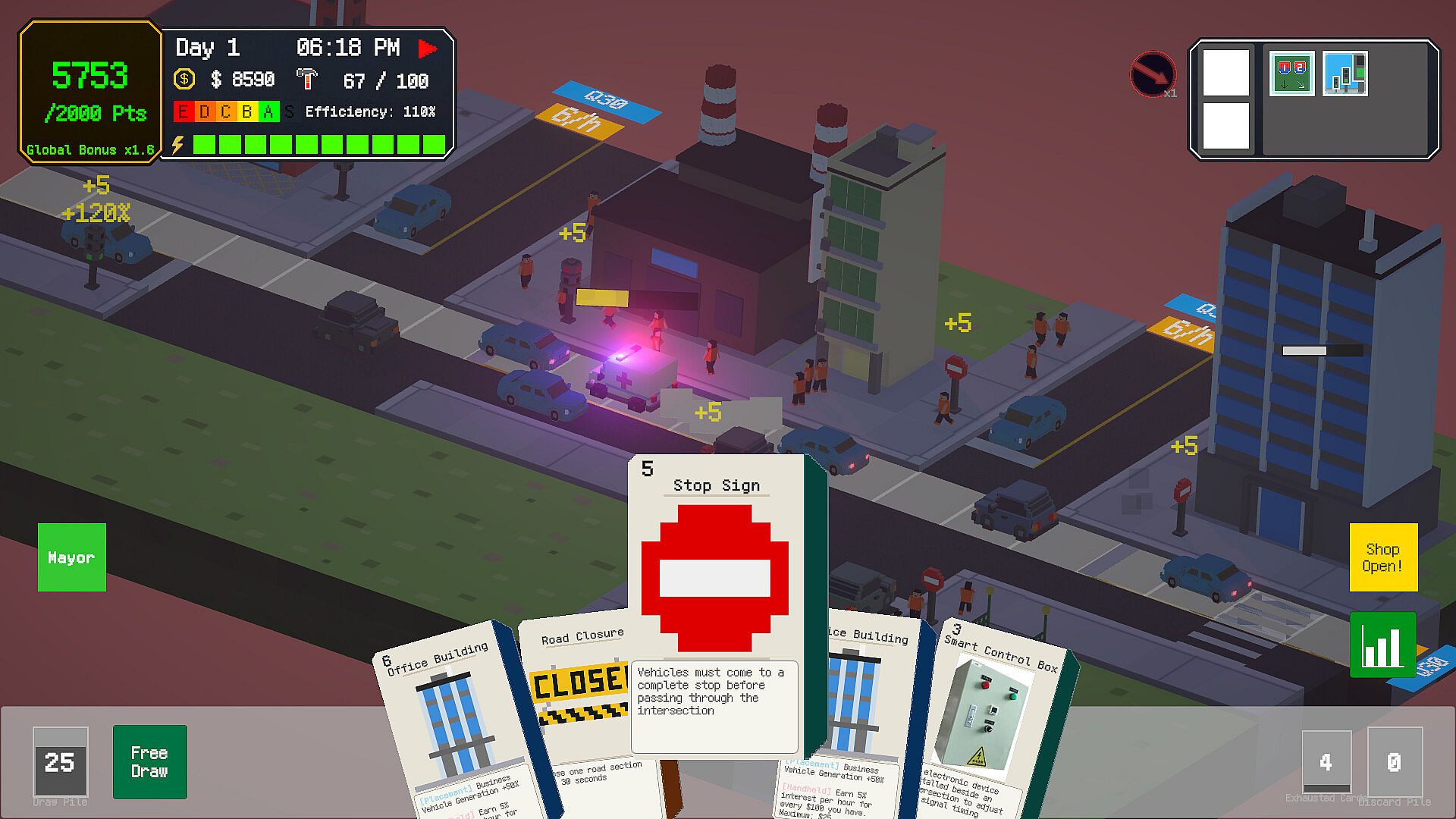
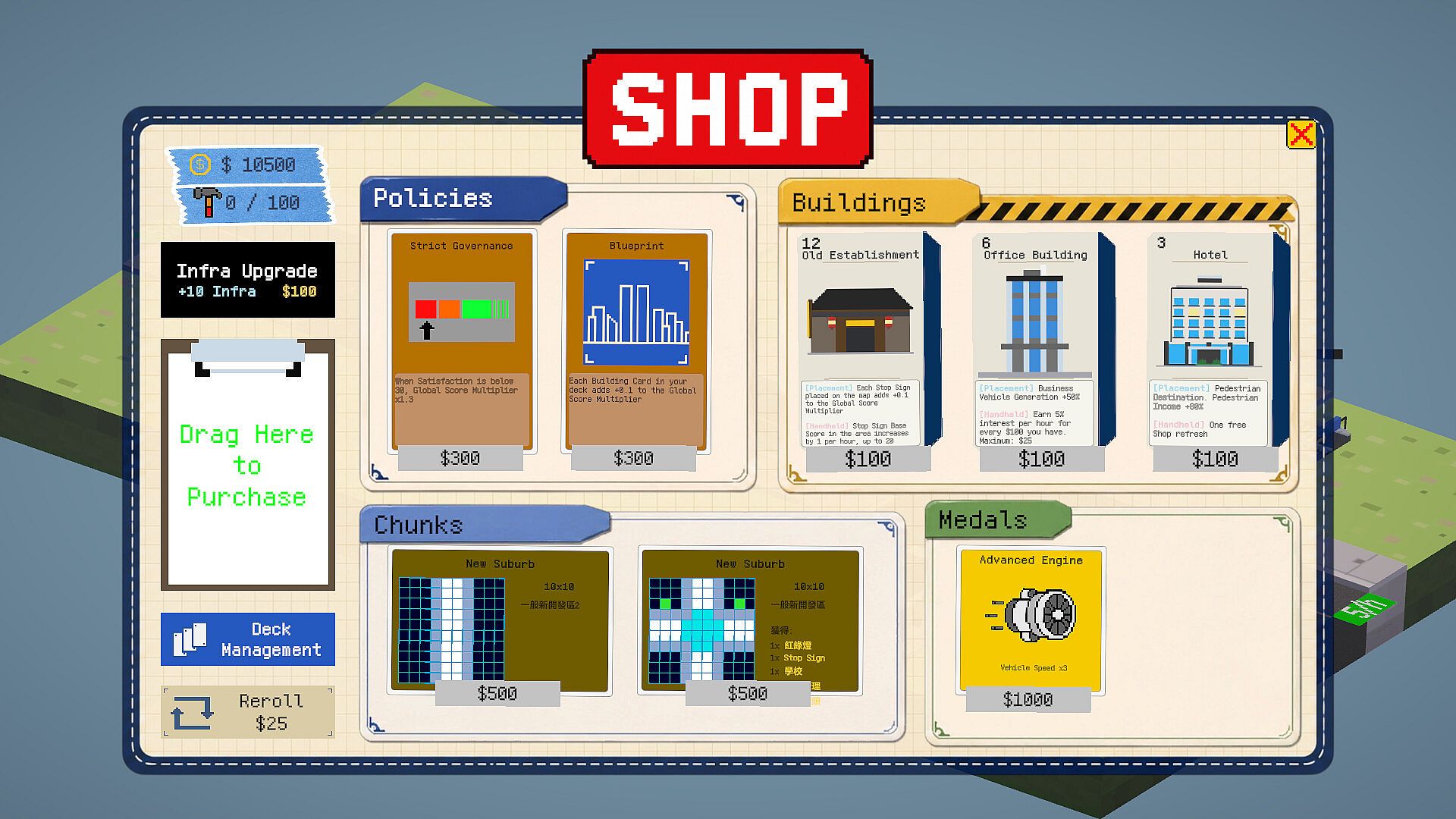
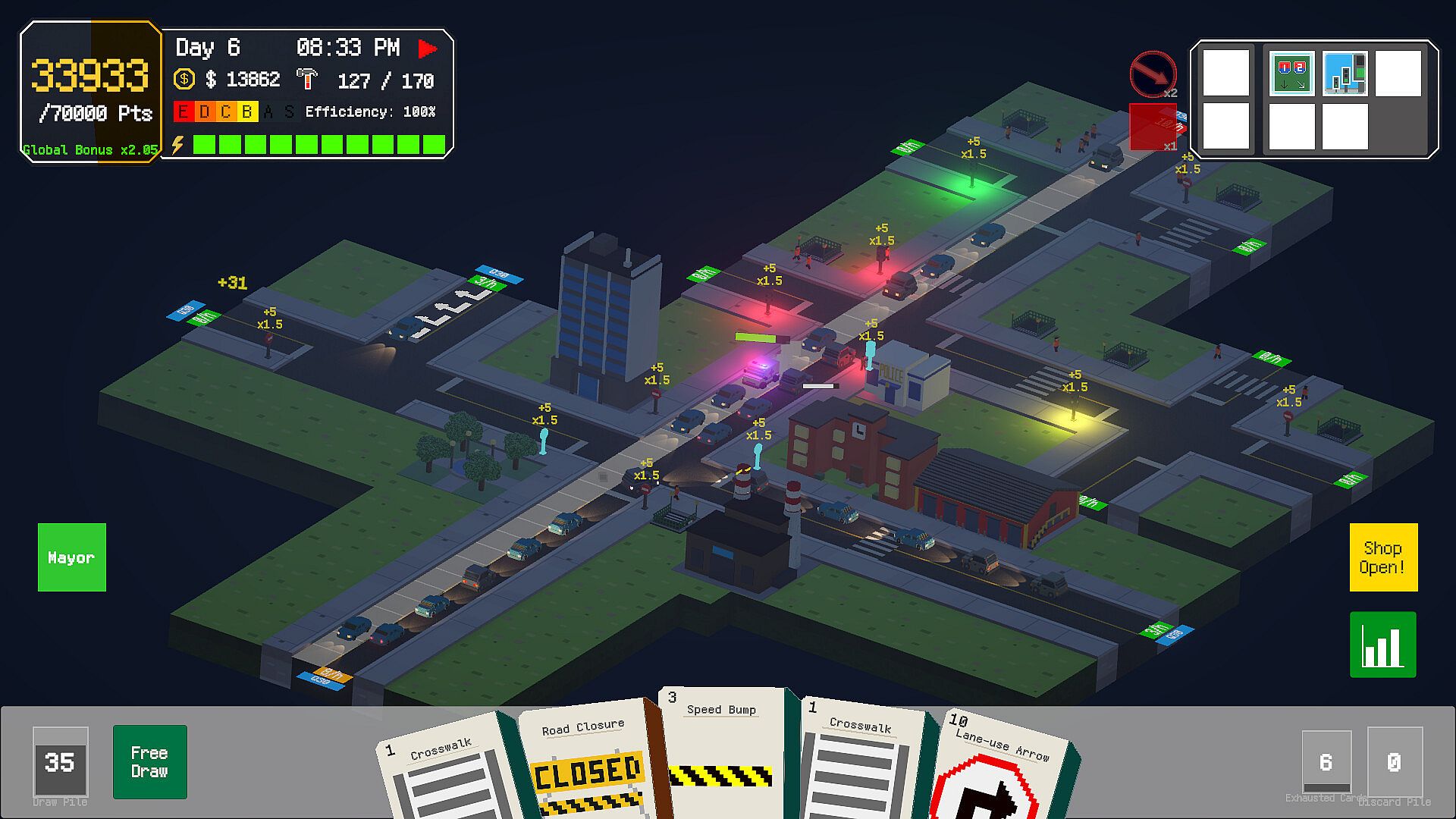
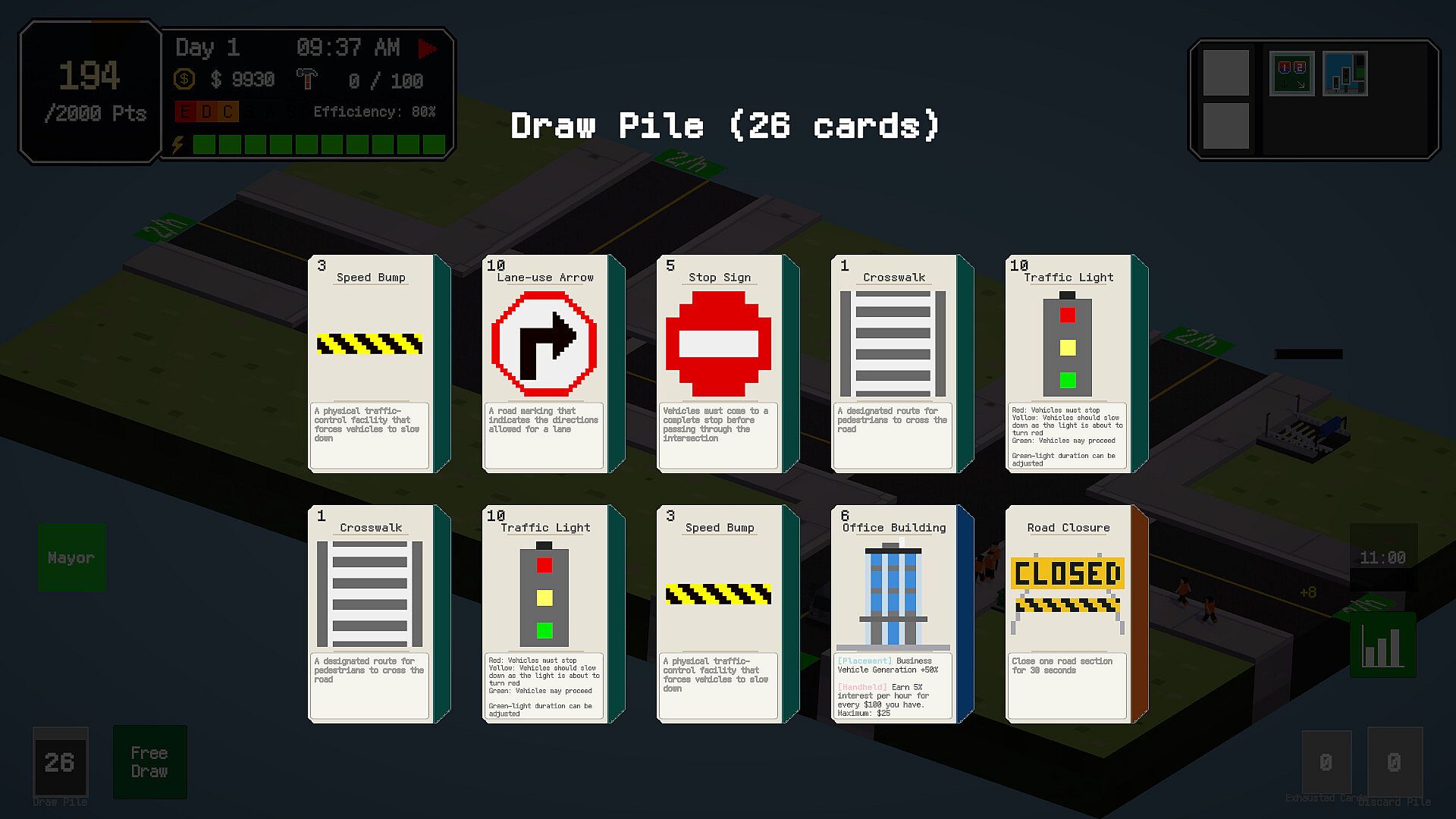
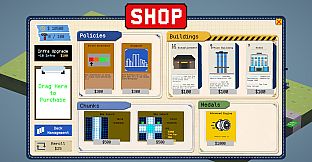
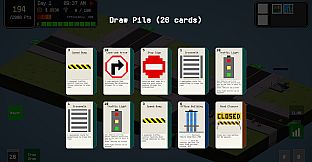
The core loop revolves around placing traffic lights, stop signs, and related infrastructure to dictate street rhythm. Players deploy cards that represent these elements and combine them with civic policies plus city buildings to create synergies that boost scoring potential through chained effects.
Random events introduce variability, including accidents, road closures, and emergency vehicle arrivals that demand immediate adjustments. Success requires balancing transit efficiency against resource limits and public satisfaction levels, as each placement influences the broader grid in connected ways.
Adaptation forms a key part of progression. Unpredictable incidents force on-the-fly strategy shifts, rewarding those who identify strong card pairings and maintain steady flow despite setbacks. The system emphasizes ripple effects, where one change can unlock or disrupt larger combos across the network.
Game Modes
Traffic Authority operates as a single-player experience focused on high-score runs. Leaderboards allow comparison of personal bests against others through repeated attempts at managing the traffic grid under escalating pressures.
Play centers on solving evolving crises within each session while optimizing for efficiency and satisfaction metrics. The structure supports iterative improvement through discovery of effective card and building combinations that handle the daily chaos more effectively over time.
Is It Worth Playing?
Traffic Authority suits players drawn to strategy simulations that combine card-based decision making with real-time adaptation in a management context. Its emphasis on grid-wide consequences and combo building appeals to those who enjoy resource allocation challenges without direct combat elements.
The game remains in a planned release state with no user reviews available yet. Features such as achievements, cloud saves, and leaderboards indicate support for ongoing score competition once it launches. Those interested in indie strategy titles centered on urban systems may find the described mechanics align with their preferences for thoughtful, reactive play.
Strategic Depth and City Management
Resource management ties directly into infrastructure choices, where overcommitment in one area can strain others during peak disruptions. Public satisfaction acts as a feedback mechanism that influences scoring multipliers when kept high through consistent flow.
Exploration of card synergies encourages experimentation across multiple sessions. The simulation layer tracks how placements interact with pedestrian and vehicle patterns, creating opportunities for large-scale scoring when events align favorably with prepared setups.
Player Experience and Long-Term Appeal
Sessions reward careful observation of traffic patterns before committing to deployments. The indie scope keeps focus narrow on the controller role, avoiding extraneous systems in favor of tight feedback between actions and grid responses.
With its blend of planning and improvisation, the title targets fans of simulation games that evolve through repeated high-score attempts rather than narrative progression. Leaderboard integration provides a clear metric for measuring improvement in handling the city's persistent demands.