




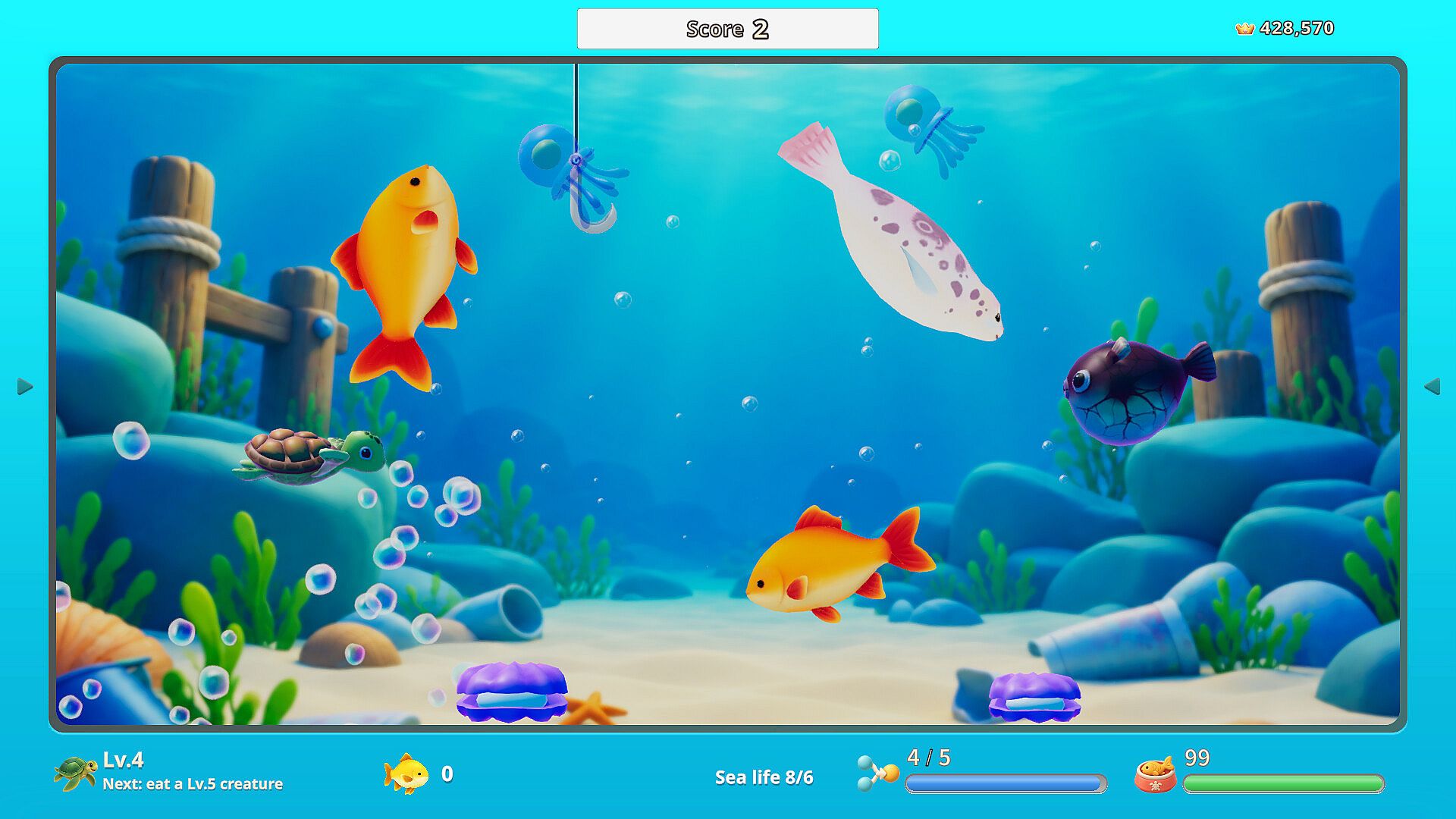
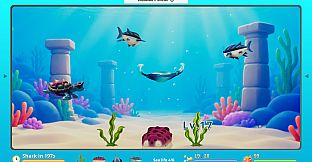
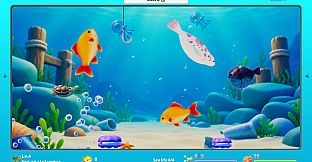
Turtle Game is a casual indie title that recreates the feel of a classic mechanical water toy in digital form. Players use simple button presses to generate currents in a contained underwater scene, guiding food and objects toward an AI-controlled turtle that swims on its own. The experience blends precise timing with unpredictable physics, where buoyancy, weight, and spin affect how items move through the water.
Gameplay
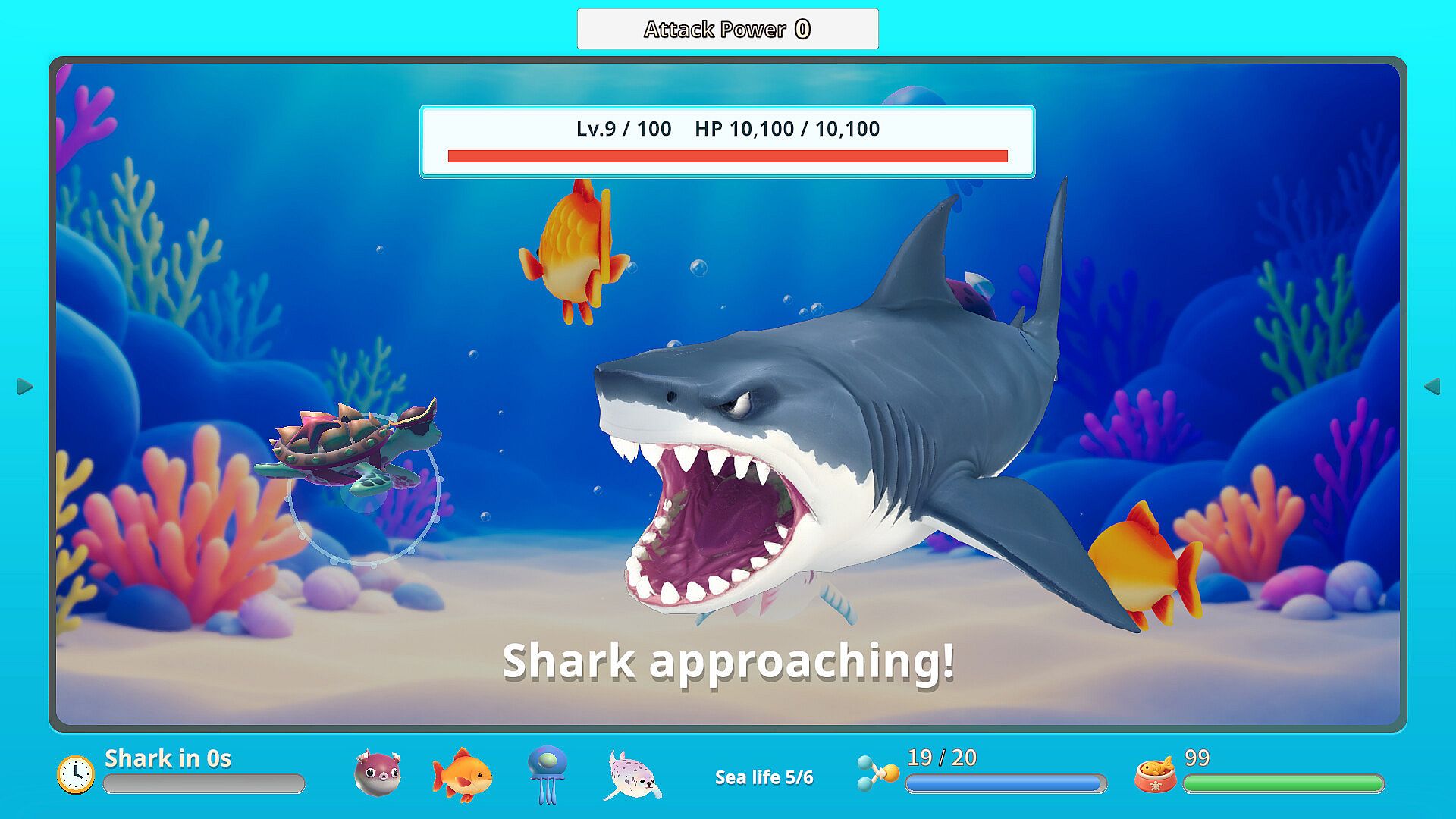
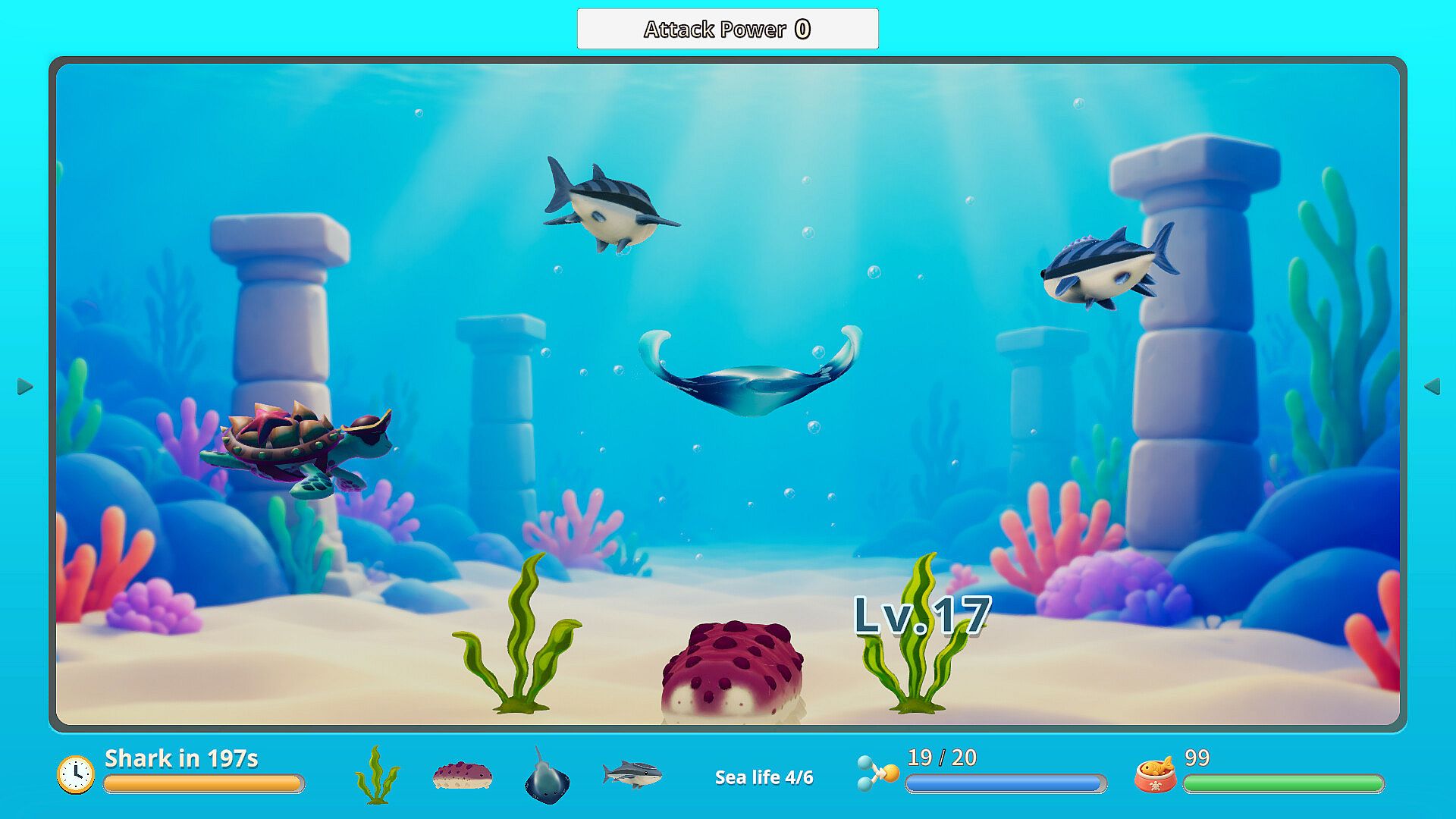
Core play revolves around creating targeted currents to deliver floating food directly into the turtle's mouth. Different sea creatures react uniquely to the same push: light jellyfish drift easily while heavier clams require stronger or better-timed flows. Sessions emphasize observation and patience, as the turtle moves independently and players must wait for the right approach angle before acting.
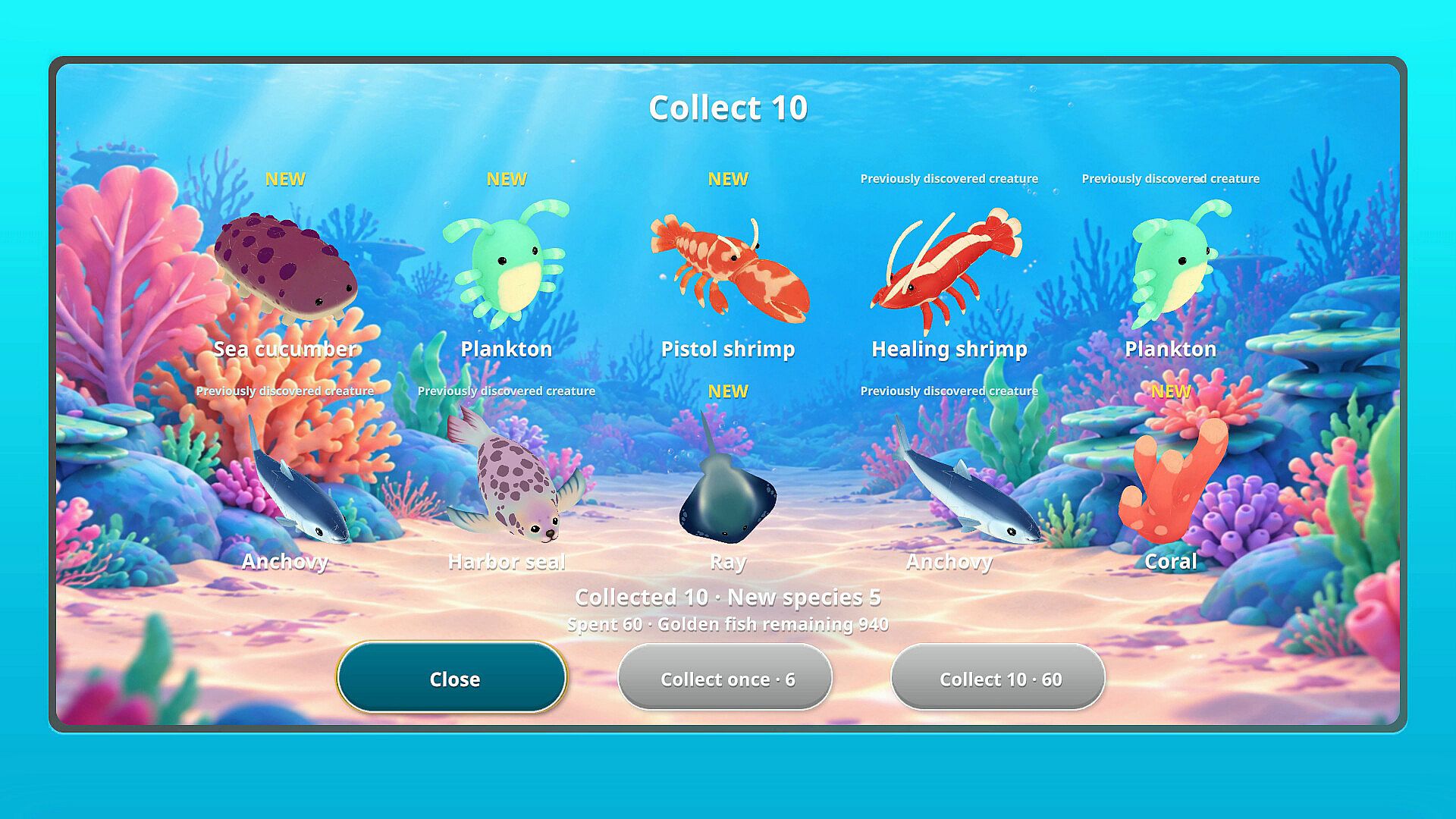
Creature collection adds depth to each run. Players select four types to form a starting combination, then decide whether to feed or preserve individuals for growth. Successful feeding contributes to the turtle's experience points, allowing it to reach higher levels with visible changes in size and capability. New species appear over time, expanding available combinations for future attempts and encouraging experimentation with different mixes of light and heavy objects.
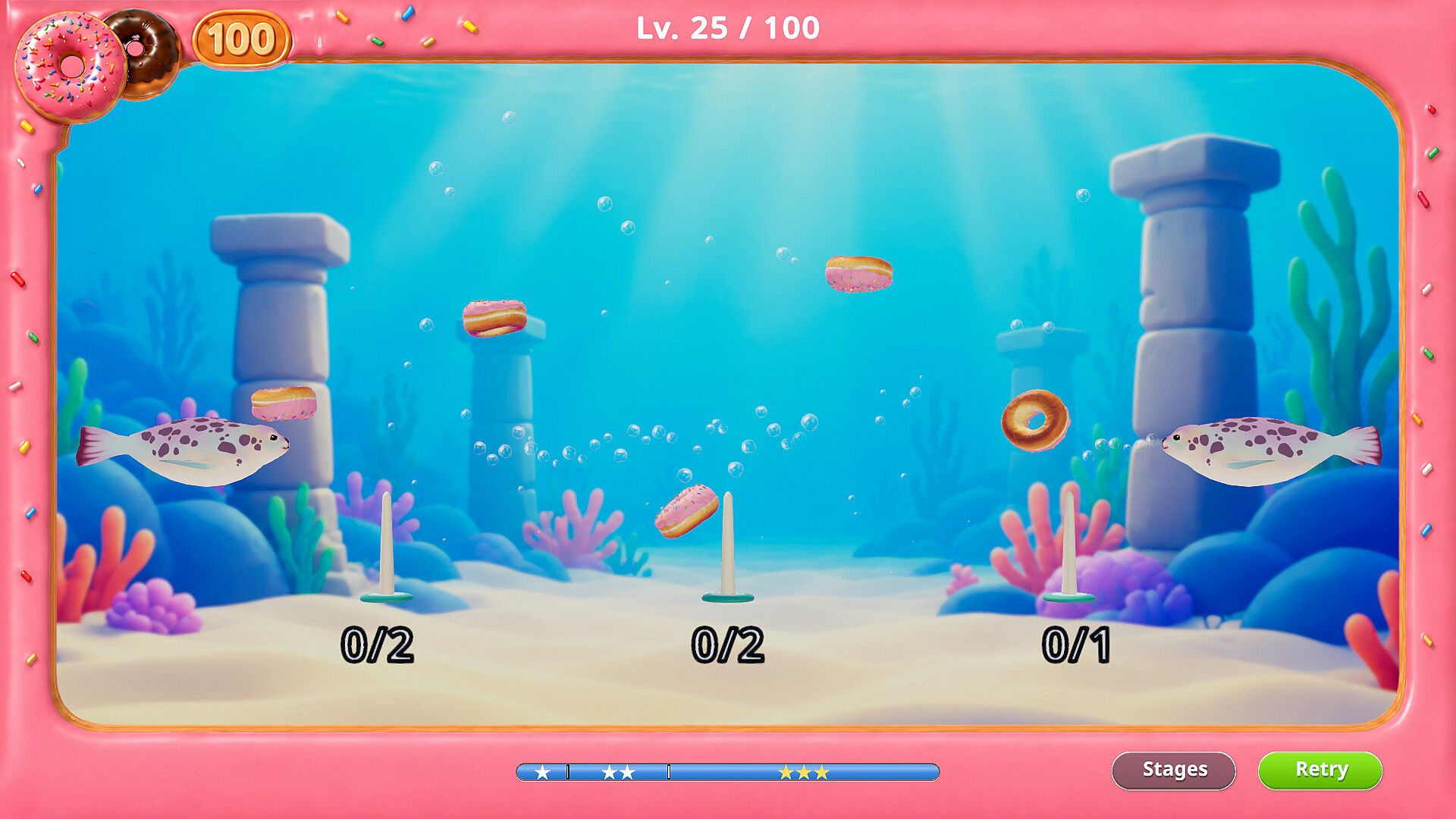
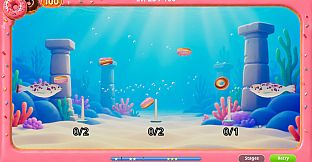
A secondary ring-toss element integrates into the physics system. Currents lift rings that must be timed to settle onto underwater pegs. Near-misses often prompt an immediate follow-up attempt, extending short rounds naturally. The entire loop stays accessible through keyboard or controller inputs, with feedback that feels immediate and tactile.
Game Modes
The game centers on single-player rounds built around the feeding and collection loop. Each attempt lasts a few minutes and focuses on maximizing score through efficient food delivery, creature merges, and ring placements. High-score tracking and progression systems reward repeated plays without requiring long commitments.
Customization options let players alter the visual mood between rounds. Backgrounds, frames, and ring styles can be swapped to create different atmospheres while the underlying mechanics remain consistent. This keeps the core experience fresh across multiple short sessions rather than introducing separate competitive or cooperative structures.
Progression and Collection
Turtle growth forms the main long-term hook. Levels advance from basic to advanced stages, altering appearance and improving feeding efficiency. Sea life spans more than thirty species, each with distinct physical properties that influence strategy when building combinations. Players manage inventory decisions carefully, choosing what to consume for immediate points versus what to retain for future variety.
Balance updates have refined spawning rates, merge rewards, and experience requirements to maintain steady pacing. These adjustments keep early runs engaging while scaling challenge as the turtle matures. The result is a self-contained loop that supports both quick dips and longer collection-focused sessions.
Is It Worth Playing?
Reception has been consistently positive across available reviews, with all entries rating the game favorably. The low entry price and short, repeatable rounds make it suitable for players seeking relaxed sessions that still reward attention to timing and physics. Those who enjoy casual puzzle toys or nostalgic mechanical games will find the current-driven interactions satisfying.
Support continues through patches that address balance and usability. A portion of revenue supports ocean conservation efforts, adding a tangible benefit for buyers interested in that aspect. The game suits adults revisiting retro toys, parents seeking simple shared experiences, or anyone looking for bite-sized physics play without complex systems or long tutorials.
Overall, Turtle Game delivers focused, replayable casual gameplay centered on precise current manipulation and creature management. Its straightforward design and positive feedback position it as a worthwhile pick for fans of indie physics experiences on PC.