






TV Network Simulator is a strategy and simulation game focused on building and managing a television network from its earliest stages. Players take on the role of a network executive, making decisions that shape programming, finances, and audience growth over time. The core loop revolves around long-term planning in a single-player environment where weekly outcomes directly influence the network's success or failure.
Gameplay
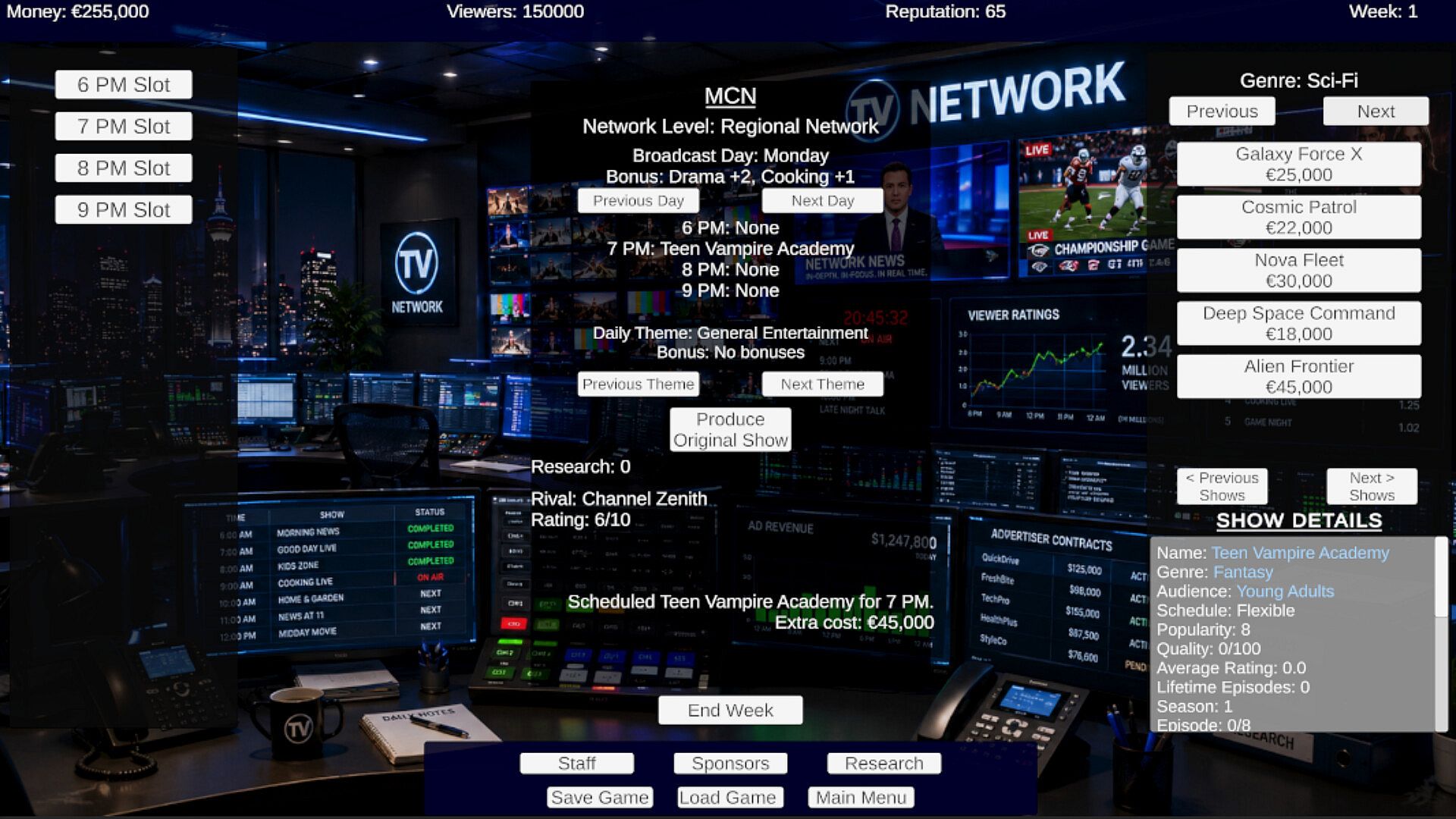
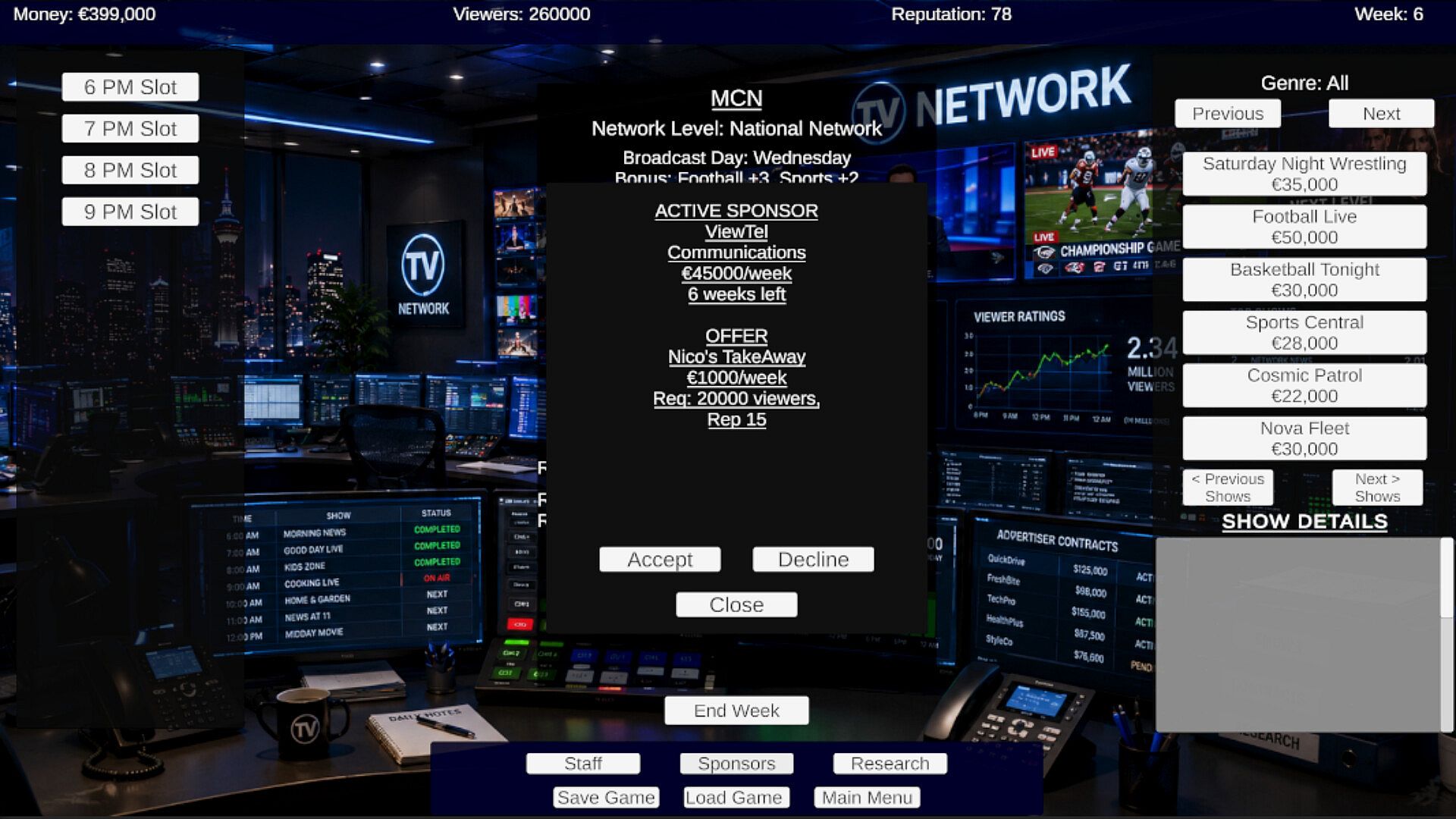
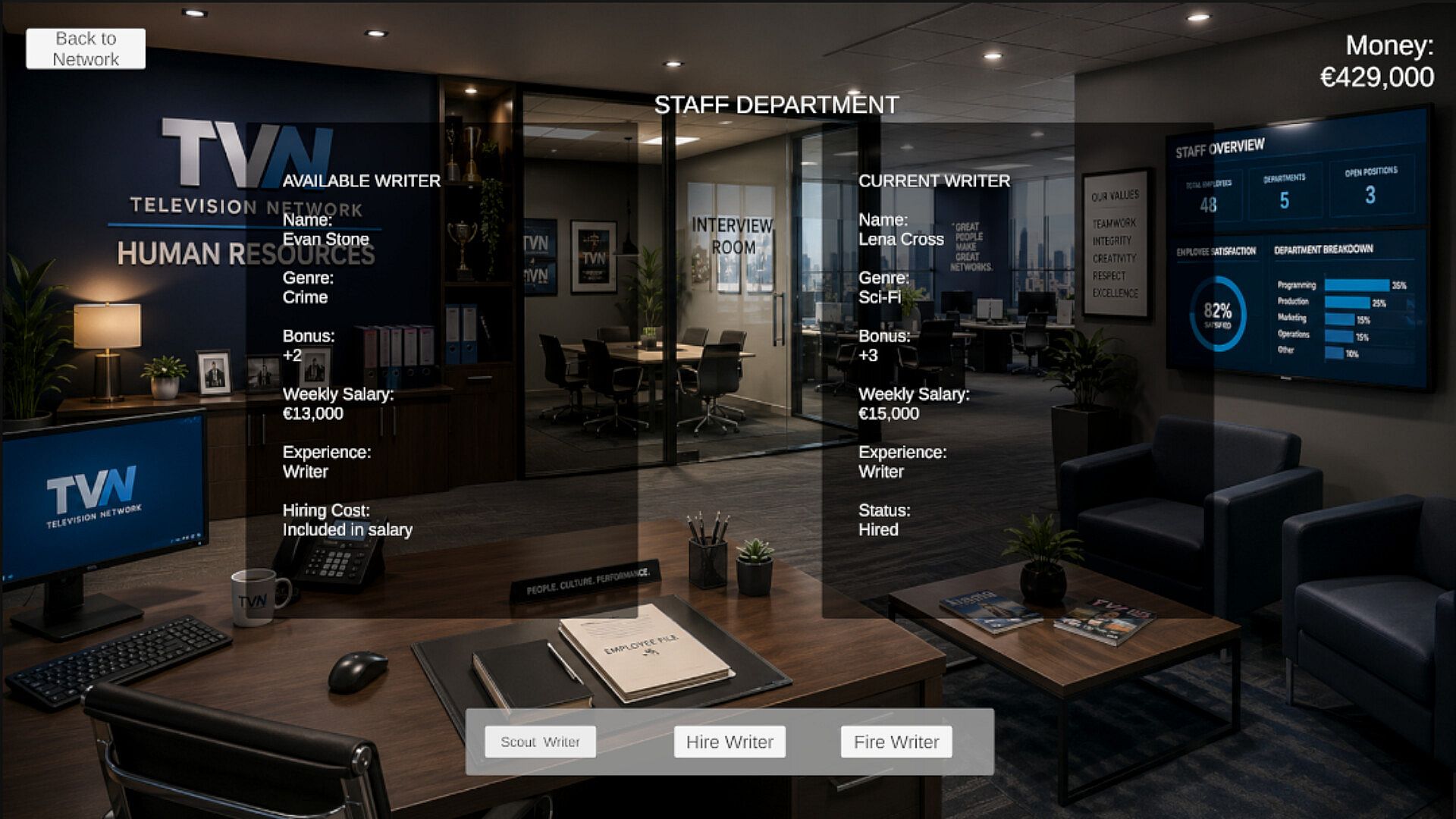
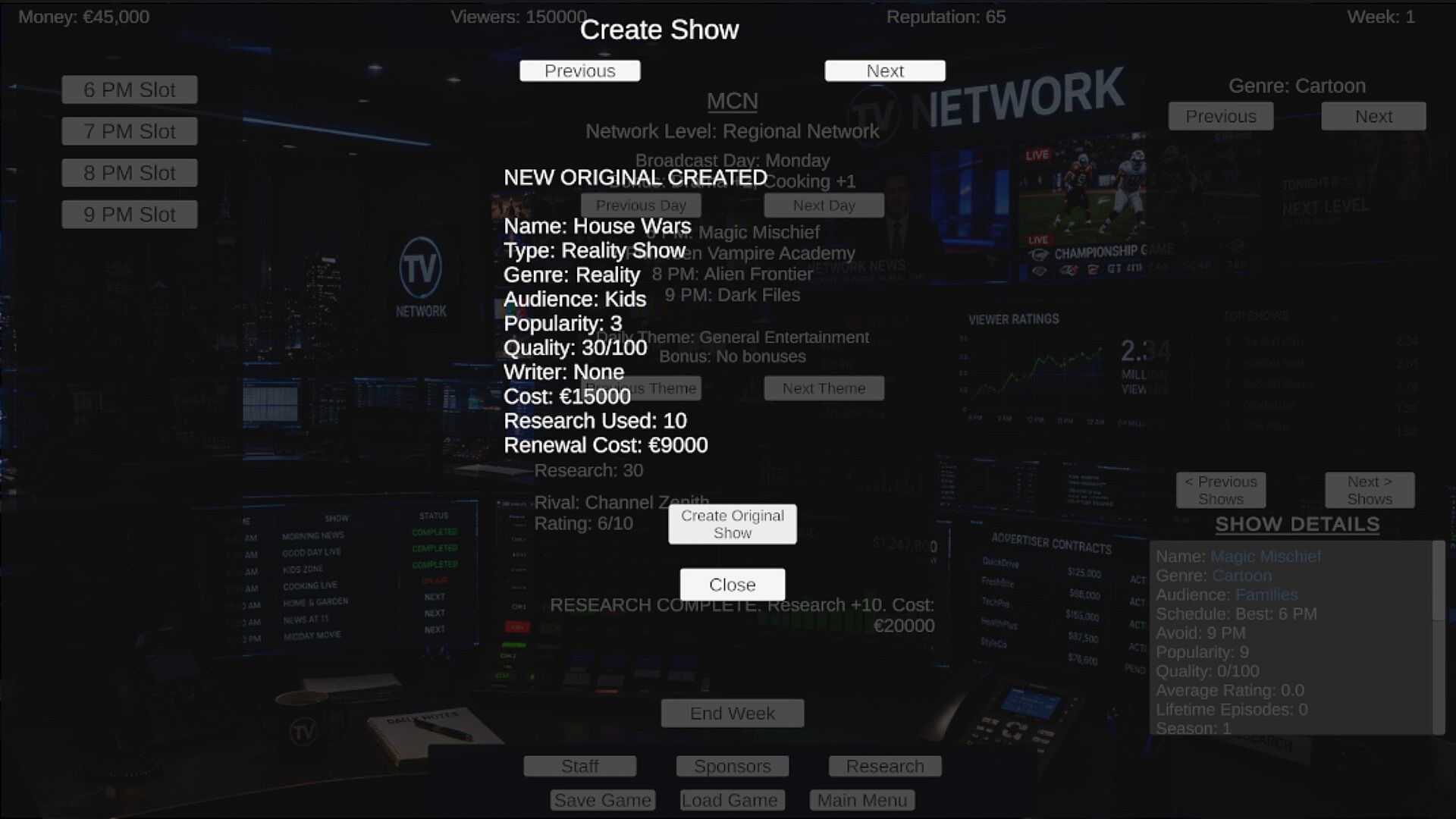
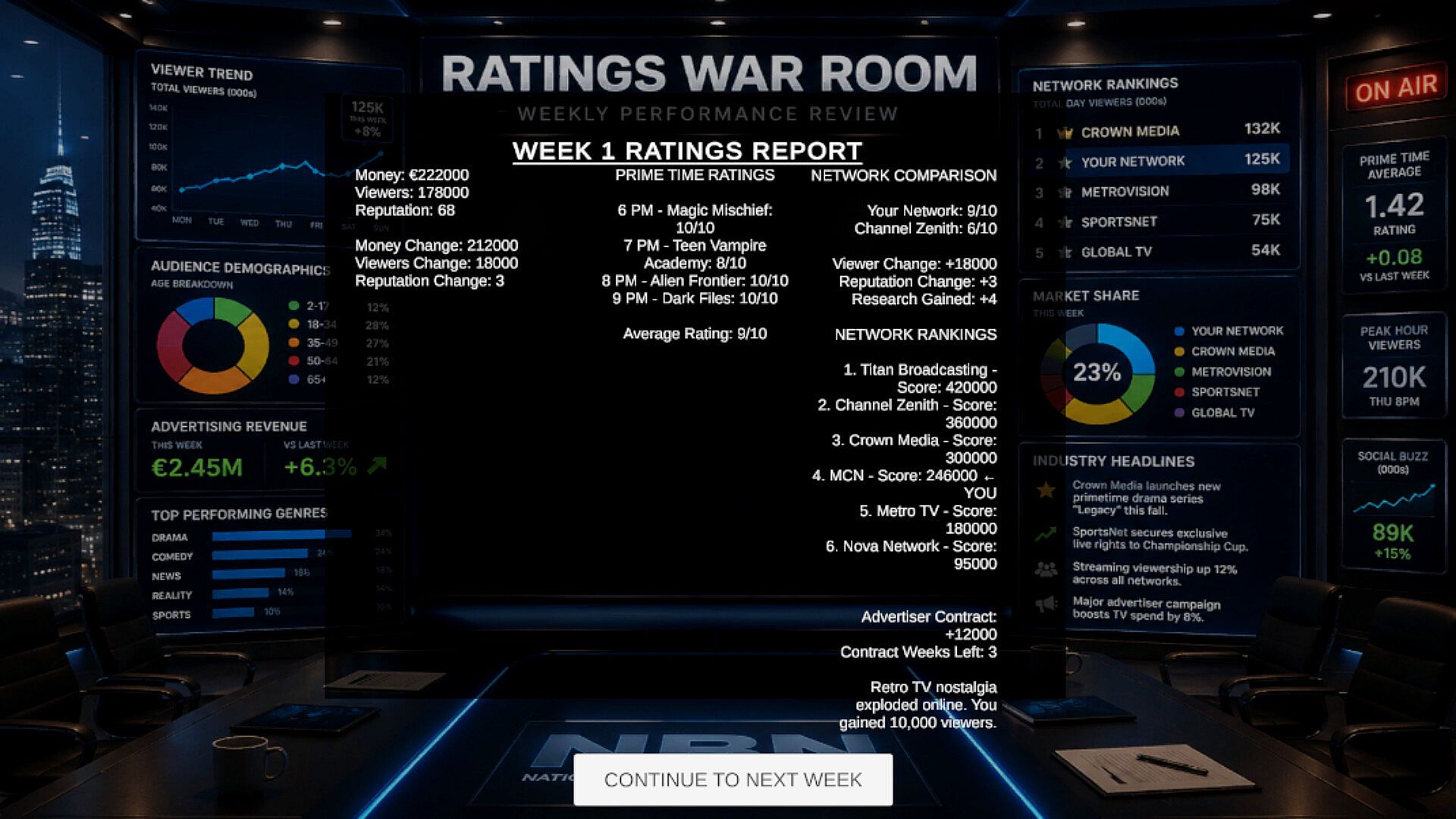
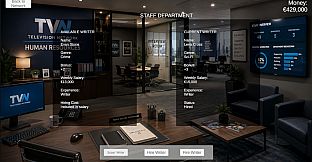
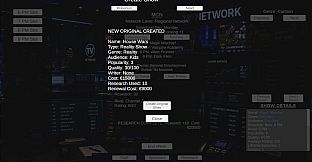
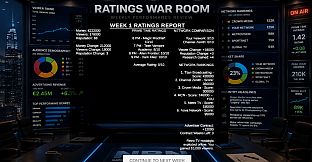
The gameplay centers on a detailed management system that tracks viewer numbers, revenue, and reputation each week. Players begin by selecting a network type and then acquire licensed content to fill broadcast slots. Scheduling requires careful consideration of time slots, as prime-time placements can boost visibility while poor choices lead to declining income. Research options allow development of new programming ideas, and hiring writers supports the creation of original shows. Sponsorship deals provide additional revenue streams, but they must align with the network's overall direction to maintain audience trust. Resource management plays a key role, with budgets affected by production costs and advertising income.
Progression builds through incremental improvements to the schedule and content library. Reputation grows when viewers respond positively to the lineup, unlocking further opportunities for expansion. The system emphasizes cause-and-effect relationships, where consistent audience retention supports larger investments in future seasons of programming.
Game Modes
The game operates as a single-player management experience without separate multiplayer or competitive modes. All activity takes place within one continuous campaign where the player oversees the network's development from startup to established broadcaster. The structure encourages repeated playthroughs through different network types and scheduling strategies, though no distinct named modes exist beyond the core simulation loop.
Key Mechanics
Weekly cycles form the backbone of decision-making, requiring players to adjust the broadcast schedule based on previous results. Content licensing and original production run in parallel, with writers contributing to unique shows that differentiate the network from competitors. Sponsor contracts add layers of financial strategy, as they can provide steady income but may limit creative freedom if chosen poorly. Reputation serves as a secondary metric that influences available deals and viewer loyalty over extended periods.
Research trees expand the range of available content, allowing gradual specialization in genres or formats. The interplay between audience data and financial reports guides whether to renew popular shows or pivot toward new directions.
Is It Worth Playing?
TV Network Simulator appeals to players who enjoy detailed tycoon-style management and incremental progress systems. The emphasis on scheduling and resource allocation creates a focused experience centered on optimization rather than action or narrative elements. With the game still in development and a demo available for testing core systems, interested players can evaluate the weekly management loop firsthand before the full release. Those drawn to simulation titles that reward careful planning and adaptation to feedback will find the mechanics align closely with that preference. The absence of established player reviews at this stage means expectations should center on the described management features rather than unconfirmed depth or polish.











