


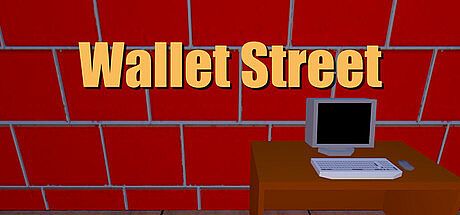





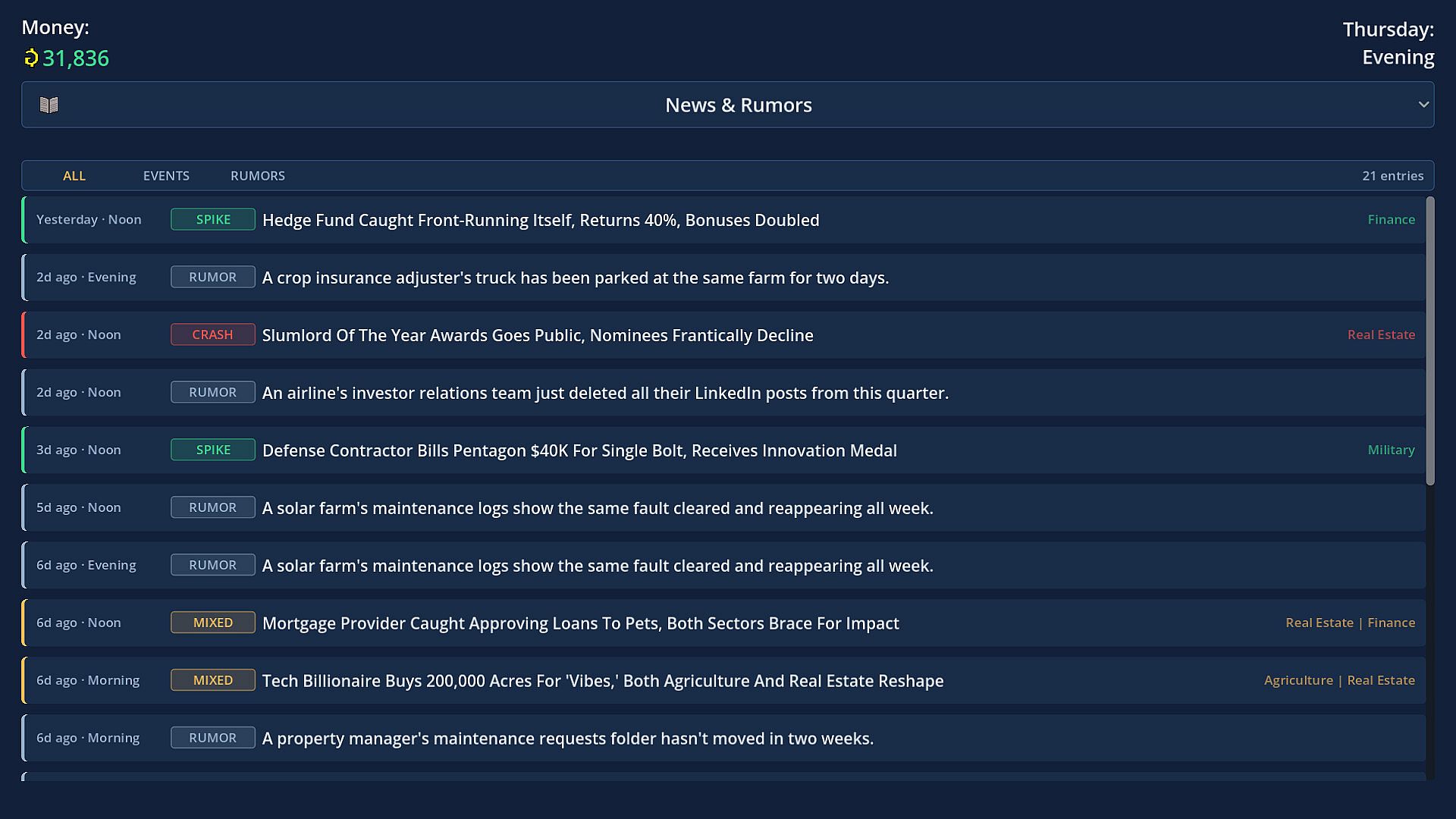




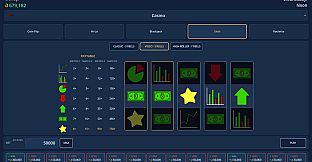
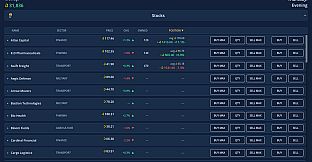

Wallet Street is a first-person stock market simulation game in the indie casual and simulation genres for PC. It places players in a daily routine where the goal centers on building extreme wealth through trading and other available actions, with the constant risk that mounting debt could end the climb.
Gameplay
The core loop revolves around a structured day divided into three time slots. The in-game clock advances only when the player chooses an action, which creates a deliberate pace for managing time and resources. Available actions include heading to work for steady income, taking a nap to restore energy, or turning on the television for passive downtime. Between these commitments, players can engage in stock trading for as long as desired without pressure from a ticking clock.
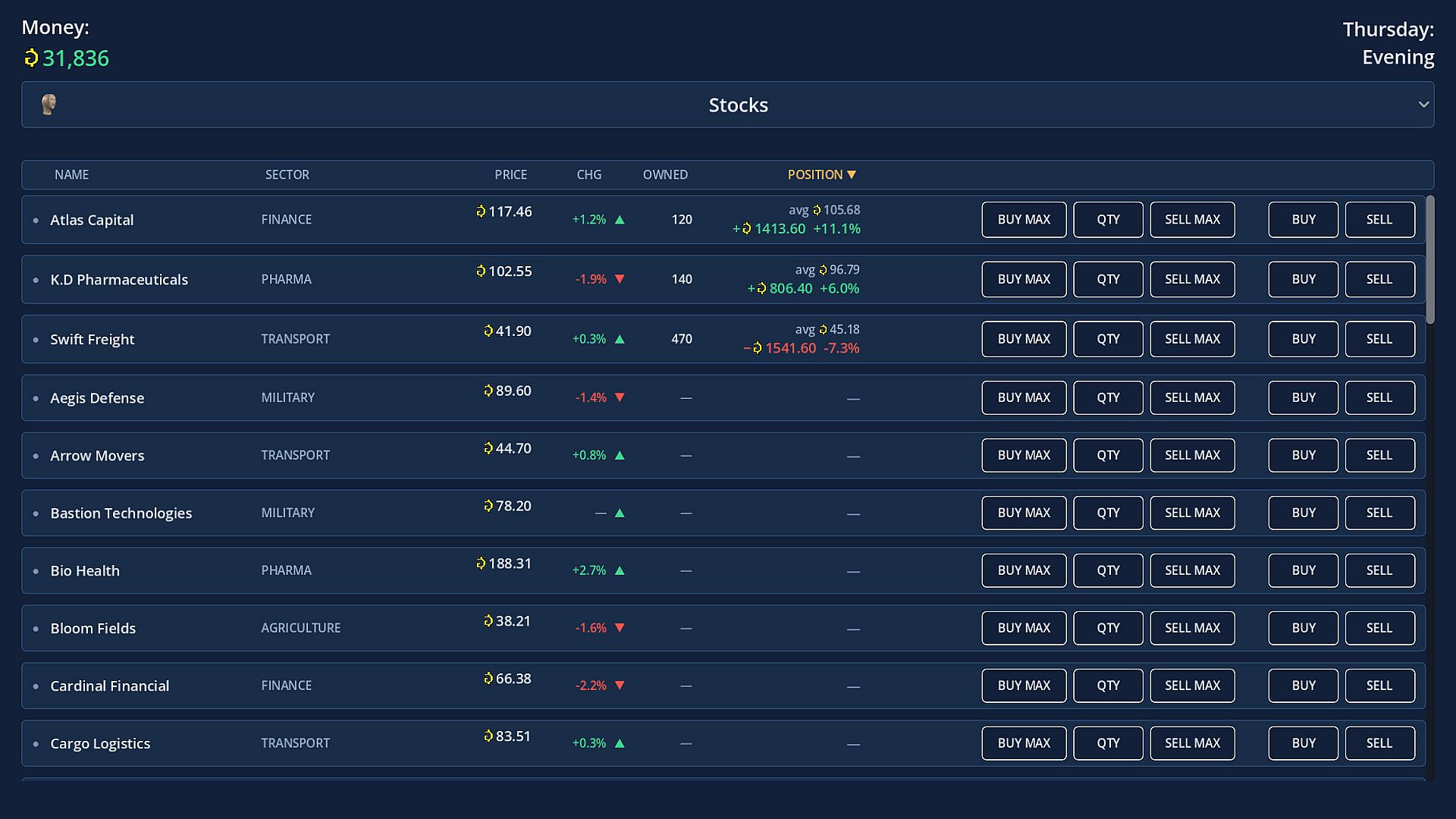
This first-person perspective frames the experience as a personal journey through financial decisions rather than an abstract spreadsheet exercise. Trading forms the central activity, allowing extended sessions focused on market movements while the rest of the day provides structure and recovery options. The simulation emphasizes climbing toward ownership of the planet through consistent progress or facing the consequences when debt takes over.
Game Modes
Wallet Street operates as a single-player simulation without separate named modes or multiplayer components. The entire experience builds around the repeatable daily cycle of time slots and trading opportunities. Players progress by balancing work, rest, and market activity to accumulate wealth, with the outcome determined by how effectively they navigate the available choices each day.
The structure supports open-ended play where the focus remains on personal strategy within the fixed daily framework. No additional game modes alter this foundation, keeping the emphasis on the core loop of time management and stock market engagement.
Daily Structure and Progression
Each day presents a clear set of options that influence both short-term gains and long-term financial health. Work provides reliable earnings to fund trades, while naps and television offer ways to pass time without active effort. Trading sessions can stretch across multiple in-game periods once the clock pauses, giving players freedom to analyze and act on market conditions at their own speed.
Progression ties directly to wealth accumulation. Successful trades build capital that can be reinvested, pushing the player closer to the ultimate target of planetary ownership. Poor decisions or overextension lead toward debt dominance, creating a natural tension that shapes each run through the daily routine.
Is It Worth Playing?
Wallet Street suits players who enjoy casual simulation games built around financial strategy and time management in a first-person setting. The mechanics reward deliberate pacing and repeated engagement with the stock market while the three-slot daily structure prevents the experience from feeling entirely open-ended or overwhelming.
Those drawn to indie titles that blend simulation elements with a clear wealth-building objective will find the core loop consistent and focused. The absence of extra modes or complex systems keeps the emphasis on trading decisions and daily choices, making it a straightforward option for fans of the genre who prefer a personal, low-pressure approach to market simulation.












