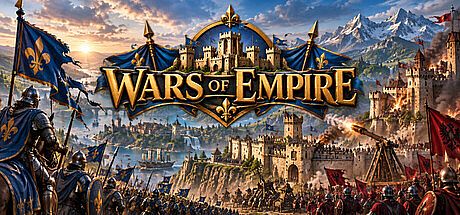


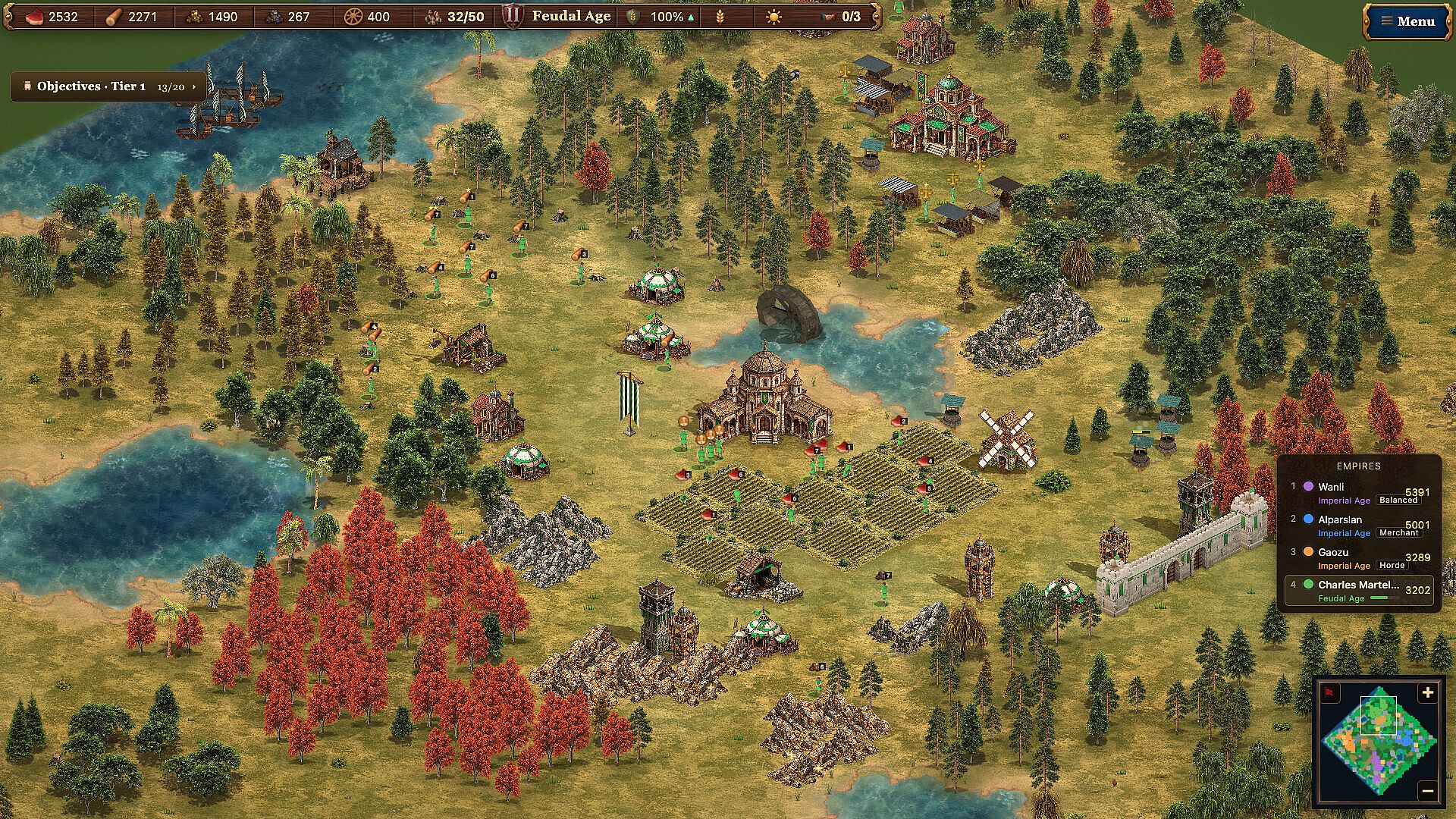
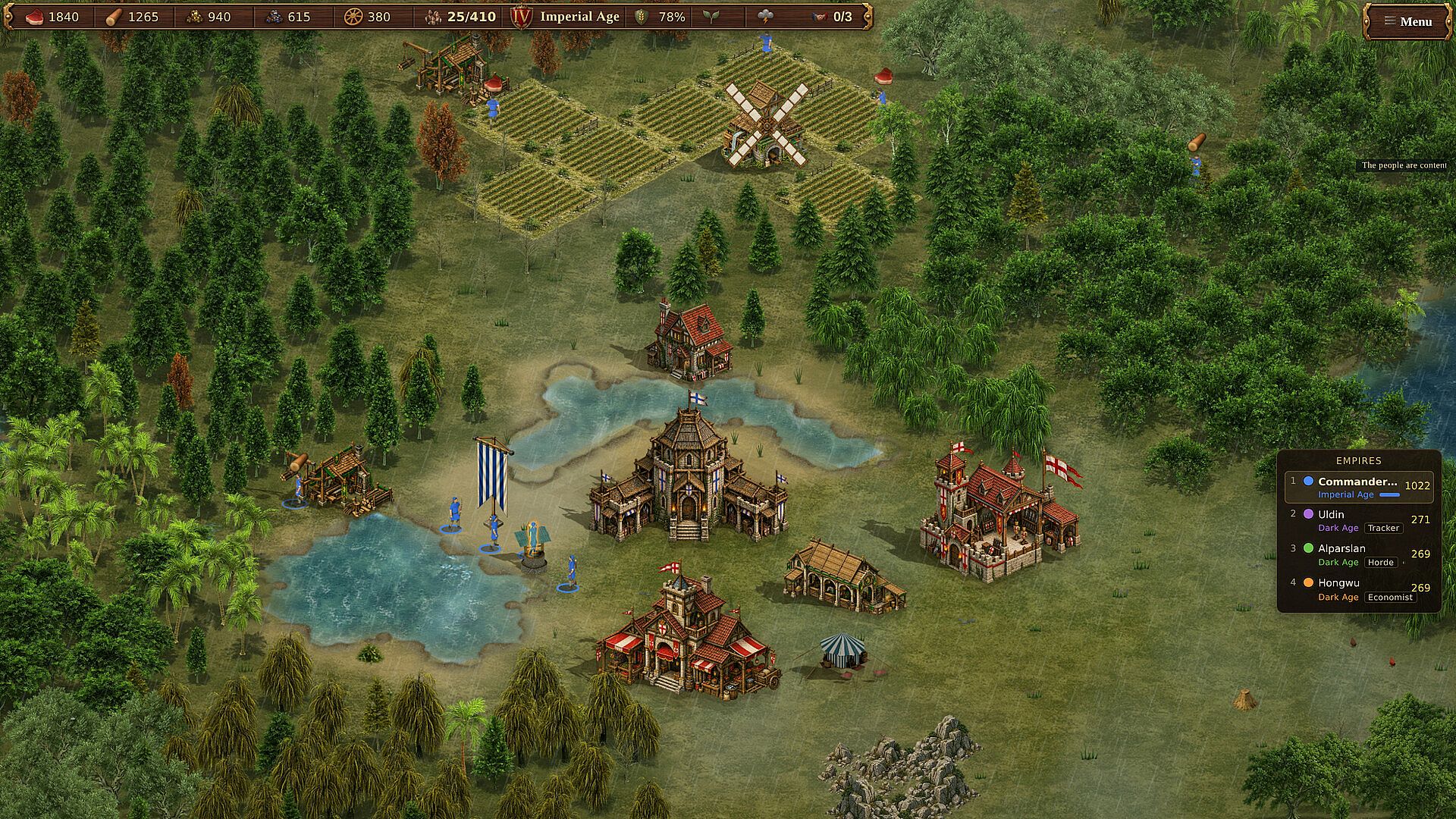
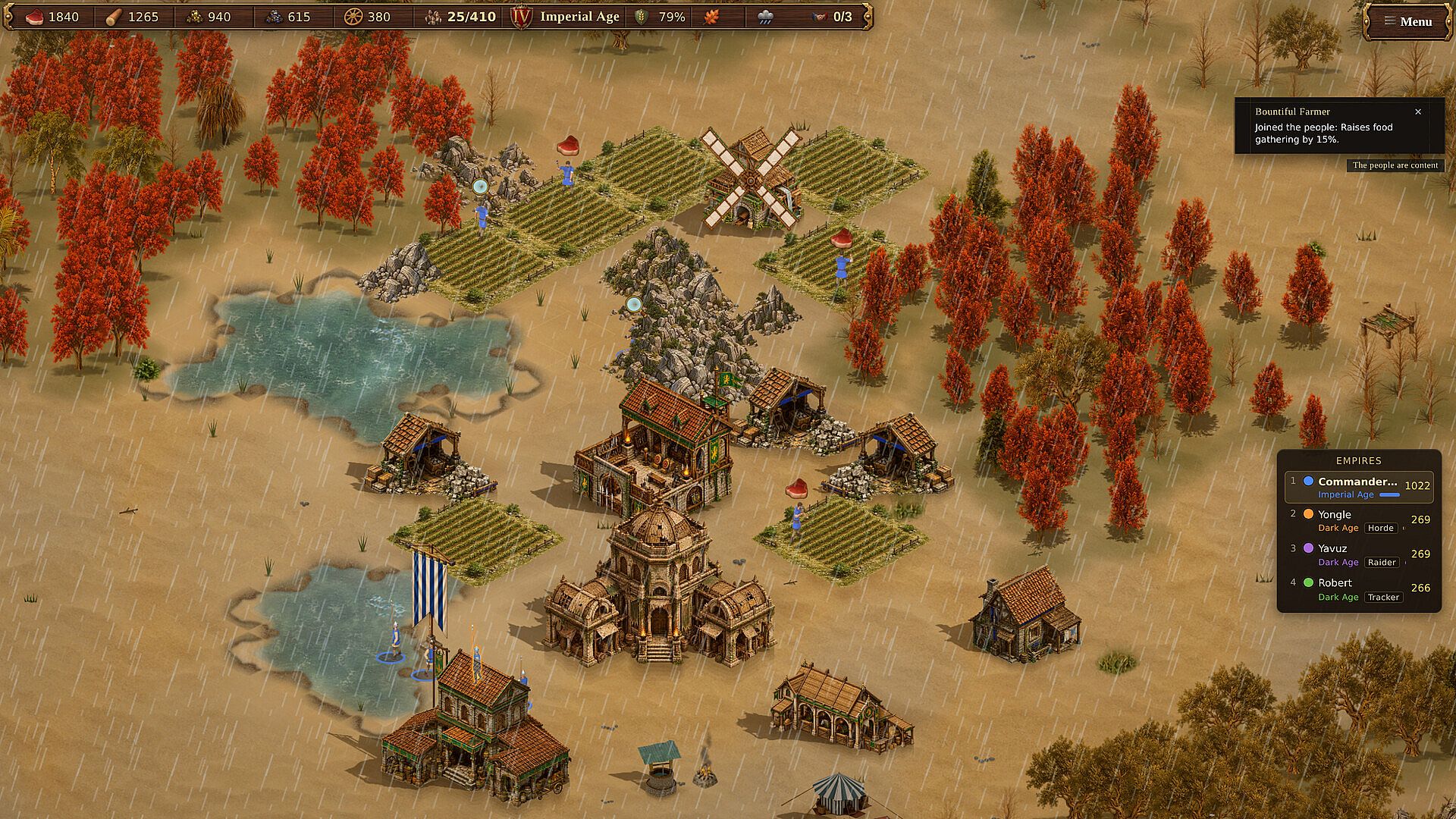
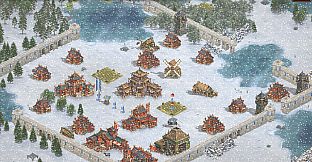
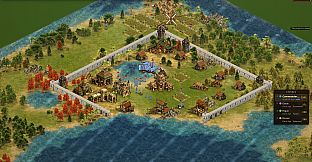
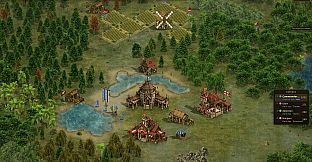
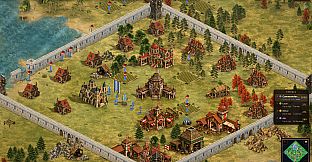
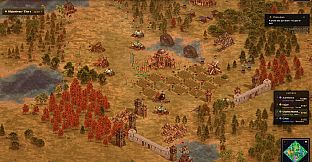
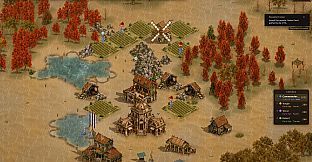
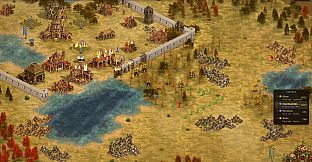
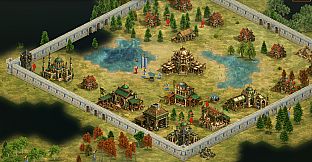
Wars of Empire is a 2D isometric real-time strategy game built around economy, expansion and siege warfare. Each match begins with five villagers and a town centre, and develops from there into an empire.
Economy and development
Progression runs through four ages: Dark, Feudal, Reform and Imperial. Each age unlocks structures the previous one could not support.
Sixty-seven technologies are distributed across the buildings that research them, and each produces a measurable effect in play. Blacksmith upgrades apply in combat; university research extends the range of defensive towers.
Villagers promote as they work, and named notables join the village over time, each carrying a permanent bonus.
Warfare
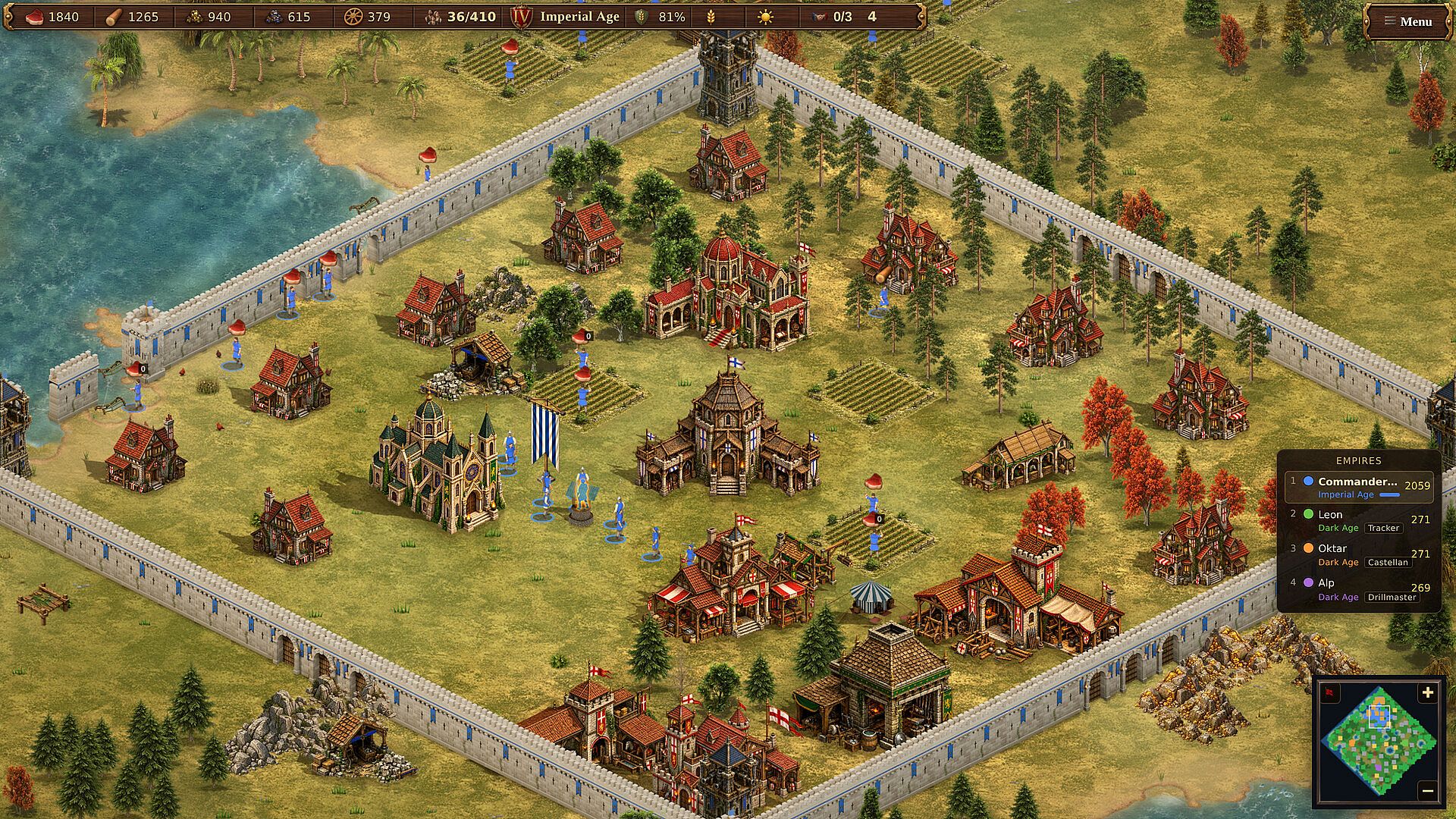
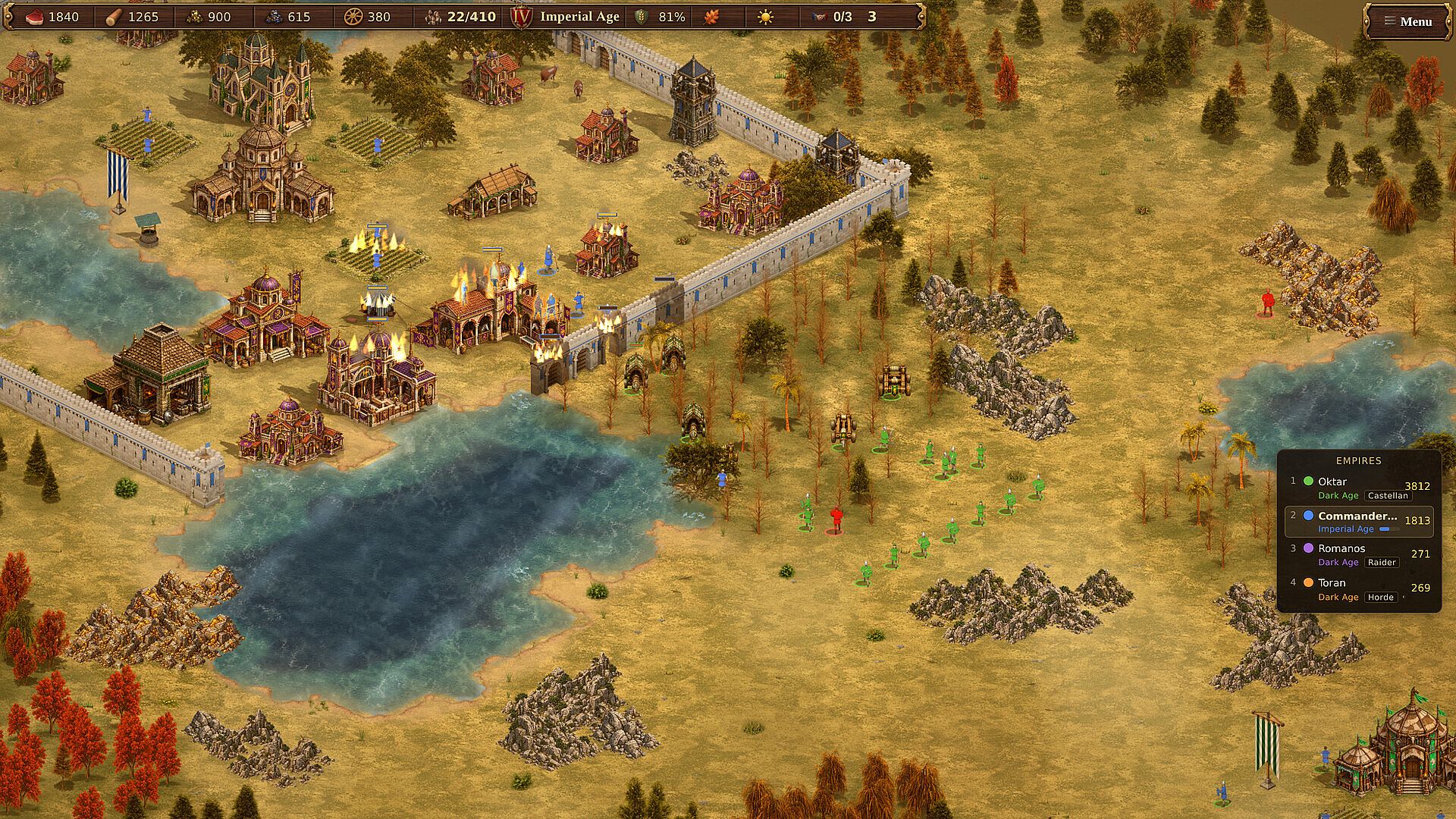
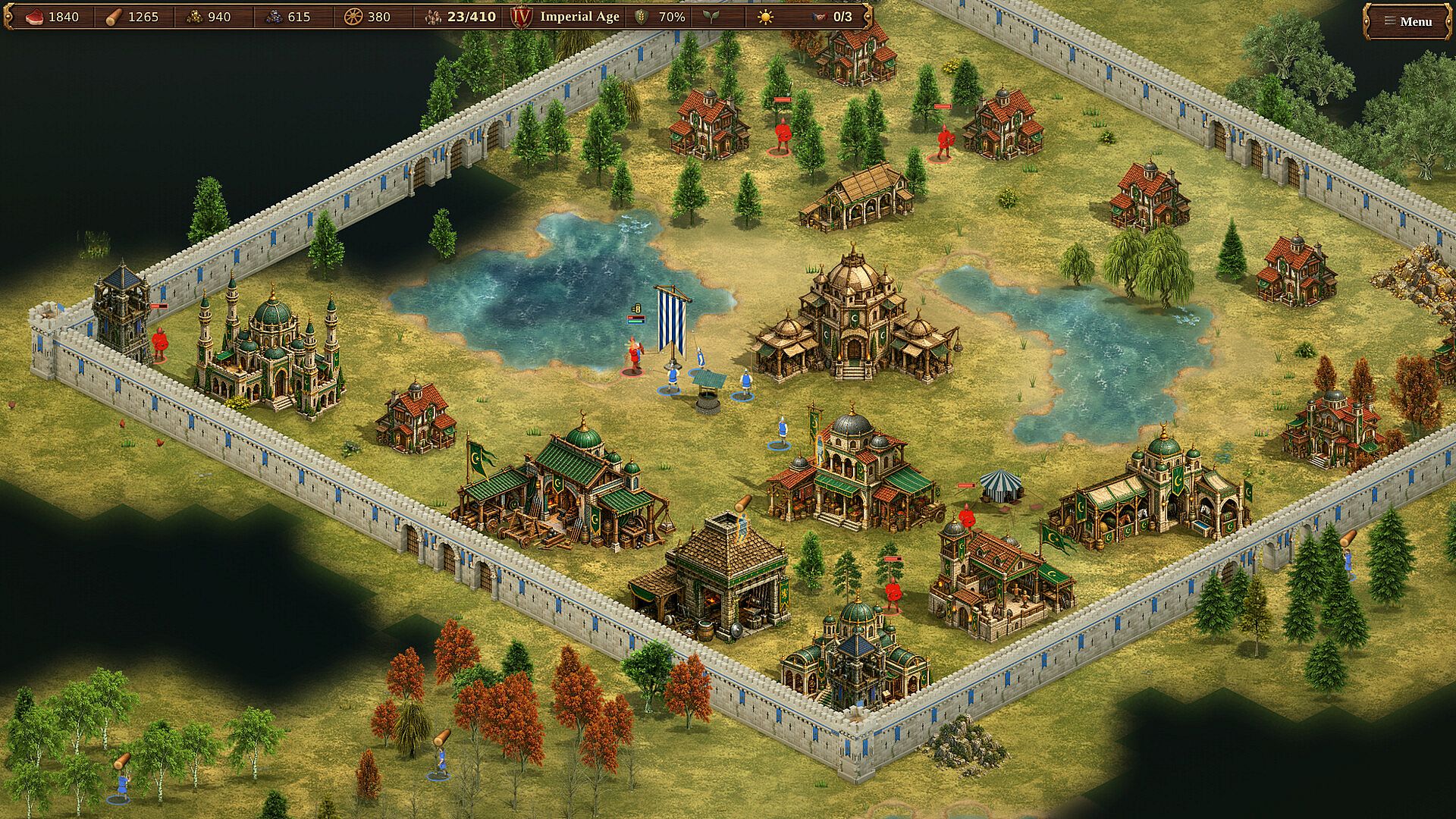
Barracks produce infantry and archers. The siege workshop produces rams, onagers and scorpions for use against player-built fortifications: walls and gates placed section by section, three tiers of tower, and a castle with salvo fire.
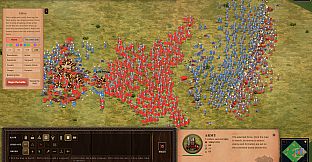
Twenty men drilled together form a company, and a company can break. Formations and stances govern behaviour without direct input.
An army that marches across the map arrives tired, while the defender does not, so the approach costs something before the first blow lands. A broken army leaves runners, and runners who are caught are held for ransom rather than killed. A town can also be taken without touching its walls: a ring closes around it and hunger settles the matter.
Every soldier wears the gear of the civilisation that raised him, at the armour tier his own smithy has researched, and his name says which tier that is. A line of troops shows what has been paid for.
The sea
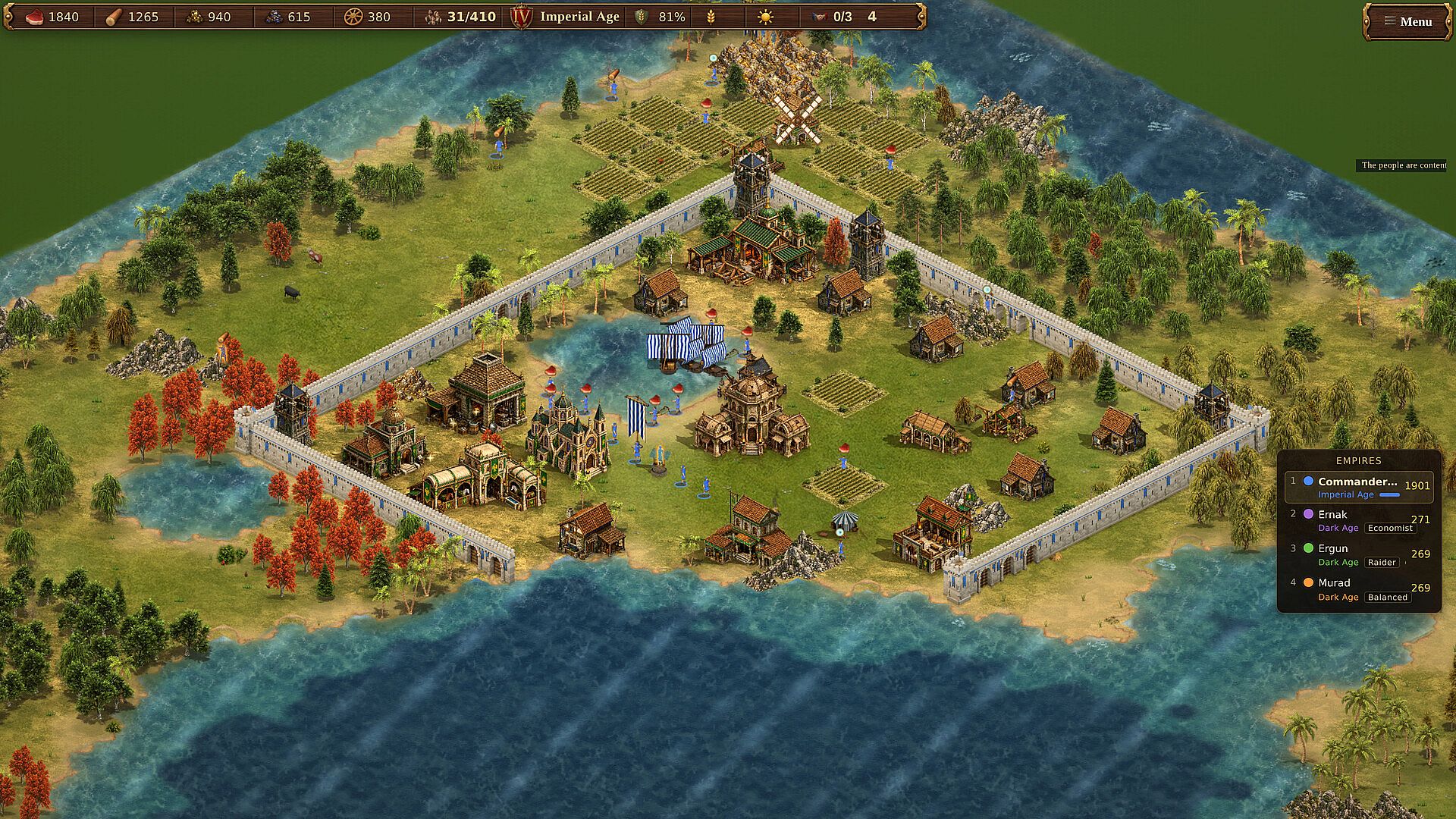
Warships take the same orders and technologies as the land army, turn to face the way they sail, and sink rather than vanish. Fishing boats work the shoals and transports carry troops between shores. Pirates arrive in waves along the coast.
Civilisations
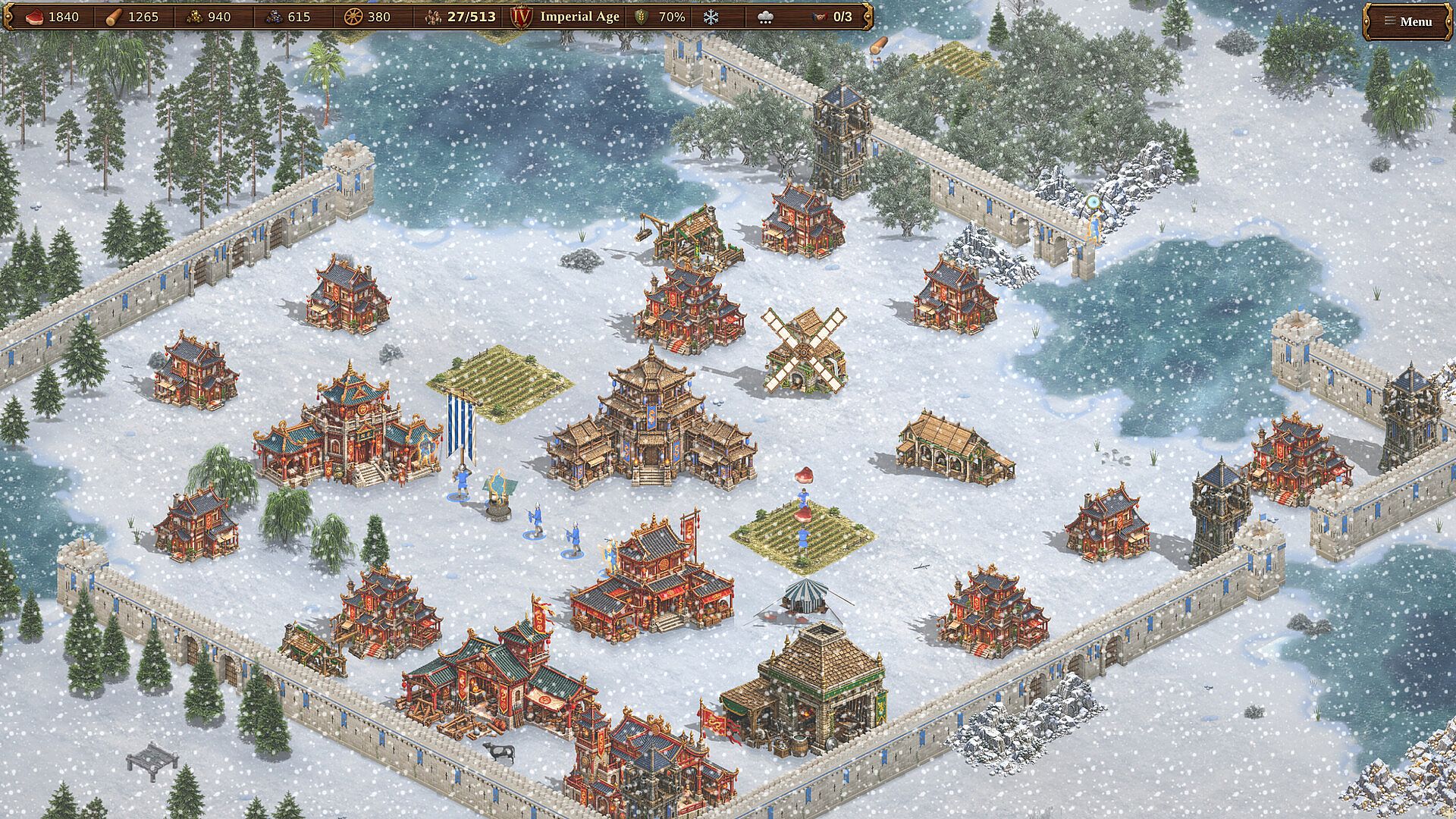
Six playable civilisations: Ottomans, Byzantines, English, Chinese, Huns and the WOE. Each has distinct architecture, a distinct army composition, its own unit kit and its own voice set.
Twenty-two troops carry a civilisation's own name rather than the common one: the Janissary, Sipahi and Akinji of the Ottomans, the Cataphract and Varangian Guard of the Byzantines, the Longbowman and Knight of the English, the Chu Ko Nu and Zhanmadao of the Chinese, the Tarkan and Alp of the Huns. A rename changes no number; it changes who is standing there. The WOE is a balanced civilisation without specialisation, and wears the common gear.
Historical campaigns
Three prepared scenarios, each on a hand-built board with its own mission chain: The Conquest of Constantinople, The Great Wall and The Hun Raids.
Game modes
Last Banner Rival empires attack. Winning means bringing them down one by one while the town centre holds to the end.
The Arena Resources are unlimited and the match opens in the Imperial Age, so the army comes before the economy.
Common Bounty Every wood, mine, lake and flock sits in one fertile ground at the centre of the map. The home ground carries nothing, and the rival is at the centre too.
Golden Age Nobody attacks anybody. Winning means becoming the most advanced civilisation of the age, along a chain of development tasks.
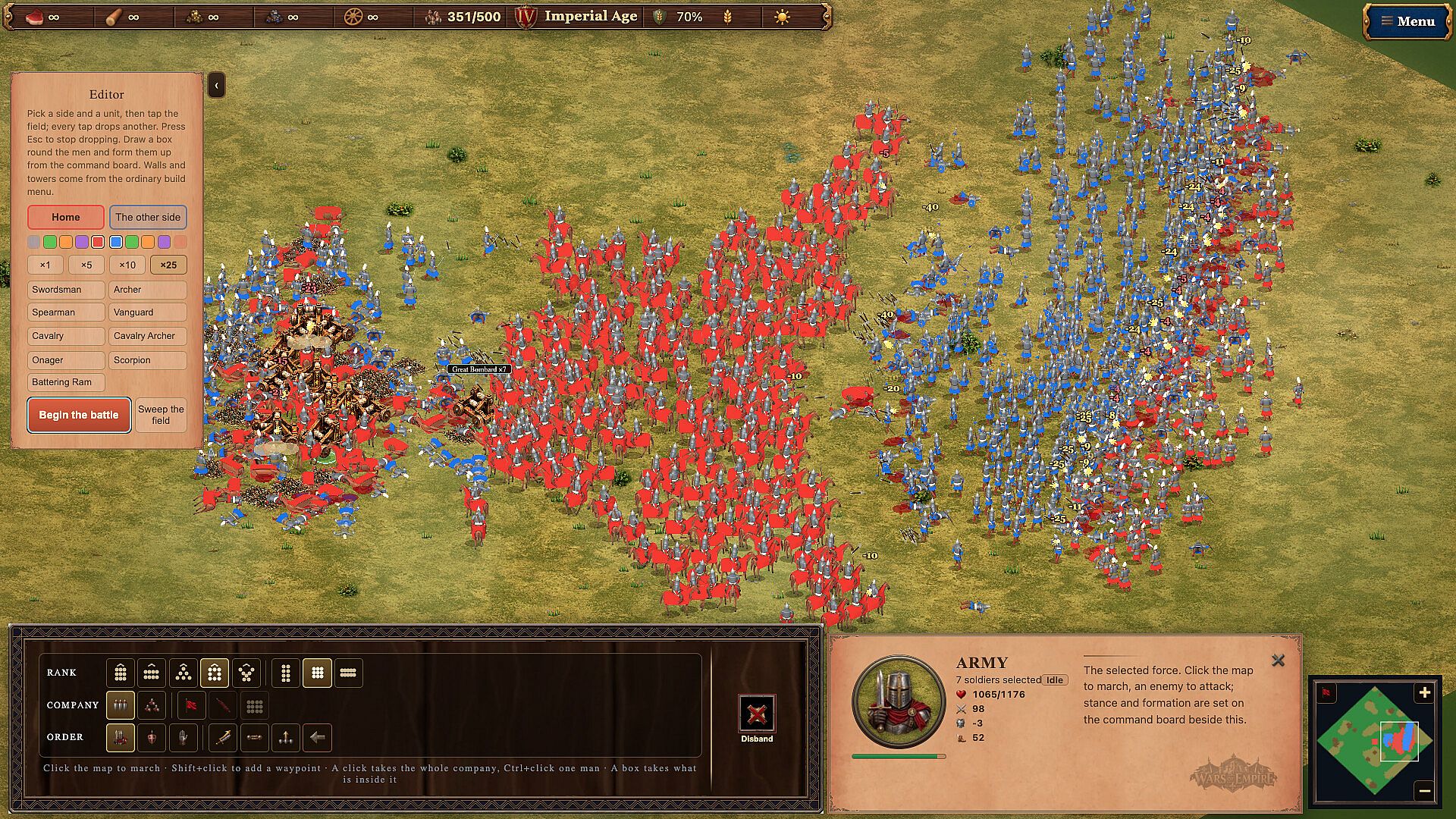
Tactical Arena A sandbox rather than a match: a bare plain, any number of any troop on either side, walls raised for a gateway fight.
Map generation
Maps are procedurally generated across three layouts (land, island, mixed), three terrain types (balanced, forest, rocky) and three sizes. Five optional geographic rules change what the board demands: Inland Sea, Archipelago, One Crossing, Ore Basin and Famine.
The world in motion
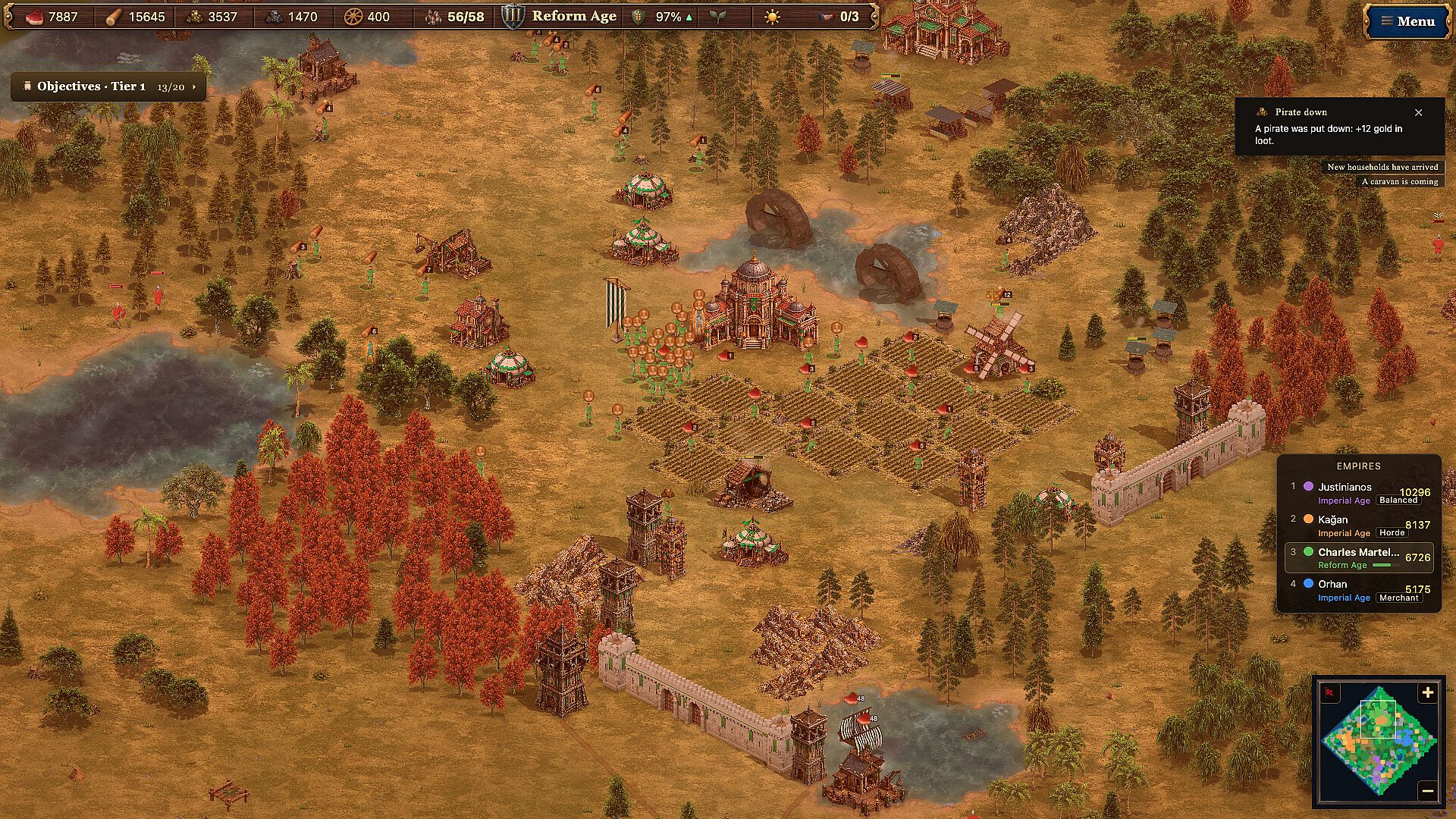
Seasons turn during a match, and the day runs to night. Night darkens the board itself, with windows, lanterns and braziers lit across the town. The optional Night Raid setting opens the match in the late afternoon, shortens the days and sends rival and pirate raids into the dark; it pays 25% more renown.
Weather is chosen at the start and charges for the sky: blows, gathering, pace, production, morale and sight. Fires spread and need putting out. Disasters and dilemmas arrive during play, and trade caravans set out from the corner banners.
People vote with their feet. Prosperity draws them in and its absence drives them away, so morale and faith are held rather than owned.
Online multiplayer
Live matches are conducted through a lobby system. Each participant commands their own settlement, with fog of war calculated independently per player. Host migration allows a match to continue when the hosting player disconnects.
A seasonal ranking records results against AI opponents, and is partially reset at the beginning of each season. Live matches are recorded separately; that second table is not published during Early Access, and will open once there is a population to fill it.
Map editor
The map editor allows players to create, name and store custom boards for use in matches.