




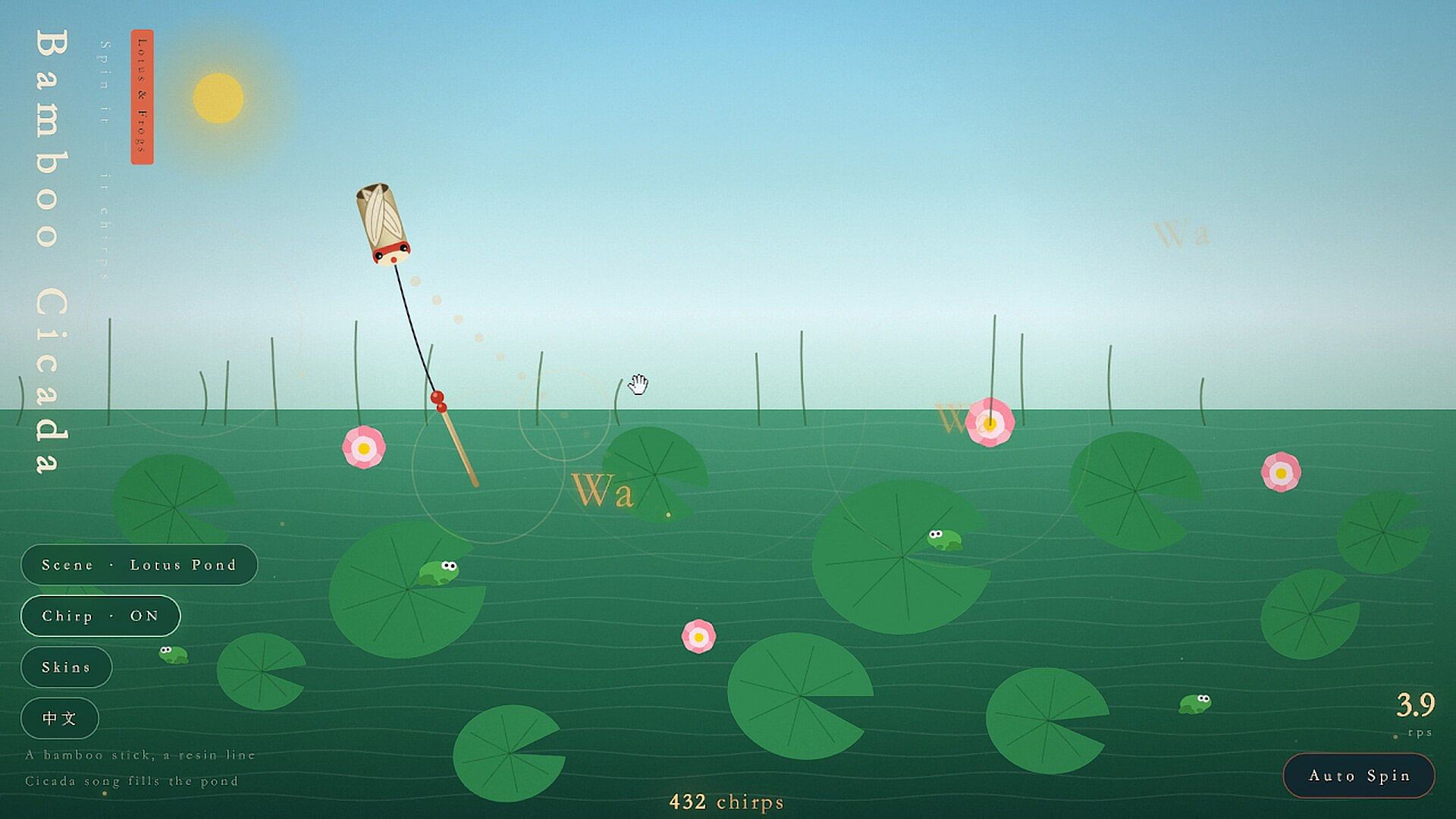
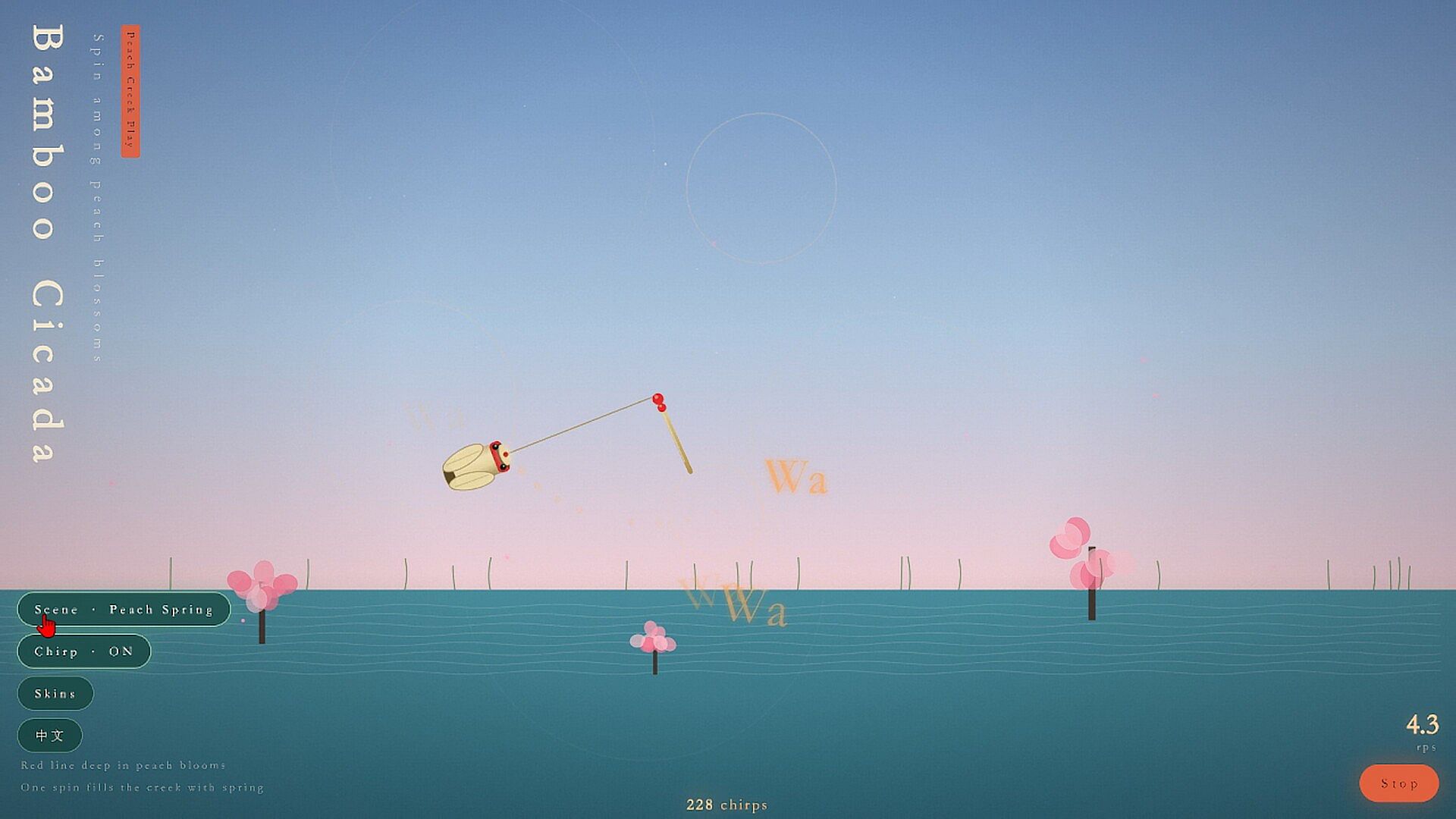
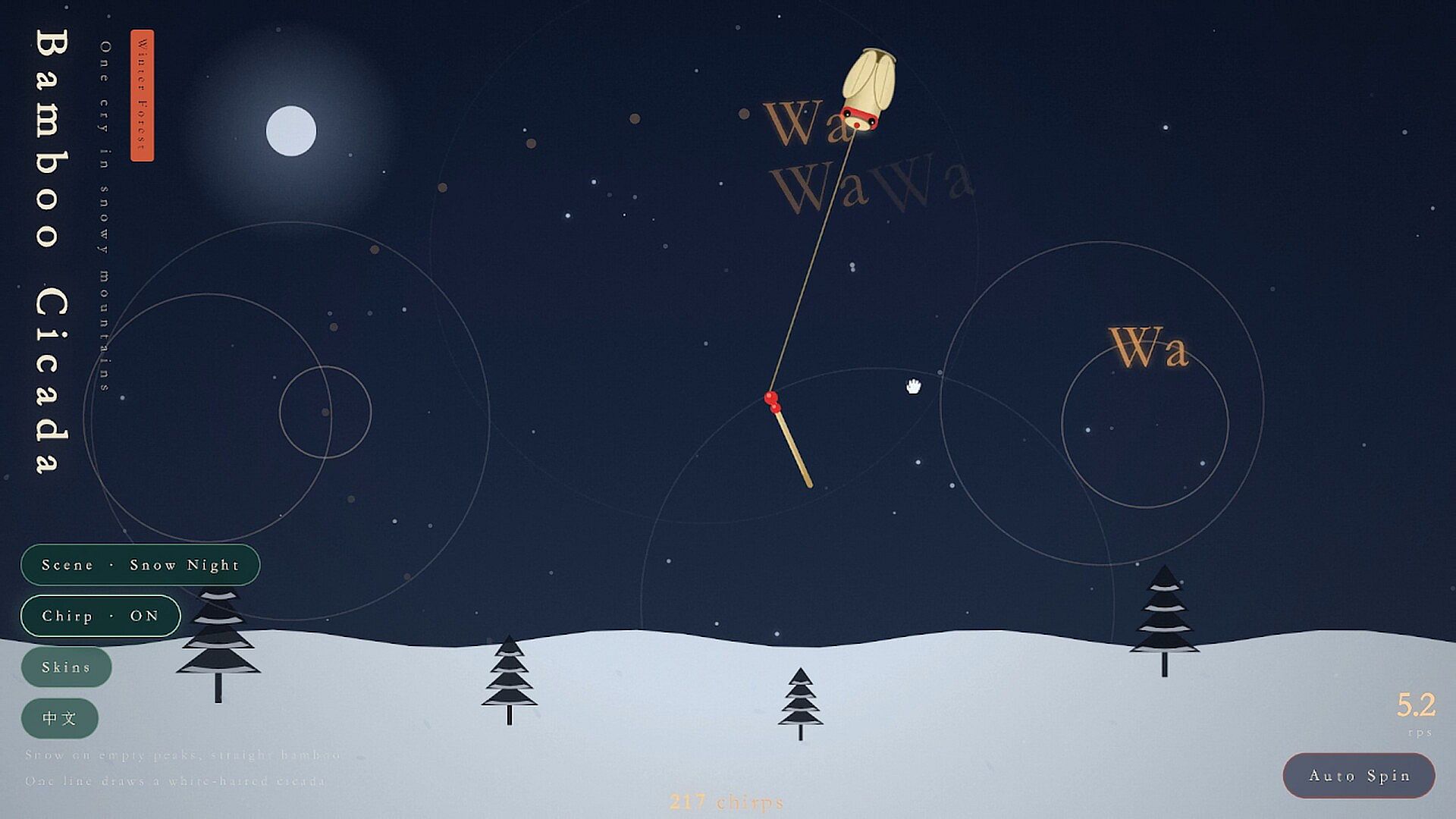
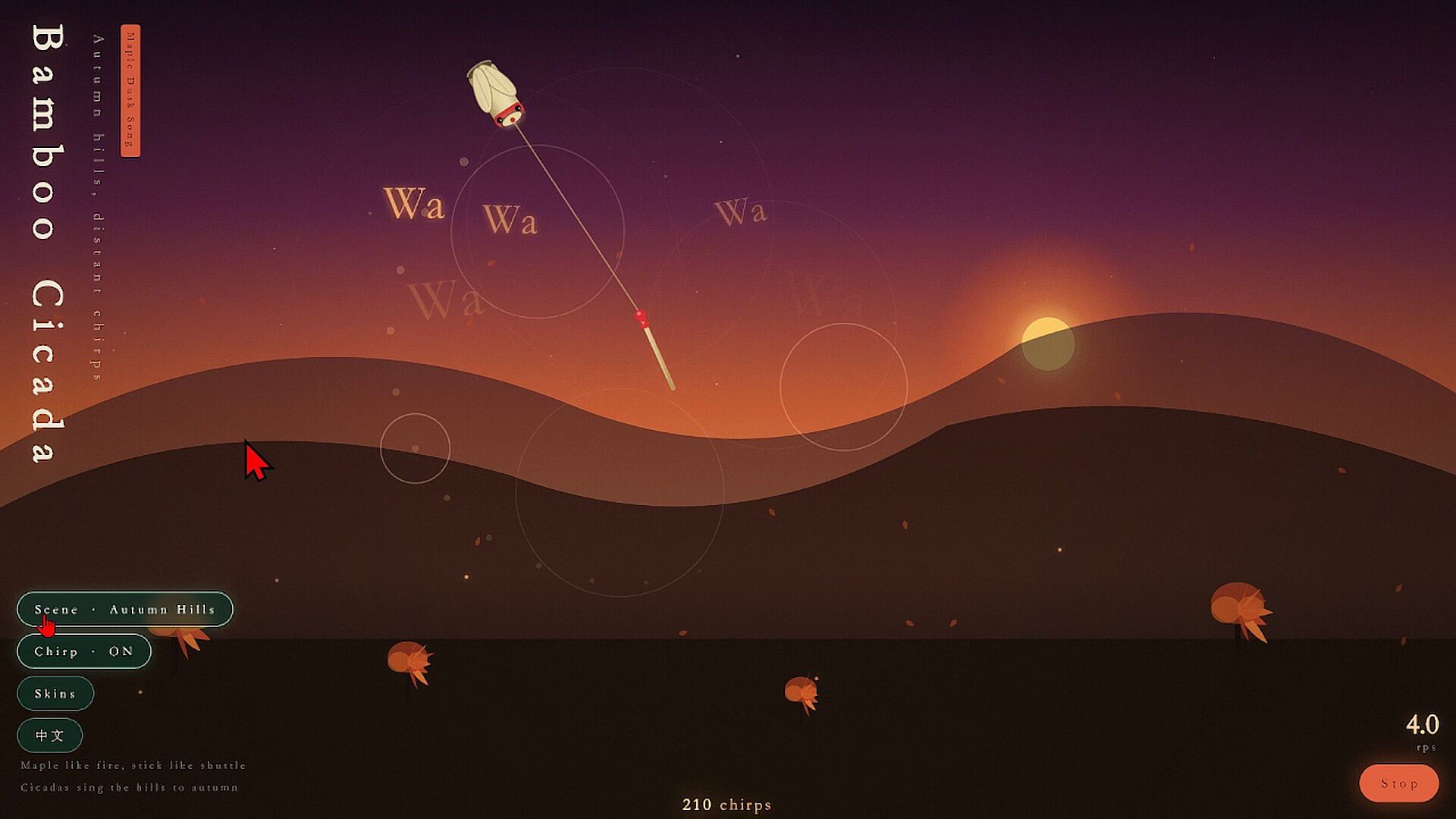
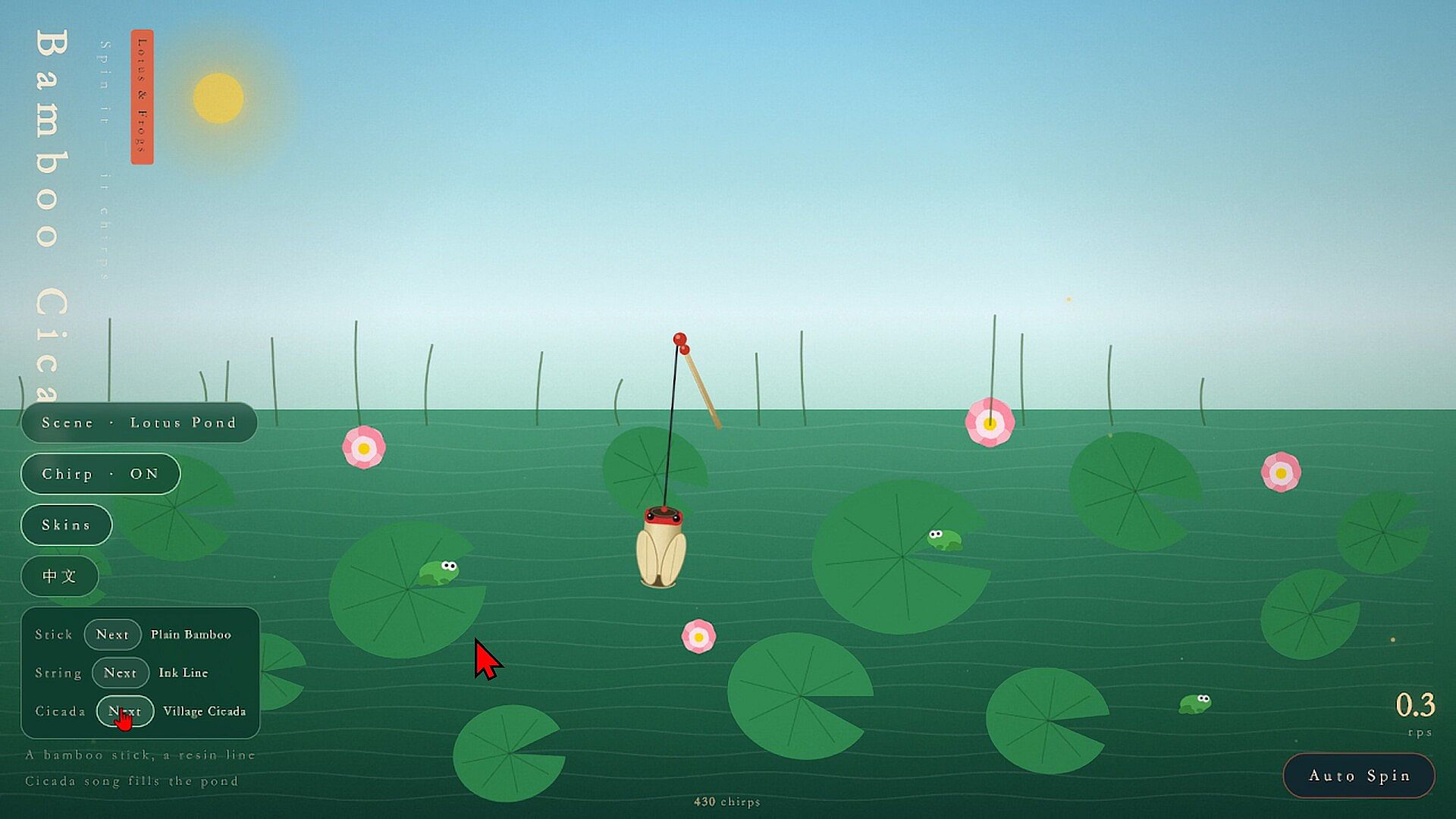
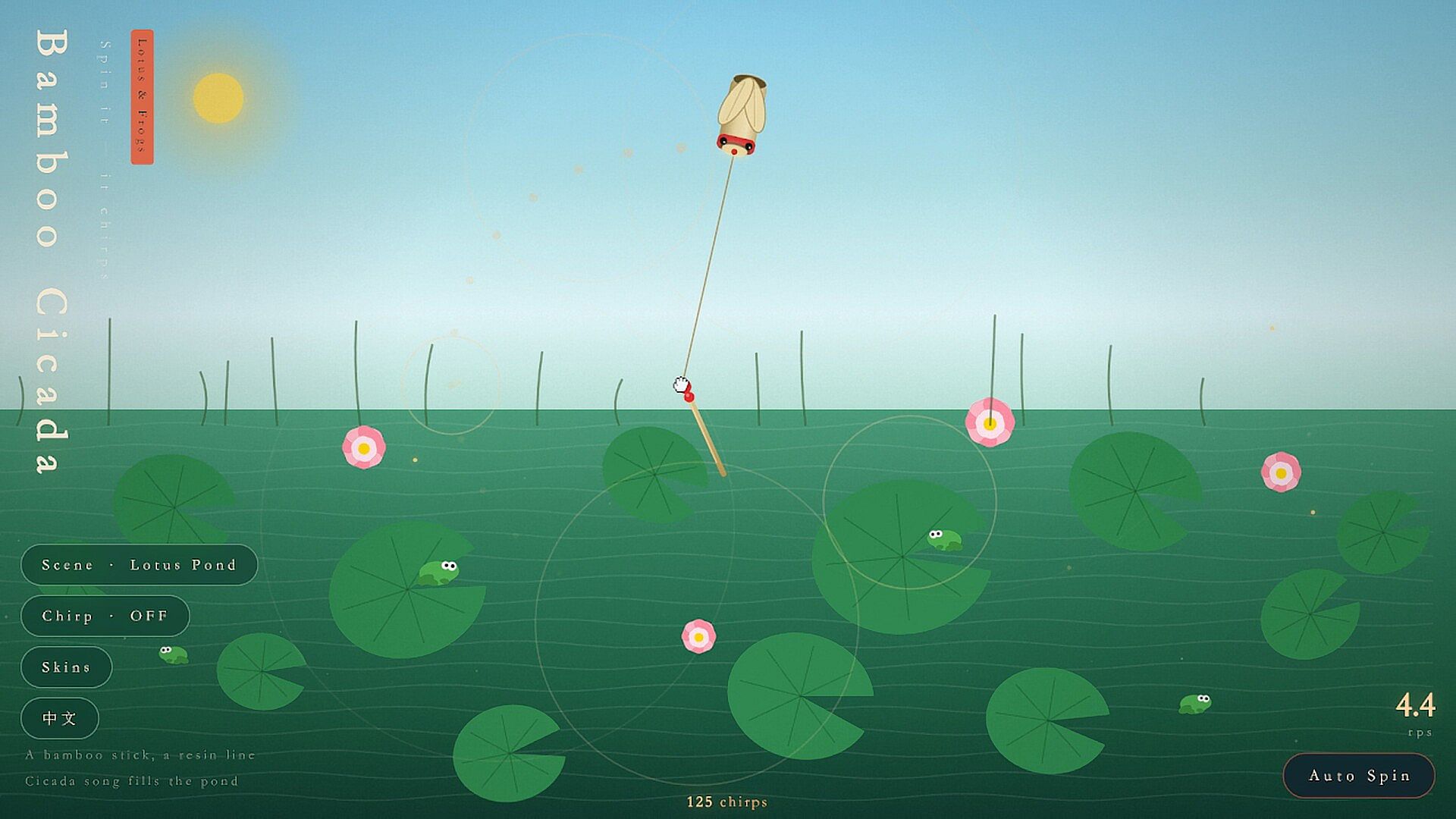

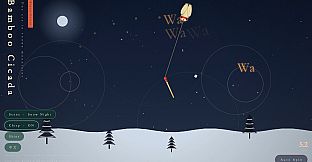
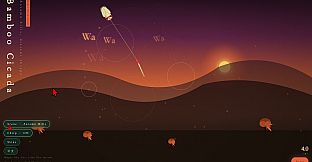
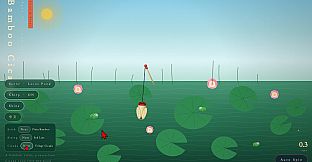
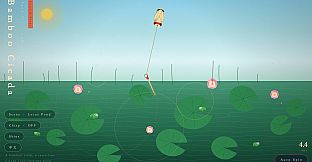
Wawa Cicada is a PC game that blends action, indie, casual, simulation, and sports elements into a focused recreation of a classic bamboo toy. Players spin a virtual bamboo cicada to generate its signature buzzing sound through realistic physics modeling. The experience centers on building speed with simple mouse or controller inputs to trigger stick-slip friction between the string and membrane, which then resonates through the hollow chamber. This setup delivers an immediate loop of increasing volume and intensity as spins accelerate.
Gameplay
The core loop revolves around holding the input to rotate the toy in circles until rotational speed surpasses a threshold. Once active, the simulation applies accurate acoustic principles to produce the alternating friction that creates the distinctive waaah sound. Faster rotations yield louder output and greater visual lift, encouraging sustained effort to push personal limits. The physics engine tracks momentum and resonance without additional layers, keeping every session centered on the mechanical act of spinning itself.
Controls remain minimal by design, requiring only consistent circular motion once engaged. Players observe real-time feedback through sound amplitude and on-screen indicators of height and intensity. The absence of progression systems or upgrades means each attempt stands alone, rewarding raw technique and endurance in the moment. Visuals stay clean and focused on the bamboo structure, allowing the audio output to dominate the sensory experience.
Game Modes
The primary activity takes the form of a cicada sound competition where the objective is to achieve the loudest and most sustained buzz possible through continuous spinning. Scores derive directly from peak volume levels and overall performance duration, creating a straightforward chase for higher results on each run. This mode supports repeated short sessions or longer focused attempts without timers or external objectives.
Score sharing features allow players to export results for comparison with others, turning individual runs into informal challenges. No separate competitive lobbies or team formats exist, preserving the solitary nature of the toy simulation while enabling external social engagement through exported data.
Nostalgic Design and Accessibility
Wawa Cicada draws directly from the physical properties of the traditional bamboo cicada toy, replicating its construction and sound generation without modern embellishments. The simulation emphasizes the courtyard play of past summers through accurate friction modeling and resonance effects. This approach appeals to those seeking a direct digital counterpart to the inexpensive, high-volume toy that required no batteries or complex setup.
System requirements stay low, with support for basic hardware and straightforward installation. Sessions fit easily into brief breaks due to the instant start and lack of loading sequences or tutorials beyond the initial spin mechanic. The game runs in English and Simplified Chinese with full audio and subtitles, broadening access across different player preferences.
Is It Worth Playing?
Wawa Cicada suits players who enjoy pure mechanical challenges and quick, repeatable sessions over narrative depth or multiplayer structures. Its single-player focus and score-driven spinning create an addictive loop for short bursts, particularly for those drawn to nostalgic recreations of simple childhood activities. The game launches in August 2026 with no confirmed post-release updates or additional content at this stage.
Those looking for lightweight entertainment that awakens specific sensory memories will find the physics and audio faithful to the source toy. The format avoids pay-to-win elements or layered statistics, delivering consistent access to the core spinning experience across all attempts. Casual audiences and simulation enthusiasts may appreciate the precision in sound modeling, while others seeking broader genres or ongoing seasons might look elsewhere.
- Ideal for quick play during commutes or downtime
- Strong emphasis on technique over strategy
- Direct translation of physical toy mechanics to digital format