

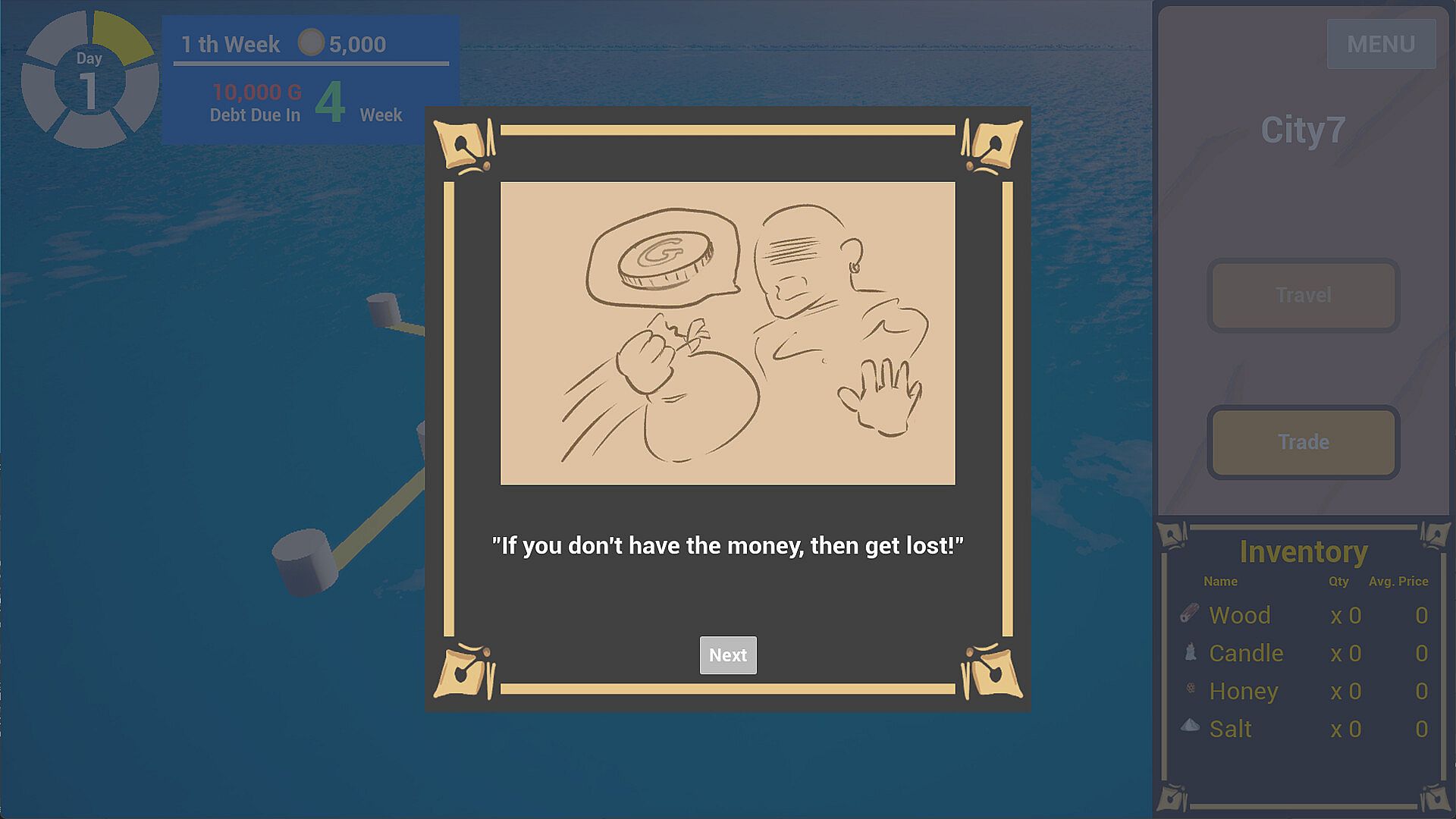
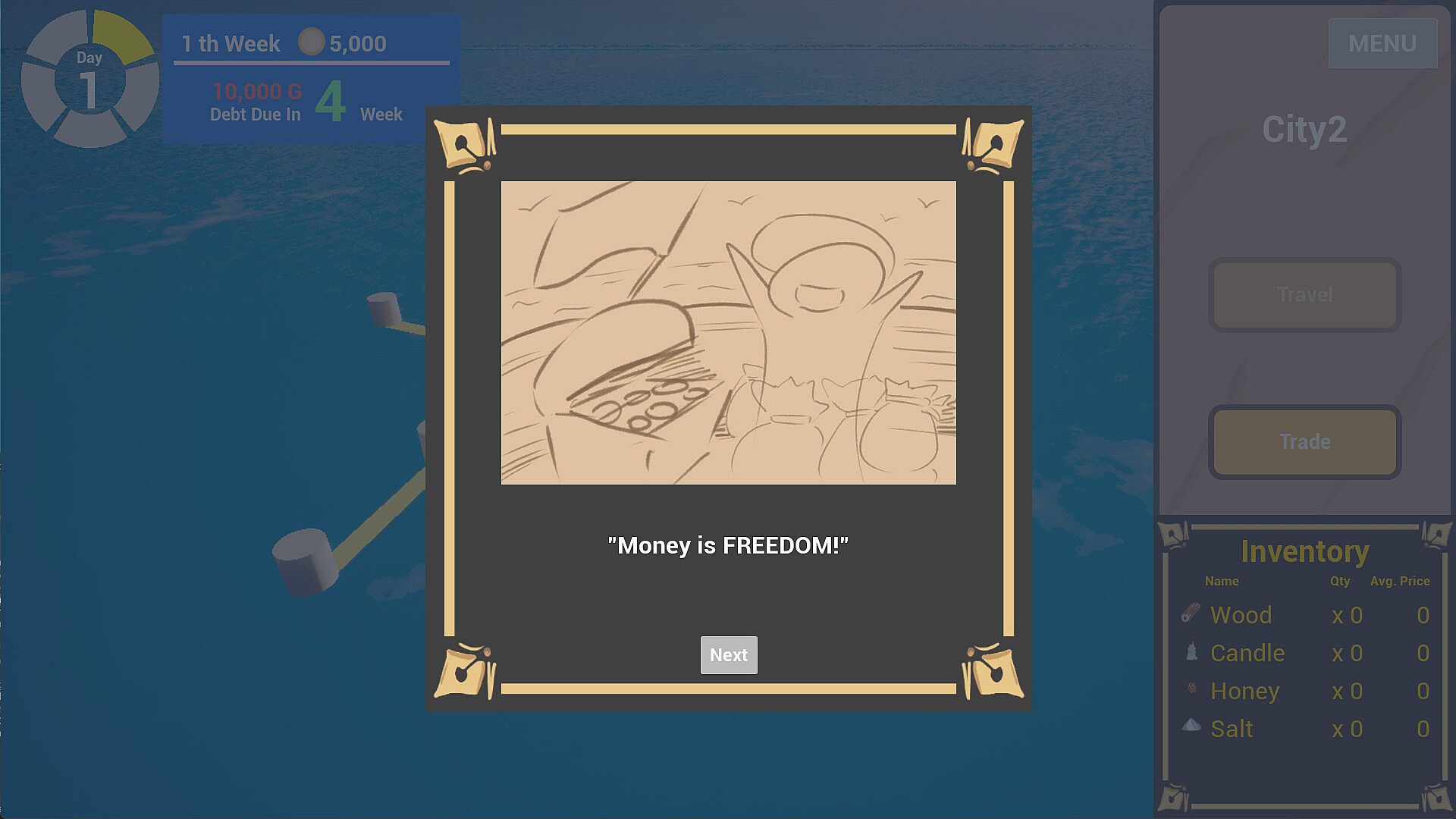
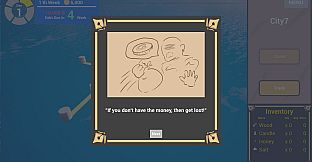
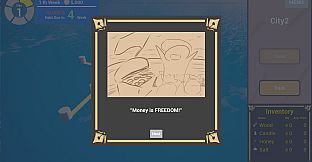
Wayward Wind is an indie trading simulation game for PC that places players in the role of a merchant rebuilding a fallen family empire through careful buying and selling across a world of interconnected cities and ports. The core premise follows a narrative of sudden financial ruin, where a divine gift of a single ship becomes the only tool for recovery from overwhelming debt. Rather than offering instant wealth or shortcuts, the game emphasizes patient navigation of fluctuating markets and the risks inherent in long voyages.
Gameplay
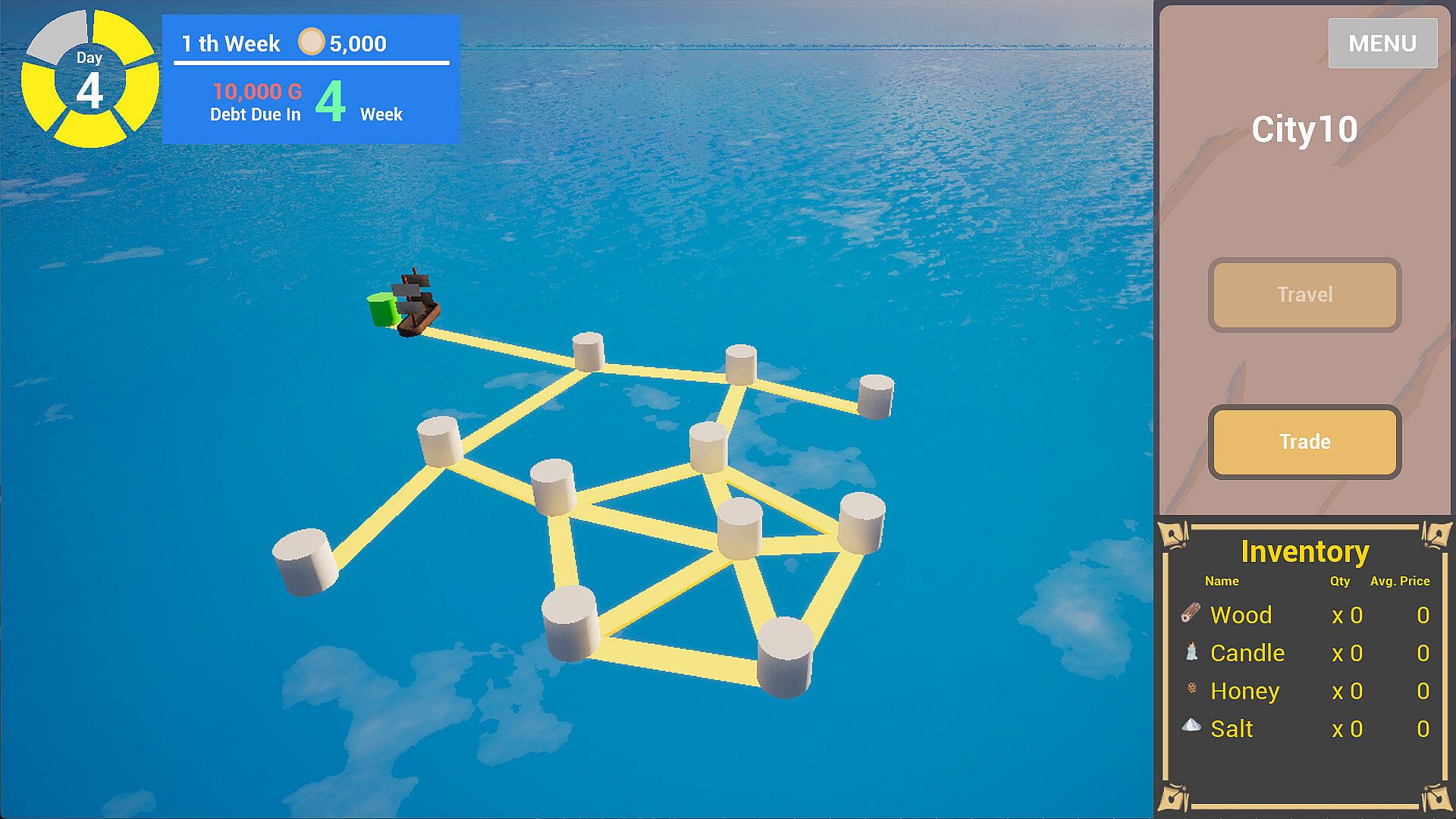
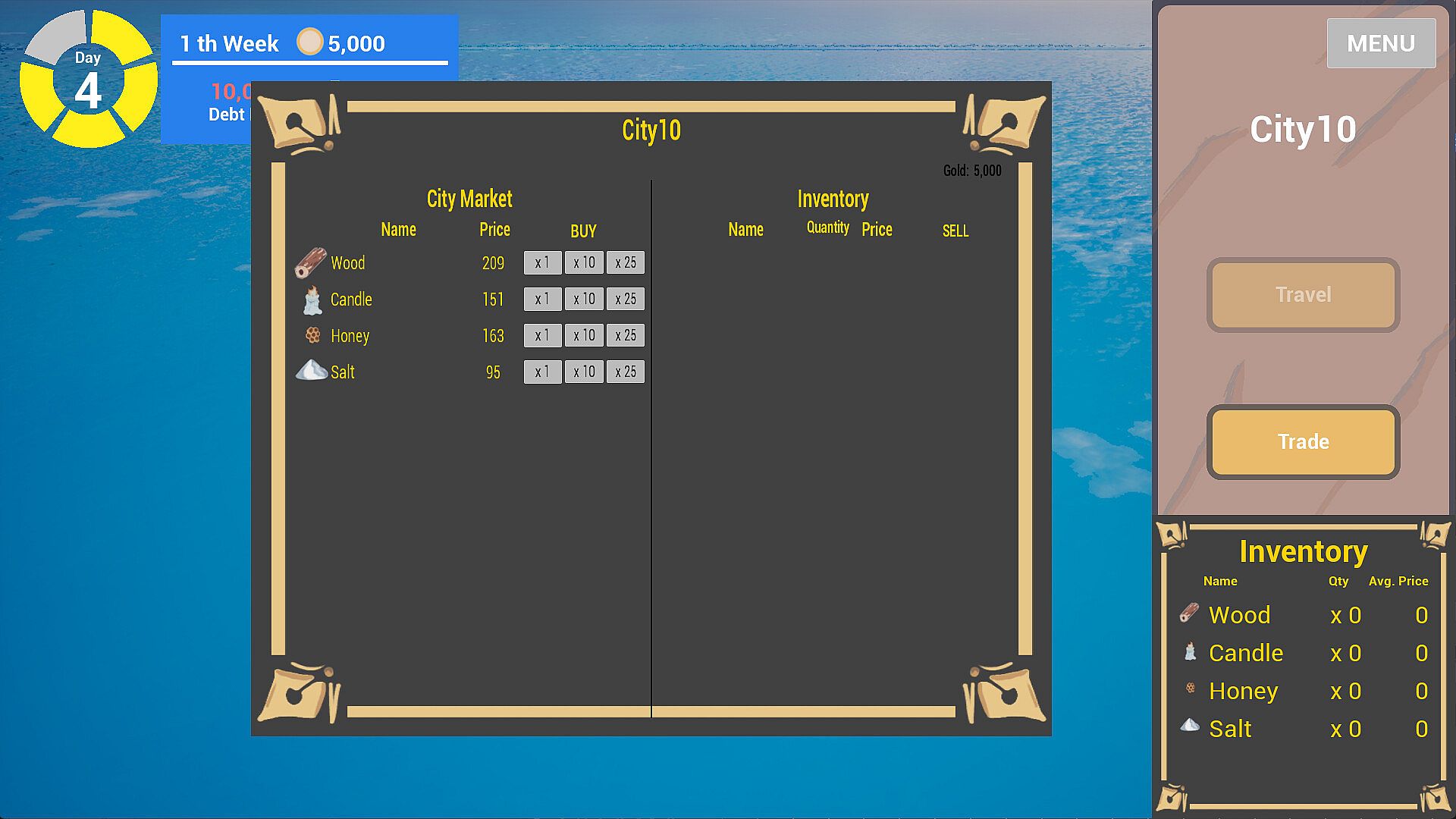
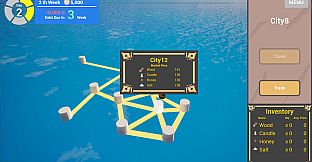
The central loop revolves around acquiring goods at low prices in one location and transporting them to markets where demand drives higher returns. Players begin with limited starting capital and must decide which commodities to purchase, how much cargo space to allocate on the ship, and which routes offer the best potential margins. Travel between cities consumes time and resources, introducing variables such as changing prices upon arrival or unexpected shifts in supply that can turn a planned profit into a loss.
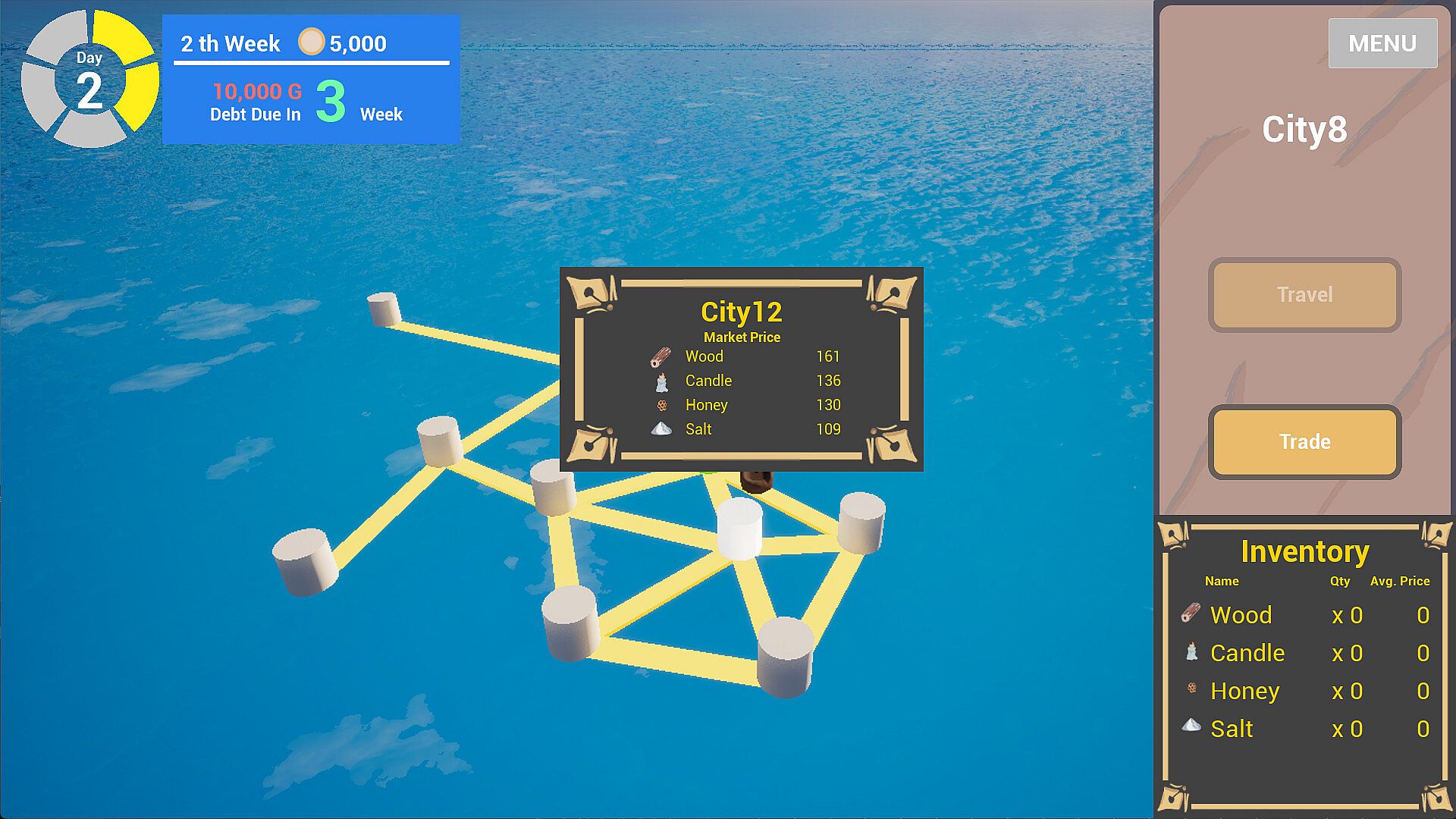
Market study forms a key part of progression. Prices for the same items vary significantly from port to port, rewarding observation of patterns and willingness to experiment with different trade routes. Losses are part of the experience, as yesterday's reliable commodity can become unprofitable the next day due to oversupply or shifting demand. Every purchase carries financial risk, and cumulative decisions determine whether the player edges closer to clearing the family debt or sinks further into it.
The simulation aspects focus on resource management and opportunity recognition. With no magical interventions beyond the initial ship, success depends on repeated voyages, adaptation to market conditions, and gradual accumulation of knowledge about profitable paths. The world feels expansive through the lens of sea travel, where each journey opens new cities and potential trade connections without relying on combat or exploration mechanics outside of commerce.
Game Modes
Wayward Wind operates as a single-player experience centered on personal trading campaigns. There are no separate multiplayer modes or competitive elements described in the available information. The gameplay centers on one continuous journey of debt repayment and fortune rebuilding, allowing players to approach each voyage with their own strategies for buying, selling, and route planning.
Progression remains tied to the core trading cycle rather than distinct modes. Players manage their own pace, deciding when to take calculated risks on new commodities or stick with established routes. This structure suits those who prefer methodical, self-directed sessions over structured challenges or cooperative play.
Is It Worth Playing?
Wayward Wind appeals most to players who enjoy simulation games focused on economic systems and long-term strategy. The emphasis on market fluctuations and route optimization provides a steady sense of incremental progress as wealth grows and debt shrinks through repeated successful trades. Those drawn to casual indie titles that reward observation and patience will find the mechanics align closely with the described trading loop.
The game avoids complex systems beyond commerce, keeping the focus narrow on buying low, selling high, and managing the risks of sea travel. This makes it accessible for short or extended play sessions without requiring mastery of additional layers such as combat or base building. For anyone interested in the merchant fantasy of turning opportunity into wealth through careful decisions, the provided starting scenario offers a clear entry point into that style of gameplay.
Reception details remain limited in public sources, with no confirmed aggregate scores or widespread review summaries available at this time. The title remains available on PC through standard digital storefronts, and its straightforward premise makes it a low-commitment option for fans of trading simulations. Players seeking a focused experience of rebuilding through trade will likely appreciate the direct connection between decisions and outcomes.