













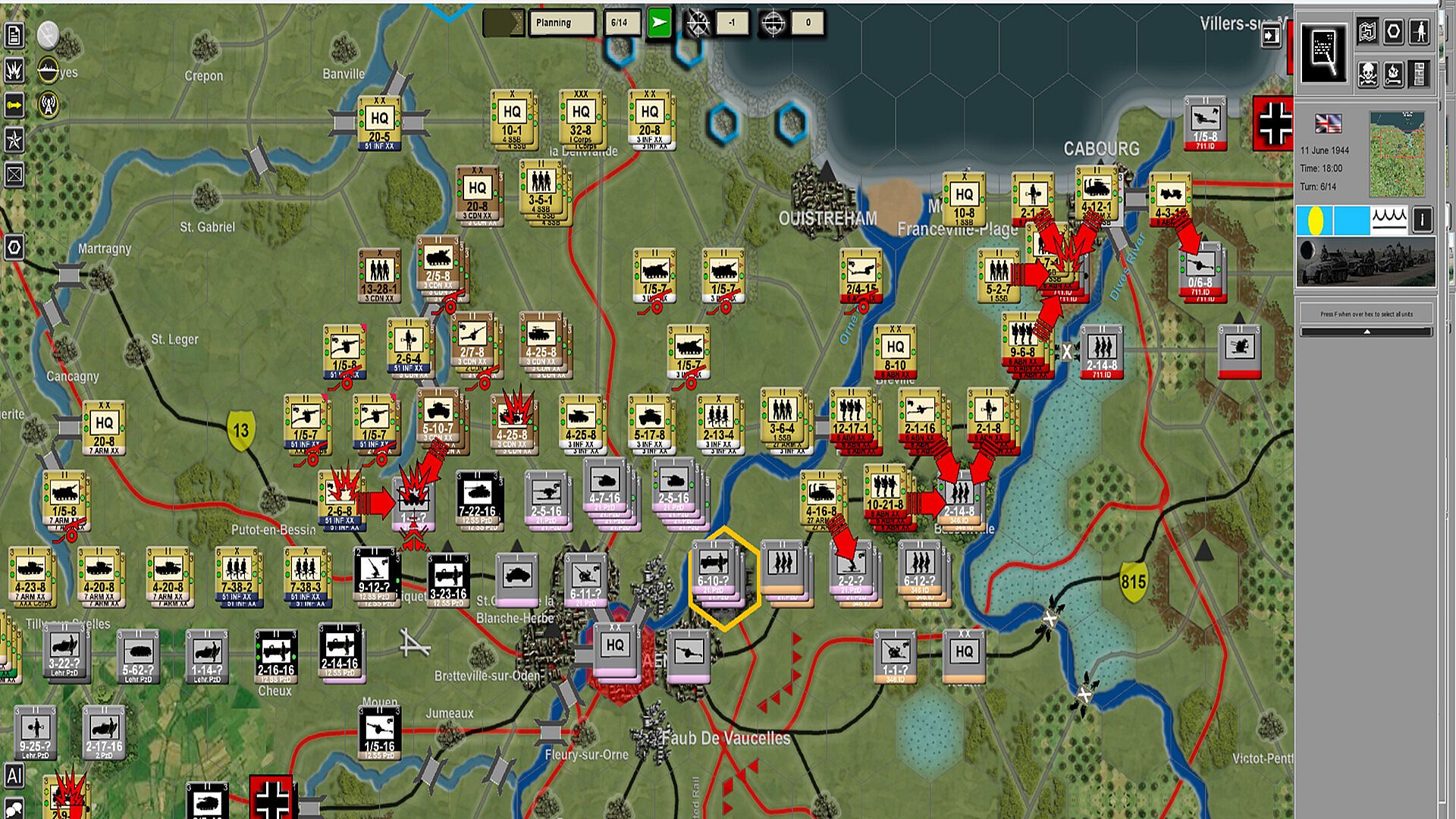
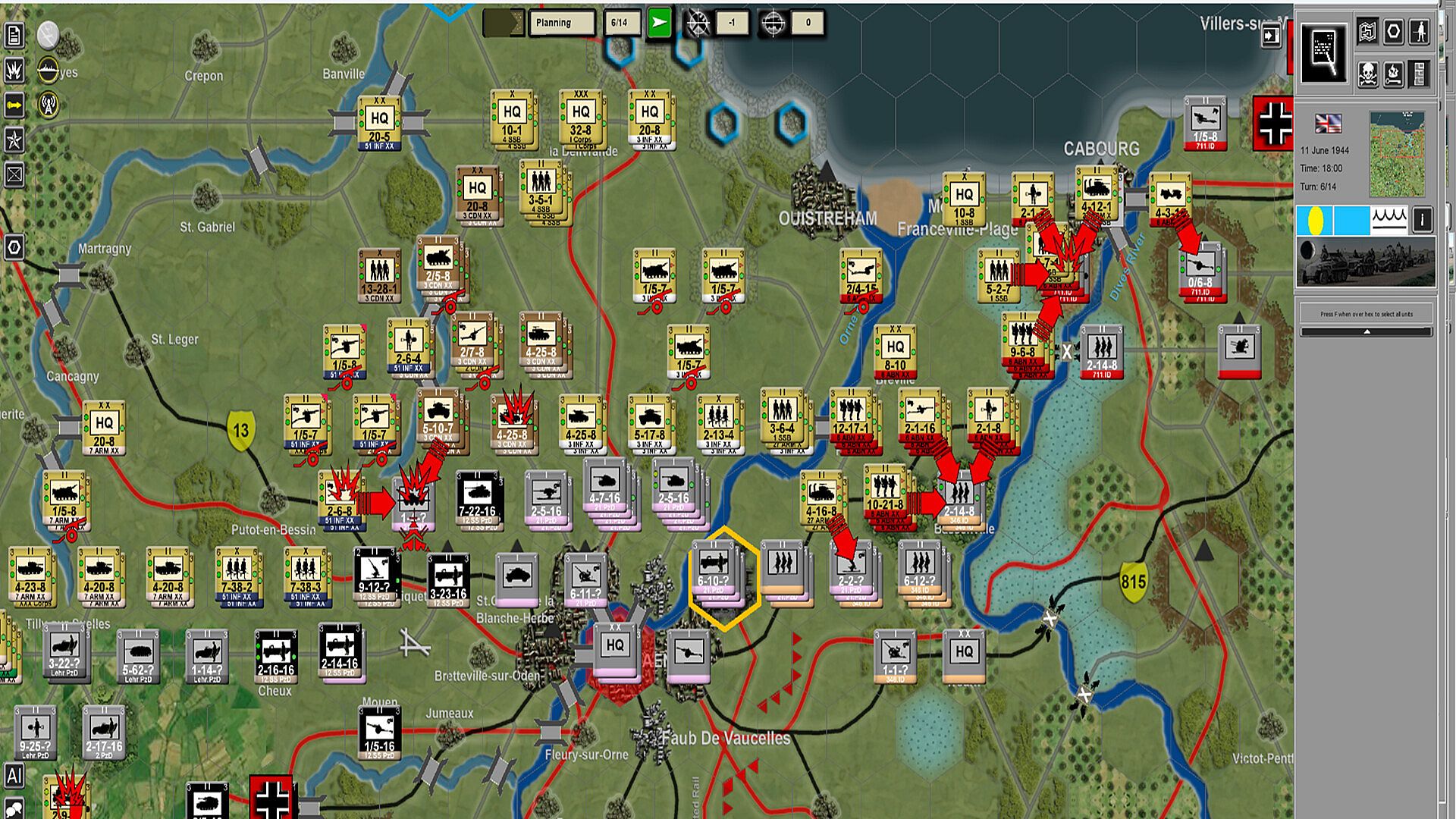
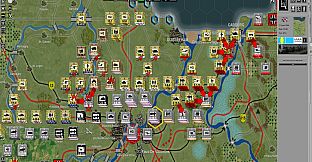
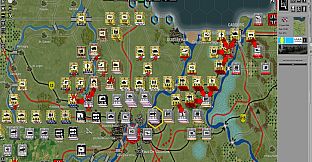
WEGO World War II: Overlord is a strategy wargame set during the Allied invasion of Normandy in 1944. This operational-level title places players in command of ground forces across a hex-grid representation of the Normandy region, with support from air and naval elements that shape the flow of operations.
Gameplay
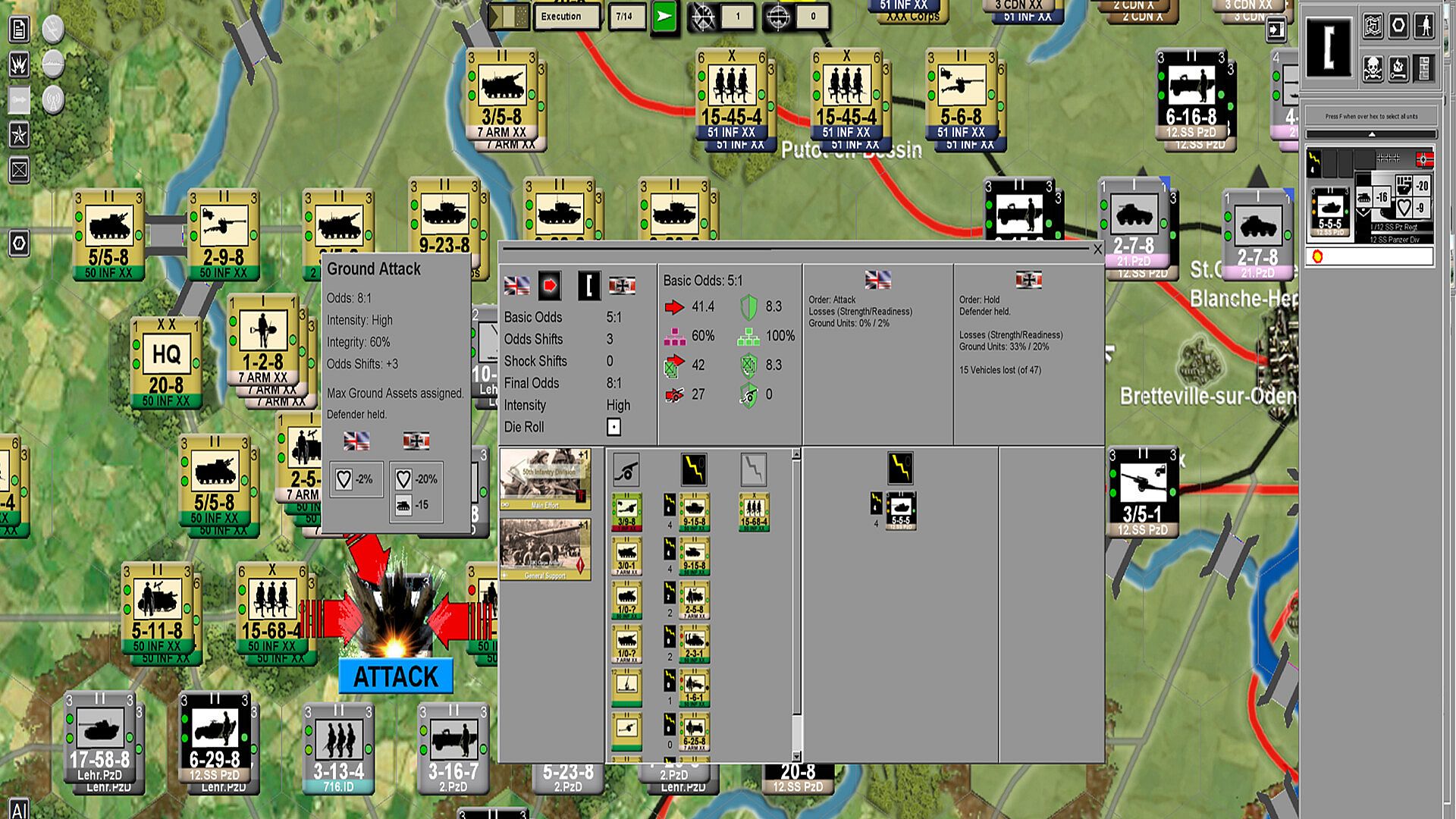
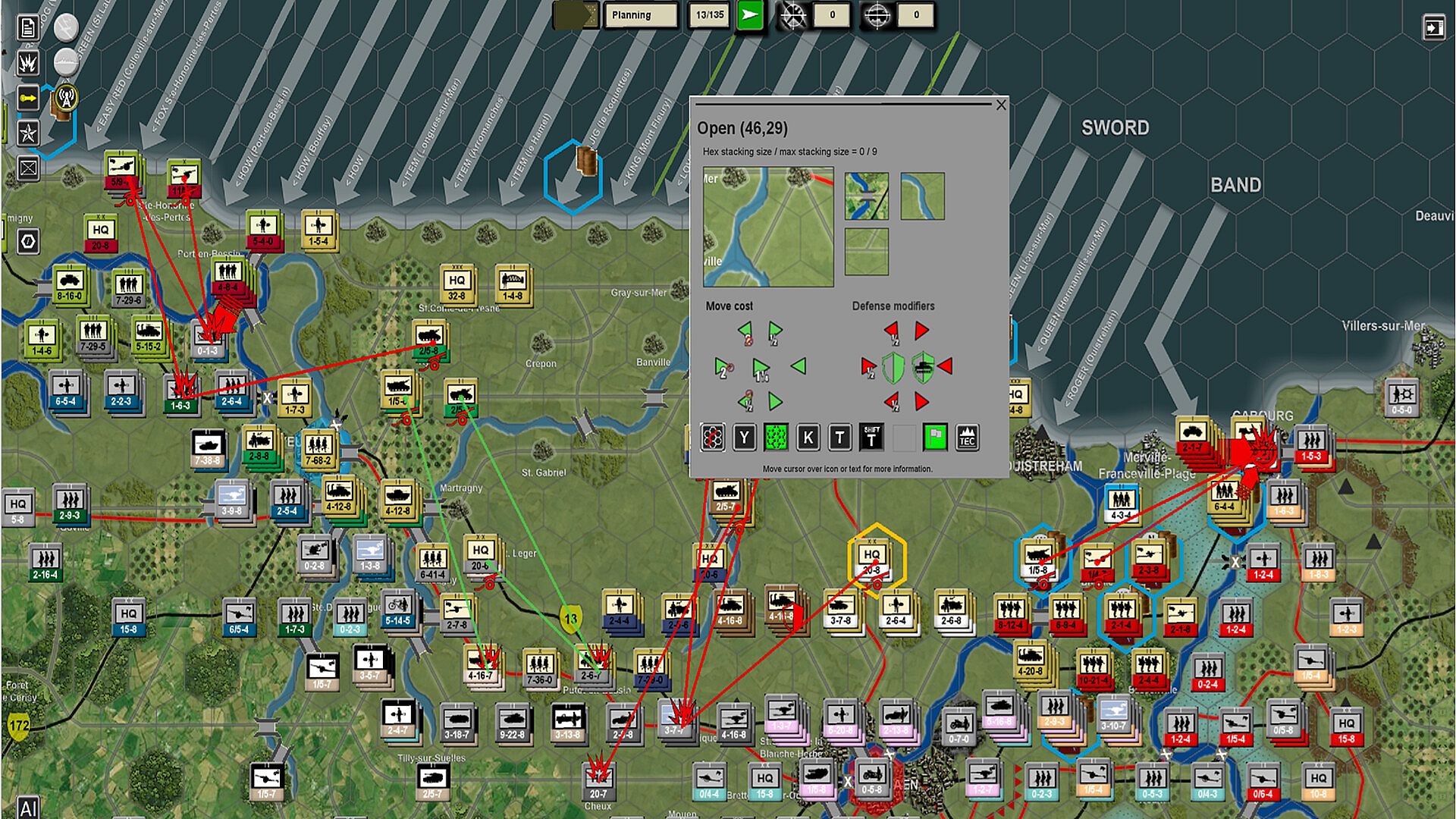
The core loop centers on the WEGO system, where both sides plan moves and resolve actions simultaneously rather than alternating in strict sequence. This approach emphasizes preparation for uncertainty, as the exact location and strength of opposing units remain hidden until reconnaissance or contact reveals them. Players must anticipate enemy responses while managing their own limited resources and supply lines.
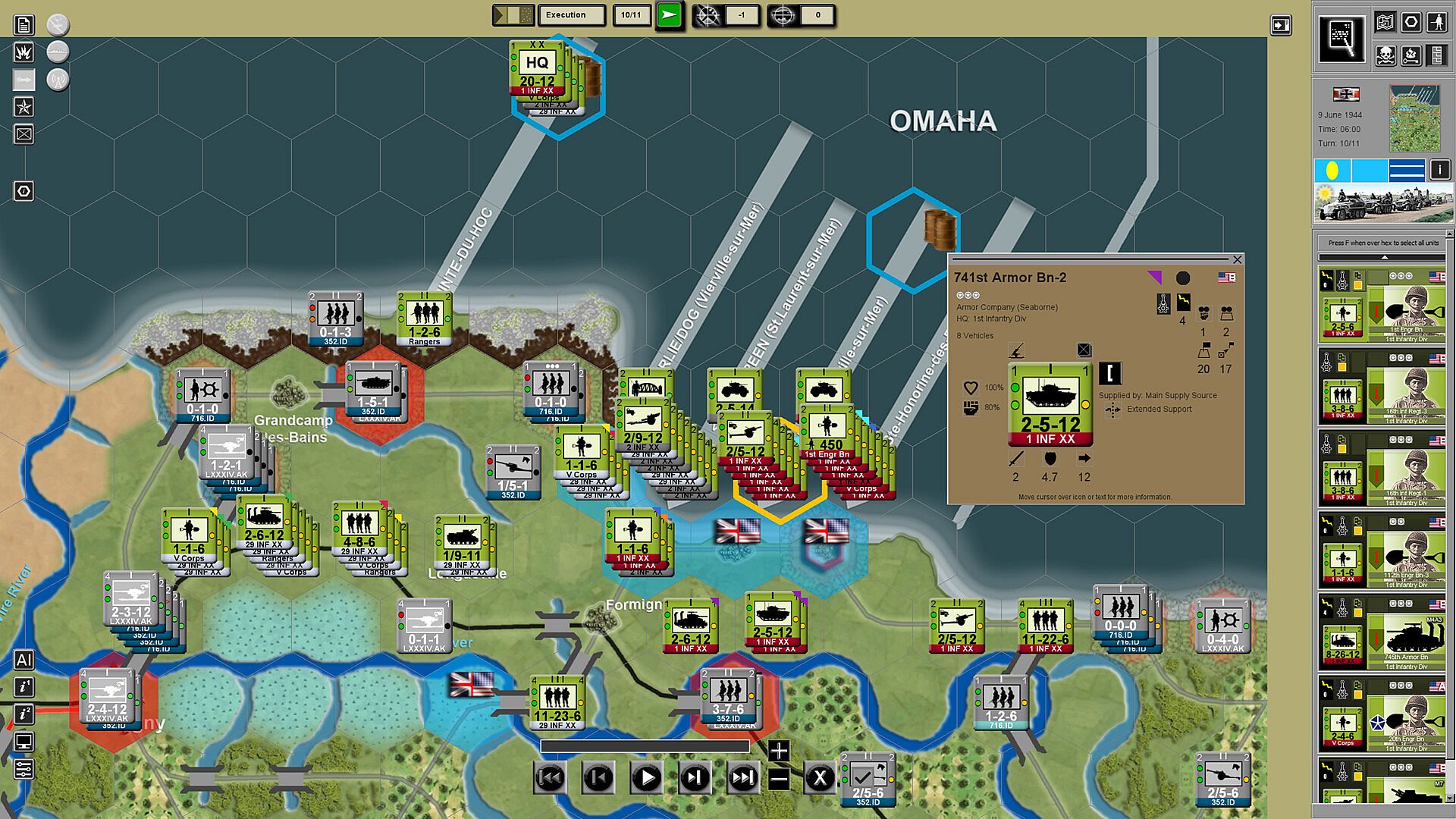
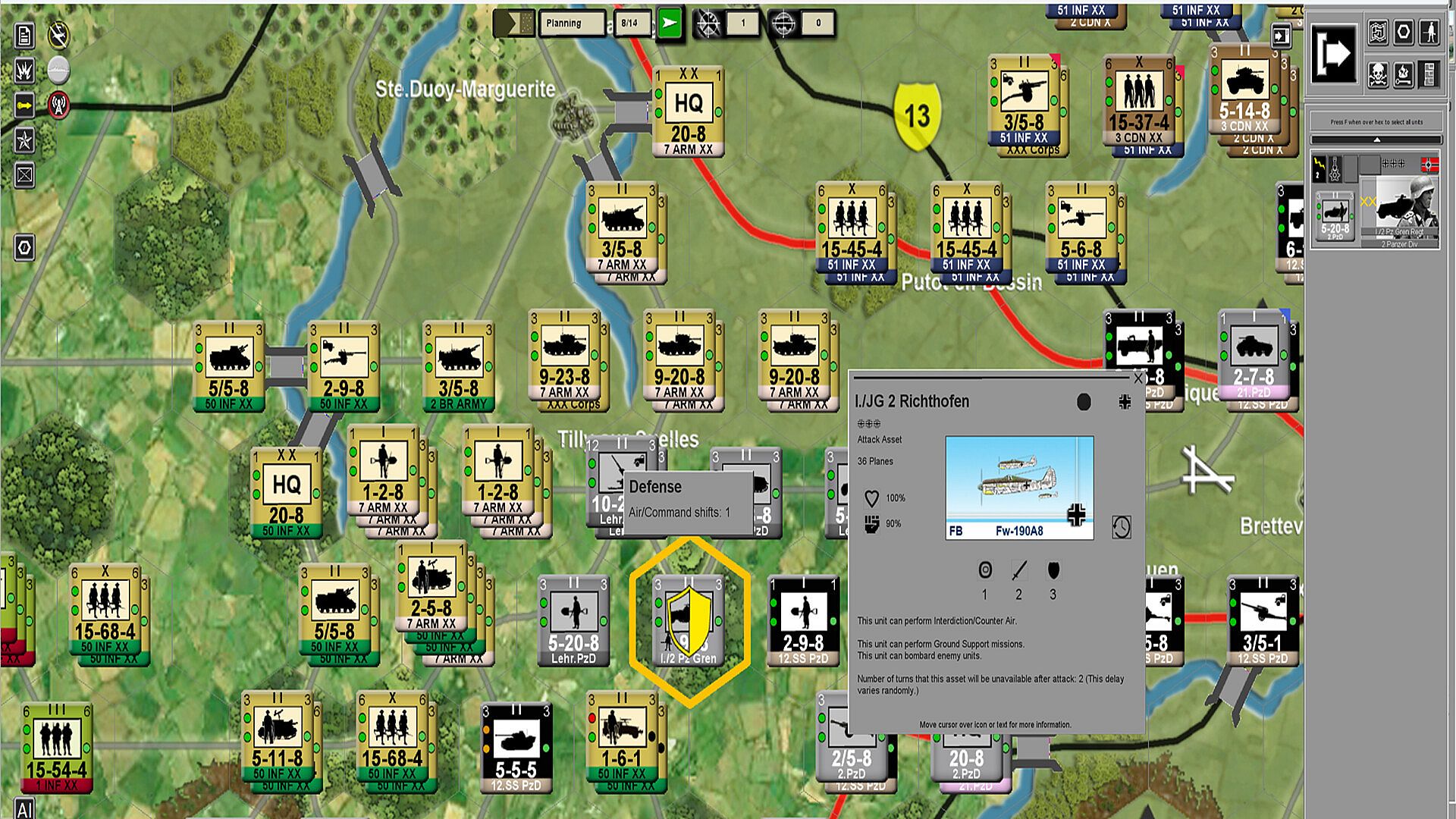
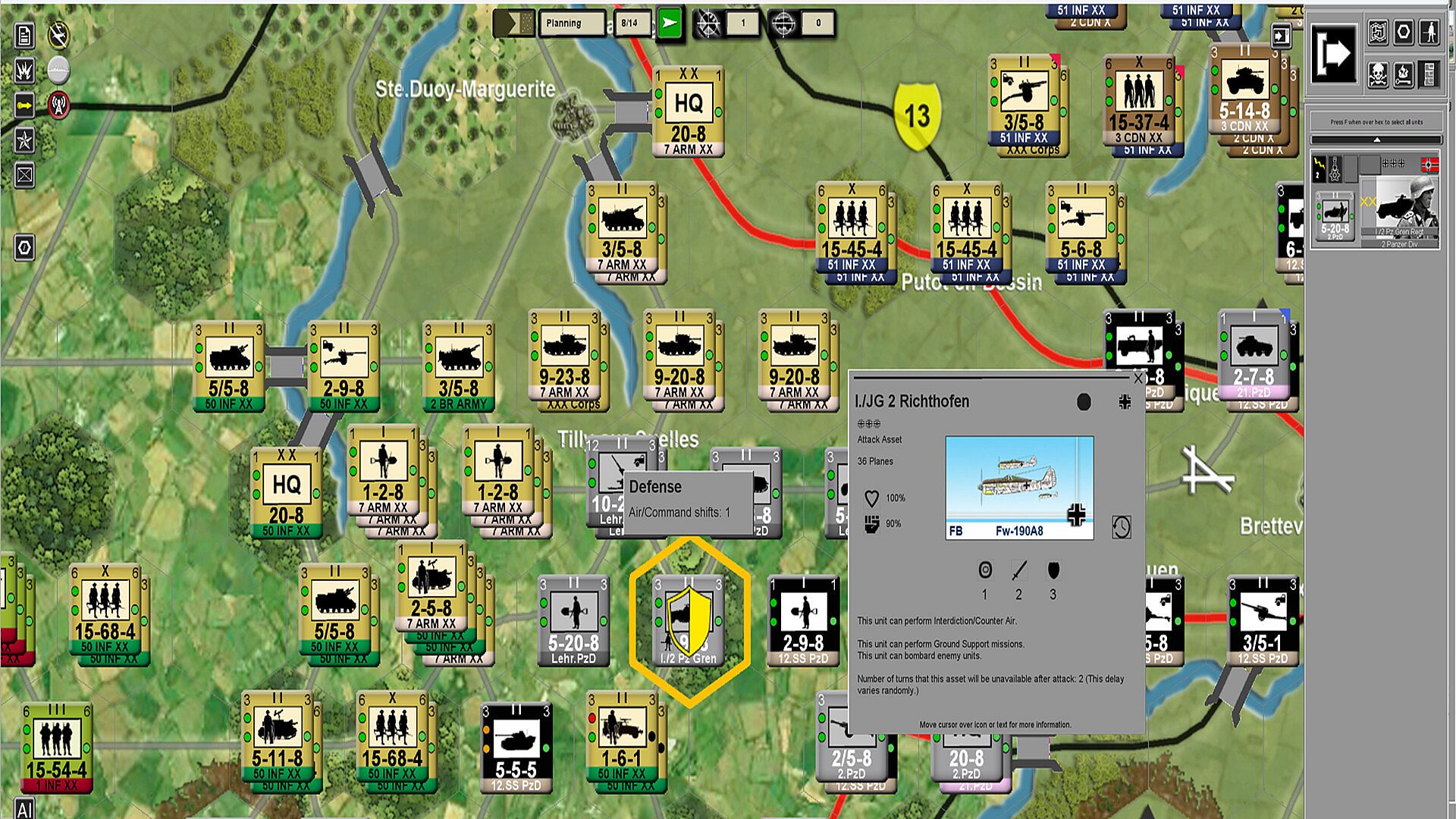
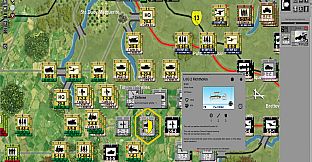
Ground units operate at company to regiment or brigade scale and move across the hex map according to terrain restrictions and logistical constraints. Air assets handle missions such as interdiction, bombardment, and ground support, while reconnaissance flights gather intelligence on enemy dispositions. Naval forces contribute gunfire support and enable amphibious movements along the invasion beaches. Weather conditions affect air operations and supply delivery, and airborne or glider units can land behind enemy lines to seize objectives or disrupt reinforcements.
Additional ground assets cover electronic warfare, command functions, and specialized logistics that improve unit performance or replacement rates. Maintaining supply routes remains essential, as shortages quickly reduce movement and combat effectiveness across formations.
Game Modes
Players can engage in 14 historical scenarios that range from focused landings, such as the assault on Omaha Beach, to larger operations involving multiple sectors. A single extended campaign spans 135 turns and covers the full Normandy theater from the initial invasion through subsequent advances.
Multiple interconnected campaigns and standalone scenarios allow exploration of key phases, including fighting through hedgerow country, the push toward Brittany, and battles for cities such as Caen and Cherbourg. Multiplayer options include hotseat play on the same device, matches against the AI, and PBEM for turn-based exchanges between remote opponents.
Historical Context and Scale
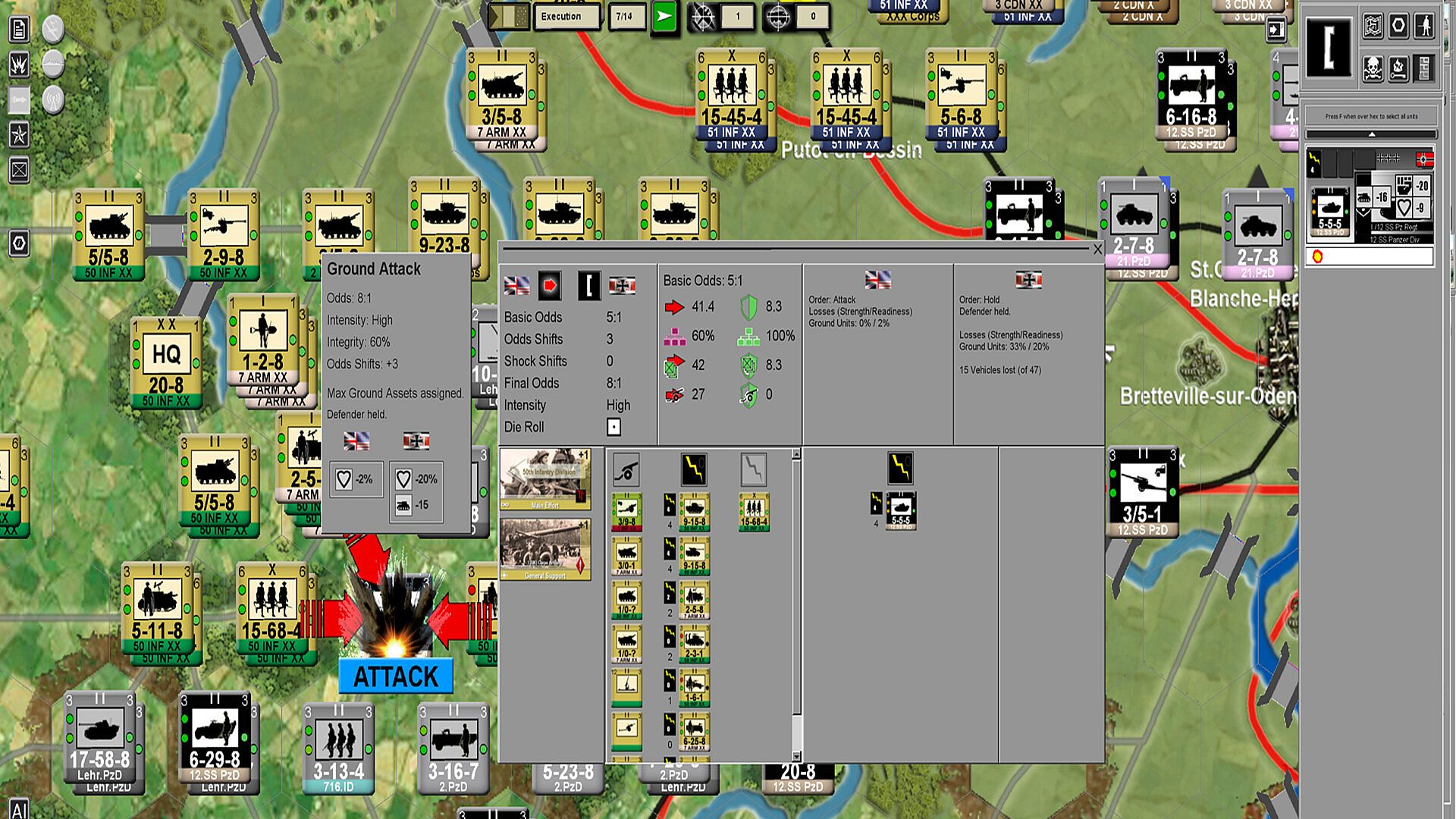
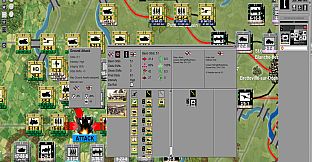
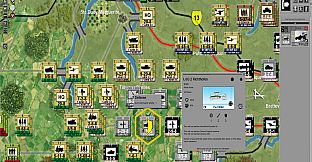
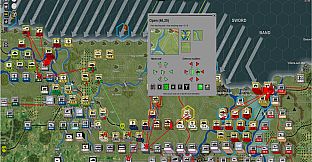
The game recreates the ground-centric nature of the campaign while incorporating the supporting roles of air and naval power. Stylized maps with a superimposed hex grid govern placement, movement, and combat resolution. Counters display unit types through icons, and the overall design highlights the challenges of coordinating large formations under fog of war conditions.
Logistics and supply management form a persistent layer of decision-making, as players allocate resources to sustain momentum or recover from setbacks. Airborne operations add opportunities for deep strikes that can alter the operational tempo for either side.
Is It Worth Playing?
This title suits players who enjoy detailed operational wargames that reward careful planning and adaptation to incomplete information. The simultaneous resolution mechanic creates tension distinct from traditional alternating-turn formats, and the combination of ground, air, and naval elements provides layered tactical choices within a historical framework.
Availability on PC supports both solo sessions against the AI and competitive play through PBEM or hotseat. The range of scenario lengths accommodates shorter sessions as well as extended campaigns, making the game accessible to those interested in the Normandy theater at an operational scale. Those drawn to hex-based systems with emphasis on logistics and multi-domain support will find the mechanics align closely with that preference.