






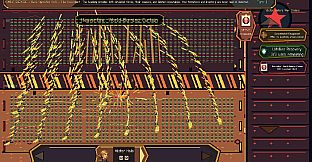
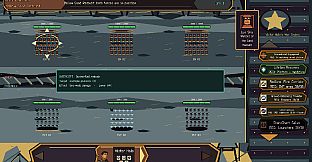
Wheat Awn: Line Zero is a single-player strategy game that blends military management, simulation elements, and turn-based card battles. Players build and expand an army through resource gathering, officer training, and equipment procurement before deploying forces into a series of structured operations. The game emphasizes careful preparation and tactical choices during encounters rather than direct control of units on the field.
Gameplay
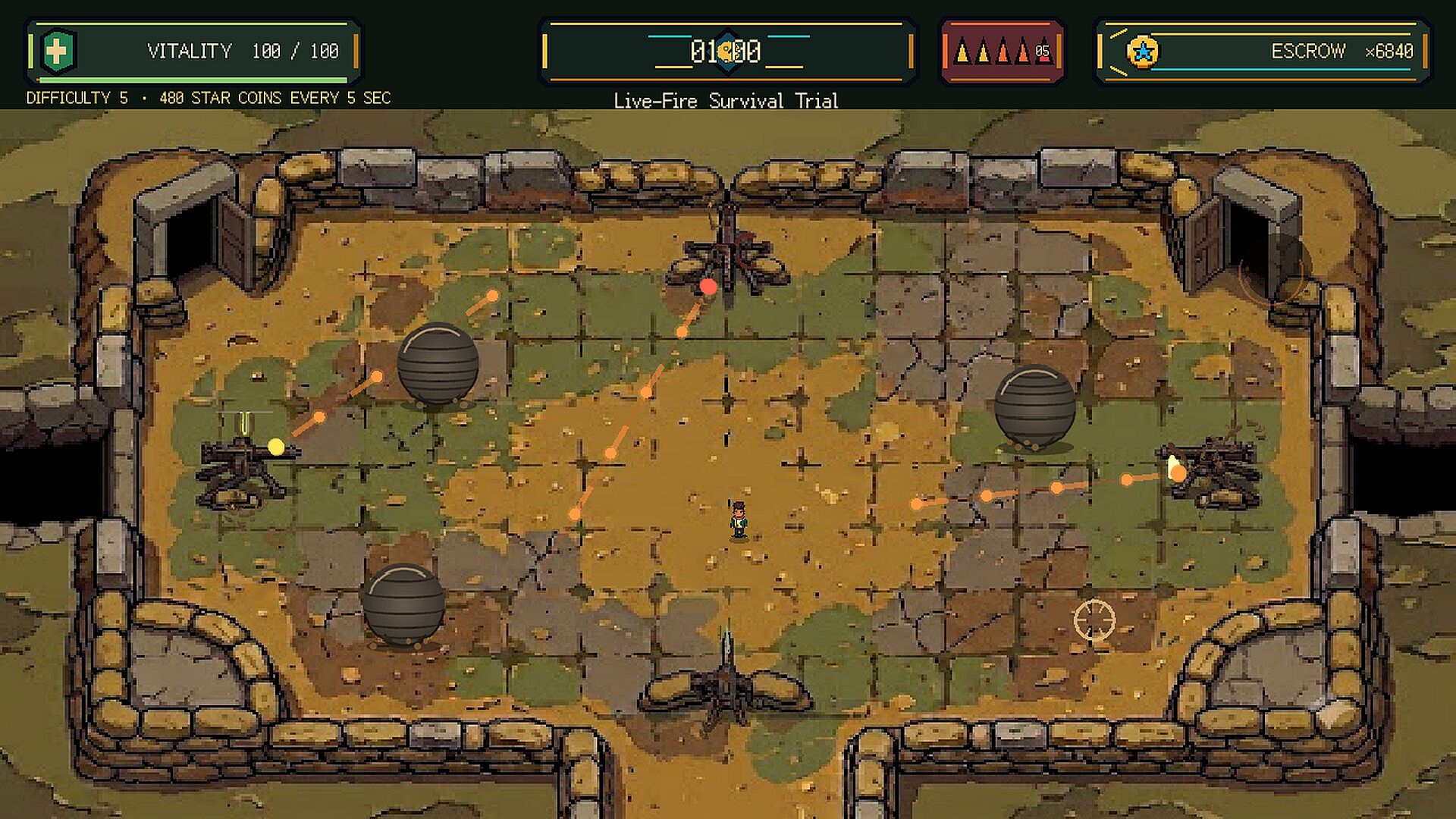
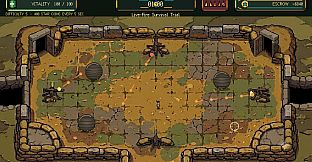
The core loop revolves around earning resources in a survival-style activity, then using those resources to grow a force of platoons and equip them for combat. Players begin by visiting the police station in Wheat Awn Town to speak with the Police Chief and select the duration of the Live-Fire Trial. Movement uses WASD or arrow keys while avoiding hazards such as ricocheting boulders and machine-gun fire. Star Coins accumulate every five seconds during the run, and completing the timer preserves all earnings for that attempt. Early exit or failure removes only the coins collected in the current run.
Star Coins fund recruitment at the military compound, where groups of 30 soldiers form new platoons. Weapons, medicine, and special supplies must be purchased in sufficient quantities for every soldier sent into the field. At the Academy, coins purchase officer slots, with each officer restricted to courses that align with their military attributes. Successful completion of a course grants one of three tactical cards that become part of that officer's available options.
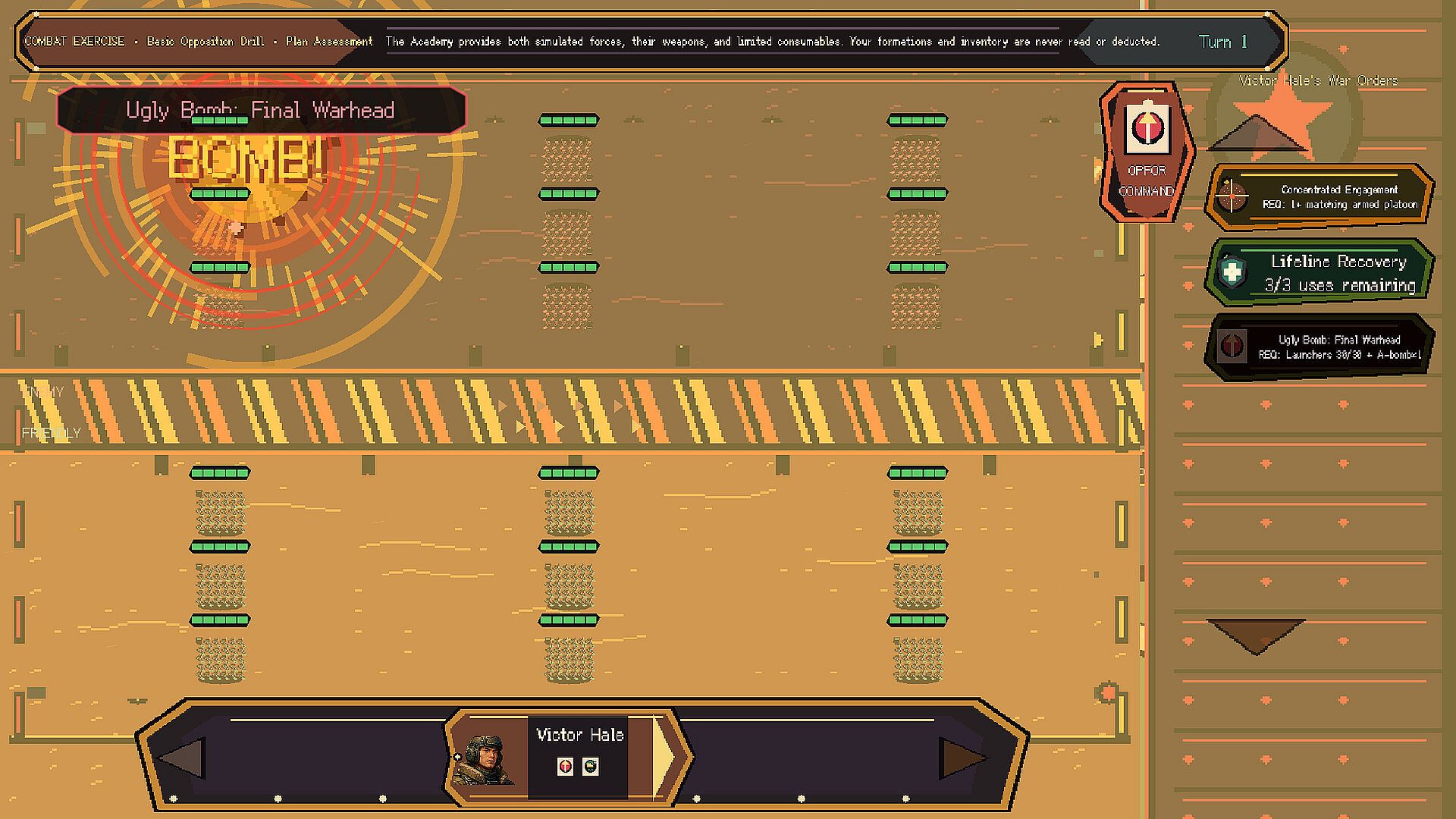
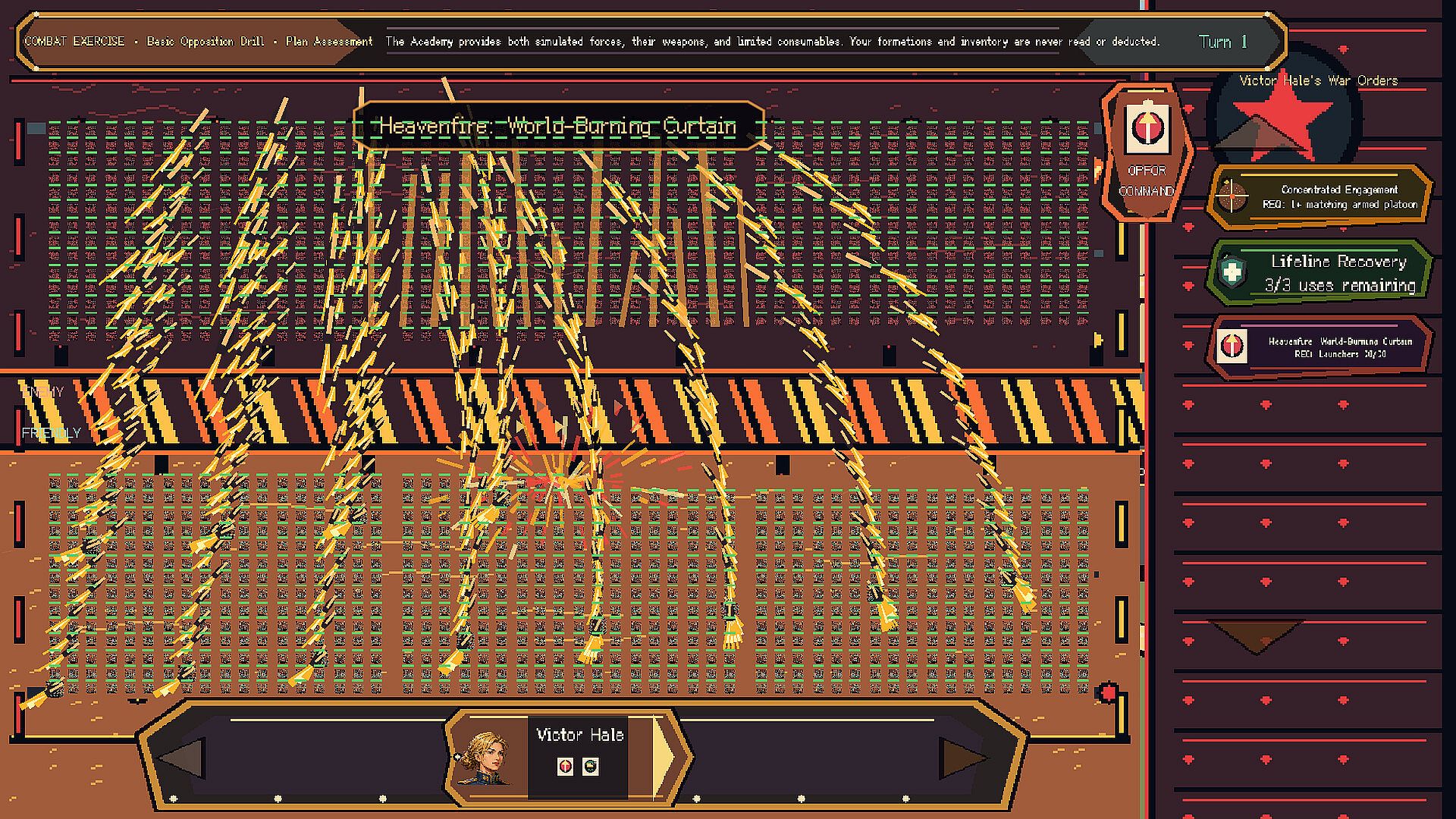
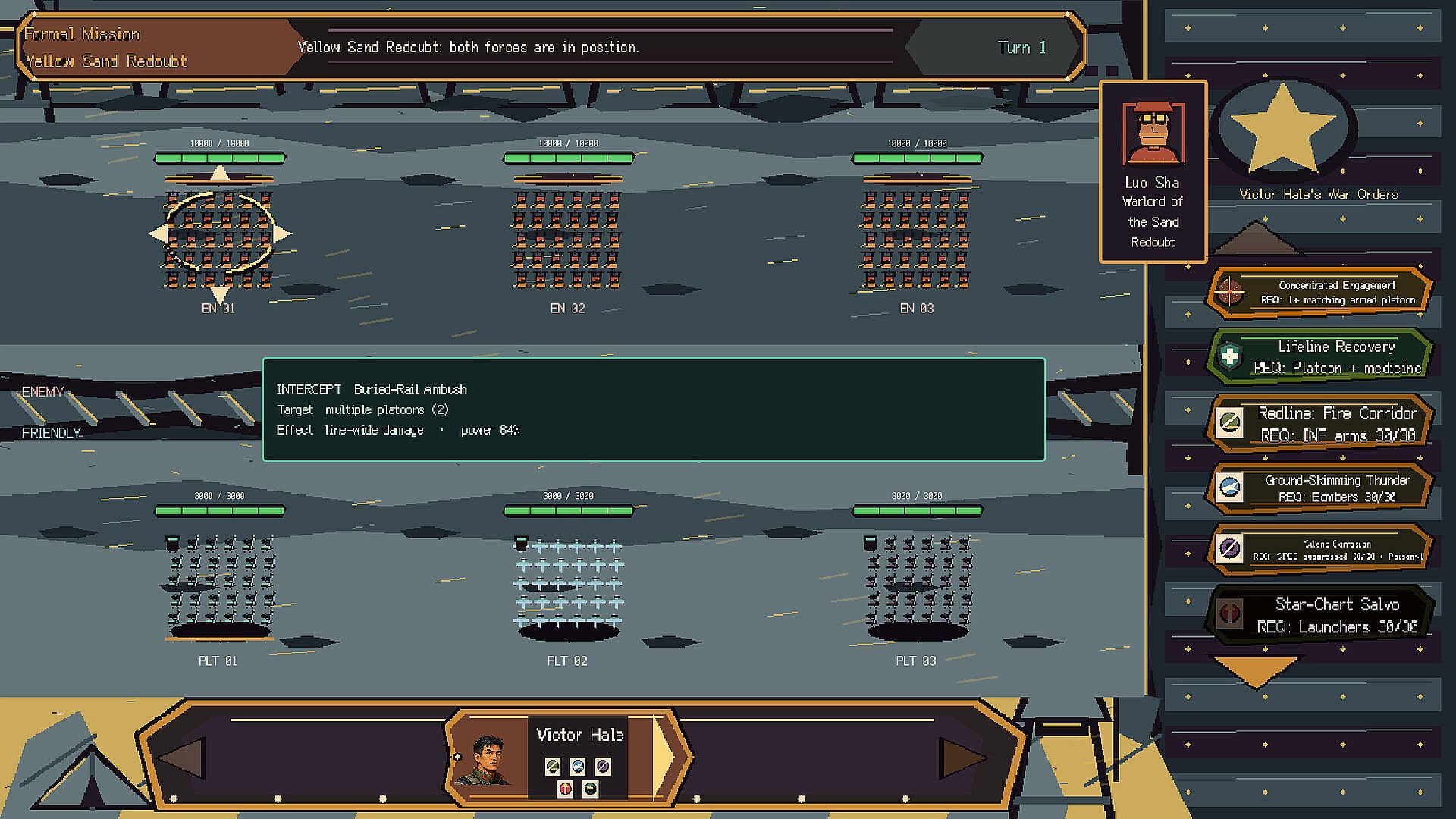
Combat follows a turn-based sequence. A living enemy platoon is selected, an officer is chosen, and one tactical card is played. The order resolves before the enemy responds. Each card requires specific troops or equipment to be present in the deployed force: infantry orders need armed infantry, armored orders need tanks, rocket orders need launchers, air orders need aircraft, and medical orders consume medicine. The Agent Radio provides advance notice of the enemy's next action and its intended effect, allowing time to select an appropriate counter.
Game Modes
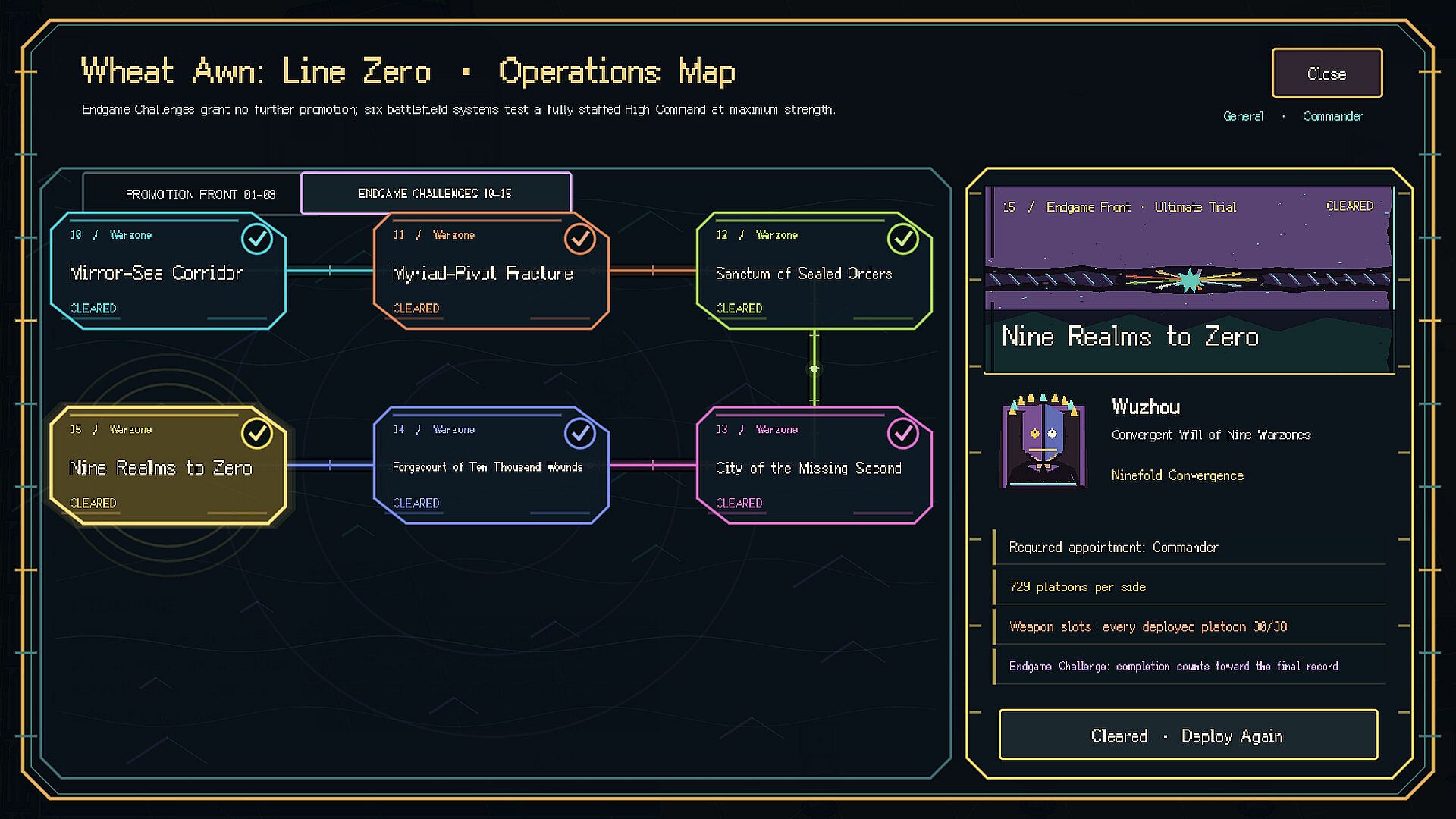
The primary experience is a single campaign that opens with two playable lessons to introduce core systems. Players then progress through 15 warzones. The first nine award promotions while the army expands from a single 30-soldier platoon toward a maximum of 729 platoons. The final six serve as challenge stages that test the full scale of the force assembled.
Supporting activities include the Live-Fire Trial for resource acquisition and Academy simulations that supply temporary armies and equipment without drawing from the player's inventory. These simulations focus on officer development and card selection. Operations themselves are presented as discrete deployments that list required platoon counts, positions, and equipment before departure.
Campaign Structure and Progression
After preparing platoons at the military compound, players board a train to reach each operation. Success across all 15 warzones completes the campaign, with the ending screen recording the total in-game days required. Promotions earned along the way increase available platoon capacity and reflect overall force growth. Tactical cards remain tied to individual officers and only function when the necessary units and gear are present in the deployed formation.
Resource management extends beyond initial purchases. Medicine and supplies are consumed during specific orders, while weapons must cover every soldier in active platoons. The system encourages balanced preparation across infantry, armor, rockets, air support, and medical capabilities to unlock the full range of available cards.
Is It Worth Playing?
Wheat Awn: Line Zero targets players who enjoy methodical army building combined with turn-based tactical decisions. The single-player campaign offers a clear progression path from small platoon operations to large-scale deployments across 15 warzones. Resource loops in the Live-Fire Trial and Academy provide repeatable activities that feed directly into combat readiness.
Because the title remains in a pre-release state with no user reviews available, suitability depends on interest in management-focused strategy rather than fast-paced action. Those who appreciate planning equipment loads, matching officers to courses, and reacting to revealed enemy intentions will find the systems align with that preference. The game is positioned as a complete single-player experience without additional modes or multiplayer components.











