




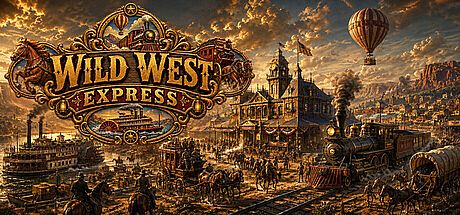


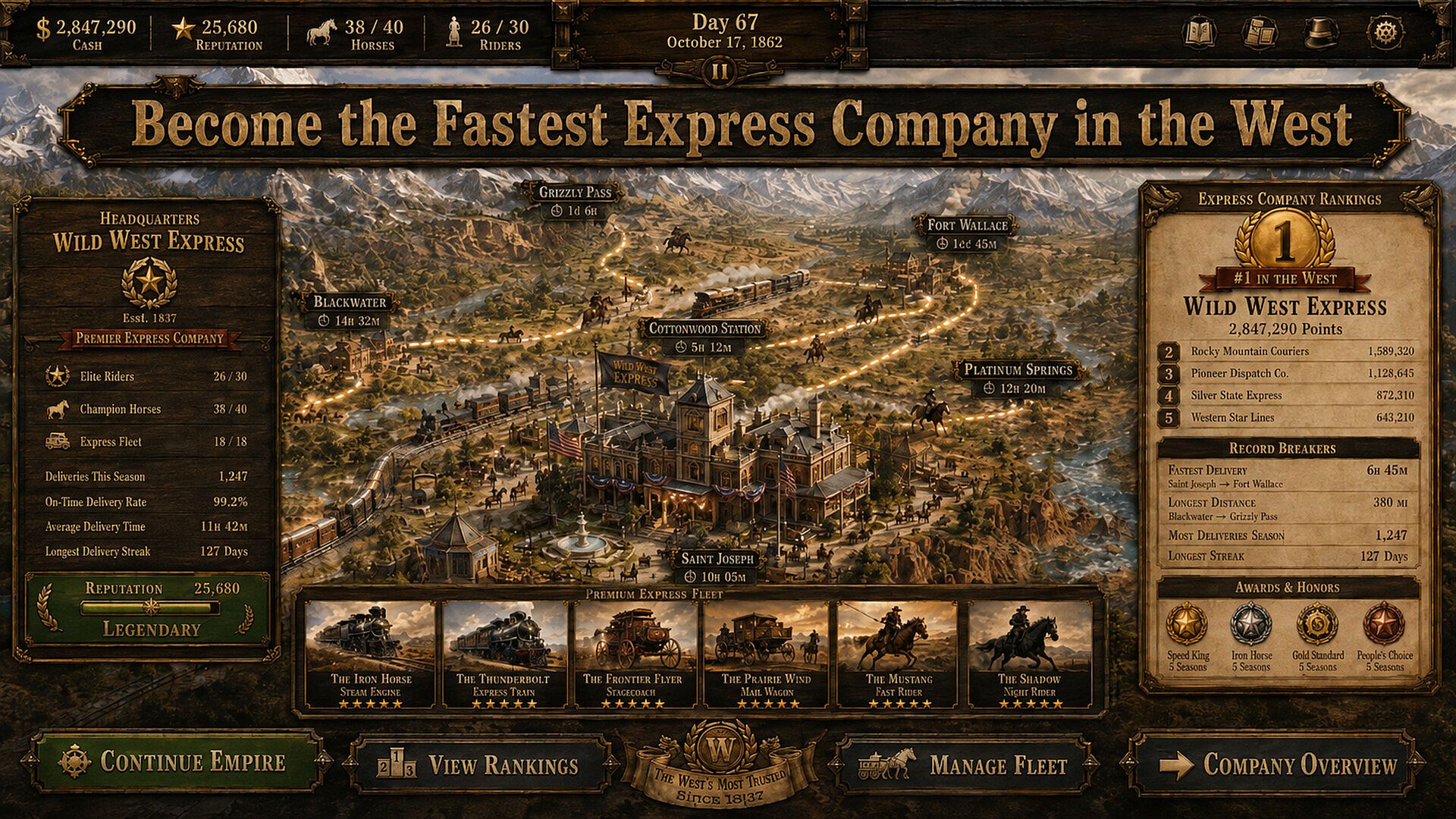
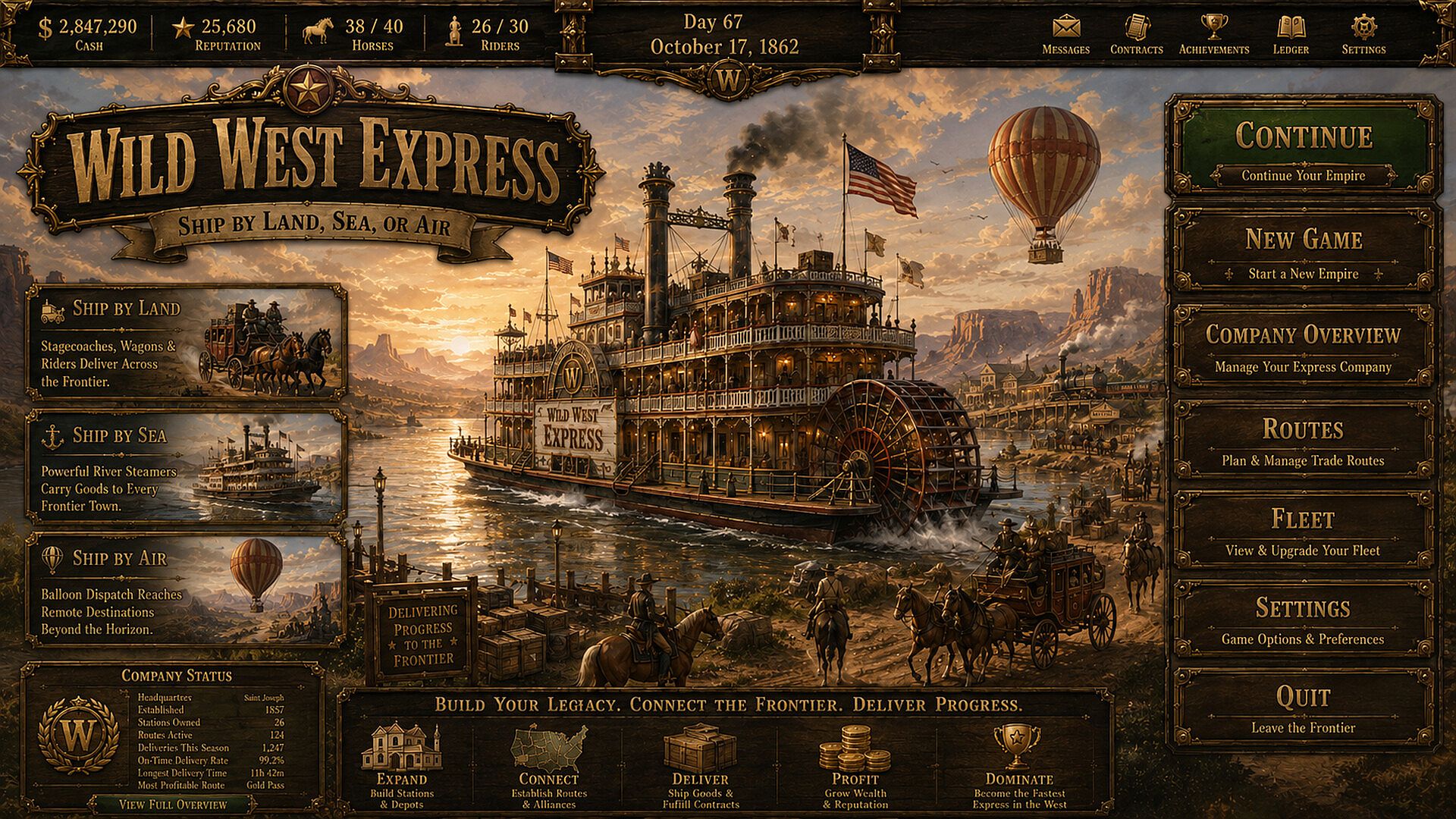
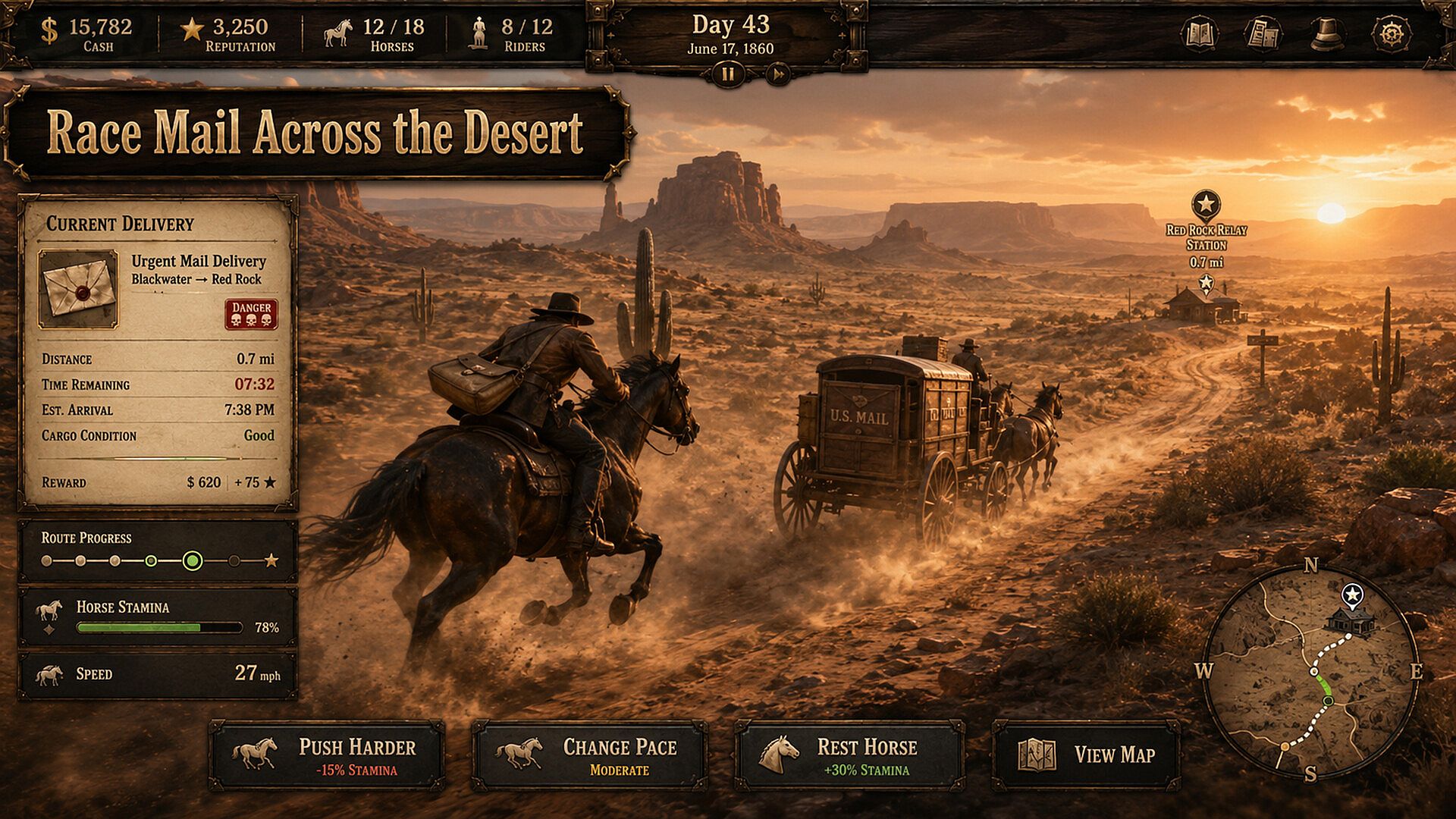
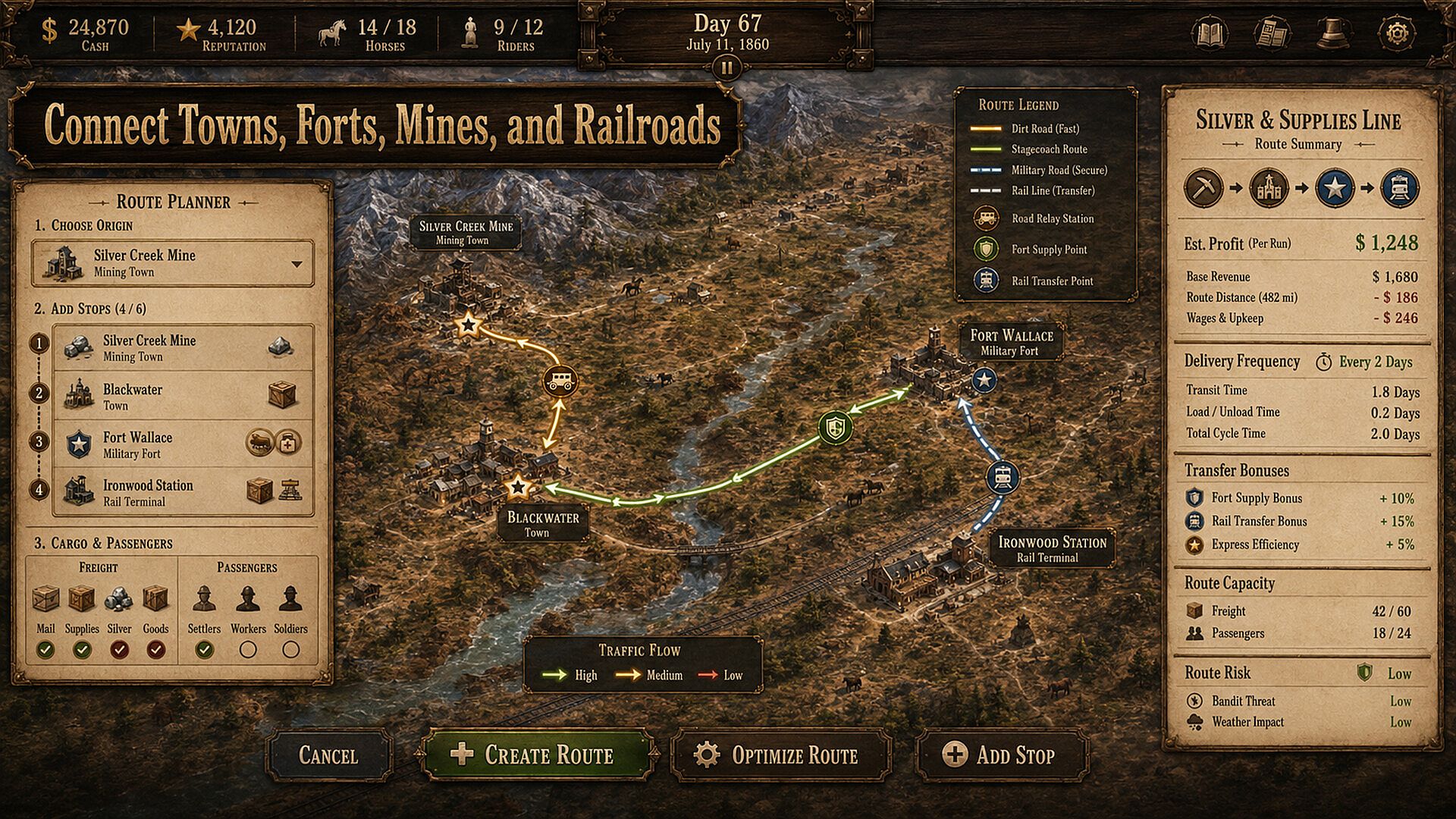
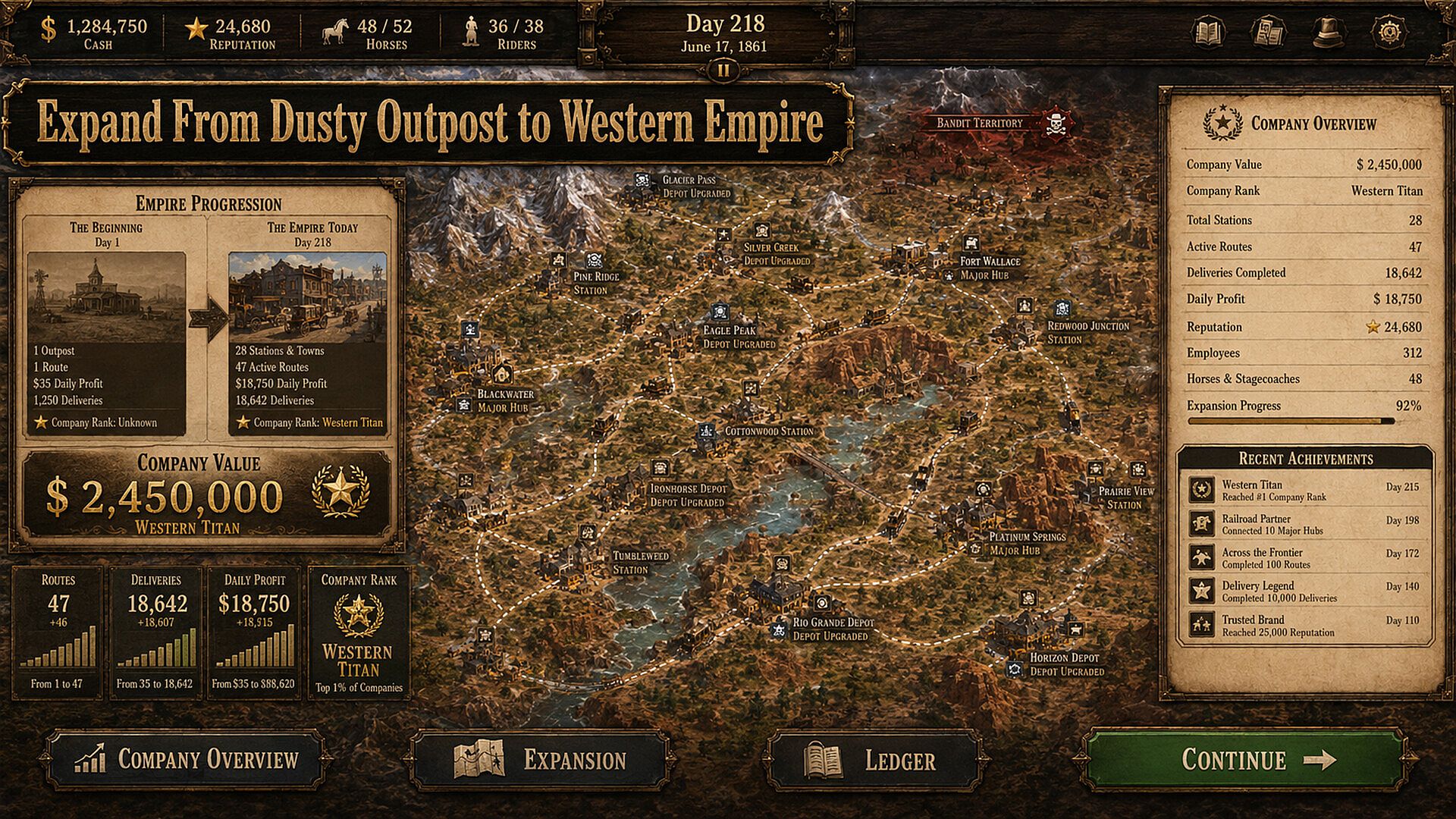
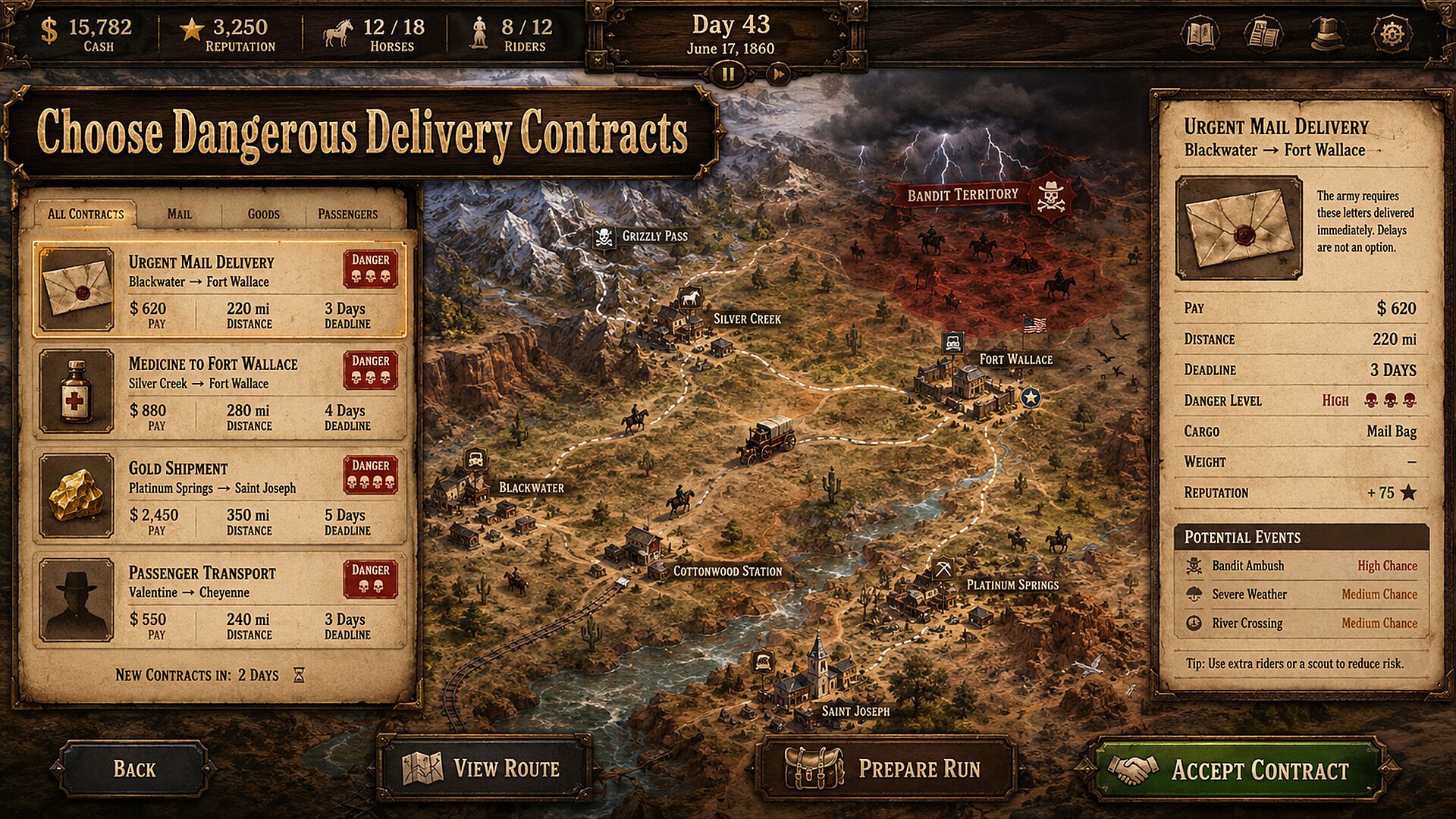
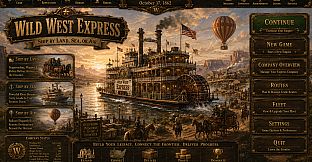
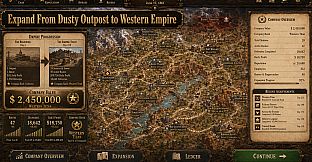
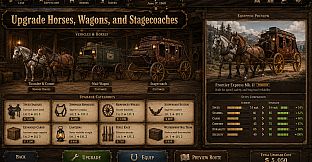
Wild West Express is a strategy, indie, and simulation game set in a frontier environment where players manage a growing transport business. The core experience centers on expanding from a single delivery route into a network that moves cargo across land, water, and air while handling the challenges of the Wild West.
Gameplay
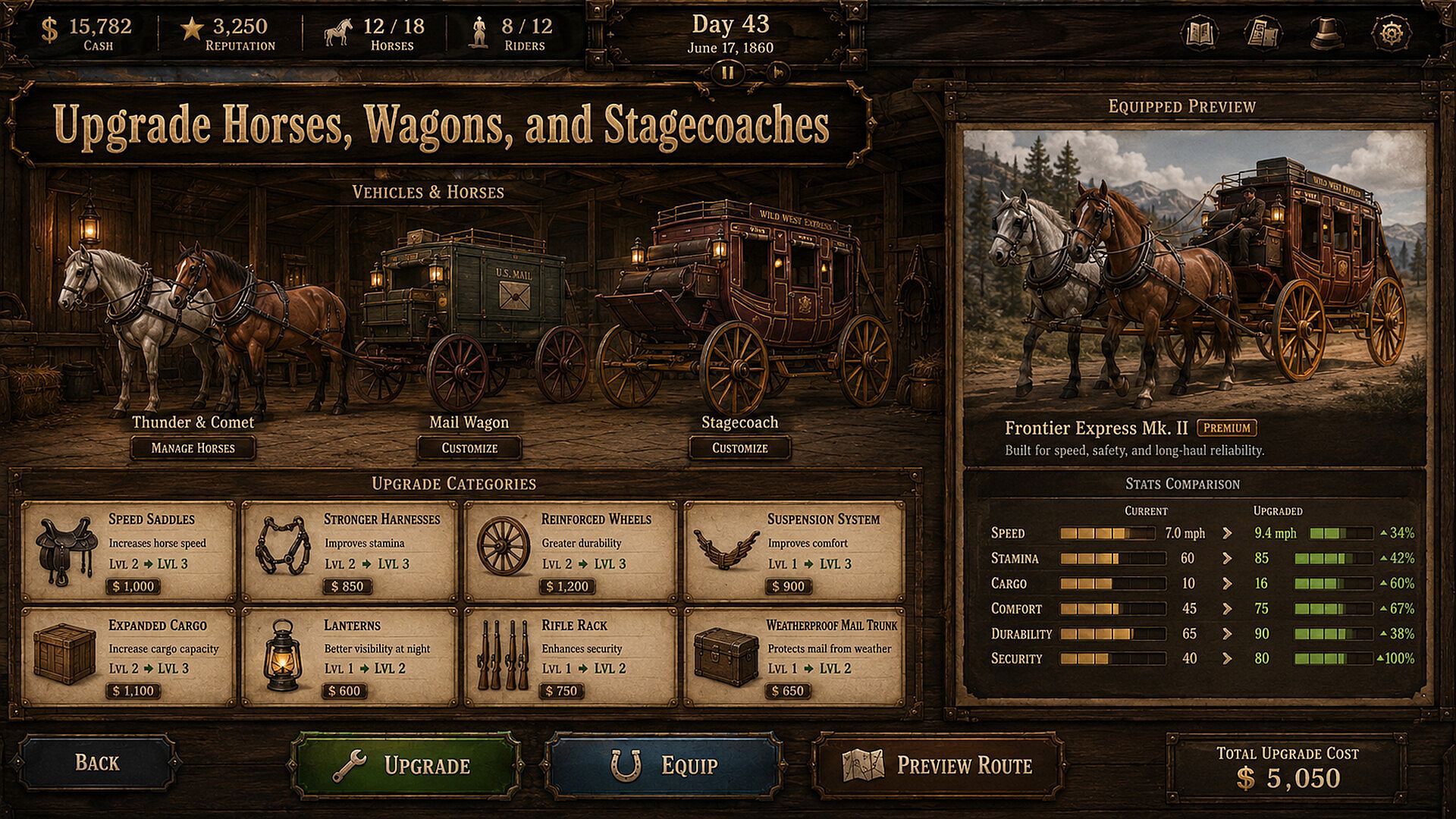
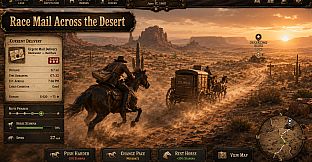
Players begin with a modest operation and focus on establishing profitable routes between settlements, outposts, camps, ports, and rail stations. Vehicles include stagecoaches, wagons, riders on horseback, steam trains, paddleboats, and hot-air balloons. Each type of transport can be upgraded for better speed, cargo capacity, durability, comfort, and protection against hazards.
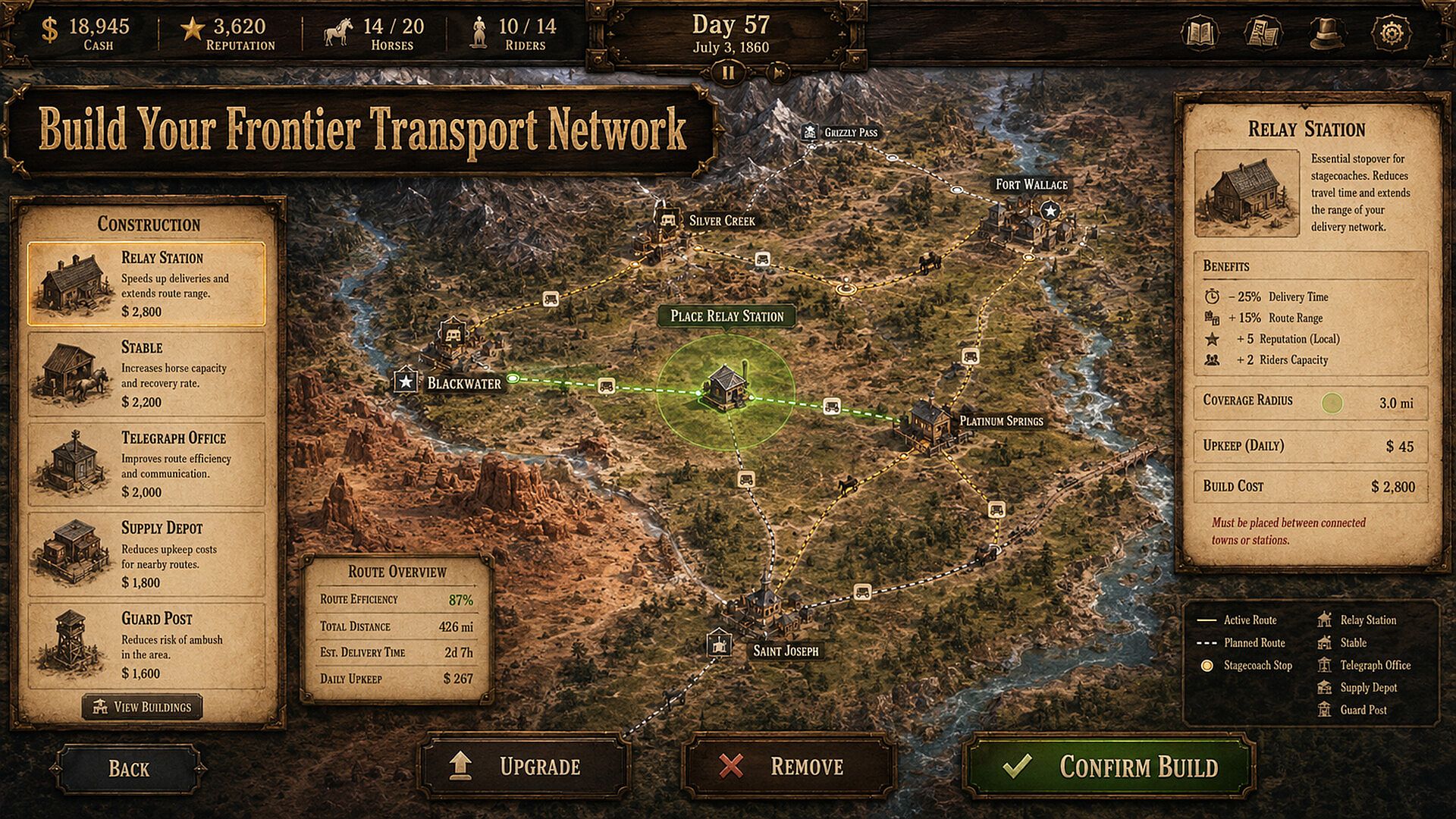
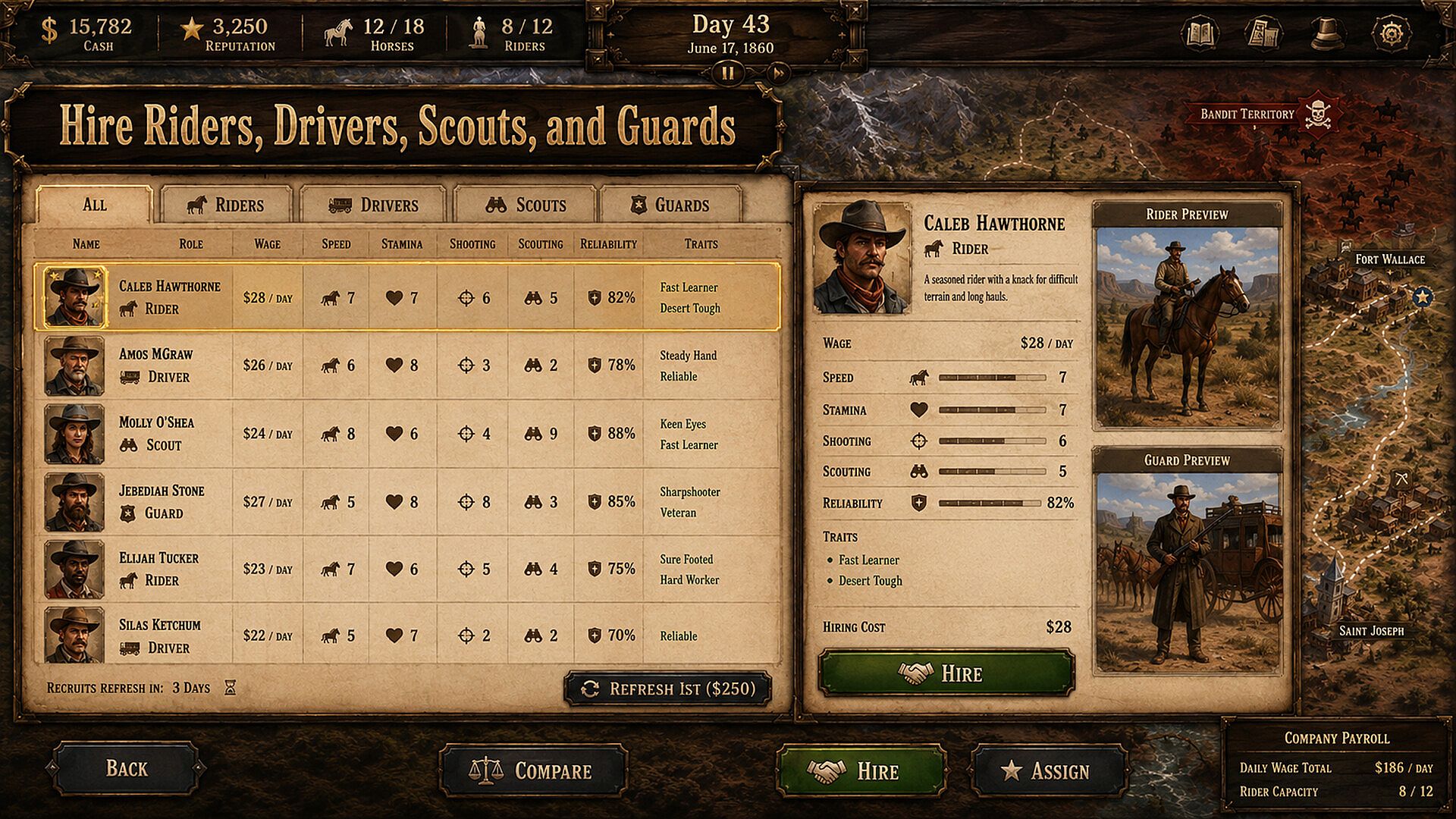
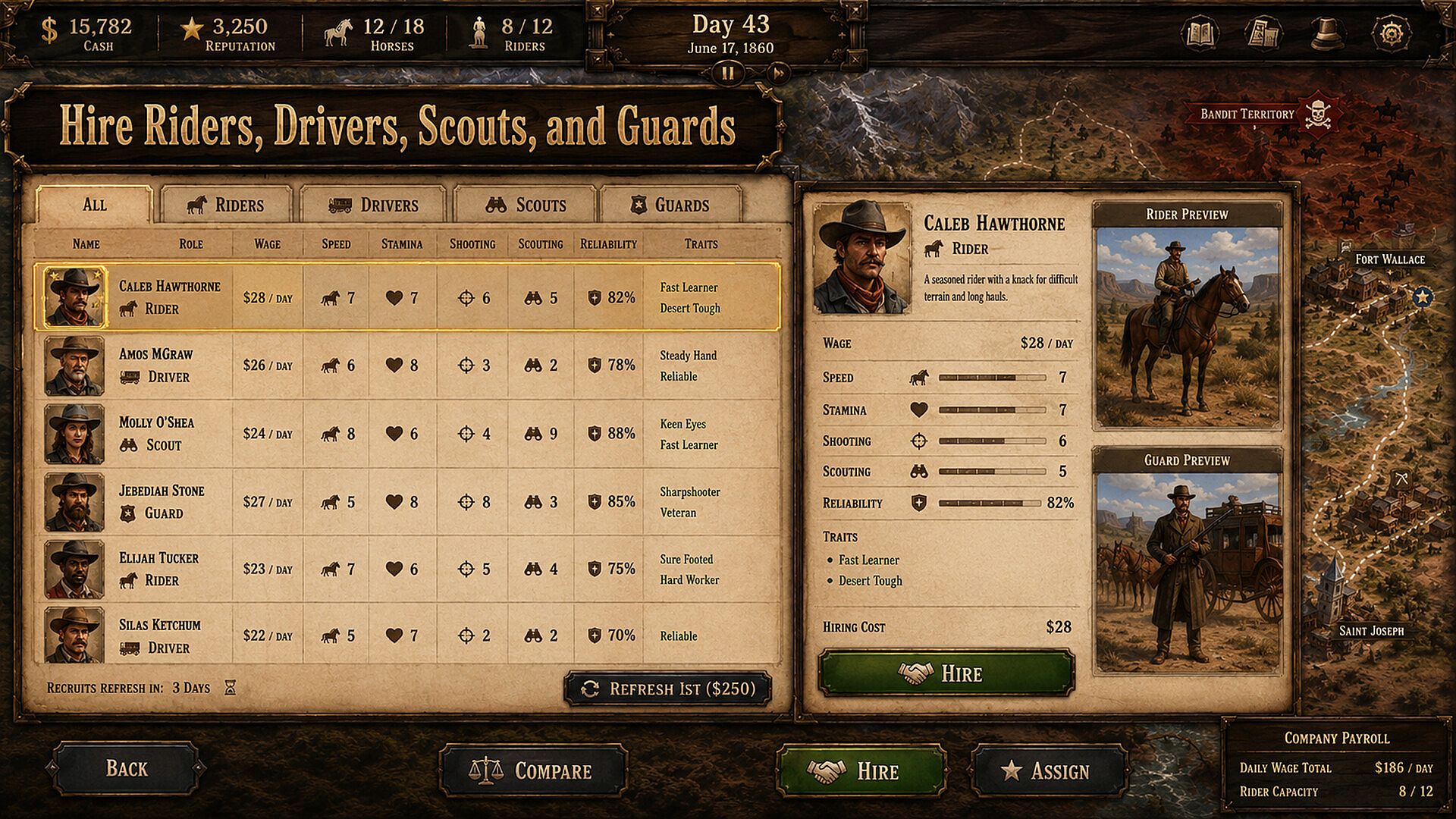
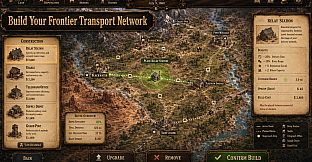
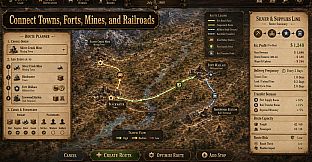
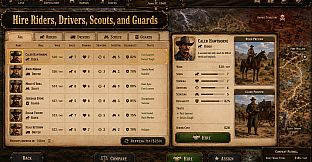
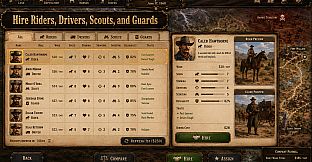
Route planning requires balancing factors such as distance, terrain, weather conditions, and potential profit. Stations and depots receive upgrades that include stables, warehouses, repair yards, relay stations, ports, and rail connections to support the expanding network. Crew management involves hiring riders, drivers, scouts, and guards who must contend with bandit ambushes, dust storms, washed-out roads, broken bridges, exhausted animals, and rival interference.
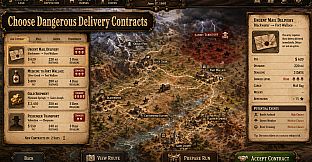
Contracts range from mail runs and supply shipments to passenger routes, medicine deliveries, mining operations, military requests, and high-value express jobs. Successful deliveries improve reputation and revenue, while failures can harm standing and allow competitors to gain ground. The simulation emphasizes steady growth through careful resource allocation and risk assessment rather than direct combat or exploration.
Game Modes
The game operates as a single-player experience focused on campaign-style progression. There are no separate competitive or cooperative modes listed. All activity revolves around building and maintaining the transport empire within one continuous play session that scales from small beginnings to a large interconnected system.
Progression follows a management loop of accepting contracts, assigning vehicles and crew, upgrading infrastructure, and expanding into rail and river transport options. Balloon routes add another layer for specialized dispatch needs. The structure rewards long-term planning over short sessions, with reputation and profit serving as the main measures of success.
Key Mechanics and Progression
Expansion into rail transport connects existing routes to steam train terminals for faster long-distance movement. Riverboat supply lines use paddle steamers to link towns along waterways. Balloon dispatch routes provide additional flexibility for urgent or remote deliveries. These systems integrate with the land-based network to create more efficient overall operations.
Frontier dangers appear as ongoing threats that players mitigate through crew composition, vehicle upgrades, and route selection. Reputation management ties directly to contract performance, influencing future opportunities and the ability to outpace rivals. The simulation tracks multiple variables including cargo types, weather impacts, and infrastructure maintenance without introducing unrelated systems.
Is It Worth Playing?
Wild West Express targets players who enjoy detailed management simulations and incremental empire building. The single-player format suits those interested in logistics, route optimization, and resource balancing within a historical frontier theme. Because the game remains unreleased with a planned date still to be announced, no player reviews or performance data exist yet.
Those drawn to strategy titles that combine vehicle upgrades, crew hiring, and contract fulfillment may find the described systems appealing once it launches. The emphasis on surviving hazards and growing a reliable service network provides a focused loop without additional layers such as combat or narrative branches. Availability will depend on the eventual release on PC.











