


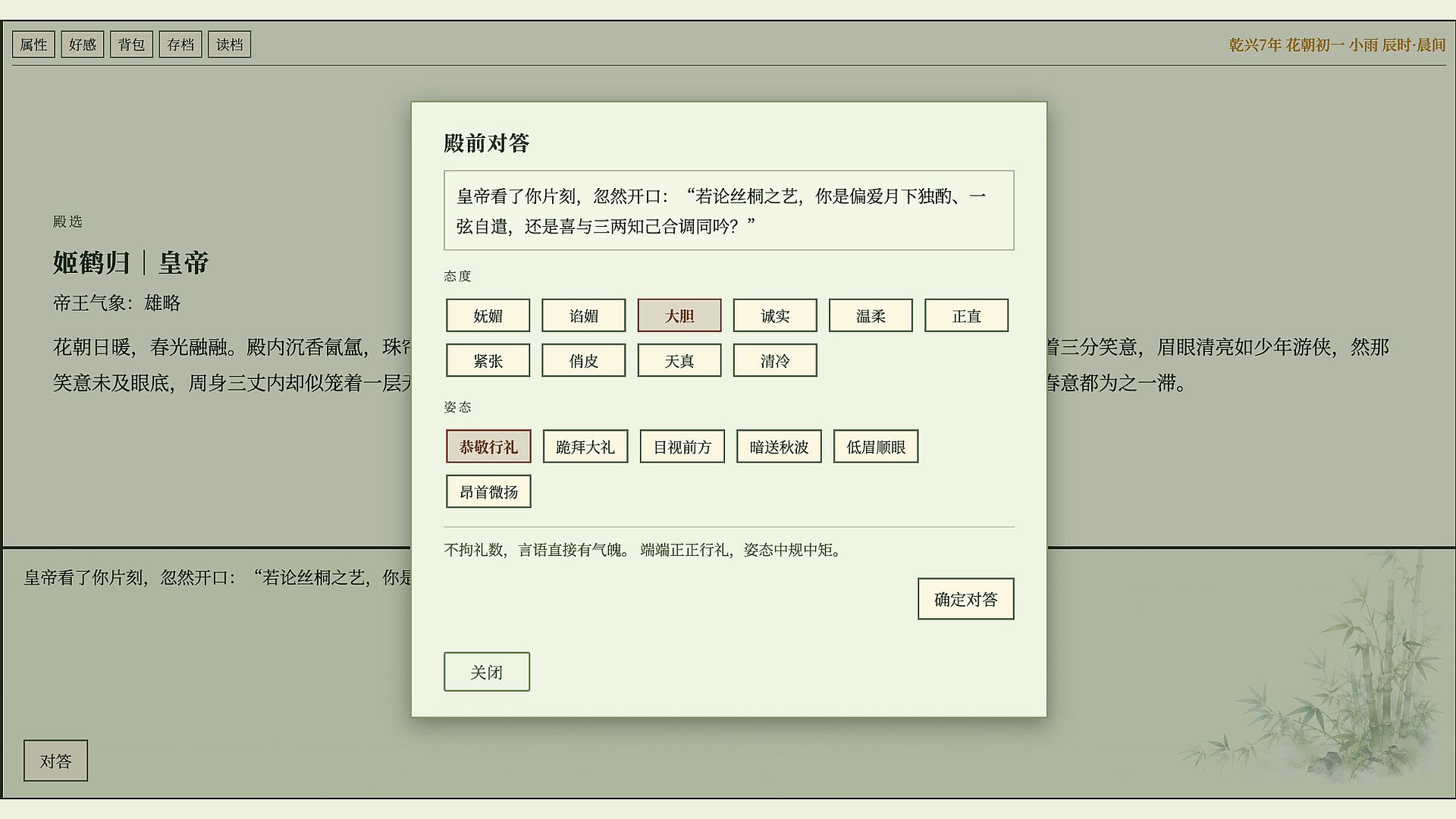


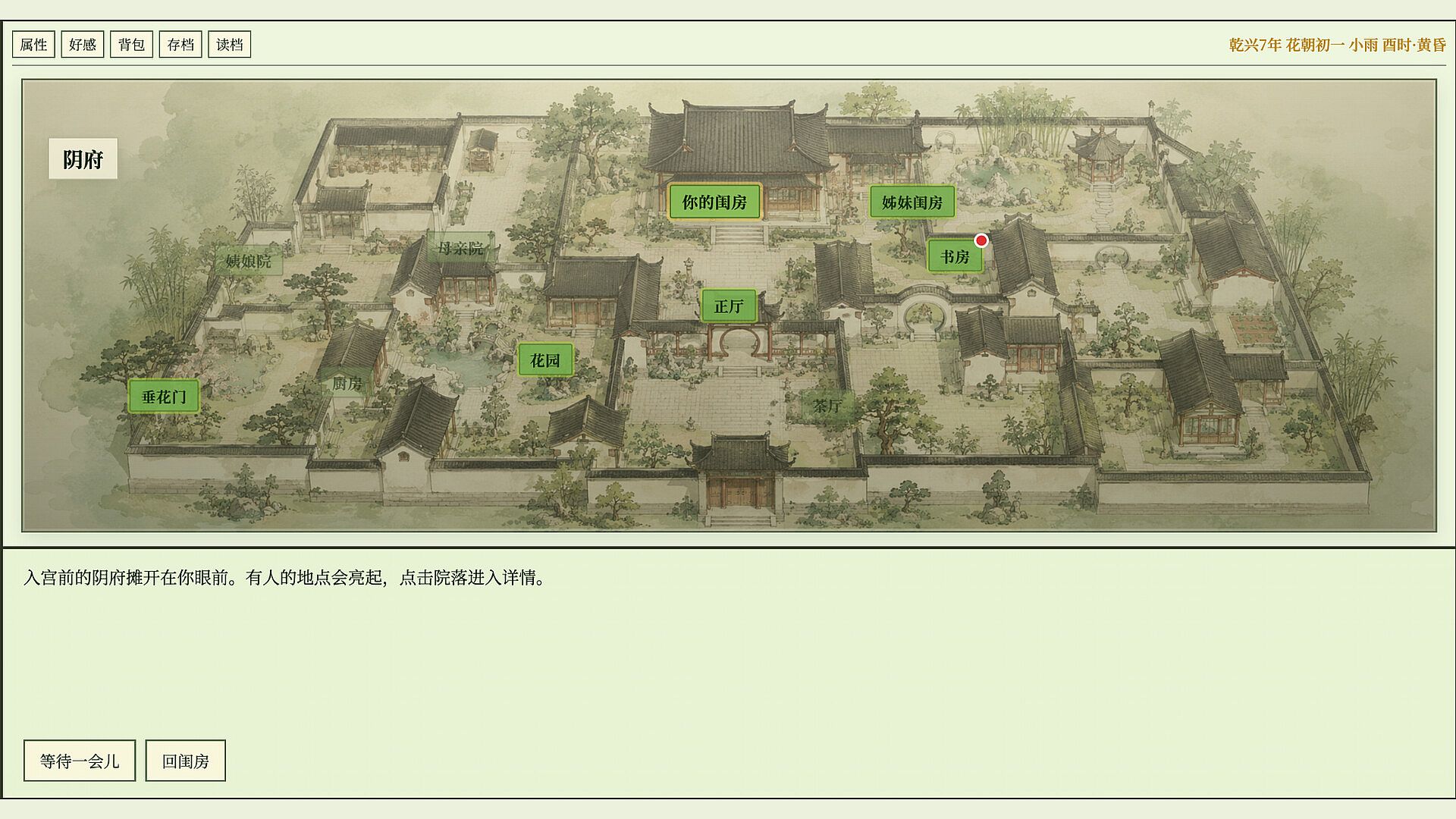
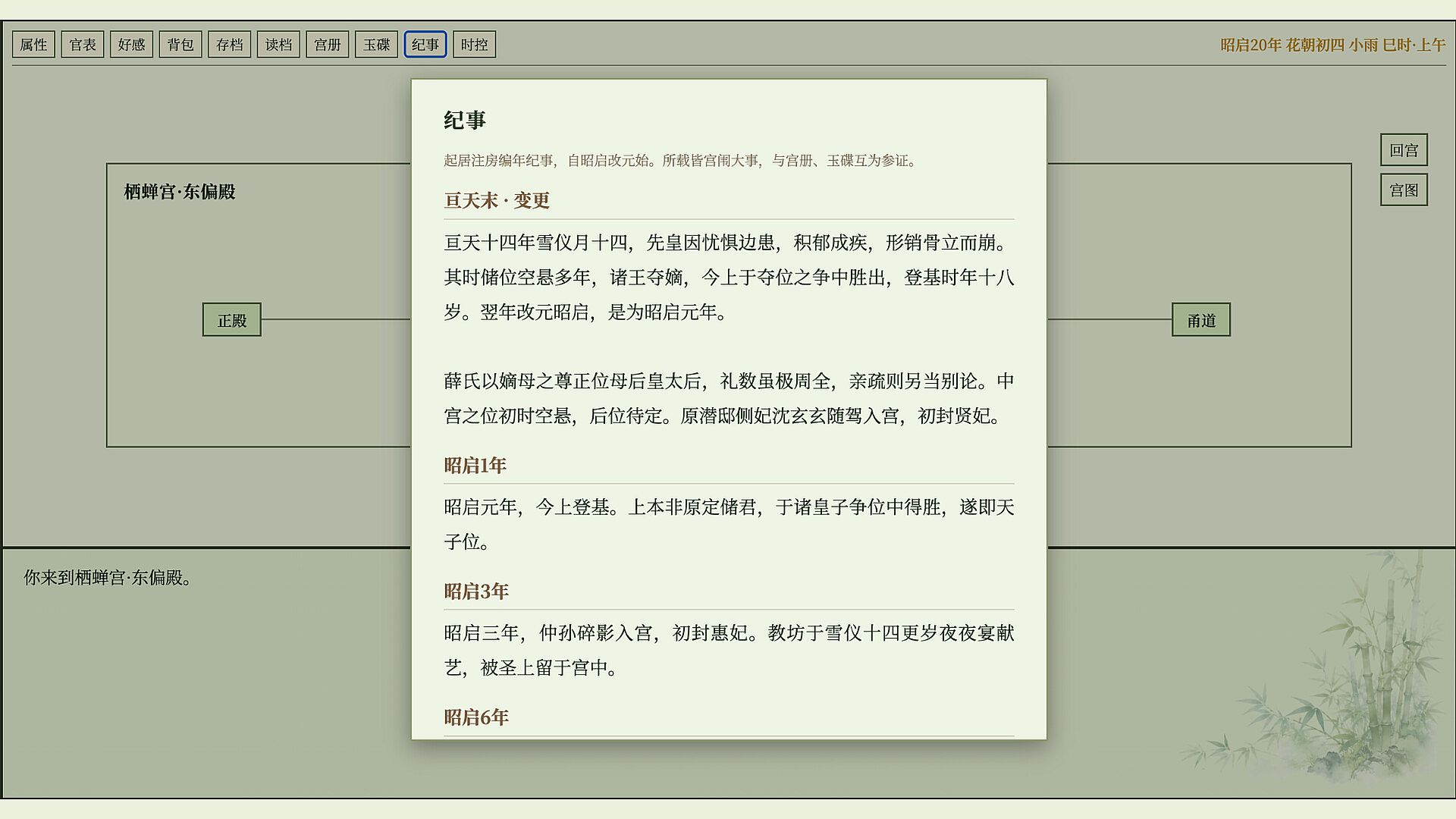






Within the Inner Palace is an indie RPG with casual and simulation elements set on PC. Players take on the role of the daughter of a court official who enters a fictional imperial court as an imperial consort. The experience centers on text-based life simulation enhanced by AI systems that support free-form interactions rather than limited preset choices.
Gameplay
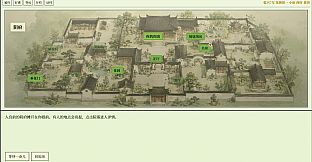
The core loop revolves around managing personal development alongside family interests in a rule-based environment. Daily activities include handling household affairs, observing etiquette, and navigating time and resource constraints while building connections with a wide range of characters. These include the emperor, empress, other consorts, servants, officials, physicians, and relatives. Interactions influence favor, trust, suspicion, rivalry, and hidden states that affect future events.
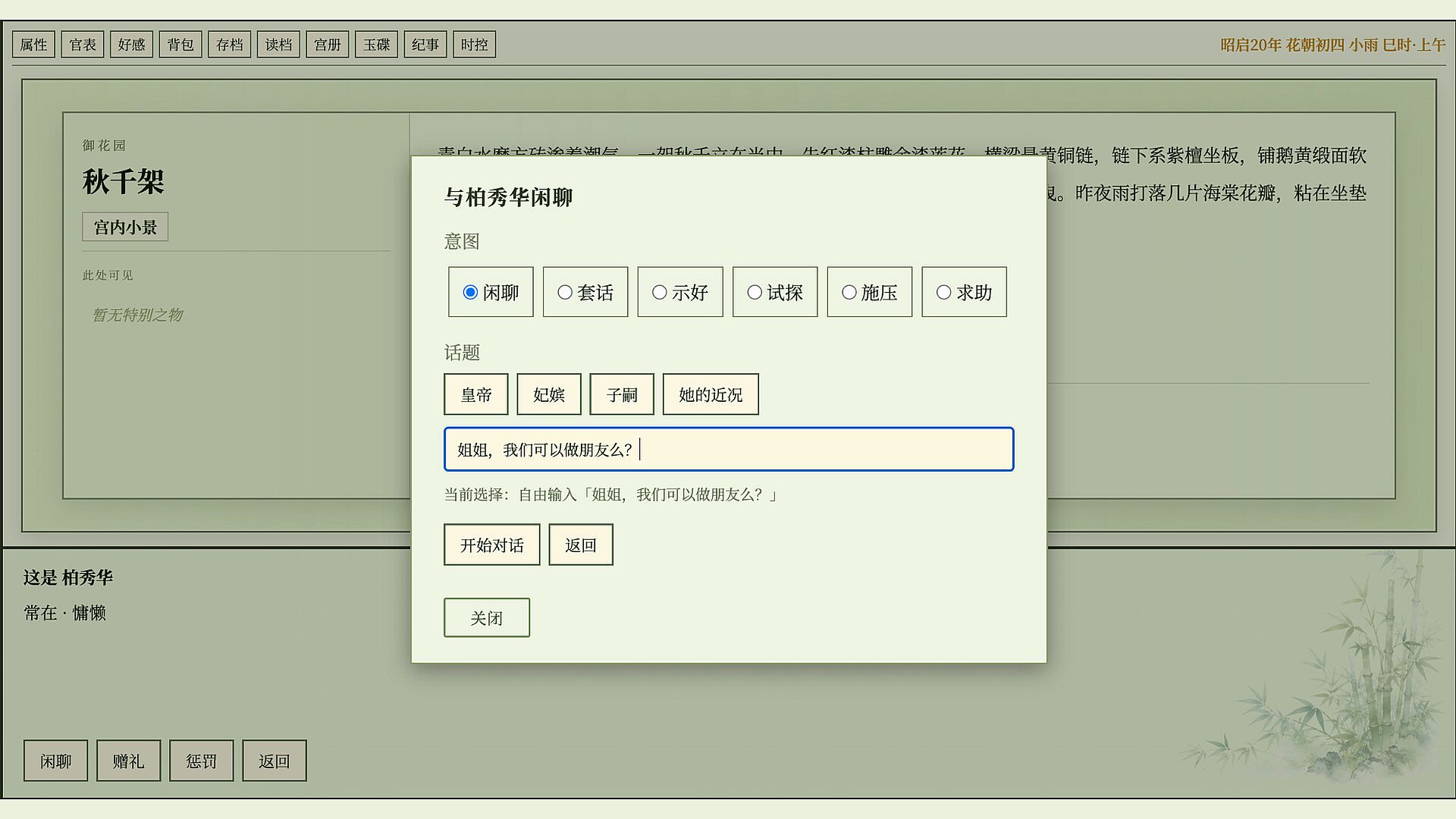
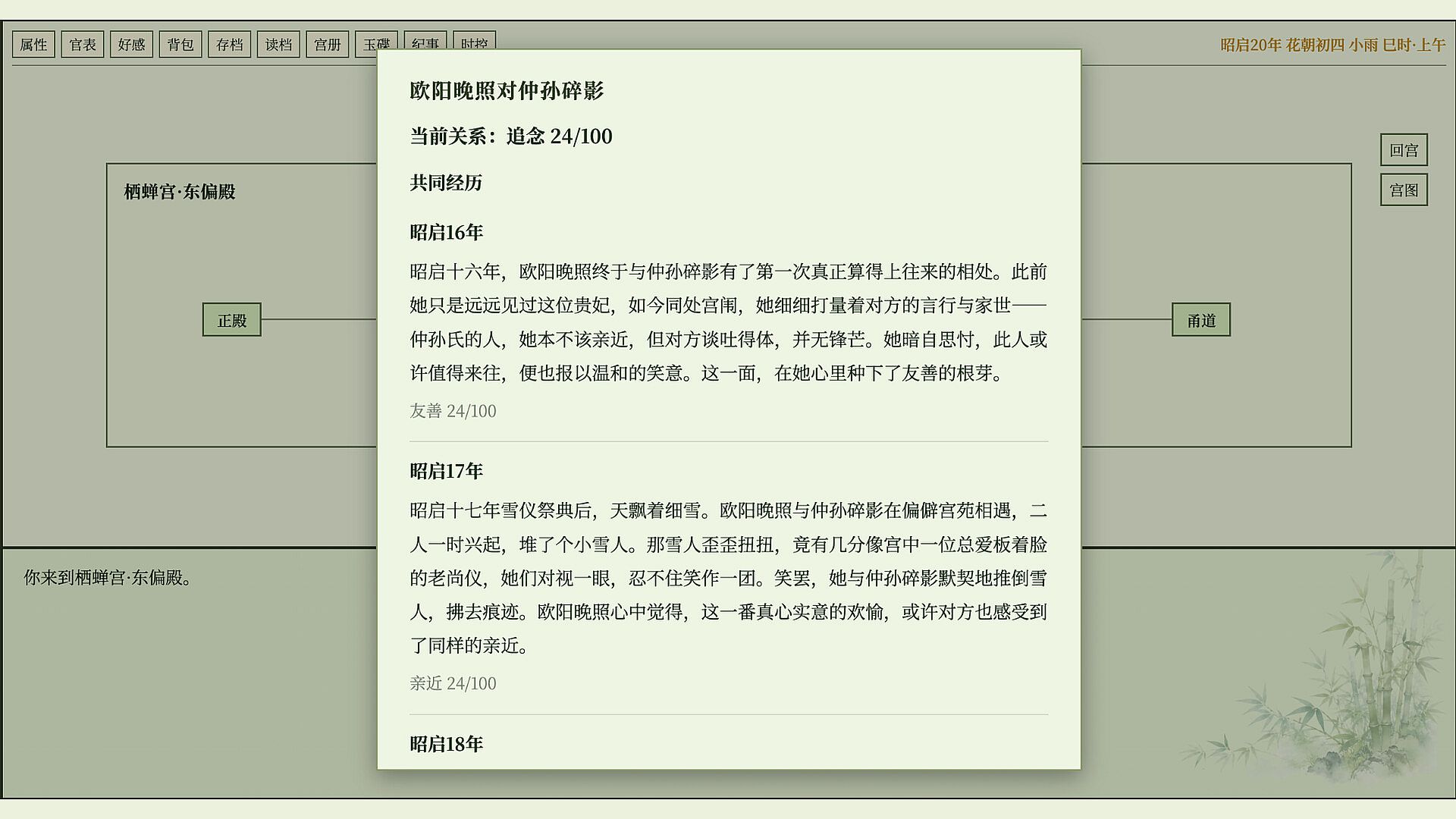
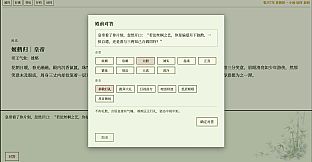
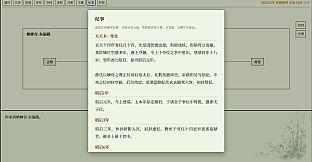
Free-form dialogue allows input in natural language, which the AI processes to generate responses that can unlock special branches or unexpected outcomes. A memory system tracks conversations, promises, conflicts, favors, and emotional impressions, enabling characters to adjust attitudes based on personality, status, ambitions, and changing circumstances. This creates ongoing consequences for decisions made earlier in a playthrough.
Progression involves balancing romance, political maneuvering, pregnancy and children, alliances, and potential betrayals. Players influence rank and household management while deciding whether to follow expected paths or pursue alternatives that alter the court's order. The simulation ties individual choices directly to family honor, influence, and survival.
Game Modes
The game operates as a single-player experience focused on nonlinear progression through the imperial court. Different approaches emerge from player decisions, such as pursuing favor with key figures, protecting clan interests, advancing through the hierarchy, maintaining a low profile, or challenging the established structure for alternate conclusions. No two playthroughs follow identical sequences due to the combination of rule-based systems and AI-driven responses.
Mechanics emphasize relationship building across the inner court and external connections. Hidden conditions tied to past interactions can trigger special events or shift alliances over time. The structure supports both structured simulation elements and open-ended exploration of personal and political dynamics without fixed storylines.
Key Systems and Mechanics
Rank and resource management form the foundation, requiring attention to etiquette, household operations, and family obligations. Relationship states evolve through repeated interactions, with the memory system ensuring that prior events shape character behavior. Pregnancy and children introduce additional layers of consequence that link personal life to broader political outcomes.
Political struggles unfold through alliances and rivalries that players can foster or disrupt. The AI-enhanced dialogue supports varied responses based on context, allowing for tools, confidantes, or enemies to develop organically. This setup rewards careful tracking of impressions and promises while permitting radical deviations from standard consort expectations.
Is It Worth Playing?
The game suits players interested in text-based simulations that combine structured management with flexible AI interactions. Those who enjoy tracking long-term relationship changes, exploring multiple paths through political and personal decisions, and experiencing consequences from free-form choices will find the systems engaging. The nonlinear structure and memory features support replayability through different strategies for favor, survival, or upheaval.
Availability on PC makes it accessible for those seeking a focused single-player experience centered on court life and character-driven outcomes. The emphasis on rule-based simulation paired with AI dialogue provides depth for fans of indie RPG and simulation titles that prioritize consequence and personalization over preset narratives.