


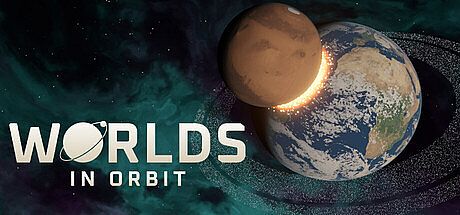


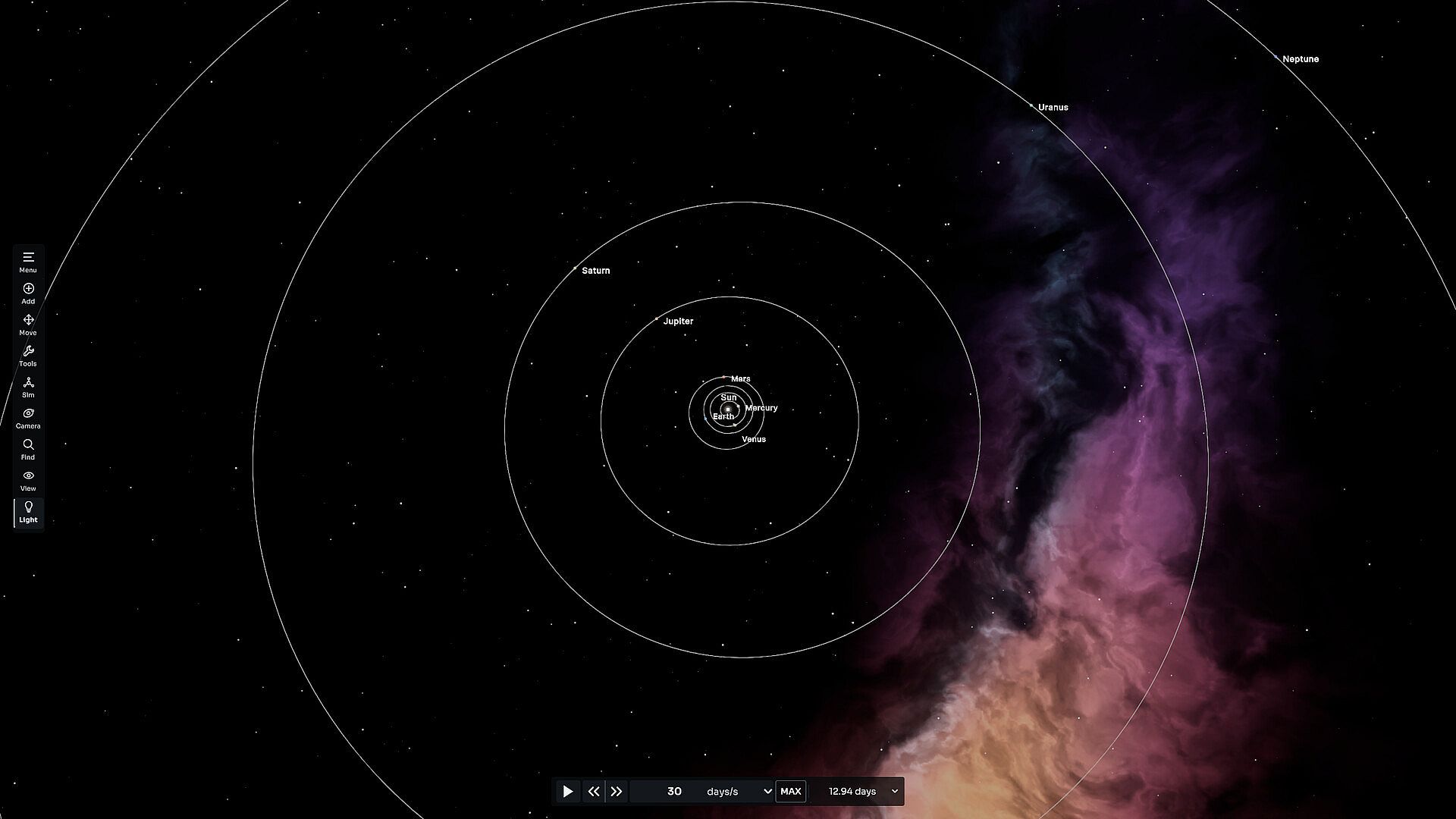
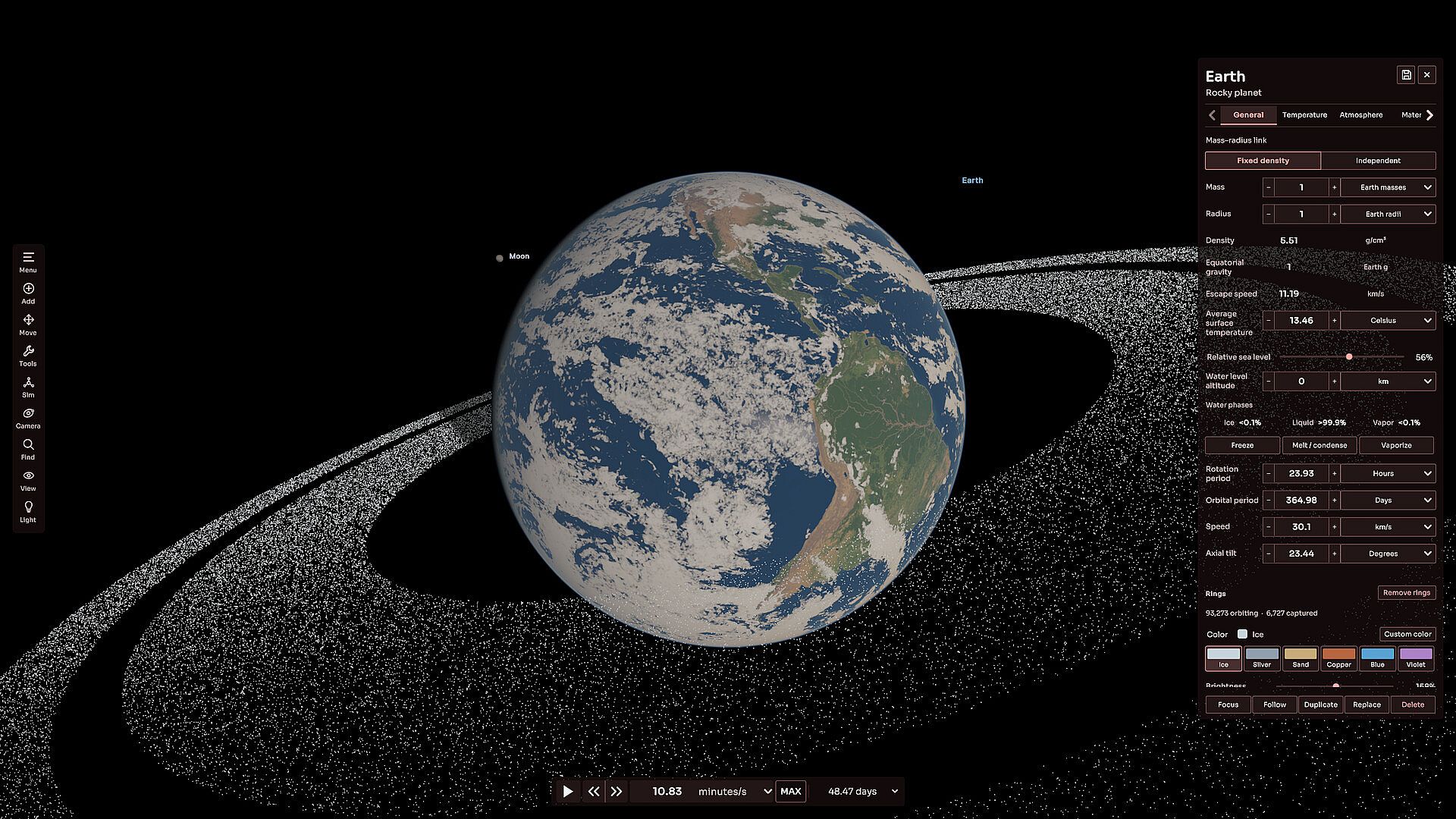
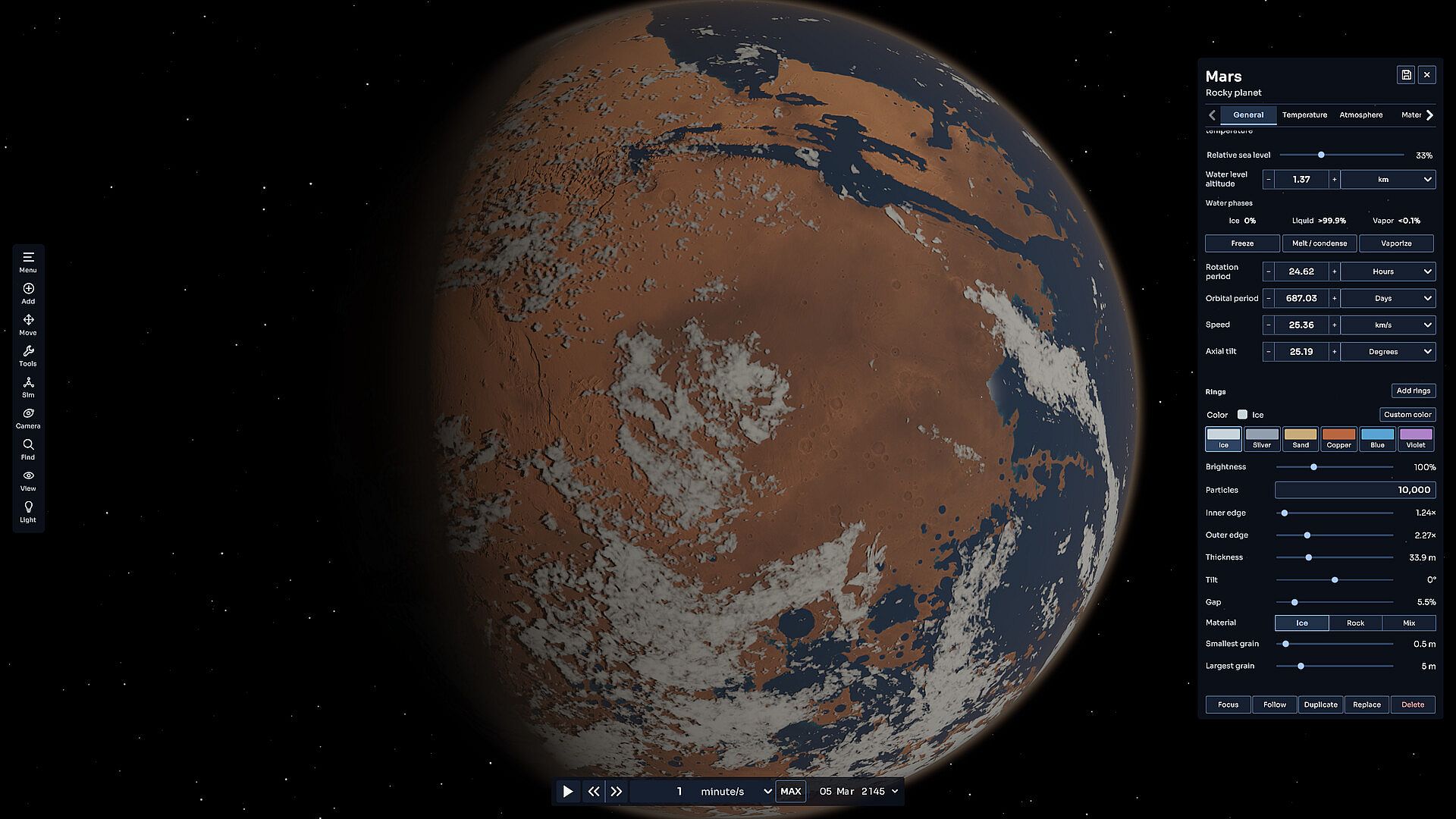
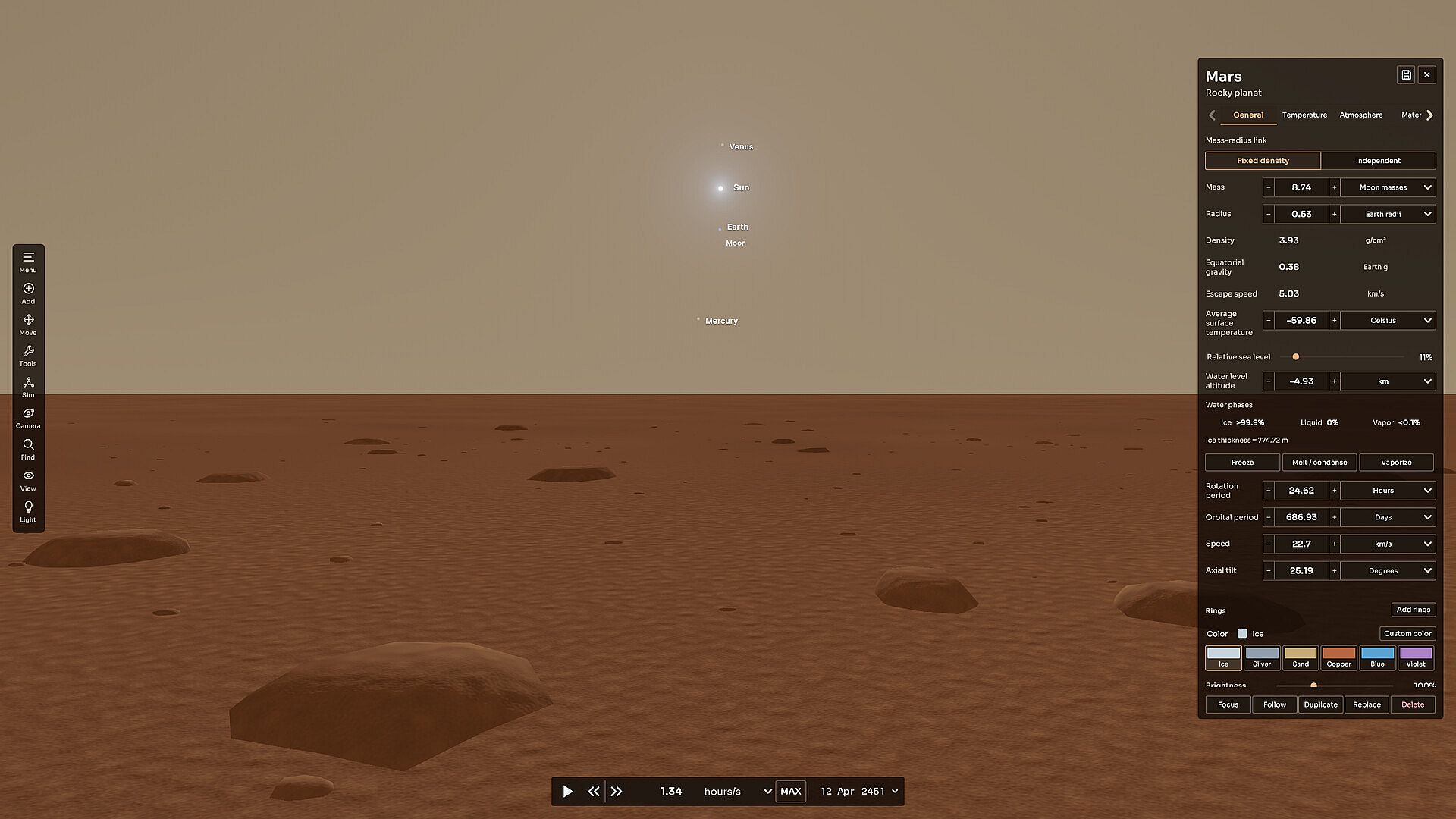
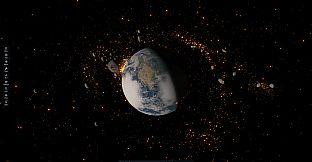
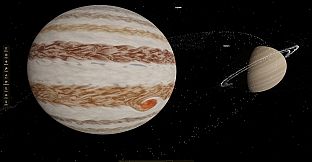
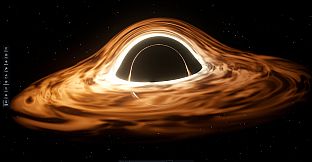
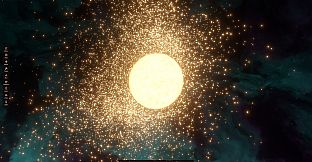
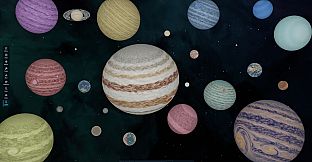
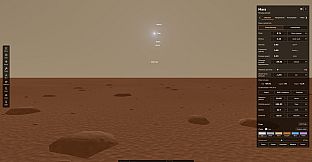
Worlds in Orbit is an indie space simulation game for PC that centers on creating custom planets and solar systems governed by realistic Newtonian N-body gravity. Players shape individual worlds through detailed terrain and climate tools, then place them into dynamic orbital systems where mass, velocity, and interactions determine long-term outcomes like captures, collisions, or stable configurations.
Gameplay
The core loop involves designing planets from the ground up and observing their behavior under gravitational forces. Users begin with a procedurally generated sphere or a blank template, then sculpt features such as mountains, canyons, volcanoes, and lake basins. Separate layers handle terrain elevation and surface materials, allowing precise adjustments with undo and redo support for specific regions.
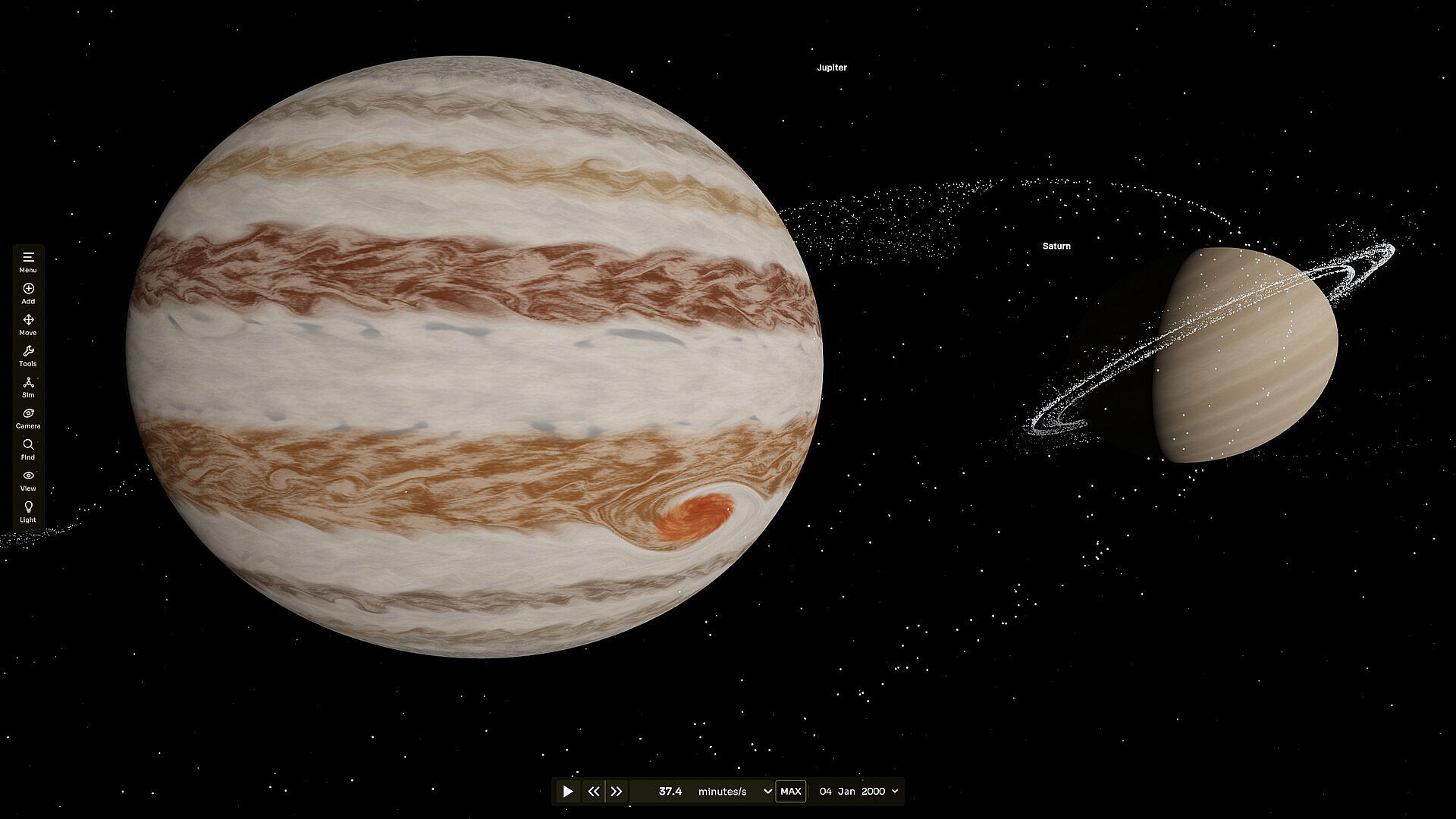
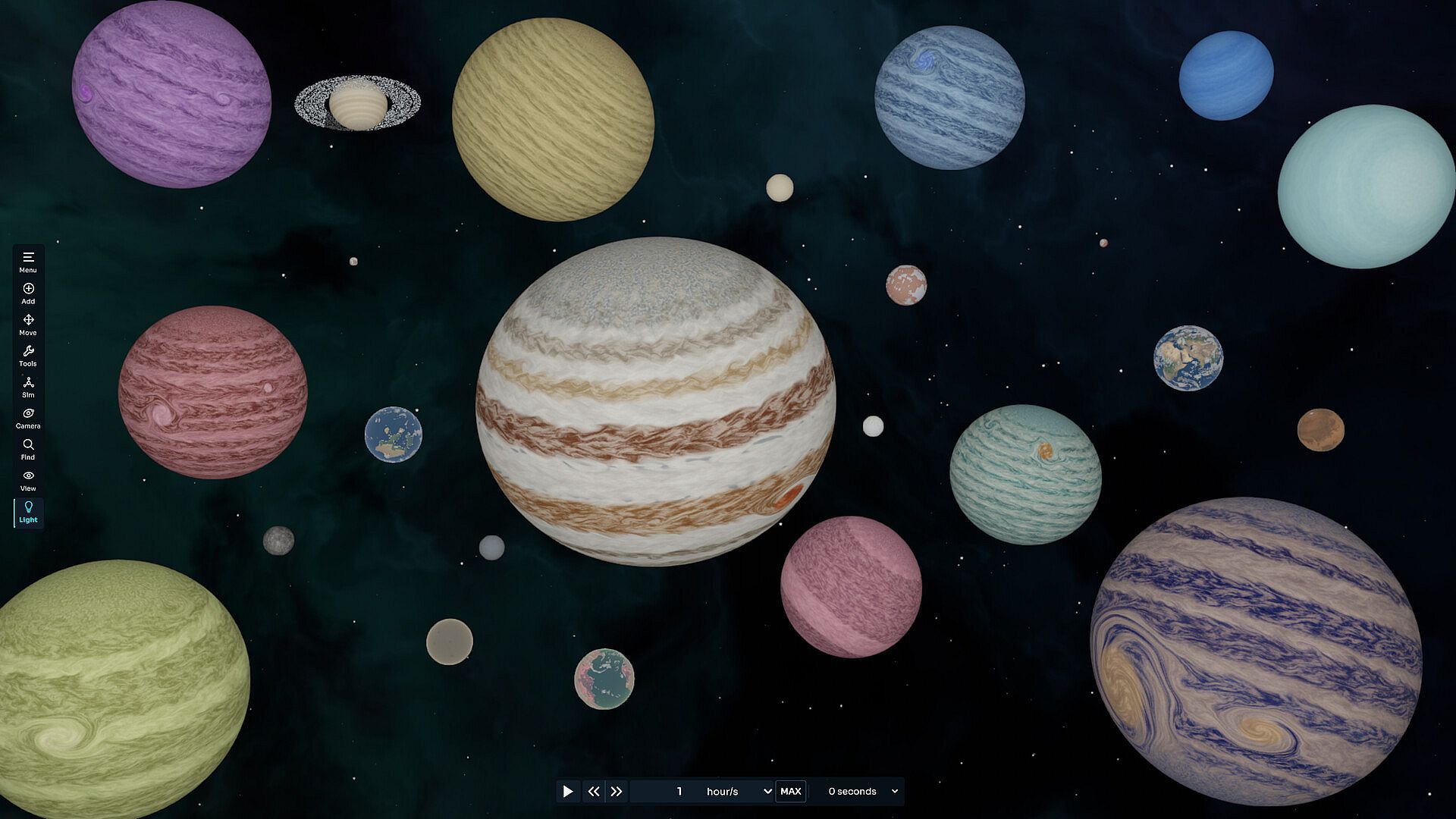
Atmosphere, ocean levels, clouds, mass, size, axial tilt, and rotation speed all factor into the simulation. Gas and ice giants receive dedicated editing options for cloud bands, colors, and storm patterns. Once placed in a system, bodies influence one another through gravity, so altering one planet's properties can shift nearby orbits or trigger chain reactions.
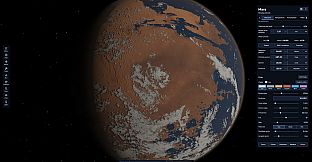
Climate systems track energy balance between stellar input and radiative cooling. Temperature adjustments affect ocean freezing, ice melt, evaporation, snow cover, sea ice, and vegetation color shifts. Players add or remove water, gases, rock, and metal, with impacts from icy or rocky bodies capable of altering surface composition. A habitable zone indicator helps identify conditions suitable for liquid water based on atmosphere and surface details.
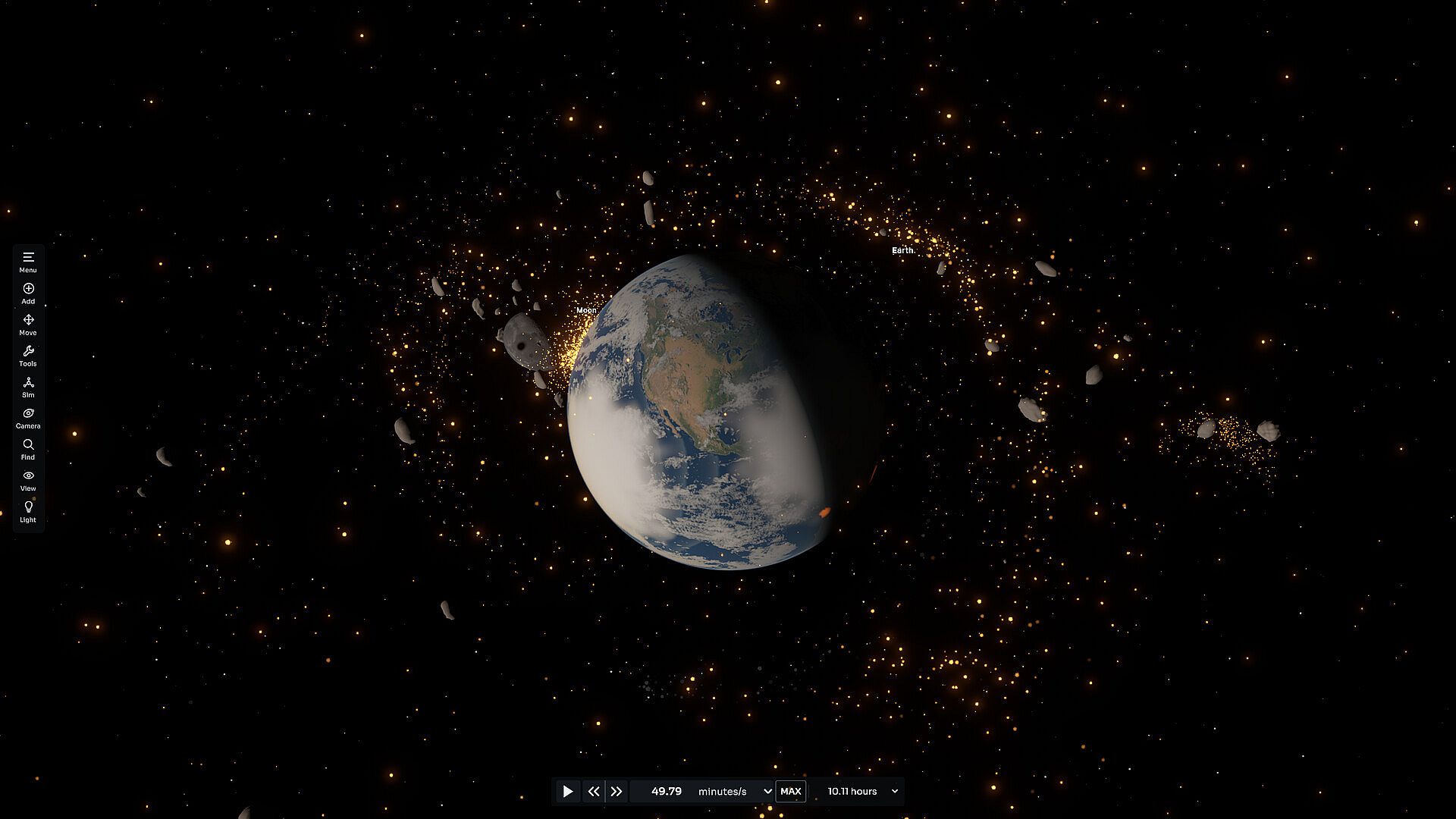
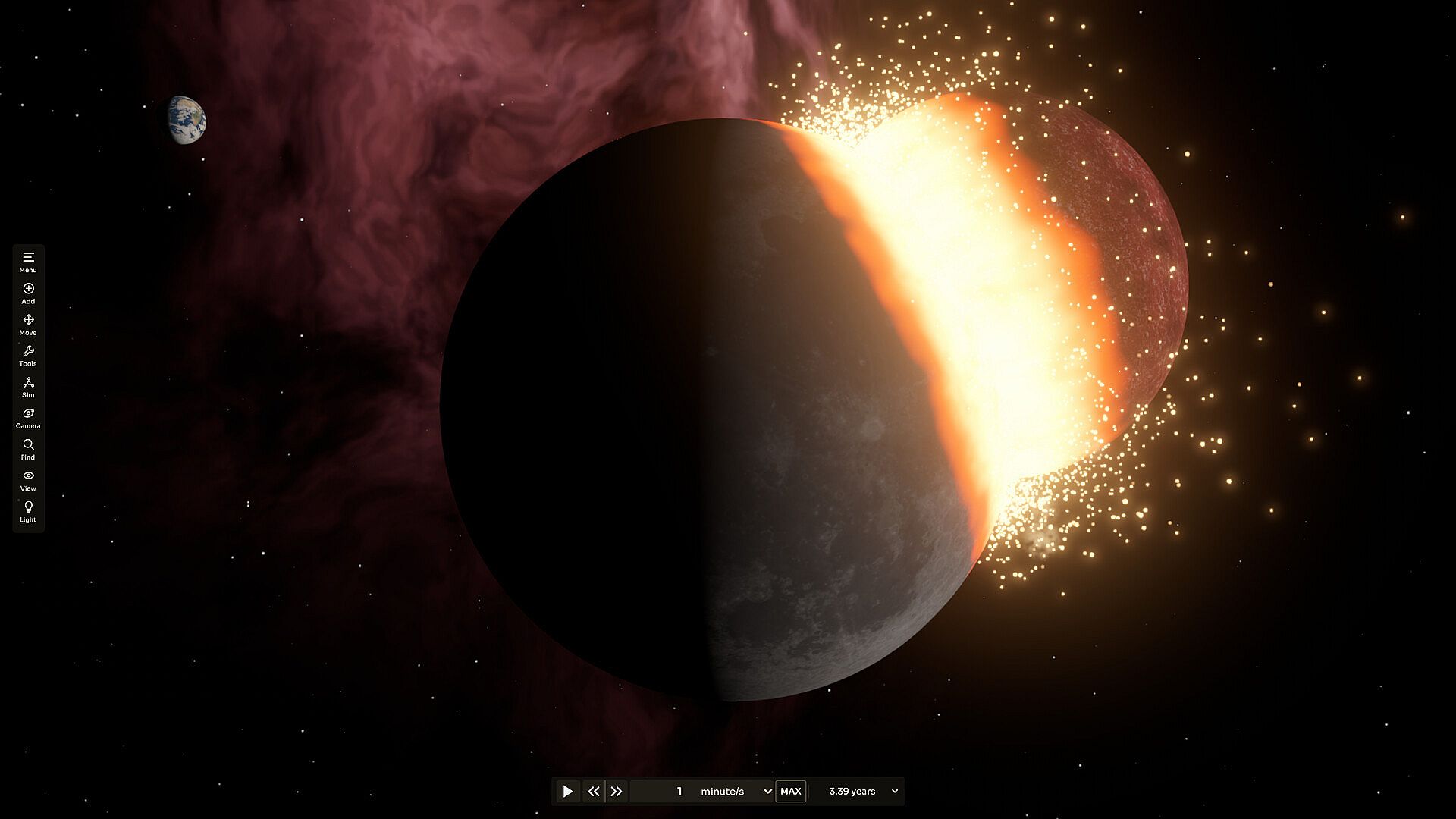
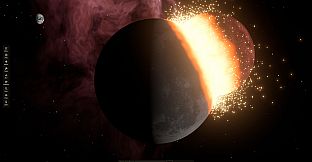
Stress events include tidal stretching during close passes that can strip material from moons, and collisions whose results depend on size, speed, and angle. Faster planetary rotation flattens poles and expands equators, adjusting ocean shorelines accordingly. Exploration tools let users view rocky worlds from orbital distance down to surface level, examining slopes and coastlines in detail.
Game Modes
Worlds in Orbit operates as a single-player creative simulation without separate named modes. The experience centers on iterative world-building and system experimentation, where users pause, slow, or accelerate time to study outcomes. Custom creations save to a personal library for reuse across different simulations, supporting repeated tests of orbital stability or climate responses.
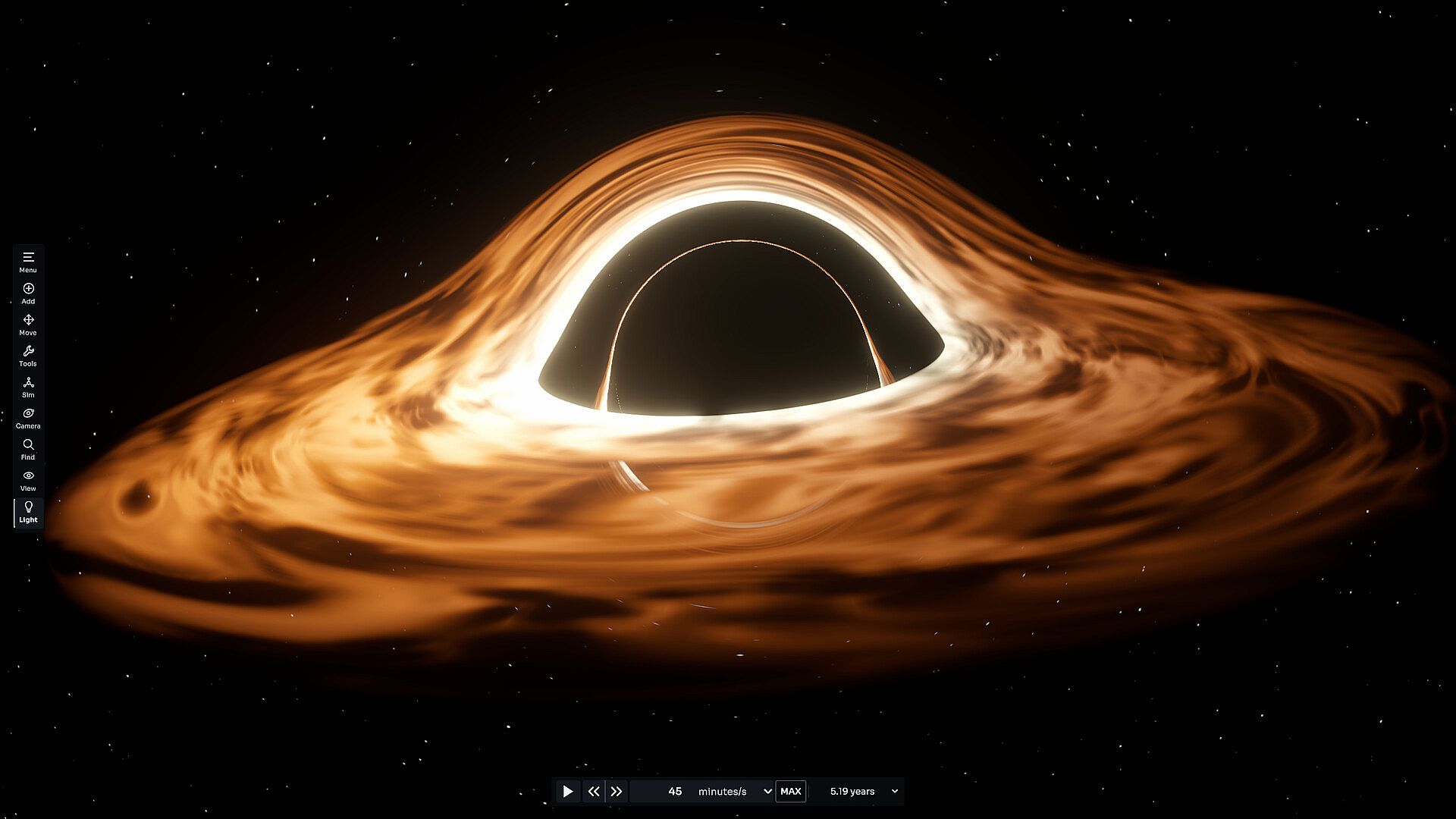
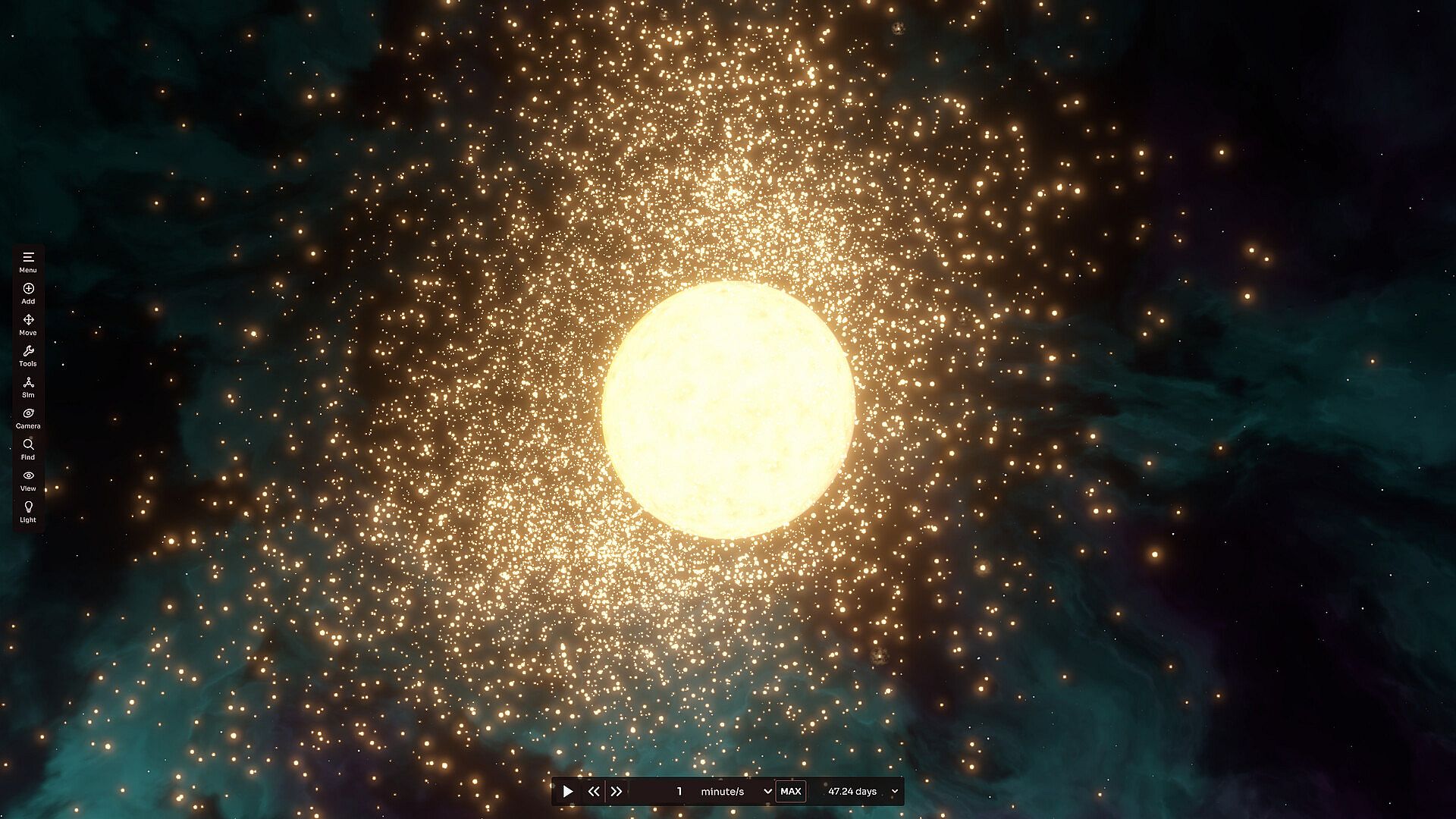
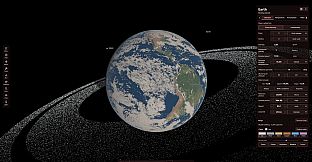
Systems assemble from catalog objects combined with player-made worlds, complete with moons around planets and planets around stars. Adjustable star properties cover temperature, brightness, mass, and size, while black holes support responsive gas discs. Rings of ice and rock can encircle planets, adding visual and gravitational complexity to setups.
World Creation and Editing Tools
Planet editors support temperate, arid, frozen, volcanic, cratered, and alien surface types. Vegetation layers include forests, grasslands, deserts, wetlands, tundra, and ice, each contributing distinct visual character. Procedural generation provides starting points, while manual sculpting refines individual areas without affecting the rest of the surface.
Direct controls over ocean depth, atmospheric composition, and planetary spin allow fine-tuning of physical responses. Saved worlds carry forward their edited properties into new simulations, preserving terrain, climate settings, and material distributions for consistent reuse.
Is It Worth Playing?
Worlds in Orbit suits players interested in physics-driven creative tools rather than action or narrative gameplay. Its Newtonian gravity model and responsive climate mechanics deliver observable cause-and-effect interactions that reward experimentation with mass, orbits, and atmospheric changes. The single-player focus emphasizes personal sandbox sessions for building and testing solar systems at varying speeds.
Because the game remains in a coming-soon state with no released version or player reviews available, its appeal rests on the depth of the described simulation features. Those drawn to detailed planet sculpting, orbital mechanics, and long-term system evolution will find the core systems align closely with those interests. Availability on PC supports broad access once launched, though system requirements scale with simulation complexity involving multiple interacting bodies.












