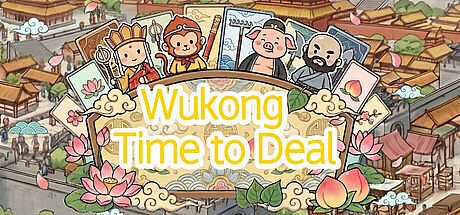


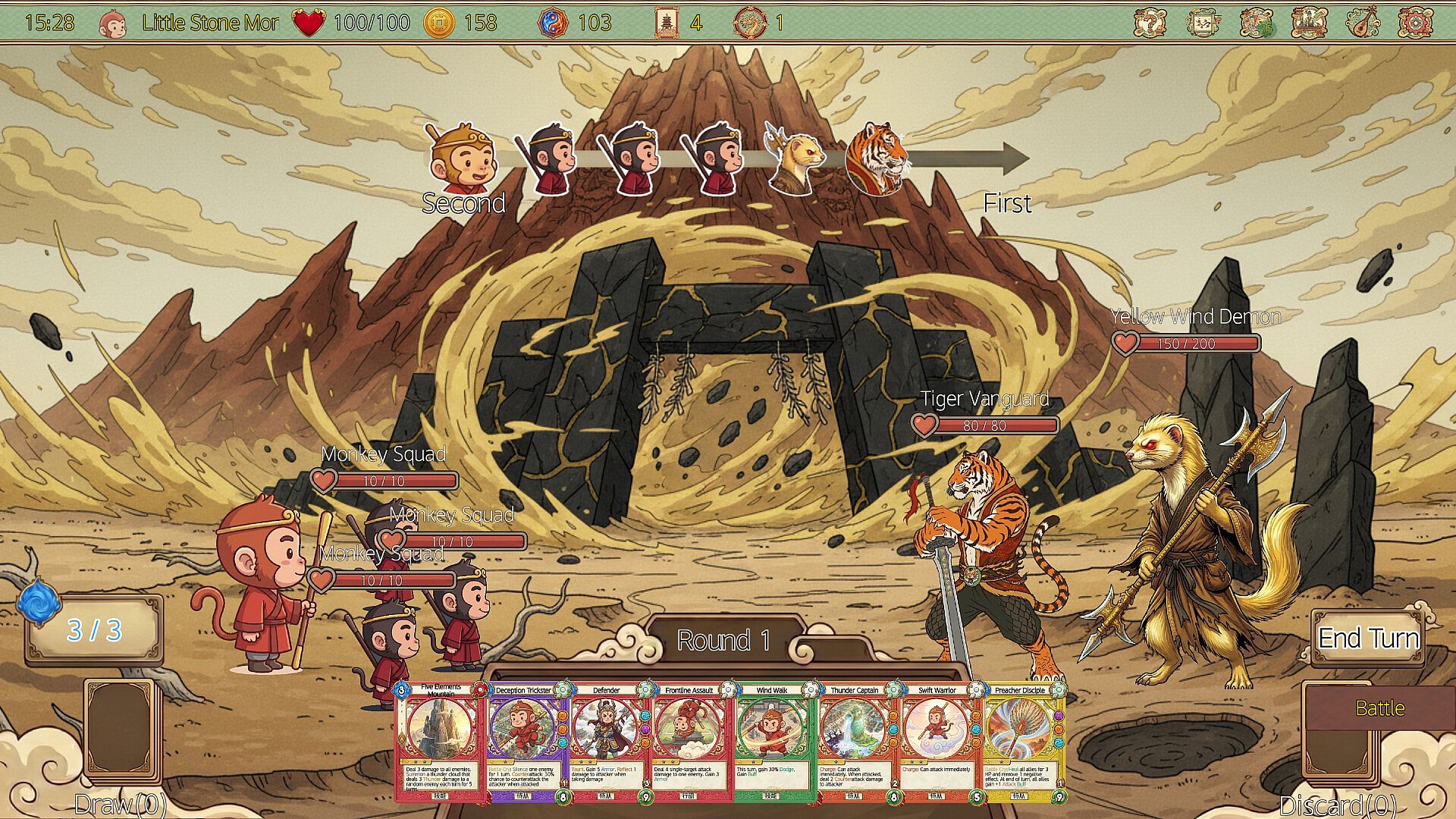
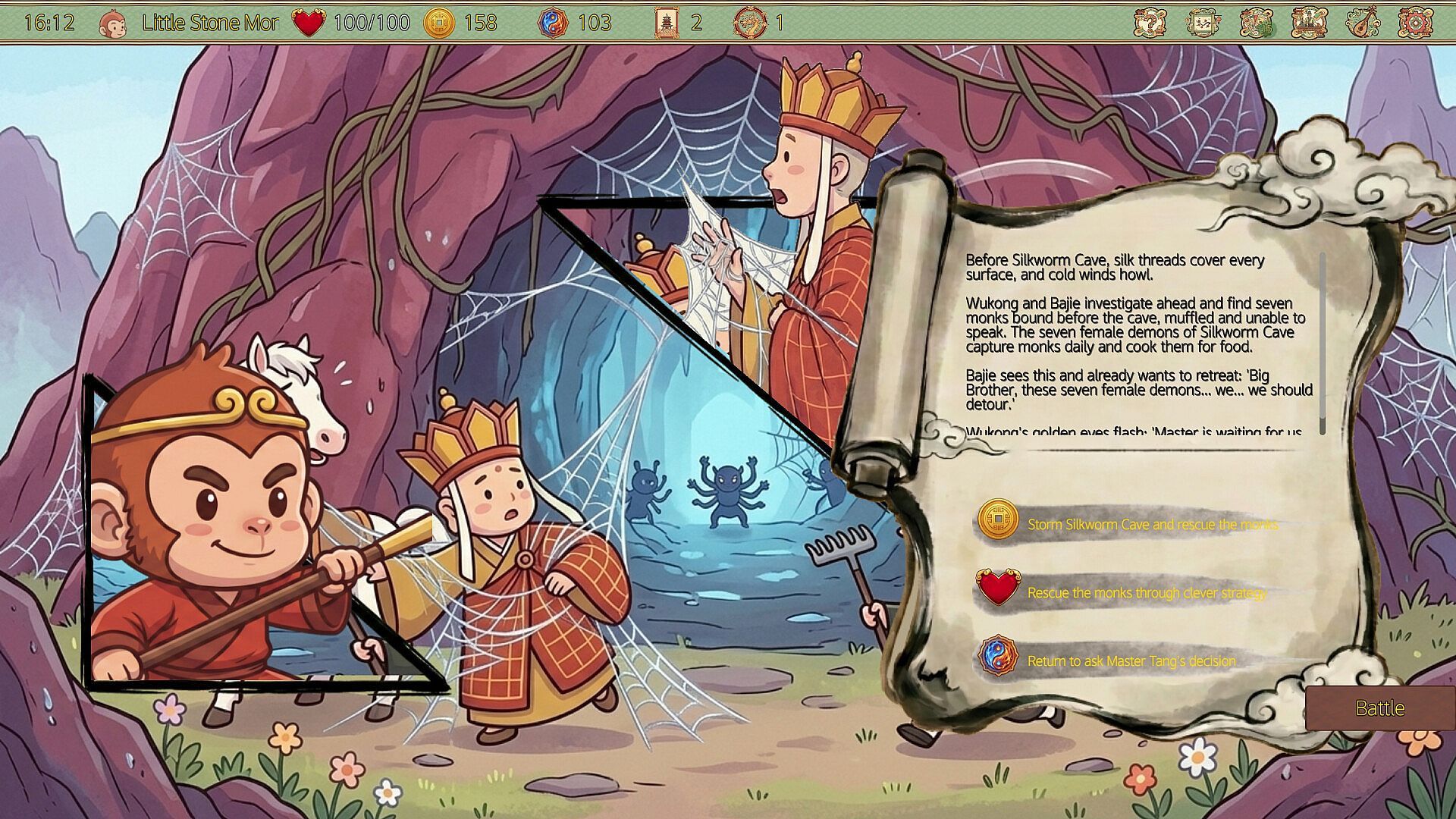
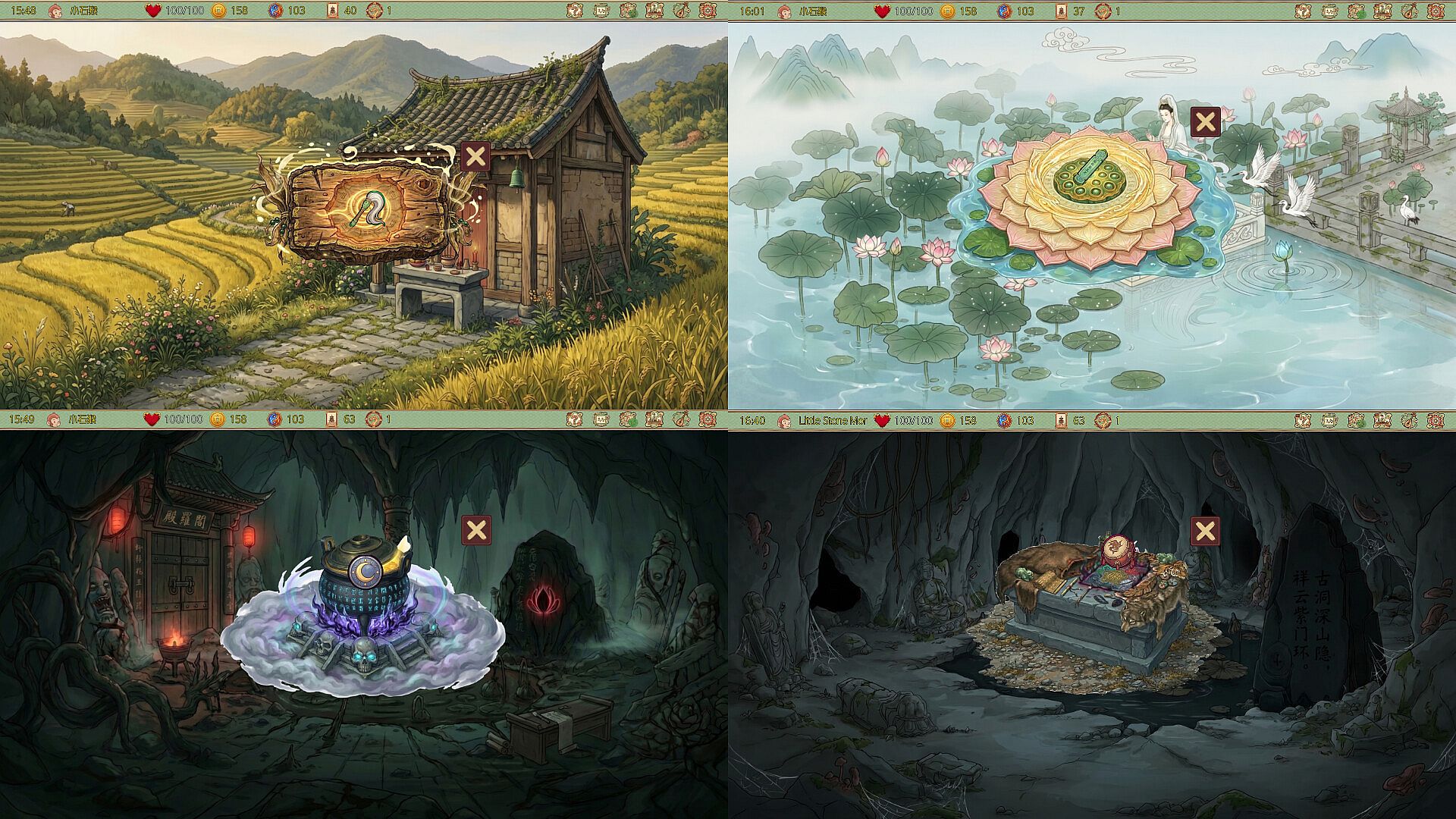
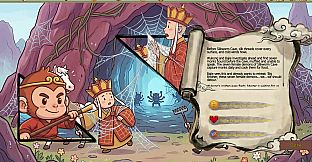
Wukong: Time to Deal is a roguelike deck-building game in the strategy, indie, and casual genres for PC. Players step into the pilgrimage from Journey to the West, using cards as weapons while harnessing the Five Elements to grow stronger during runs toward the sacred scriptures.
Gameplay
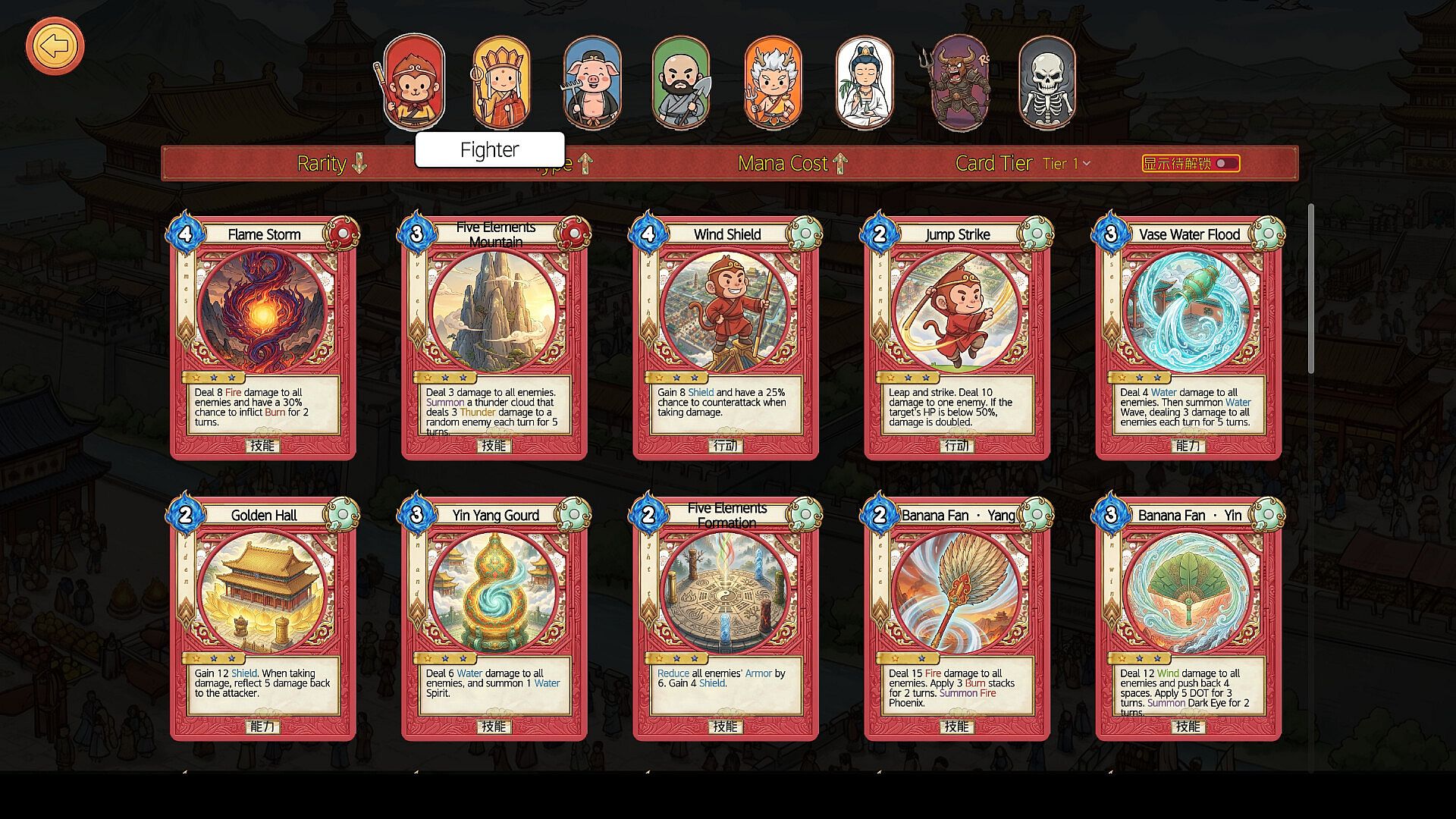
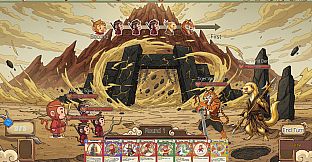
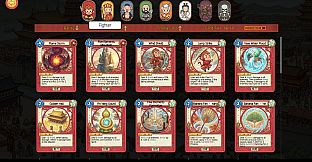
The core loop centers on deck construction and roguelike progression. Each run involves selecting cards from a pool exceeding 500 options across seven factions, each with distinct playstyles and synergies. Combat blends card plays with Five Elements mechanics to boost abilities, cast spells, and counter enemies drawn from over 100 monsters and bosses. Treasures collected between fights provide permanent or temporary upgrades that shape future encounters. Randomness plays a key role, as every attempt introduces new card draws, enemy compositions, and path choices that force adaptation. The system encourages experimentation with different faction combinations while maintaining a focus on building efficient decks for survival and advancement.
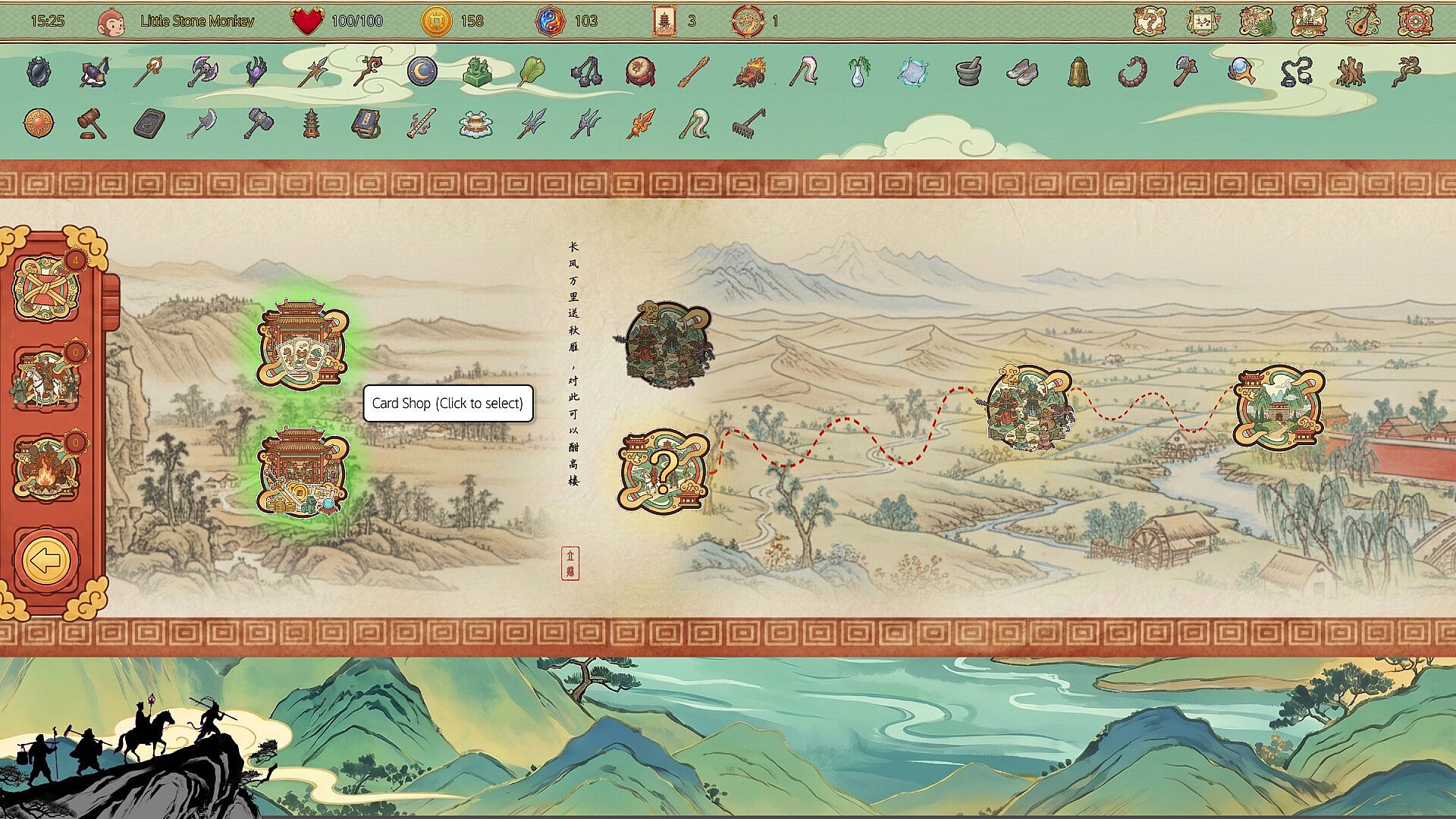
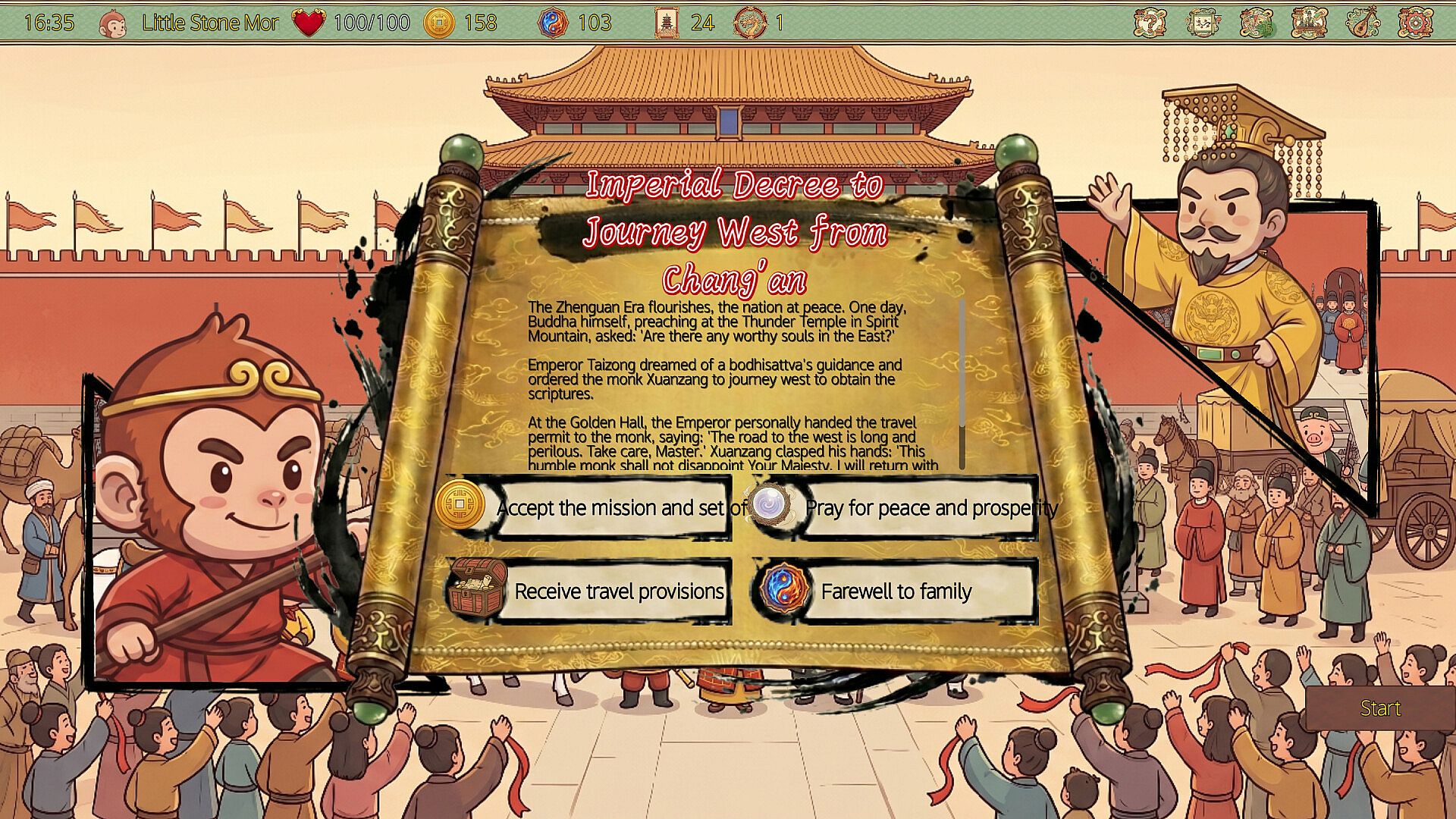
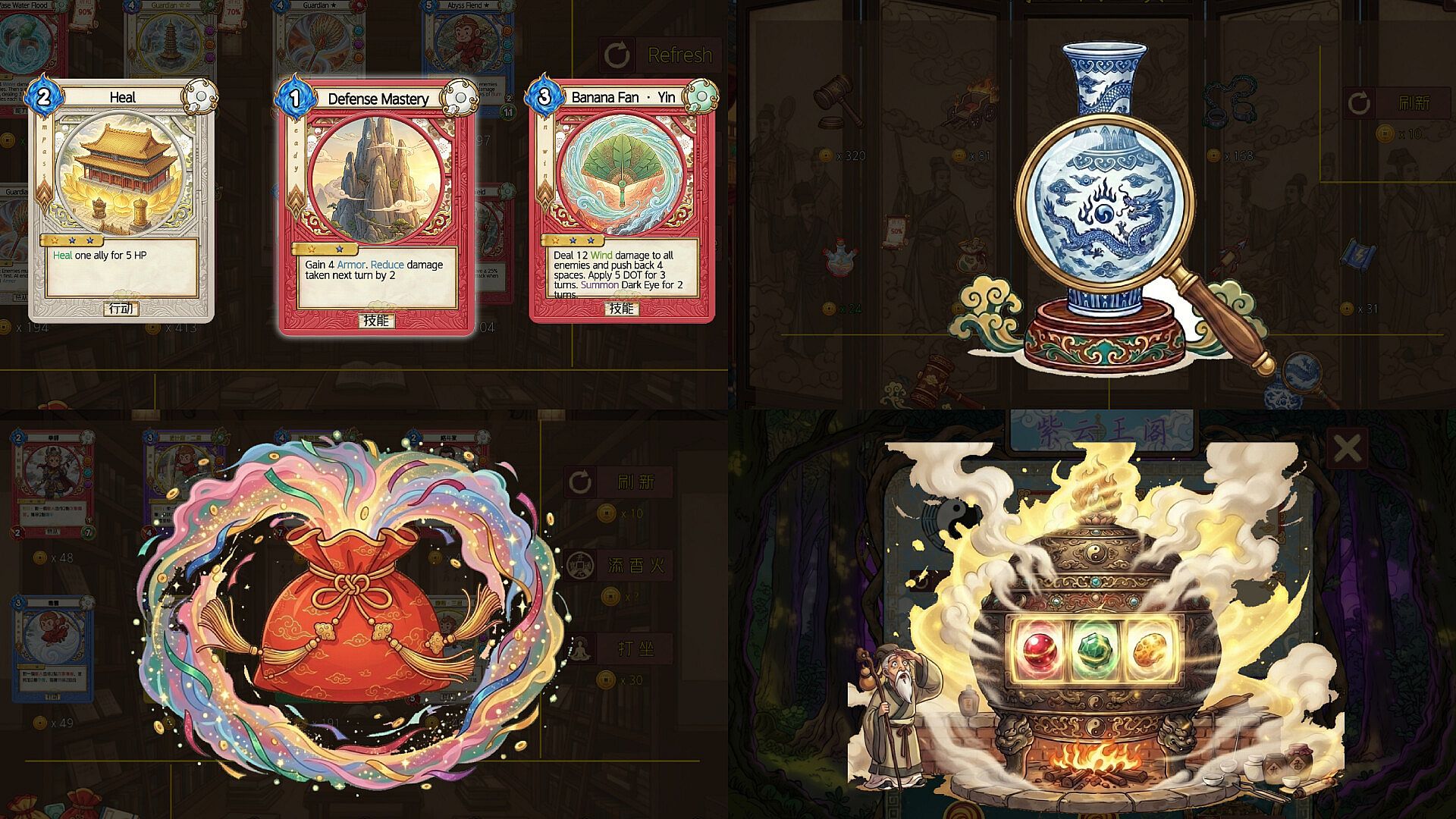
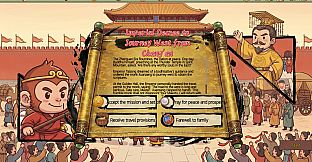
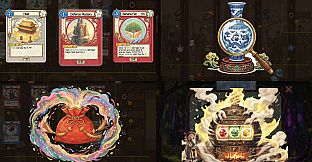
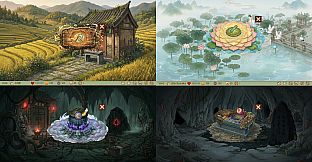
Exploration draws from traditional landscape painting aesthetics, guiding players along a Silk Road-inspired route filled with varied scenery. Battles can involve fighting solo or alongside allies for different tactical options. Between combat sequences, players engage in interactive desktop cultivation activities that mix leisure elements with progression, such as refining elixirs to enhance abilities or appraising magic treasures. These segments offer a break from high-stakes card battles while still tying into overall power growth. Character journals provide additional context for the reimagined classic tales, allowing deeper engagement with the narrative threads woven into each run.
Game Modes
Runs follow standard roguelike structure with persistent randomness across multiple attempts. Difficulty modes scale enemy strength and introduce additional constraints, while secret challenges present optional high-risk encounters for greater rewards. Combat variety comes from choosing to battle foes independently or coordinate with companions, altering strategy based on available cards and faction decks. The design supports repeated playthroughs through fresh card combinations and story branches that emerge from player choices. No fixed campaign length exists, as progression depends on how far each run advances before defeat or success in reaching key objectives.
Characters and Factions
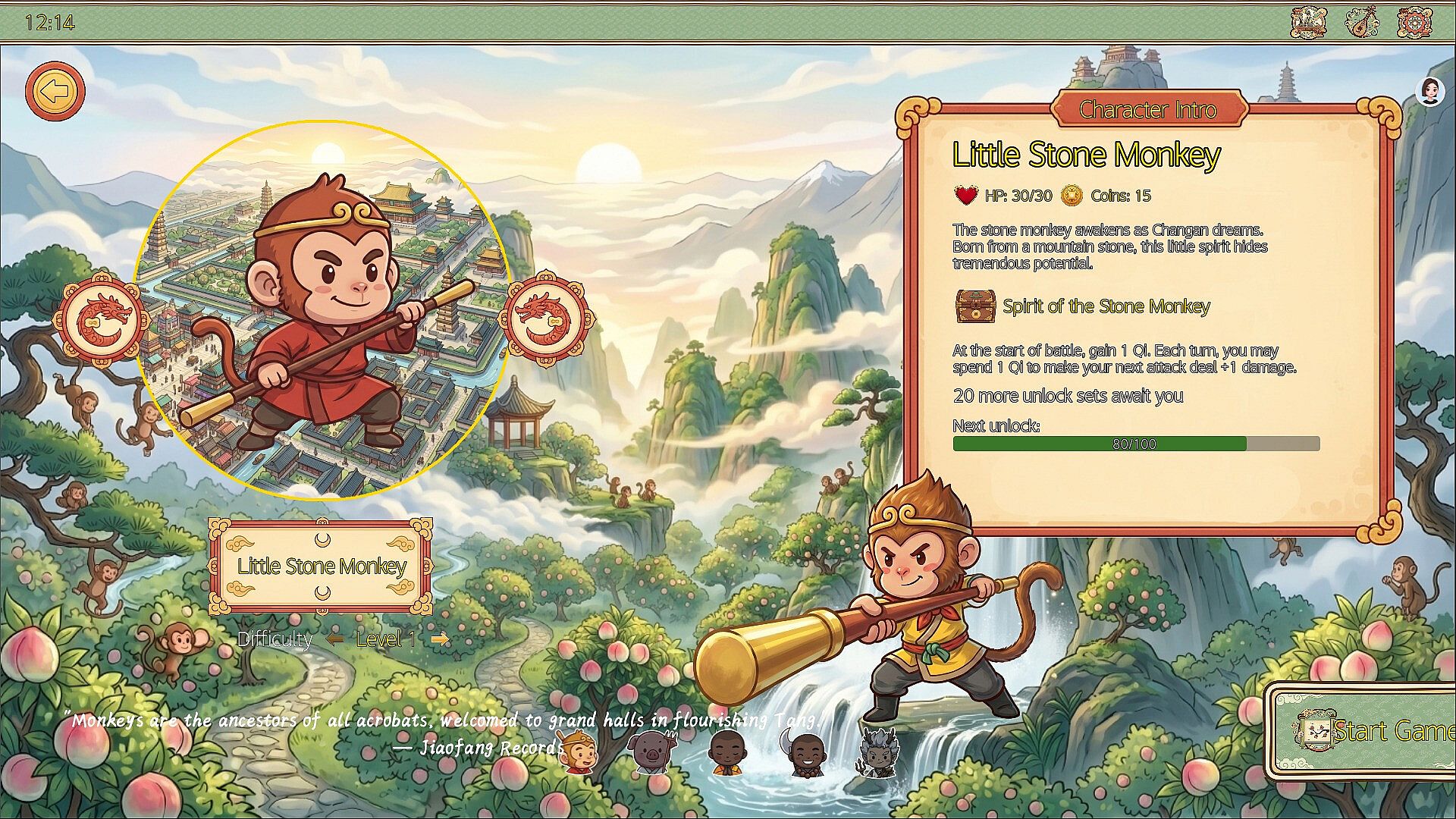
Five playable characters anchor the experience, each tied to different aspects of the pilgrimage crew. Over 100 story characters populate the world and influence events through journals and interactions. The seven factions supply the card pools, with decks built around unique themes that reward specific strategies during battles. Players select starting characters and factions at the outset of a run, then expand options through collected cards and upgrades. This setup allows for varied approaches, from aggressive elemental combos to defensive treasure-focused builds. Additional roles and tales are planned for future updates to expand the available choices.
Is It Worth Playing?
The game suits players who enjoy roguelike deck-builders with thematic ties to Chinese mythology and a blend of combat with lighter desktop activities. Its emphasis on randomness and faction variety creates replay value through different deck constructions each attempt. Those seeking a mix of strategic card play and narrative elements from Journey to the West will find the core systems align closely with that preference. The indie scope keeps the focus tight on deck building and progression without unnecessary complexity. Current development includes plans for more content, which may extend the available characters and desktop features over time. For fans of the genre on PC, the verified mechanics provide a solid foundation for repeated runs and story exploration.