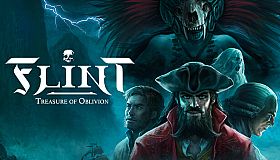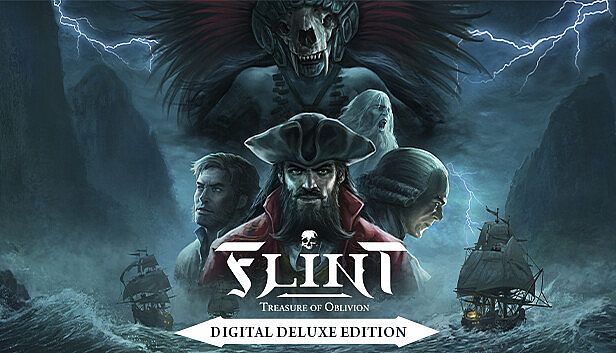








Flint: Treasure of Oblivion is a strategy RPG adventure game set in a pirate world during the golden age of piracy. Players take on the role of Captain Flint as he escapes captivity, assembles a crew, and pursues a mysterious treasure across varied locations from coastal towns to jungles and caves. The experience combines real-time exploration with turn-based tactical combat, all presented through an isometric view and distinctive comic book panels that advance the narrative.
Gameplay
The core loop revolves around exploring environments to uncover leads on the treasure, gather resources, and engage in battles. Exploration occurs in real time, allowing movement through detailed settings rendered in Unreal Engine 5, with interactions that reveal story elements via expressive comic-style panels and speech bubbles. Combat shifts to a turn-based system on a hexagonal grid, where characters spend action points on movement and attacks. Each pirate uses a combination of profession dice and weapon dice to resolve hits against target numbers, with outcomes influenced by distance, terrain, and equipped items. Cards collected during play unlock abilities that alter statuses or provide tactical advantages, while crew members level through accumulated wealth rather than traditional experience points. The system emphasizes preparation, including selecting crew with complementary skills and managing equipment that can break on critical failures.
Game Modes
The game structures its content around a single-player campaign focused on sequential exploration segments and hand-crafted battle encounters. These encounters grow in scale as the story progresses, requiring management of larger groups of up to around fifteen characters against comparable enemy forces. No separate multiplayer or standalone modes exist, keeping the focus on the integrated narrative progression that alternates between open movement phases and structured tactical fights. Battles incorporate environmental interactions such as pushing objects or leveraging height advantages, alongside variable dice rolls that introduce strategic planning around probabilities and rerolls via charms or items.
Key Mechanics and Features
Combat resolution relies on multiple dice types, including those for impact, reprisal, and effects, which determine damage, status application, or special outcomes like bleed or knockdown. Crew customization involves equipping multiple weapons per character and assigning cards that modify performance in battle. Exploration rewards include new cards, equipment, and booty that directly funds upgrades. The comic panel system handles dialogue and key story beats without traditional cutscenes, maintaining a consistent visual style across the journey from the starting prison escape in Saint-Malo to Central American landscapes. Historical pirate elements appear in costumes, weapons, and setting details, grounding the fantasy-tinged adventure.
Is It Worth Playing?
Reception has been mixed, with Steam user reviews sitting at 50 percent positive. Critics highlight the striking comic book art direction and the depth of the tactical combat system as strengths, noting that strategic choices around positioning, card use, and dice management can feel rewarding once mastered. Common criticisms center on the steep learning curve caused by incomplete tutorials and occasionally clunky controls or UI elements that obscure ranges and options. The game suits players who appreciate complex turn-based strategy with dice-driven variability and a strong thematic commitment to piracy, particularly those willing to invest time in understanding the systems. It offers a complete single-player experience without ongoing seasons or updates required for enjoyment, though the execution may frustrate those seeking smoother onboarding or less reliance on random outcomes. For fans of tactical RPGs drawn to the unique presentation, the title delivers a focused pirate adventure worth considering at its current price point.