




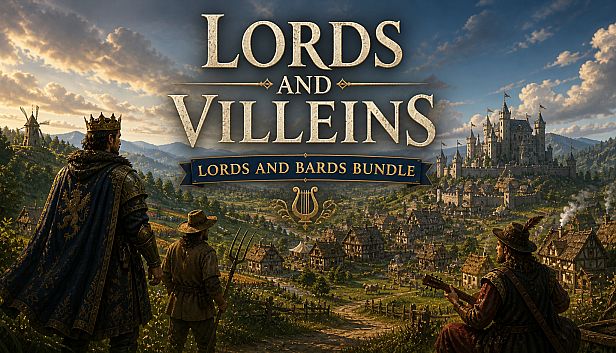














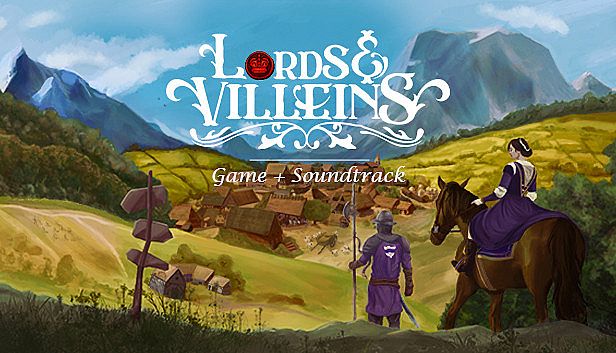
Lords and Villeins is a single-player city-building strategy simulation set in a medieval feudal setting. Players take on the role of a ruling family tasked with establishing and expanding a settlement on newly granted land. The core experience revolves around managing autonomous villager families, directing economic production, and balancing the needs of the realm with personal dynasty goals.
Gameplay
The central loop involves zoning land, constructing buildings, and assigning plots to families who then operate with significant independence. Each family follows a profession passed down through generations, running their own shops, producing goods, and trading within the settlement or with visiting caravans. Over 130 resources feed into chains supported by 40 professions and 53 distinct zones, creating varied economic paths depending on available terrain and player choices.
Logistics play a major role as settlements grow. Players must consider travel distances, storage placement, and terrain features to maintain efficiency. Taxation policies, production priorities, and supply-demand balancing allow for different approaches, from heavy redistribution through central warehouses to minimal intervention in a free market. Seasons bring visual and mechanical changes, including weather effects that influence daily routines and resource availability.
Additional layers include diplomacy with noble houses that request resources or offer gifts, the construction of monasteries and churches that provide unique benefits such as healing during outbreaks, and the recruitment of personal servants or guards. Difficulty settings and game modules let players adjust complexity to suit their preferences, ranging from relaxed economic focus to more demanding management challenges.
Game Modes
The game features a campaign mode consisting of 15 distinct levels. These levels progressively introduce core mechanics such as family management, resource chains, and taxation while teaching players how to handle growing settlements.
Sandbox mode provides an open-ended experience on procedurally generated maps. Here players can experiment with different economic strategies, settlement layouts, and dynasty development without campaign constraints. Both modes emphasize long-term planning around winter preparation, population growth, and maintaining stability through supply and demand fluctuations.
Settlement Development
Procedural world generation encourages thoughtful placement of housing, production buildings, and infrastructure. Players use a variety of tools to design and decorate homes for villagers while expanding their own manor and supporting structures like warehouses and places of worship. No two settlements develop identically due to differences in land quality, resource distribution, and family interactions.
Family dynamics add depth, as villagers form relationships, pursue personal ambitions, and respond to player decisions on land allocation and taxation. Disobedience or shortages can arise if needs go unmet, requiring ongoing attention to community balance alongside economic targets.
Is It Worth Playing?
Player reception has been mostly positive, with 75 percent of reviews favorable across hundreds of user submissions. The simulation appeals to those who enjoy detailed economic management and colony-style building without heavy emphasis on combat. Recent content additions, including expansions focused on noble houses, demonstrate continued support for the title.
It suits players comfortable with intricate systems and long play sessions rather than quick sessions or action-oriented gameplay. The combination of autonomous family behaviors and customizable settings provides replayability for strategy and simulation enthusiasts seeking a focused medieval management experience.


