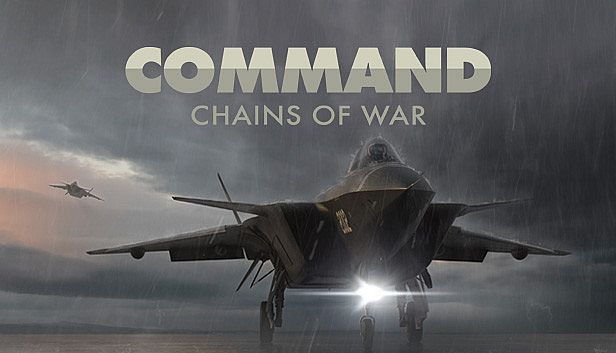
















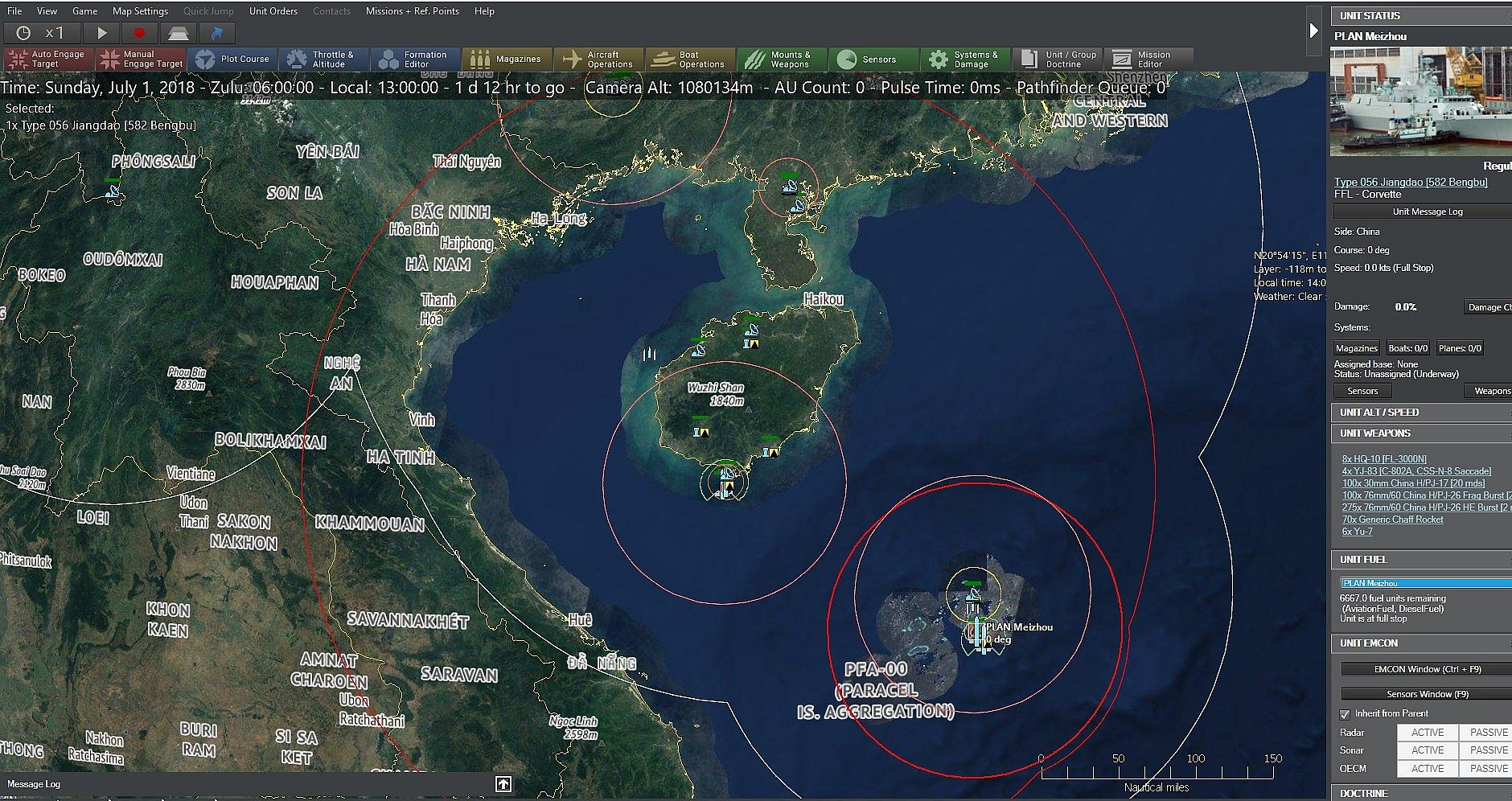
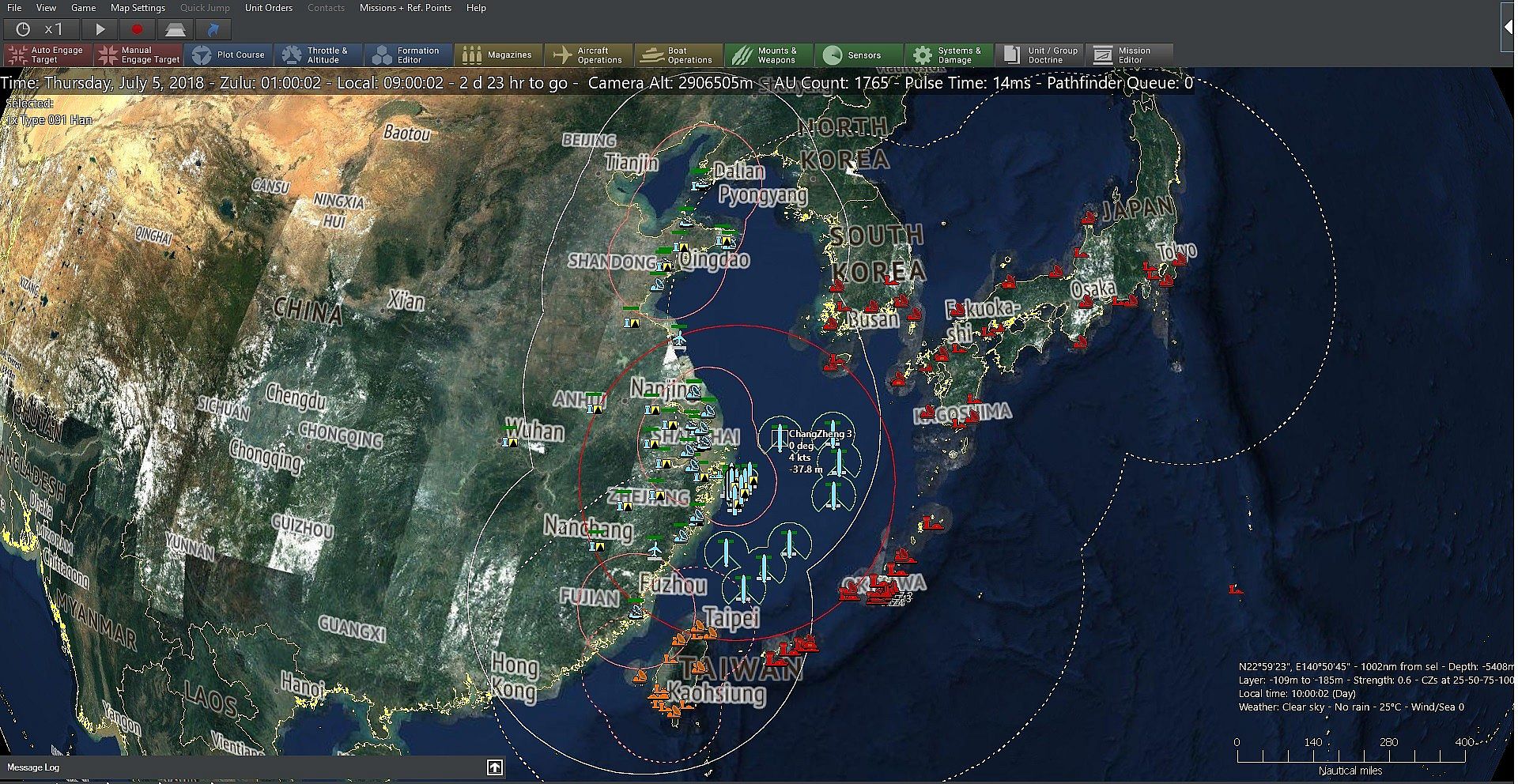
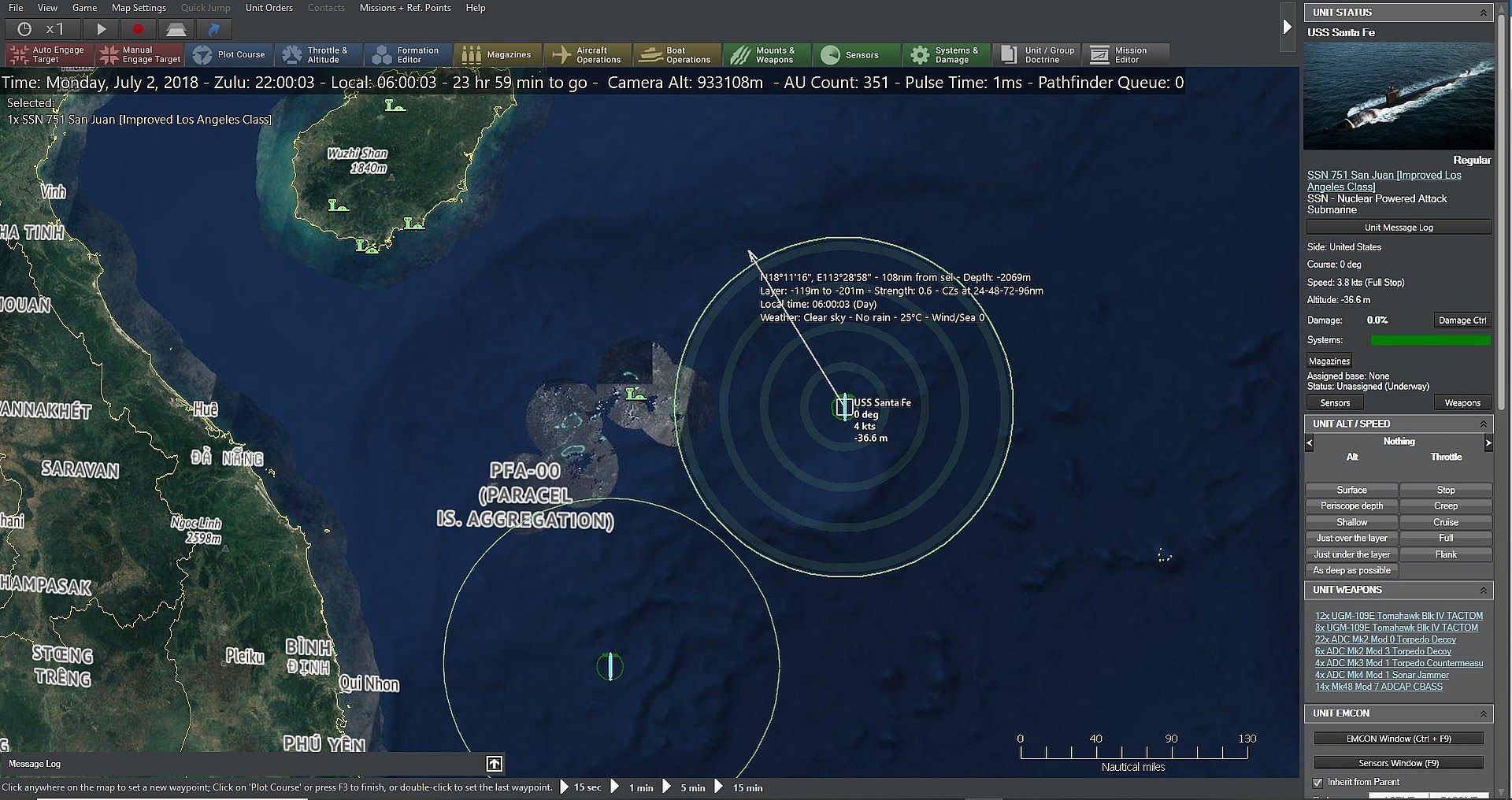
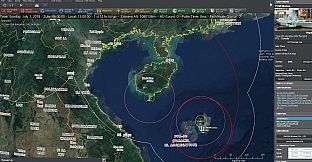
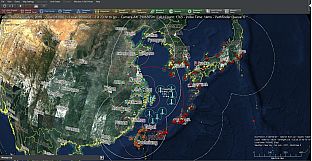
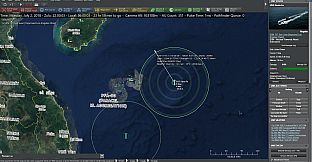
Command:MO - Chains of War is a simulation game centered on air and naval combat in a modern Pacific theater. Players command forces across detailed scenarios that reflect 21st-century military realities, including network disruptions, advanced munitions, and logistical challenges. The title expands Command: Modern Operations with a focused campaign that places the player in command of assets from multiple nations amid rising tensions between major powers.
Gameplay
The core loop revolves around managing air, naval, and limited ground assets in real-time or accelerated time. Units operate under realistic constraints where communications can fail due to cyber attacks or electromagnetic pulses, forcing isolated groups to rely solely on their own sensors and orders. This removes any centralized overview and requires careful planning of task forces that can function independently.
Logistics receive equal attention through cargo, landing, and airdrop mechanics. Players load troops and equipment onto ships, aircraft, or even submarines, then deliver them to suitable coastal or inland points while respecting volume, weight, and crew limits. Aircraft feature a layered damage system that tracks impacts to fuselage, cockpit, and engines separately. A plane may survive hits yet return home with reduced capability or require extensive repairs that sideline it for the remainder of an engagement.
Weapon systems introduce new tactical layers. Railguns provide long-range kinetic strikes, high-energy lasers deliver precise burns against optics or missiles, and anti-ship ballistic missiles threaten large surface vessels. Tactical EMP devices and anti-satellite weapons further complicate the battlefield by disabling electronics or orbital assets at critical moments. These elements combine to create engagements where electronic warfare and precision effects often decide outcomes before traditional firepower is brought to bear.
Game Modes
The primary experience comes through a 12-scenario campaign that follows an escalating crisis across the western Pacific. Each mission places the player on one side or the other of the conflict, alternating between defending and attacking forces as the situation develops. Four additional standalone scenarios offer self-contained operations drawn from earlier potential flashpoints that remained peaceful in reality.
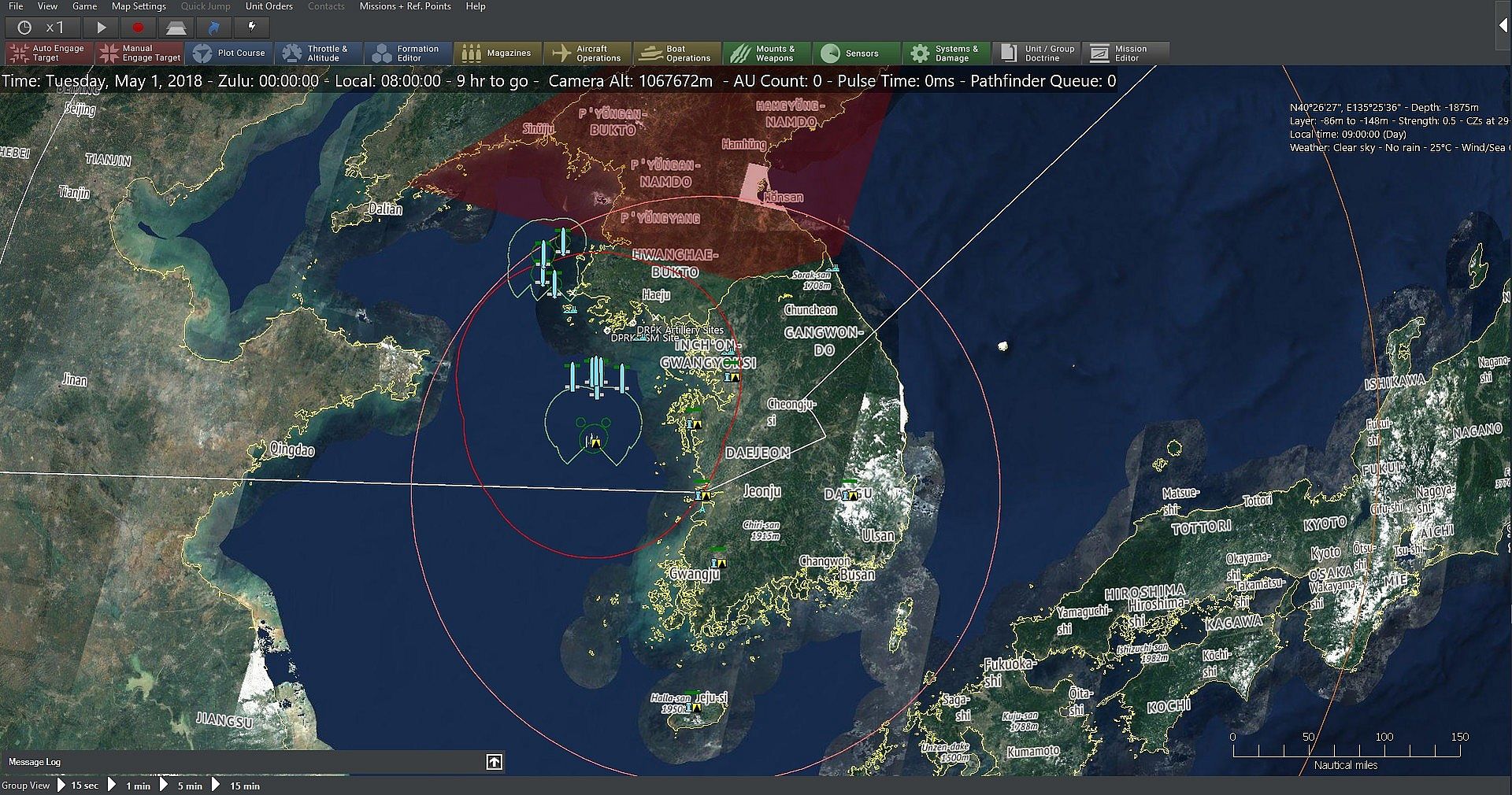
All scenarios support individual play without requiring progression through the full campaign. The structure emphasizes single-player command decisions rather than competitive or cooperative multiplayer formats. Players select starting conditions, adjust time compression, and issue orders through a detailed interface that tracks unit status, sensor coverage, and supply lines.
The Pacific Theater
Events unfold in a near-future setting where tensions on the Korean peninsula ignite broader involvement from China, the United States, and regional allies. Control of sea lanes and strategic bases forms the central objective, with forces drawn from the United States, South Korea, Japan, Taiwan, Australia, North Korea, and China. Each side fields period-appropriate platforms that interact under the new systems for communications, damage, and logistics.
Scenarios range from initial border clashes to larger fleet actions and amphibious maneuvers. The design highlights how modern sensors, missiles, and electronic measures alter traditional naval and air operations compared with earlier conflicts.
Is It Worth Playing?
This simulation appeals most to players who value detailed modeling of contemporary military systems over fast-paced action. The campaign and standalone scenarios deliver extended play sessions focused on planning, coordination, and adaptation to unexpected disruptions. Features such as realistic aircraft damage and communications isolation add depth that rewards repeated attempts and careful observation of unit behavior.
Those seeking accessible arcade-style combat may find the interface and pace demanding. The title continues to receive updates that maintain compatibility with the base simulation, keeping the scenarios relevant for existing owners. It suits enthusiasts of air and naval wargaming who appreciate the opportunity to explore hypothetical modern conflicts with high fidelity to technical and operational factors.