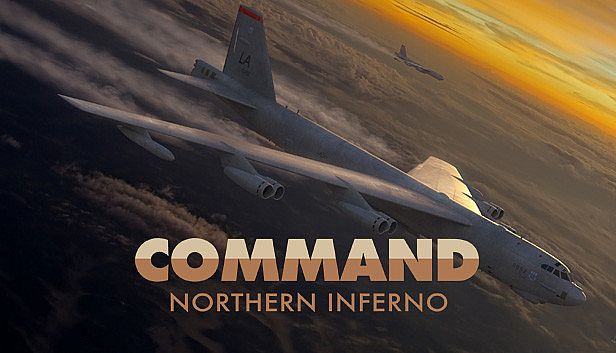













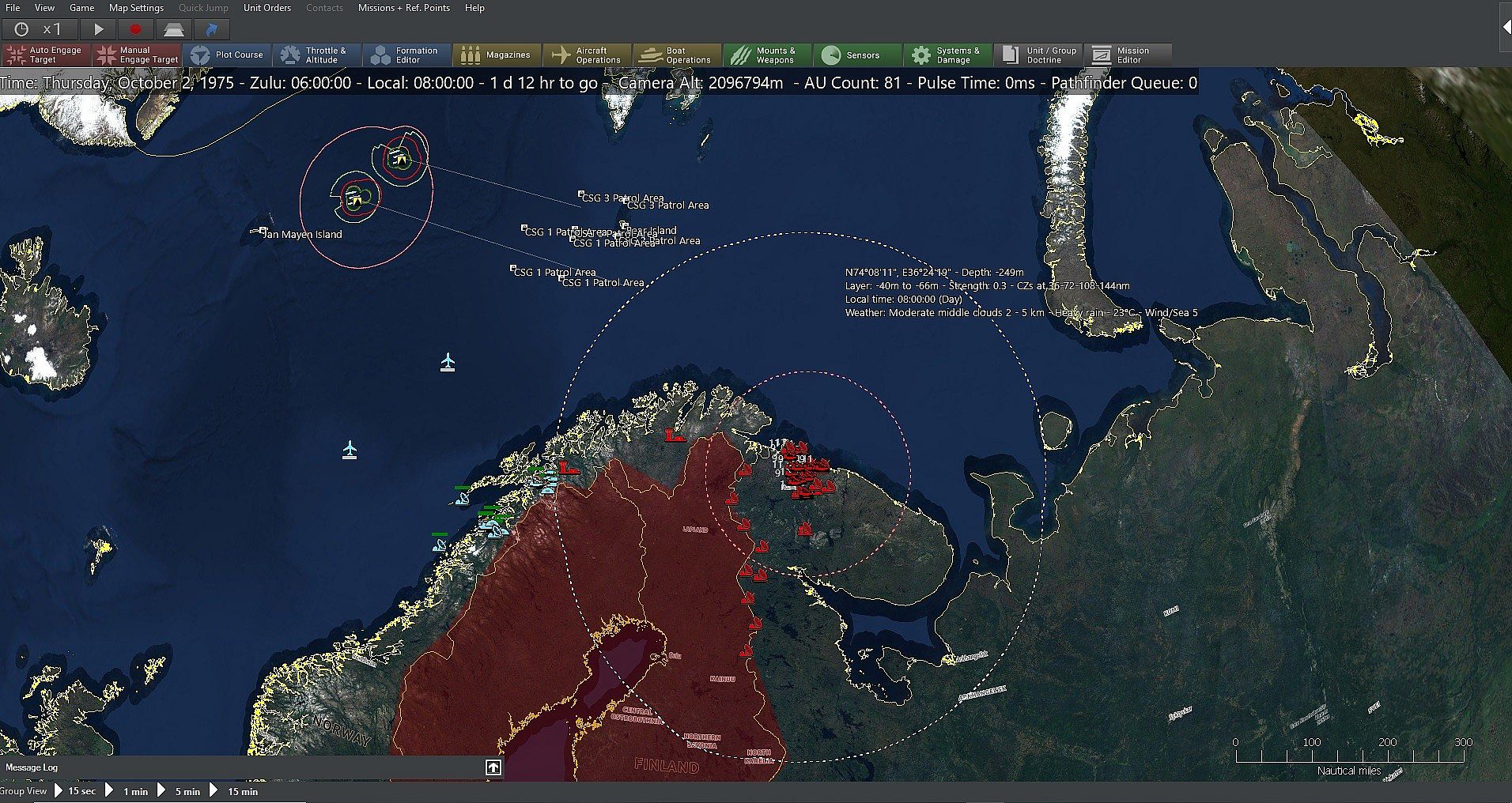
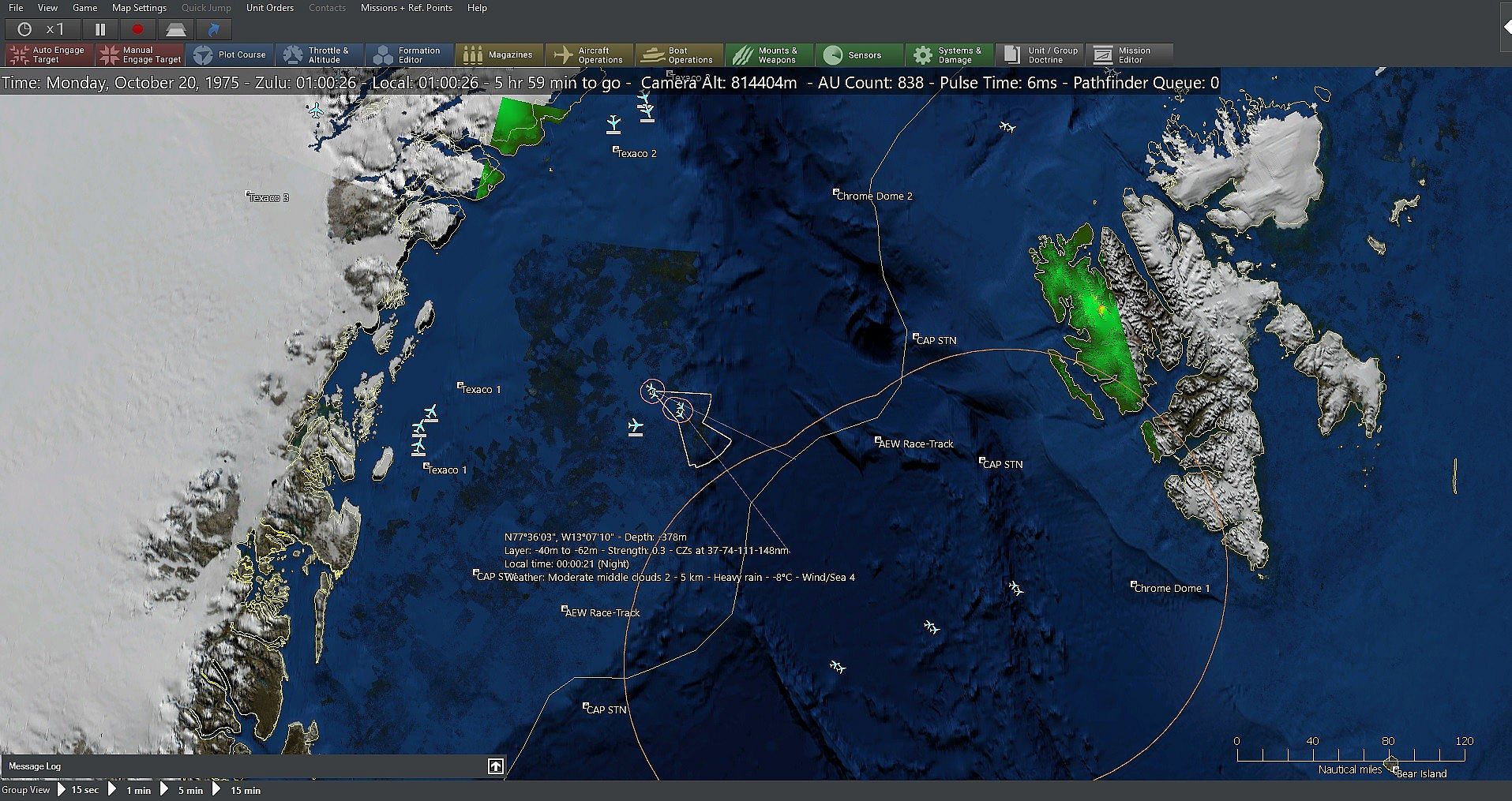
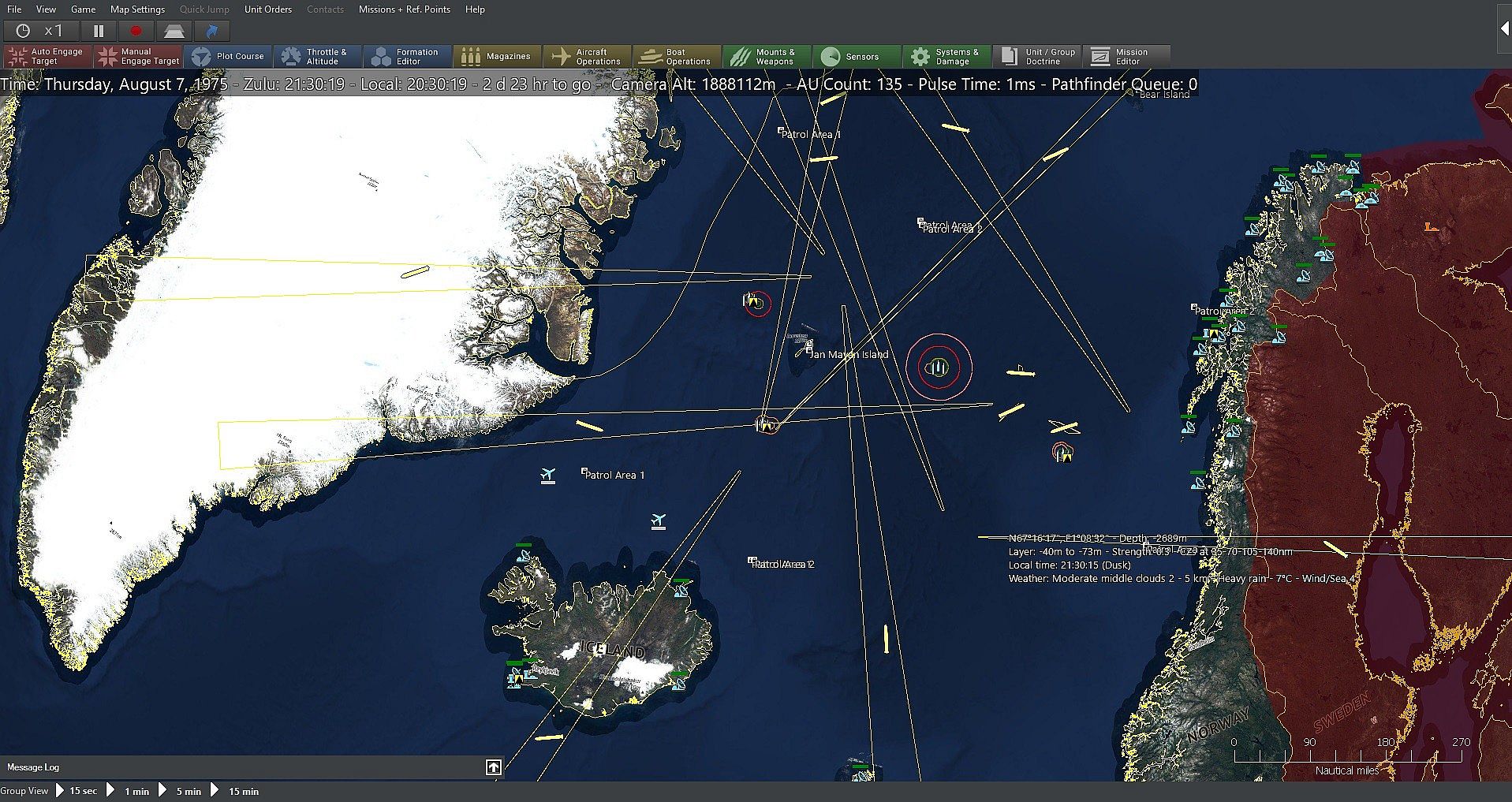
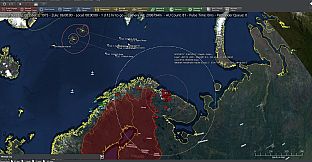
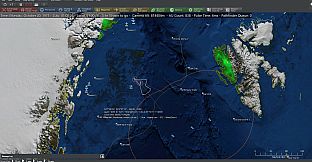
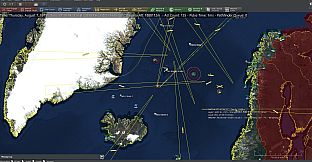
Command:MO - Northern Inferno is a strategy and simulation title for PC that places players in command of naval, air, and joint forces during a fictional escalation of the Cold War in 1975. The setting begins with an at-sea incident involving a Royal Navy frigate and quickly builds tension between NATO-aligned Western powers and Soviet-led Warsaw Pact forces, with the risk of nuclear escalation always present. This expansion requires the base Command: Modern Operations game and delivers a researched campaign focused on realistic military operations rather than simplified arcade mechanics.
Gameplay
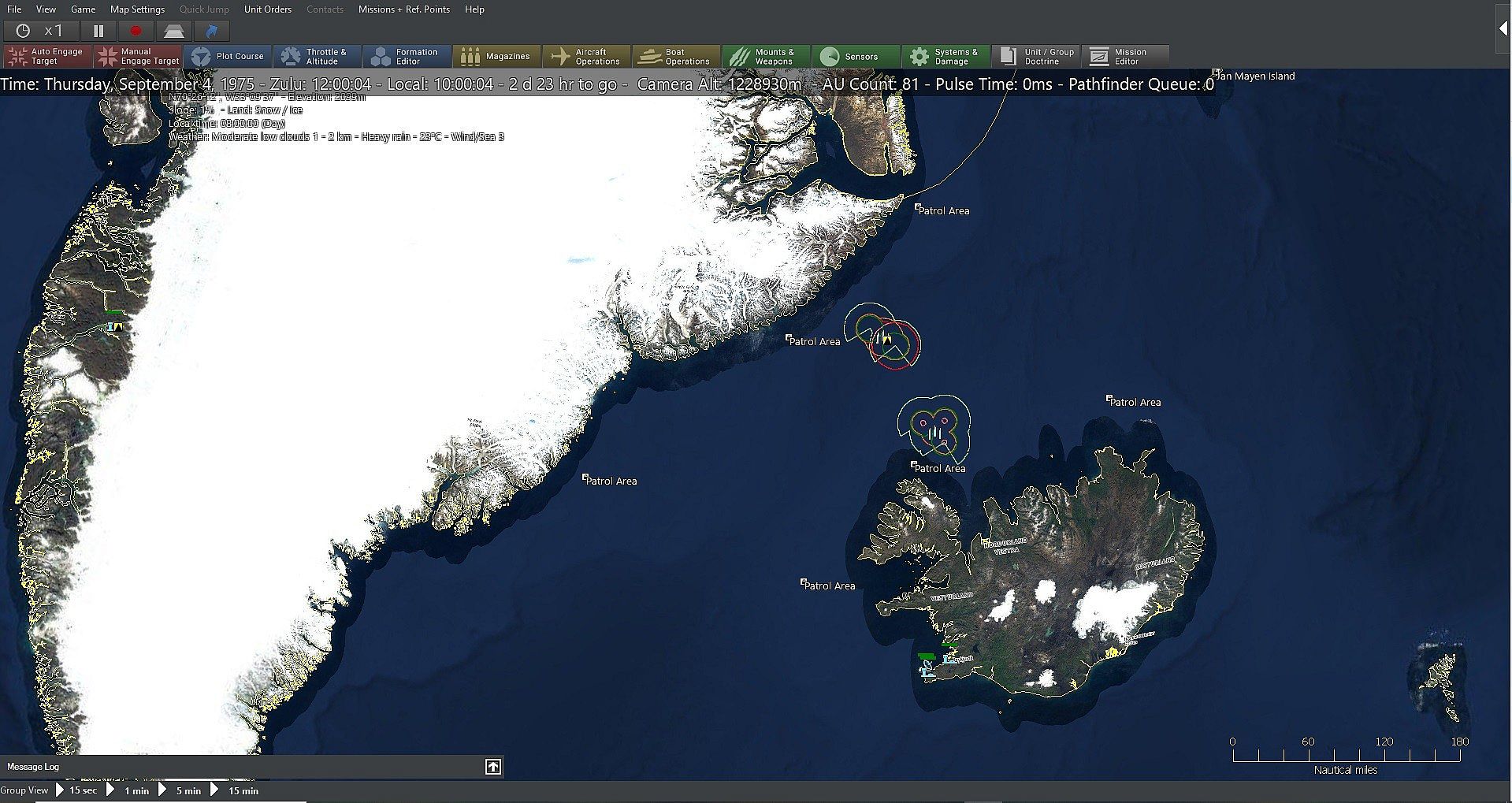
The core loop centers on managing units across air, surface, and underwater domains through the simulation engine. Players issue orders to individual ships, submarines, aircraft, and supporting elements while accounting for sensor ranges, weapon capabilities, and environmental factors that affect detection and engagement. Success depends on coordinating joint operations where naval assets support air strikes and vice versa, with every decision carrying weight in a scenario that can shift from conventional strikes to higher-stakes exchanges. The engine models unit performance with attention to historical equipment from the mid-1970s era, including emerging platforms alongside older systems still in widespread use.
Scenarios unfold in real time with options for time compression to handle longer movements or pauses for detailed planning. Players must track logistics, maintain formations, and respond to emerging threats without the benefit of perfect information. The emphasis remains on operational command rather than direct unit control, rewarding those who anticipate adversary movements and allocate resources across multiple fronts simultaneously.
Game Modes
The primary experience is the linked campaign consisting of fifteen scenarios that progress the story from initial incidents through escalating confrontations. Each scenario connects to the next through briefings that incorporate edited historical video footage with voice-over narration to establish context and stakes. Players advance by completing objectives in one scenario before carrying forward into the subsequent one, where prior outcomes can influence available forces or strategic options.
Individual scenarios from the campaign can also be loaded separately for standalone play or repeated attempts. This structure supports both a continuous narrative run and targeted practice on specific engagements involving surface task groups, submarine patrols, or air operations. No additional modes such as multiplayer or persistent online campaigns are part of this expansion.
Setting and Research
The 1975 timeframe captures a transitional period in military technology, with new aircraft and missiles appearing alongside established Cold War platforms. All units and capabilities draw from documented historical data, allowing players to experiment with realistic force compositions on both sides. Western forces include Royal Navy elements and NATO partners, while opposing forces represent Soviet and Warsaw Pact deployments with corresponding equipment and tactics.
Conventional operations form the bulk of most scenarios, yet the possibility of nuclear weapon use remains an explicit part of the design. Players decide how far to push escalation thresholds, with the campaign exploring the boundary between limited conflict and potential catastrophe. The fictitious storyline rests on extensive background research into the geopolitical climate and available military assets of the era.
Is It Worth Playing?
This expansion suits players who seek detailed, realistic military simulations rather than fast-paced action. The steep learning curve and focus on operational planning reward patience and study of unit characteristics. With only a small number of user reviews available on major platforms, reception remains limited but consistent with other titles in the series that emphasize accuracy over accessibility.
Those already familiar with the base game will find a self-contained campaign that adds new content without requiring additional purchases beyond the required core title. The fifteen scenarios provide substantial playtime for those interested in Cold War naval and air operations, particularly when the goal is to manage complex joint forces under realistic constraints. Newcomers should expect to invest time learning the interface and mechanics before tackling the full campaign progression.