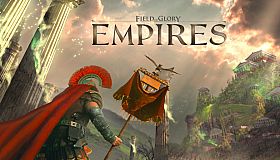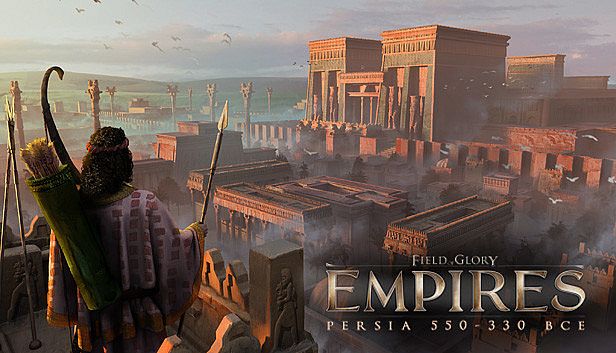



















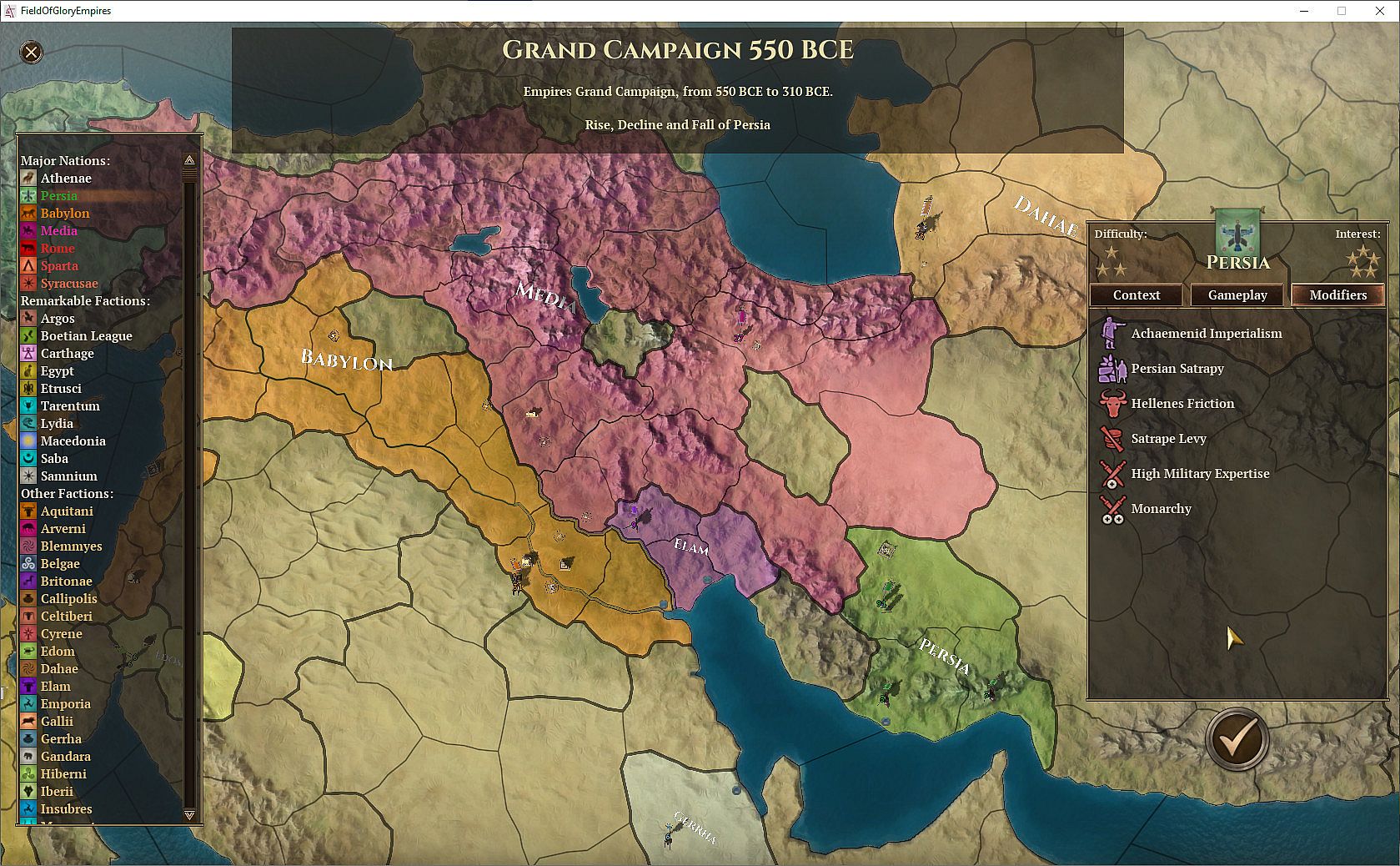
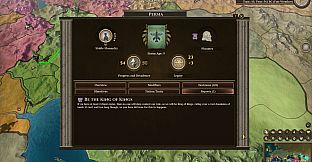
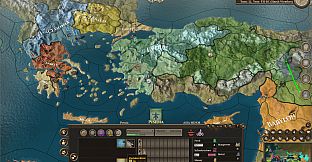
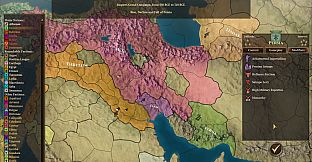
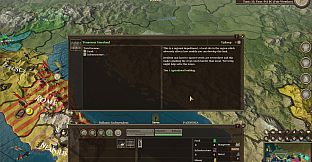
Field of Glory: Empires - Persia 550 - 330 BCE is a grand strategy game set in the ancient world. Players guide emerging powers through a period of rapid expansion and conflict, with Persia rising from a regional kingdom to a vast empire under leaders like Cyrus the Great. The title expands the base game with a dedicated campaign that begins two centuries earlier, incorporating new tools for nation management alongside environmental and societal challenges that shape every playthrough.
Gameplay
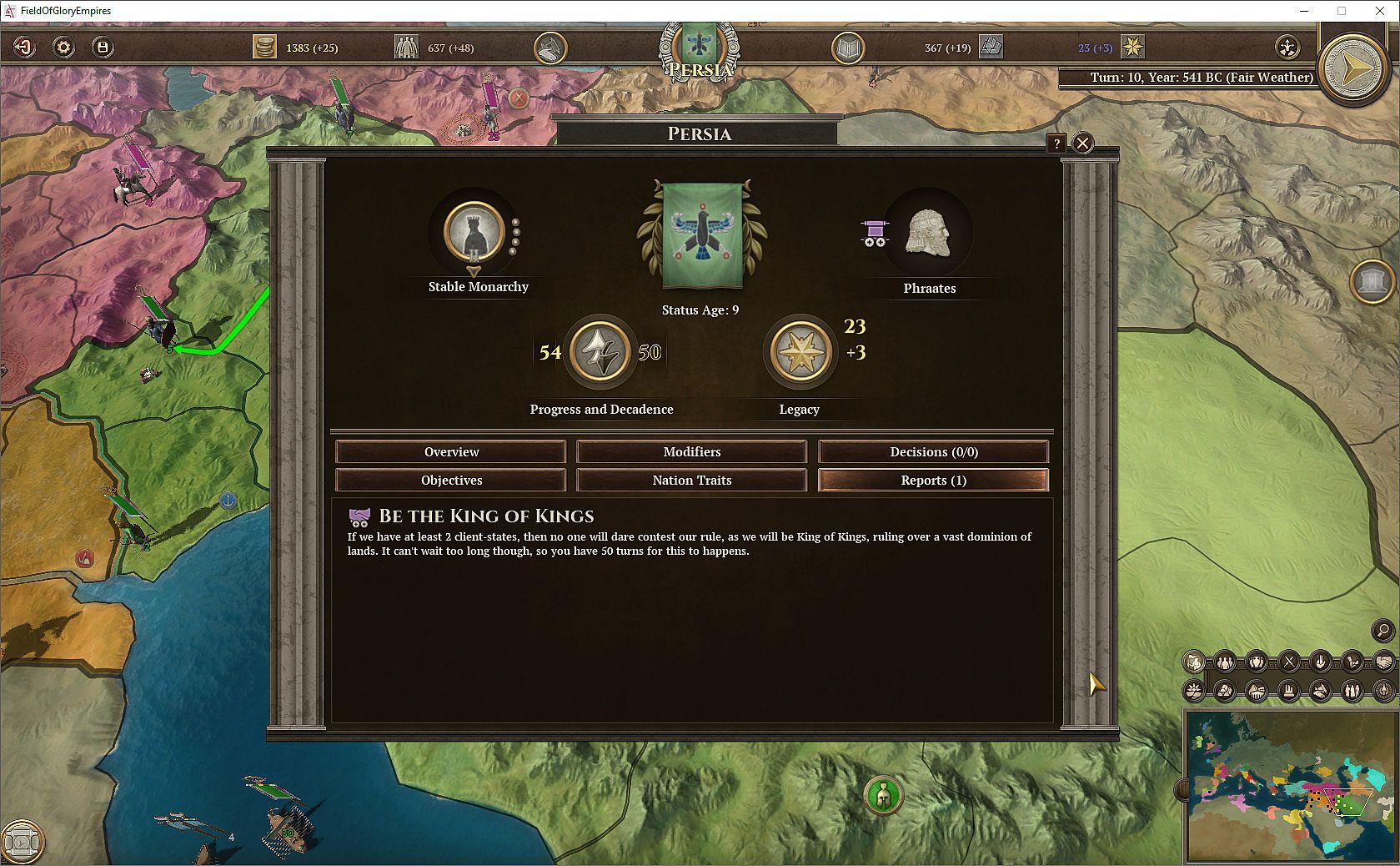
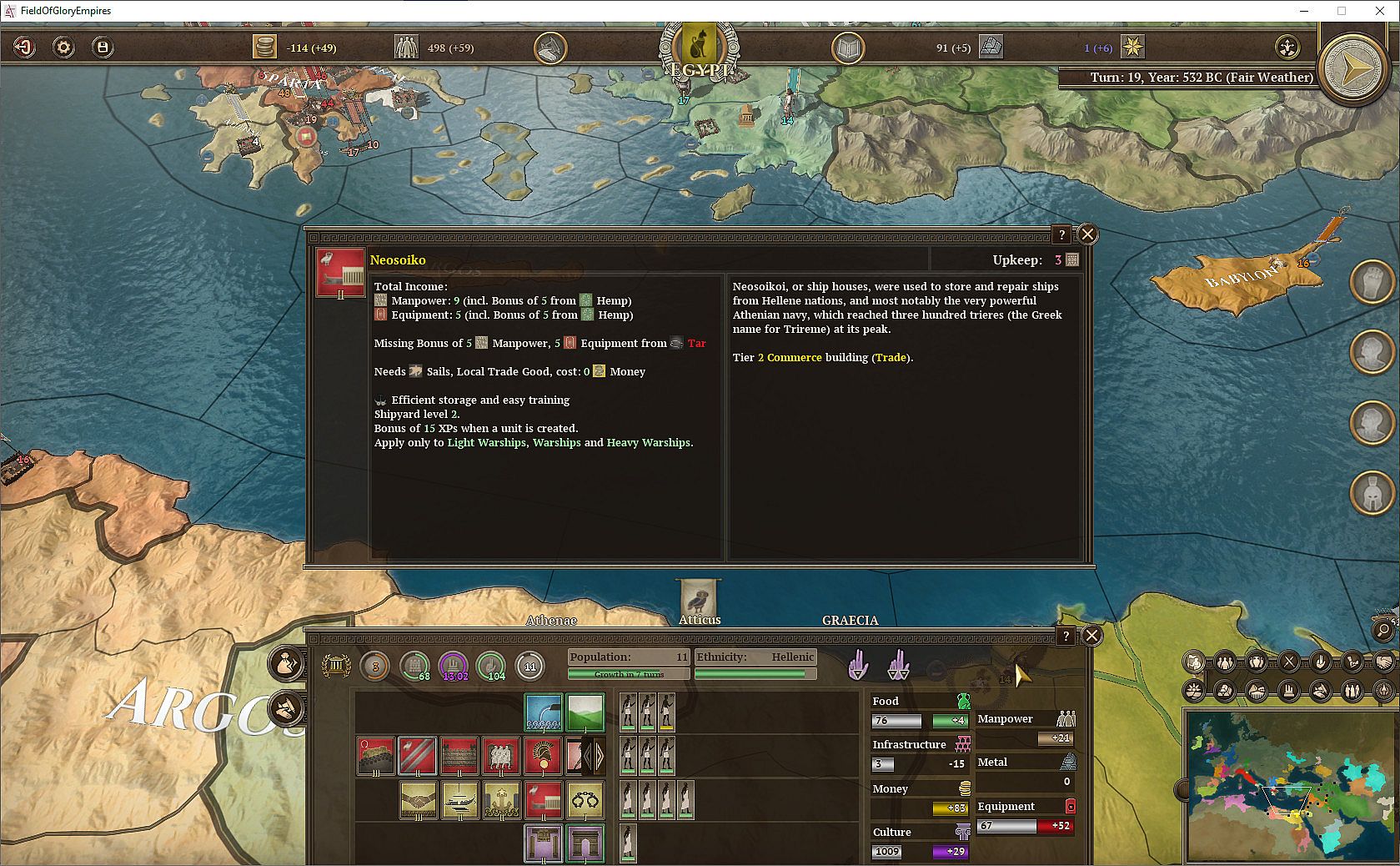
The core loop centers on turn-based management of territory, resources, armies, and diplomacy across a detailed map of the ancient Near East and Mediterranean. Nations pursue goals through events, missions, and national modifiers that alter how each faction operates. Persia receives unique events and units tied to its historical ascent, while other powers like Lydia or emerging Greek city-states follow distinct paths defined by their own modifiers and buildings.
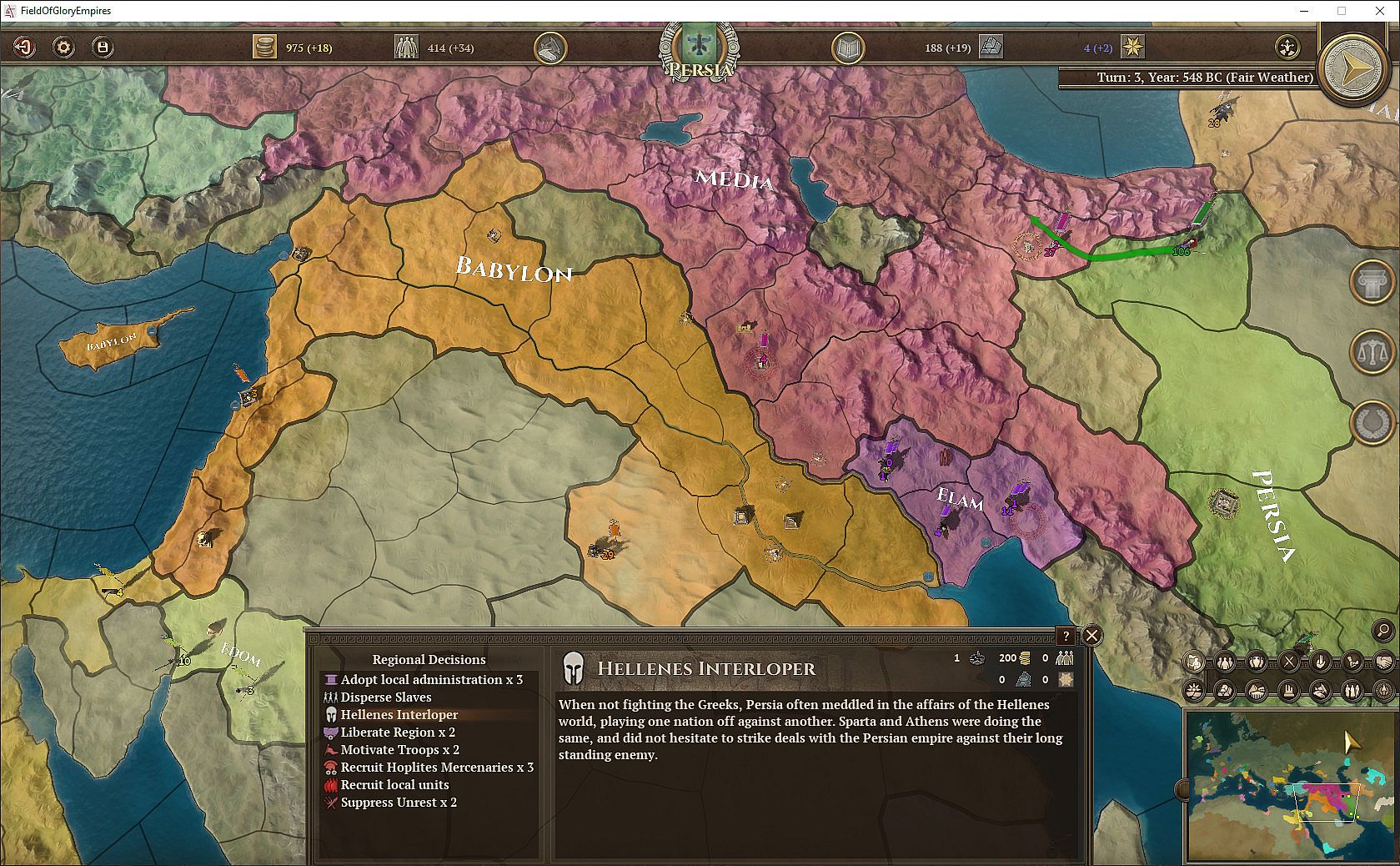
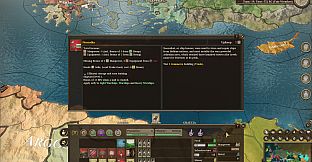
Regional decisions provide targeted actions in specific locations. These include federating barbarian groups, establishing new colonies, ordering forced marches for armies, or prospecting for natural resources. Fifteen standard decisions apply to most nations, with additional options reserved for Persia, Athens, and Sparta that reflect their historical roles, such as intervening in Greek affairs or recruiting mercenary hoplites.
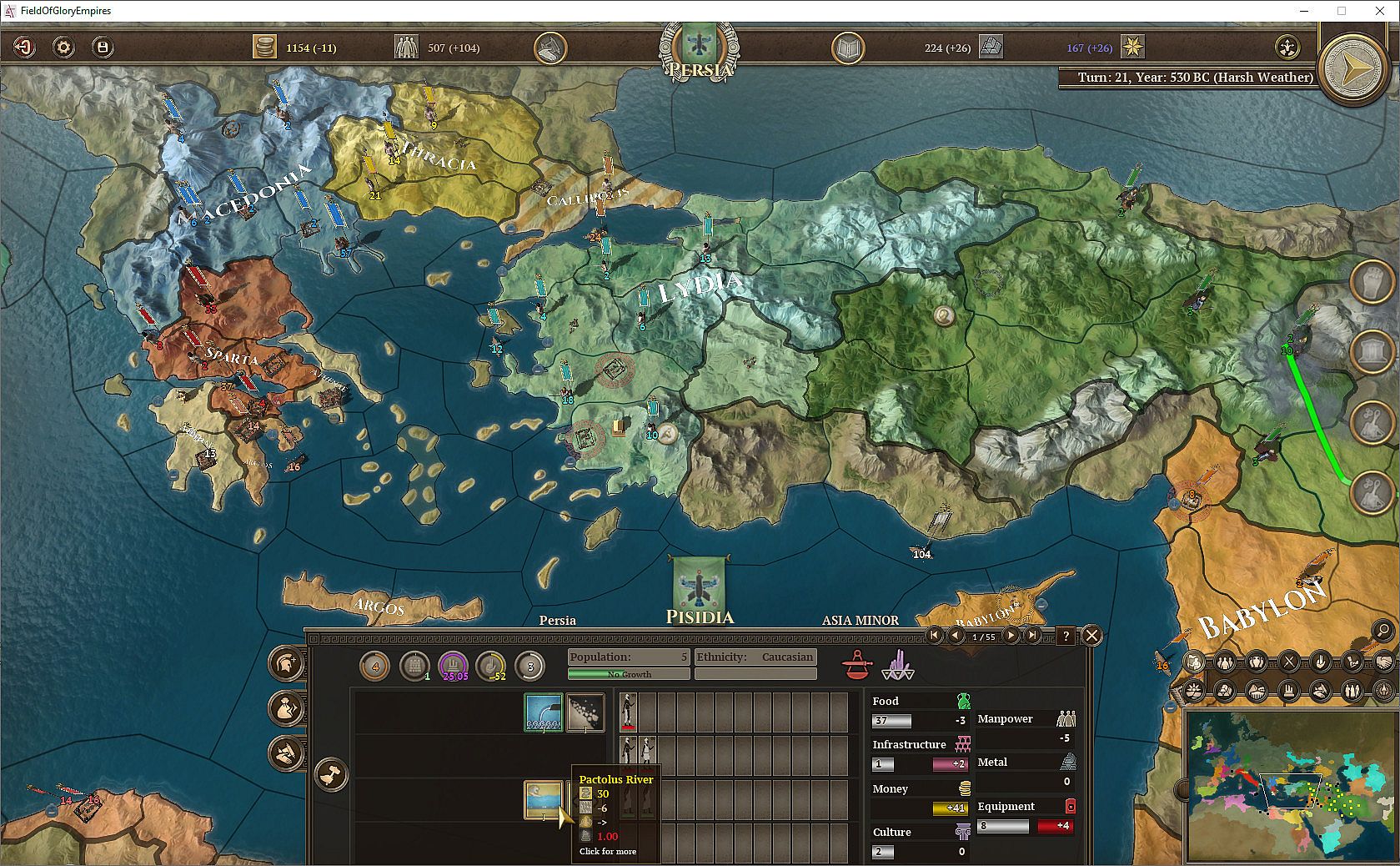
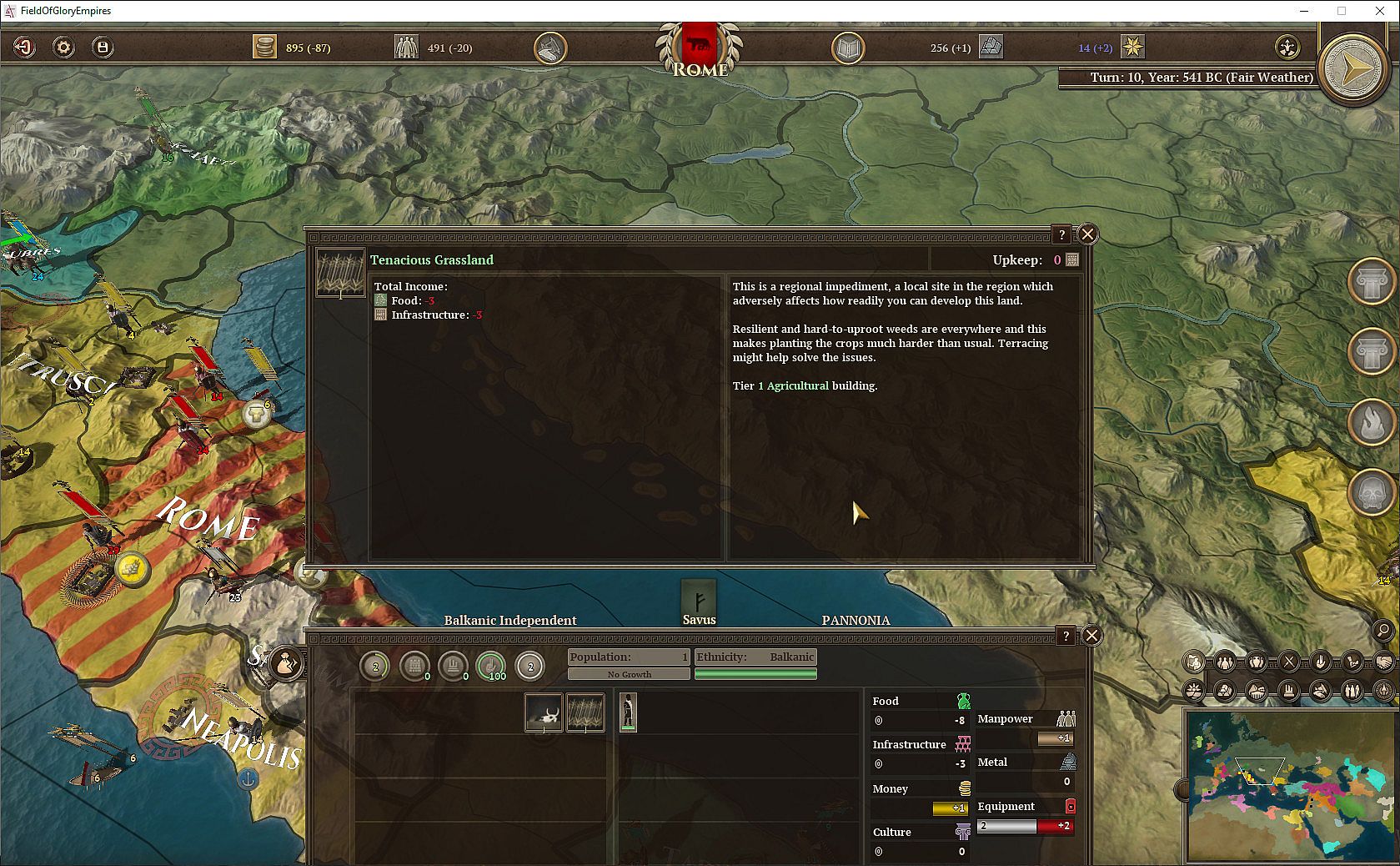
Impediments and boons add layers of variability to regions. Over eighty such features appear, ranging from Impenetrable Forests and Nauseous Swamps that slow development to Bandits that threaten stability. Positive counterparts include rich soil, oases, and sacred groves that boost productivity or provide other advantages. These elements ensure no two campaigns unfold identically, even when replaying the same starting nation.
Game Modes
The experience revolves around a single historical campaign that places players in control of one of several nations during the specified era. Available starts include major powers such as Persia under Cyrus the Great, alongside opportunities to guide underdogs like a modest Italian city or the early Carthaginian settlement. Each choice leads to different strategic priorities shaped by the faction's special content.
Progression involves balancing expansion against internal and external pressures. The campaign integrates the new regional decisions and impediments directly into the existing grand strategy framework, allowing players to adapt tactics based on the unique tools and challenges each nation presents. No separate skirmish or multiplayer modes appear in the design.
Historical Context and Faction Variety
The setting captures the lightning expansion of the Achaemenid Empire alongside the rivalries among Greek states and other regional actors. Athens and Sparta compete for influence over the Hellenic world, creating tension that eventually draws Persia into western conflicts. Lydia under Croesus and Babylon represent formidable early obstacles that must be overcome or navigated.
Special content ensures factions feel distinct. Events, missions, modifiers, units, and buildings tailor the experience so that managing Persia requires different approaches than directing Athens or Lydia. This variety extends replayability, as peripheral regions carry their own impediments and boons that interact with core systems.
Is It Worth Playing?
Player reception for the DLC stands at 96 percent positive based on available reviews. The addition of regional decisions and the extensive set of impediments and boons enhances the base game's systems without altering their fundamental structure. Those who enjoy detailed turn-based grand strategy with historical flavor and variable regional conditions will find the campaign offers meaningful new challenges and replay value.
The title suits players comfortable with managing multiple interlocking systems over long campaigns. Its focus on nation-specific mechanics and environmental variability rewards careful planning and adaptation. Availability as part of broader bundles makes it accessible for those already familiar with the series or seeking deeper ancient-world strategy options.