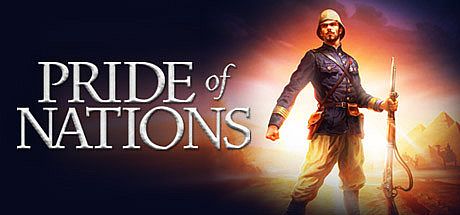














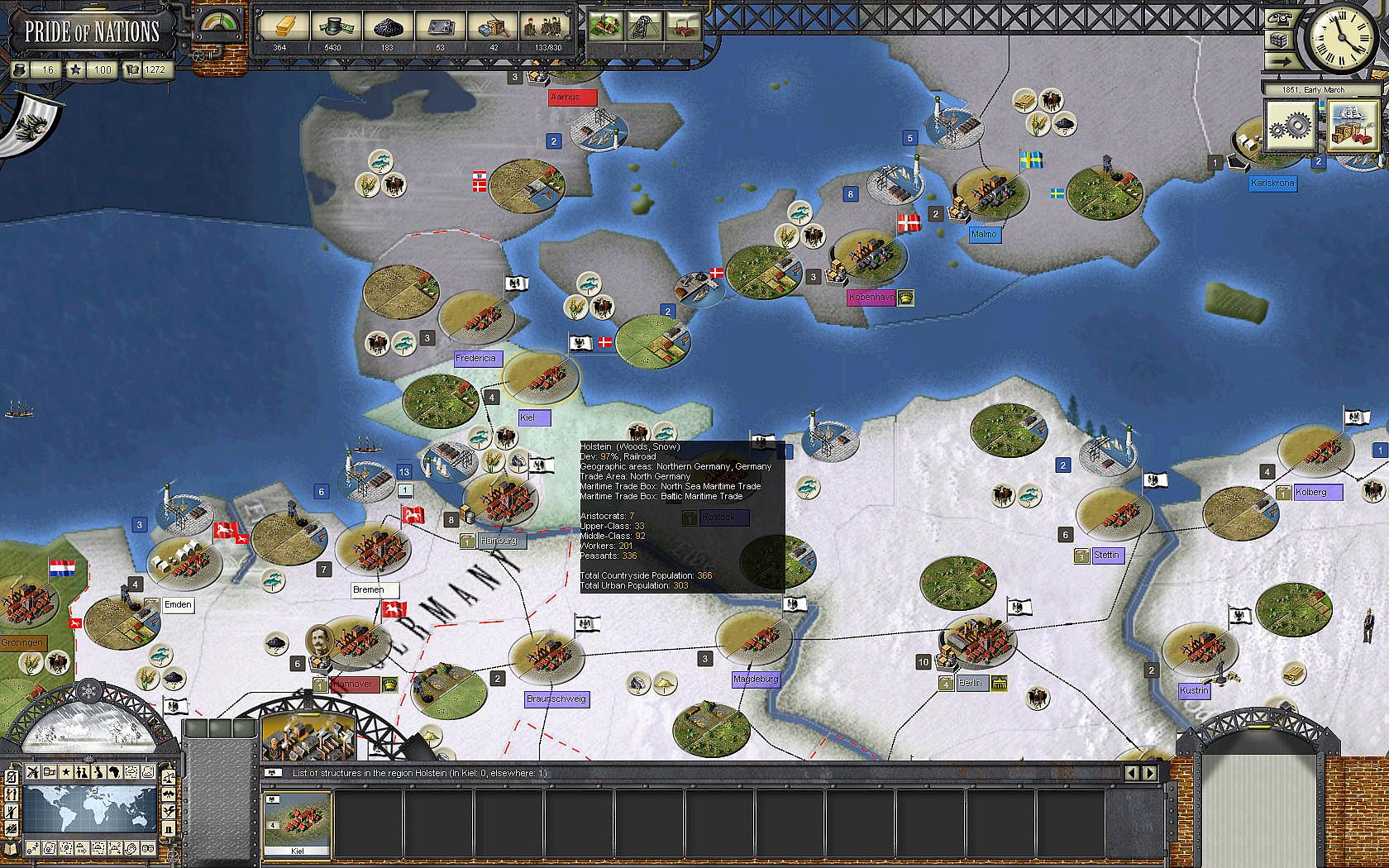
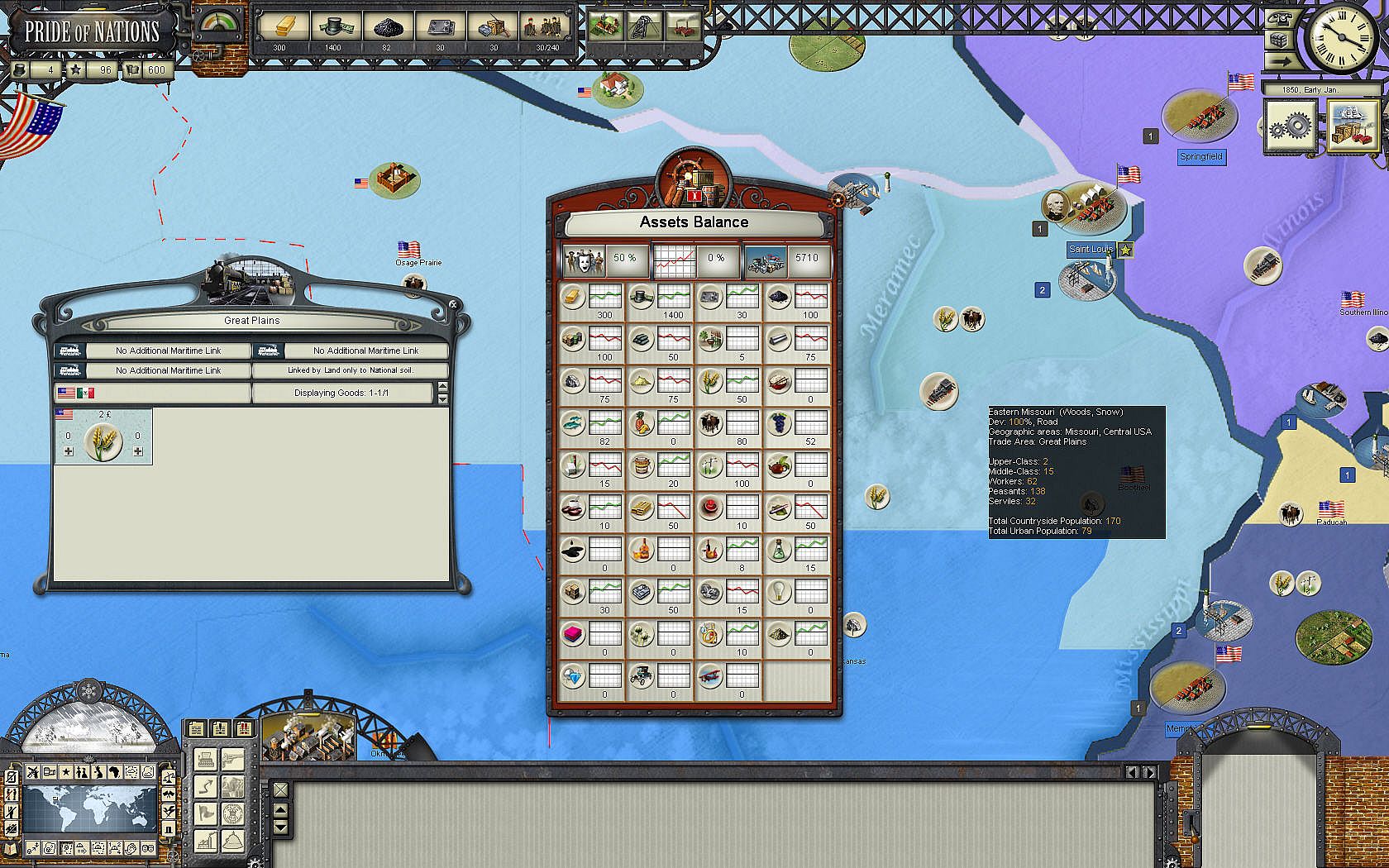
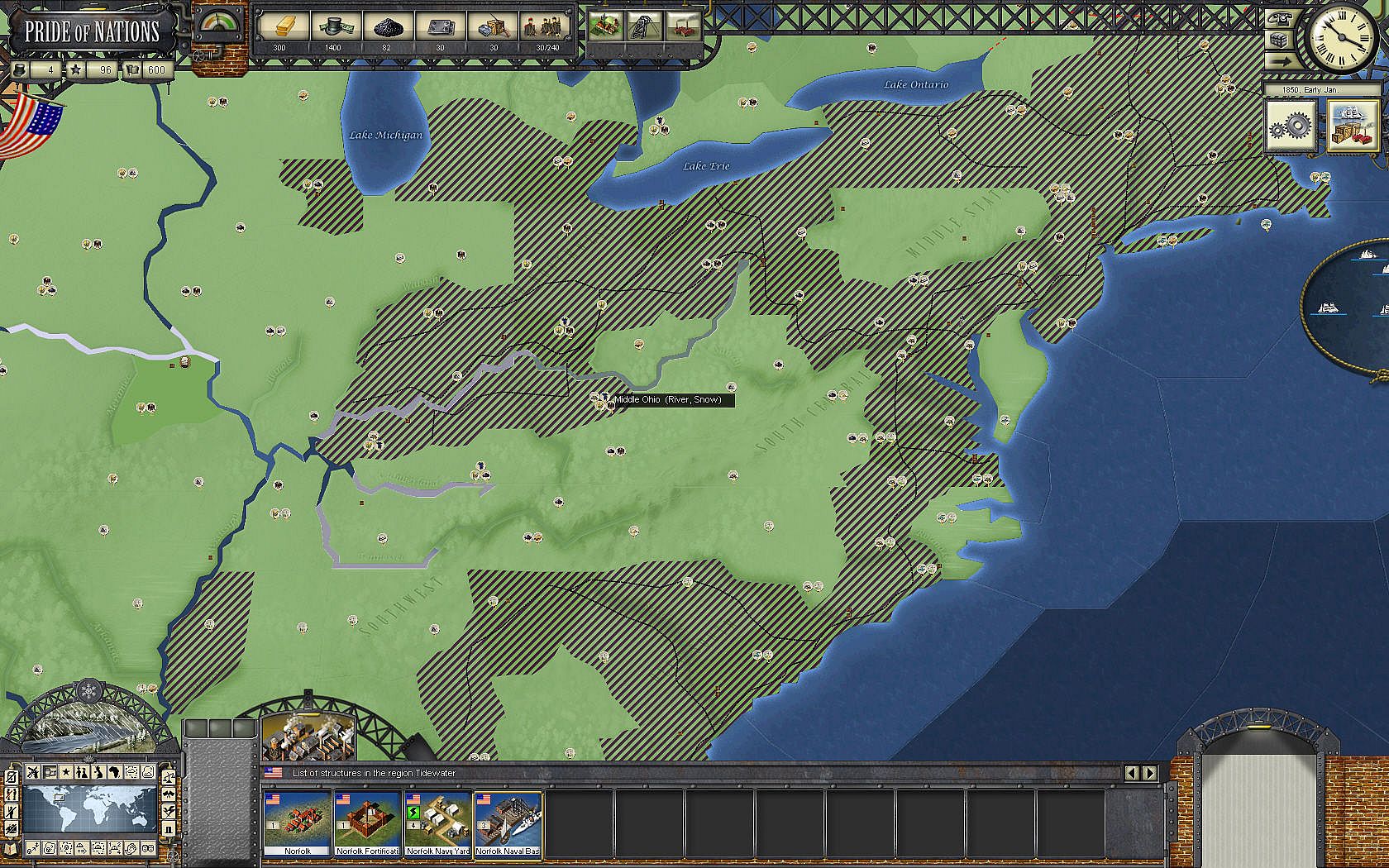
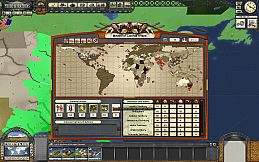
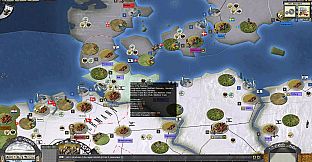
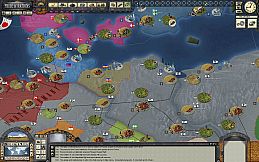

Pride of Nations is a turn-based strategy simulation game set during the colonial era of the 19th century. Players assume control of one of the era's major powers and manage its development across industrialization, territorial expansion, and international relations on a detailed global map spanning the years 1850 to 1920.
Gameplay
The core loop centers on managing national resources and decisions across multiple interconnected systems. Players handle economic growth through industrialization, direct military forces in conflicts, and pursue colonization efforts to expand influence. The game emphasizes realistic historical constraints, requiring careful balancing of domestic priorities with foreign ambitions.
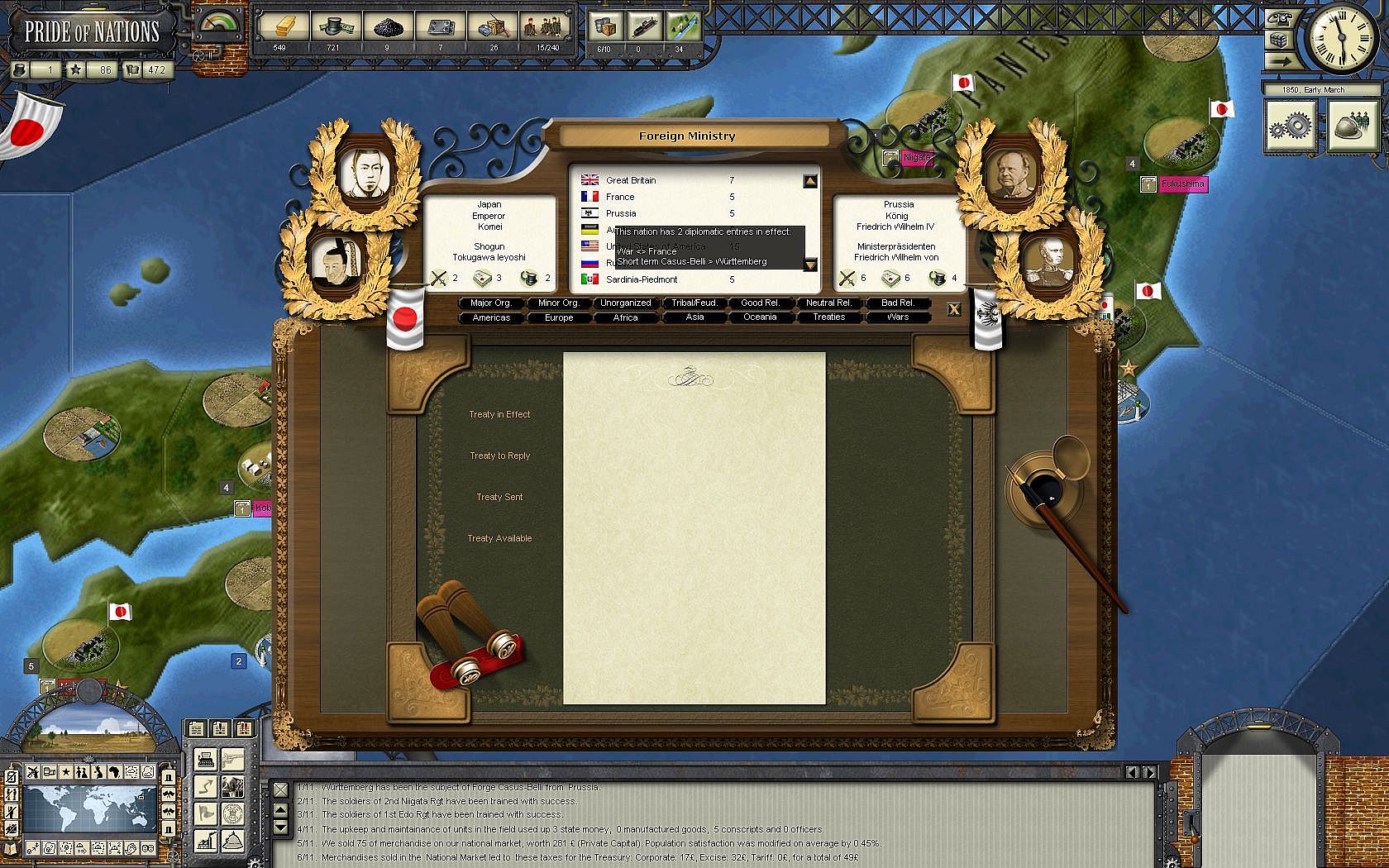
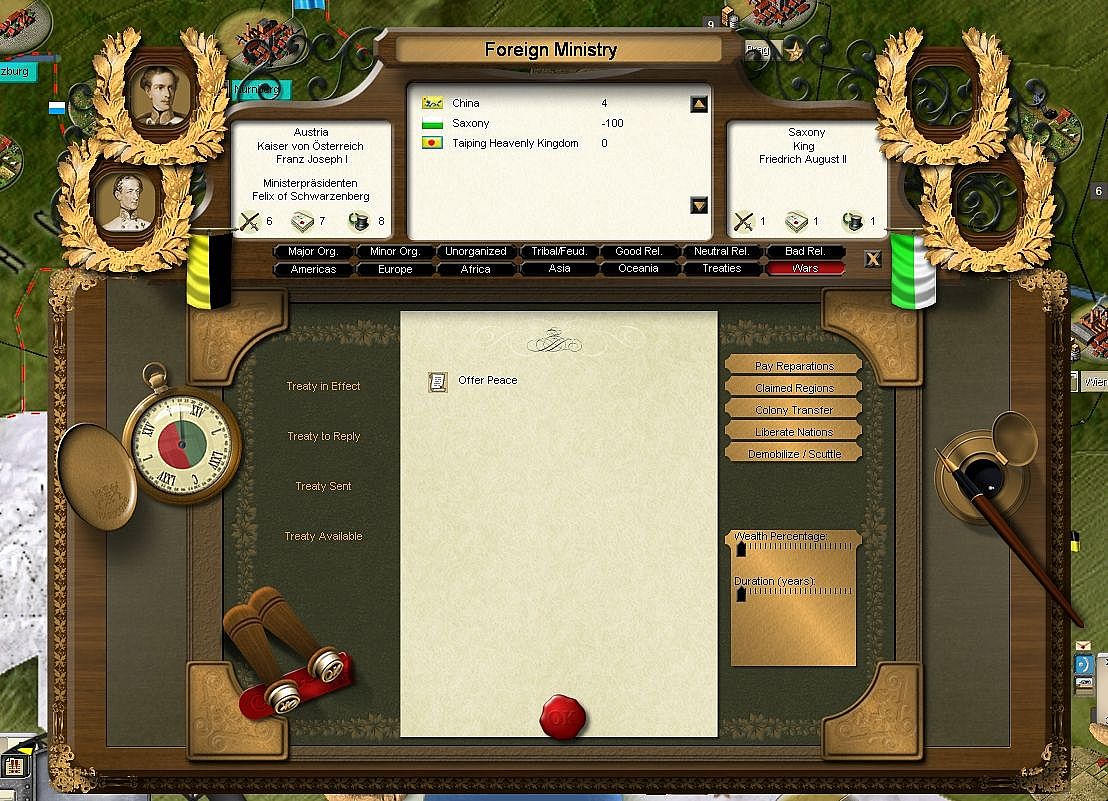
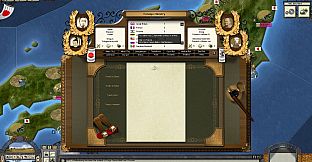
Diplomacy forms a central pillar, featuring an original model that allows nuanced interactions with other nations and minor powers. This system supports alliances, trade agreements, and negotiations that reflect the political realities of the period. Military actions involve a specialized construction process for armies and fleets, where unit composition and deployment follow period-appropriate logistics and technological progress.
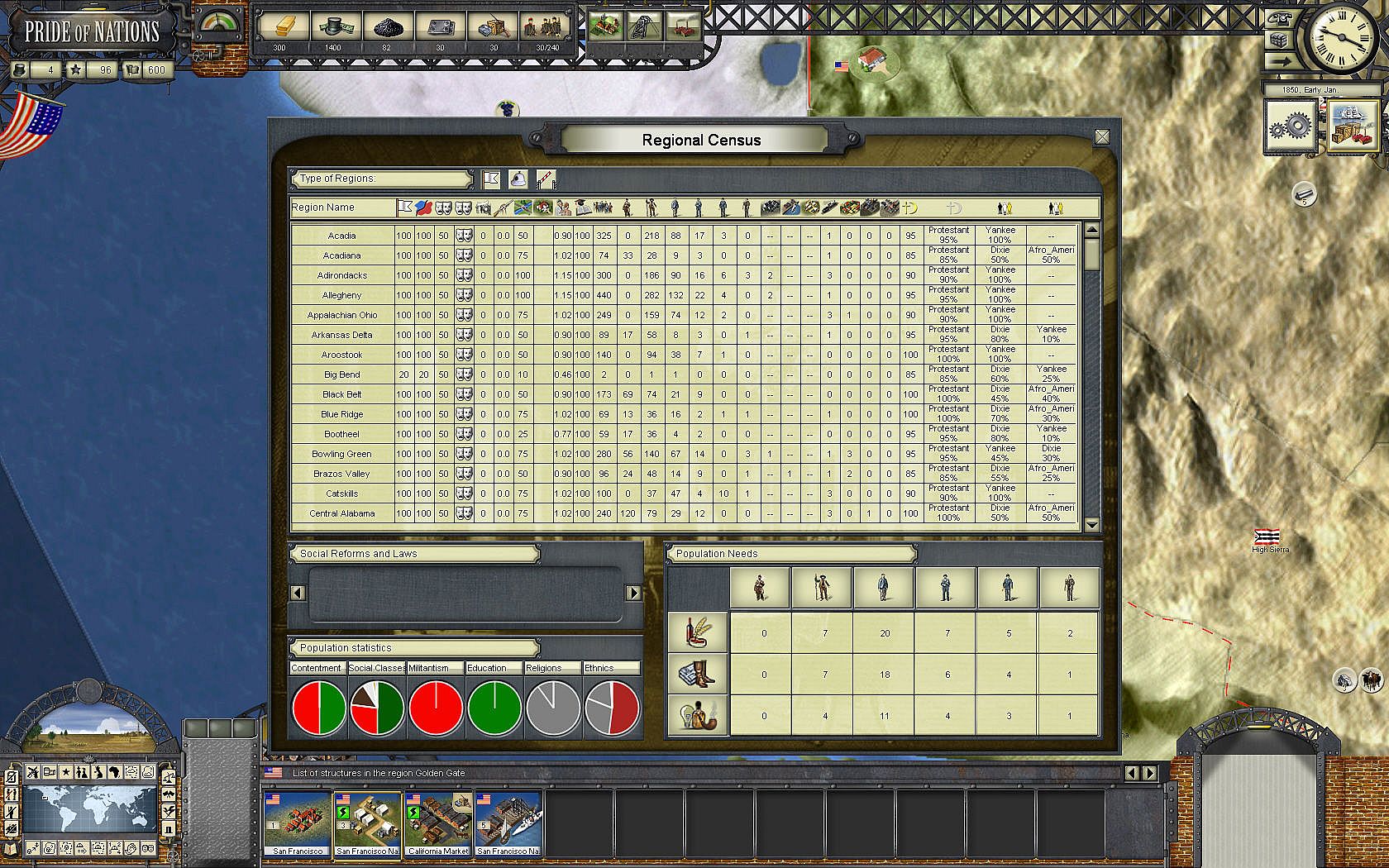
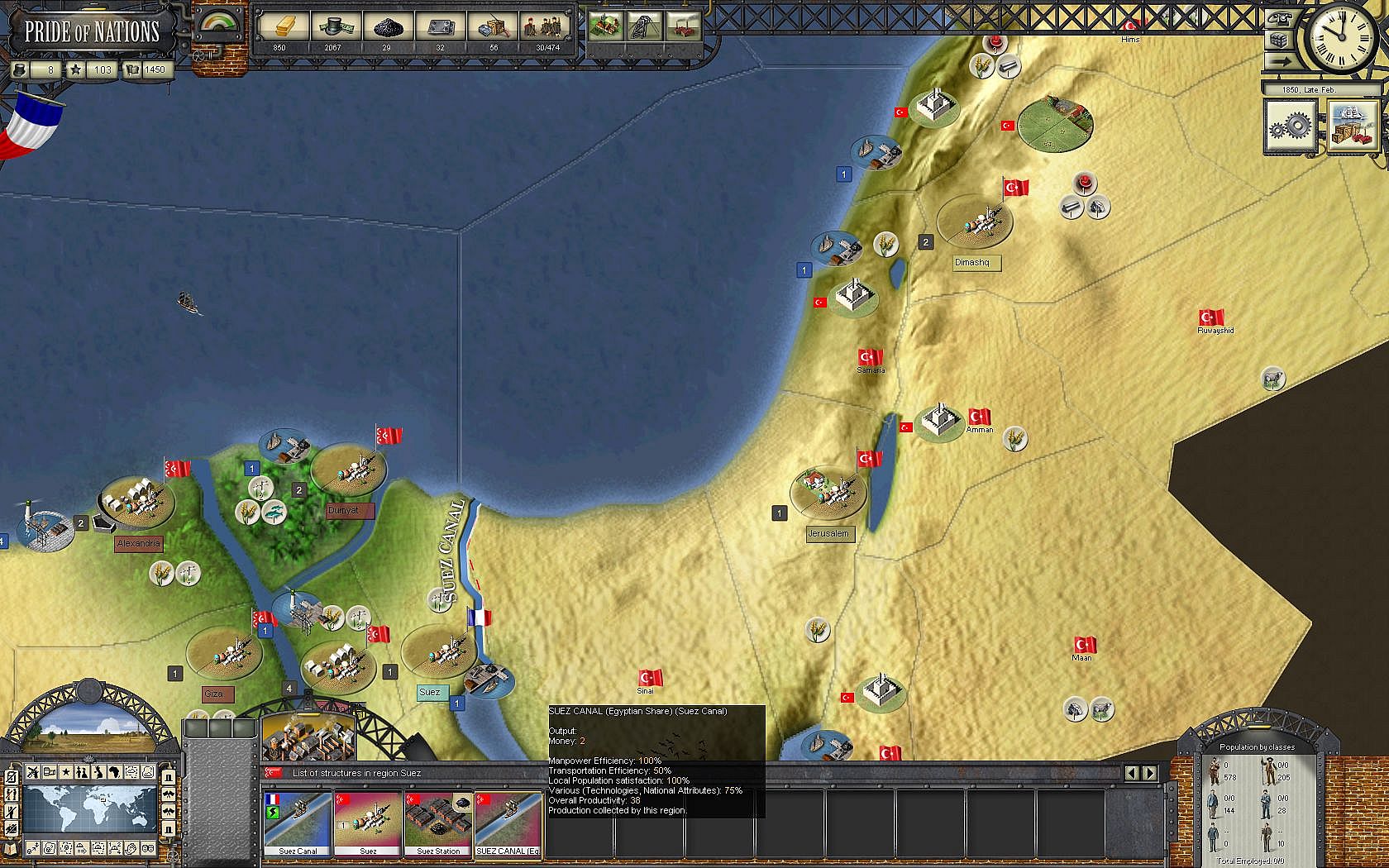
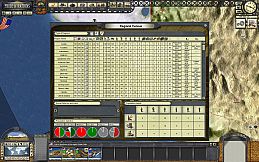
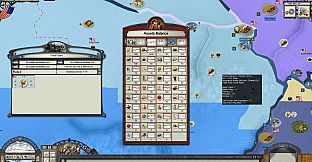
The world economy operates with detailed components that track production, trade, and resource flows. Players must navigate supply chains and market dynamics while responding to events that arise from global interactions. A capable artificial intelligence opponent challenges these efforts through adaptive strategies across all systems.
Game Modes
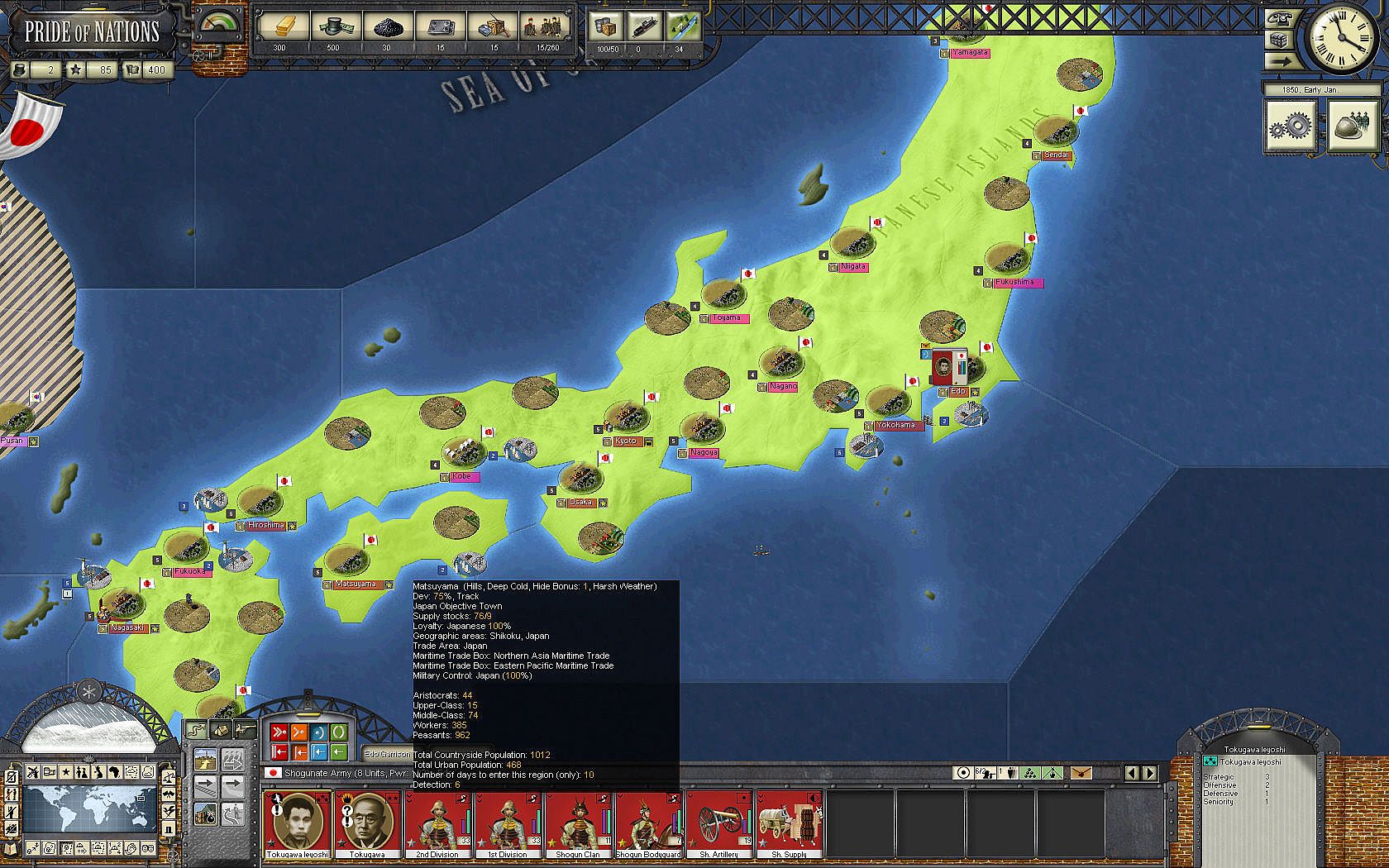
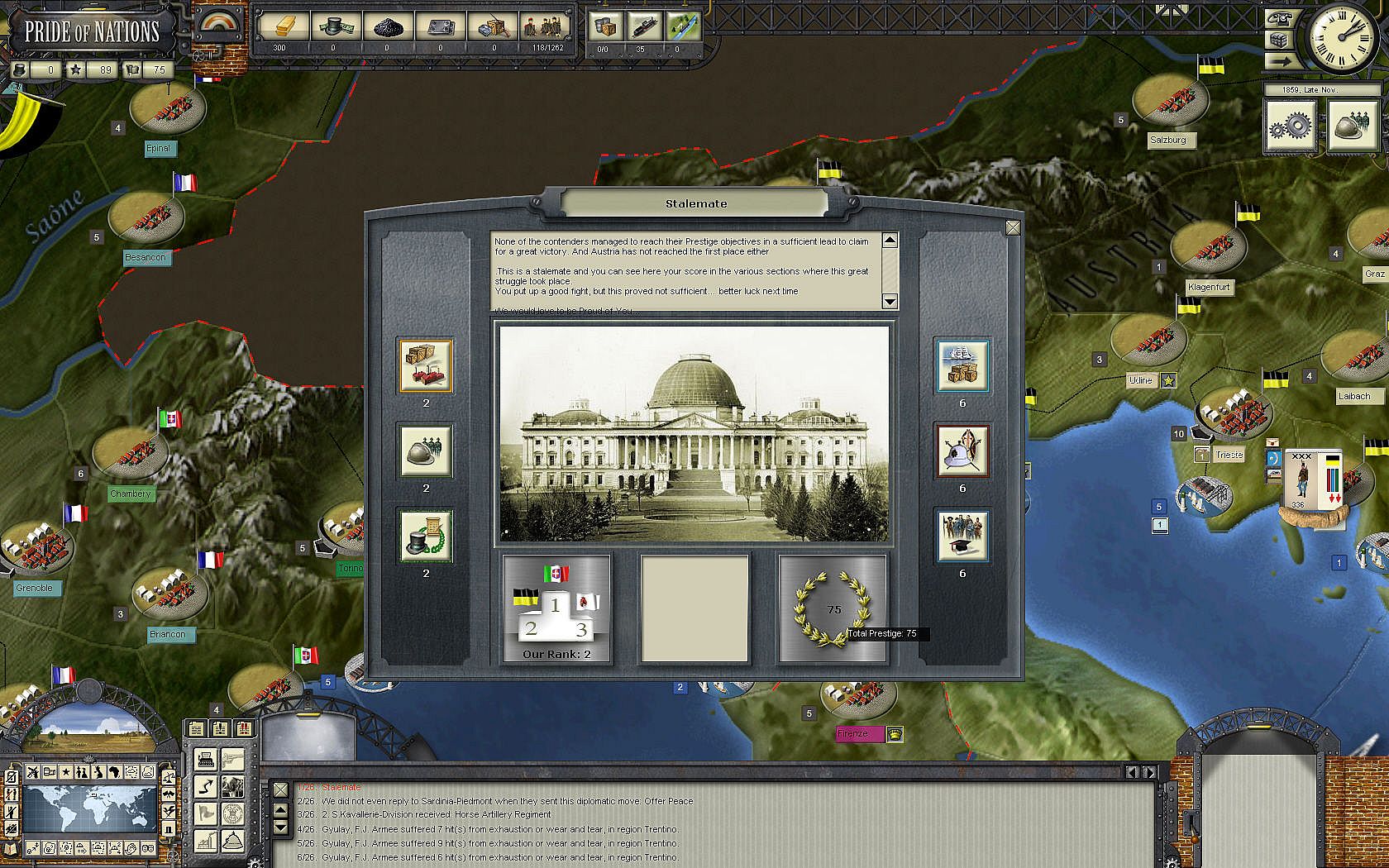
Singleplayer campaigns place the player against the AI in full historical scenarios. These allow complete control over one of eight nations, each with distinct starting conditions, goals, and personalities: the United States, Great Britain, Germany, France, Japan, Russia, Austria-Hungary, and Italy.
Multiplayer supports simultaneous turns, enabling several participants to issue orders at the same time rather than waiting in sequence. This engine reduces downtime and creates a more fluid competitive experience among human opponents.
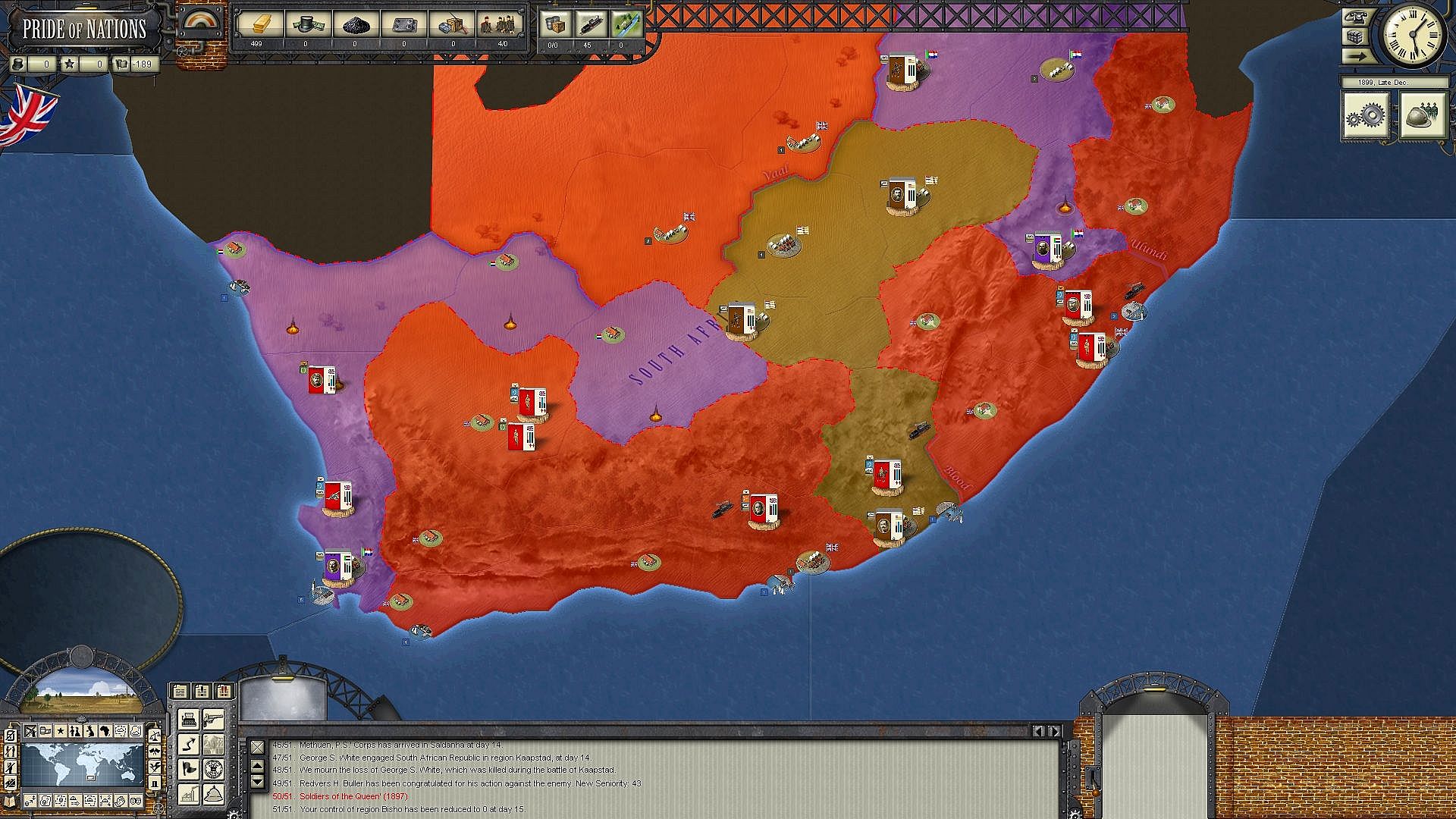
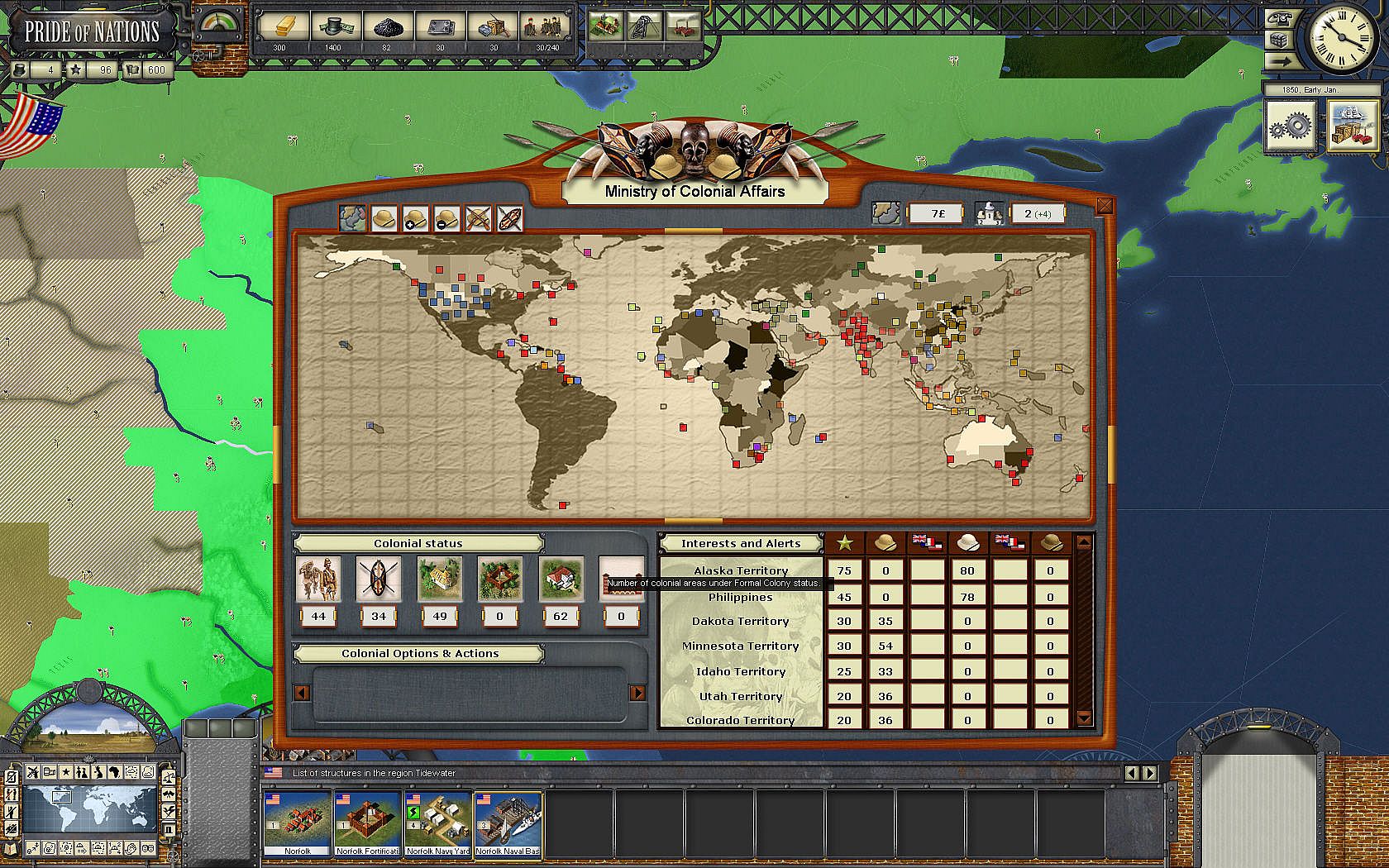
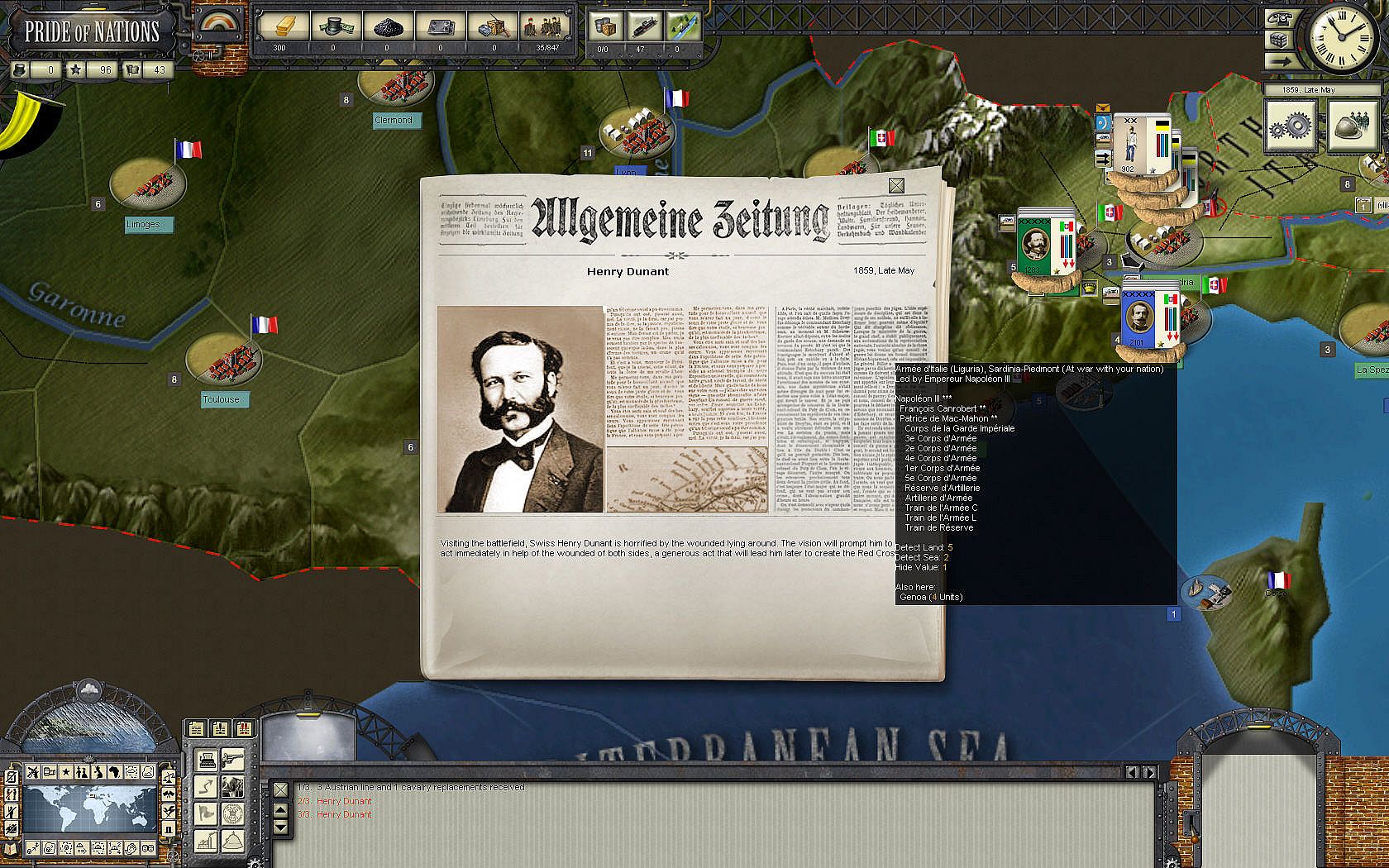
Four primary operational modes structure daily play: military for force management and combat planning, economic for industrial and trade oversight, colonial for overseas expansion and expeditions, and decision for handling key national events and policies. Sub-modes within each provide finer control over specific actions.
Historical Scope and Nations
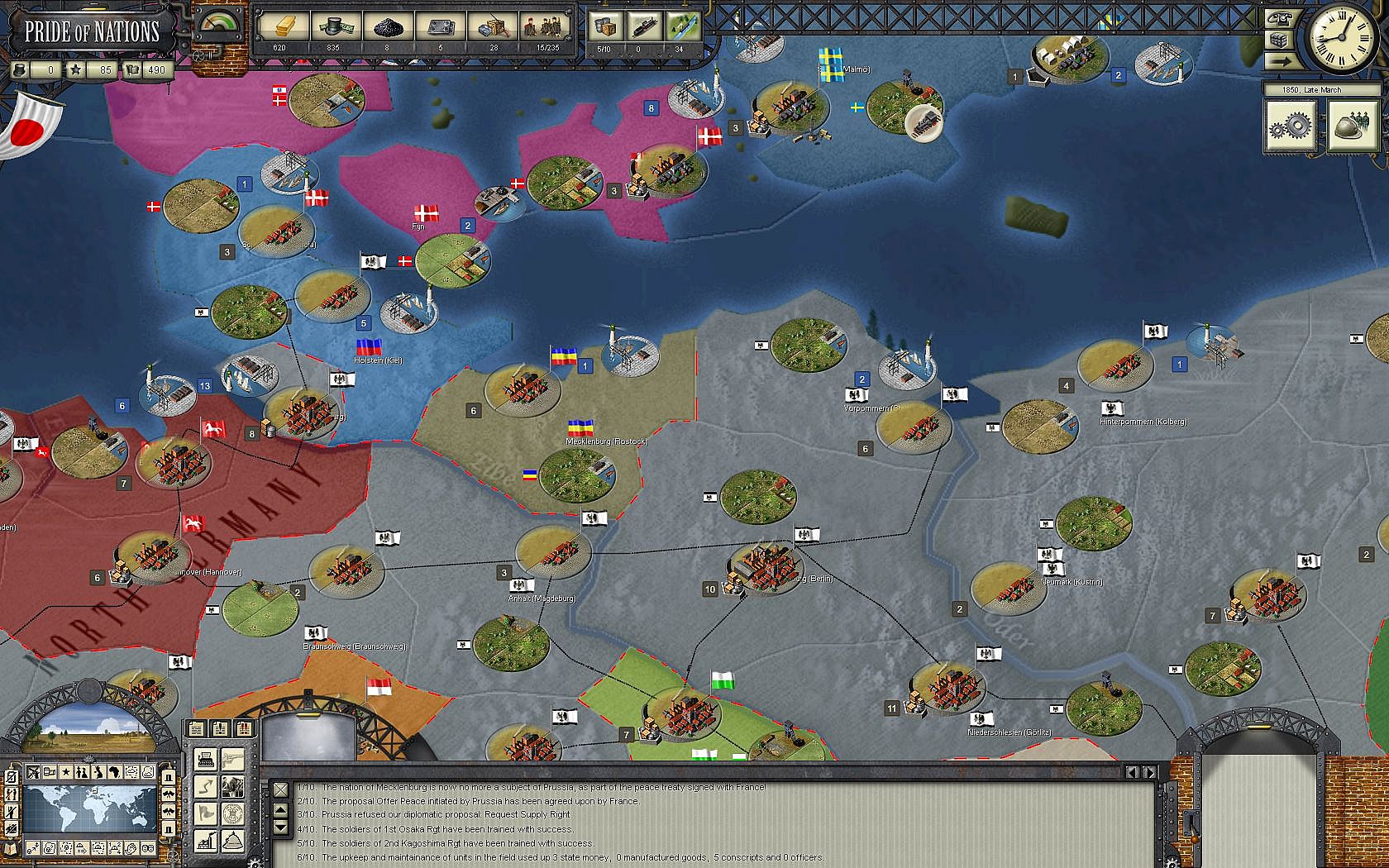
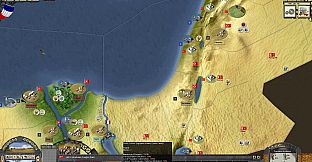
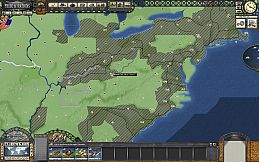
The timeframe captures the height of European imperialism and the rise of new industrial powers. Each playable nation brings unique advantages and challenges tied to its historical position, such as Britain's naval dominance or Japan's rapid modernization efforts. The global map incorporates regional variations in terrain, resources, and population that influence strategy.
Colonization mechanics encourage exploration and settlement in unclaimed territories while managing relations with local populations and rival powers. Military campaigns can escalate into larger wars that test the limits of logistics and alliances developed earlier in the game.
Is It Worth Playing?
Pride of Nations appeals to enthusiasts of complex grand strategy titles who value depth over accessibility. Its systems reward patient planning and repeated playthroughs as players refine approaches to diplomacy, economy, and warfare. The interface and learning curve present notable hurdles that may frustrate those seeking quicker sessions.
Multiplayer adds replay value for groups interested in competitive historical scenarios. The game remains available as a complete package on PC without ongoing seasonal content or major updates. Individuals drawn to detailed simulations of 19th-century nation-building will find substantial content here, while those preferring streamlined experiences may look elsewhere.