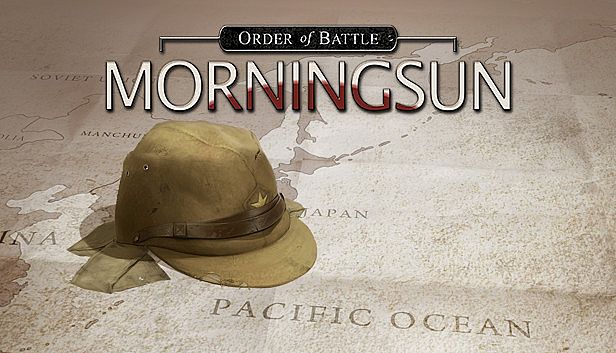









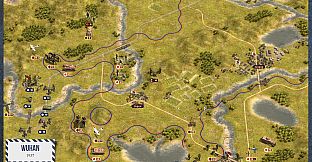
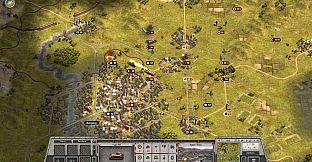
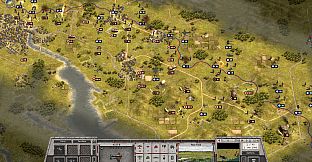
Order of Battle: Morning Sun is a strategy simulation game for PC that places players in command of Japanese forces during the opening stages of the Second Sino-Japanese War in 1937. The title expands the Order of Battle series into one of the largest but least covered conflicts of the era, focusing on territorial expansion and resource control across China.
Gameplay
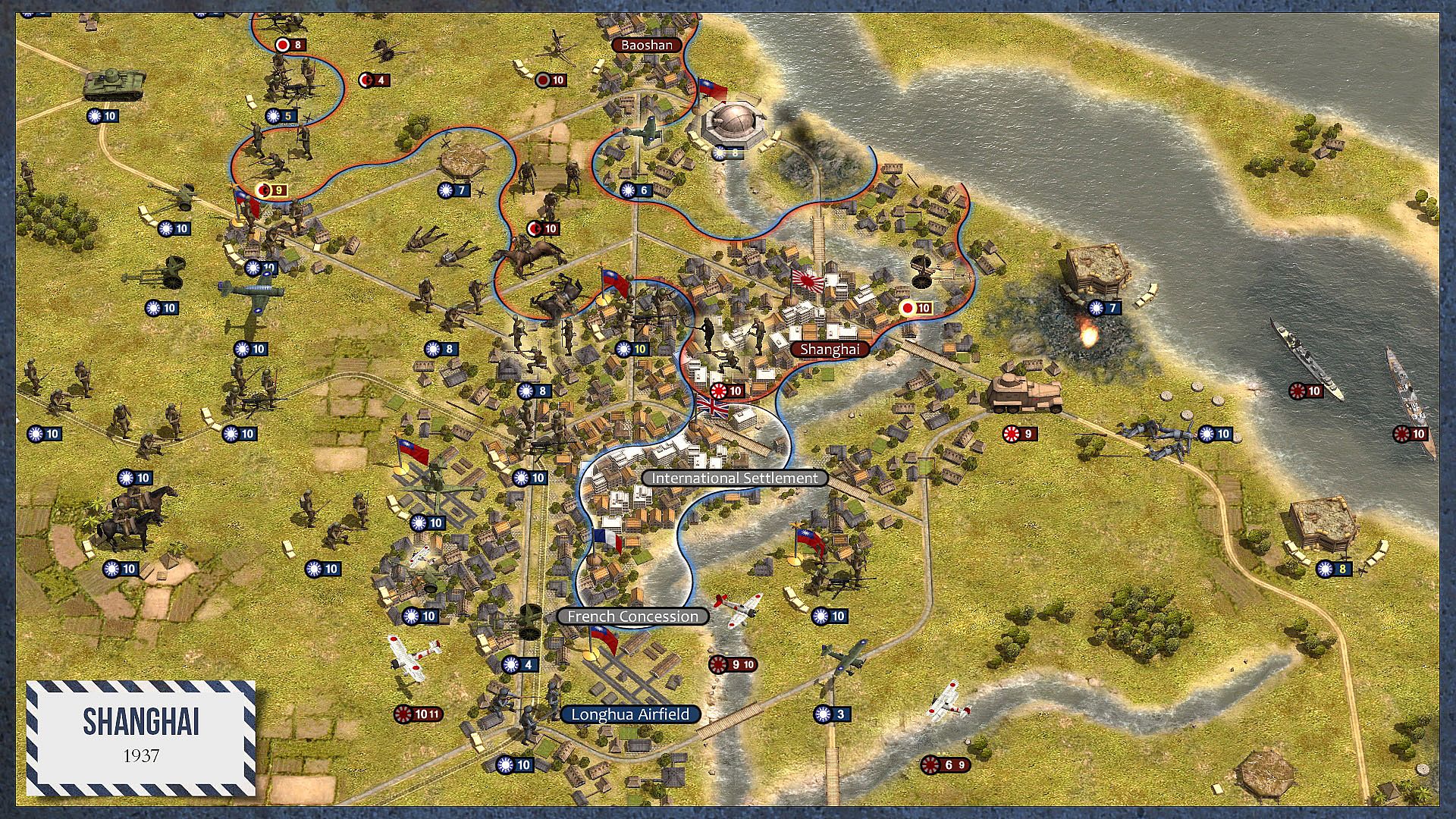
The core loop revolves around commanding modernized Japanese units against numerically superior but less equipped Chinese forces. Players manage army composition, positioning, and logistics across a series of historical operations that begin with the Battle of Shanghai and expand into broader campaigns. Japanese troops benefit from better training and equipment at the outset, though supply lines stretch thin as fighting continues, creating opportunities for Chinese counterattacks.
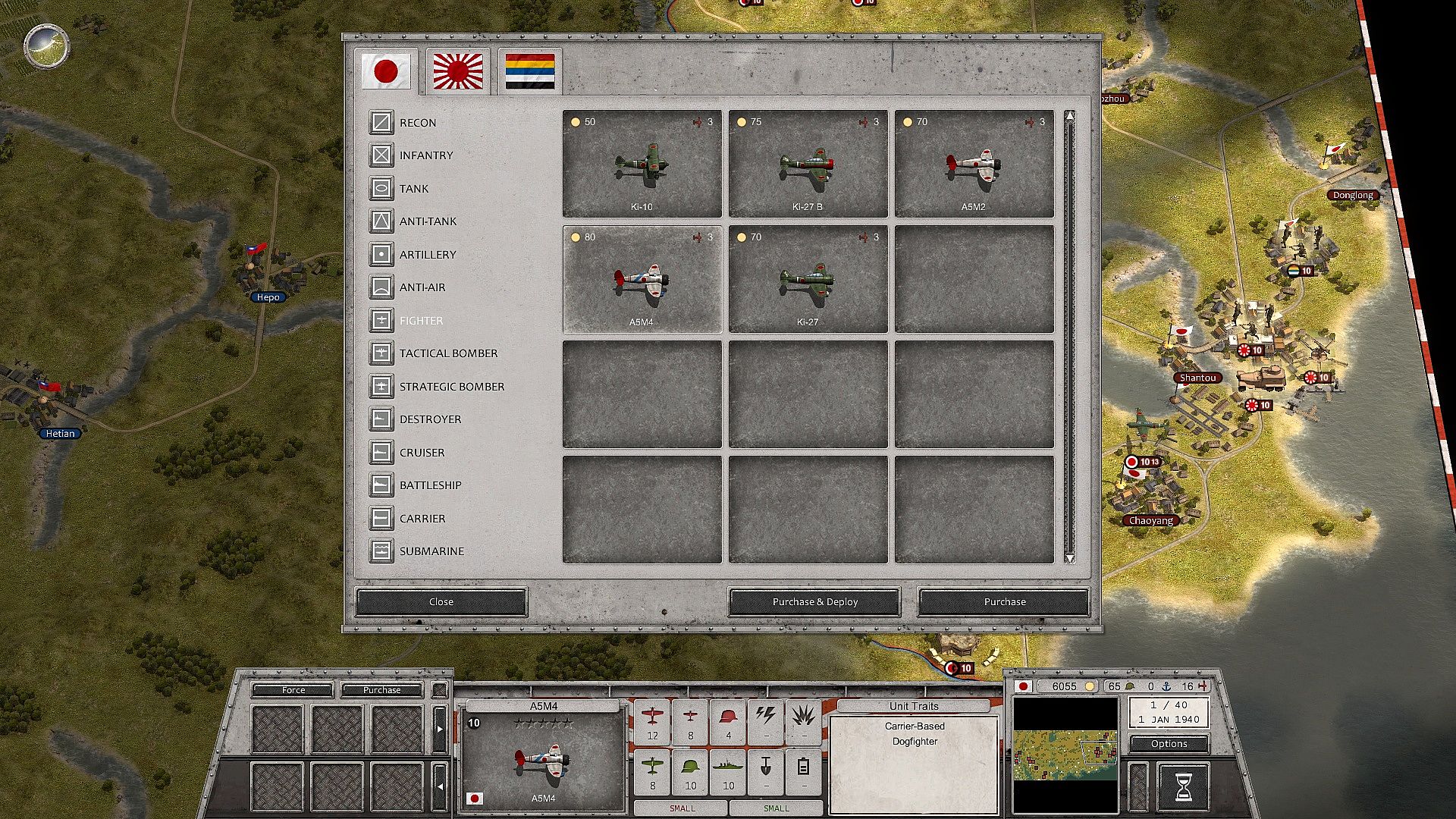
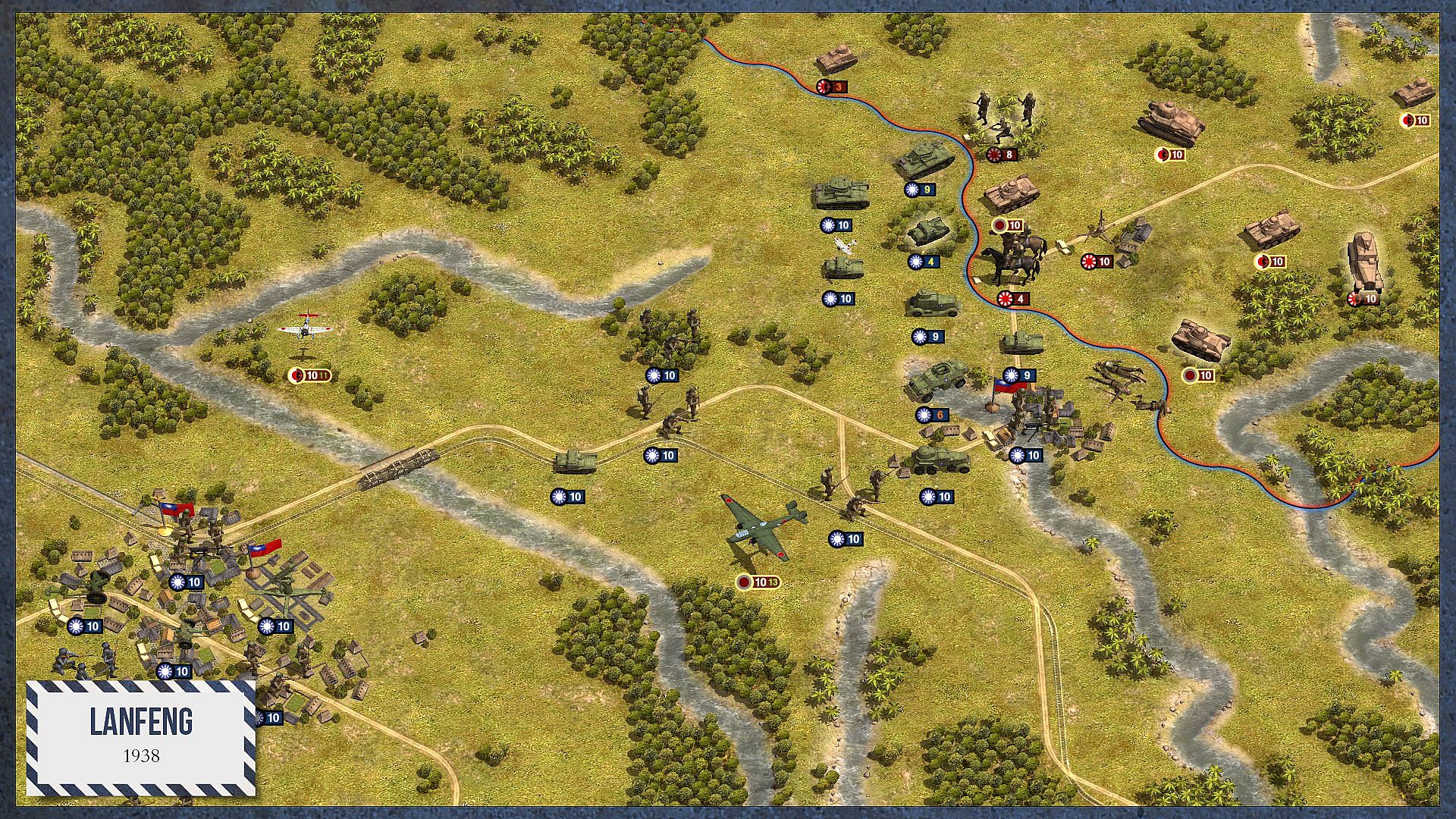
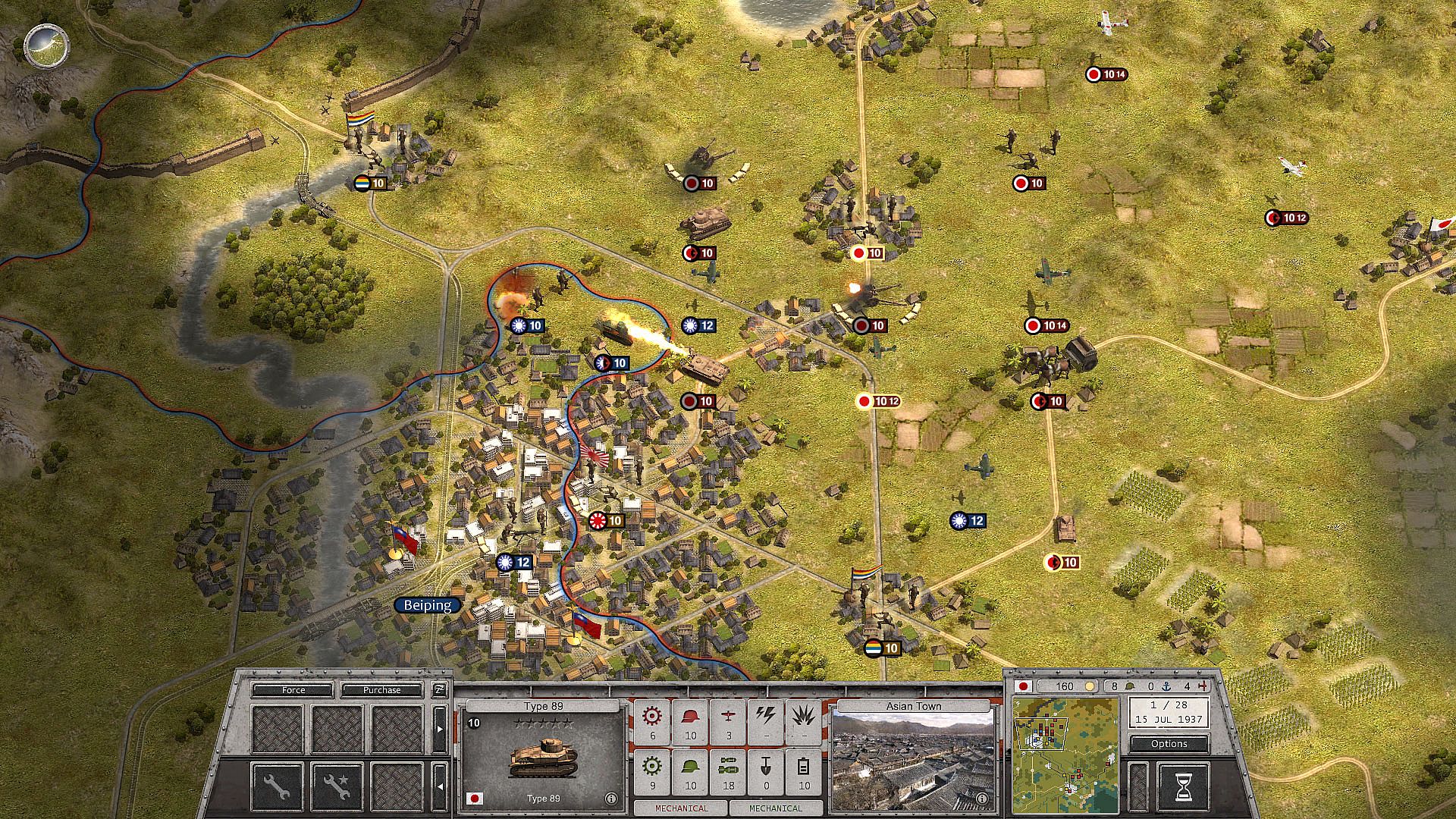
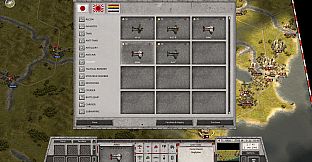
New units introduced for the Japanese side include biplane fighters and bombers such as the Ki-10, D1A, and A4N1, along with the Sōkō Sagyō Ki flamethrower engineering vehicle and Type 89 medium tanks. Chinese forces draw from international suppliers, fielding Soviet Polikarpov fighters and Tupolev bombers, T-26 tanks, German Panzer I vehicles and Sdkfz 221/222 armored cars, Italian L3/33 tankettes, British Gloster Gladiators, and 37mm PaK guns. Both sides gain access to cavalry units and horse transportation for towed artillery. Nearly 100 new unit types appear overall.
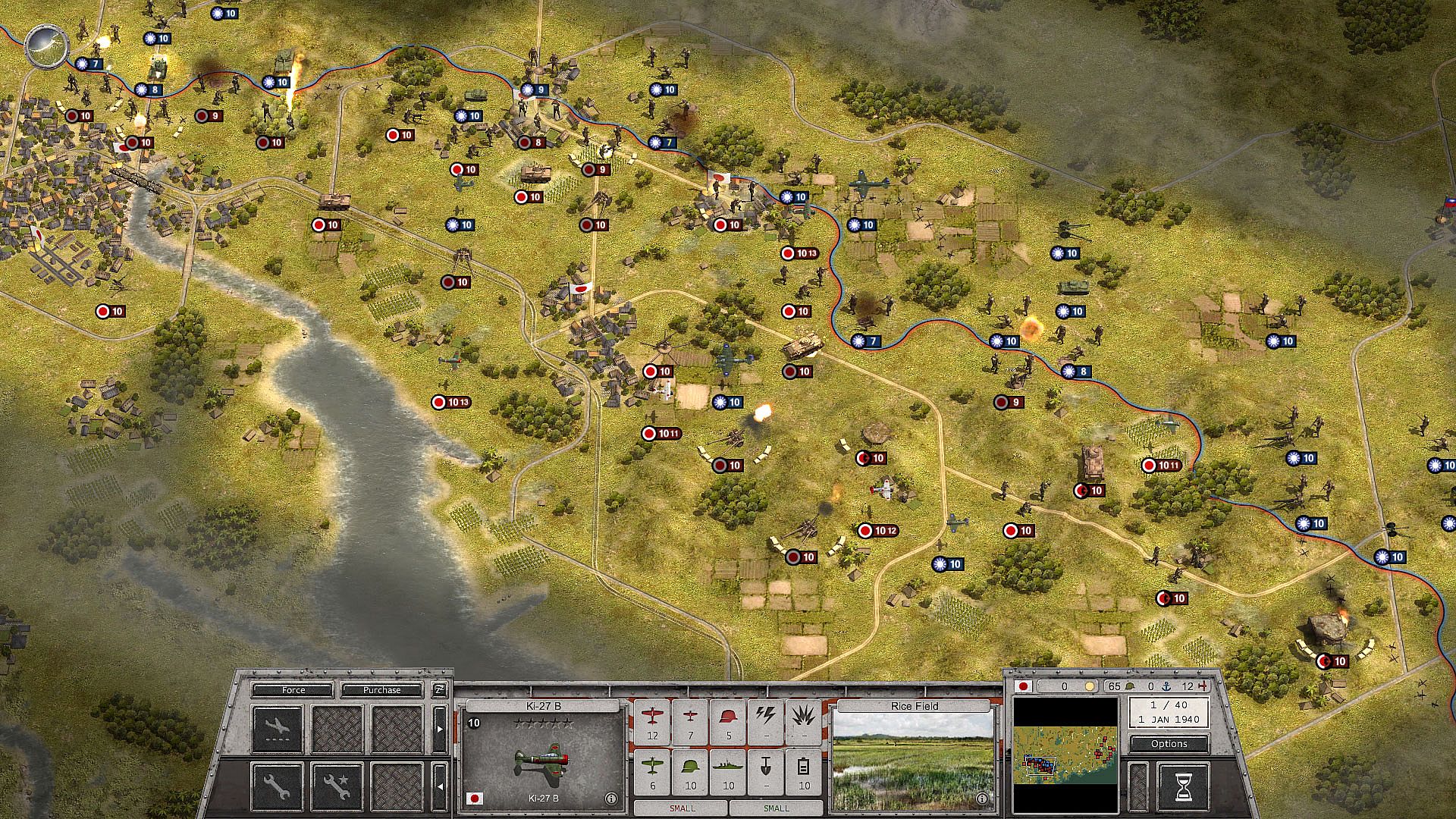
Additional mechanics include the Construction Group unit, which lets players build small airstrips at chosen locations. Cavalry and horse-drawn transport reflect the historical role of animals in moving troops and equipment. New terrain features require adaptation, such as advancing through muddy rice fields or defending positions along the Great Wall of China.
Game Modes
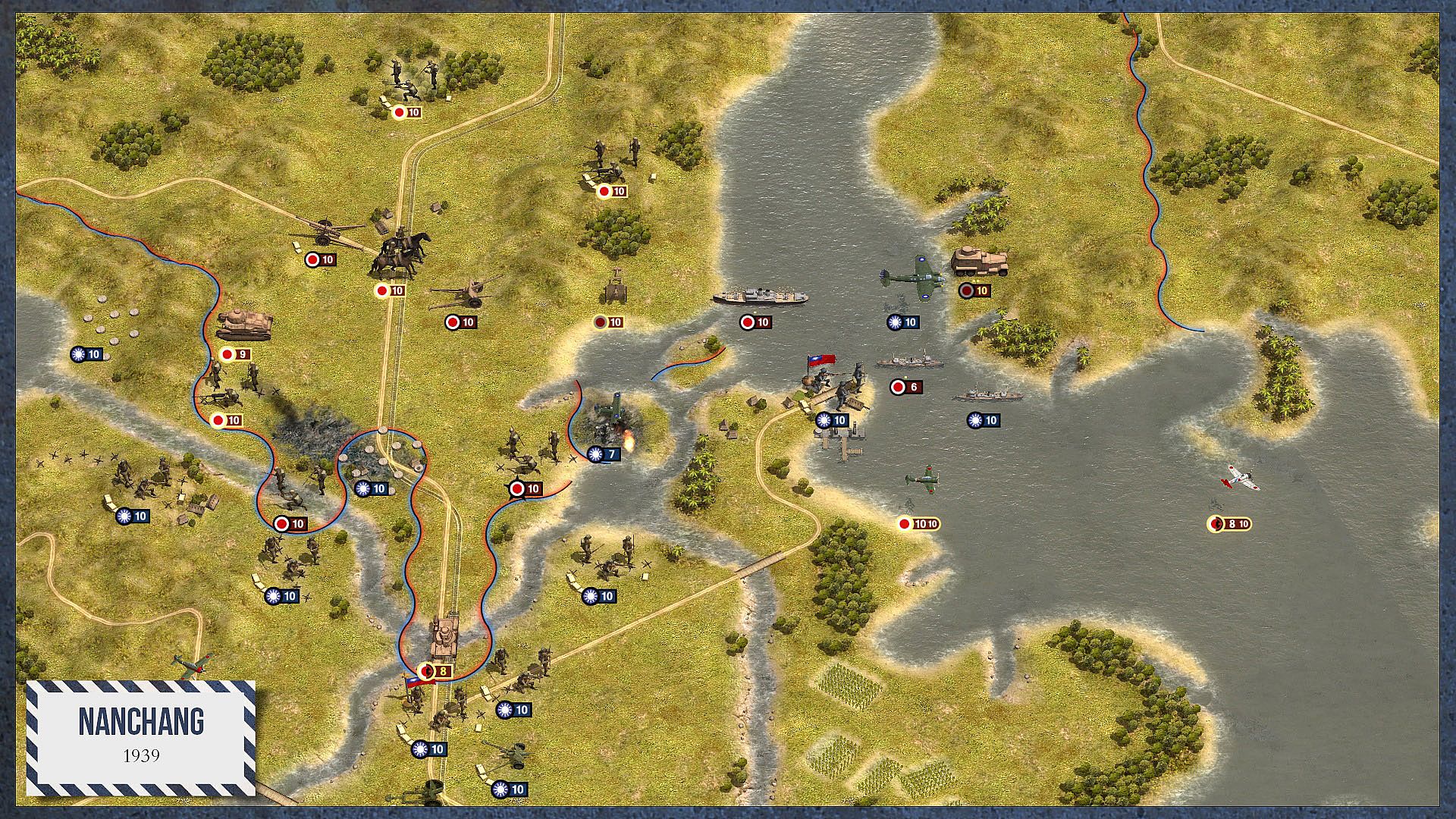
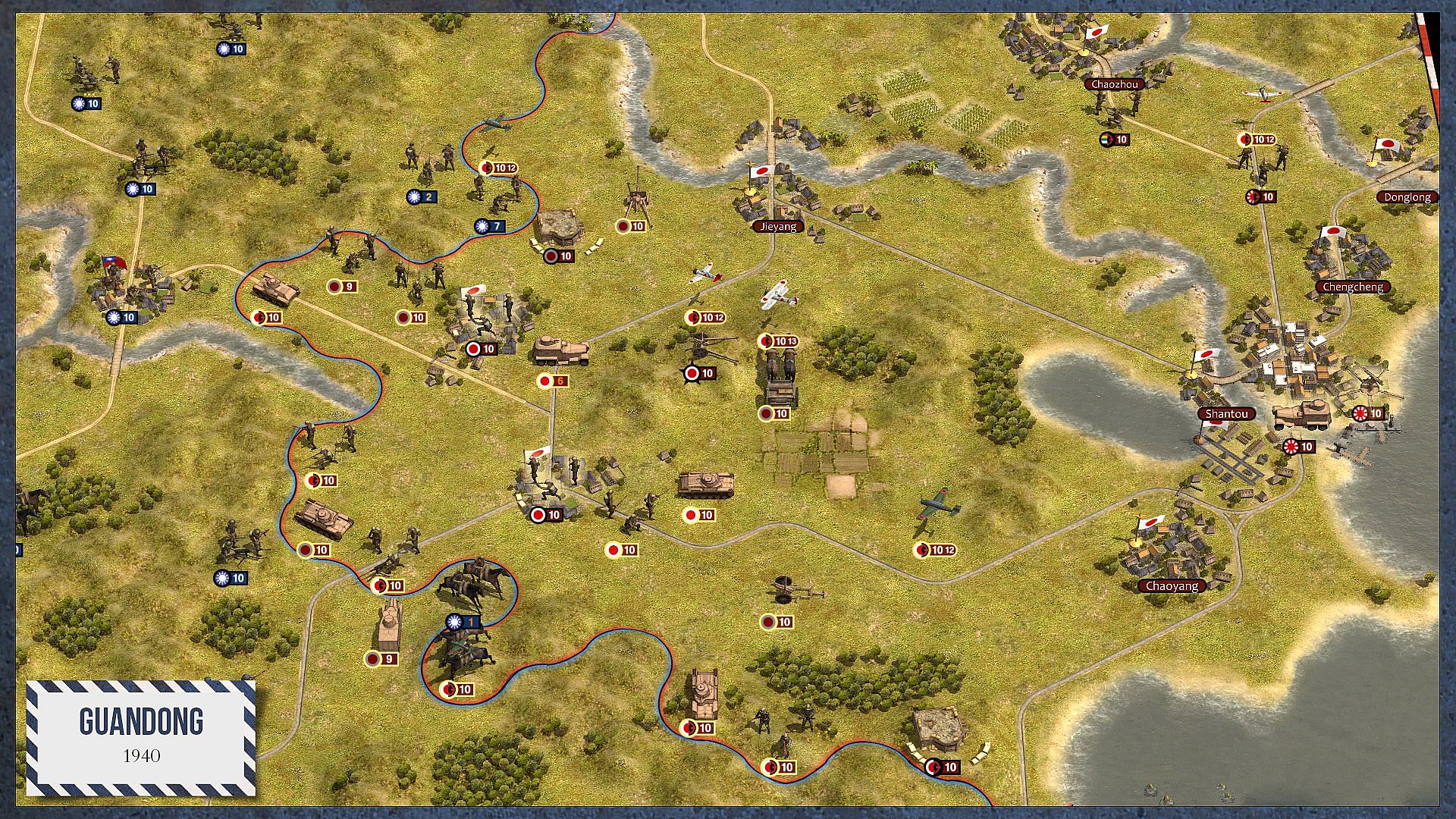
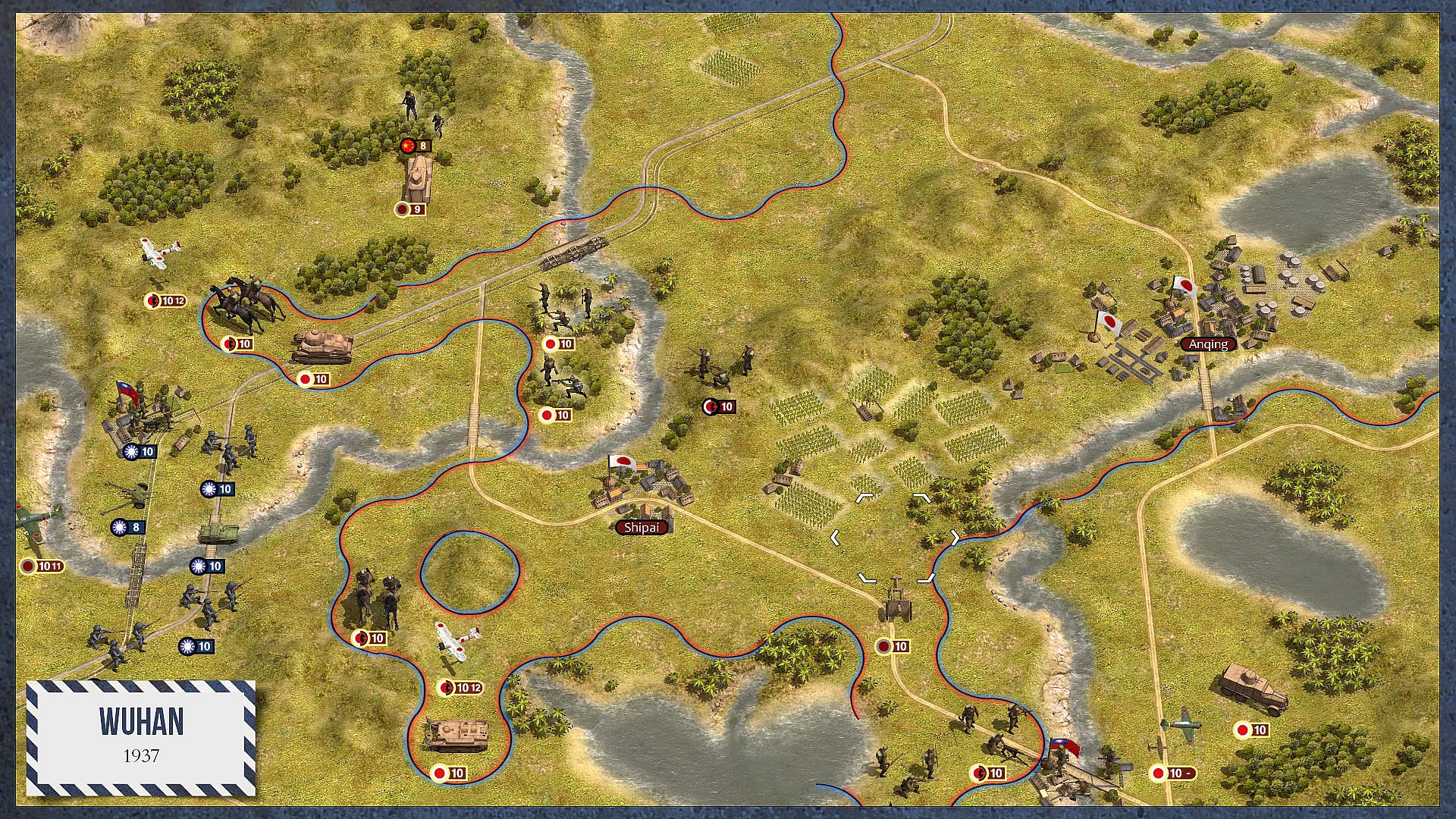
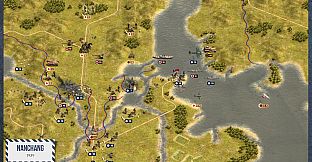
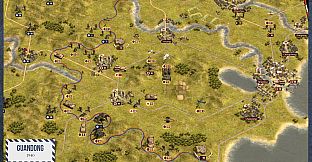
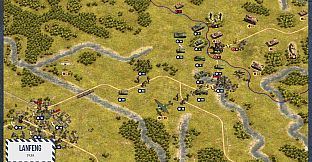
Play centers on a campaign structured around specific historical scenarios. These include Beiping-Tianjin, Operation Chahar, Shanghai, Xuzhou, Lanfeng, Wuhan, Nanchang, Changsha, South Guangxi, Guandong Offensive, and Chongqing. Each scenario recreates key phases of the conflict, with objectives tied to territorial gains, resource control, and defensive stands.
Scenario progression follows the timeline of the war, starting in summer 1937 and moving through major engagements. Players select Japanese forces and face Chinese opposition that grows in strength and variety as the campaign advances. The structure emphasizes planning around unit strengths, terrain effects, and the shifting balance of initiative between the two sides.
Historical Context and Unit Variety
The setting captures the rapid escalation from border tensions into full-scale war. Japanese forces start with advantages in training and modernization but face increasing strain from extended supply lines. Chinese armies compensate with numbers and a wide mix of foreign equipment obtained through arms deals, leading to diverse force compositions on the battlefield.
Unit variety encourages experimentation with combined arms tactics. Air units range from early biplanes to more capable designs, while ground forces include tanks, armored cars, tankettes, and engineering vehicles equipped for specialized roles such as flamethrower support. The addition of cavalry and horse transport adds another layer to movement and logistics planning across varied terrain.
Is It Worth Playing?
Order of Battle: Morning Sun suits players who enjoy detailed turn-based strategy focused on World War II operations in the Pacific and Asian theaters. The campaign delivers a sequence of linked scenarios that highlight the progression of the Second Sino-Japanese War, with attention to equipment differences and terrain challenges.
Those interested in managing overstretched forces against a resilient opponent will find the core tension between Japanese modernization and Chinese numerical superiority engaging. The game remains available as a complete title with its listed scenarios and unit additions intact, making it a focused option for historical strategy fans seeking content outside more commonly covered European fronts.