


















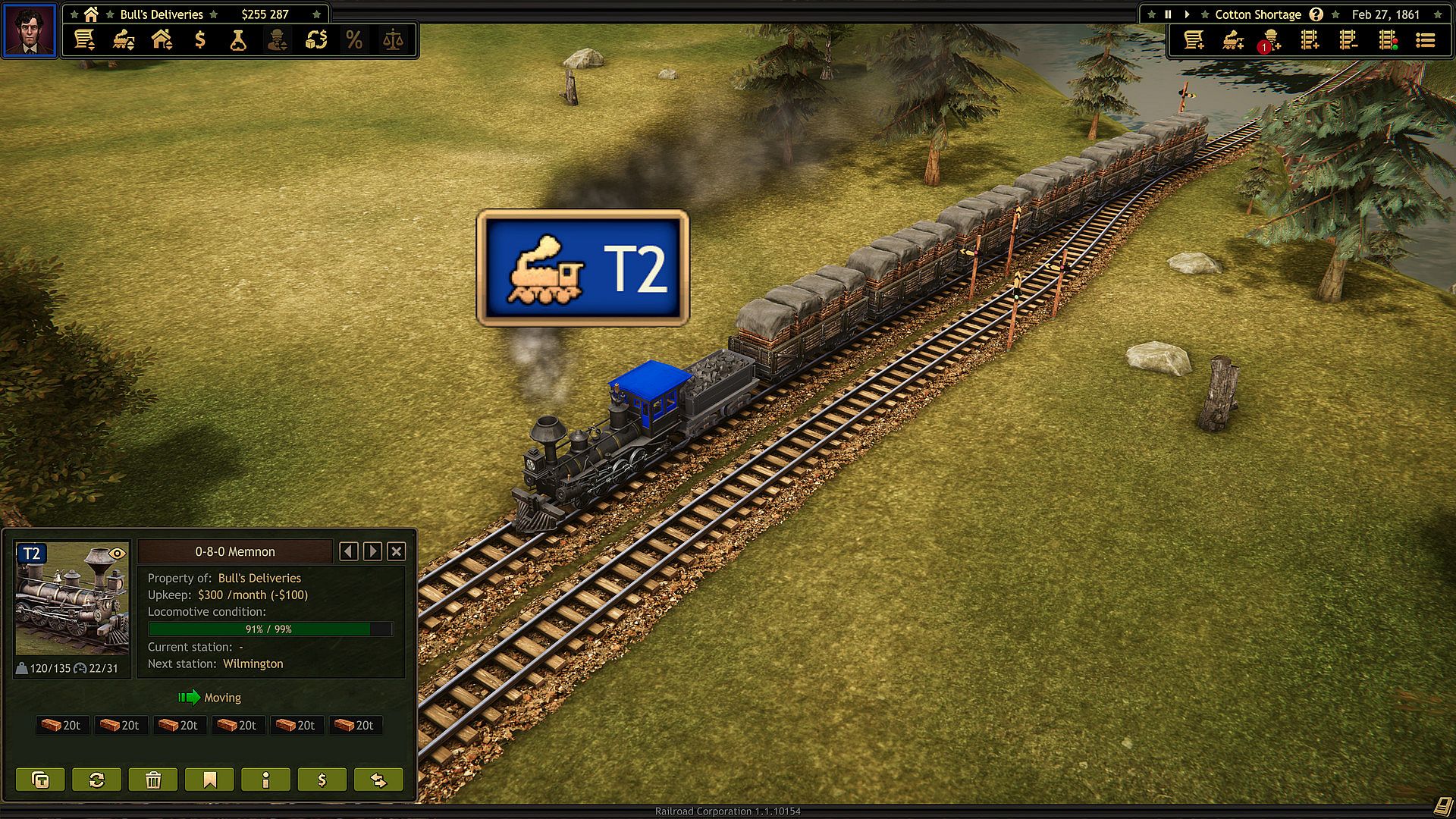
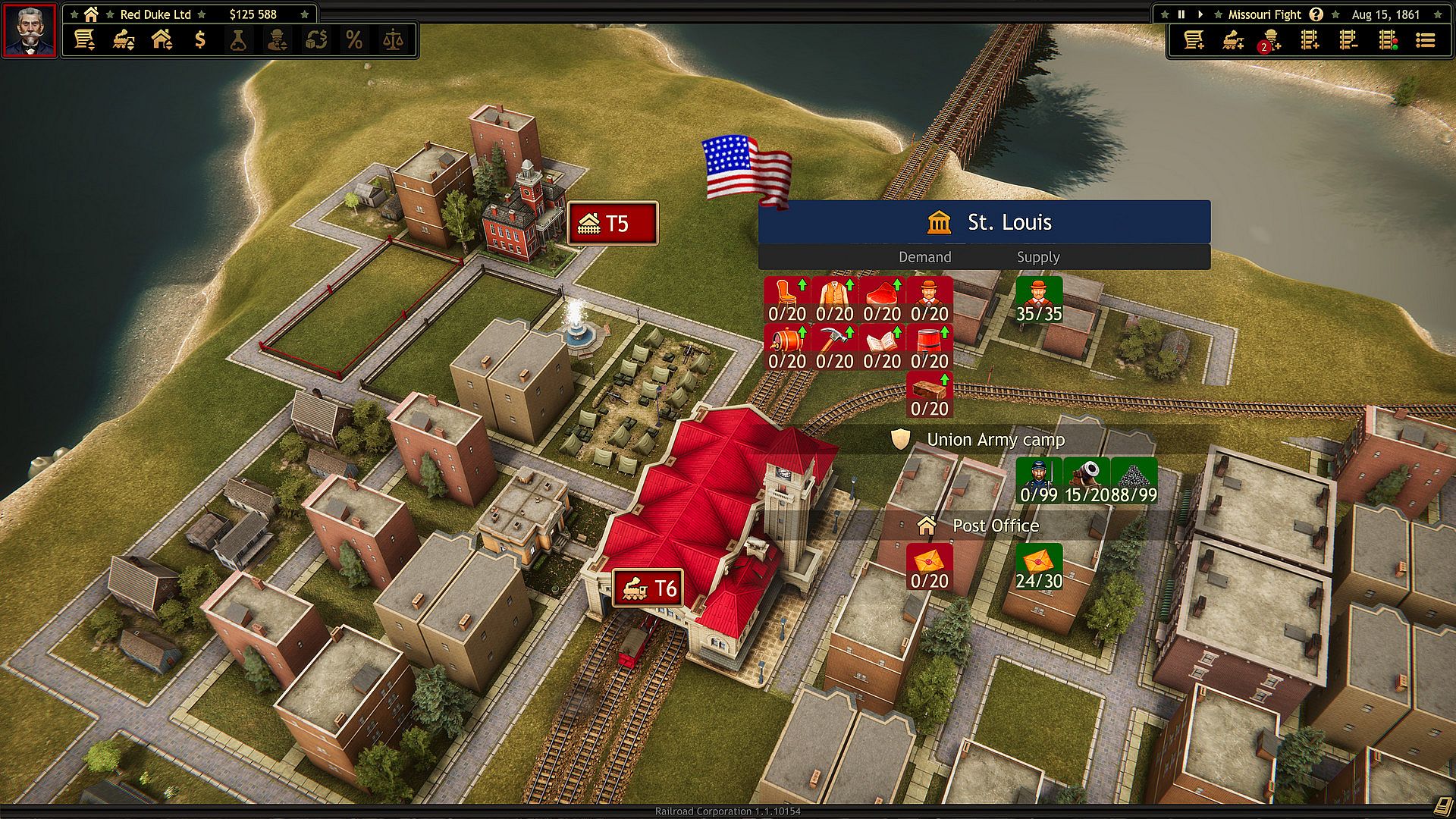
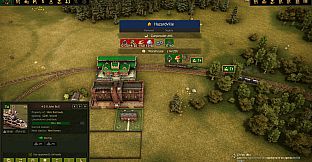
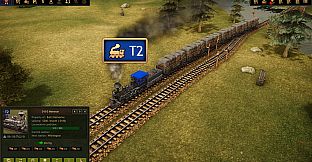
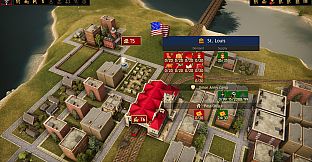
Railroad Corporation - Civil War is a strategy and simulation game that expands the railroad management experience with a focused historical campaign set in the 1860s. Players take on the role of a growing organization that supports either Union or Confederate forces through production, logistics, and military supply chains. The title emphasizes careful planning of resource extraction, manufacturing, and rail transport to meet escalating demands as the conflict progresses.
Gameplay
The core loop centers on building and optimizing a railroad network while handling production of war-related goods. Early objectives involve establishing supply lines for basic materials and delivering them to designated points. As reputation grows, responsibilities shift toward troop movements and specialized equipment. Players must balance expansion with the need to secure resources through geo-research activities that uncover natural deposits across the map.
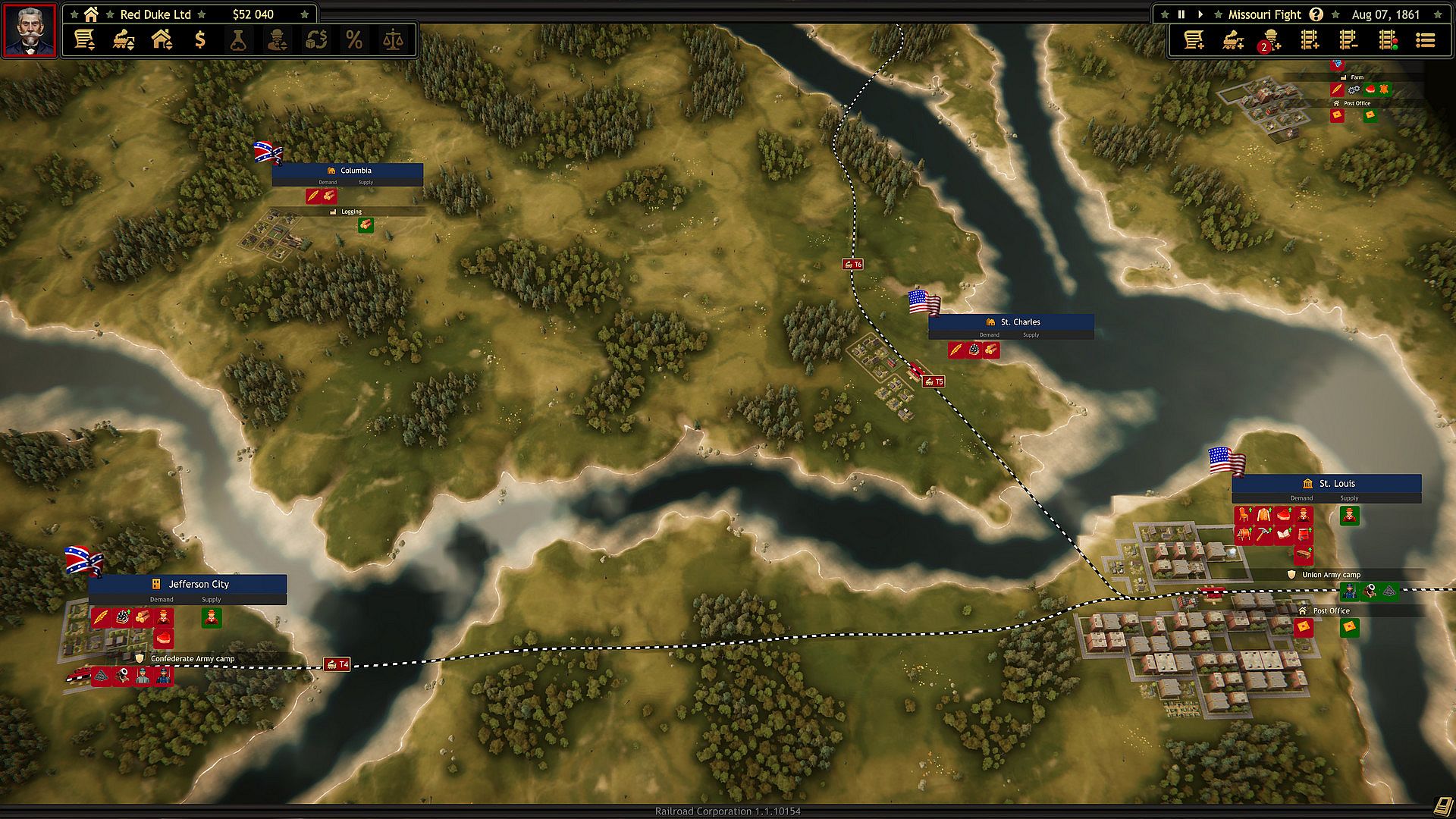
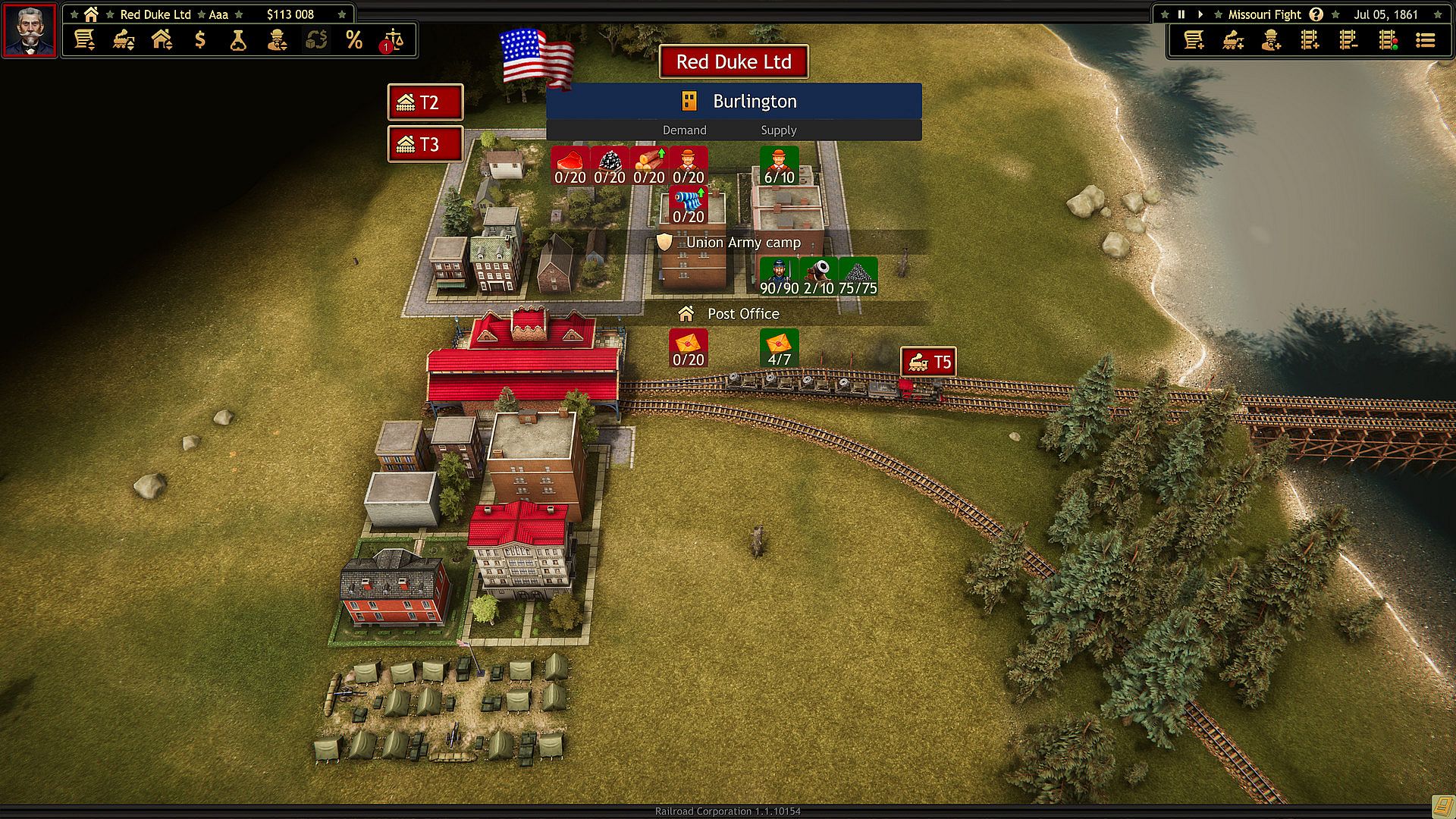
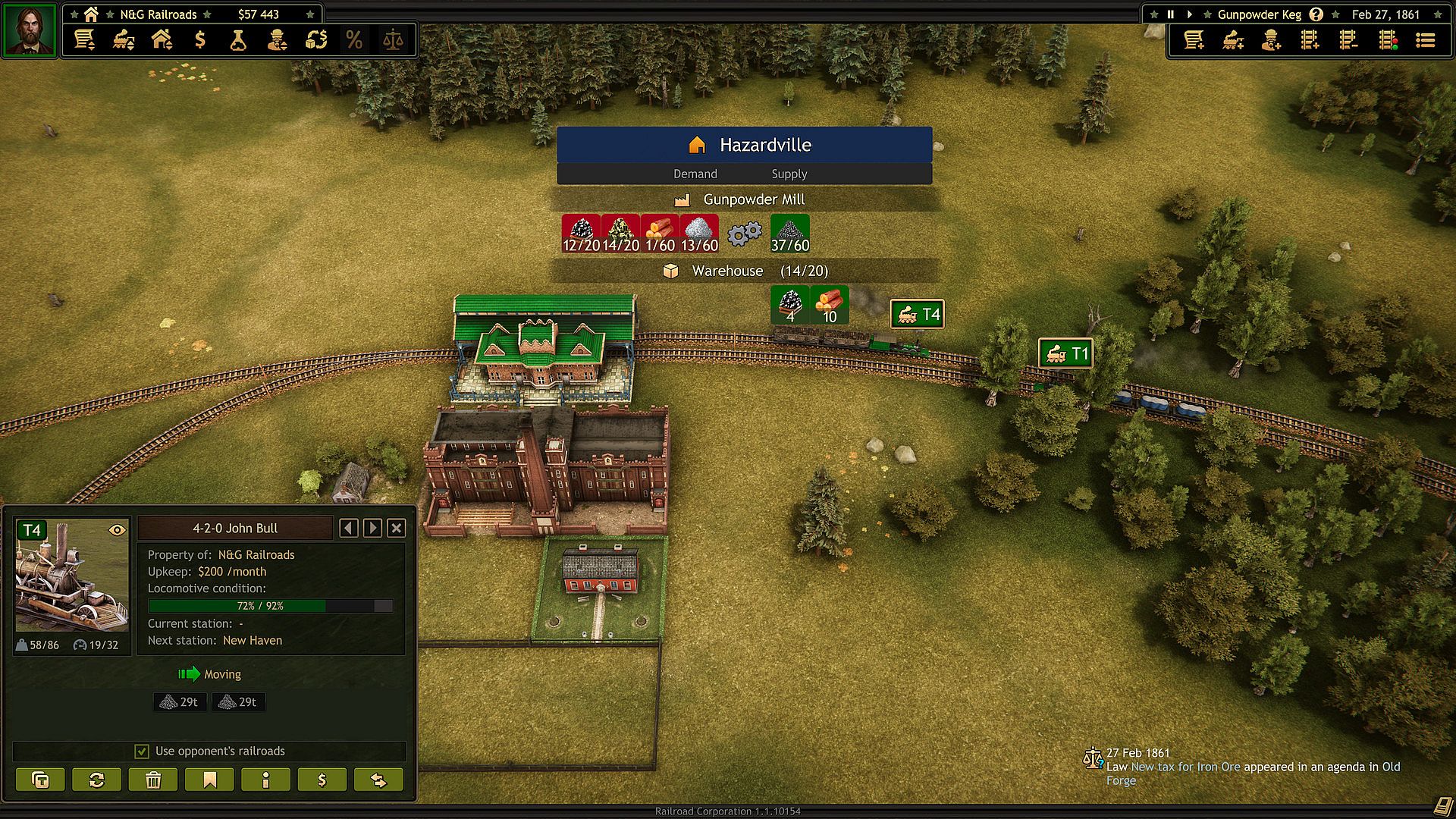
Production chains require attention to new commodities such as gunpowder and soldier uniforms. These items move from factories to army camps via rail. Special mortar carriages also enter the production pipeline and require timely delivery to front-line positions. Capturing cities depends on transporting sufficient troops to key locations, which ties directly into building recruitment offices that boost soldier availability over time.
Seven additional buildings support the expanded economy, each tied to the new commodity set. Decisions about route efficiency, warehouse placement, and contract fulfillment determine long-term success. The simulation tracks reputation with both armies, and alignment choices affect available tasks while introducing potential conflicts with the opposing side.
Game Modes
The primary experience comes through a single-player campaign structured around five sequential missions. Each mission advances the narrative of supporting one side in the American Civil War, starting with supply contracts and progressing to direct involvement in troop deployment and final battle outcomes. Mission progression unlocks new objectives and increases the scale of operations.
No separate skirmish or sandbox modes receive confirmation for this content. The campaign serves as the complete package, guiding players through escalating challenges that incorporate all new mechanics. Progression remains linear within each mission, with success measured by contract completion and resource delivery targets.
Campaign Structure and New Content
The five missions span key phases of the conflict, beginning with initial war-goods production and evolving into full logistical support for armies. Players decide the outcome of the concluding battle based on prior performance and choices. New elements integrate seamlessly with existing railroad operations, adding layers of military logistics without altering the fundamental management focus.
Resource gathering expands through geo-research stations that locate deposits needed for the fresh production lines. Transport demands grow more complex as troop trains and specialized cargo share the same rail infrastructure. The addition of recruitment offices creates ongoing soldier supply that feeds into city-capture goals.
Is It Worth Playing?
This content suits players who enjoy detailed economic simulation combined with historical logistics challenges. The campaign delivers a self-contained story arc that rewards systematic planning and efficient rail networks. With only thirteen user reviews recorded on the platform, reception sits at mixed levels, reflecting varied opinions on mission pacing and integration with the base systems.
Those already familiar with railroad tycoon mechanics will find the new buildings and commodities extend familiar loops in meaningful ways. The single-player focus means the experience stays consistent without reliance on ongoing updates or seasonal content. Availability requires ownership of the base game, and the campaign length aligns with a focused playthrough rather than extended replayability.
Overall, the title appeals most to fans of management sims who appreciate the added historical context and expanded production options. It provides a direct extension of core systems through its five-mission structure and new commodity set.