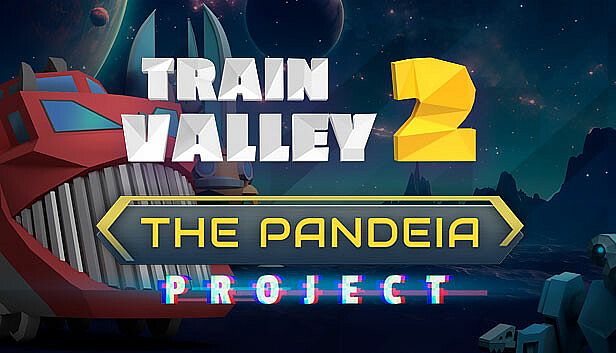























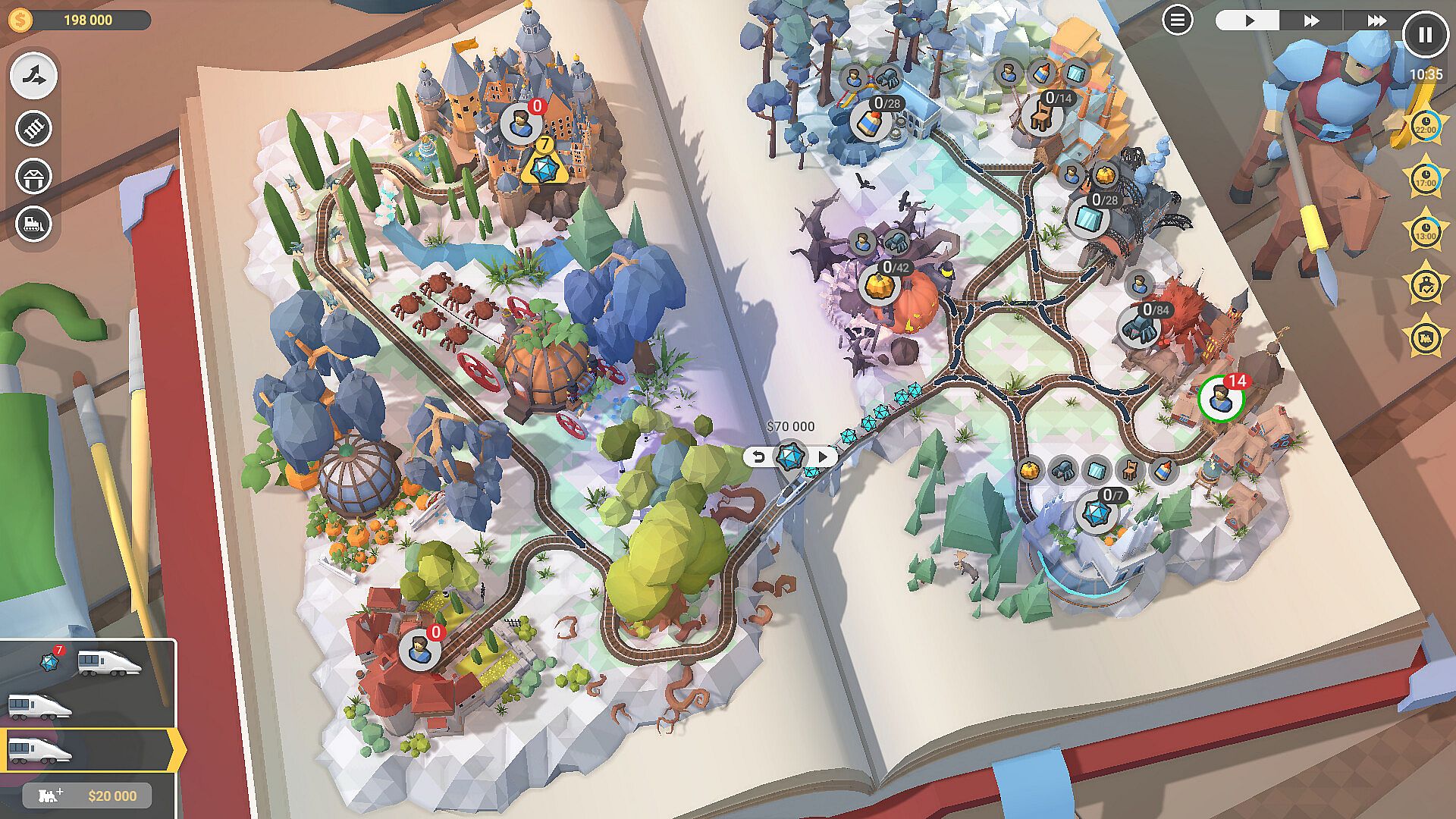
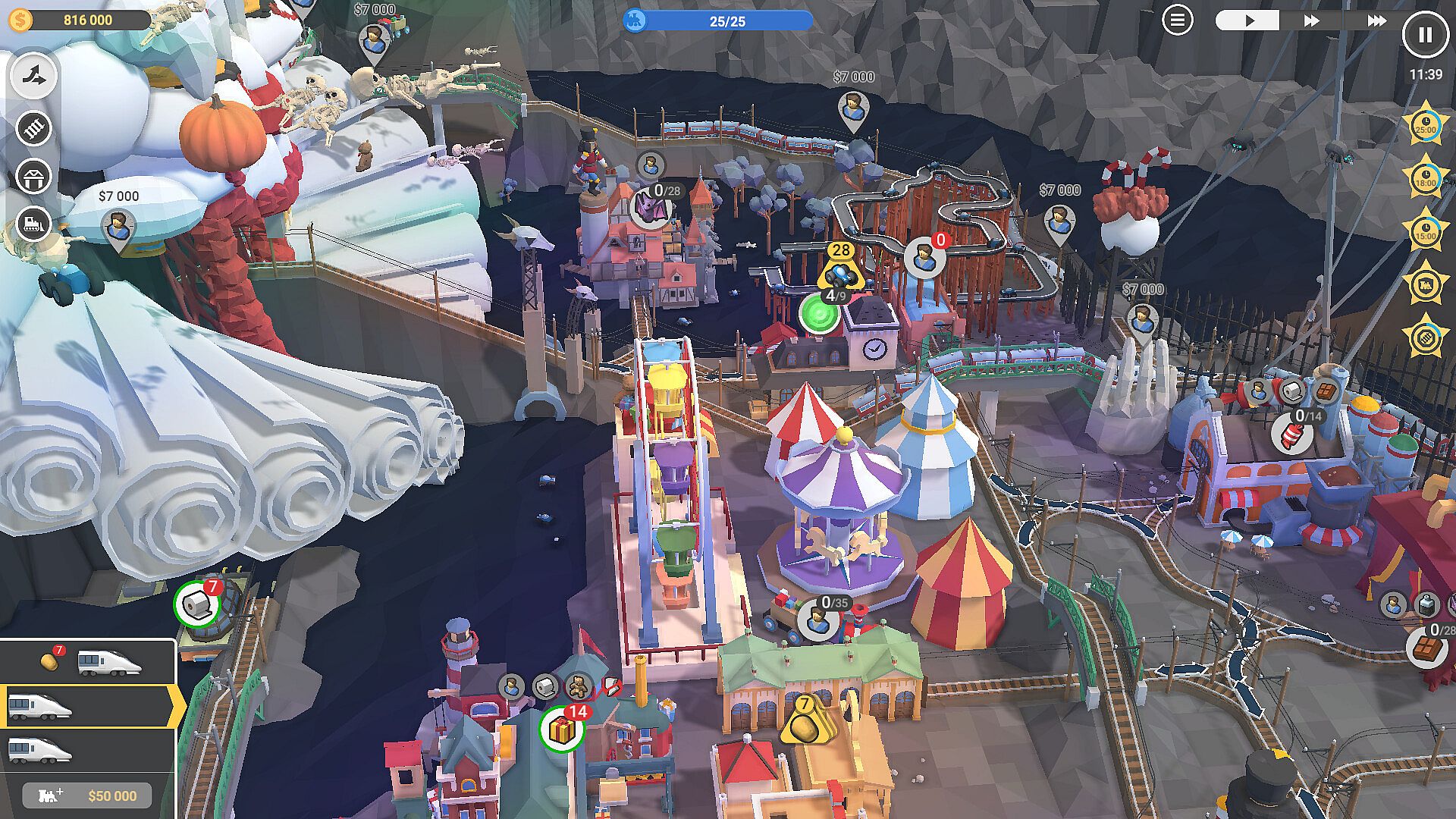
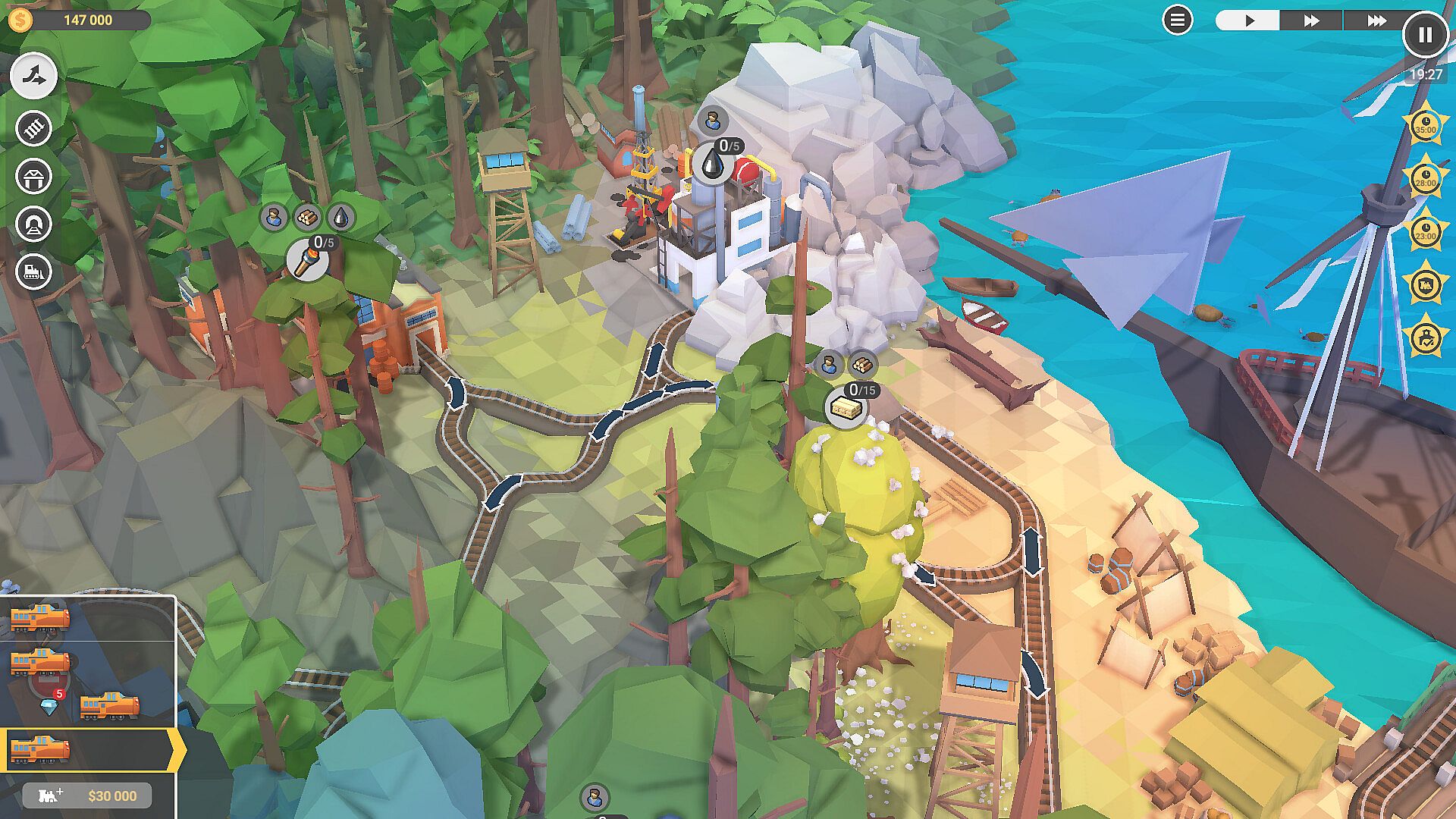
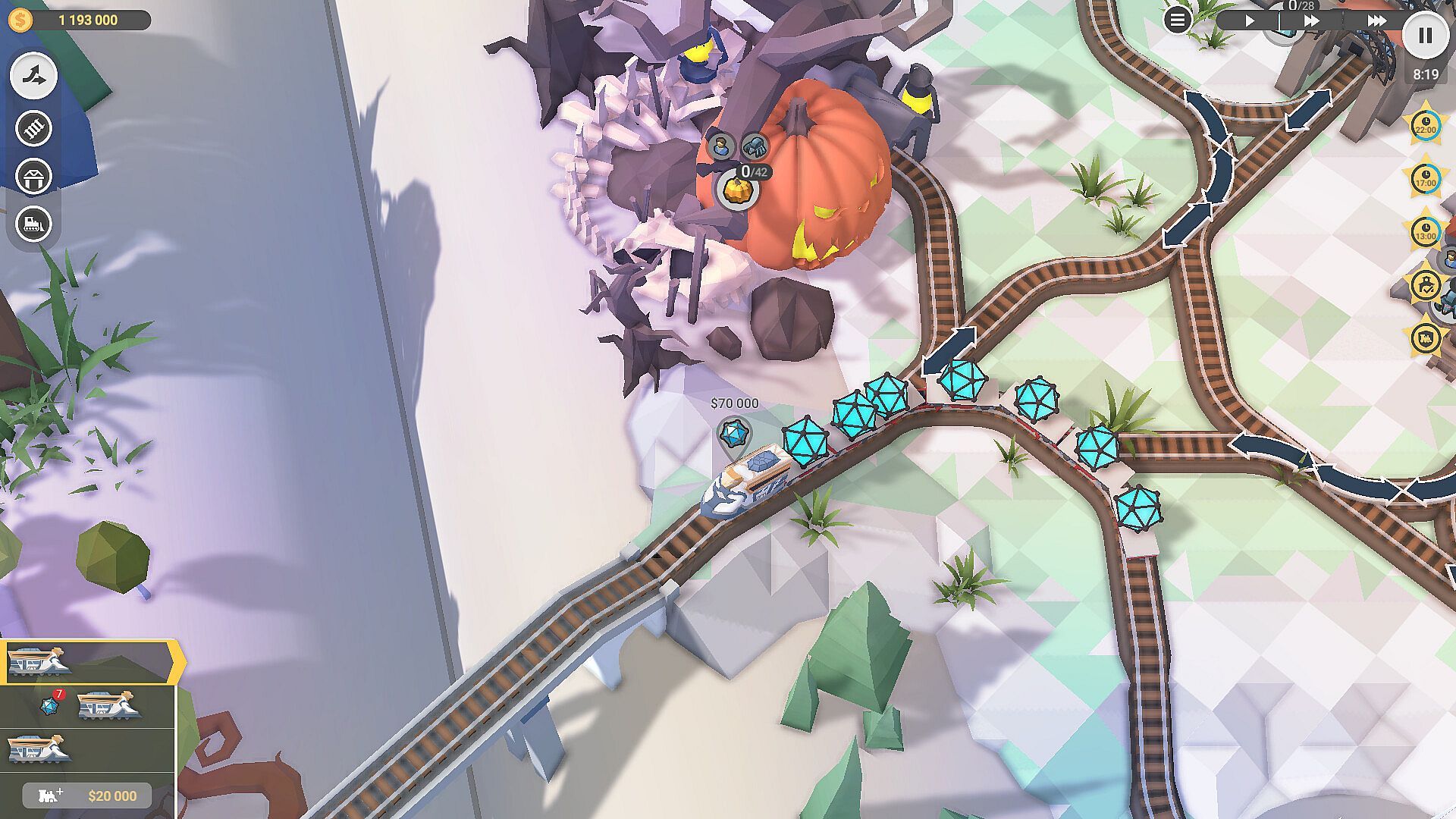
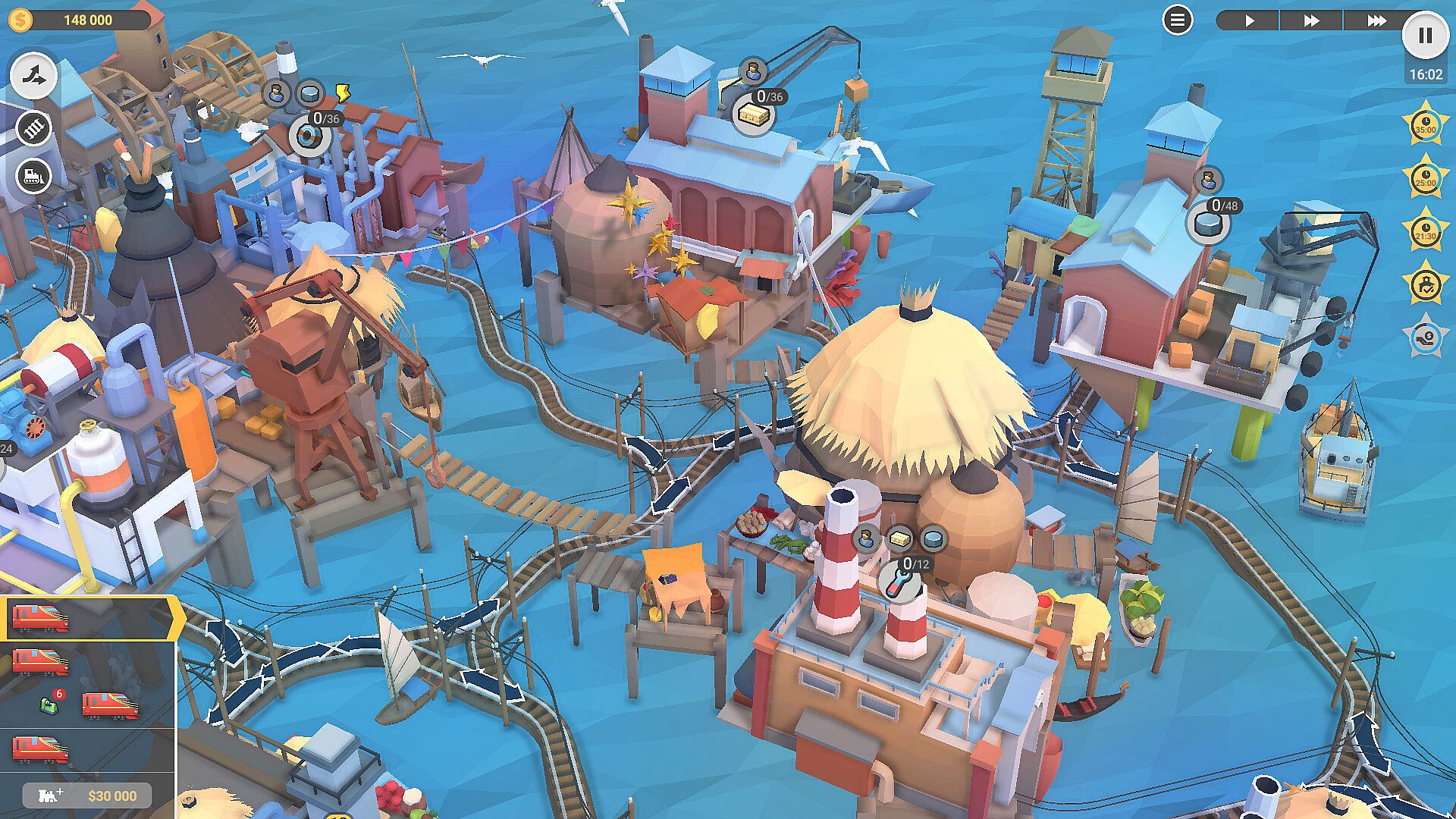
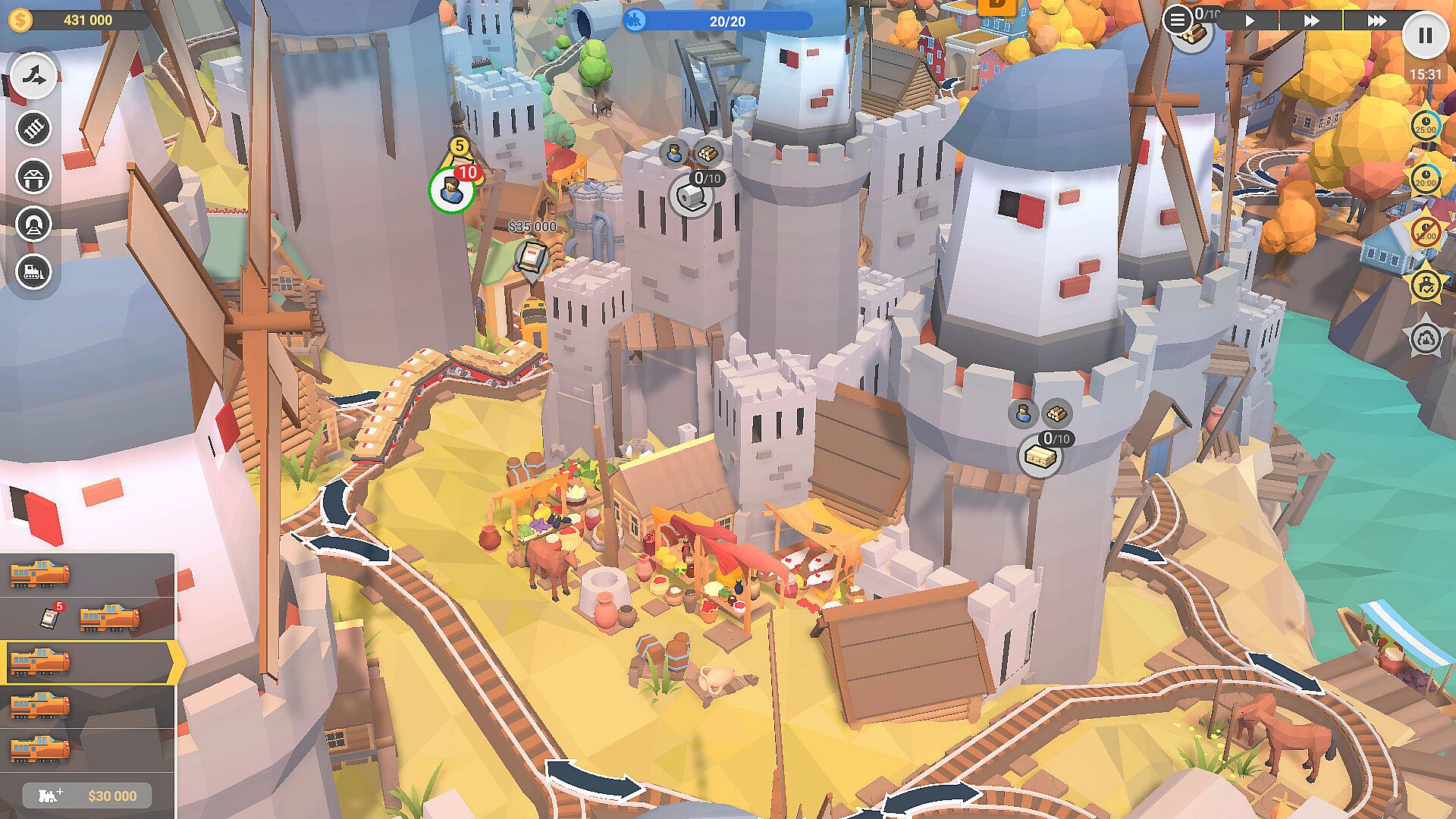
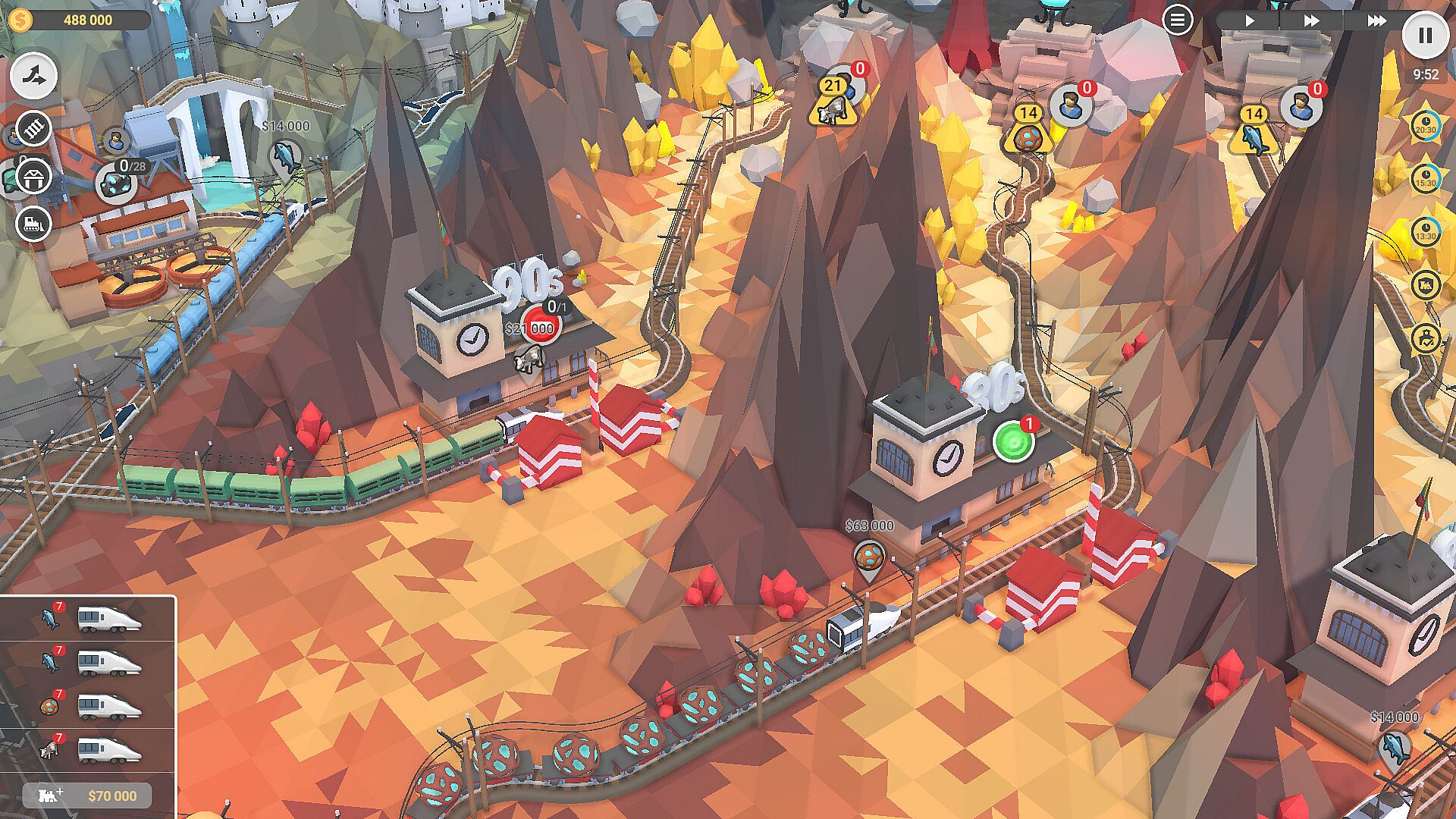
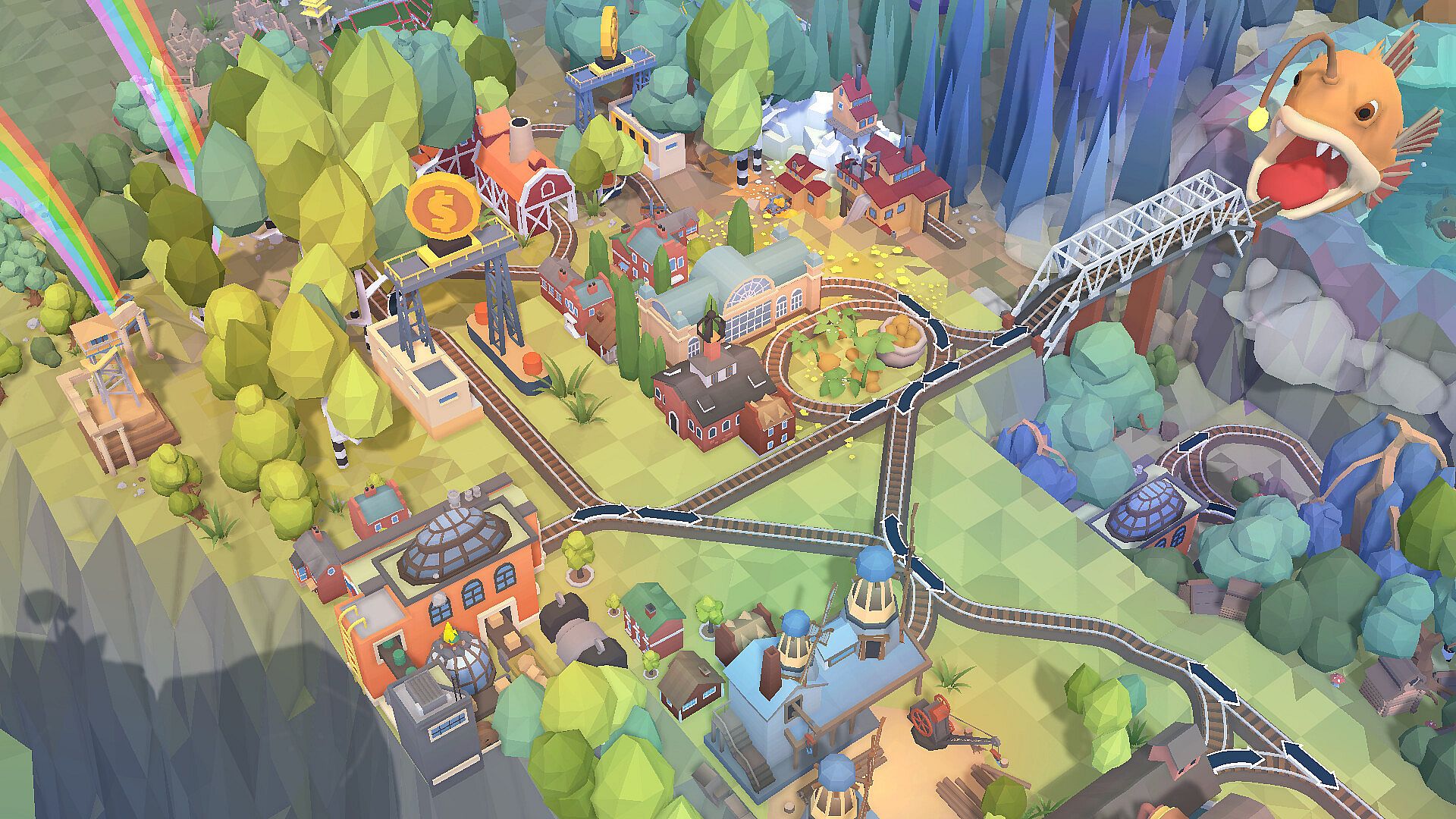
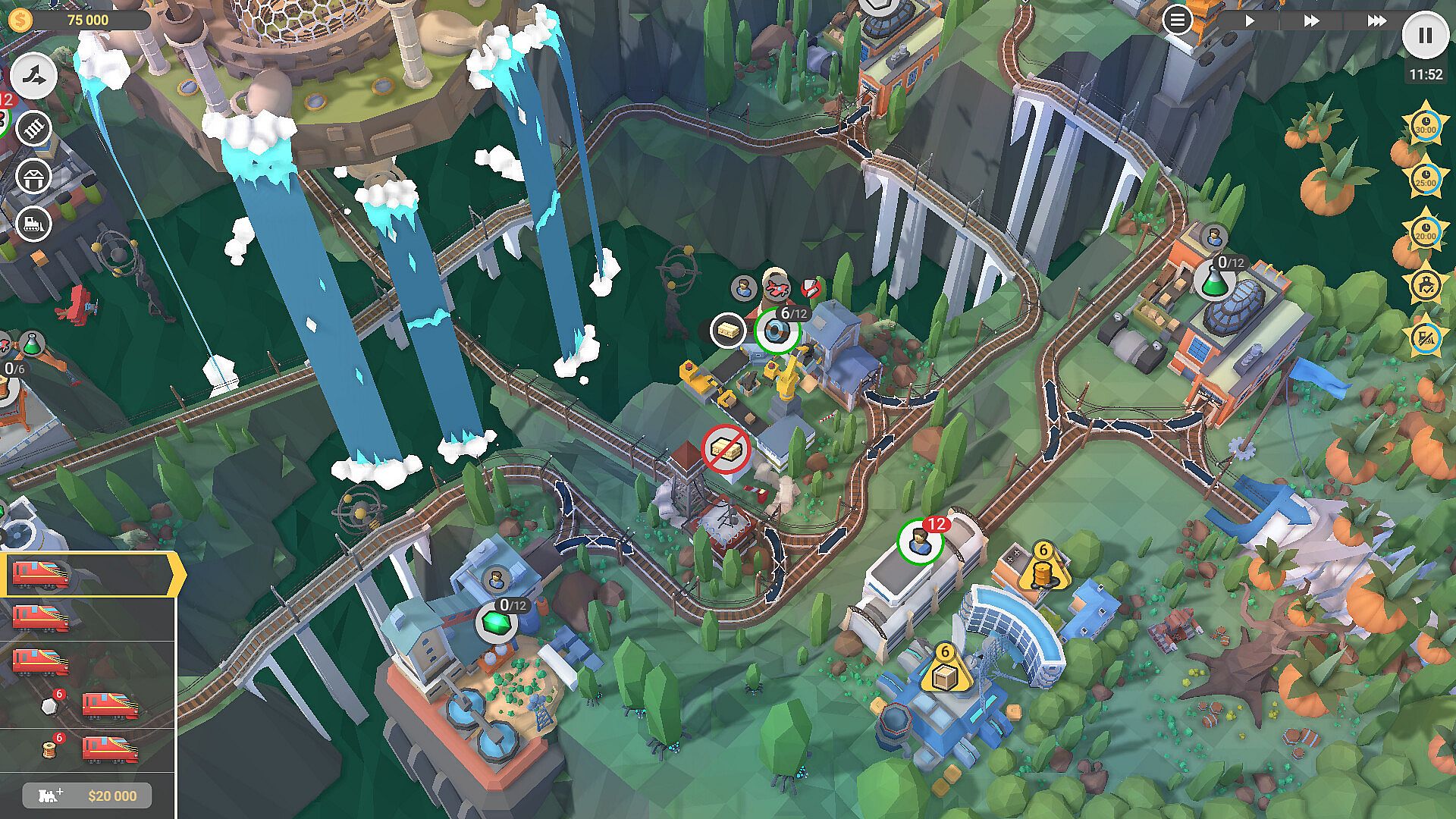
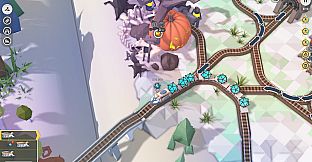
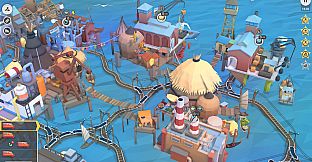
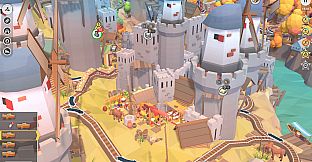
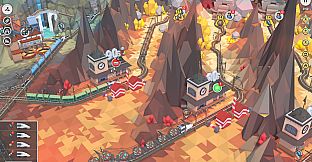
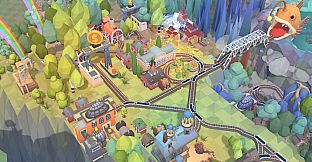
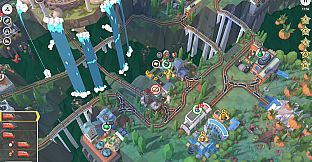
Train Valley 2 - The Pandeia Project is a single-player strategy and simulation DLC that expands the core train management experience with interdimensional themes. Players guide an exploration craft named Pandeia through surreal landscapes, focusing on track construction, cargo delivery, and resource handling across themed levels.
Gameplay
The core loop centers on laying tracks efficiently to connect stations while managing train schedules and cargo types. New resource and goods varieties appear alongside two previously unseen production buildings that alter how materials flow through each valley. Experimental stations introduce fresh placement rules, and six newly invented locomotives offer varied speed and capacity options suited to the altered environments.
Surreal elements shape the challenges, including interactions with grumpy deities, sentient spell-casting trees, wind-powered cities, and fire-breathing reptiles. These features require players to adapt routing and timing strategies beyond standard rail networks. The scouting bot reports thirty train valleys in total, each presenting distinct visual and mechanical twists that encourage repeated attempts to optimize delivery routes and meet extra objectives.
Game Modes
Progression unfolds through a sequence of thirty dedicated levels that follow Pandeia's journey across dimensions. Each level carries standard delivery goals plus five additional objectives that reward precise track layouts, efficient locomotive use, and careful handling of the new goods types. Completion often involves achieving five-star ratings by balancing speed, resource use, and station throughput.
Level design emphasizes puzzle-like constraints within the simulation framework, where players scout new station types and integrate curious locomotive models into existing networks. No separate endless or competitive modes appear in this content pack, keeping focus on the structured campaign of interdimensional exploration and cataloguing.
Key Additions and Mechanics
Ten new resource and goods types expand the economy, forcing adjustments to production chains and train assignments. Two experimental stations and two production buildings add layers to planning, while the six locomotives provide specialized tools for navigating the varied terrains. These elements integrate directly into the established track-building and timing systems without requiring prior series knowledge beyond basic rail management.
Players document findings across the levels, with each interdimensional jump revealing fresh combinations of obstacles and opportunities. The emphasis remains on methodical construction and adaptive routing rather than open-world freedom.
Is It Worth Playing?
Reception for the DLC stands at Mostly Positive based on available user feedback, with players noting the creative level variety and fresh content as highlights for those already familiar with train simulation mechanics. The pack suits individuals who enjoy precise planning, resource optimization, and level-based challenges in a casual yet strategic format.
Availability requires ownership of the base game, and the content delivers a self-contained set of thirty levels with the listed additions. It appeals most to fans of methodical simulation who value incremental expansions over broad multiplayer features or frequent seasonal updates.