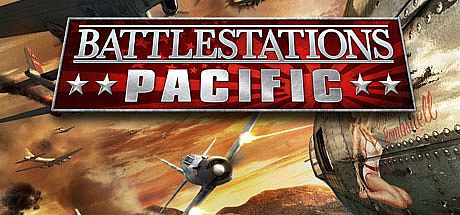












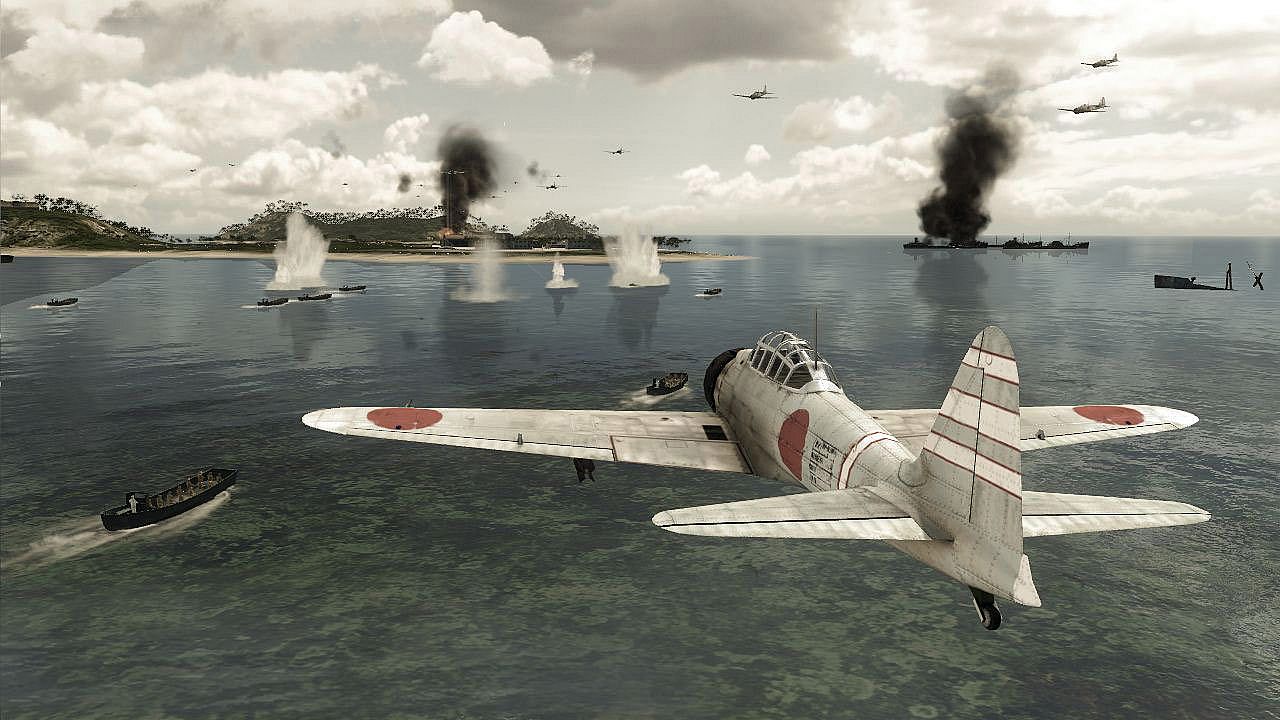
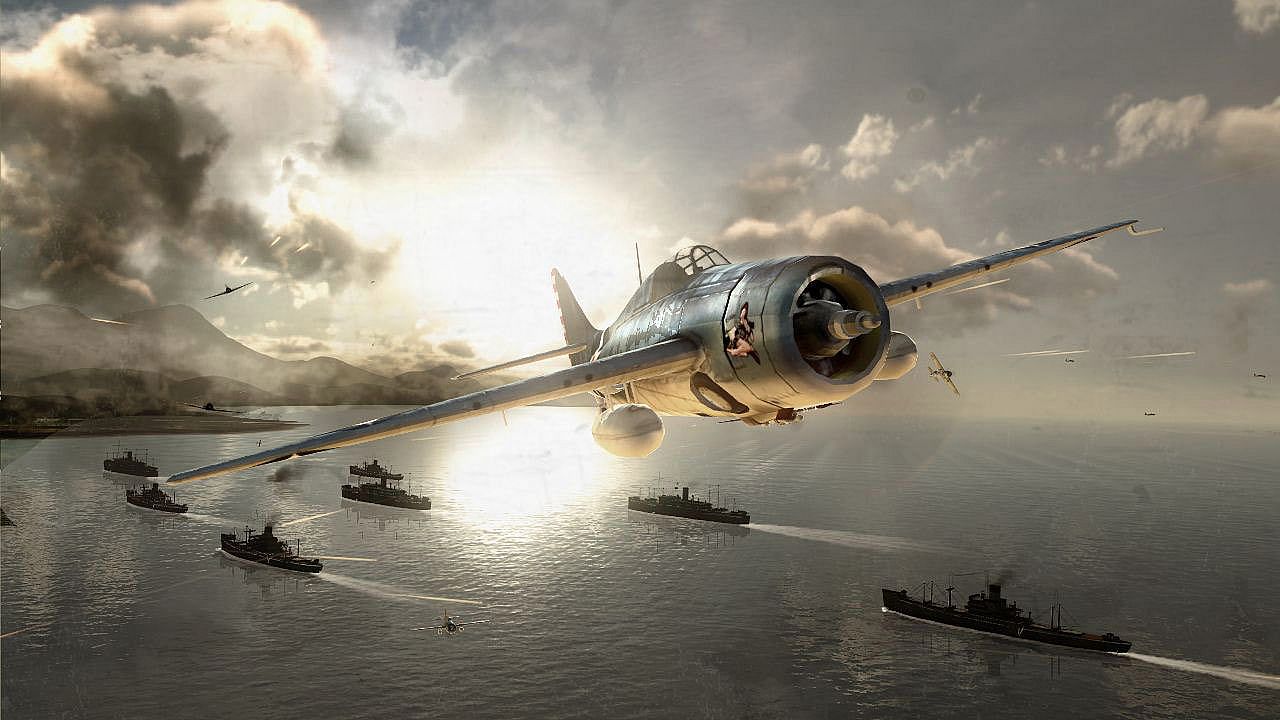
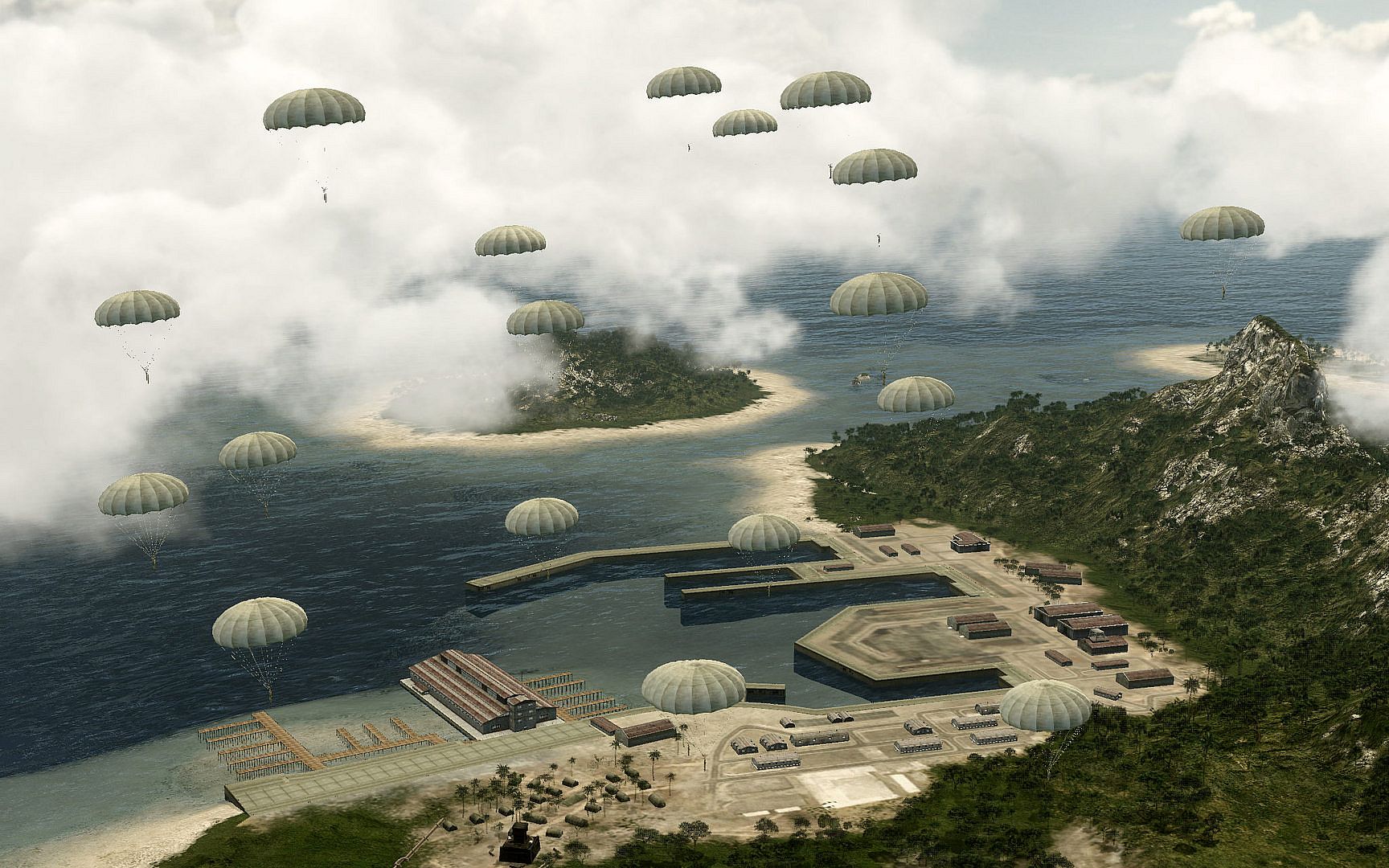
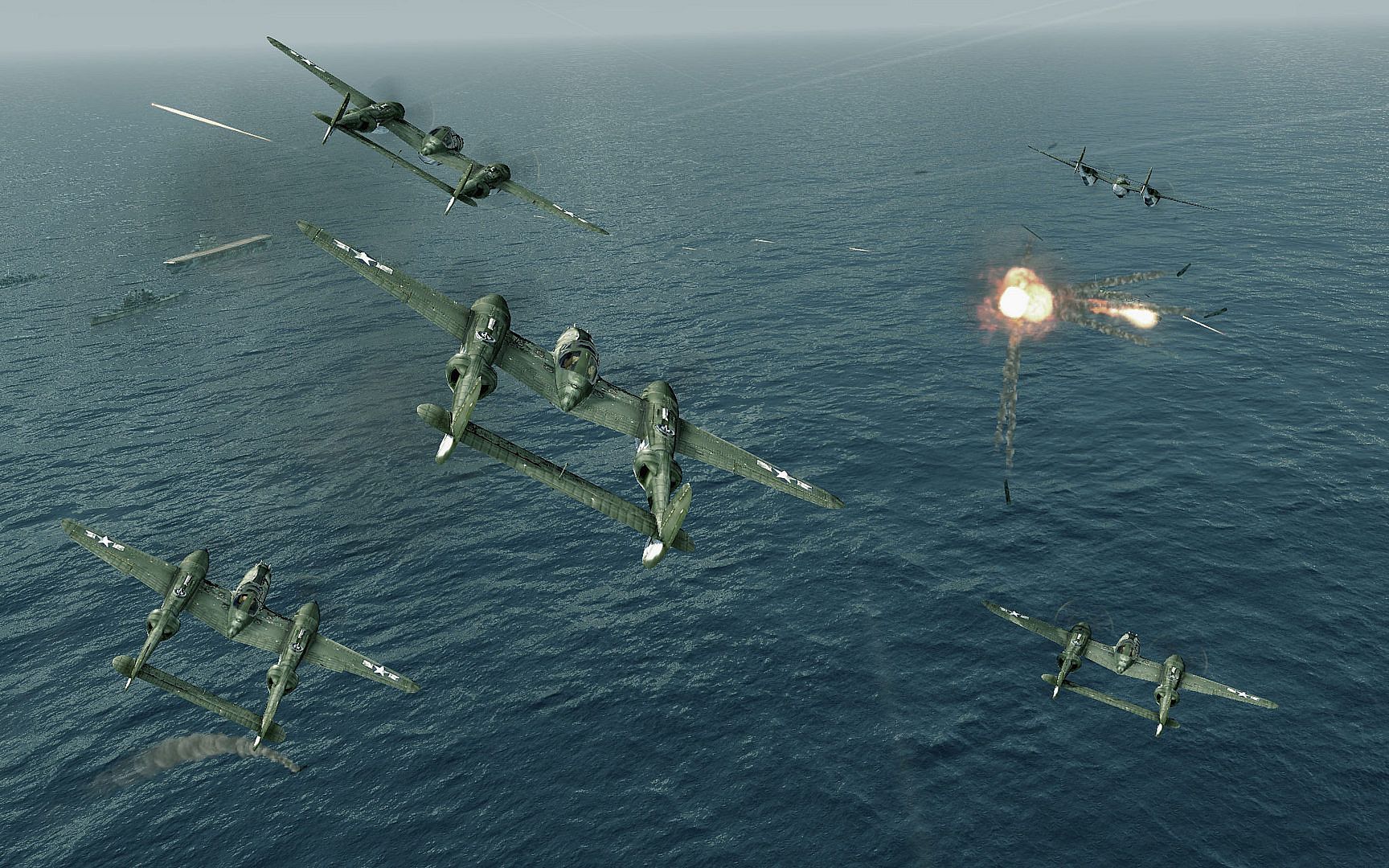
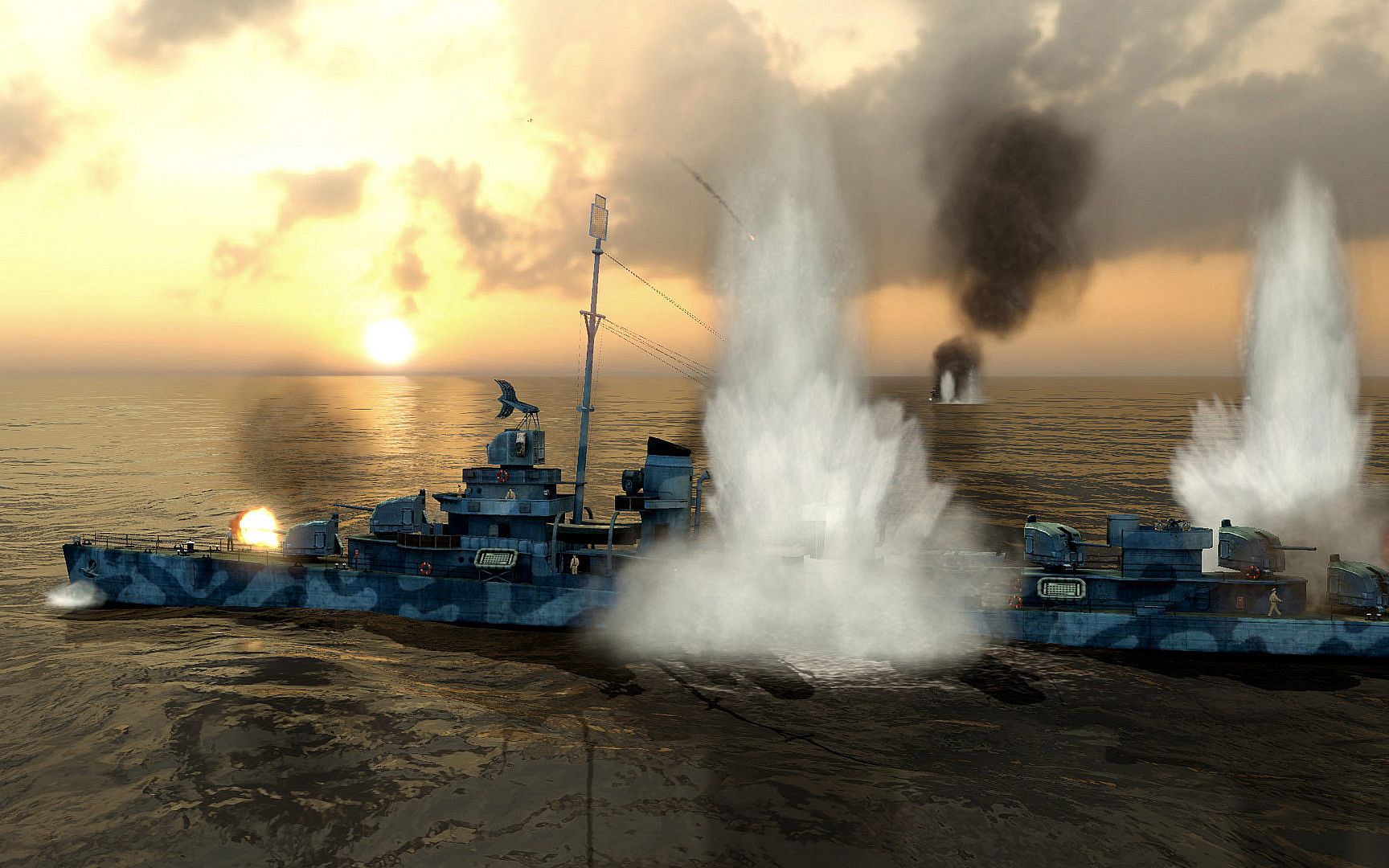
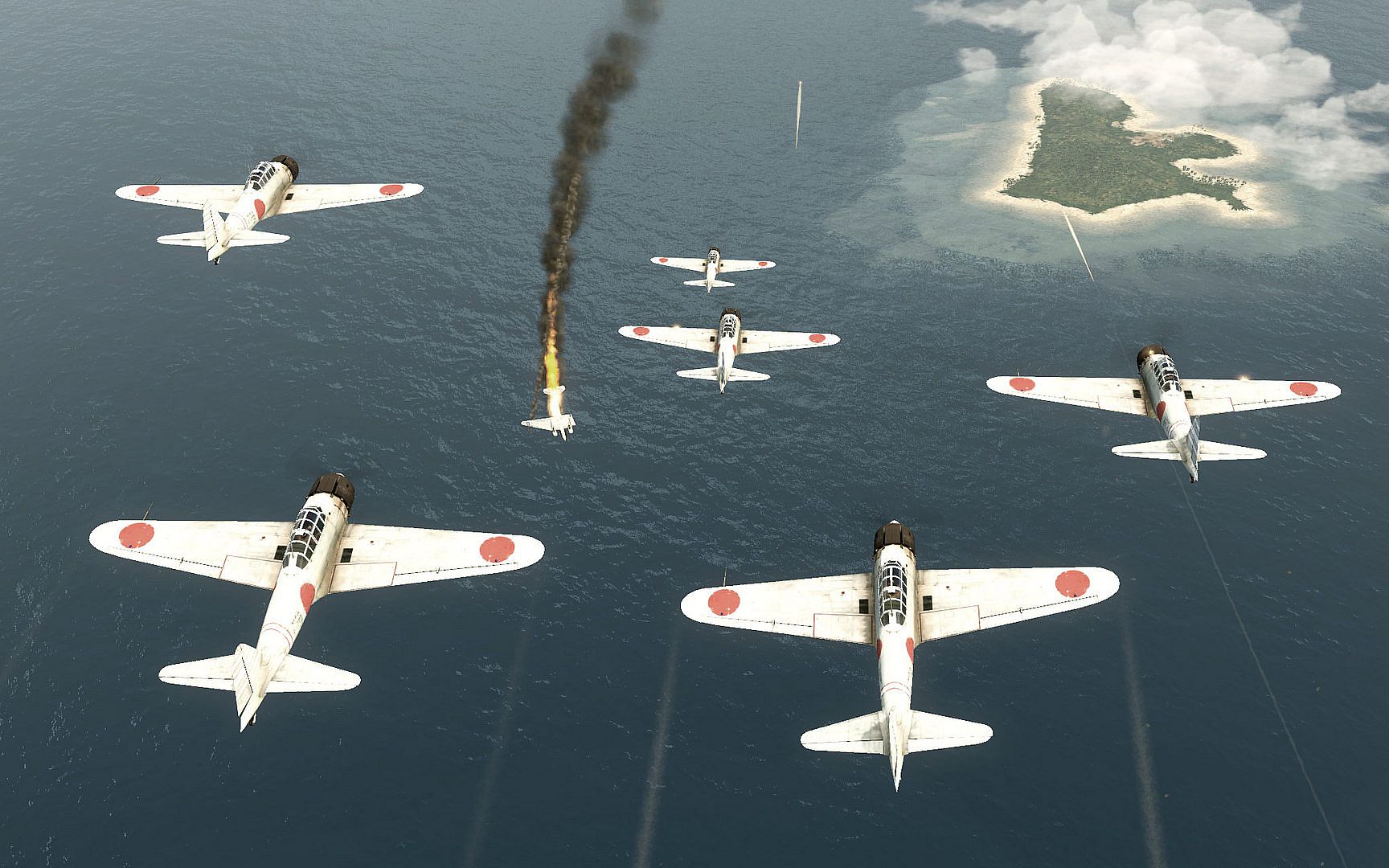
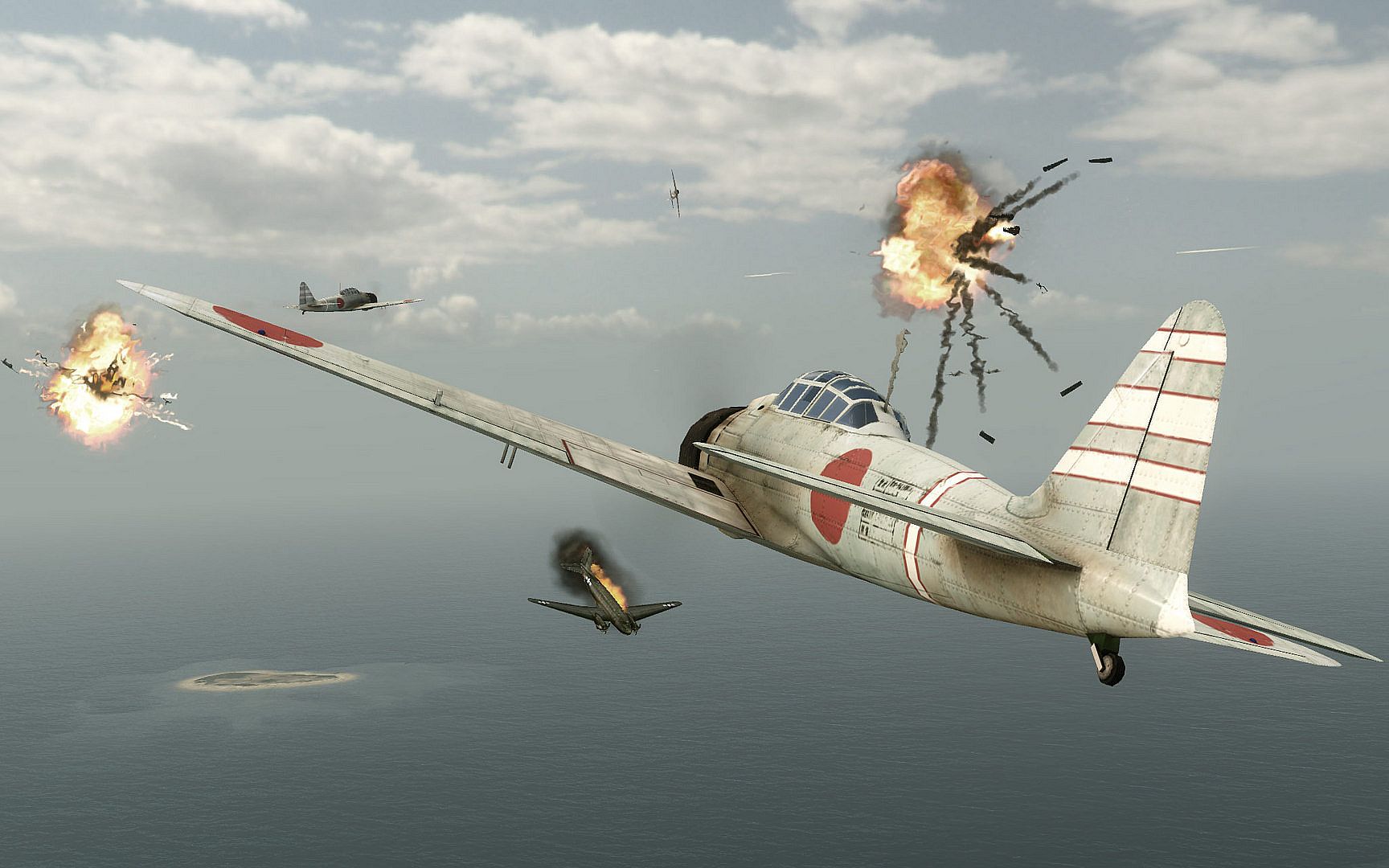
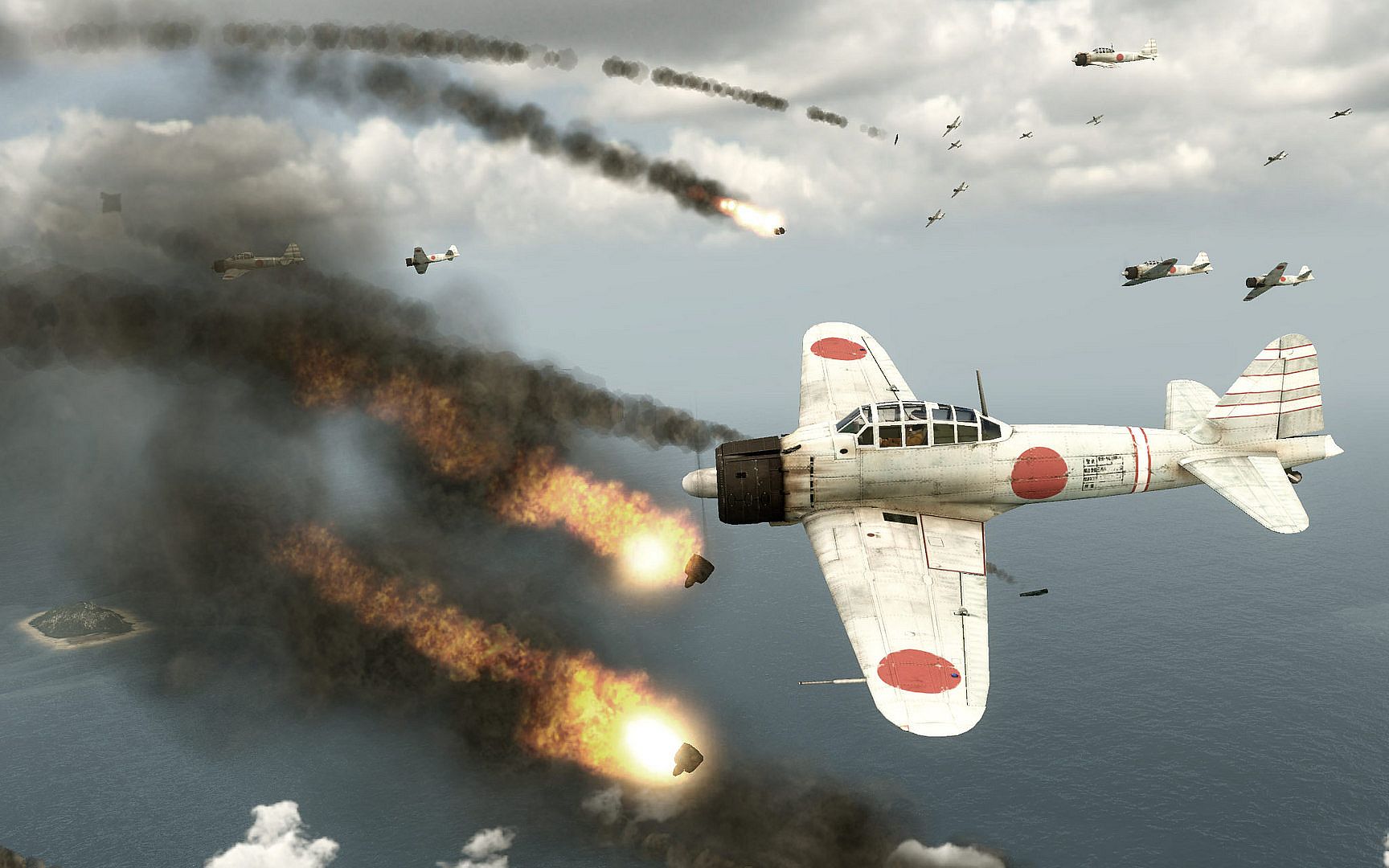
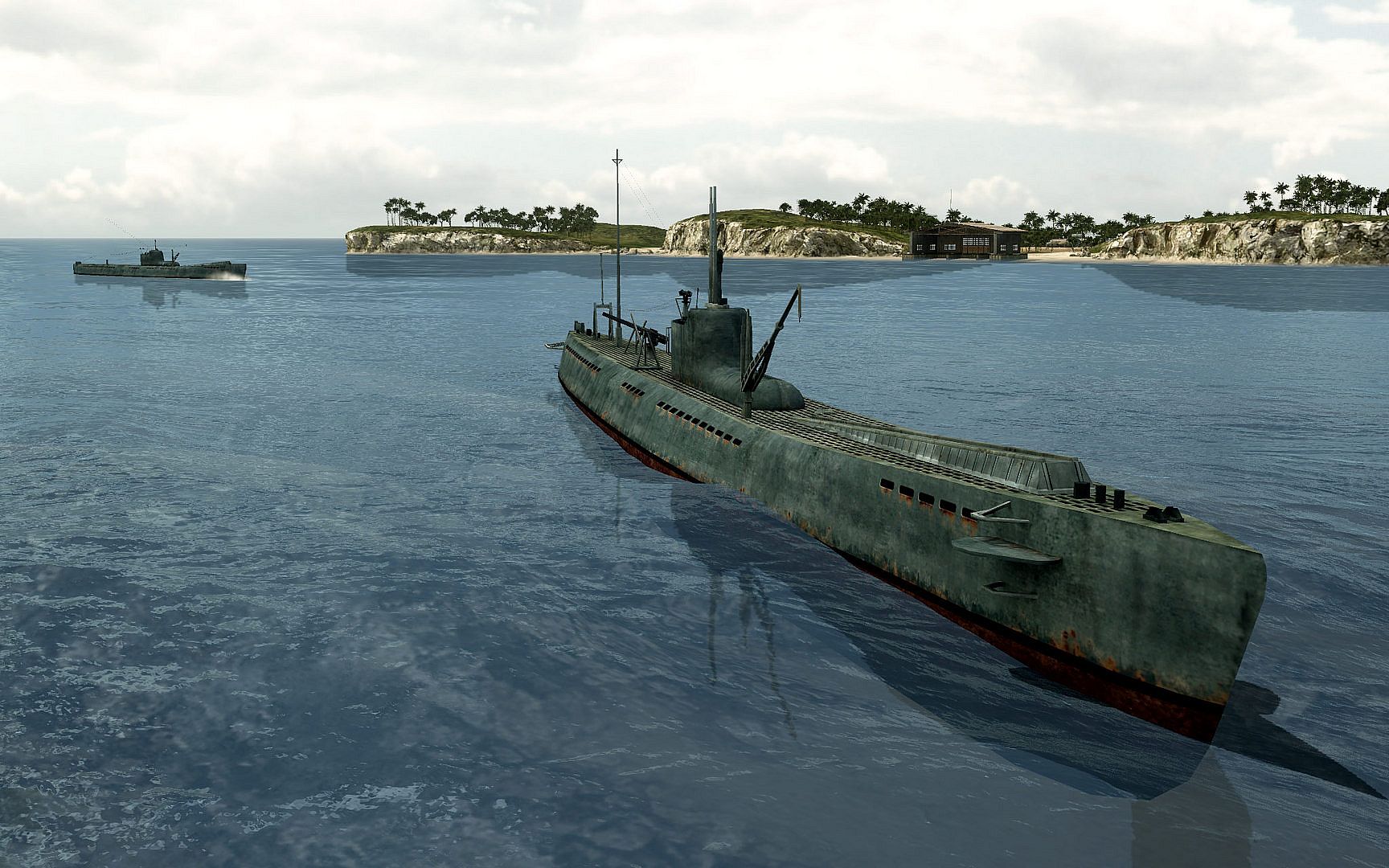
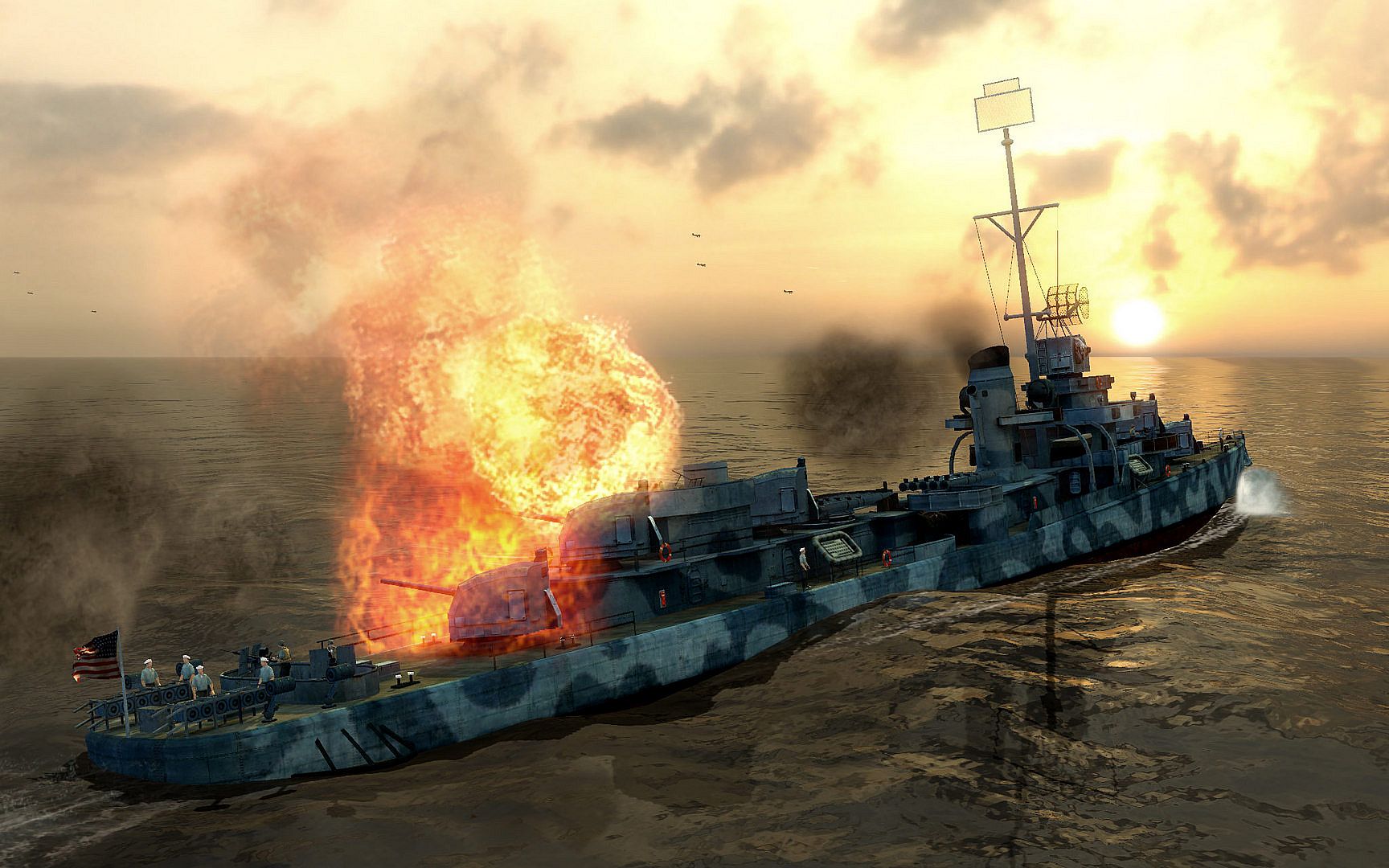
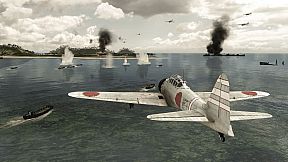
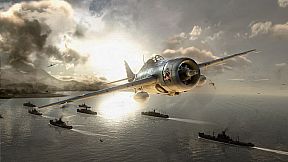
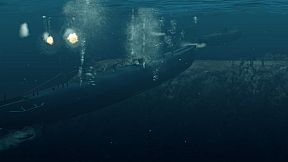
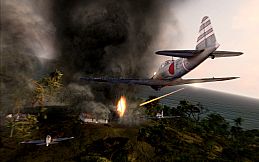
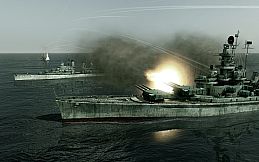
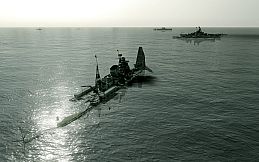
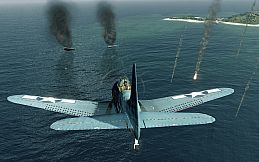
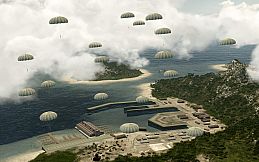
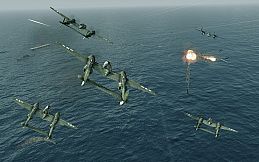
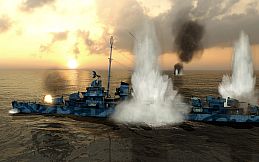
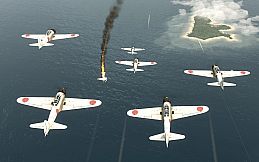
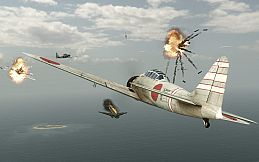
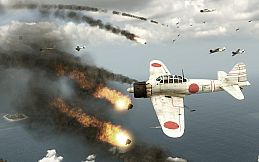
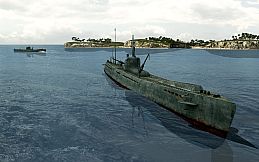
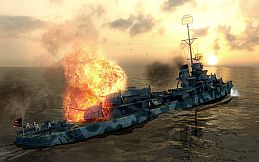
Battlestations Pacific is an action strategy game set during the Pacific War of World War II. Players command naval and air forces from the United States or Japan across two separate campaigns that together span up to 28 missions. The title blends large-scale fleet management with direct unit control, allowing commanders to issue orders from a strategic overview while switching into the cockpit or bridge of individual fighters, bombers, submarines, destroyers, cruisers, and aircraft carriers.
Gameplay
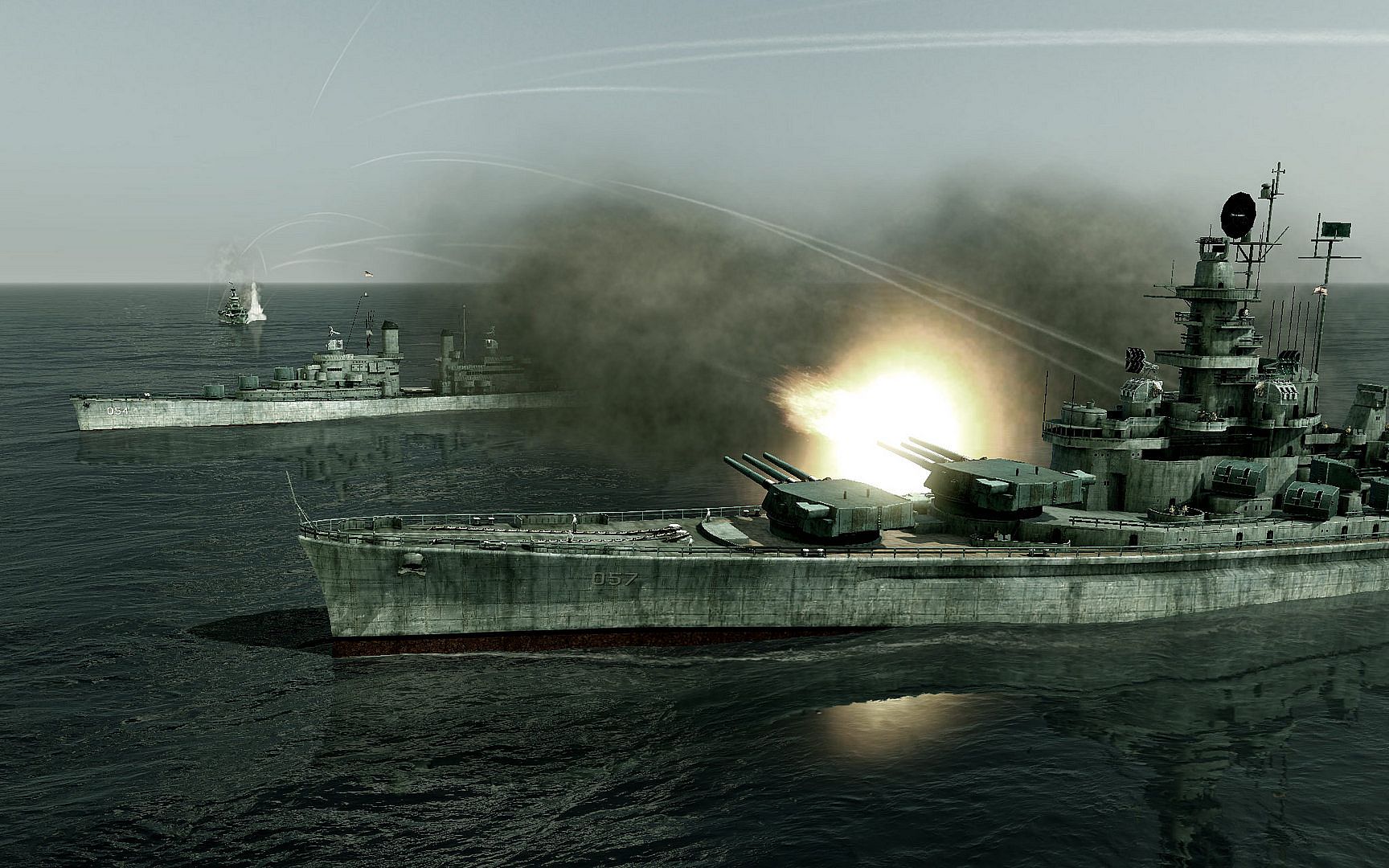
The core loop centers on planning fleet movements and resource allocation while remaining ready to seize direct control of any unit at a moment's notice. Players allocate command points to deploy more than 100 historically authentic and prototype vessels and aircraft, then maneuver them across detailed Pacific maps that include island chains and open ocean. Strategic decisions involve positioning carriers for air strikes, screening with destroyers, or sending submarines on stealth approaches, all while the opposing force reacts in real time.
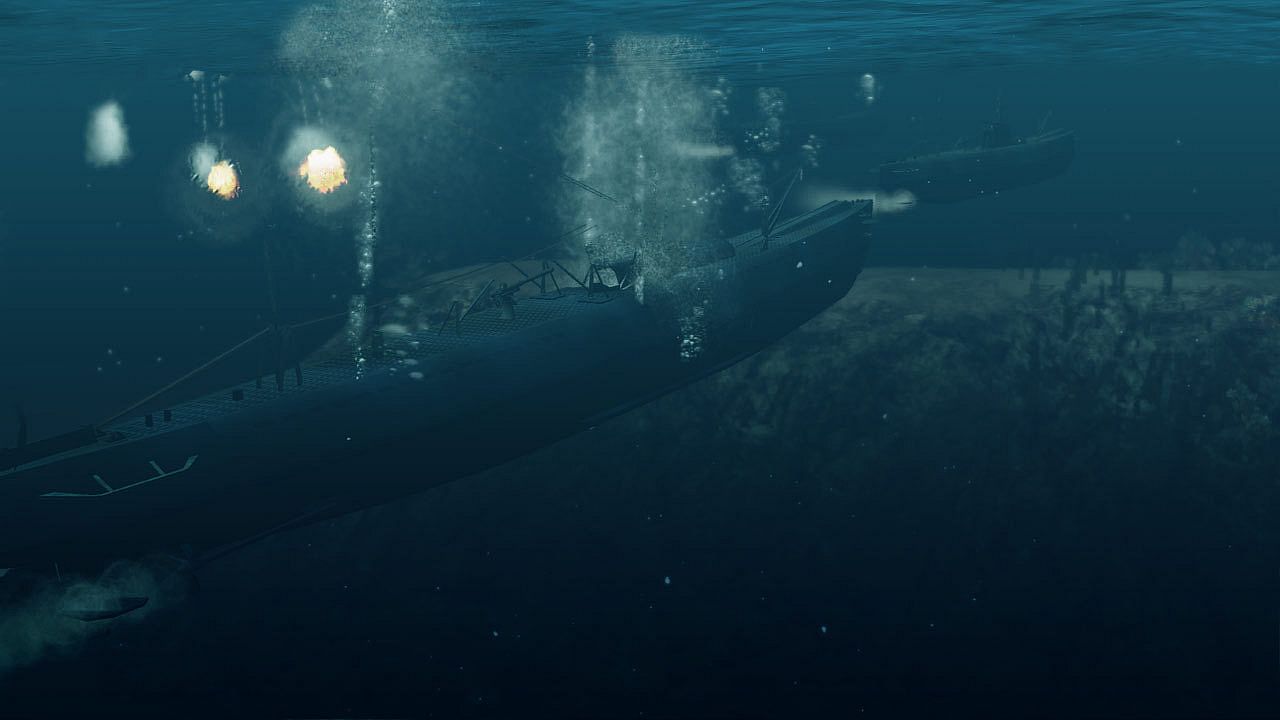
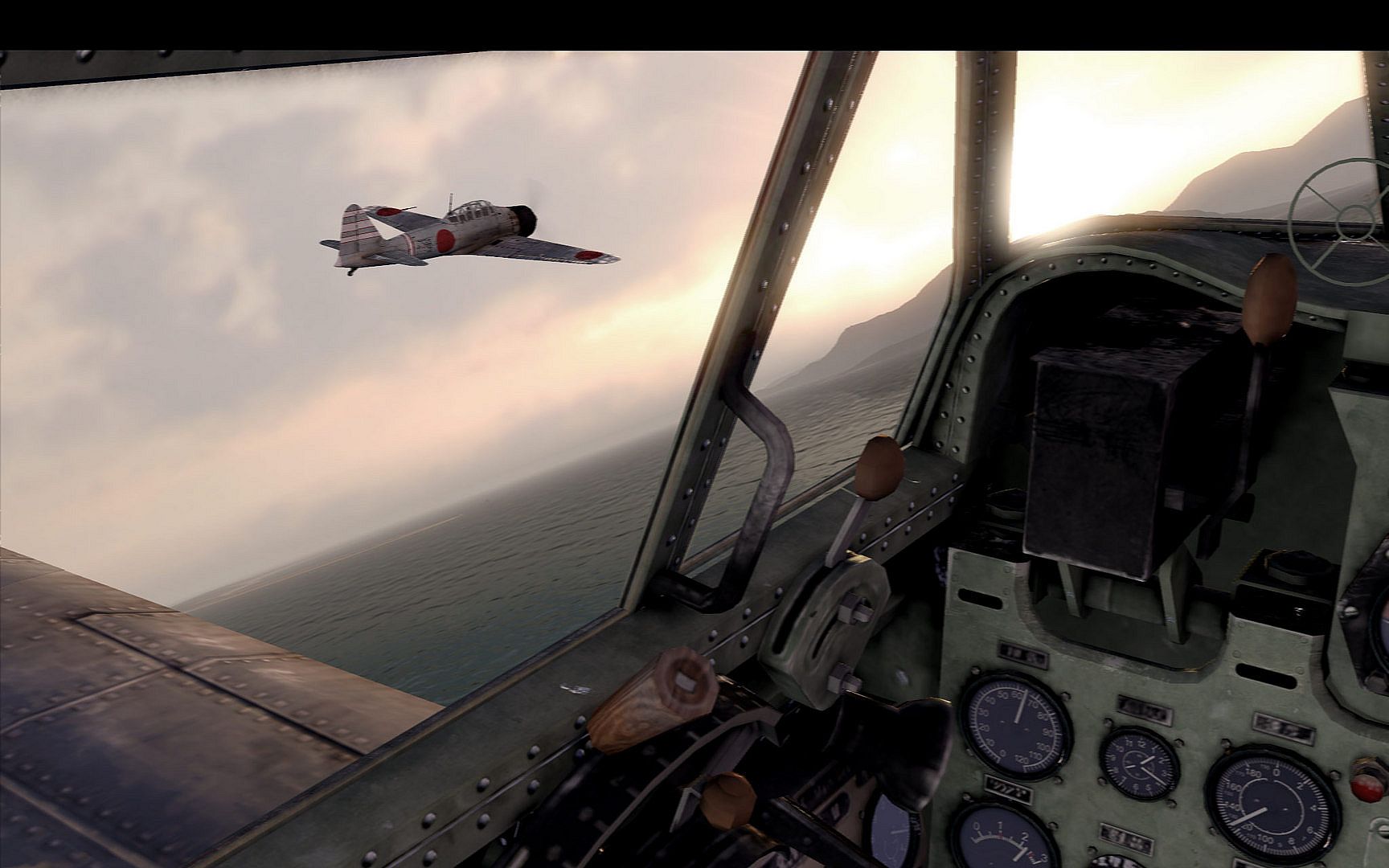
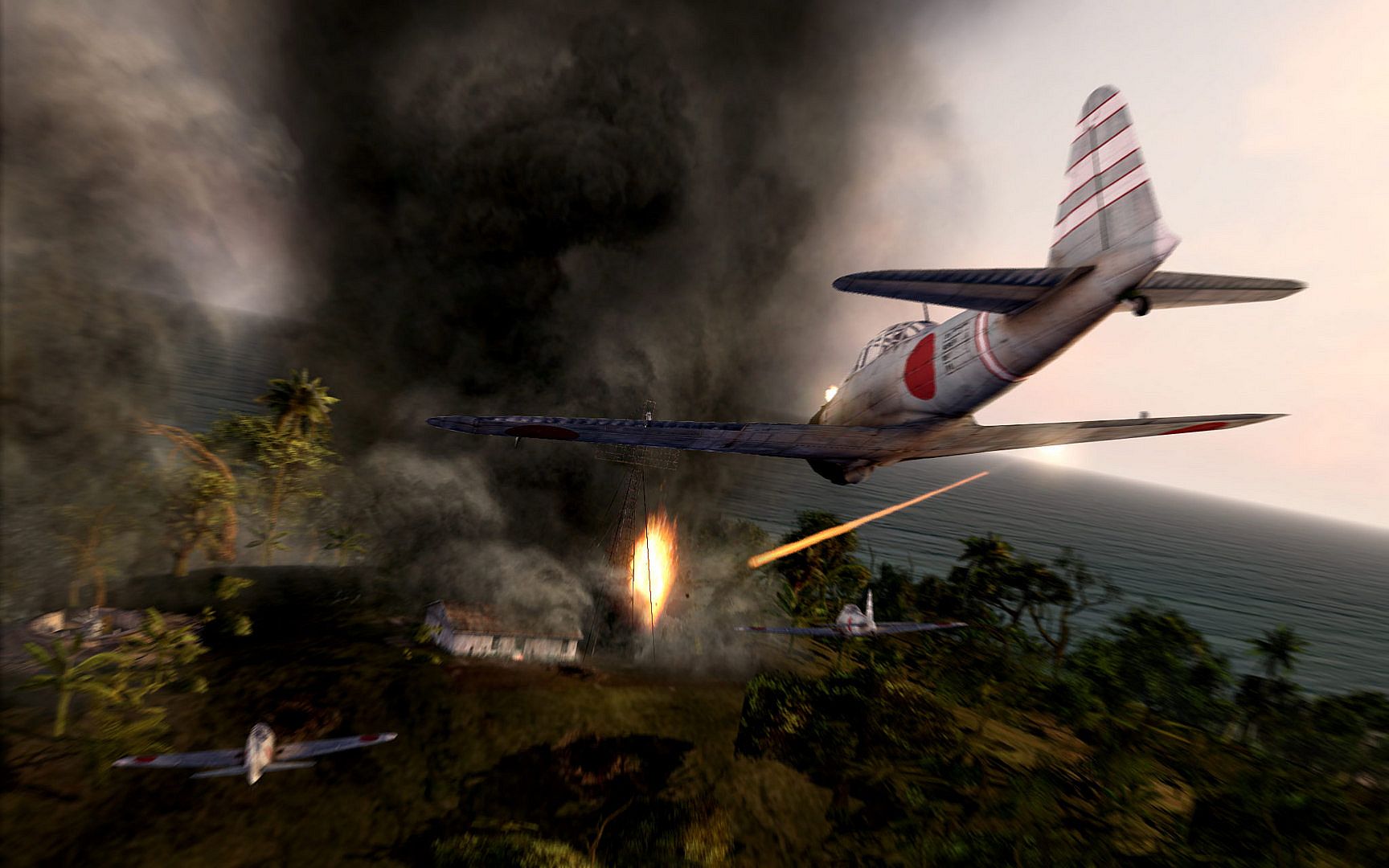
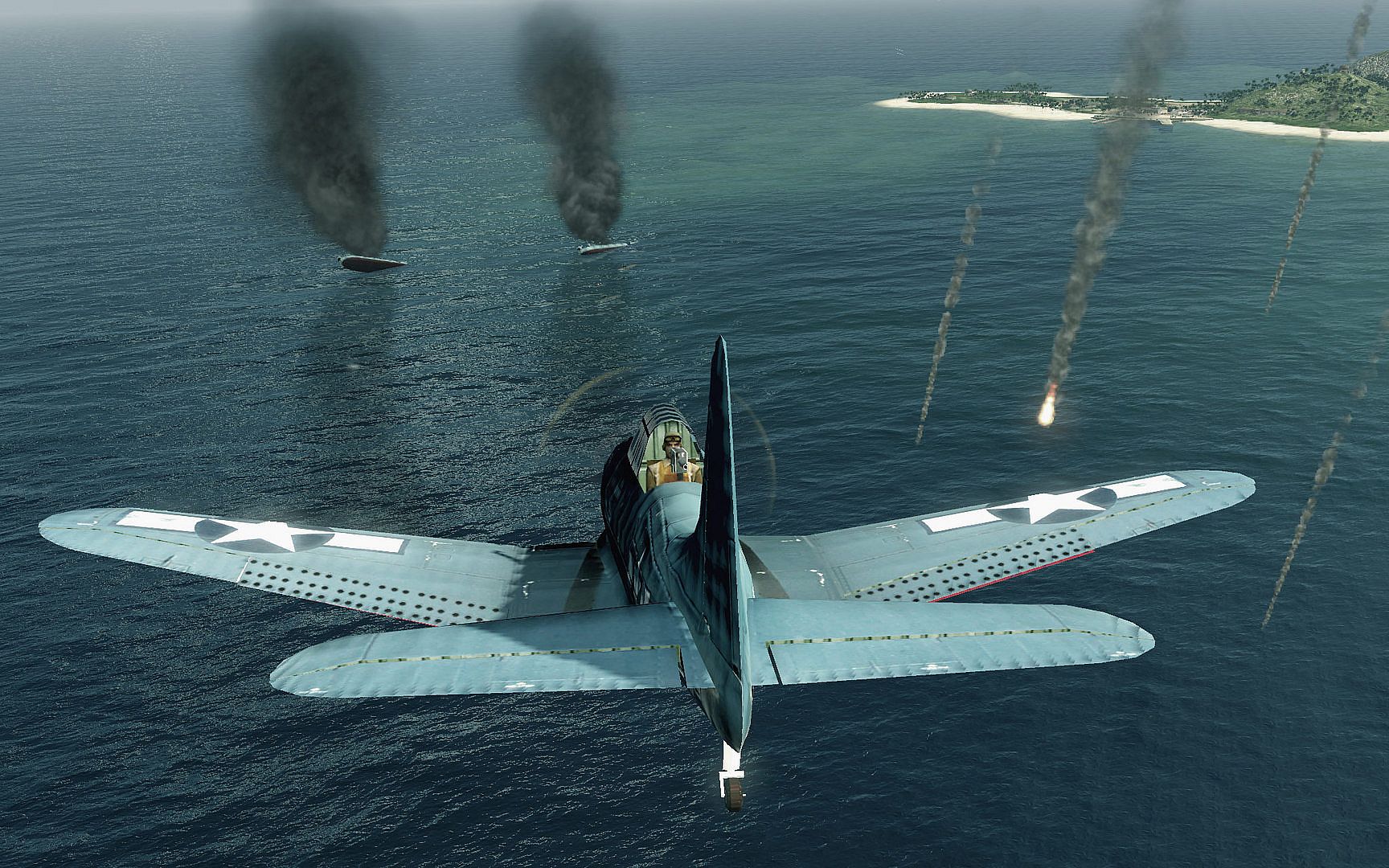
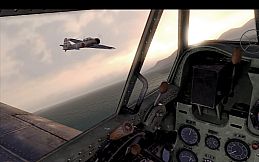
Direct control shifts the perspective into first-person or third-person views of selected units. Pilots can fly fighters and bombers with full cockpit instrumentation, gunners operate anti-aircraft batteries, and submarine captains manage torpedo runs and depth charges. This hybrid system rewards both long-term tactical foresight and split-second piloting skill. A dedicated cockpit view adds visual detail to aircraft handling and ship operations without altering the underlying command structure.
Environmental factors such as weather, island cover, and ocean distances influence line-of-sight and engagement ranges. Players must anticipate enemy reinforcements and adjust formations accordingly, often switching between multiple unit types within the same engagement to maintain pressure or exploit weaknesses.
Game Modes
Five distinct multiplayer modes support battles with up to 100 units on screen. Island Capture tasks teams with seizing and holding key locations while building forward bases from captured territory. Escort requires protecting or intercepting high-value convoys across open water. Siege focuses on assaulting or defending fortified island positions with sustained bombardment and landing operations.
Duel pits players against one another or AI in chosen unit classes, with victory going to the last side with operational forces remaining. Competitive places all participants on the same team but ranks individual performance by objectives completed and damage inflicted. Each mode supports online play against human opponents or AI, and offline skirmishes allow practice with adjustable bot counts and map selections.
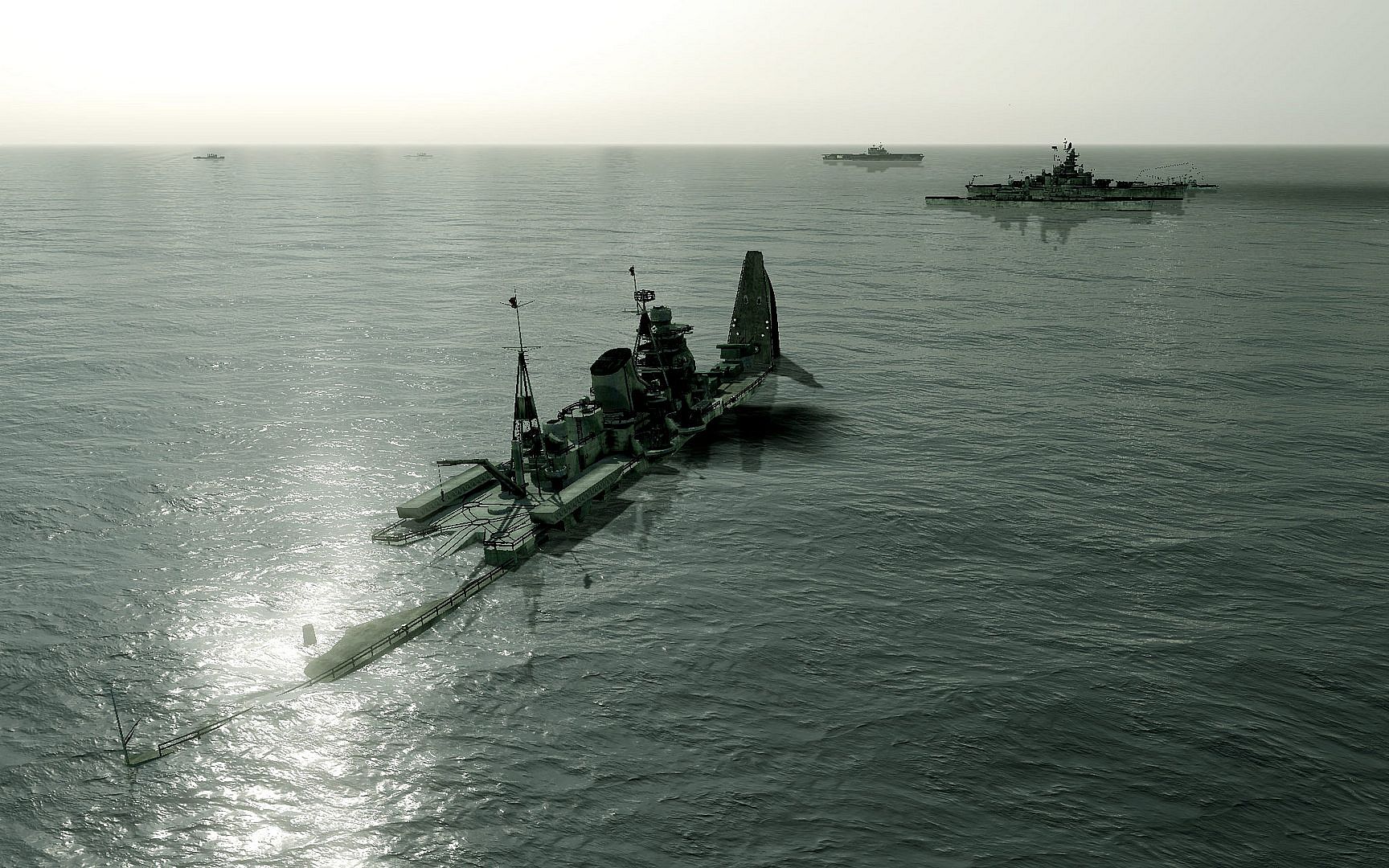
Matches emphasize combined arms coordination. Air superiority, surface gunfire, and submarine ambushes all contribute to success, and the scale permits fleet actions that feel like full naval engagements rather than isolated skirmishes.
Campaigns and Factions
Two full campaigns let players experience the war from opposing sides. The United States campaign follows historical operations with opportunities to alter outcomes through aggressive play. The Japanese campaign offers an alternate path that can lead to different strategic conclusions. Both feature mission variety that includes carrier strikes, submarine patrols, amphibious landings, and defensive stands.
Unit rosters reflect the technological and doctrinal differences between the factions. American forces emphasize robust carriers and versatile destroyers, while Japanese options include specialized kamikaze aircraft and long-range submarines. Prototype units expand the roster beyond strict historical accuracy, giving commanders experimental options for specific tactical needs.
Is It Worth Playing?
Battlestations Pacific suits players who enjoy real-time strategy layered with direct-action vehicle control in a World War II naval setting. The dual campaigns provide substantial single-player content focused on historical and alternate-history scenarios, while the five multiplayer modes deliver large-scale fleet battles that remain distinctive decades after release.
Modern play often relies on community patches and mods to address compatibility with current operating systems, yet the fundamental systems of fleet command and unit switching hold up for those interested in the genre. The title offers no ongoing seasons or official support, so expectations center on its original design rather than live-service updates.
Those seeking a focused experience with authentic Pacific theater units, mixed strategy and piloting, and both solo campaigns and competitive fleet actions will find the game aligns closely with those preferences. Players who prefer pure real-time strategy without direct control or modern multiplayer ecosystems may find the pacing and technical requirements less appealing.