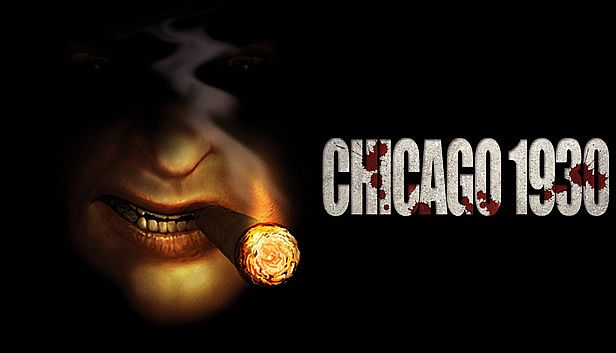


















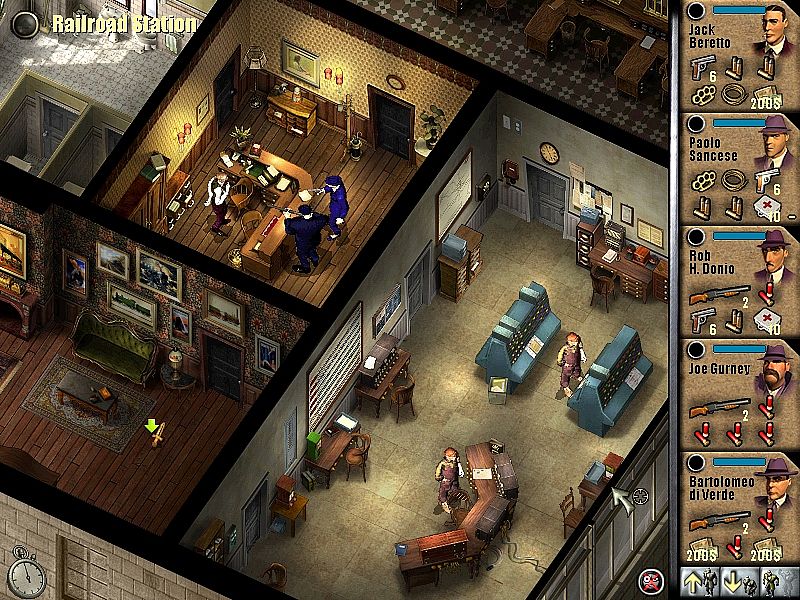
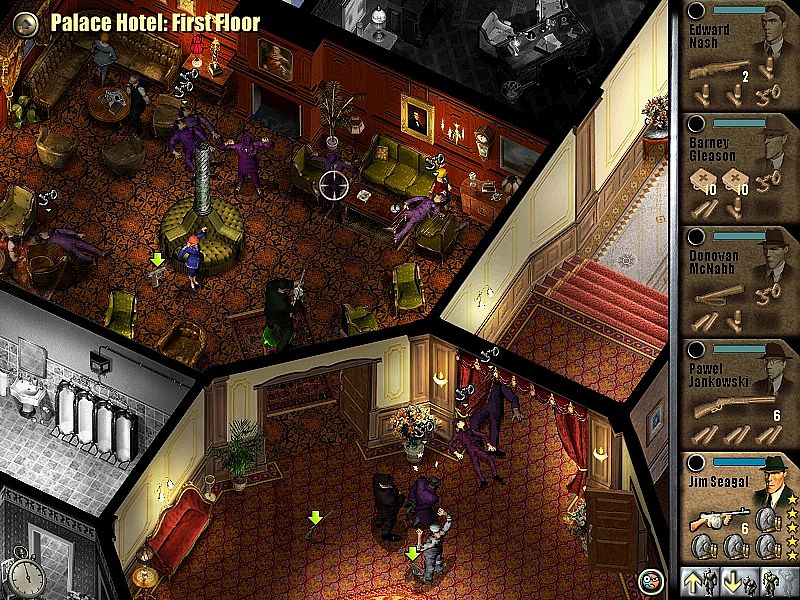
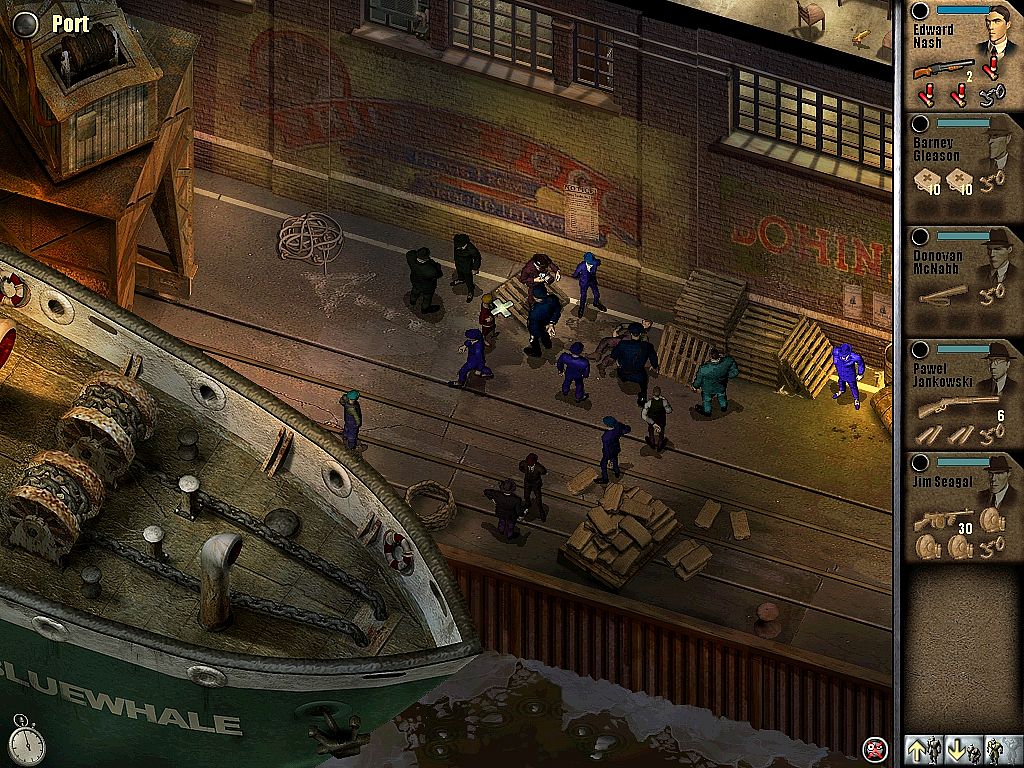
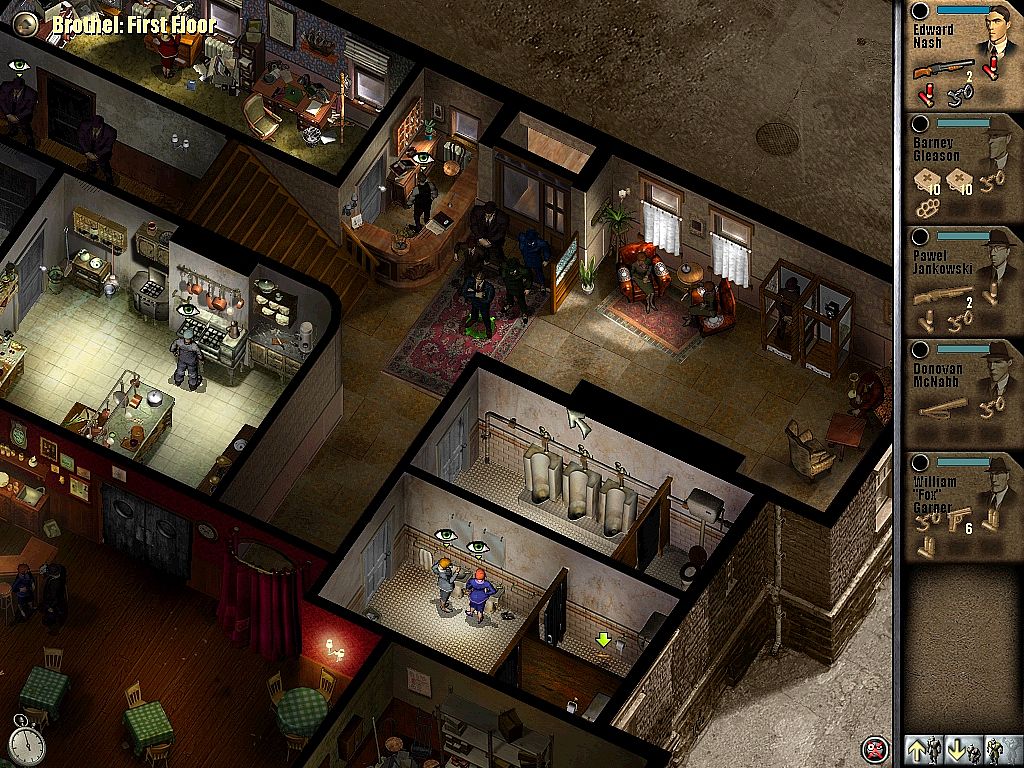
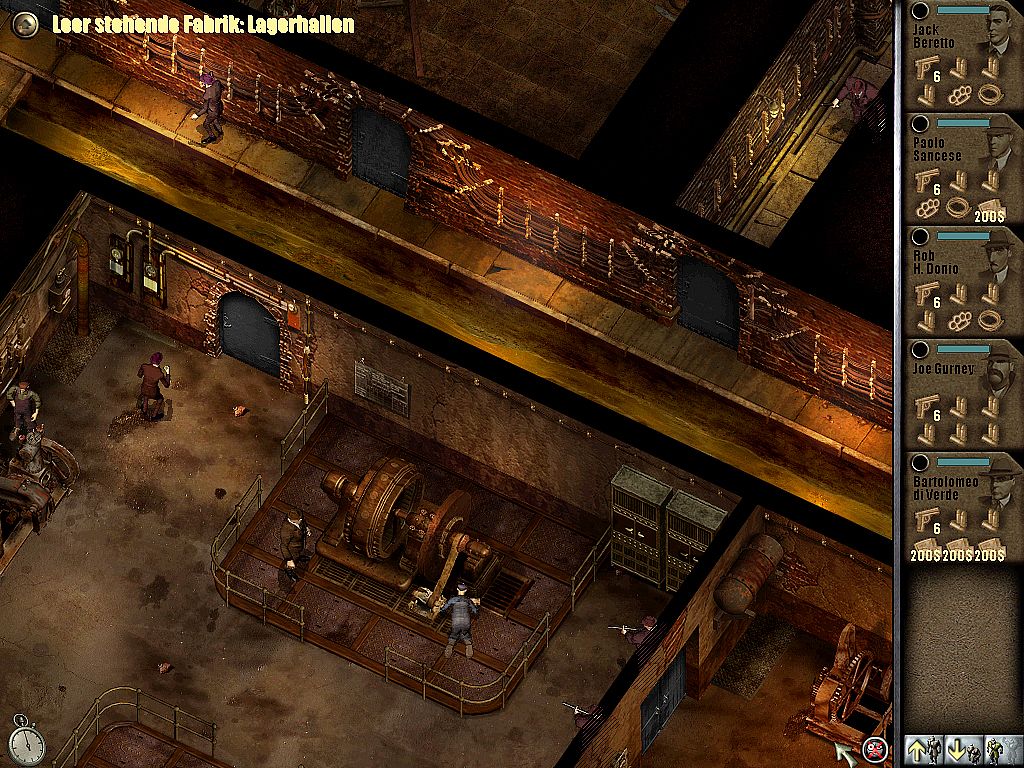
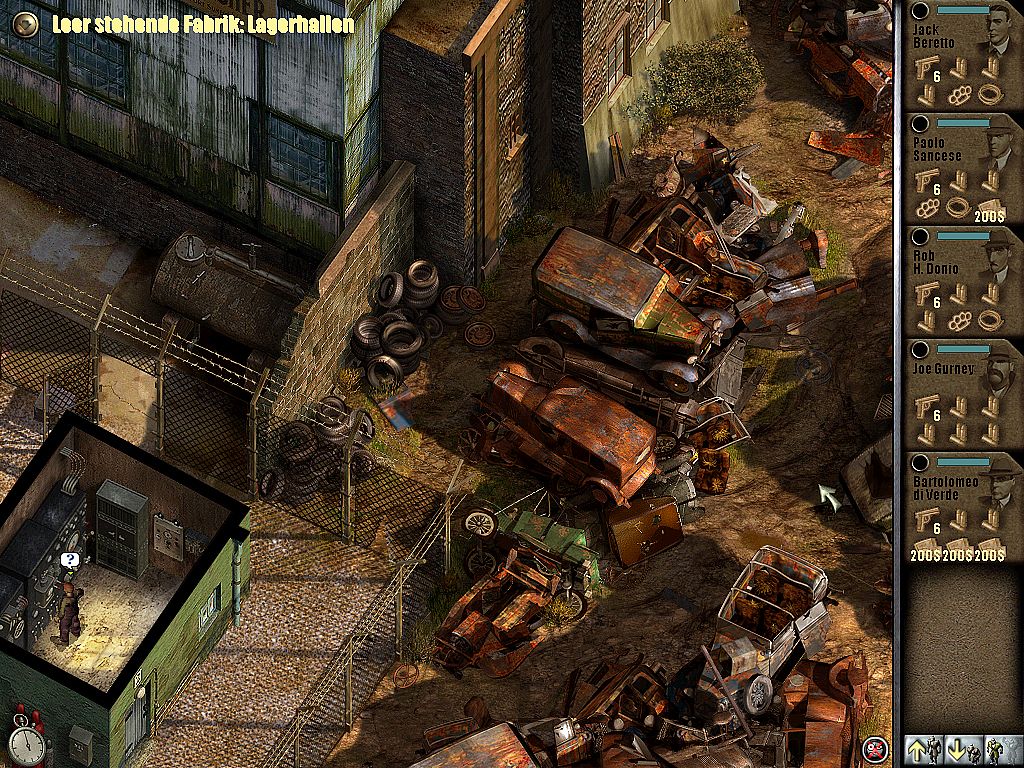
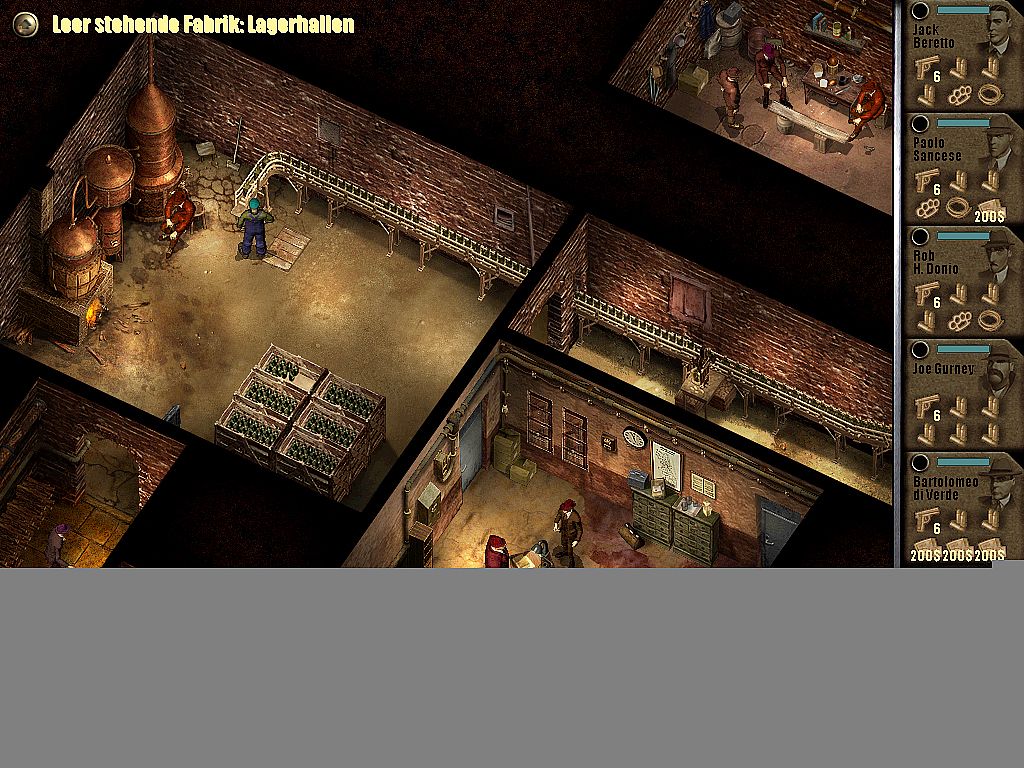
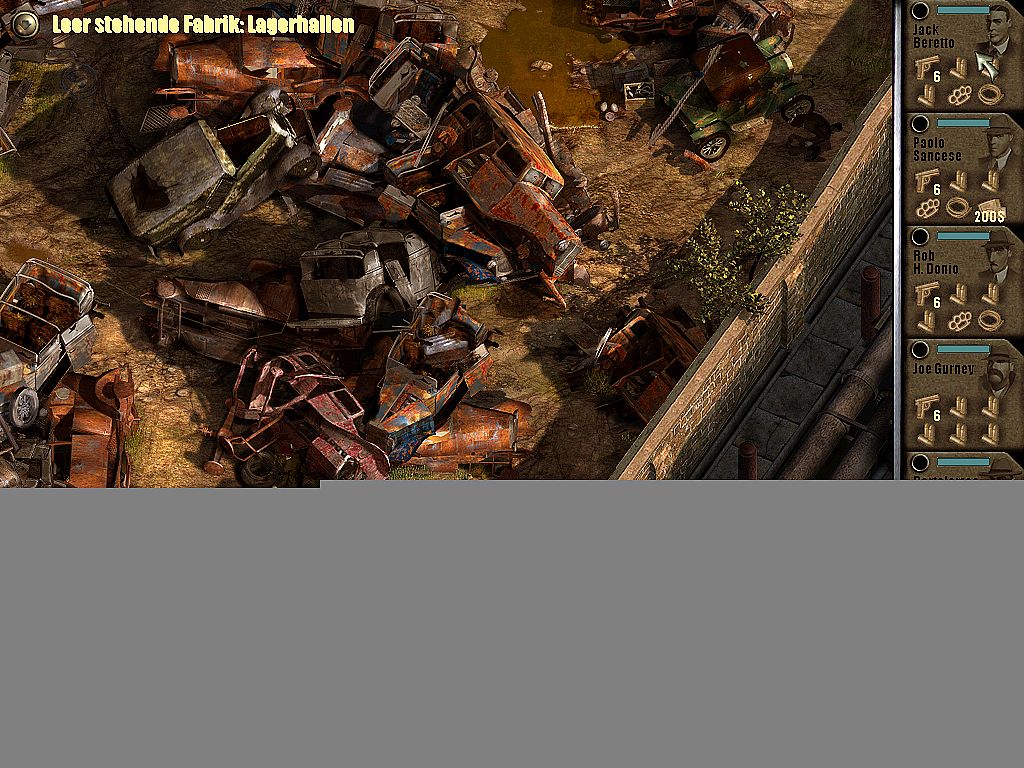
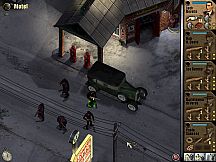
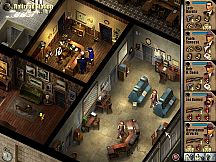
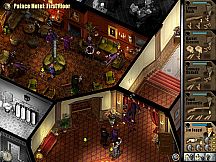
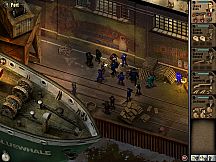
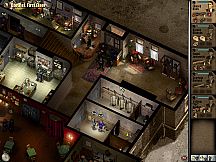
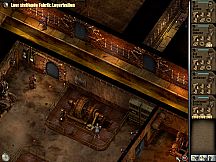
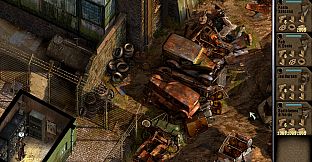
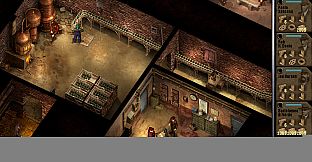
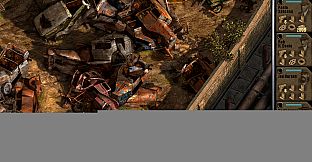
Chicago 1930: The Prohibition is a single-player strategy game set during the Prohibition era in Chicago. Players take command of a five-member squad and engage in real-time tactical combat while managing character development across multiple attributes. The title places participants in an ongoing conflict between organized crime and law enforcement, with the choice to align with either the mafia or a special police task force.
Gameplay
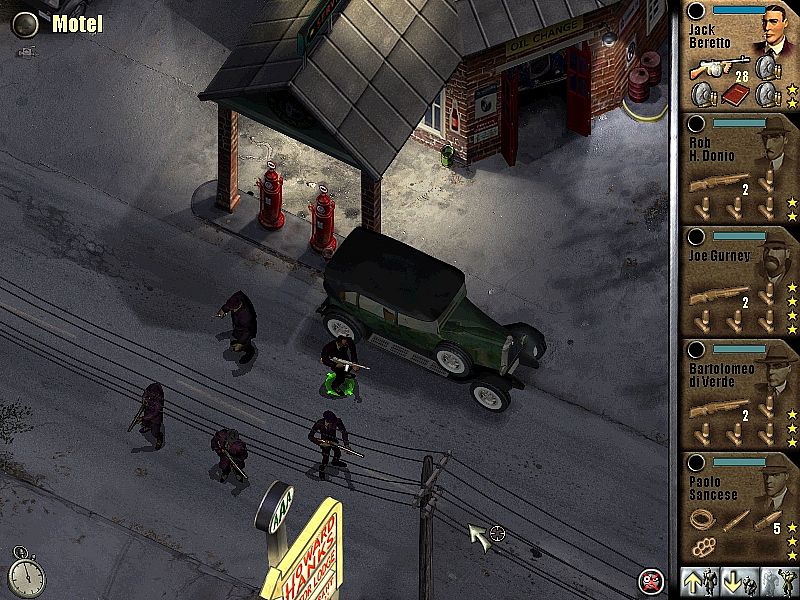
The core loop centers on squad-based real-time tactics viewed from an isometric perspective. Each mission requires directing five characters through urban districts, completing objectives that involve direct confrontations, stealth elements, and resource management. Characters possess five distinct attributes: shooting for ranged accuracy, close combat for melee effectiveness, throwing for grenades and objects, charisma for influencing non-combat encounters, and first aid for sustaining the team during prolonged fights.
Progression occurs through repeated use of these skills, allowing individual team members to improve over the course of a campaign. When combat intensifies, a dedicated slow-motion mode pauses the action briefly, enabling precise order issuance without halting the overall flow. Enemy artificial intelligence responds dynamically to player positioning, cover usage, and team composition, creating varied encounters that reward careful planning rather than brute force.
Controls support multiple unit selection and point-and-click commands, typical of real-time tactics titles. The bird's-eye view facilitates oversight of district layouts, where terrain and building placement influence line-of-sight and movement options. Success depends on balancing aggressive advances with defensive positioning, as well as leveraging each character's strengths in specific situations.
Game Modes
The game operates exclusively in single-player format. Participants select one of two opposing factions at the outset and progress through a series of missions that advance the central conflict across Chicago's districts. Mafia-aligned play involves expanding influence through territorial control and confrontations with authorities, while the police side focuses on dismantling criminal operations through targeted operations.
Both paths feature the same underlying mechanics of squad management and attribute development, though narrative framing and objective types differ according to the chosen side. There are no separate skirmish or multiplayer options; all content unfolds within the structured single-player campaigns. Missions emphasize sequential advancement, with outcomes carrying forward through character growth and team composition decisions.
Factions and Character Management
The mafia faction operates under Don Carmine Falcone, emphasizing expansion and enforcement within contested neighborhoods. The opposing police task force, led by Edward Nash, prioritizes disruption of criminal networks through coordinated raids and arrests. Each side fields a core team of five specialists whose attributes evolve based on mission performance.
Team composition remains fixed in size, so strategic decisions revolve around which members to deploy in particular scenarios and how to allocate experience toward shooting, close combat, throwing, charisma, or first aid. This system encourages replaying sections with adjusted approaches to optimize outcomes. Realistic enemy reactions further differentiate encounters, as opponents adapt to repeated tactics or exploit weaknesses in the player's formation.
Is It Worth Playing?
Chicago 1930: The Prohibition appeals to players who enjoy methodical real-time tactics combined with light role-playing progression. The emphasis on squad attributes and slow-motion command input rewards deliberate decision-making during heated exchanges. Those seeking fast-paced action or large-scale battles may find the deliberate pacing and limited team size less engaging.
The title remains available on PC platforms and preserves its original mechanics without modern updates or additional content layers. Individuals interested in historical gangster settings and classic squad tactics will find the dual-faction structure provides meaningful variety across playthroughs. The absence of multiplayer keeps the focus squarely on single-player campaign progression and character development.