

























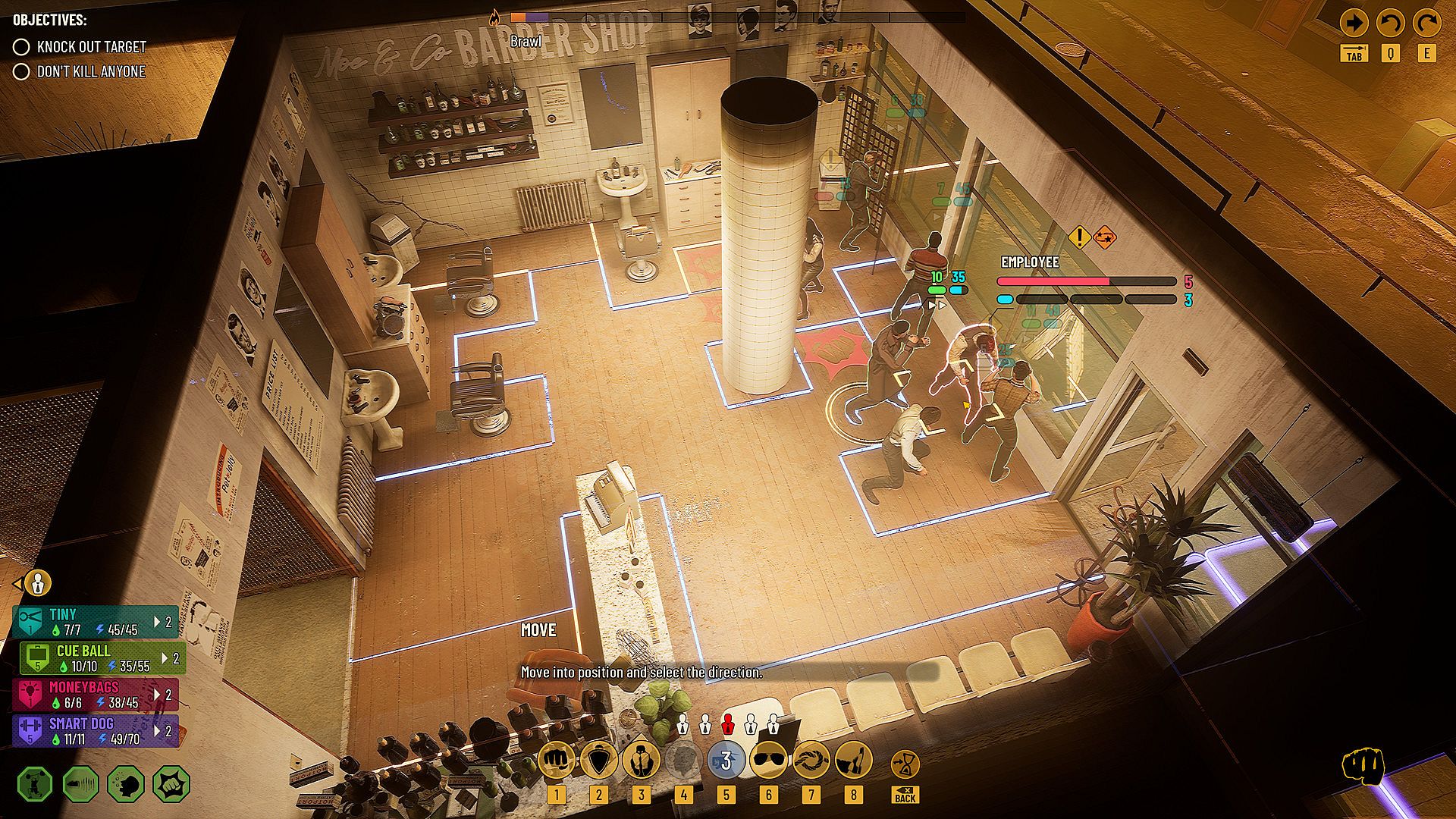

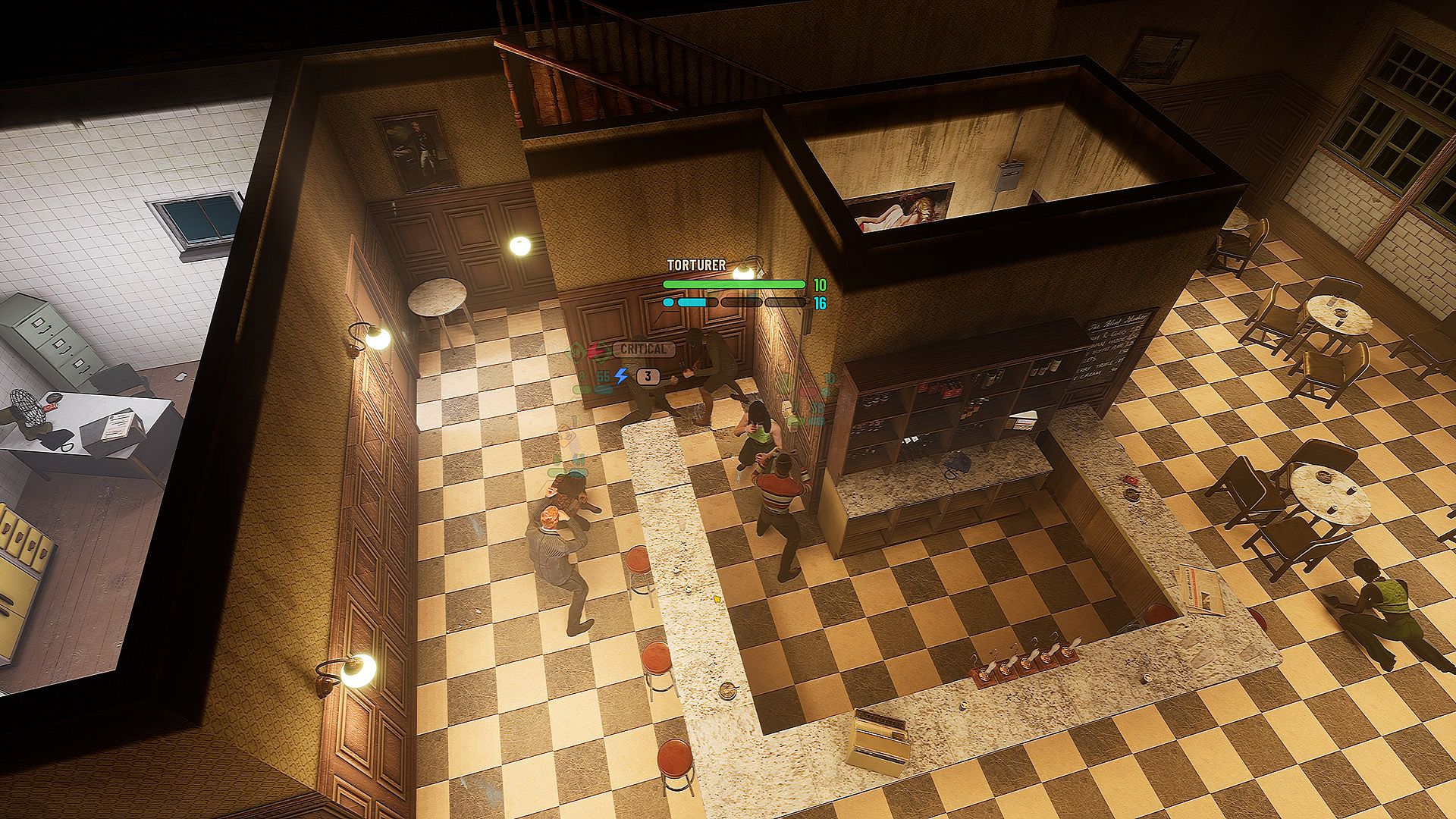
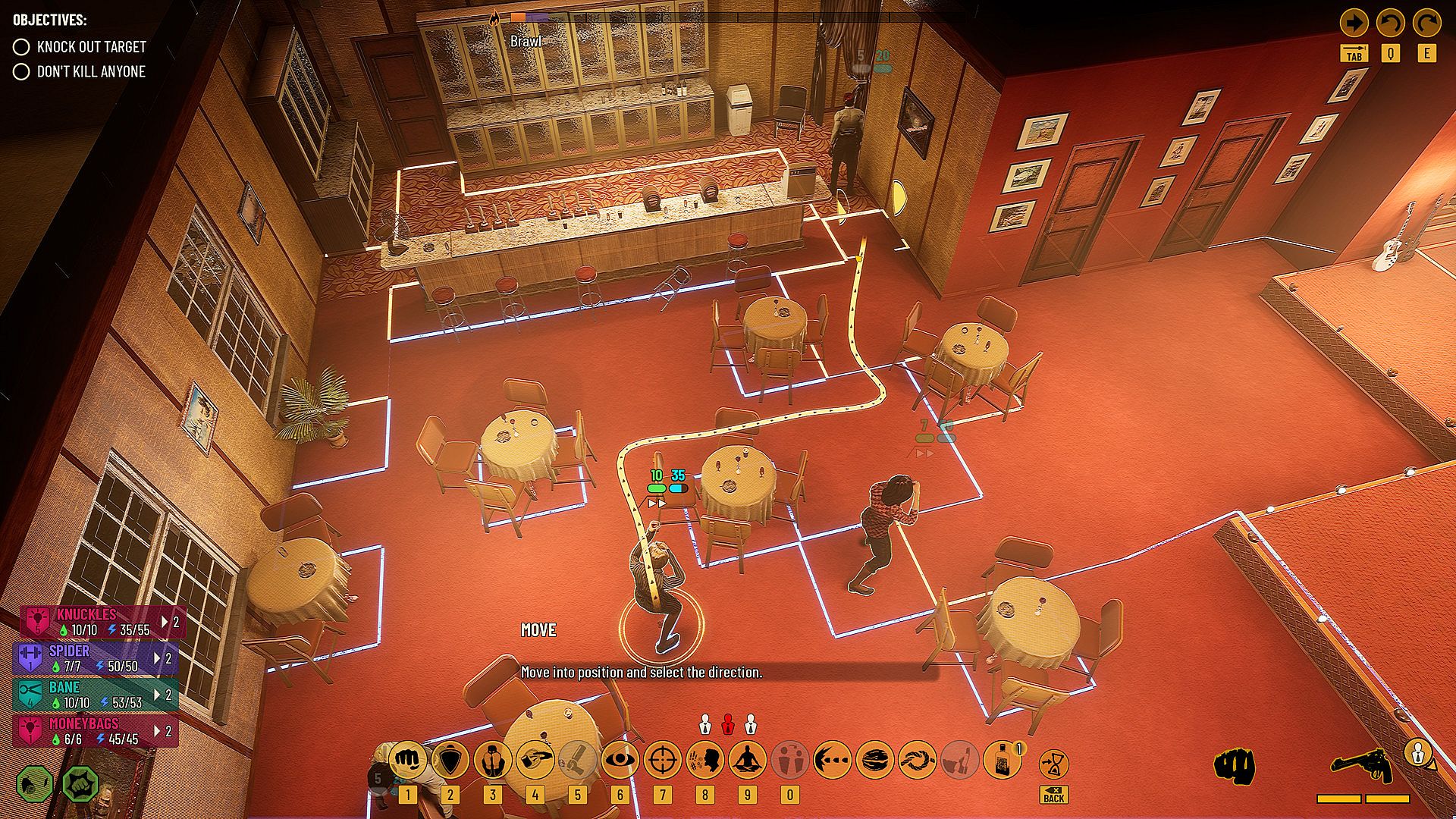
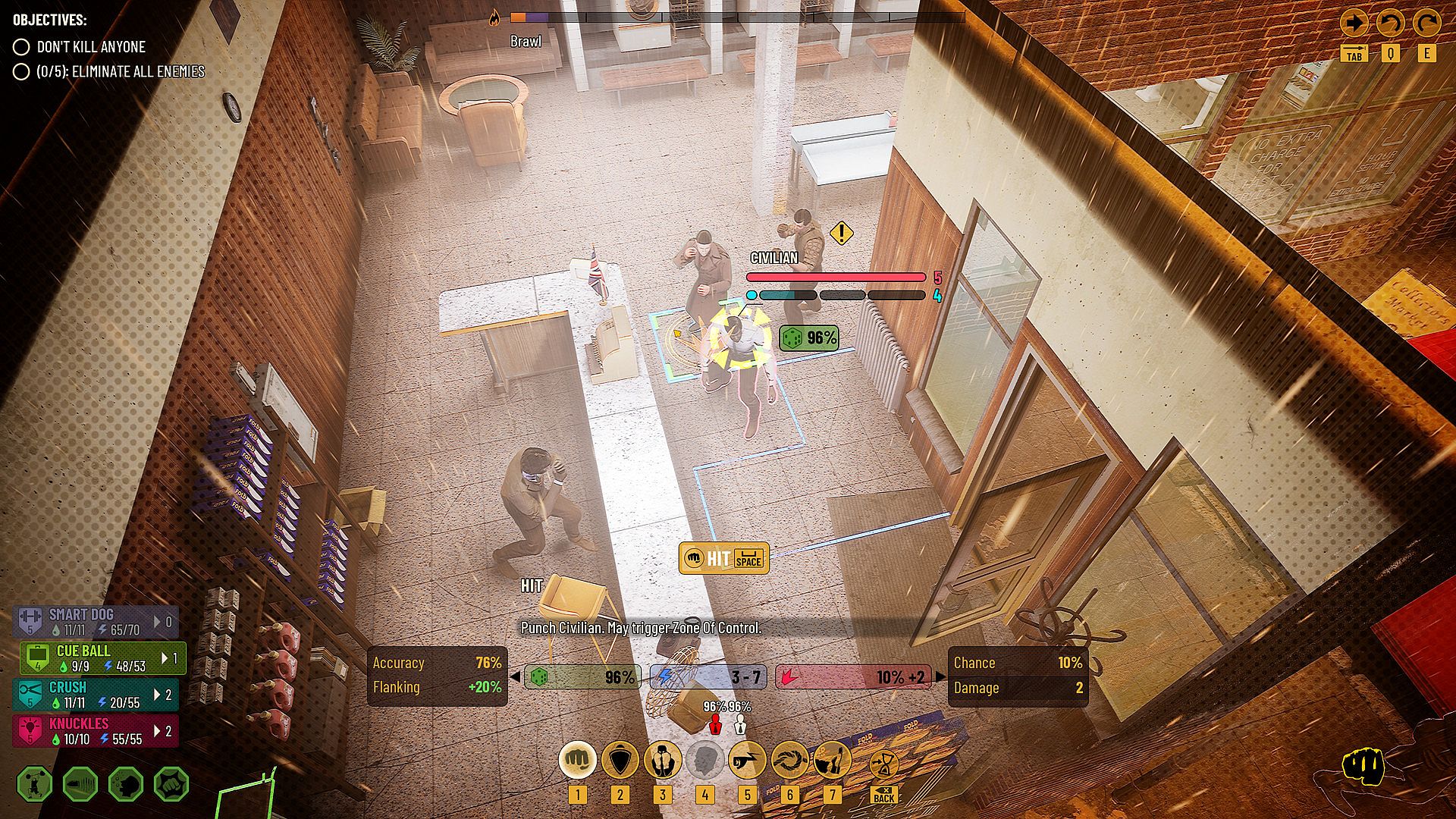









Company of Crime is a single-player strategy RPG that blends tactical turn-based combat with criminal empire management. Set in 1960s London, the game lets players either expand a gang's control over the city's underworld or dismantle it as a Scotland Yard inspector. The experience centers on turn-based missions in detailed urban locations, resource management, and long-term progression across a map of the city.
Gameplay
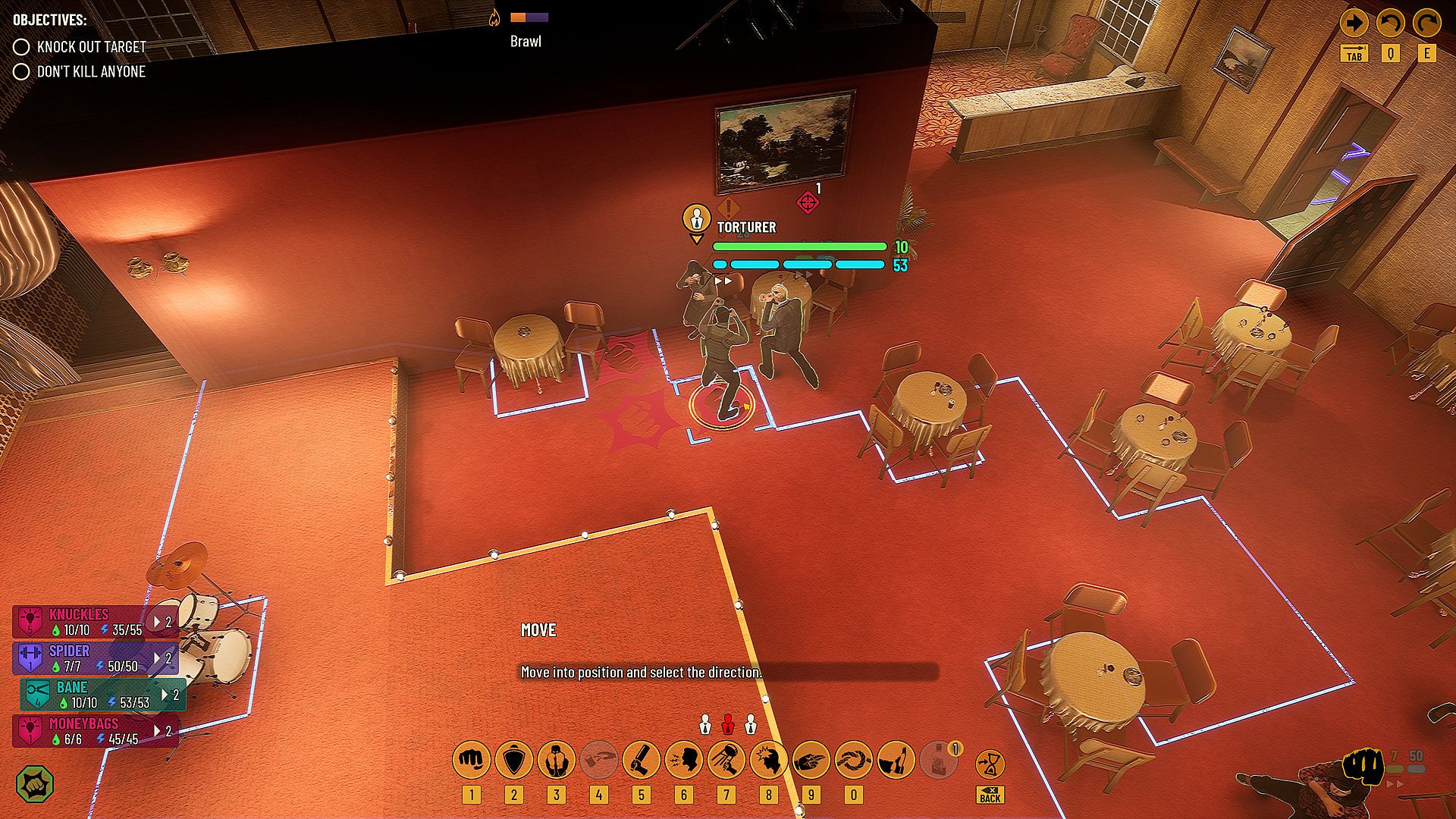
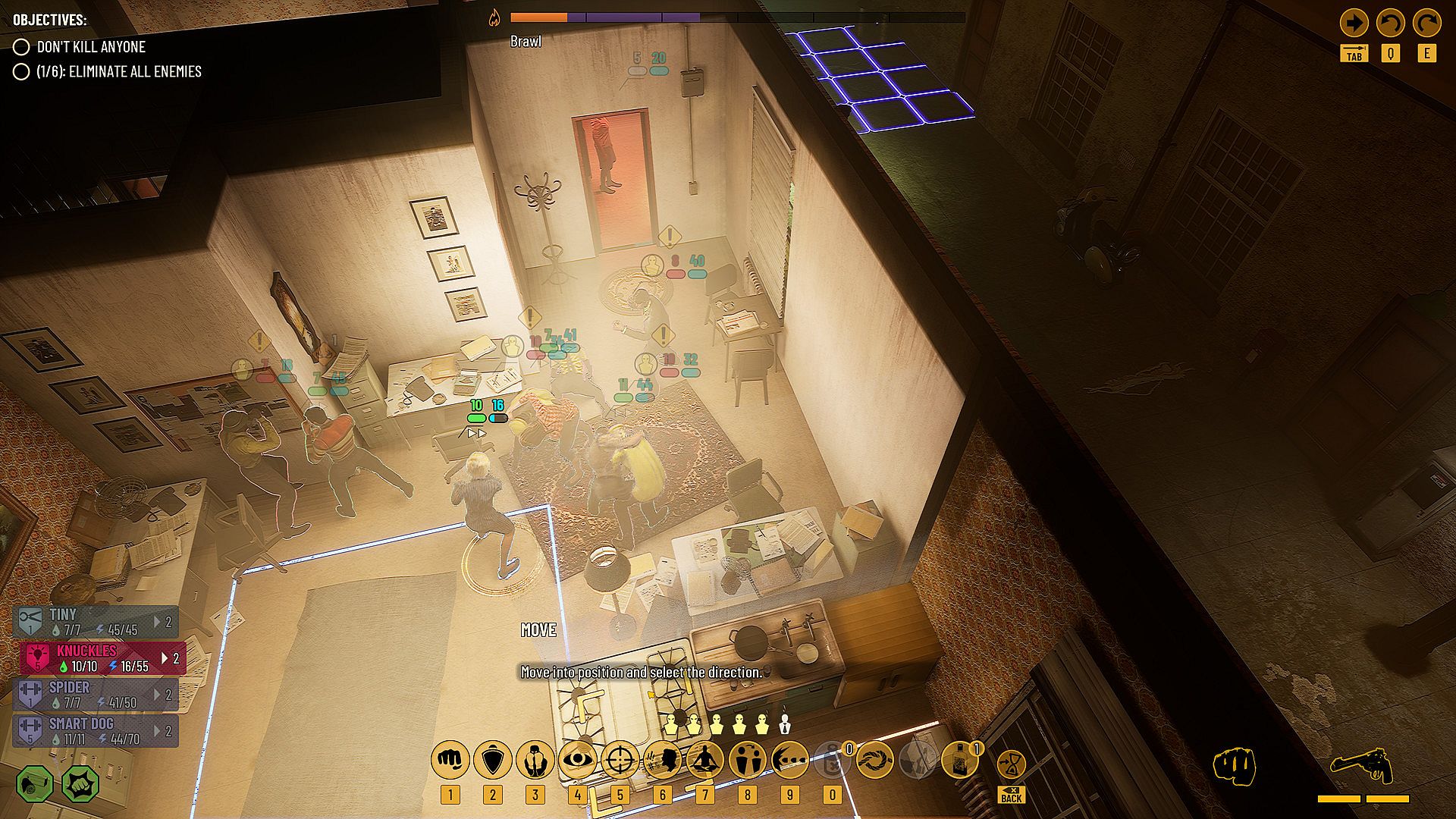
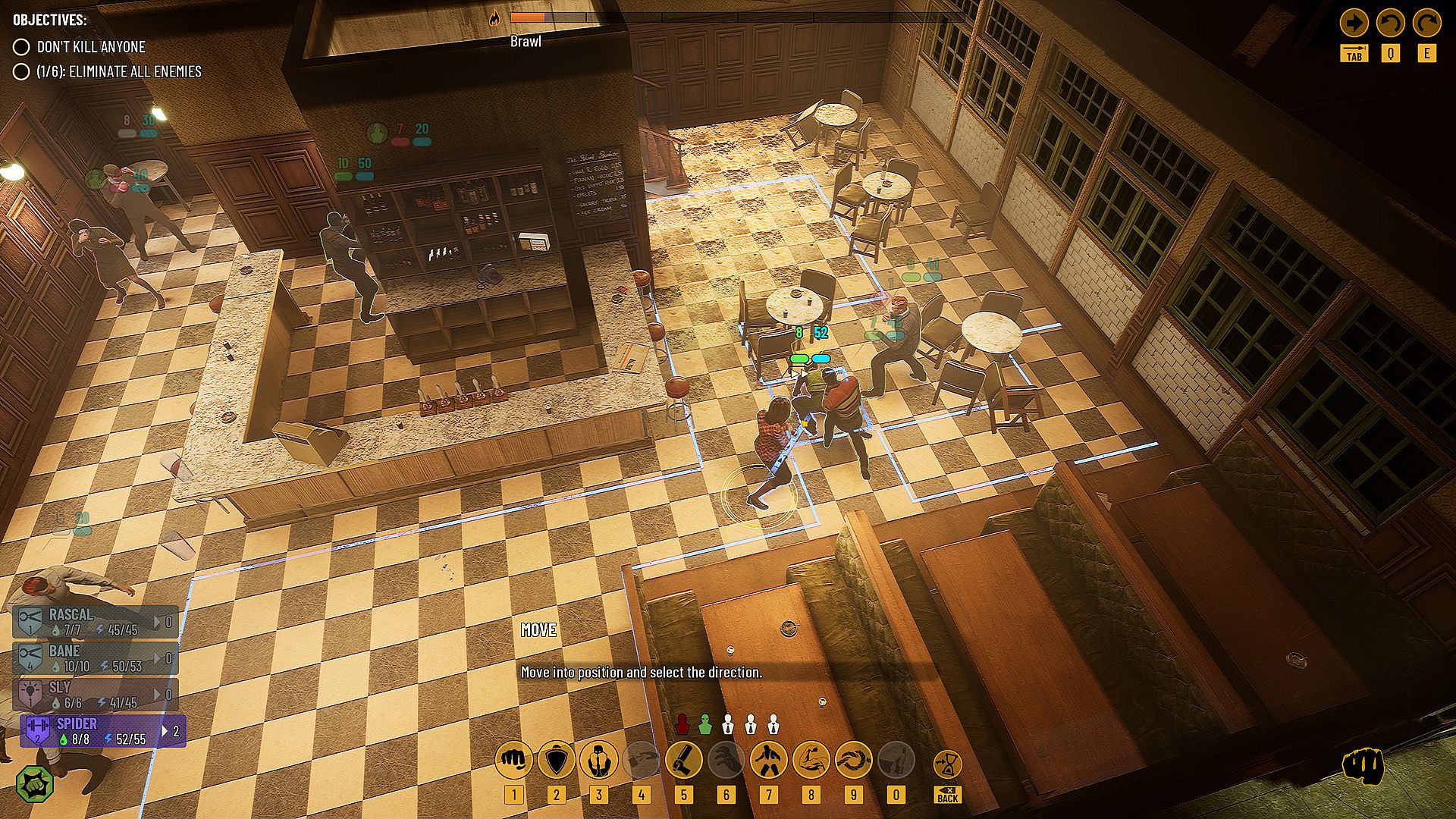
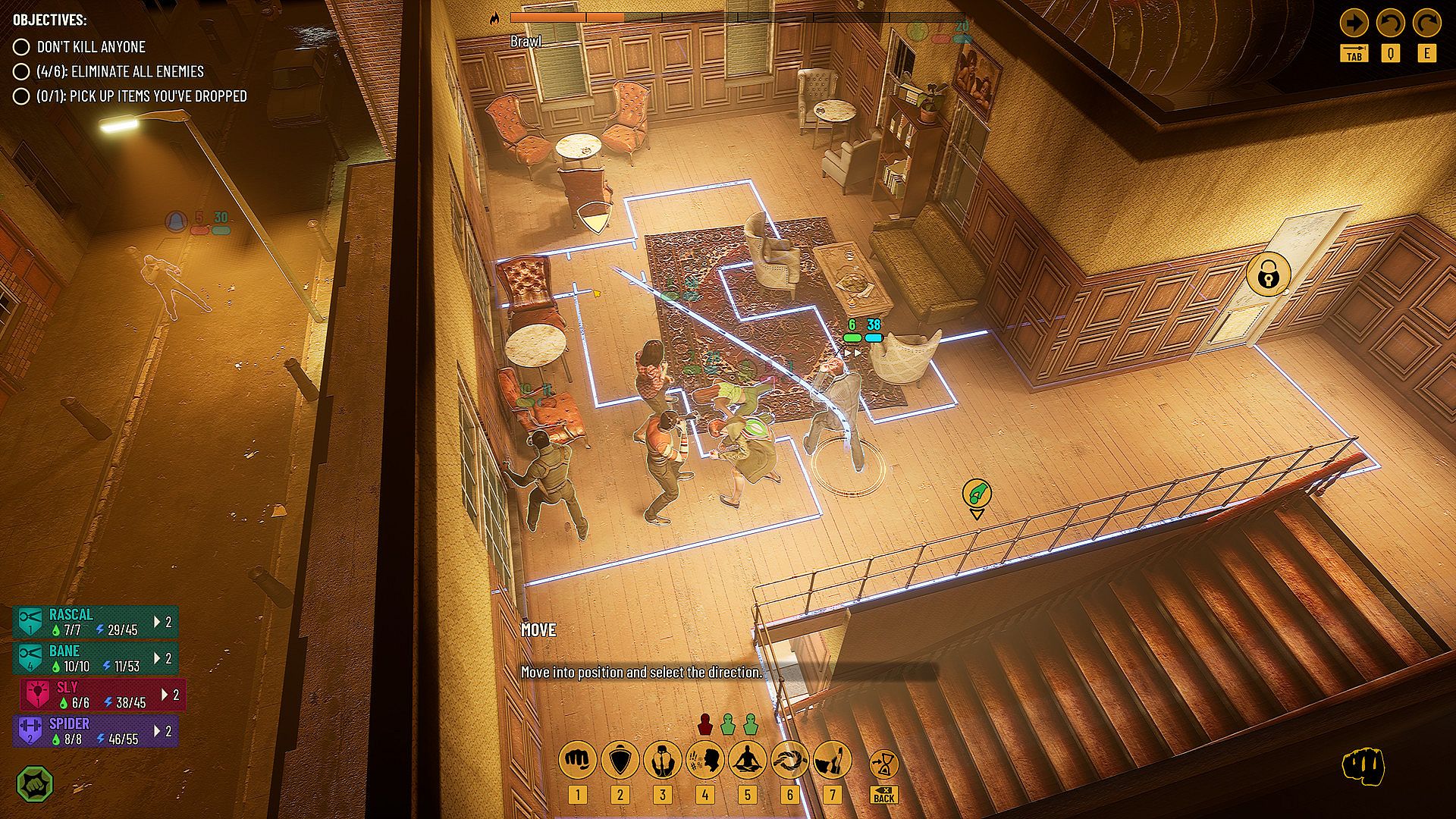
The core loop revolves around tactical turn-based missions that emphasize melee combat in confined spaces. Units exert zones of control that restrict enemy movement and create opportunities for flanking attacks. Players can block paths, build numerical advantages, and even use kicks to create openings or disrupt opponents. Guns introduce risk, as drawing one can escalate situations quickly, forcing choices between seeking cover or disarming the threat before it leads to heavier consequences.
Heat mechanics add tension to every action. Silent approaches to extortion and intimidation keep opposition low, while loud confrontations draw more police attention and rival interference. Managing this system requires careful planning, as excessive heat complicates future operations and demands leverage to reduce scrutiny.
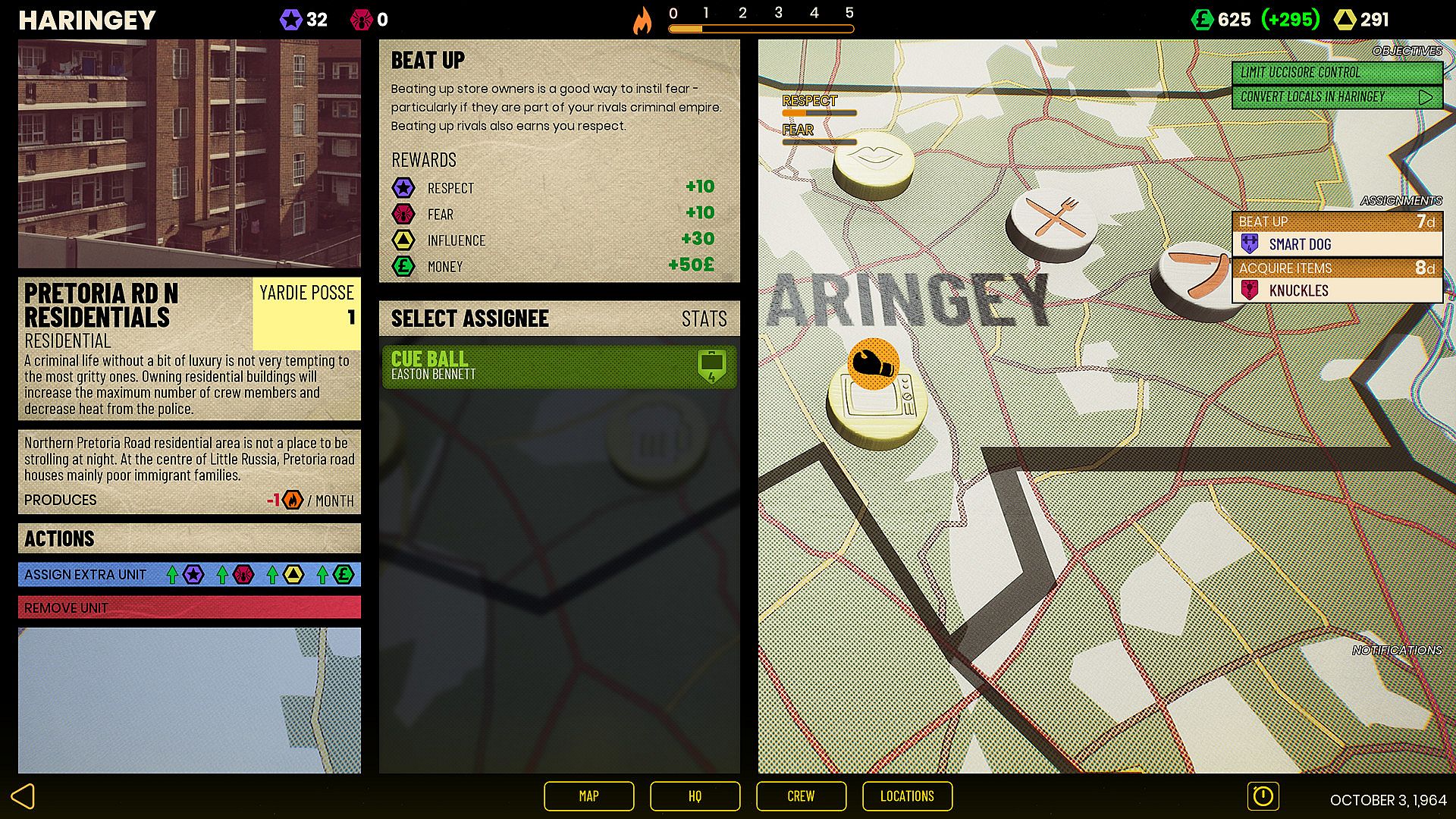
Progression extends beyond basic stats. Missions involve not only completing objectives but also handling aftermath details, such as clearing evidence from crime scenes before authorities arrive. On the criminal side, players expand influence by acquiring legitimate businesses through persuasion or pressure, which unlocks new items, safe houses, and operational options while increasing exposure to raids or attacks.
The setting incorporates the era's subcultures, from beatniks and mods to rockers, influencing the atmosphere and available contacts. A broader narrative thread involves external pressures on the British Empire during the Cold War, with shadowy elements that intersect with both criminal and law enforcement paths.
Game Modes
Company of Crime features two distinct campaigns that represent opposing perspectives. The criminal campaign focuses on building and defending an empire through missions that involve recruitment, extortion, and territorial expansion. Gang members bring varied skills suited to different tasks, and success depends on balancing aggression with discretion.
The police campaign places players in charge of the Flying Squad, emphasizing investigation and reactive enforcement. Sergeants can be assigned to gather intelligence from informants, pursue search warrants, and conduct raids. The emphasis here lies in preventing evidence destruction and securing arrests that hold up in court, rather than direct confrontation.
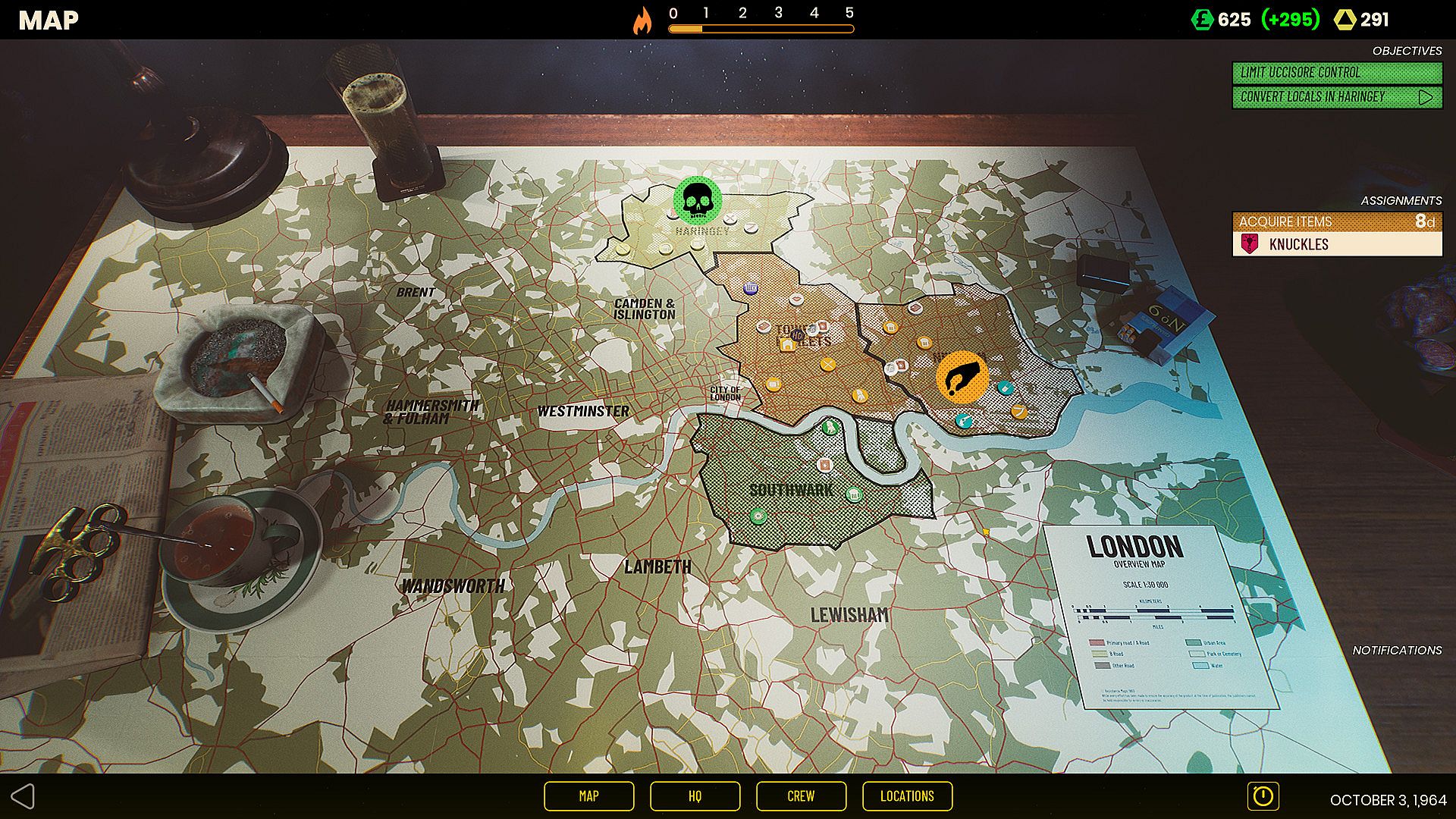
Both campaigns share the same underlying systems for combat and heat management but differ in objectives and progression paths. Missions occur across pubs, clubs, harbors, and other real-world-inspired locations in London, with choices affecting long-term control of the city.
Setting and Progression Systems
The game unfolds against a backdrop of 1960s London as a cultural hub facing internal and external strains. Ownership of properties serves as the main driver of advancement, granting access to better equipment and personnel while heightening the chance of police intervention or rival strikes. Level progression ties into mission outcomes, rewarding thoroughness in evidence handling and strategic positioning during fights.
Reactive police AI means criminal players encounter consequences primarily after visible violence, encouraging quieter methods of expansion. On the law enforcement side, proactive steps like informant networks and warrant applications become essential for building cases without alerting targets prematurely.
Is It Worth Playing?
Company of Crime suits players who enjoy deliberate, turn-based strategy combined with management elements in a historical crime setting. The dual-campaign structure provides replay value through contrasting playstyles, one focused on expansion and the other on containment. Post-launch patches addressed several aspects of the experience, improving overall stability and balance according to community feedback.
Those drawn to melee-focused tactics, heat management, and the challenge of maintaining a criminal front will find the systems rewarding. The game remains available as a complete title without ongoing seasonal content, making it a self-contained option for fans of indie strategy titles set in detailed period environments. Its niche appeal lies in the specific blend of empire building and tactical missions rather than broad action or multiplayer features.