

















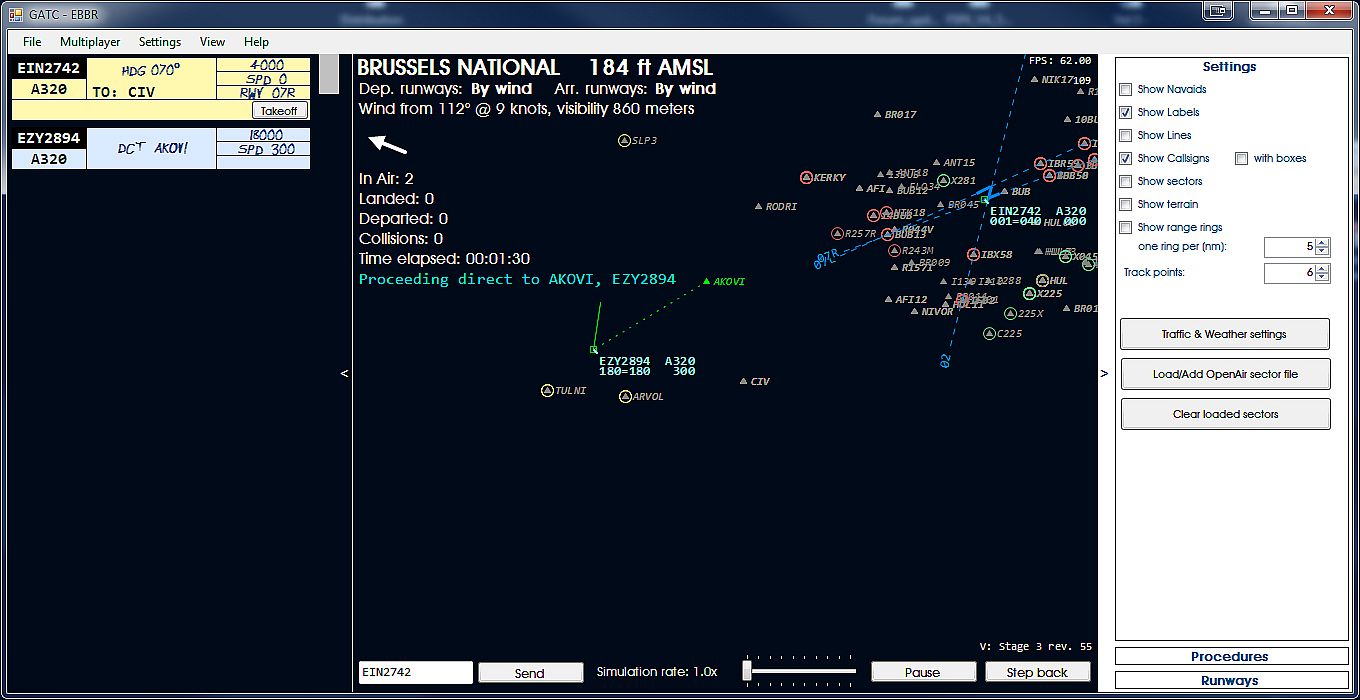
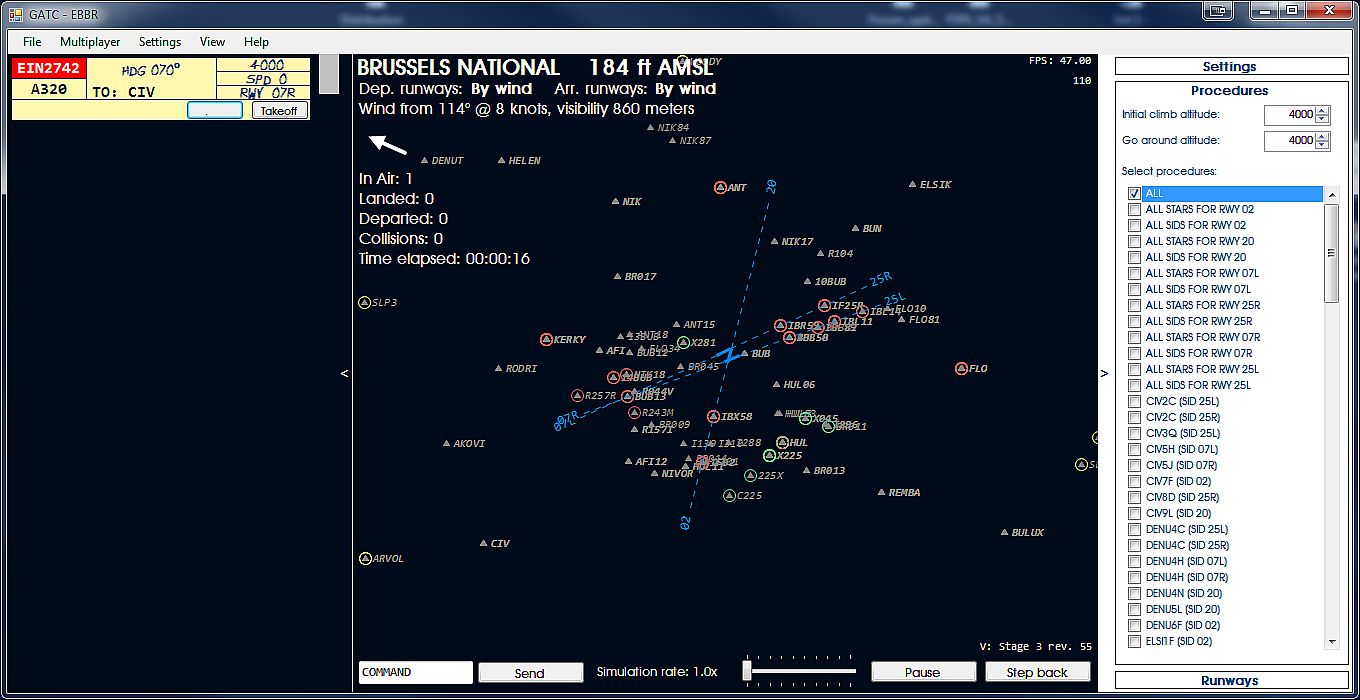
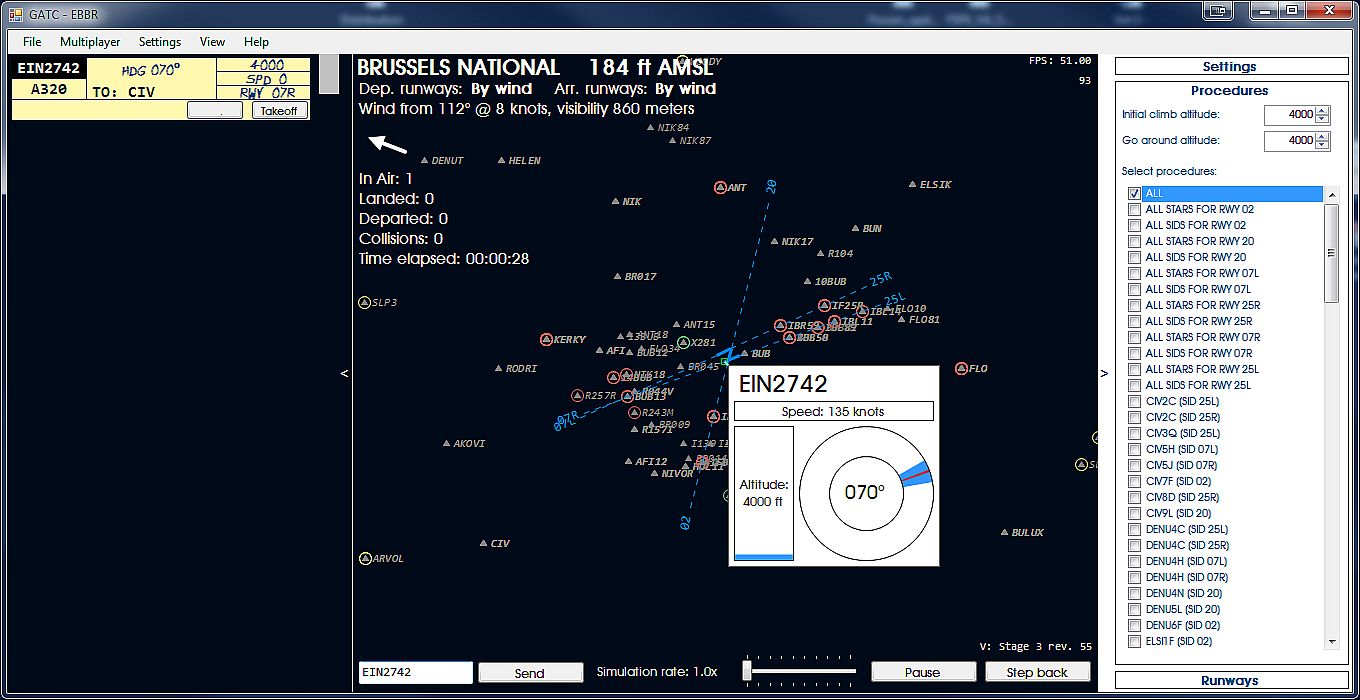
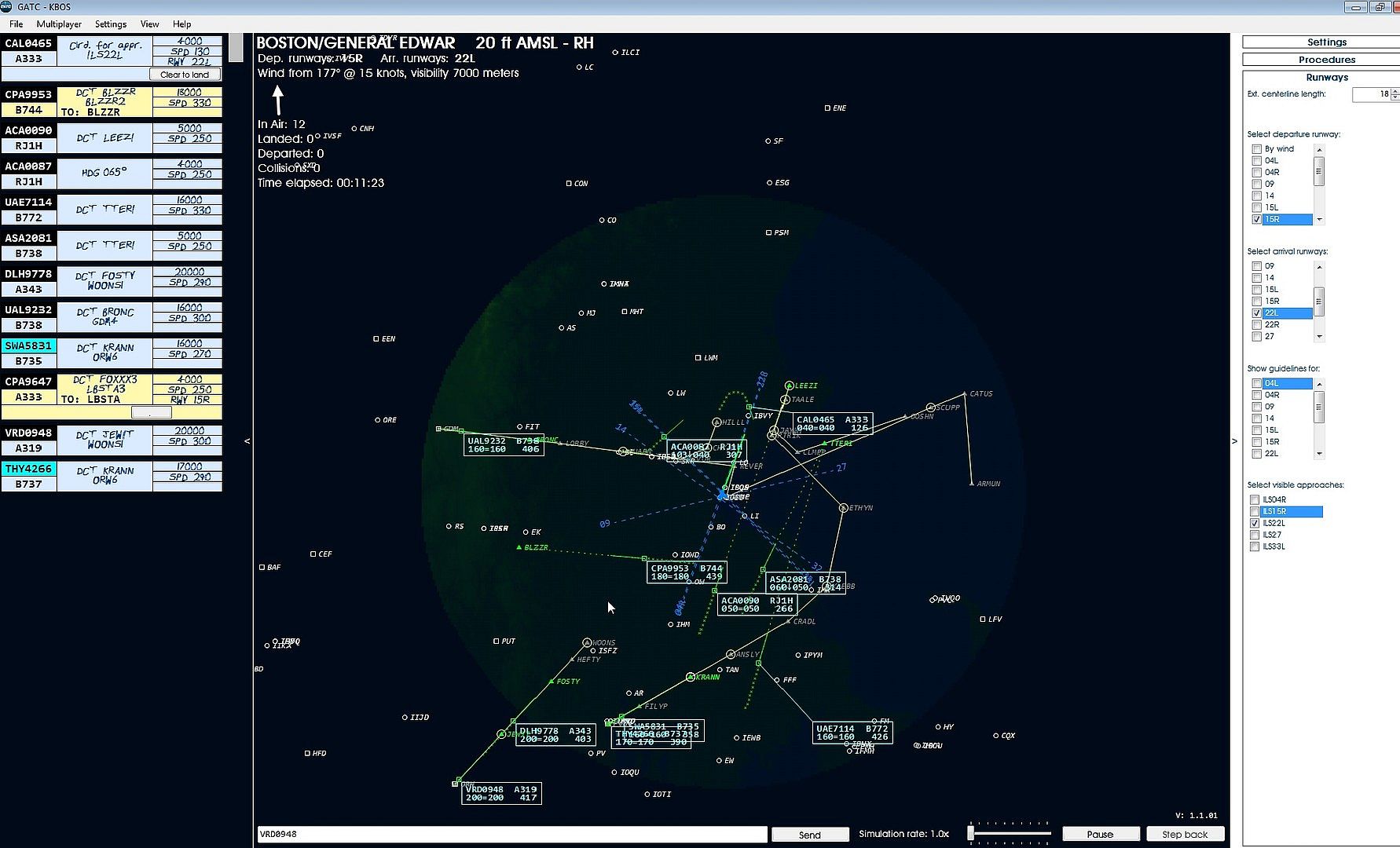
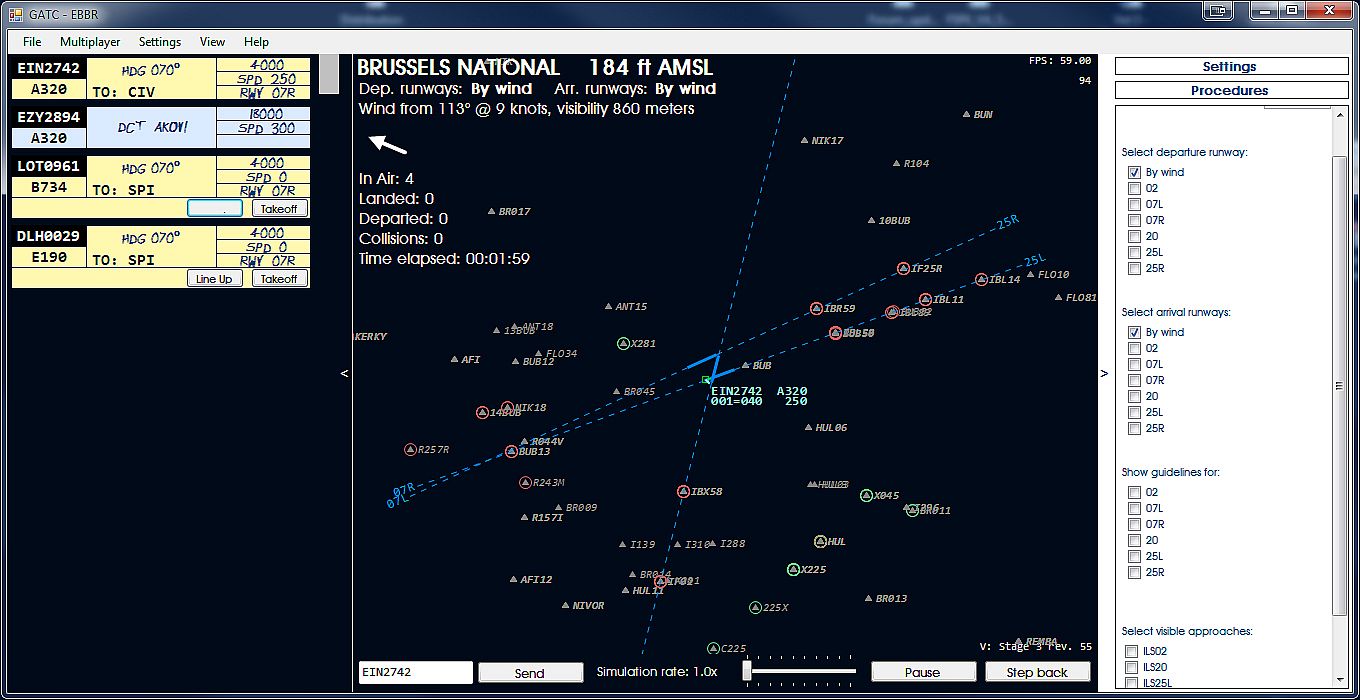
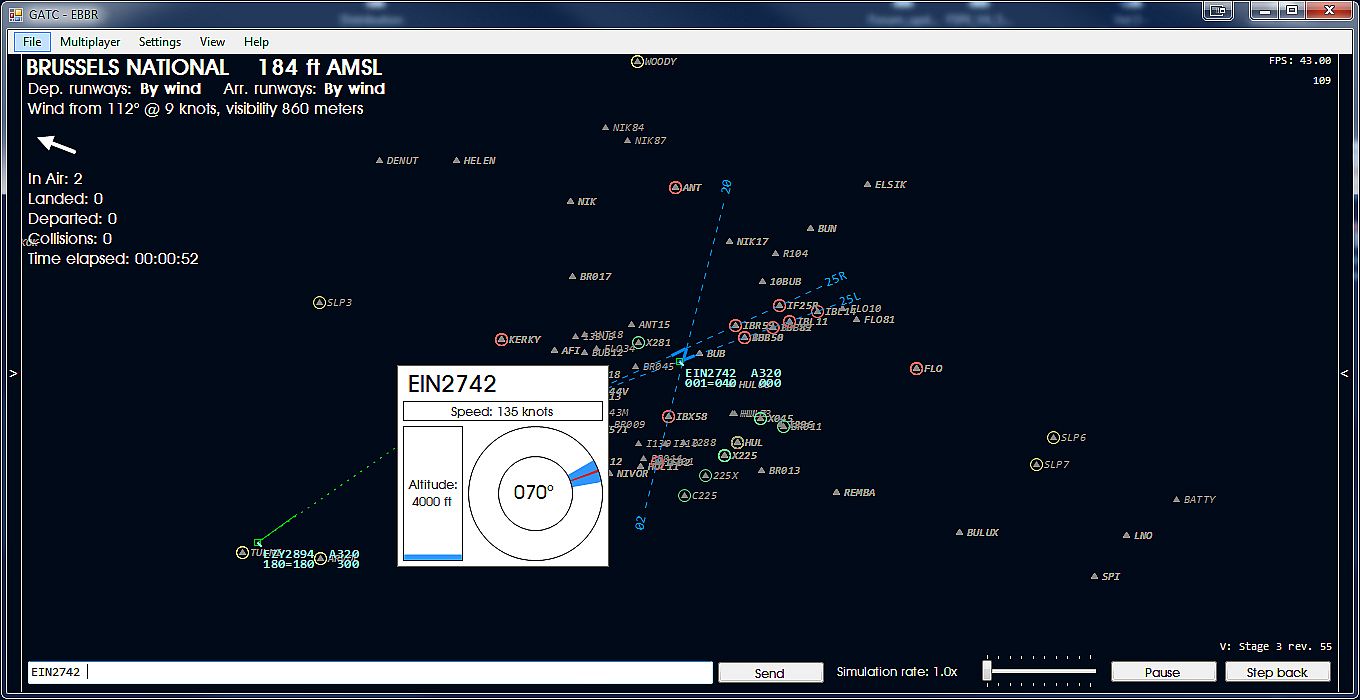
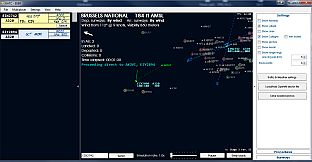
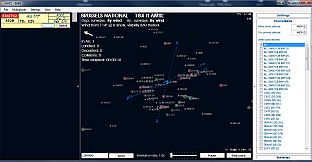
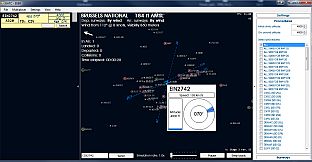
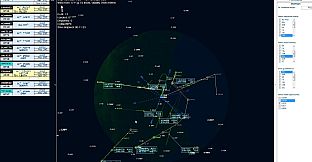
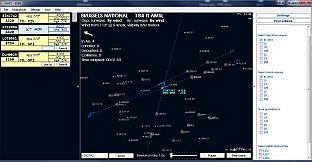
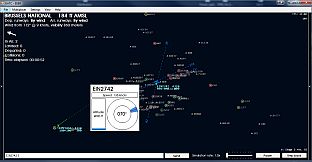
Global ATC Simulator is a simulation game that places players in the role of air traffic controllers handling tower, approach, and departure duties at airports worldwide. Released for PC in 2014, it stands out through its scale, drawing on a licensed navigation database to cover nearly 14,000 airports with detailed routing, procedures, and real-world aircraft assignments.
Gameplay
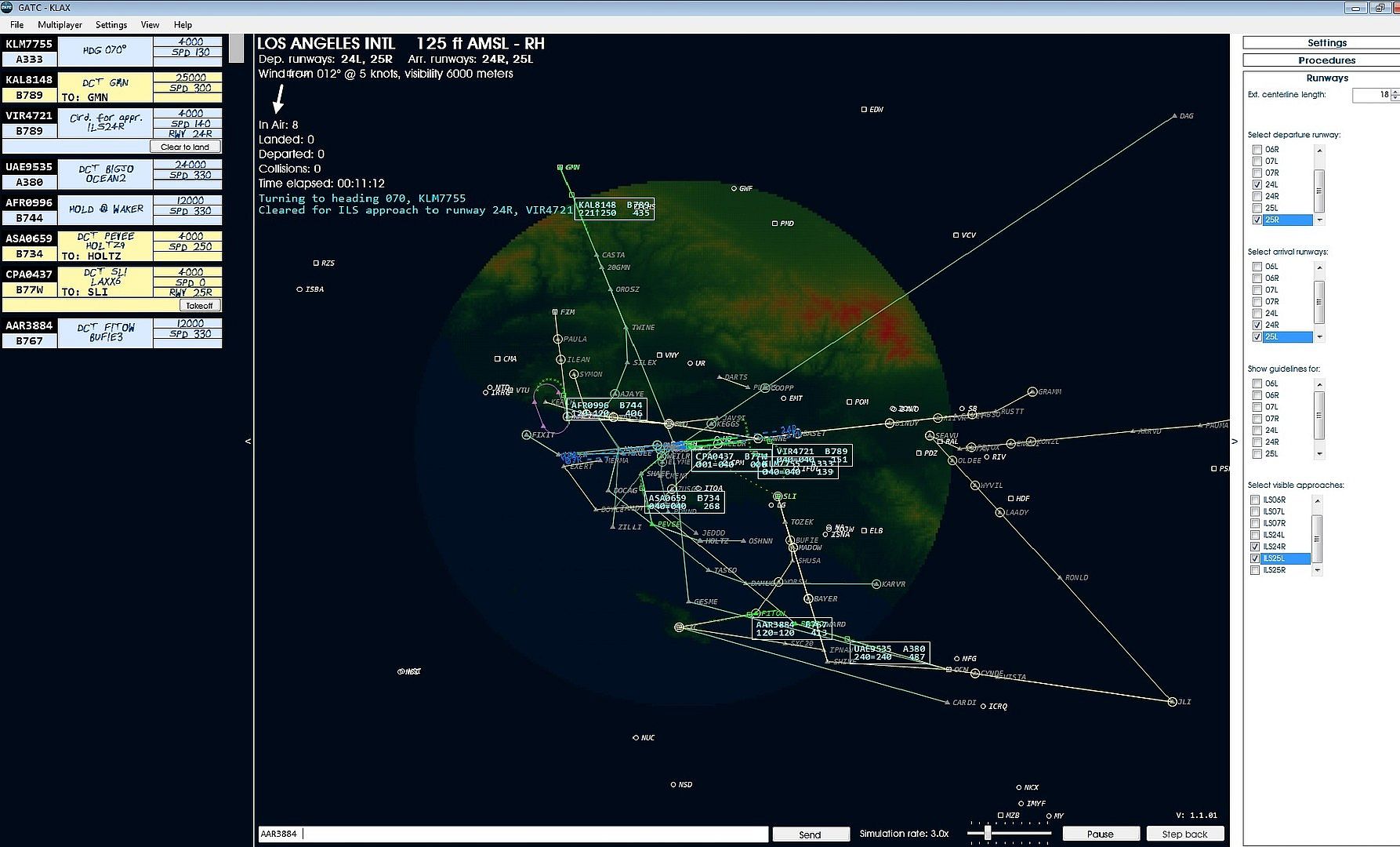
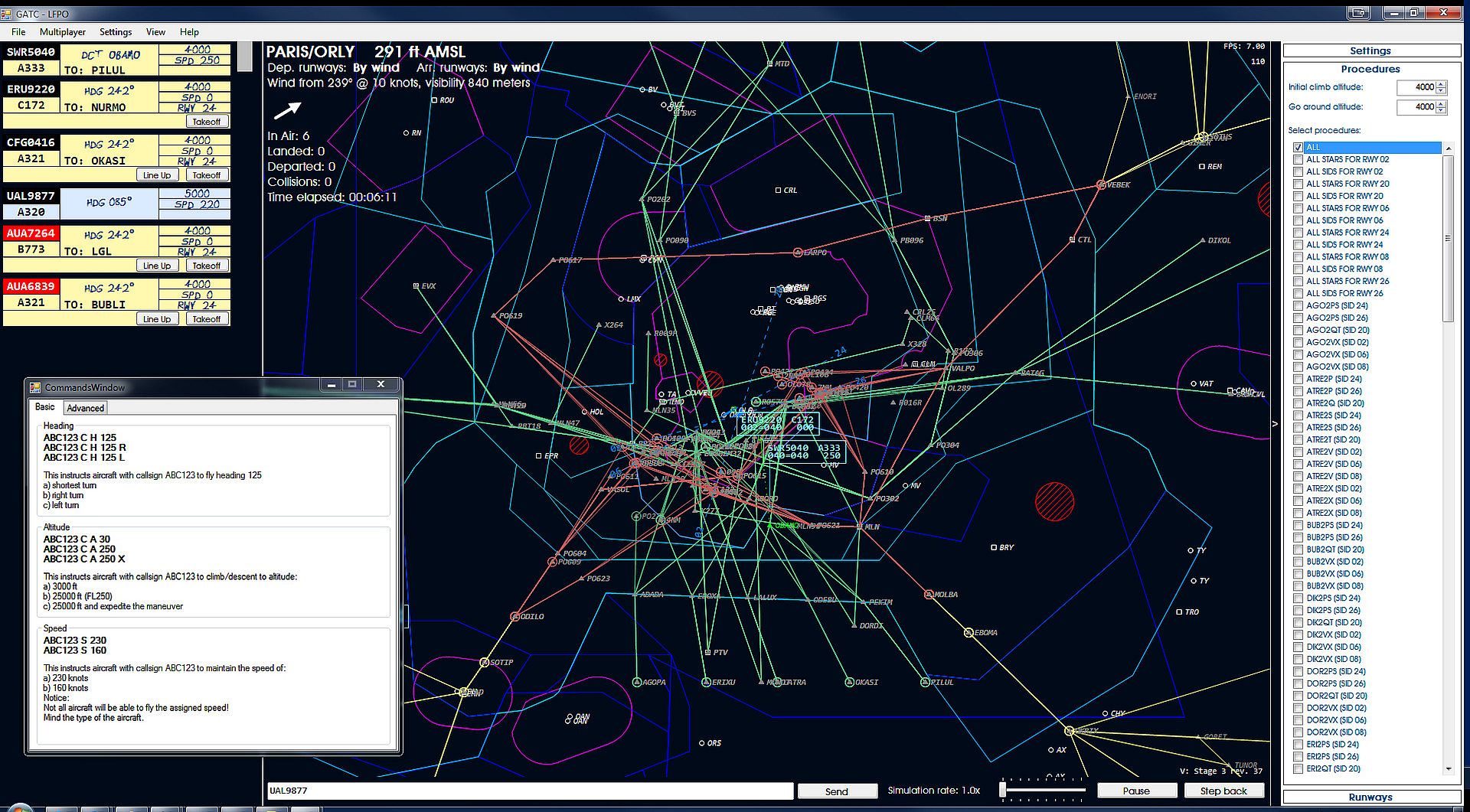
The core loop revolves around directing aircraft safely through controlled airspace while managing spacing, altitudes, and speeds. Players issue clearances using either mouse clicks or text commands, accounting for aircraft performance differences such as the wide turning radius of an Airbus A380 compared to a smaller Twin Otter. Wind and visibility conditions directly influence decisions, forcing adjustments to approach paths and departure sequences.
Traffic arrives in irregular patterns that can overwhelm an airport at peak times. Controllers must issue holding instructions to manage flow, yet prolonged holds risk fuel emergencies that demand priority landing clearances. Departures may need to yield to arrivals depending on runway availability and sequencing priorities. Every choice carries immediate consequences, from minor delays to potential conflicts that require quick resolution.
Real-time weather integration requires an online connection and adds another layer of variability. The simulation emphasizes procedural accuracy, including adherence to SIDs, STARs, waypoints, and altitude restrictions at each airport.
Game Modes
A dedicated gaming mode progressively increases traffic density to challenge player skills and decision-making under pressure. This contrasts with the primary serious simulation focus, where the emphasis remains on realistic procedures rather than endless escalation.
Multiplayer support allows sessions over a local area network, enabling coordinated control among multiple users at the same facility or across connected airports. The design encourages long sessions of sustained attention rather than quick matches.
Airports, Aircraft, and Realism
Nearly 14,000 airports appear with accurate runway layouts and navigation data. One hundred airlines populate the skies with appropriate aircraft types and routes that match real-world operations. Eighty distinct aircraft models behave according to their actual performance envelopes, including climb rates, descent profiles, and turn radii.
An updatable navigation database keeps procedures current where supported. All elements remain open to user modification, from aircraft performance files to airline additions, with the expectation that shared edits improve the experience for everyone.
Customization and User Content
Extensive editing tools cover aircraft files, airline rosters, and procedural elements. Players can adjust climb speeds, introduce new types, or expand airline coverage in minutes. Shared content forms a core part of the experience, allowing the simulation to evolve beyond its initial release state through community contributions.
Touch input support for Windows 7 and 8 complements traditional mouse and keyboard controls, providing flexibility during extended sessions.
Is It Worth Playing?
Global ATC Simulator delivers a focused air traffic control experience for players who value procedural depth and global scope over visual polish. Its mixed reception on Steam, with 62 percent positive ratings from 133 reviews, reflects appreciation for the simulation fidelity alongside notes on the learning curve and interface demands.
The title suits aviation enthusiasts and those interested in realistic controller workloads. It offers no ongoing seasonal content or frequent updates, yet the editable nature and LAN multiplayer provide lasting engagement for dedicated users. Those seeking a serious, consequence-driven simulation will find the mechanics rewarding, while players preferring lighter or graphically intensive titles may find the radar-screen presentation and manual requirements less appealing. The game remains available for PC as a one-time purchase with no additional modes or expansions required for the core experience.