


















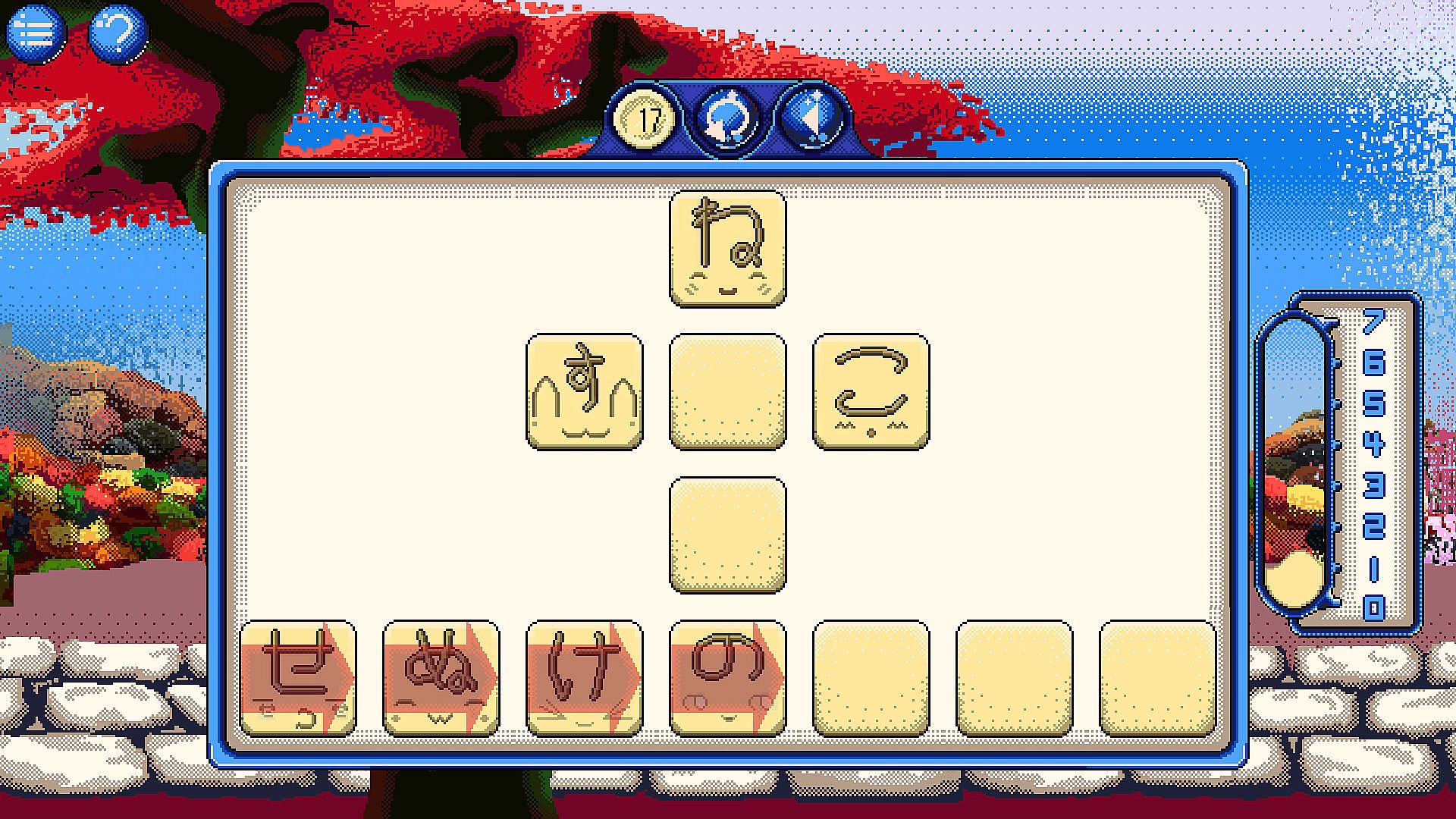
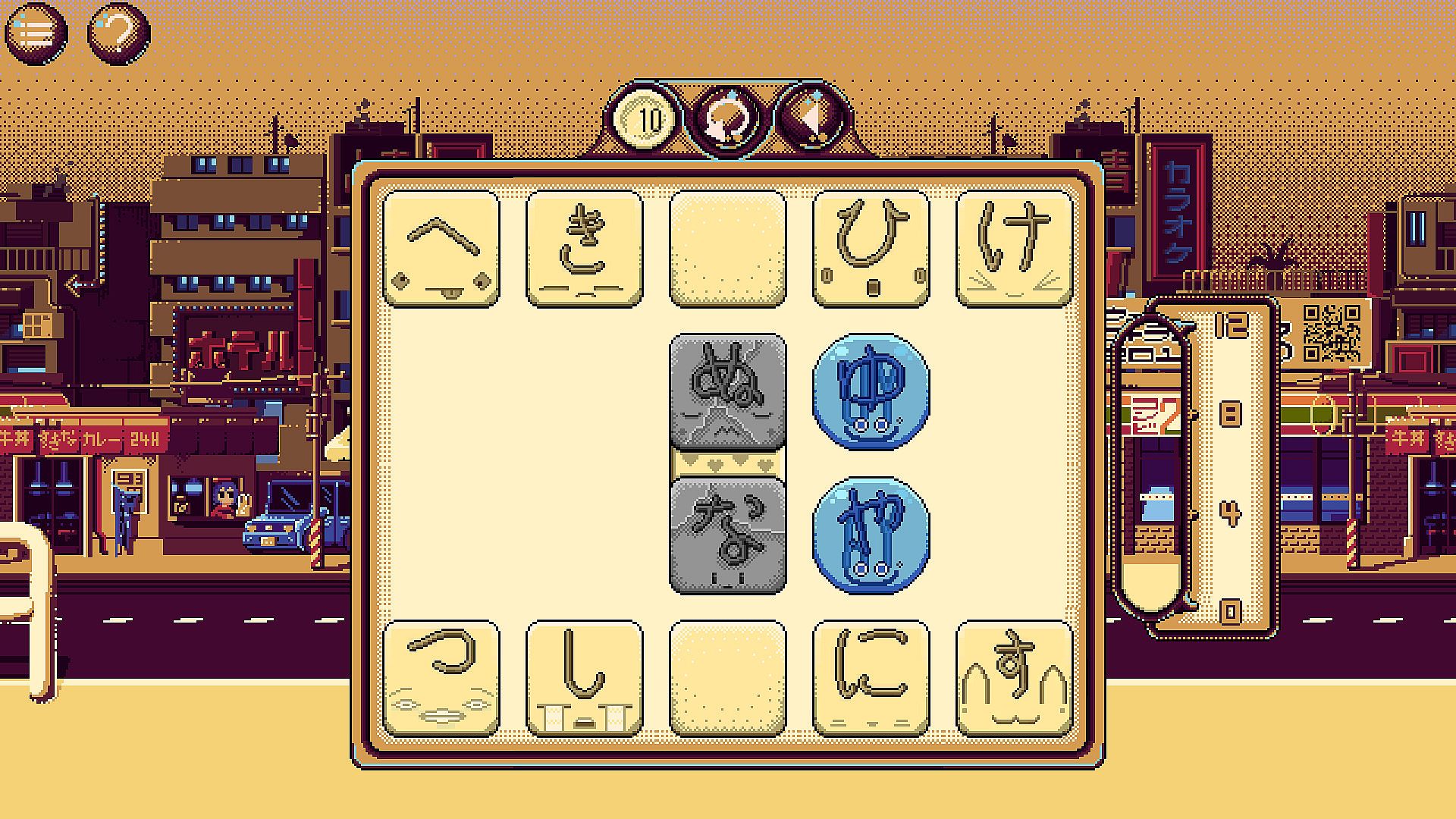
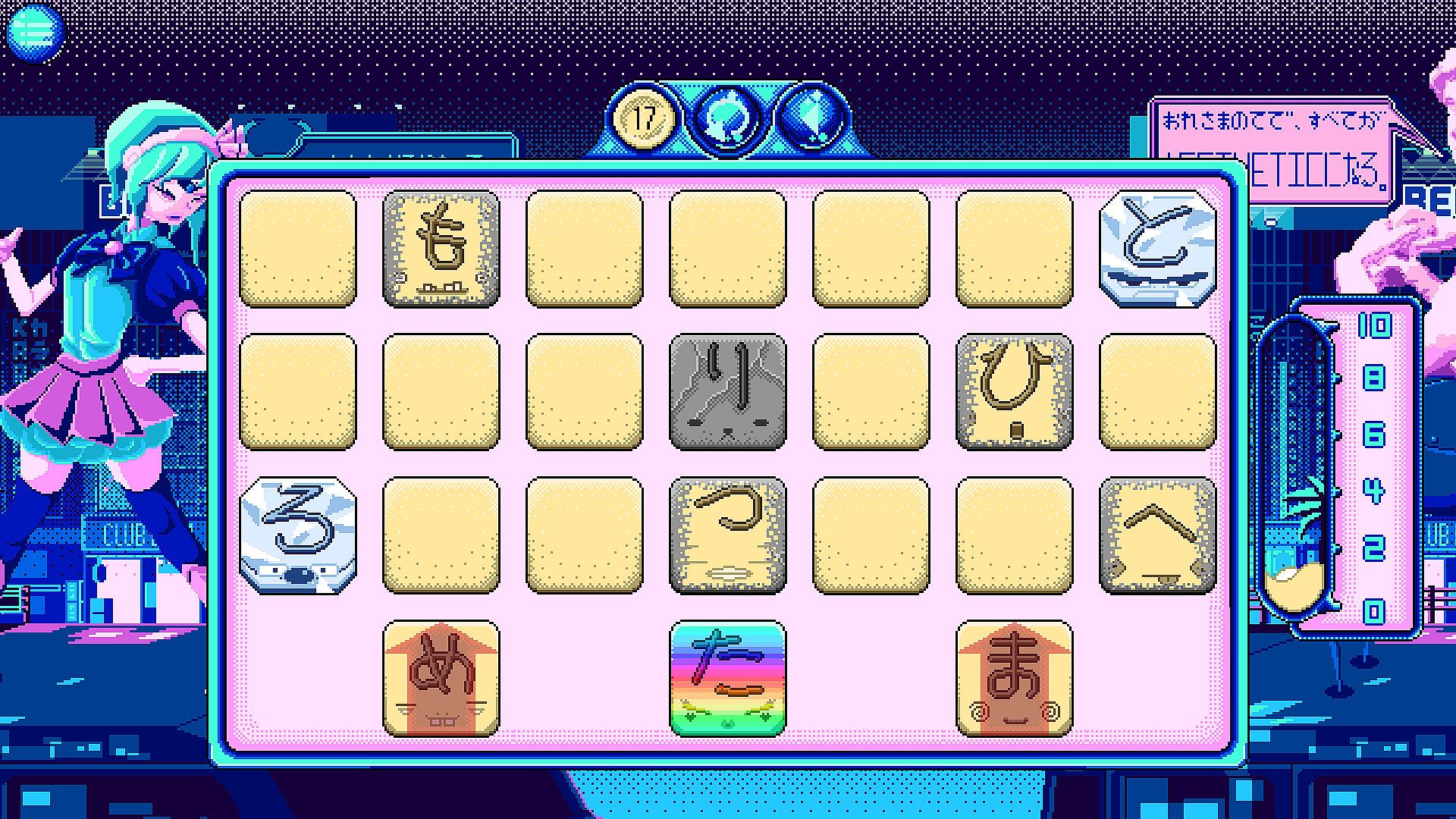
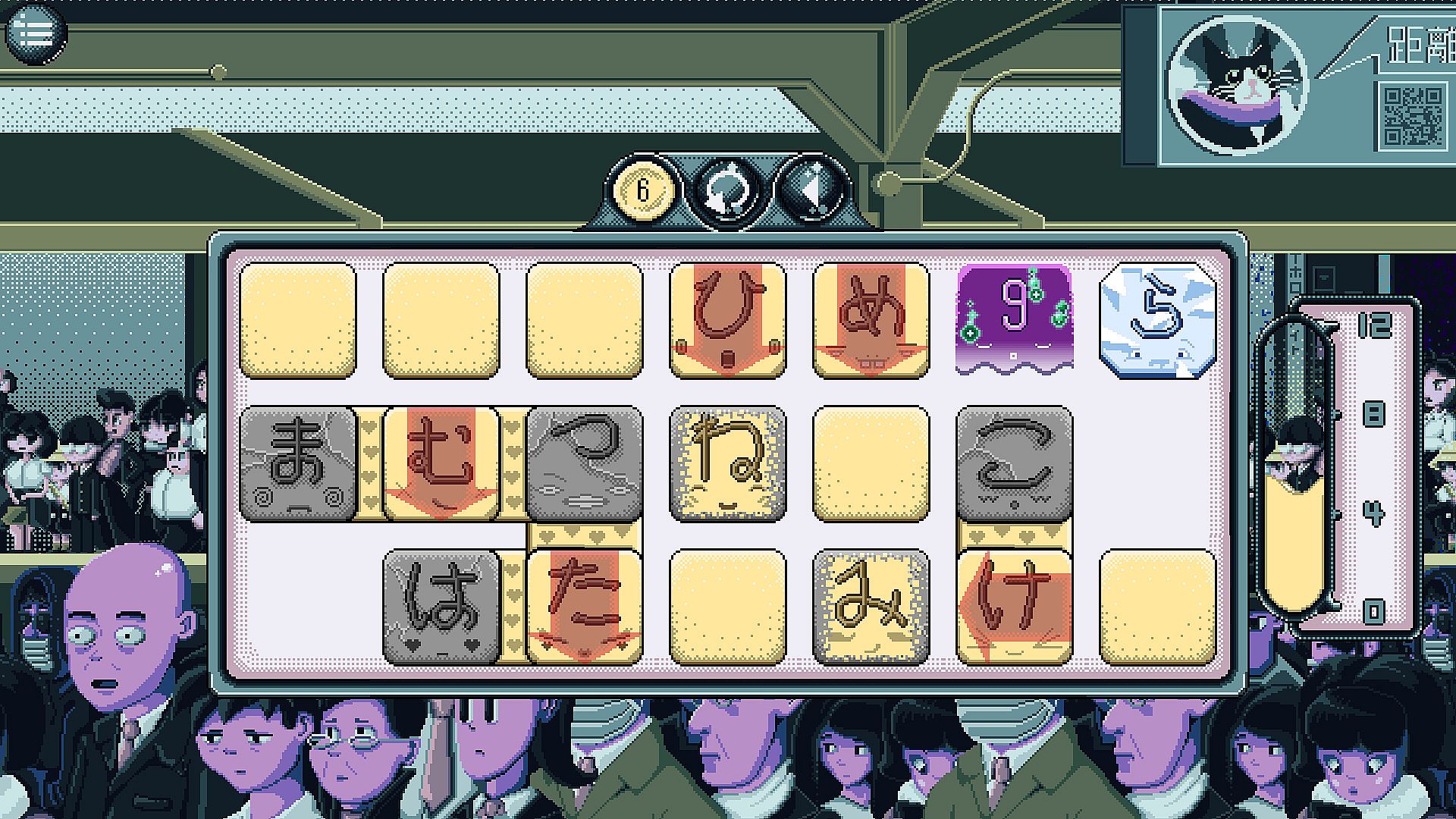
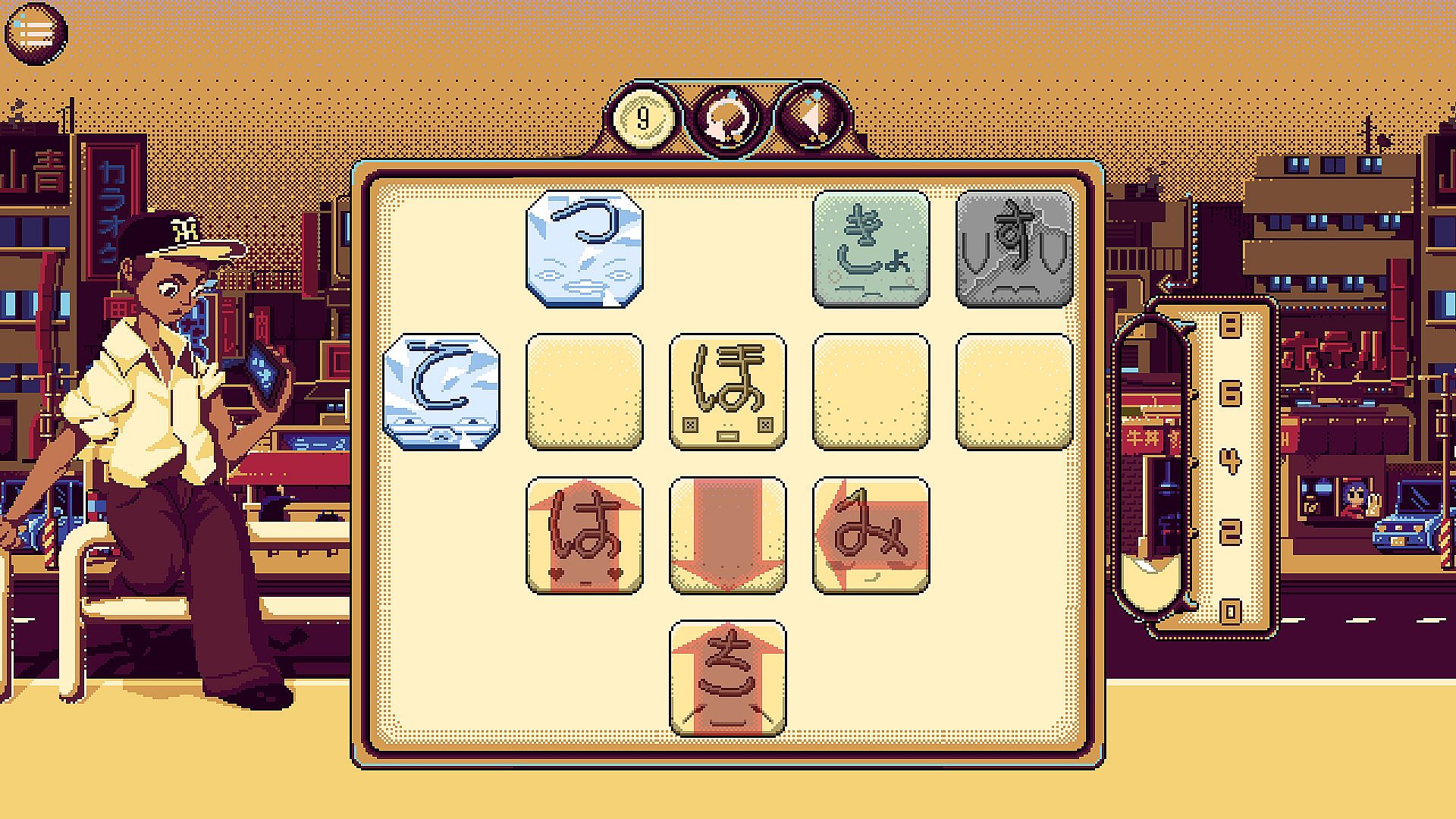
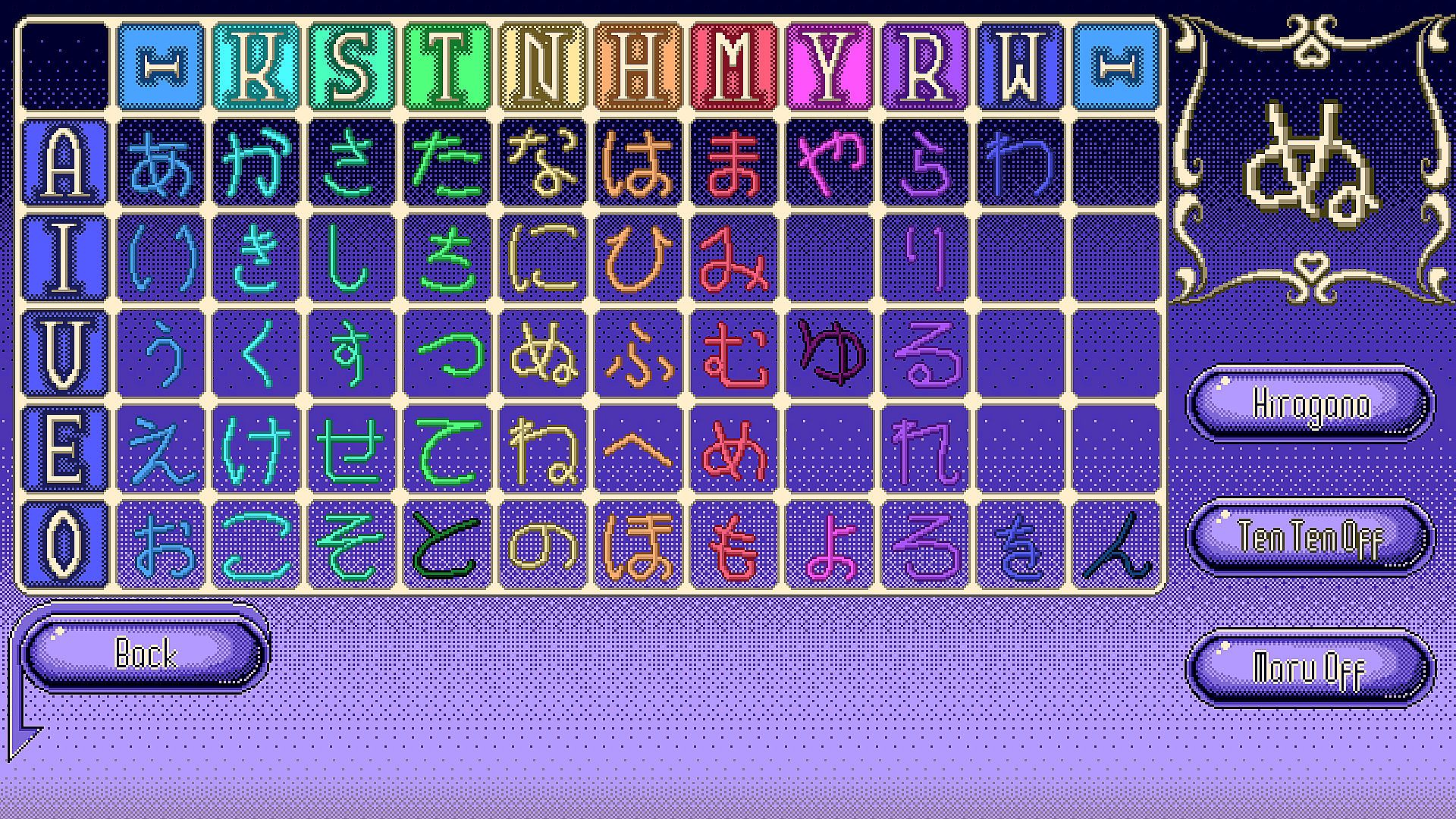
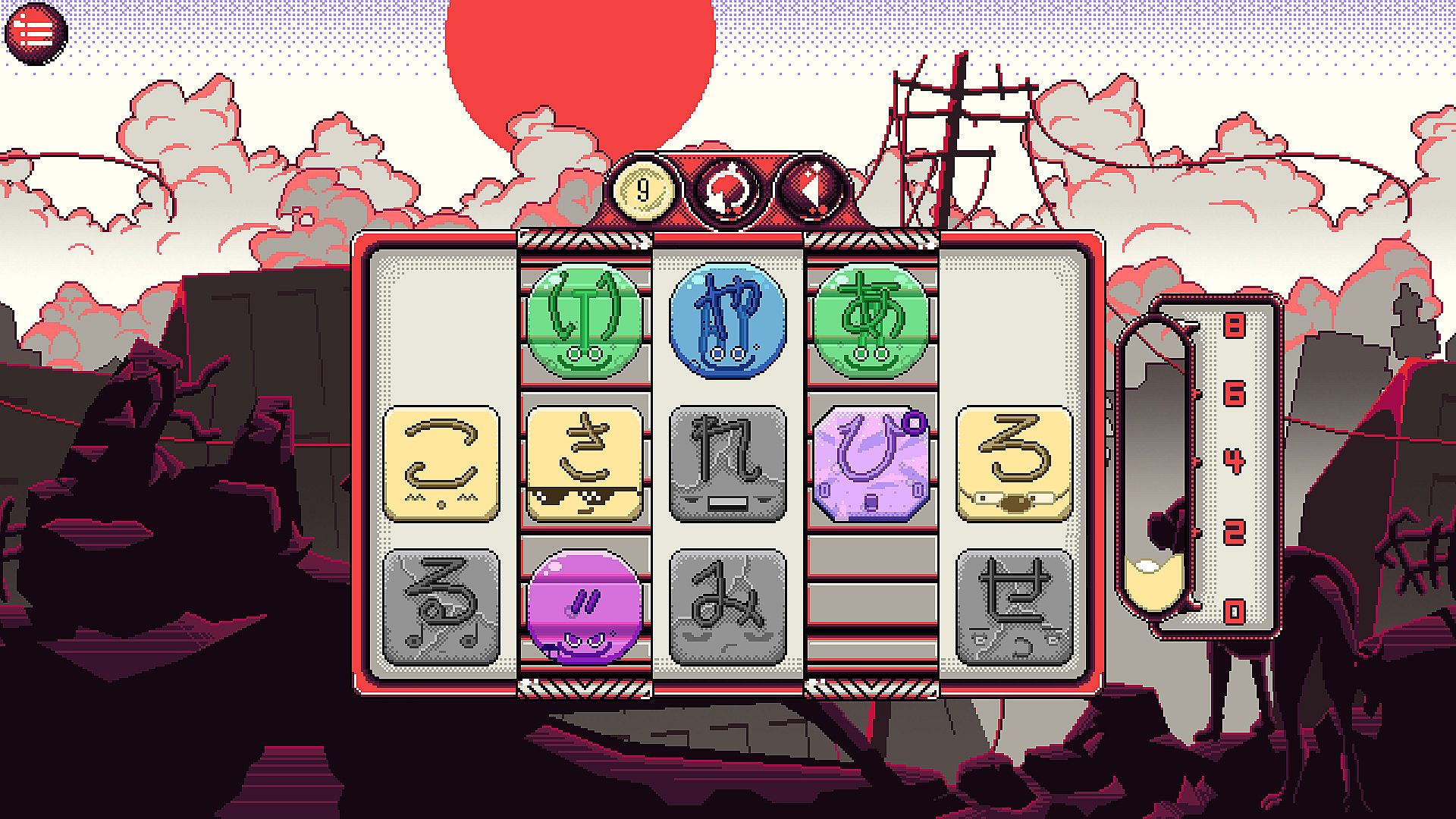
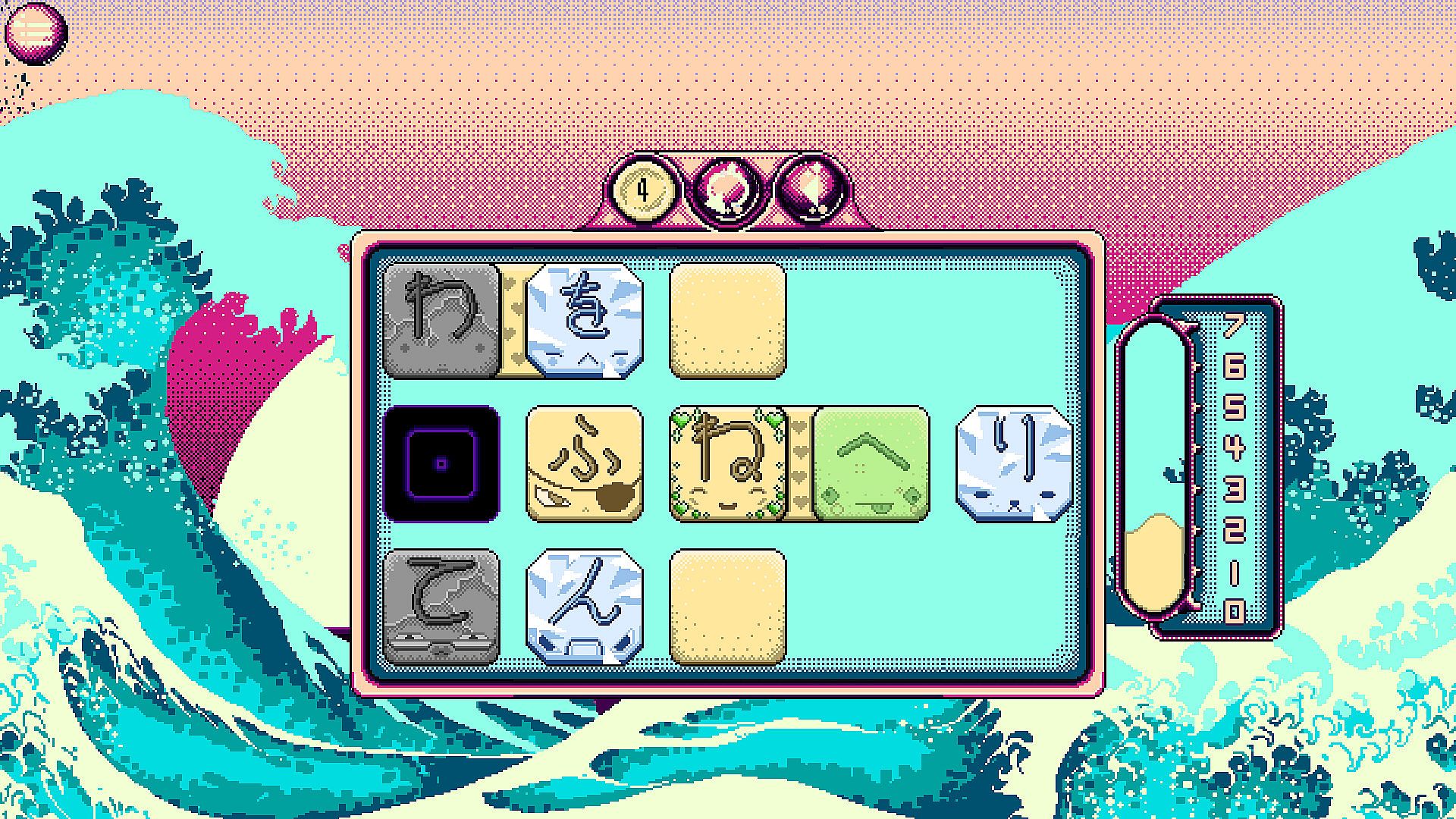
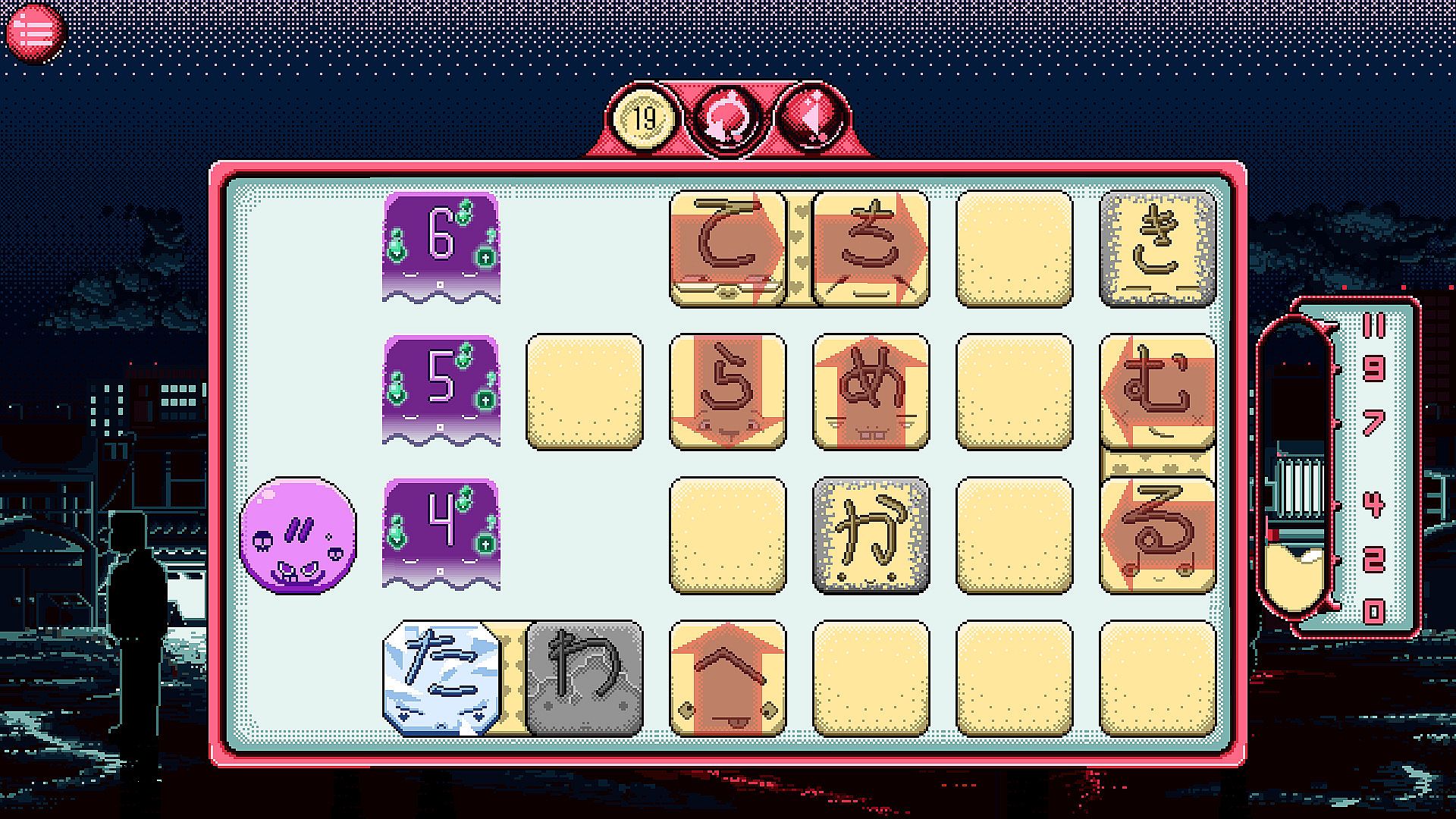
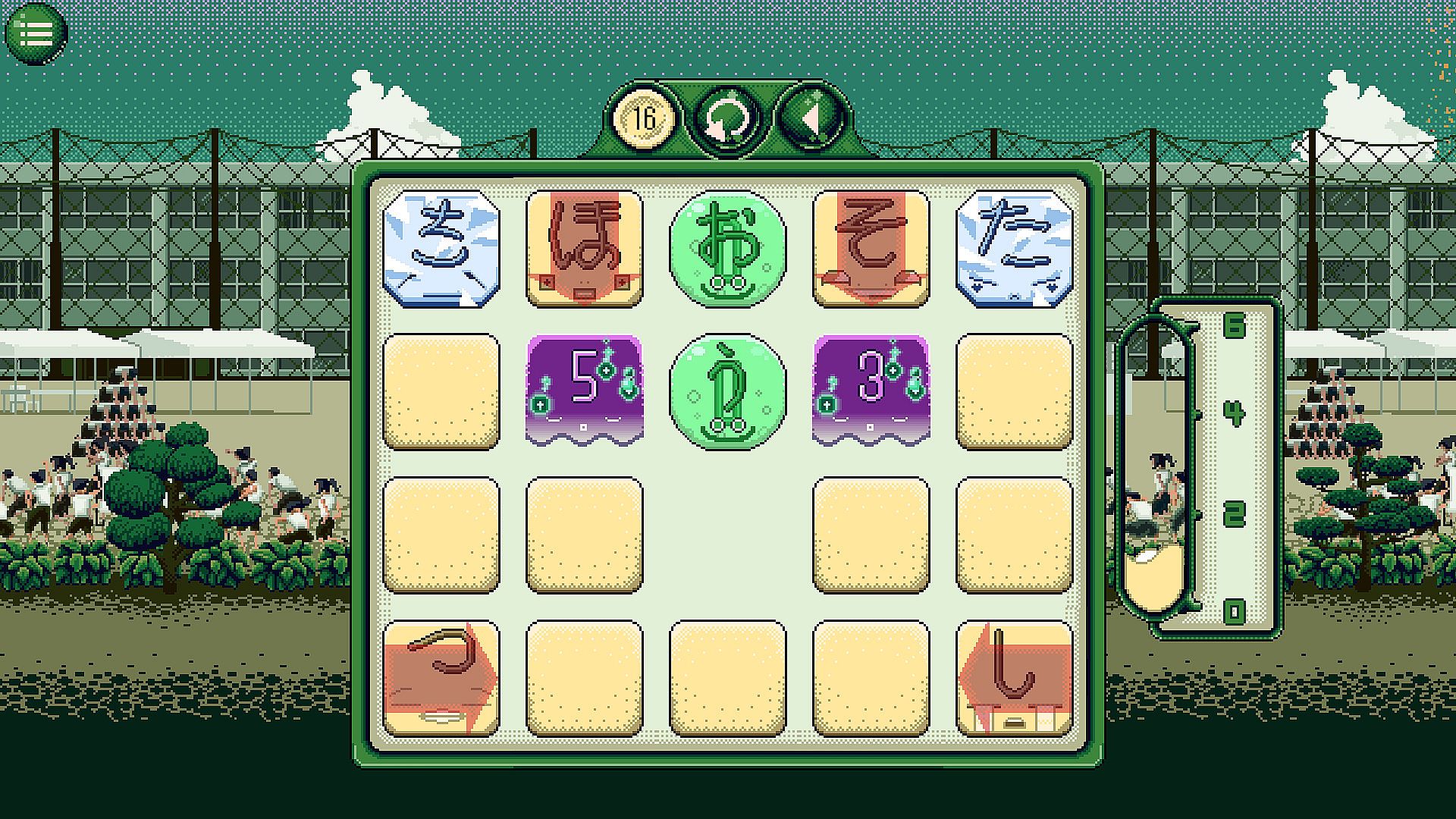
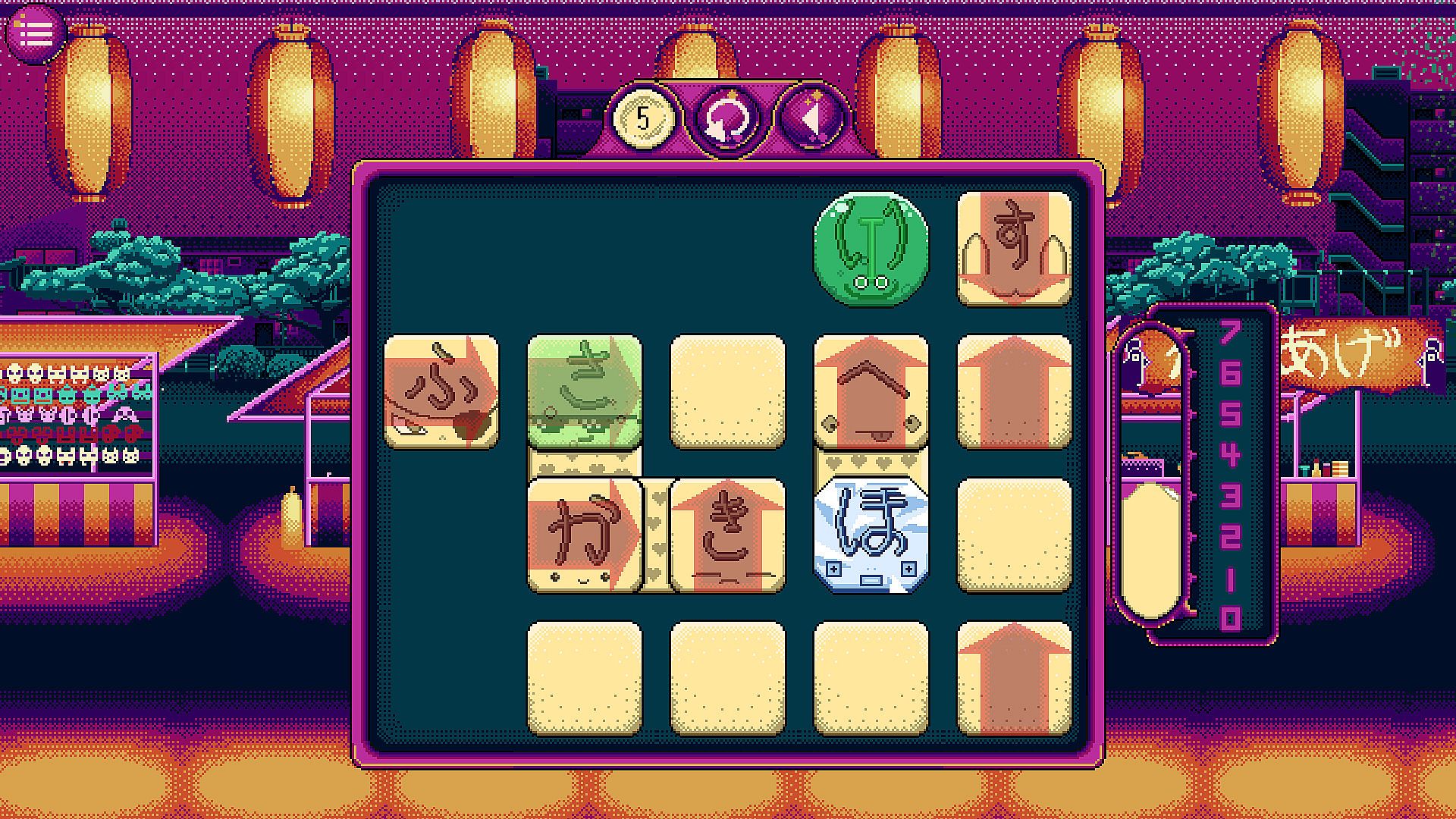
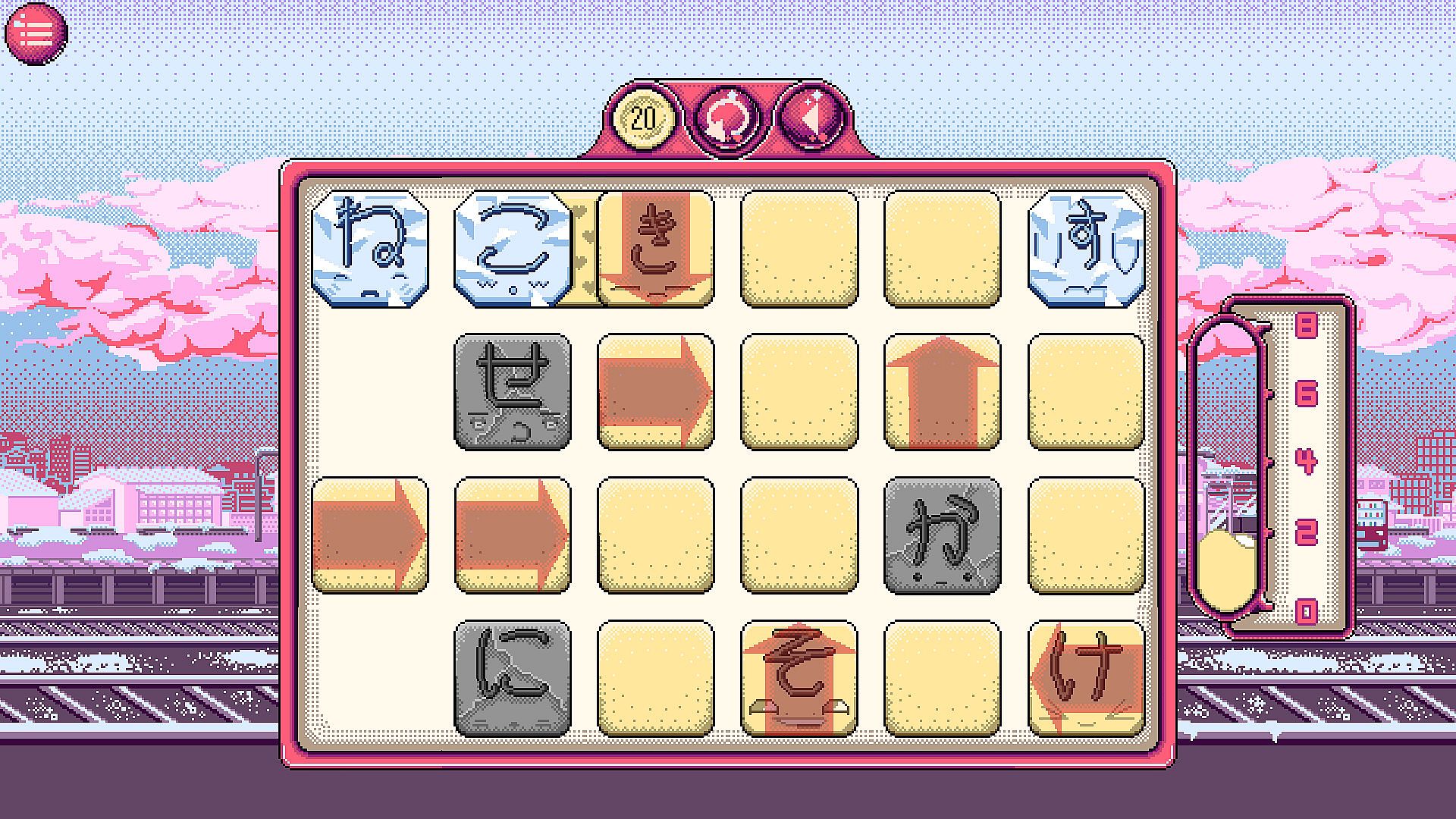
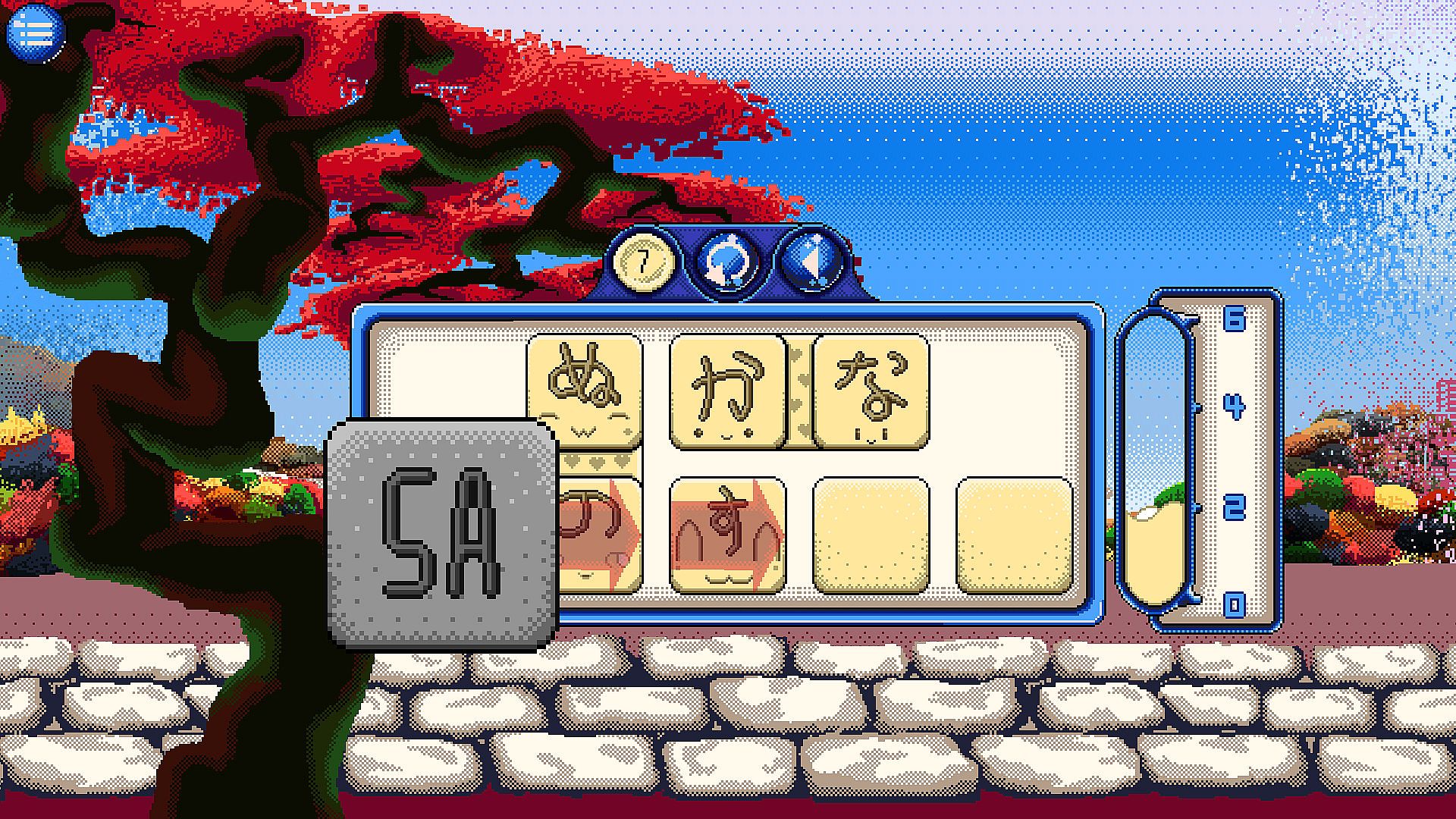
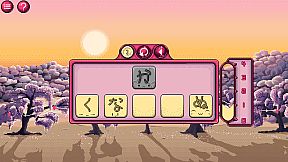
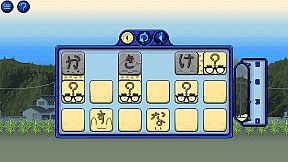
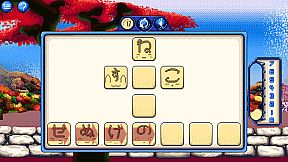
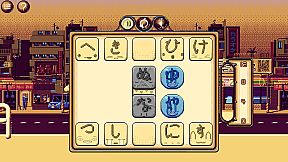
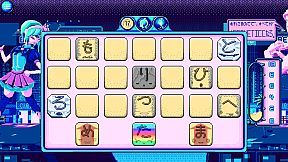
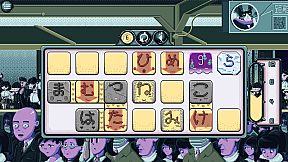
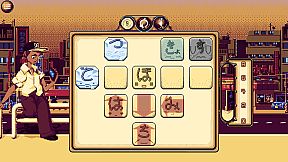
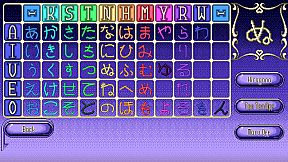
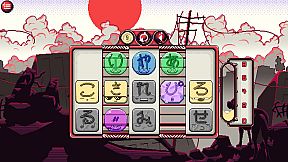
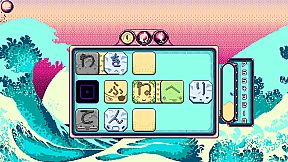
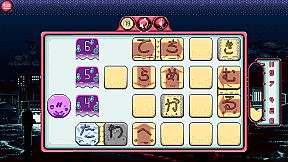
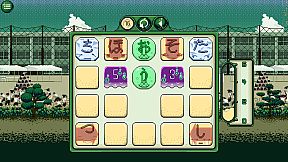
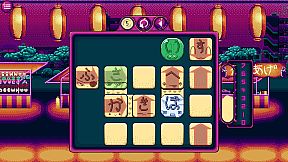
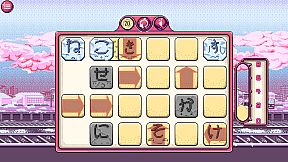
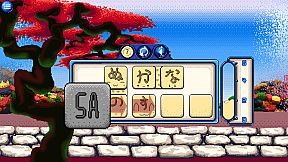
Kana Quest is a strategy indie casual game that combines matching puzzle mechanics with language learning. Players solve grid-based puzzles by pairing Japanese phonetic characters known as Kana that share the same sound. The experience delivers over 300 challenging levels filled with pixel art visuals while building real recognition skills for Hiragana and Katakana without any quiz-style testing.
Gameplay
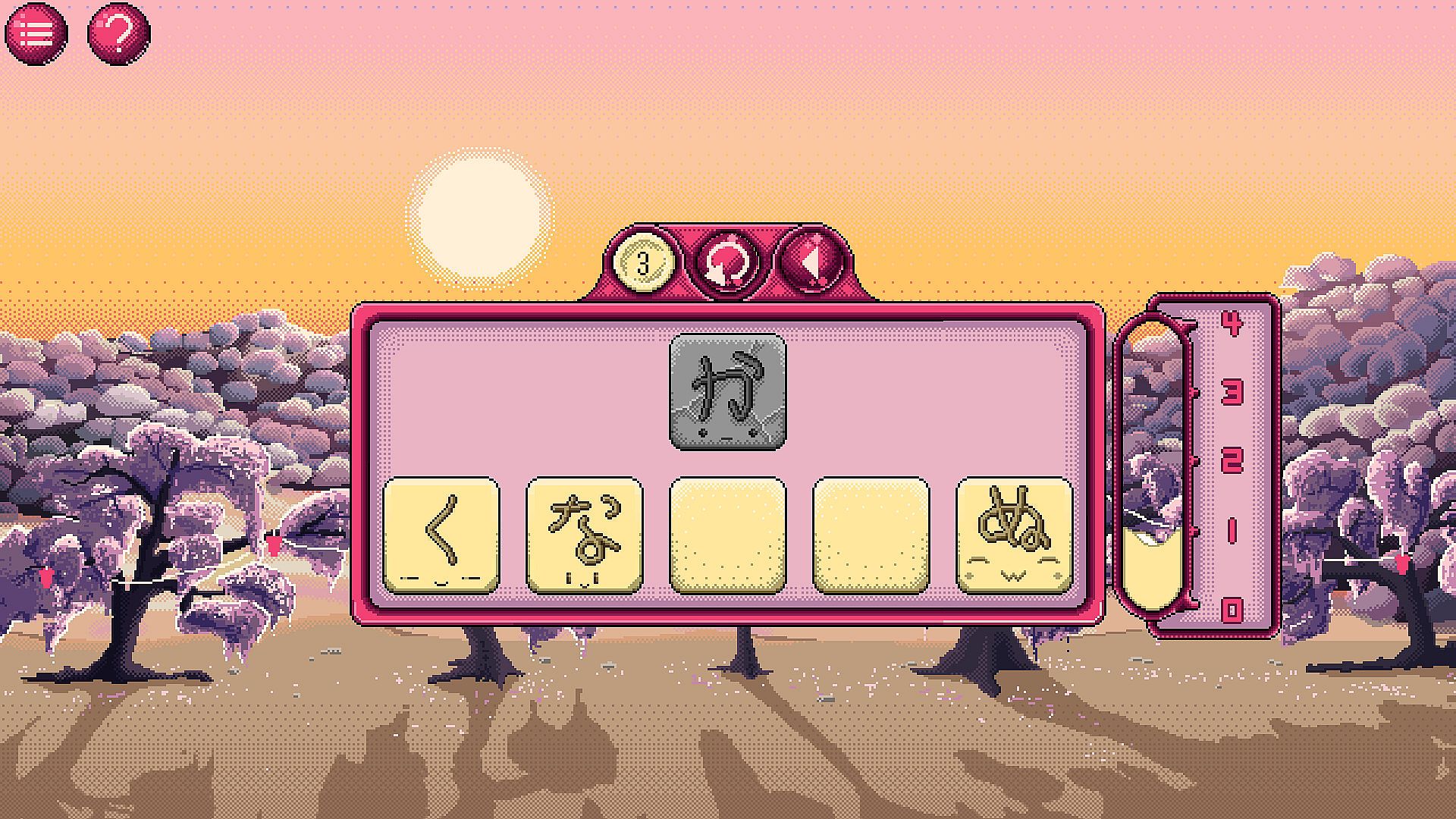
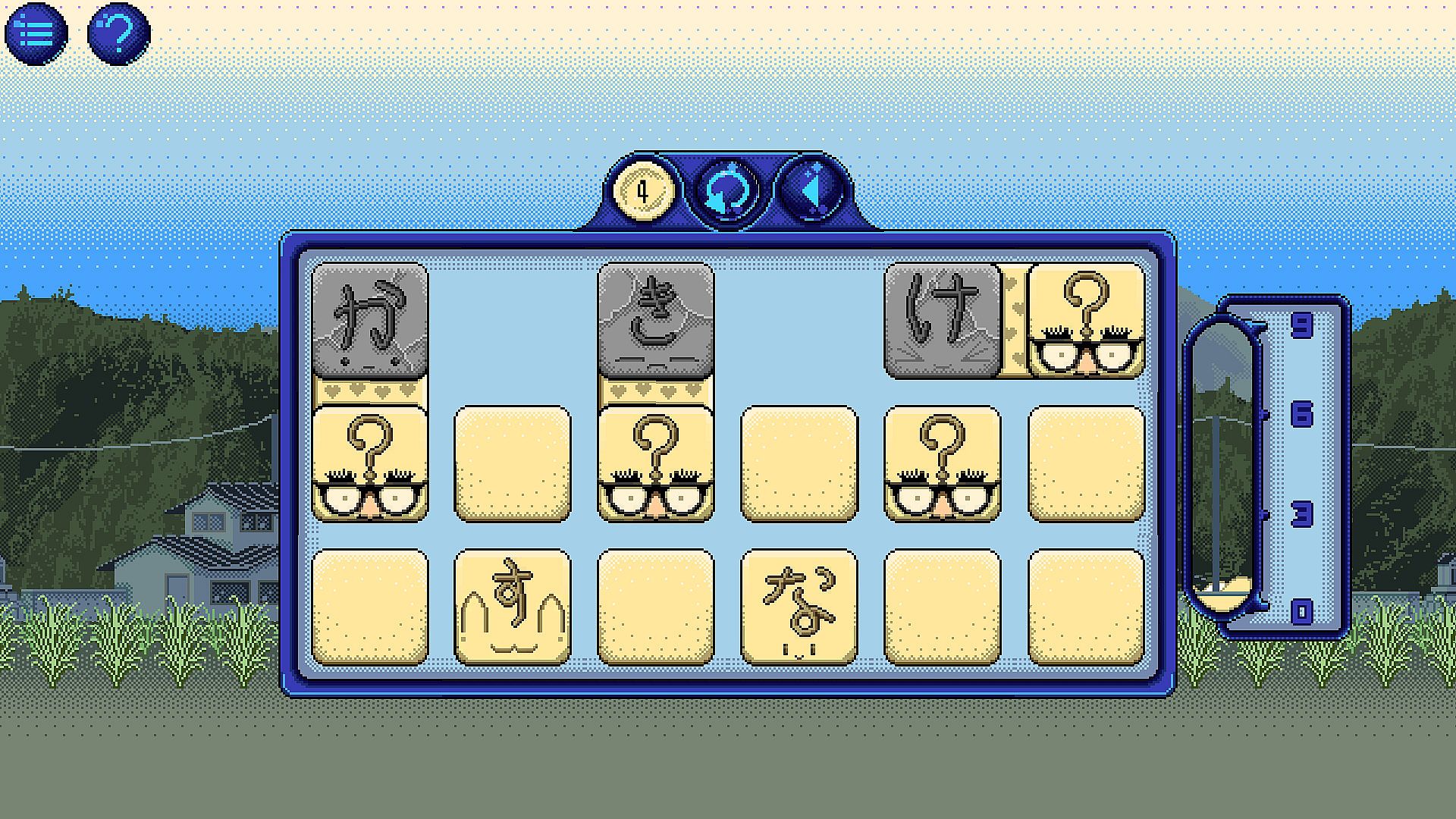
The core loop centers on rearranging tiles in a grid until every Kana connects through matches of identical sounds. Each successful connection clears the path toward completing the level once the entire set links together. This system turns rote memorization into spatial problem solving where players shift pieces around obstacles and limited spaces to form chains.
Levels progress in difficulty by introducing more Kana symbols and tighter grid constraints. Early stages focus on basic Hiragana pairings while later ones mix in Katakana and increase the number of required connections. The pixel art style keeps every screen clean and readable even as boards grow crowded with symbols.
Progression feels steady because each completed level reinforces sound associations through repeated visual matching rather than repetition drills. Players who already know the scripts can still enjoy the puzzles as pure logic challenges since the matching rules remain independent of prior knowledge.
Game Modes
Kana Quest offers a single continuous campaign of puzzle levels divided across multiple themed worlds. All content stays single player with no separate competitive or cooperative options. The structure guides players through sequential stages where each world introduces new symbol combinations and grid layouts.
Within the campaign players can select individual levels to replay for practice or to refine their matching speed. There are no time limits or scoring systems that alter the core matching rules. The focus remains entirely on completing the connection chains across the full set of over 300 puzzles.
Switching between Hiragana and Katakana tracks happens at the player's choice so the same level structure supports learning either script or both. This flexibility keeps the mode list simple while accommodating different starting points for Japanese study.
Visuals and Presentation
Pixel art defines the entire look with bright colors and clear symbol rendering that stays legible on any screen size. Each world features distinct background themes that add variety without cluttering the puzzle grids. Sound design stays minimal and supportive with soft effects that mark successful matches.
The interface stays straightforward with easy drag or swipe controls for rearranging tiles. No complex menus interrupt the flow between levels so players move directly from one puzzle to the next. This clean presentation supports both short sessions and longer play periods focused on steady progress.
Is It Worth Playing?
Kana Quest suits anyone seeking a puzzle game that also teaches Hiragana and Katakana recognition. Beginners gain practical reading skills through consistent matching practice while experienced players receive an engaging logic challenge that does not rely on language knowledge. The absence of pop quizzes keeps the experience relaxing yet effective.
Player feedback highlights the game as an enjoyable alternative to traditional study methods with many noting improved symbol recognition after completing several worlds. The 300 plus levels provide substantial content for the price point and the single player focus means no external requirements or online dependencies.
Those who enjoy spatial matching puzzles or want a low pressure way to start Japanese study will find the campaign satisfying. The game remains available on PC with its original feature set intact since launch so new players receive the complete experience without needing additional content.