
























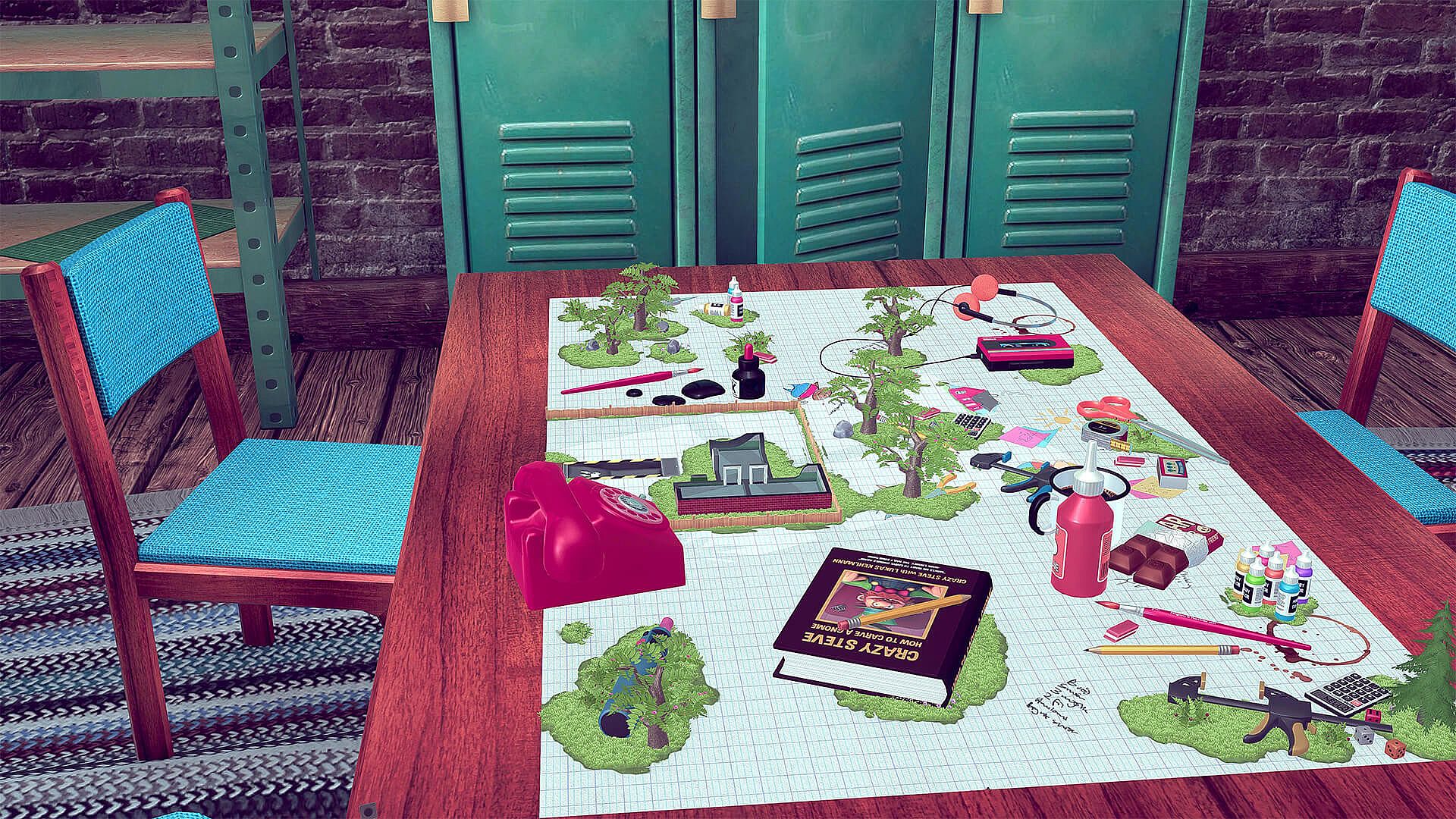
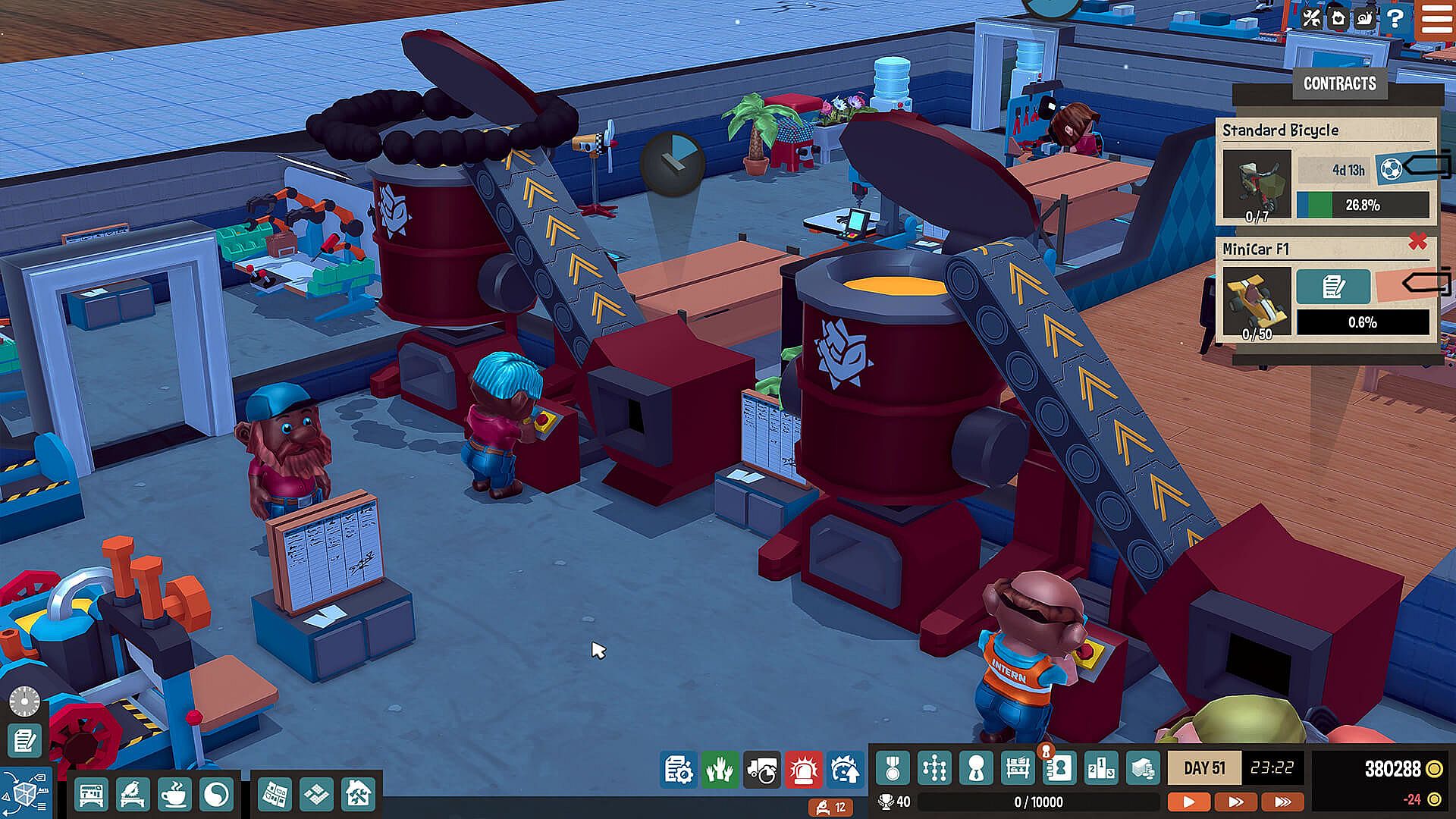
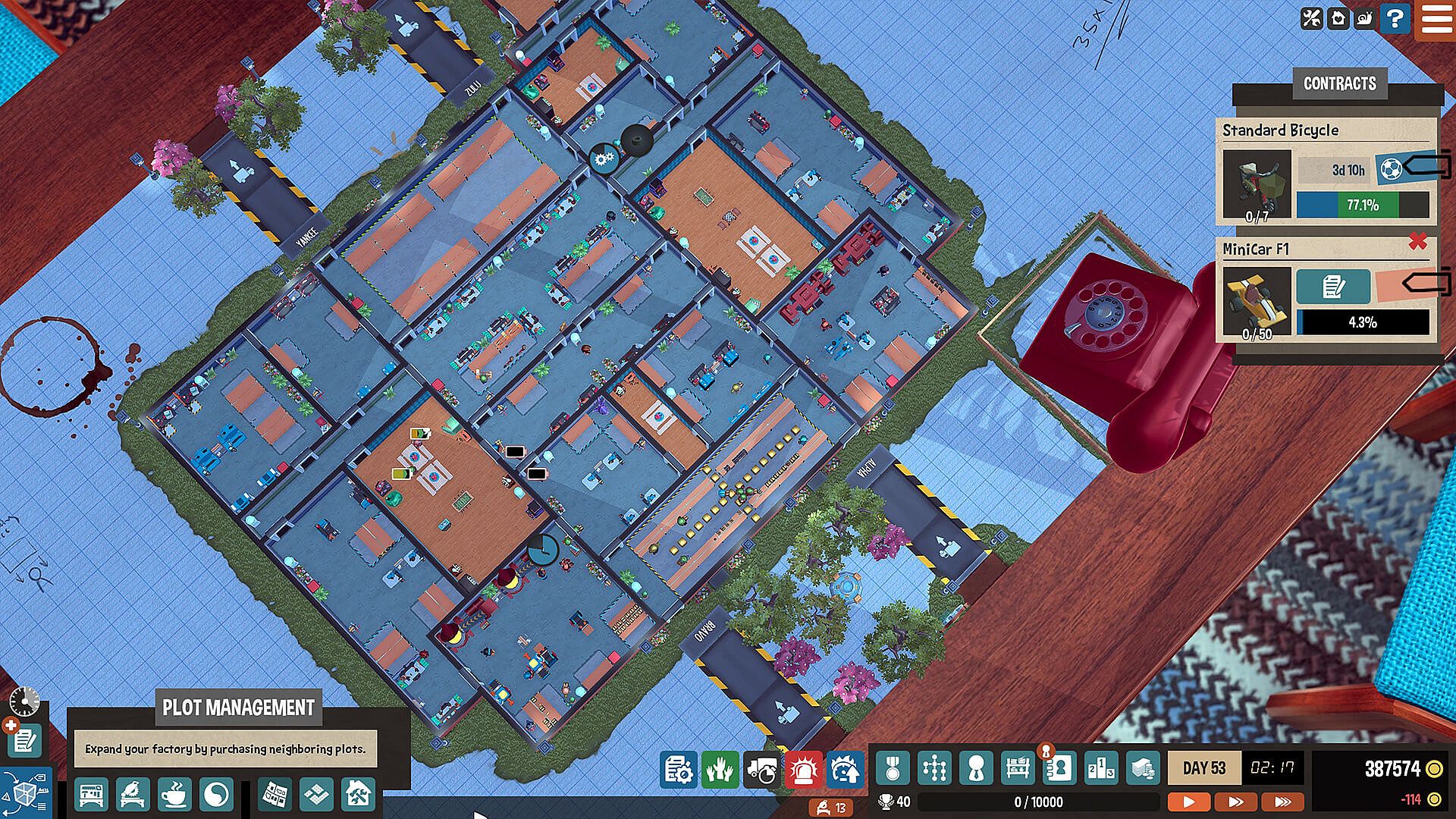
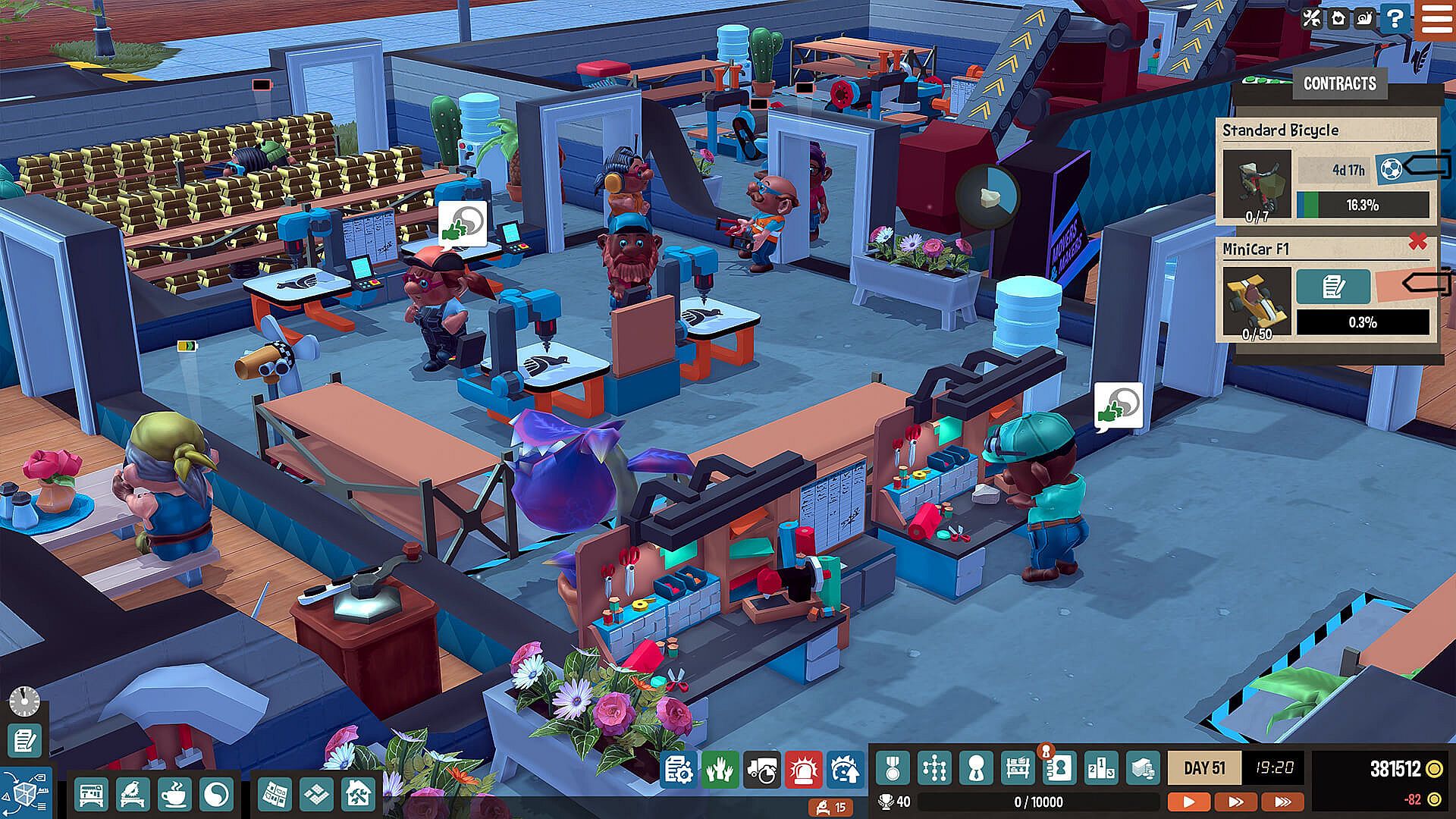
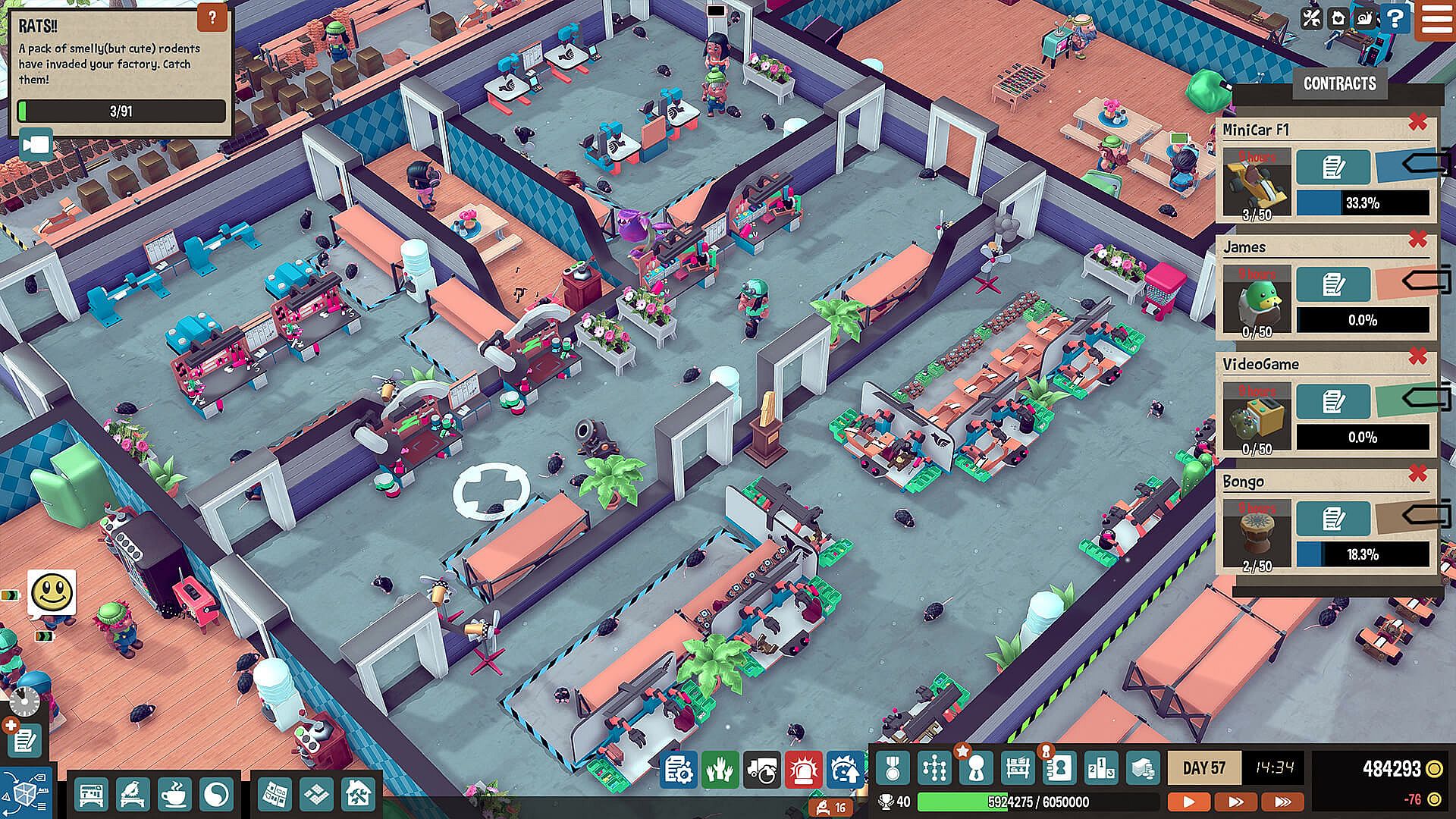
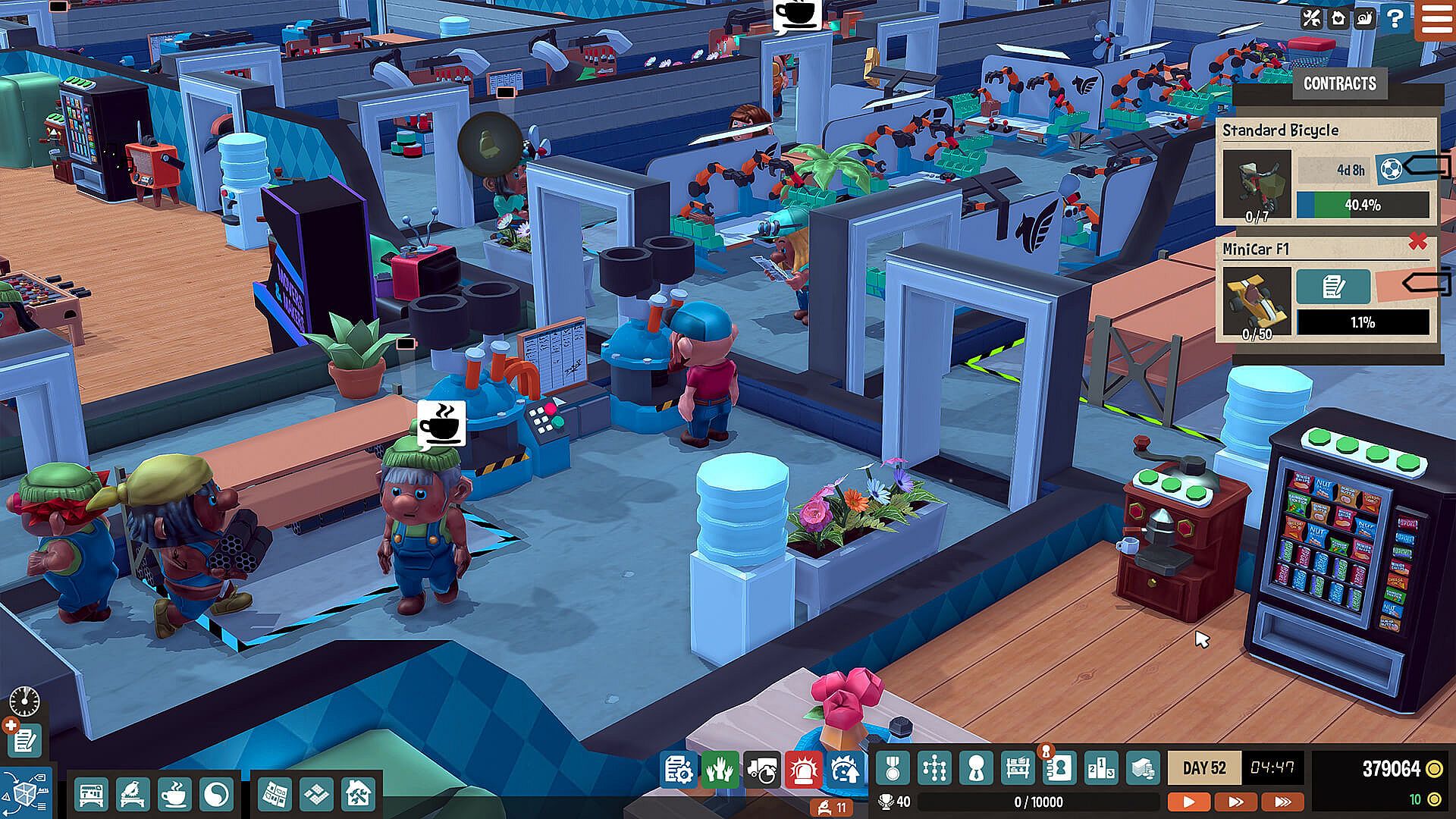
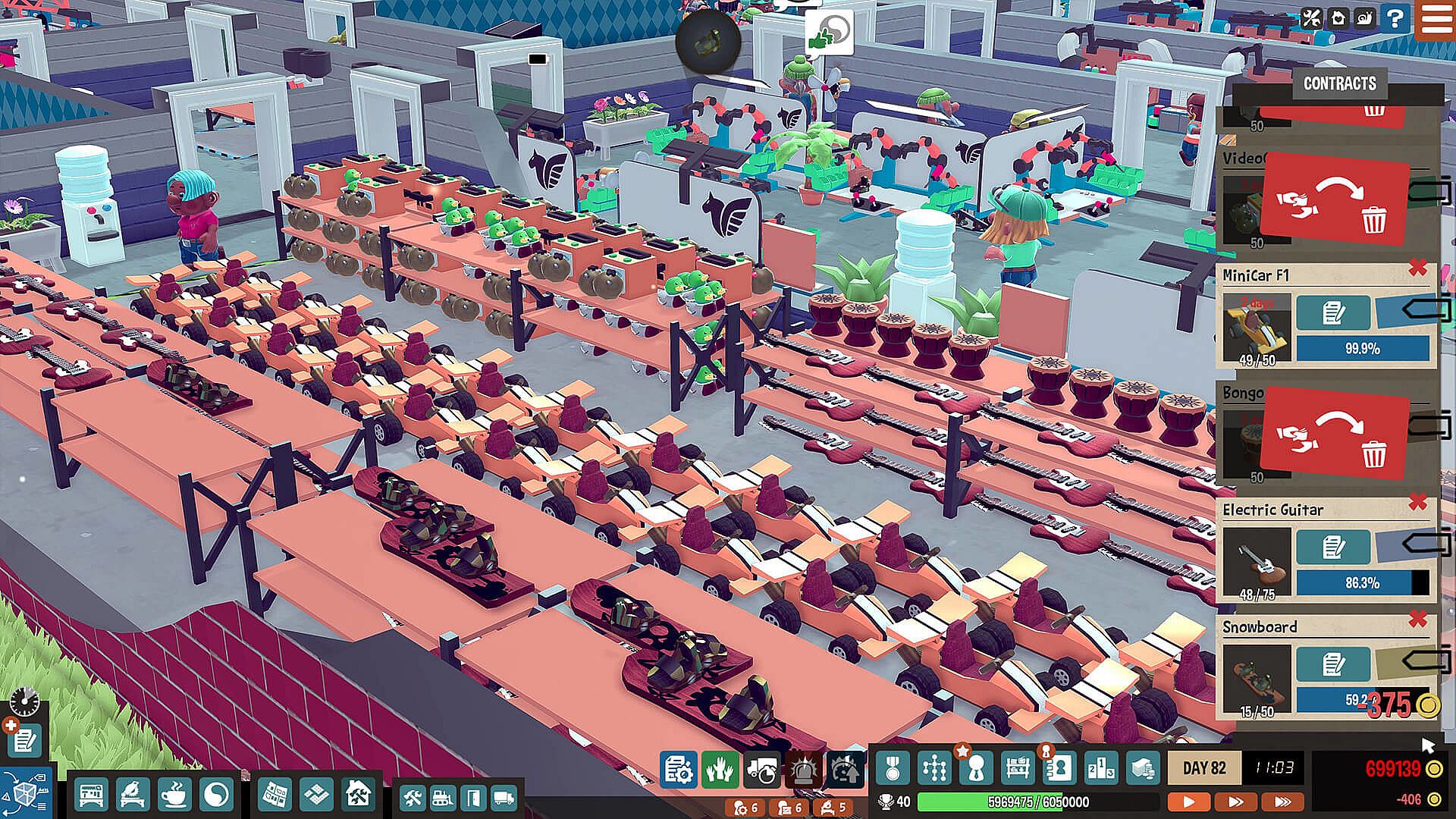
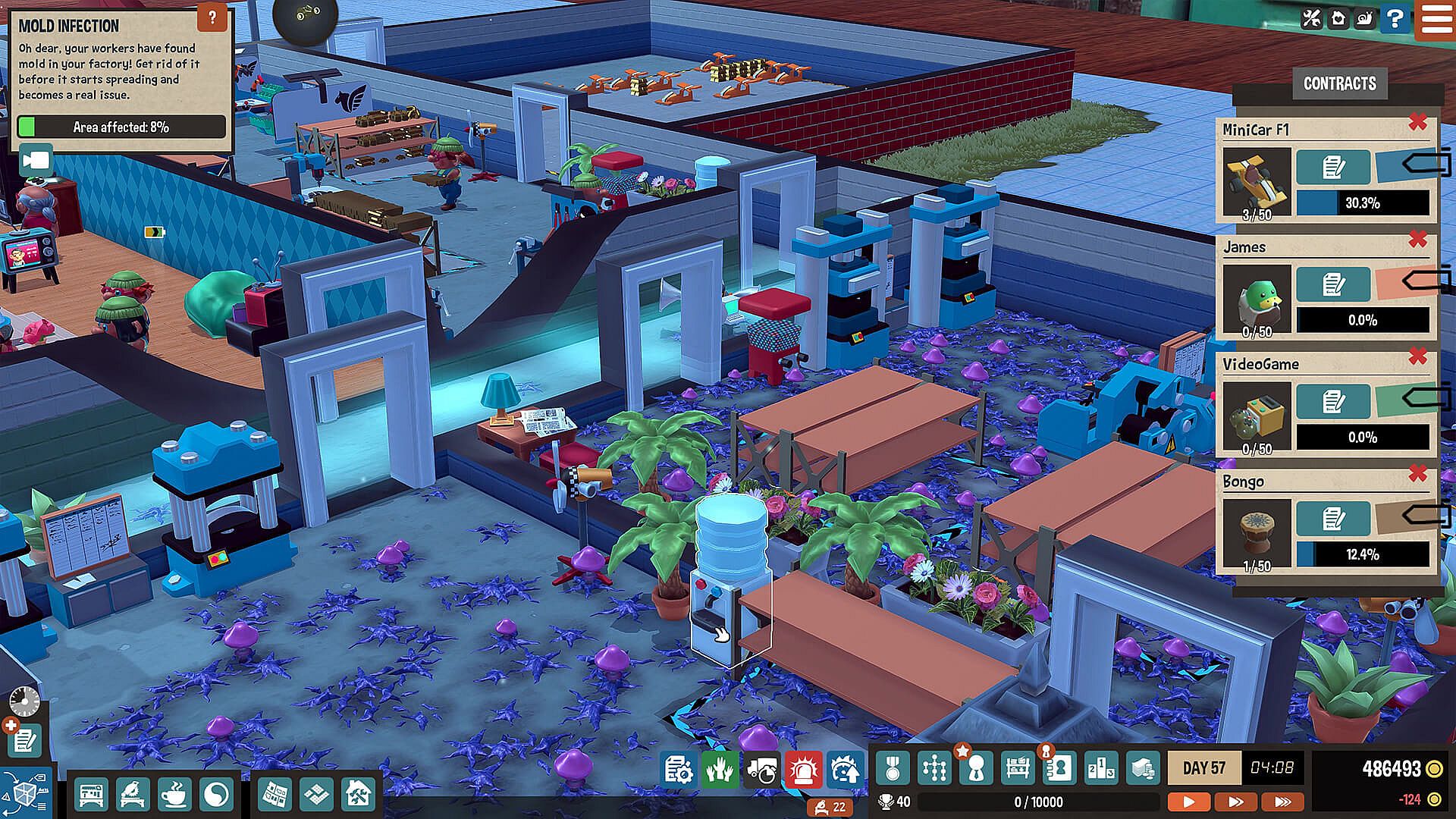
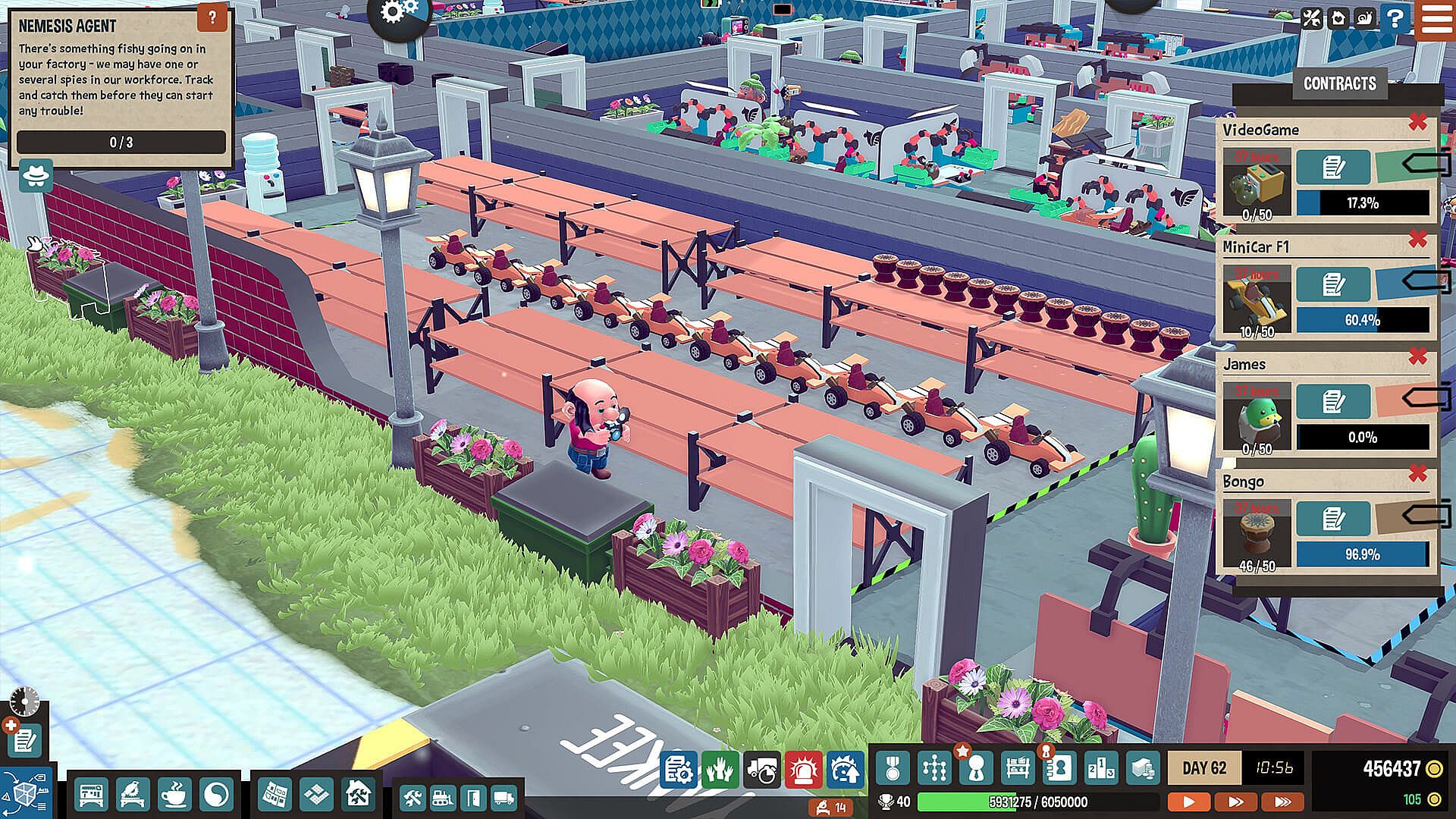
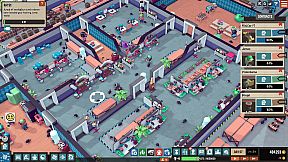
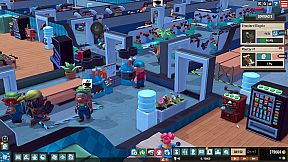
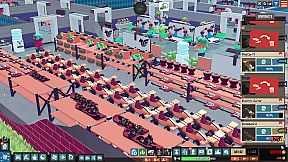
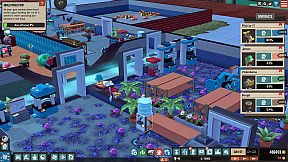
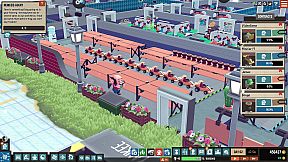
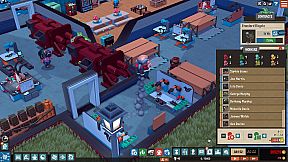
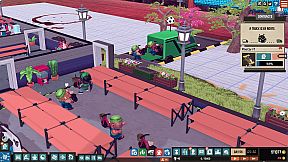
Little Big Workshop is a strategy simulation game on PC in which players design and run a compact tabletop factory. The core loop centers on arranging workstations, hiring and directing workers, acquiring equipment, and routing materials through production steps to fulfill orders for dozens of different goods.
Gameplay
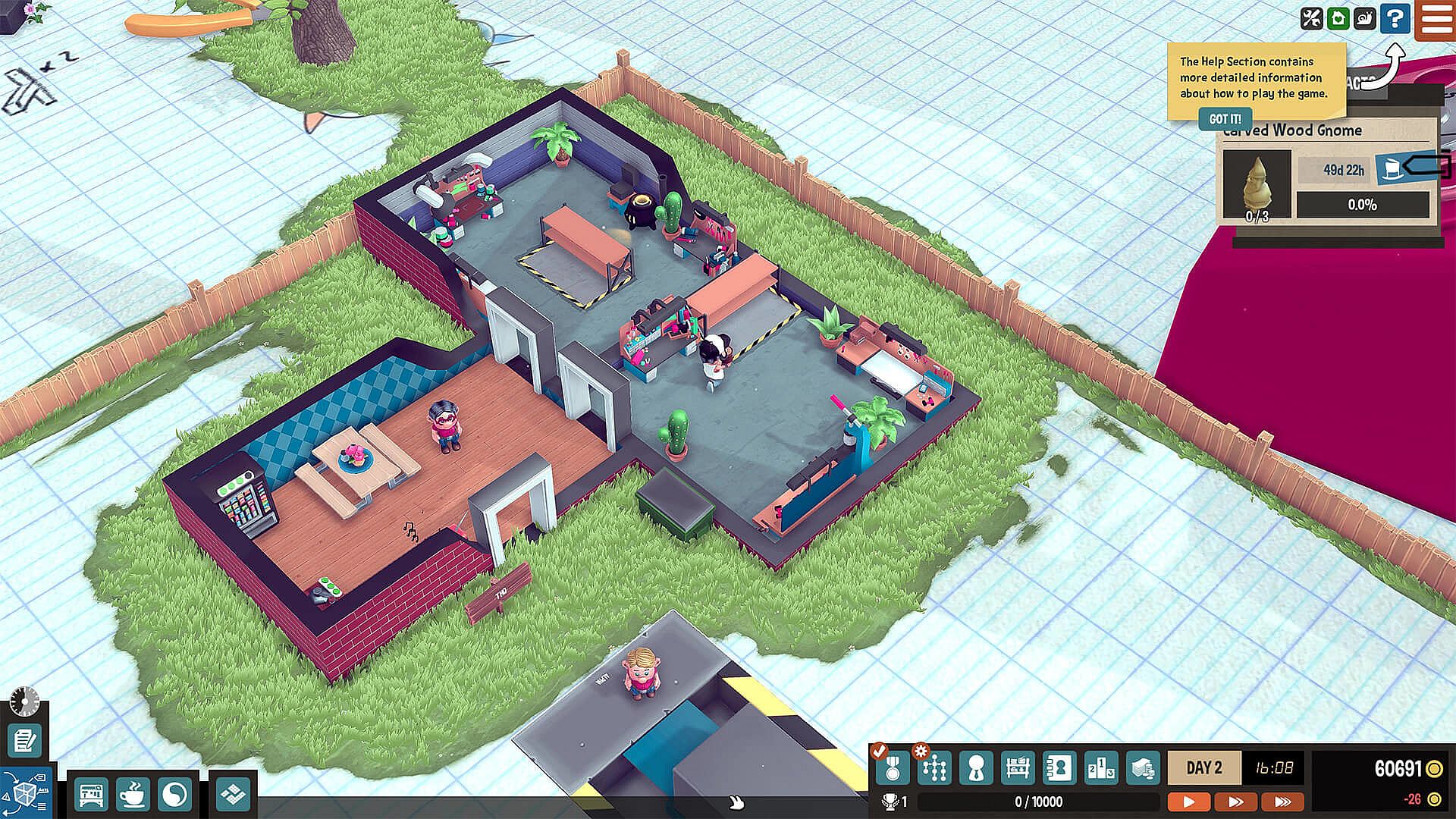
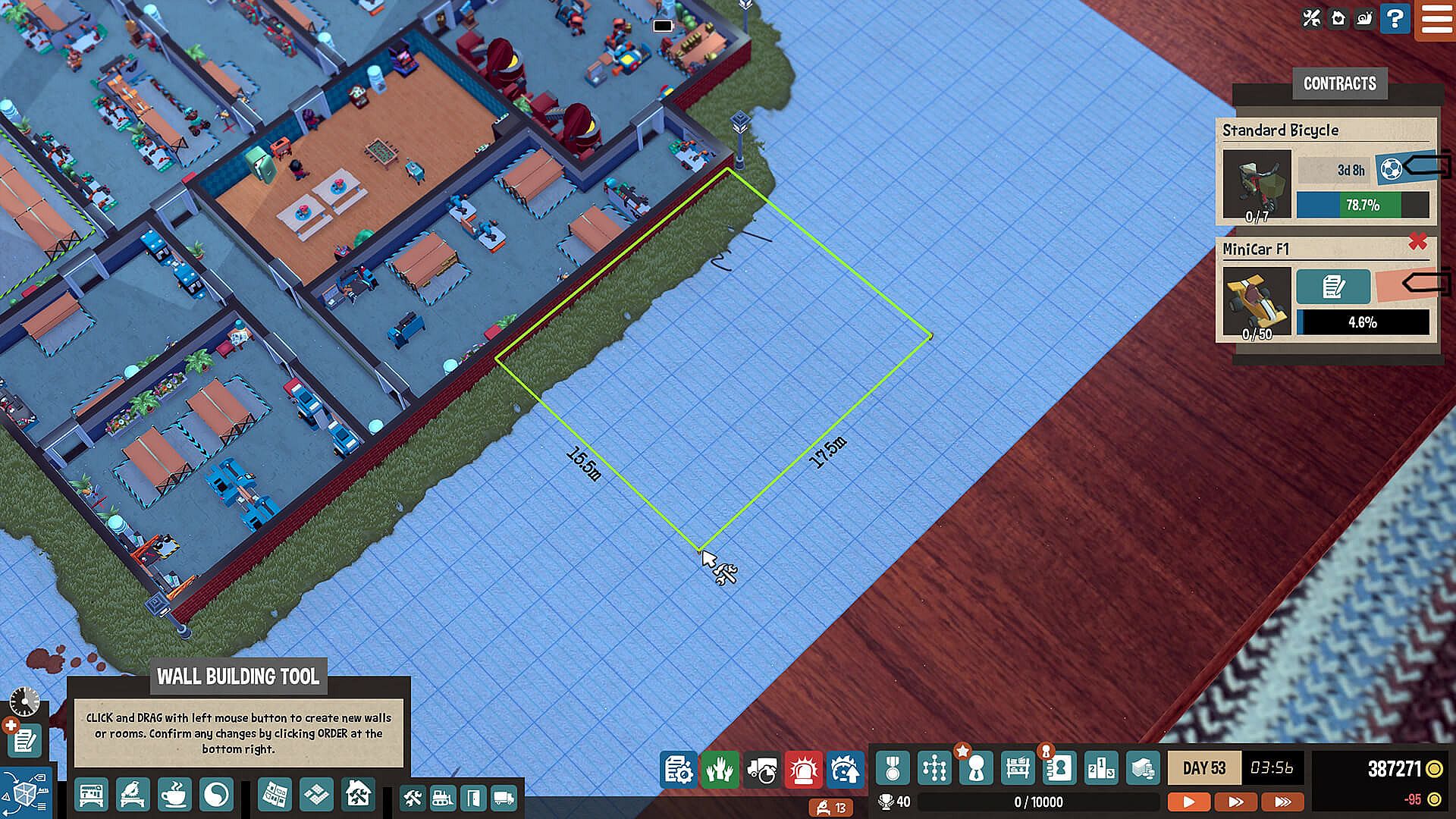
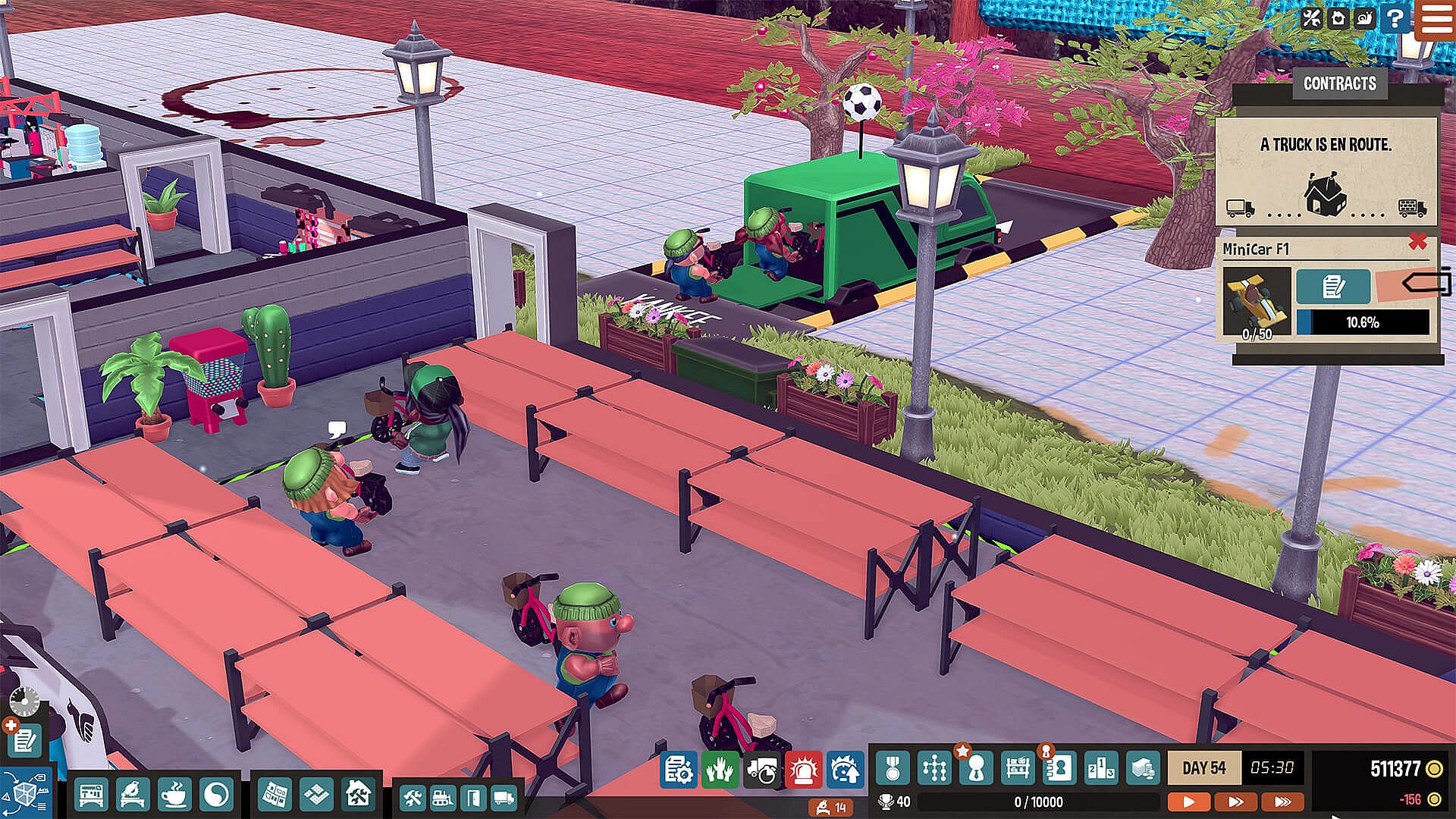
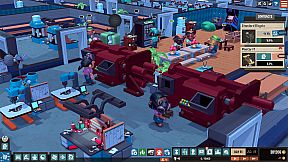
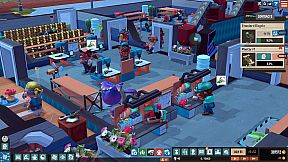
Players begin with a limited workspace and gradually expand the available floor area by unlocking additional desk space. Materials arrive in the factory, and workers carry them between stations to assemble components into finished items such as rubber ducks, dressers, drones, electric guitars, and scooters. Each product can be made from alternative materials or through different sequences of machines, encouraging experimentation with layouts.
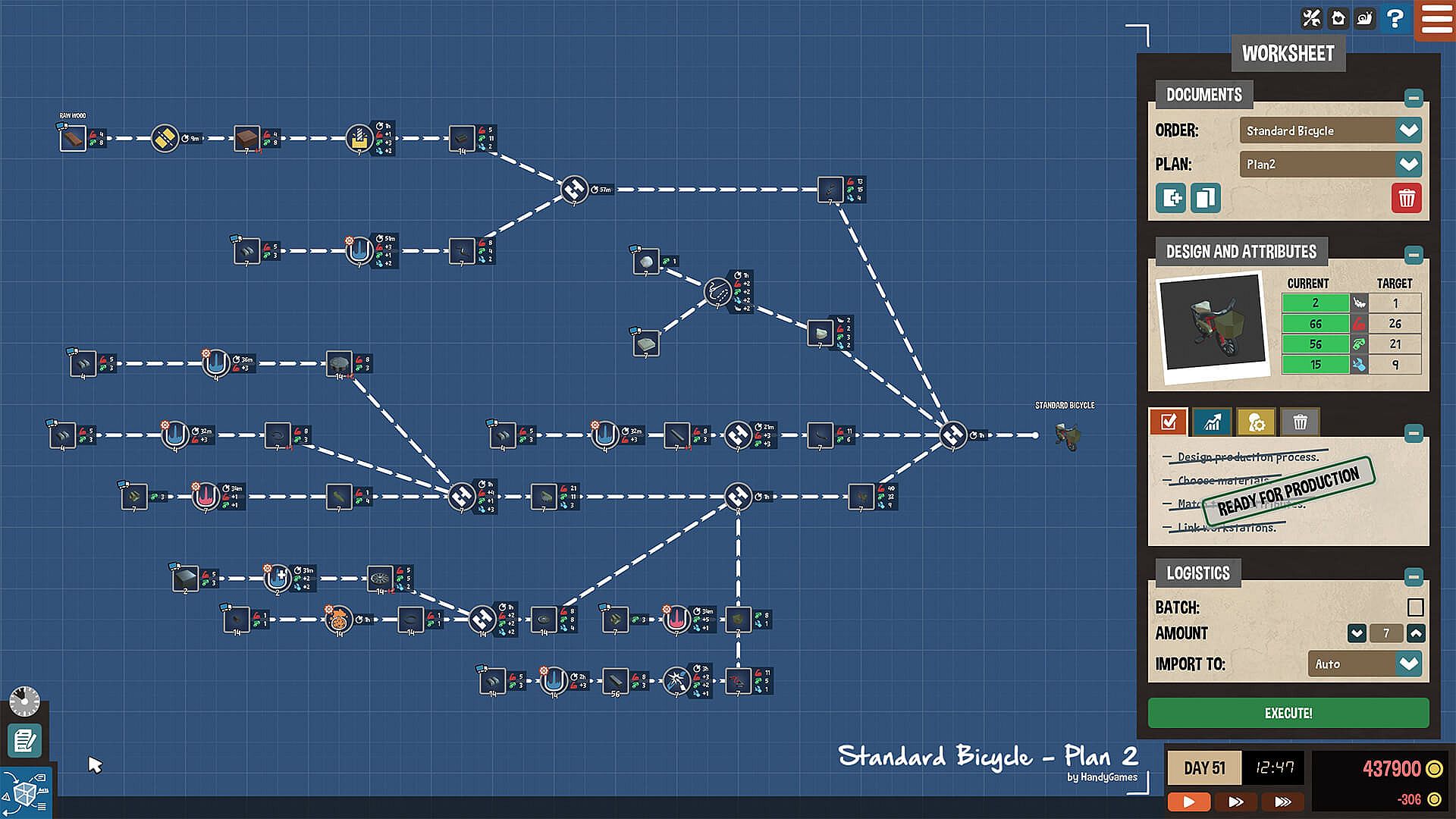
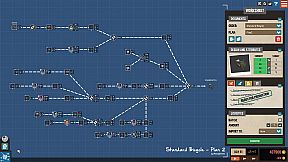
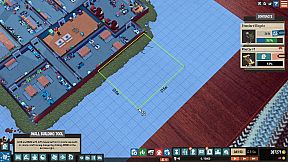
Production lines must be planned on a blueprint view before implementation. Time limits apply to each client order, so efficient placement of conveyors, machines, and storage becomes essential. A day and night cycle affects worker behavior and lighting, while overworking staff leads to fatigue and reduced output. The game emphasizes practical spatial puzzles over complex financial modeling or supply-chain logistics.
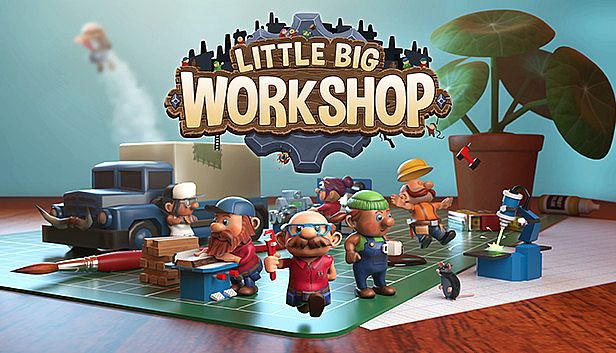
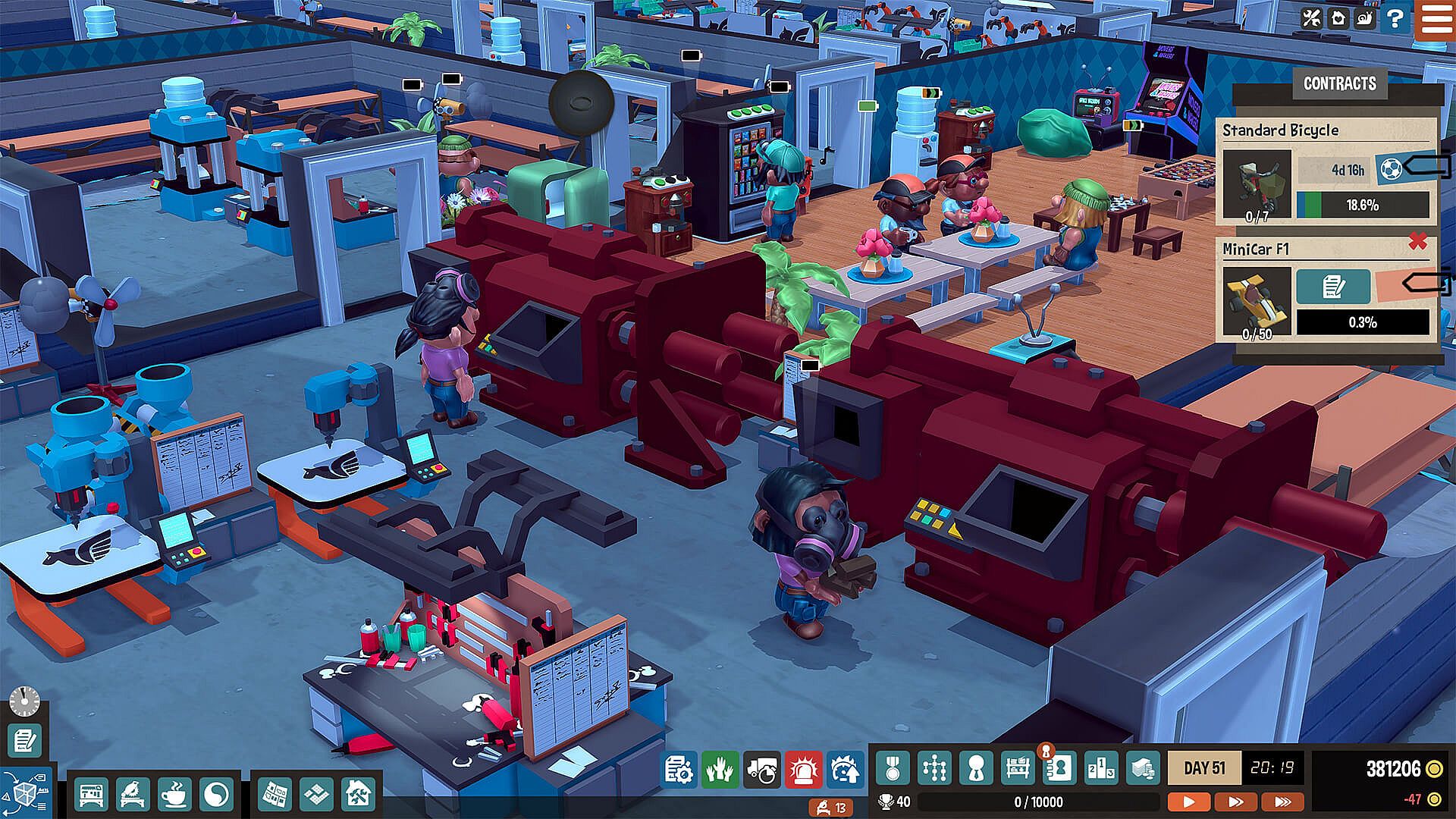
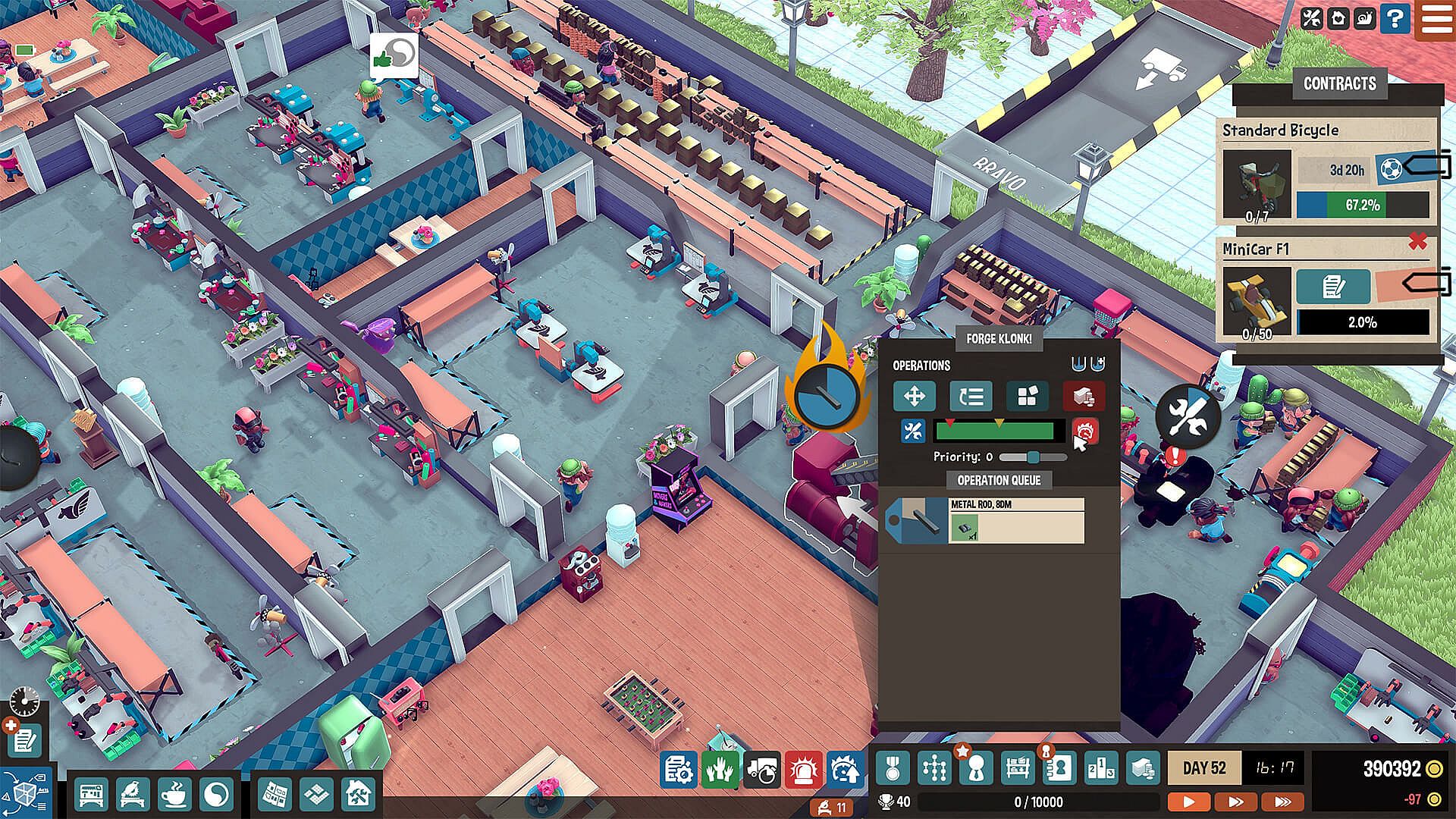
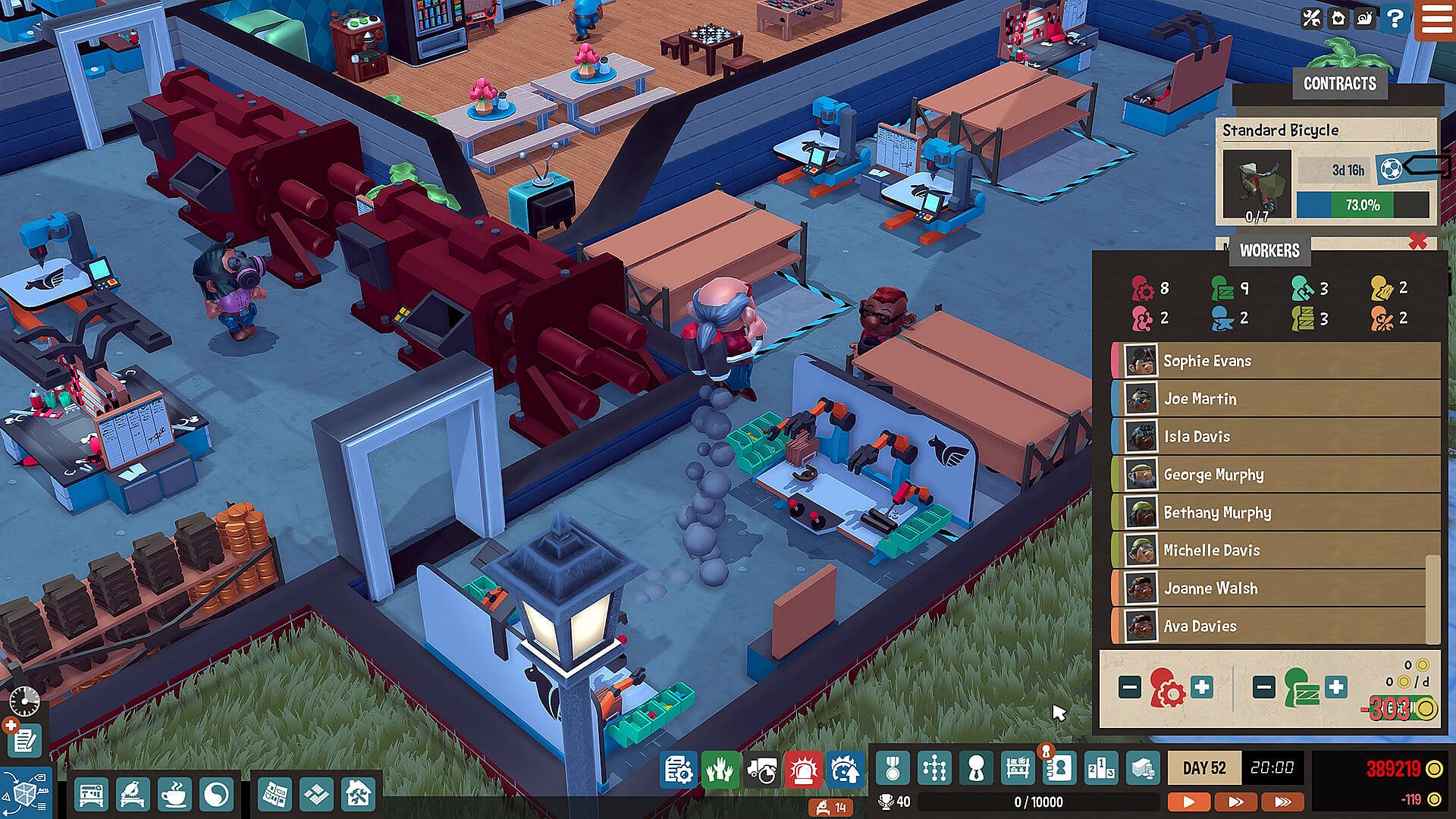
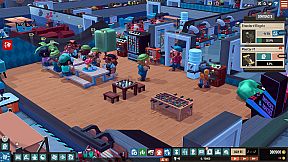
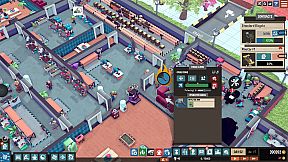
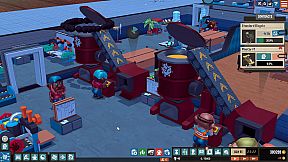
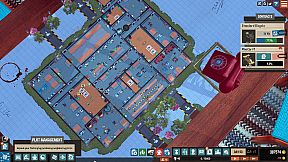
Expansion brings access to more advanced machinery and additional production methods. Factories evolve from small single-line setups into multi-line operations capable of handling hundreds of items daily. The cute model-town art style keeps the industrial theme light and approachable while still showing clear visual feedback on machine status and worker movement.
Game Modes
The experience is built as a single-player open-ended sandbox. There are no separate competitive or story-driven modes. Instead, progress comes from accepting contracts from a changing roster of clients and responding to shifting market demands. Each new order requires adapting existing lines or building fresh ones to meet specific quantity and quality targets.
Players set their own pace within the sandbox constraints. Some focus on optimizing a single product line for maximum throughput, while others diversify across many product types to keep multiple clients satisfied simultaneously. The absence of rigid objectives beyond client satisfaction allows repeated playthroughs to produce noticeably different factory layouts.
Factory Management and Growth
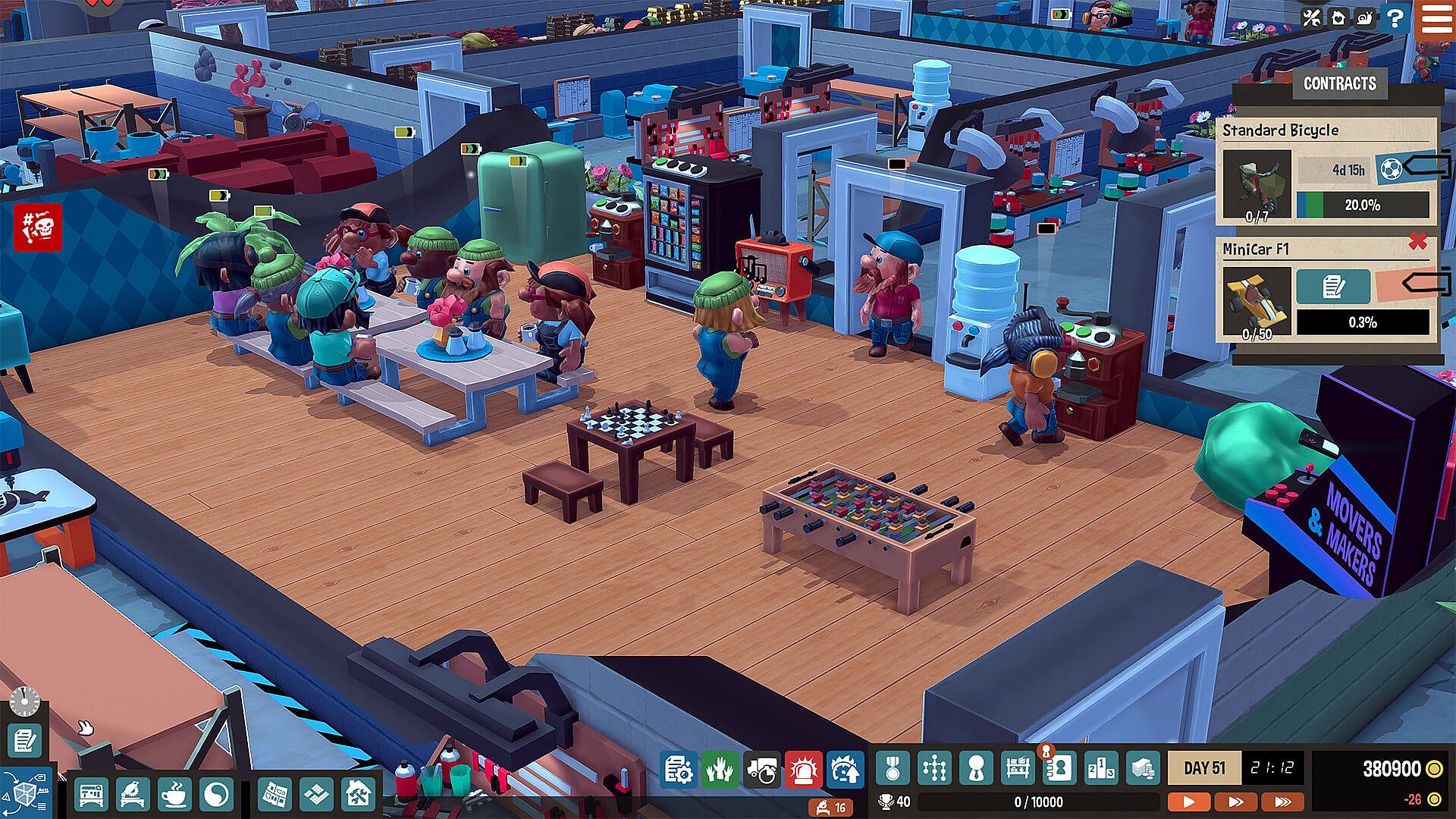
Worker management forms a key layer of decision-making. Staff must be assigned to appropriate stations, and their paths between tasks should remain short to avoid bottlenecks. Adding more workers increases capacity but also raises the risk of congestion if the floor plan is poorly organized.
Unlocks follow a steady progression of new machines and techniques. Early game focuses on basic assembly, while later stages introduce specialized equipment for higher-tier goods. The holiday update added a pause function, improved editing tools, cosmetic hats for workers, and several new product options, extending the variety available in longer sessions.
Is It Worth Playing?
Little Big Workshop suits players who enjoy methodical factory-building simulations without heavy emphasis on economics or logistics spreadsheets. The compact scale and visual charm make it accessible for shorter sessions, yet the sandbox freedom supports extended experimentation with production layouts.
Critics have given the game a Metacritic score of 77, describing it as relaxing and inventive within the genre while noting that the tutorial leaves some mechanics unclear at first. Those comfortable learning through trial and error tend to appreciate the freedom to redesign lines on the fly. The game remains available on PC with its post-launch updates intact, offering a self-contained management experience focused on spatial problem-solving and incremental growth.