















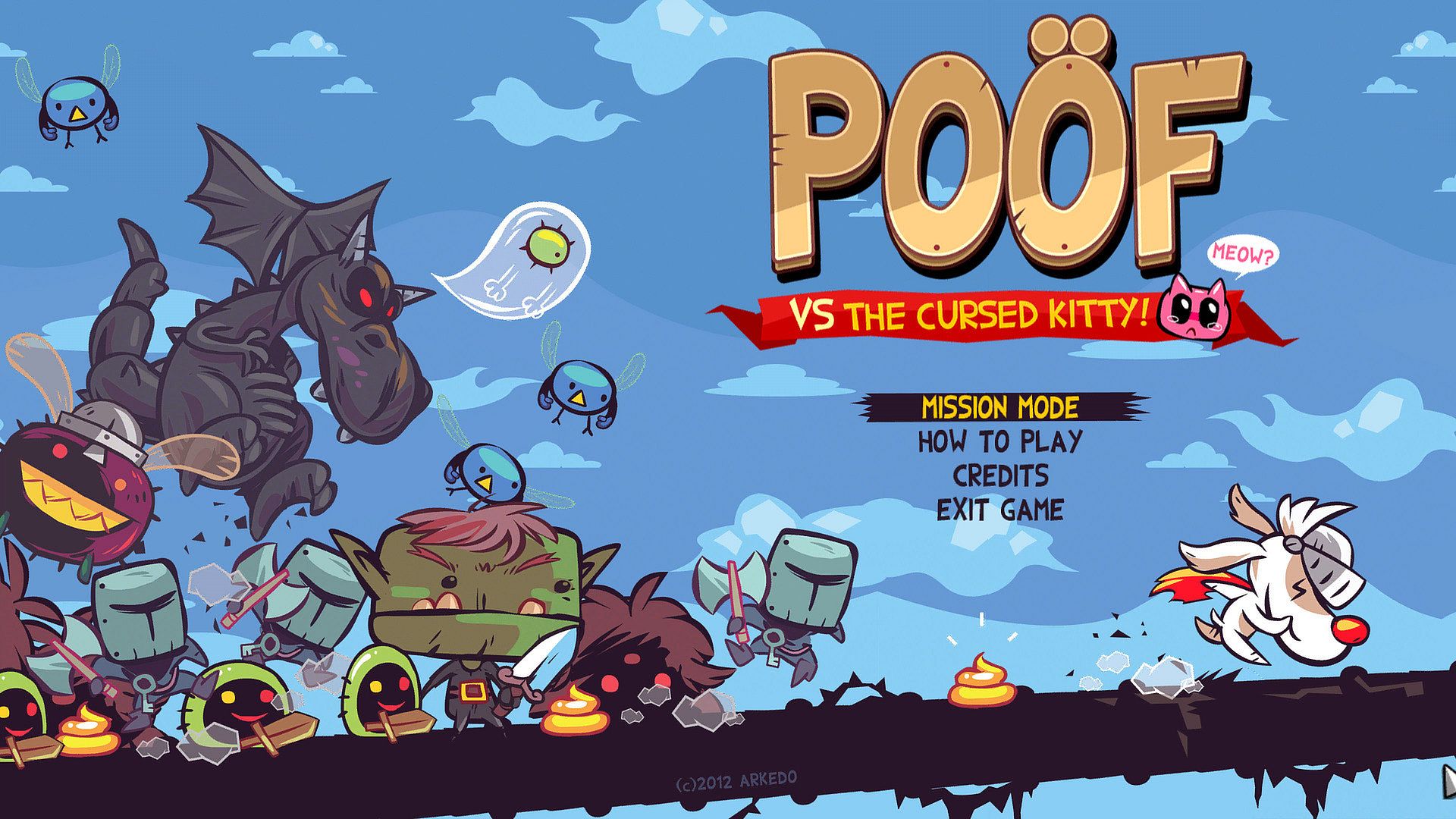
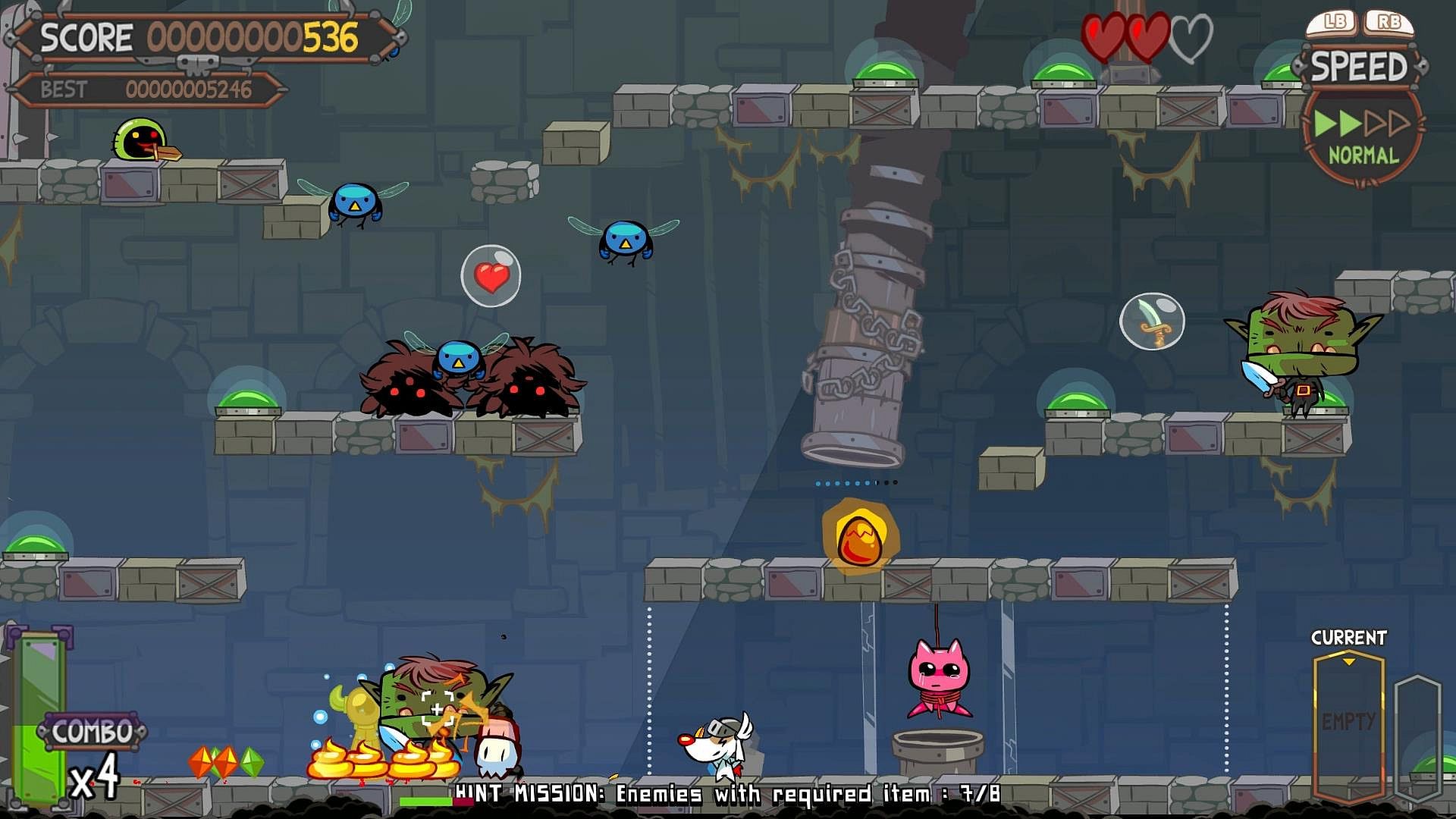
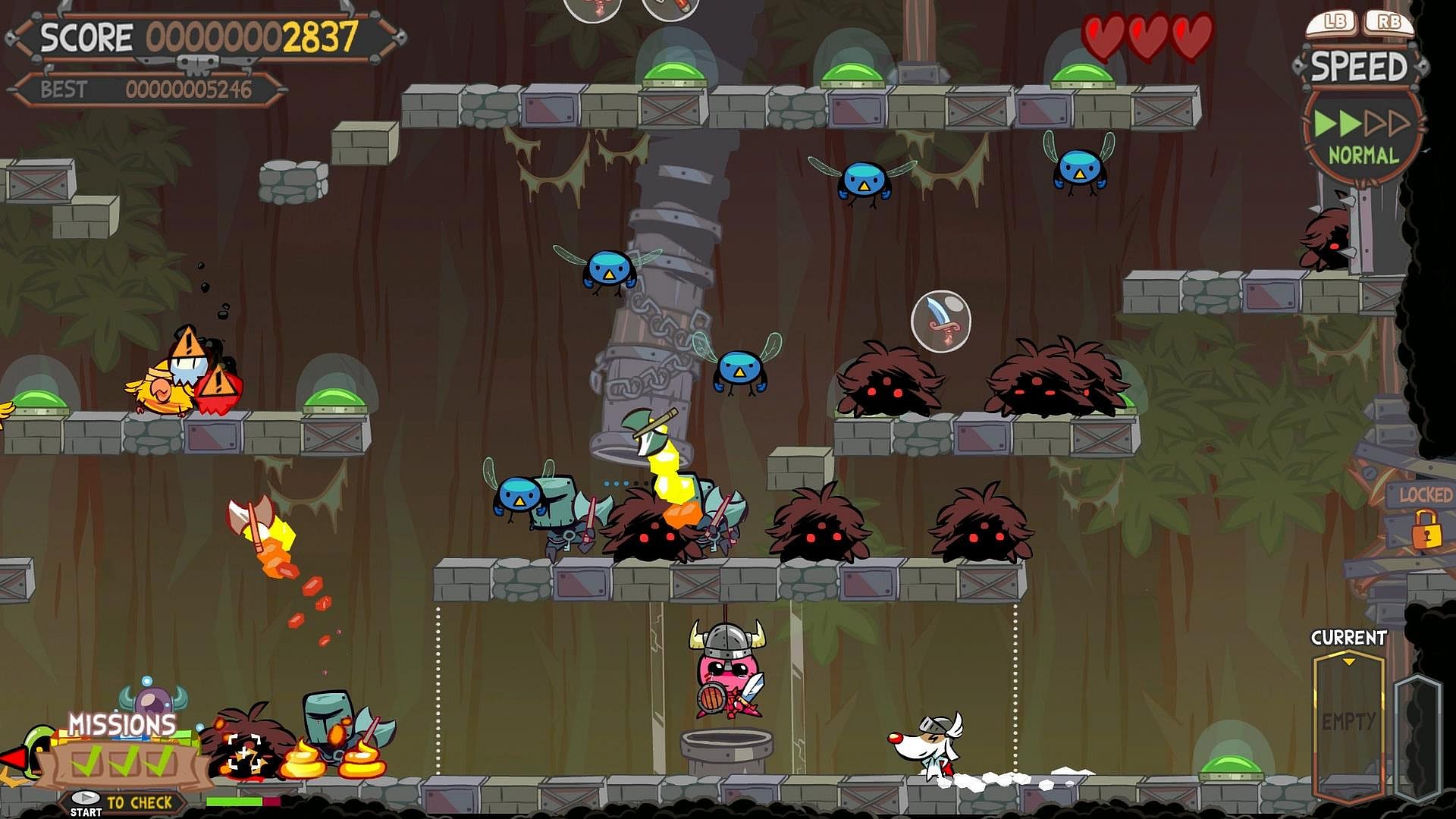
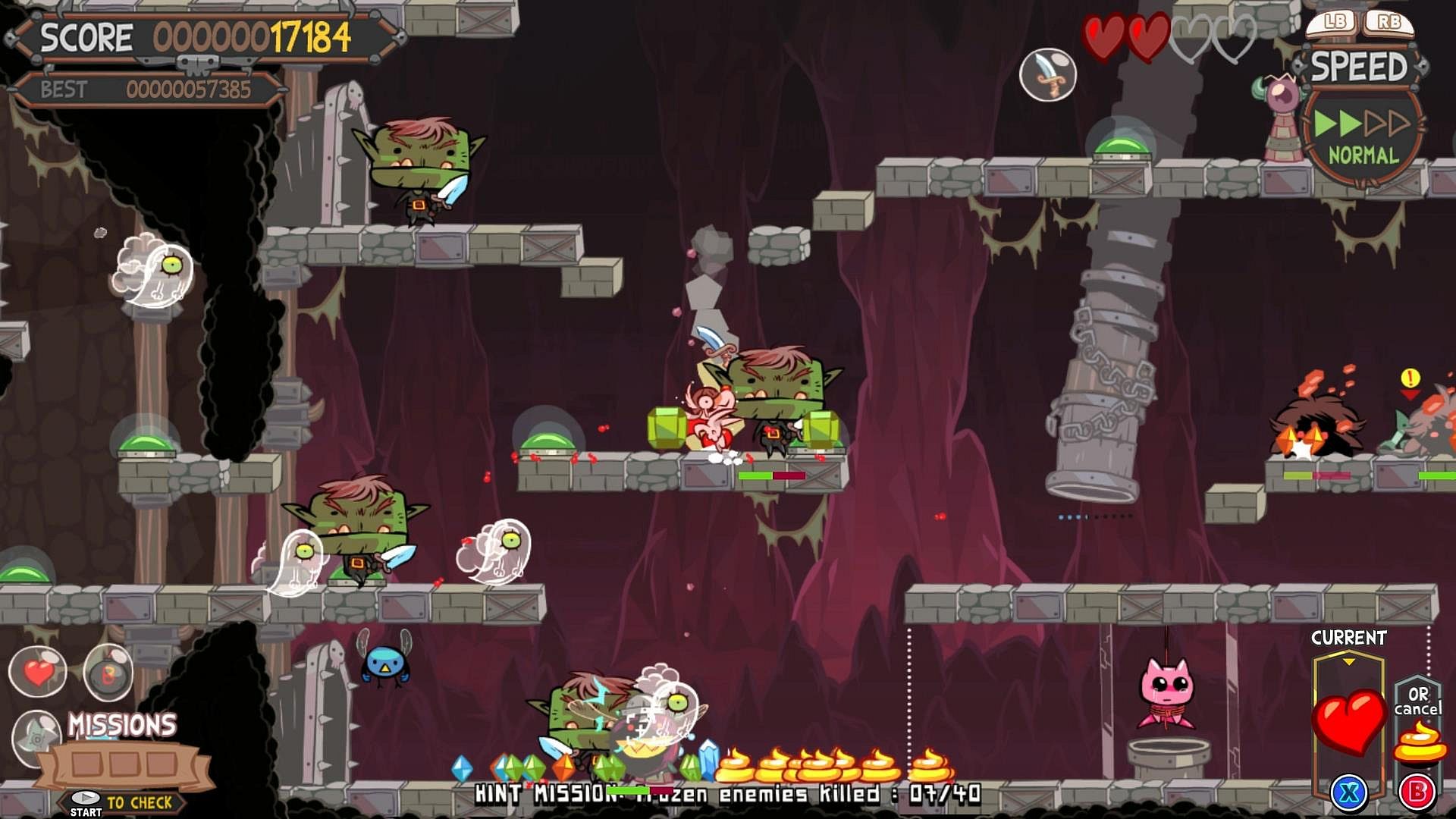

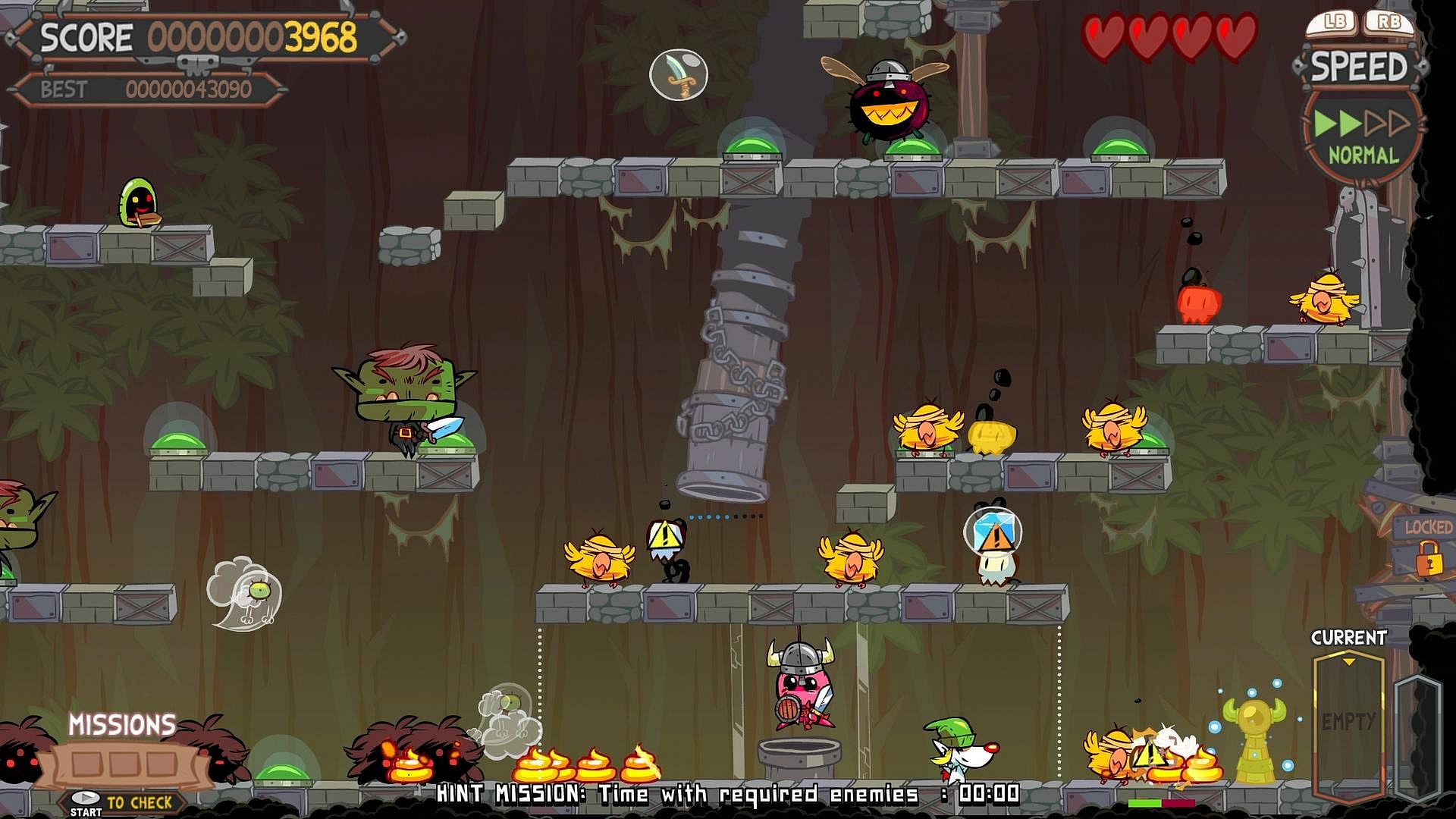
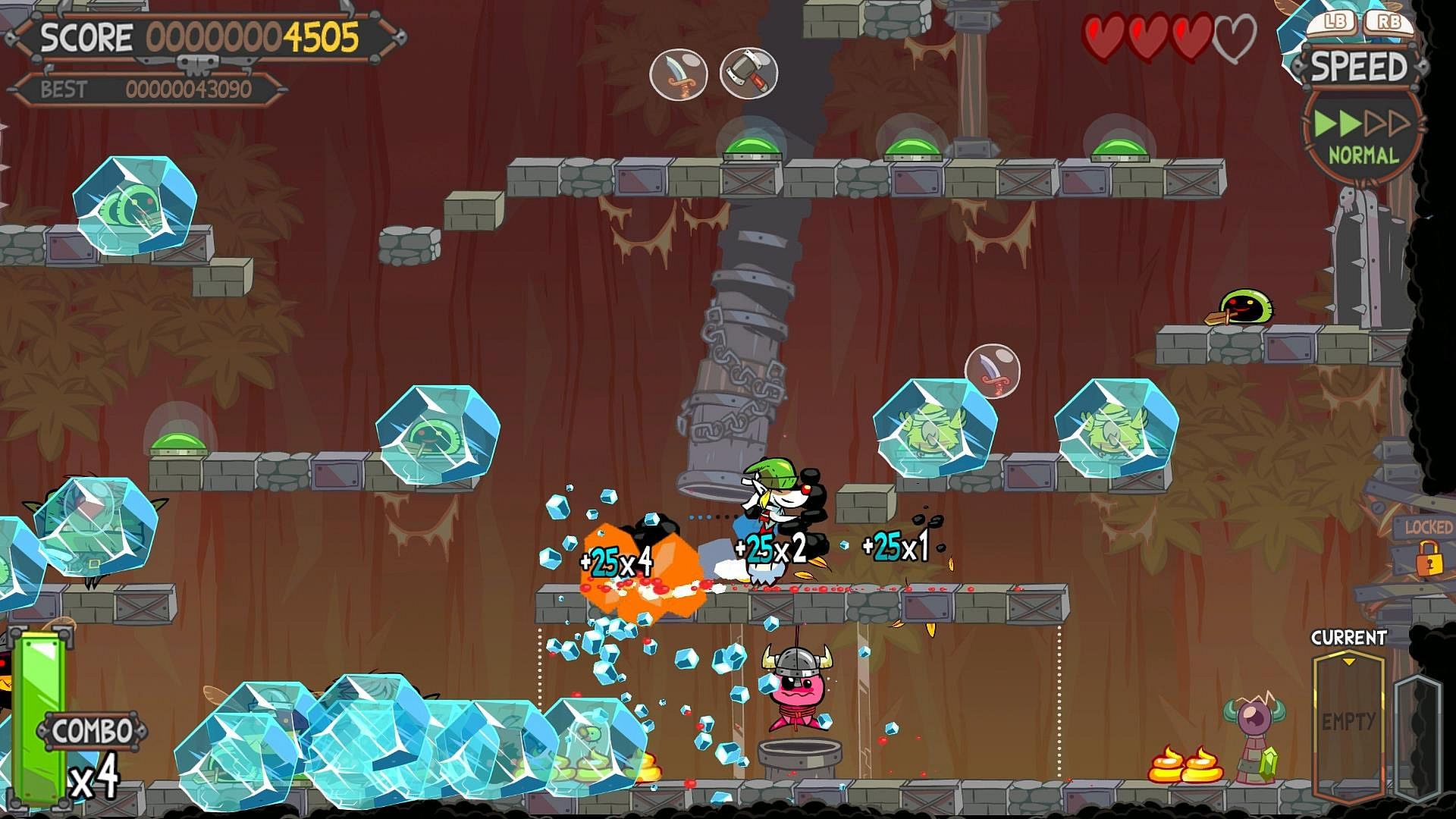
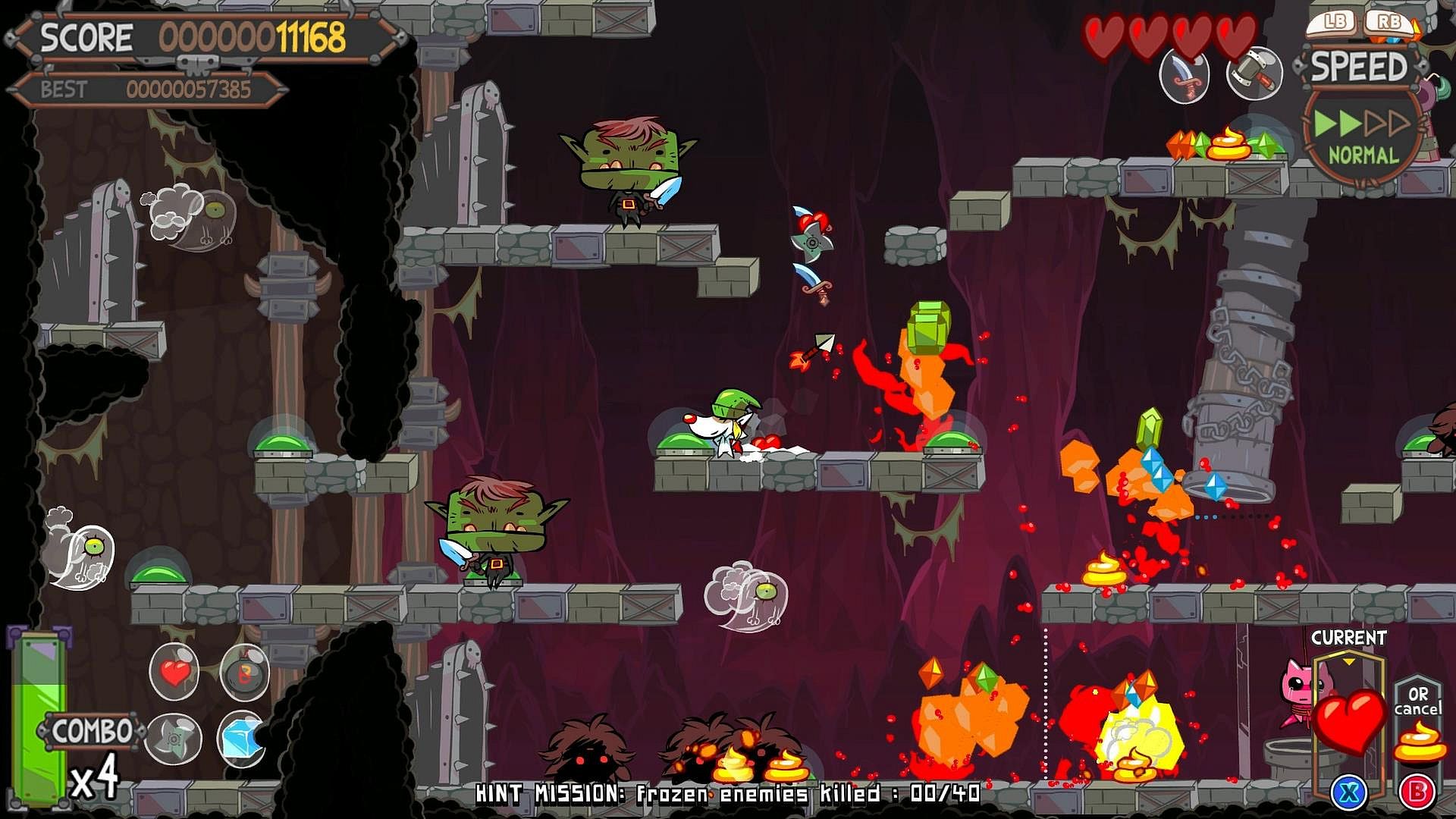
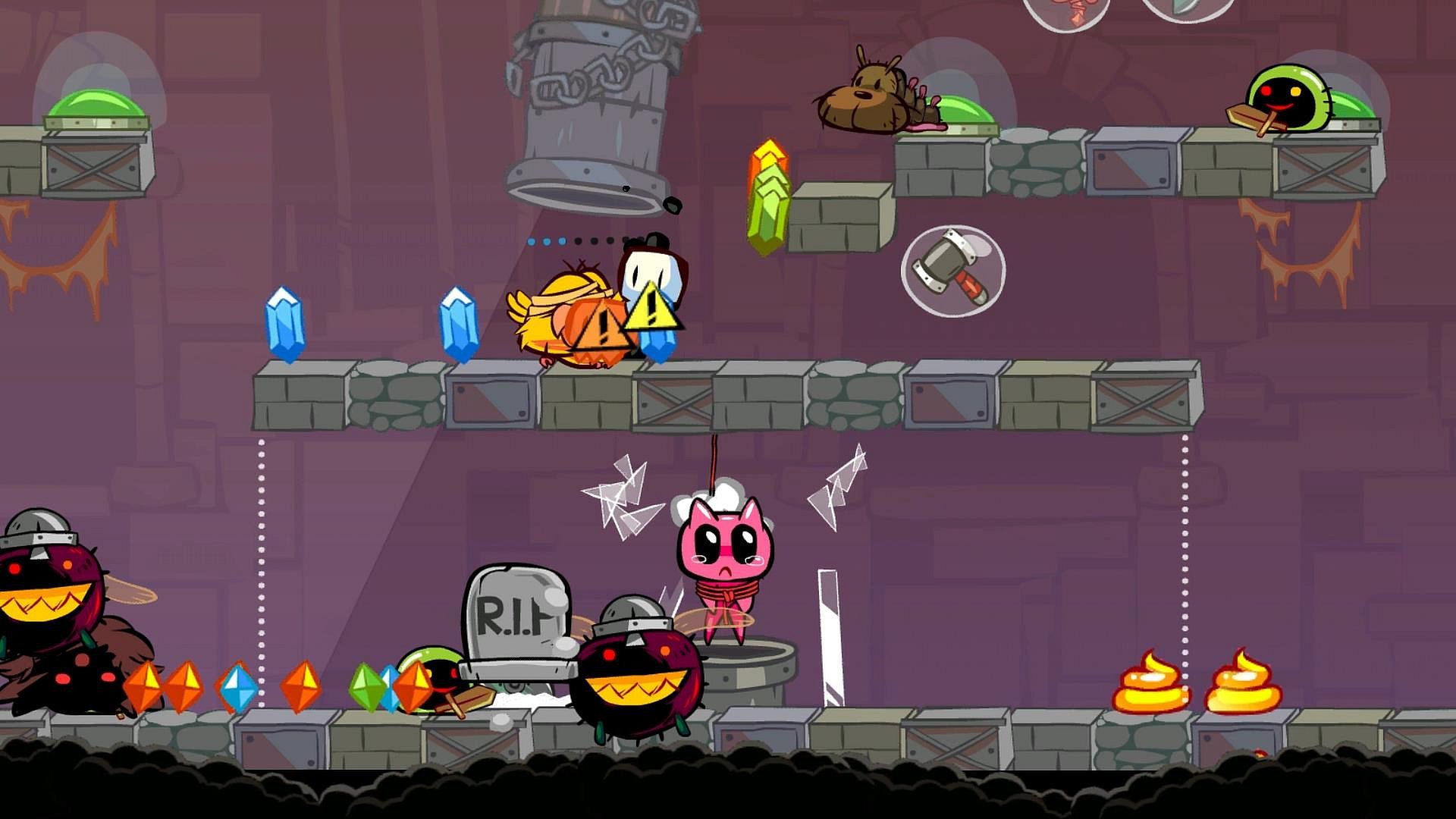
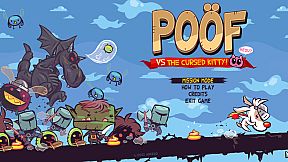
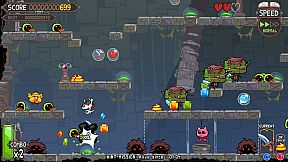
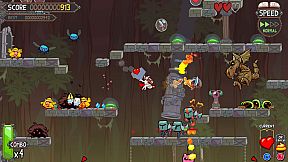
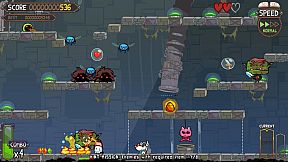
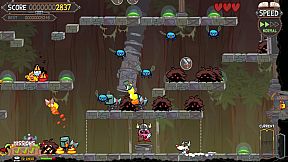
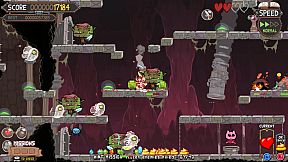

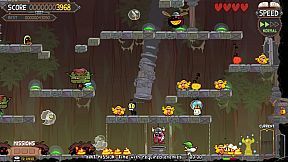
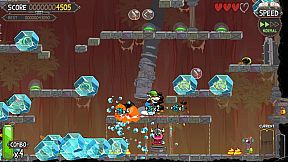
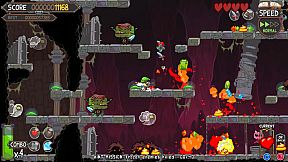
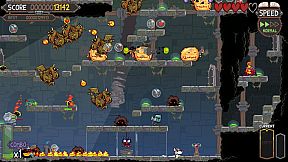
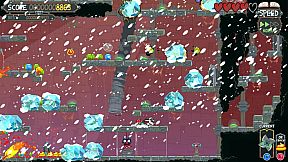
Poöf is an action and strategy indie game developed for PC that blends tower defense mechanics with platforming action. Players take control of Poöf, who must protect a golden-laying kitten from waves of envious monsters intent on stealing its revenue. The core loop revolves around surviving escalating threats through precise movement, strategic placement of defenses, and timed use of special abilities in a fast-paced environment.
Gameplay
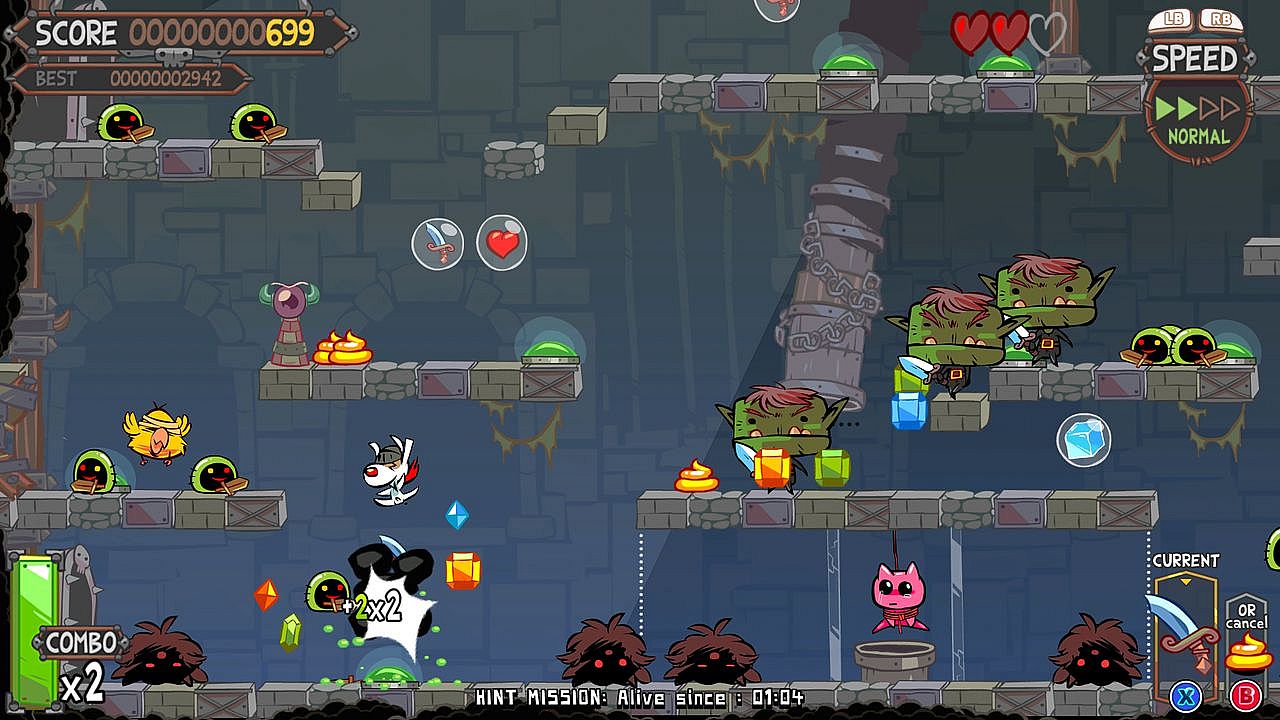
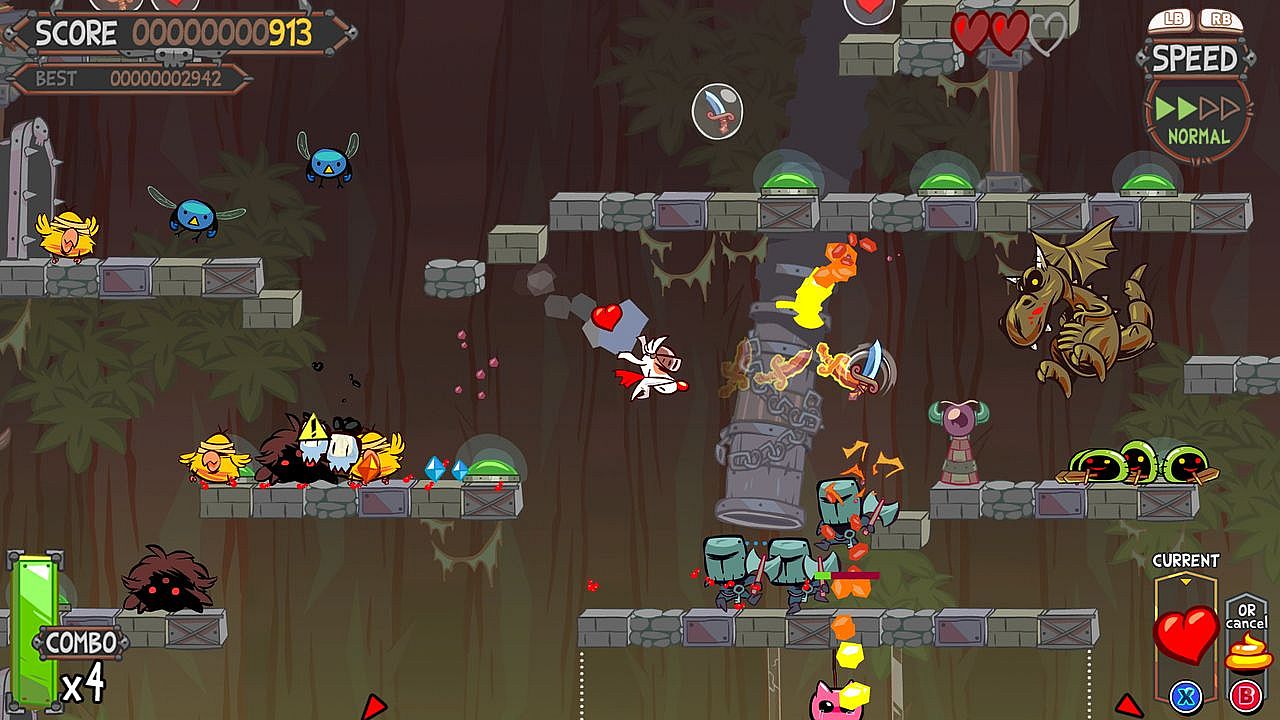
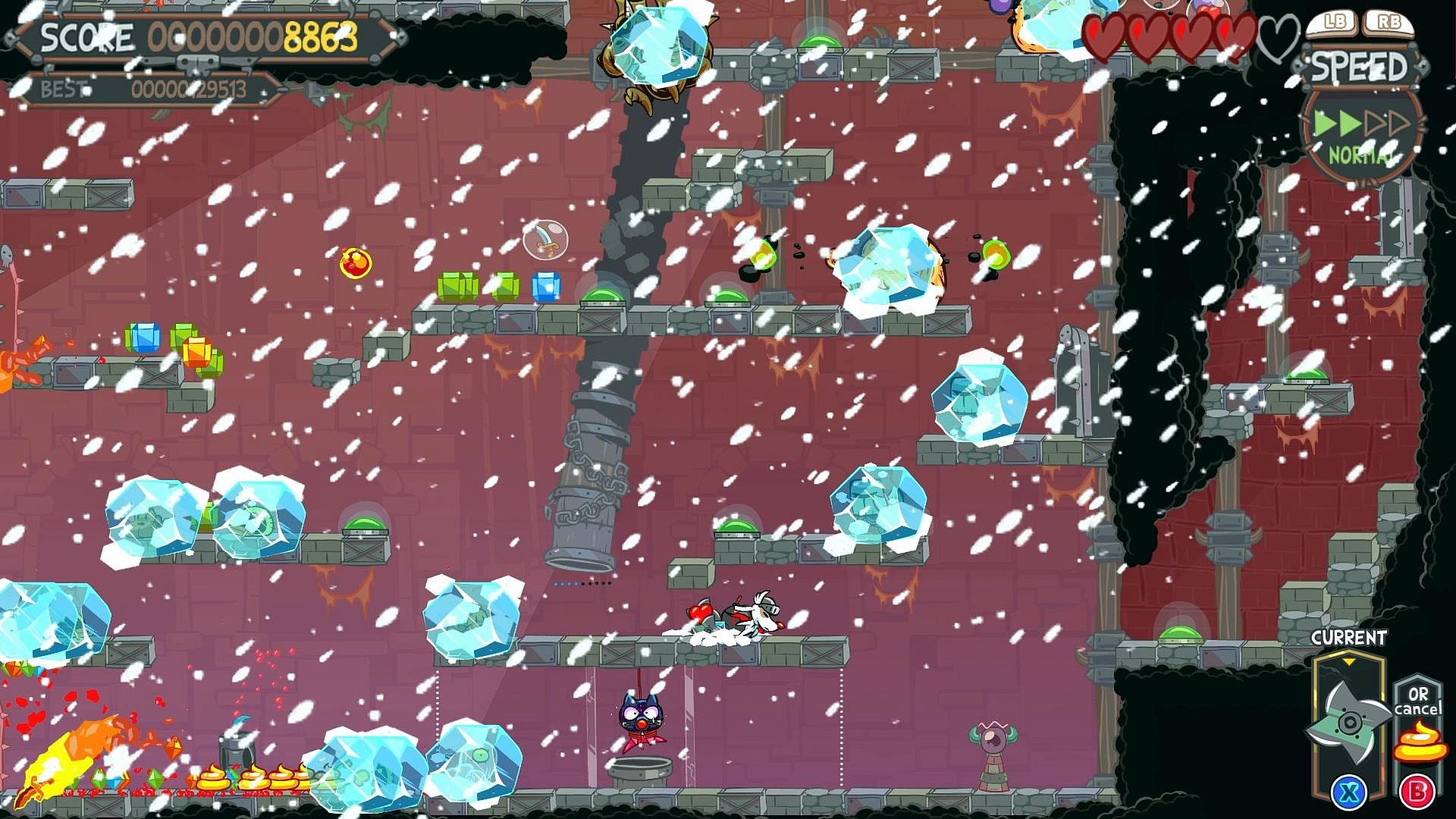
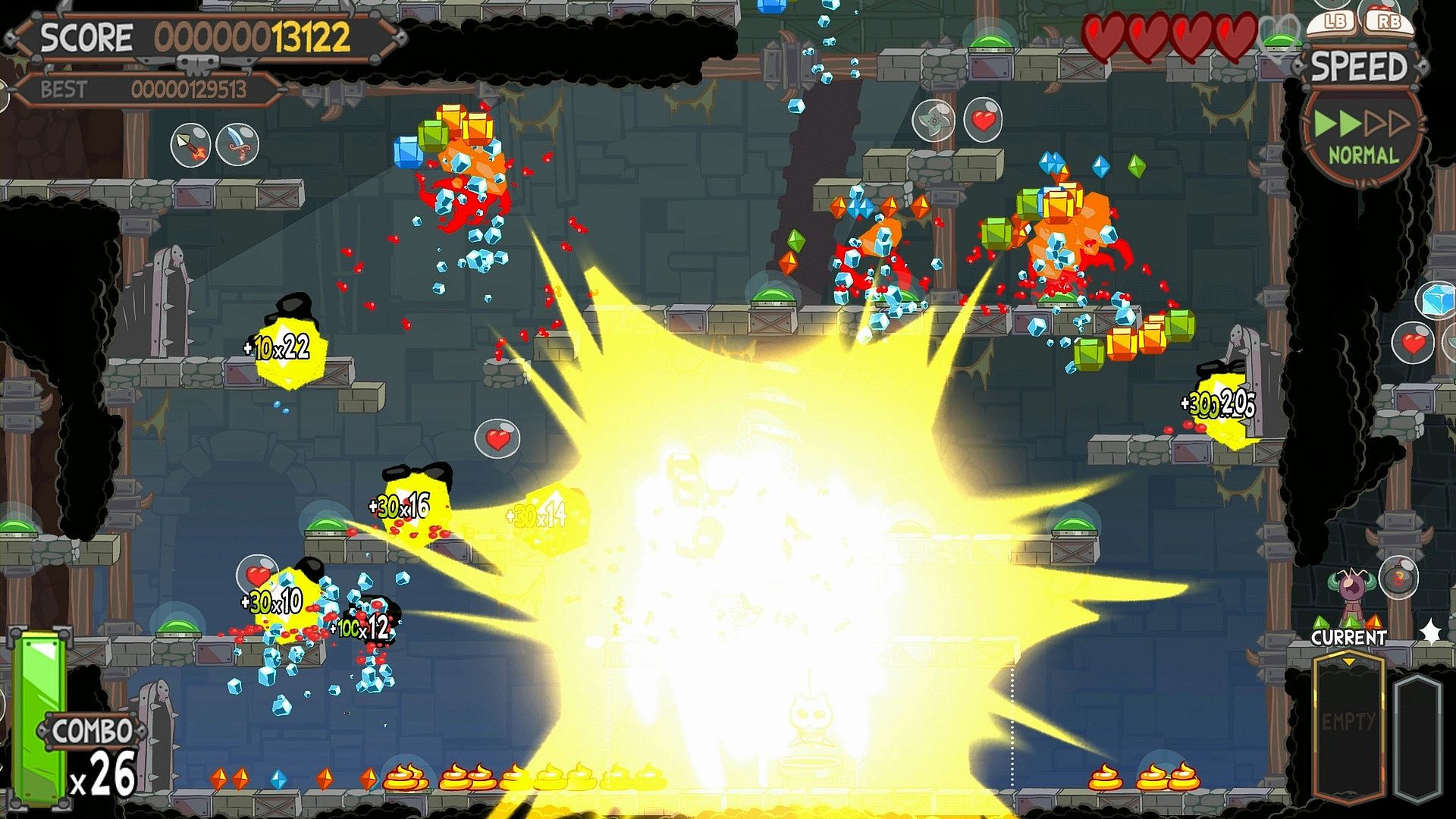
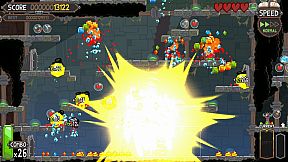
The gameplay emphasizes hardcore challenges with exponential difficulty that ramps up across sessions. Poöf navigates levels by jumping directly onto enemies to eliminate them while also positioning towers for automated attacks. Additional tools include poos that slow down foes, fire knives and bombs for direct damage, ice winds to freeze groups, and golden eggs that trigger widespread destruction. Time manipulation adds another layer, allowing players to slow the action during intense moments or accelerate it to heighten pressure and boost scores. Tight controls reward accurate timing and decision-making, drawing inspiration from classic arcade platformers and tower defense titles without relying on complex menus or overwhelming systems.
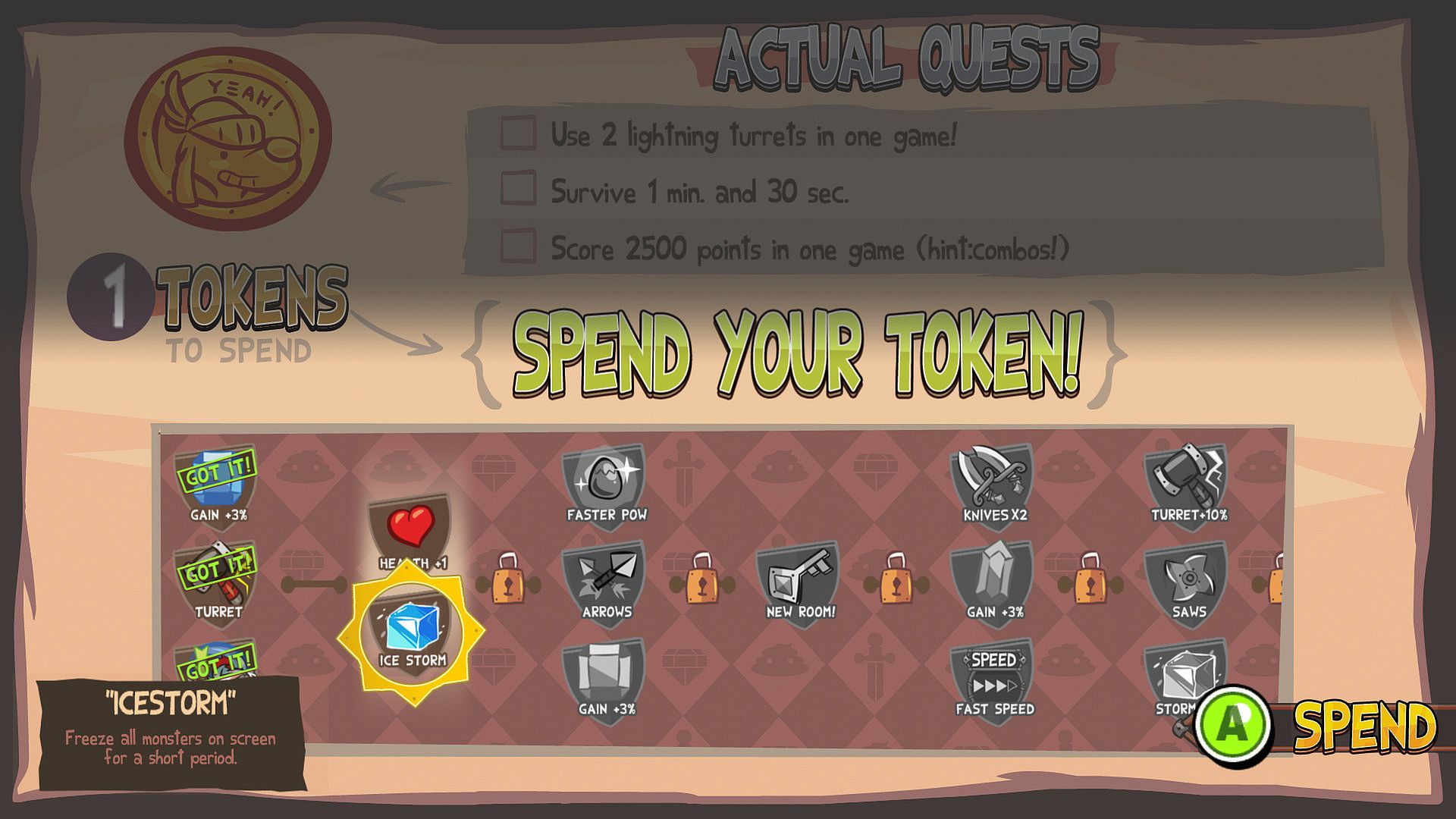
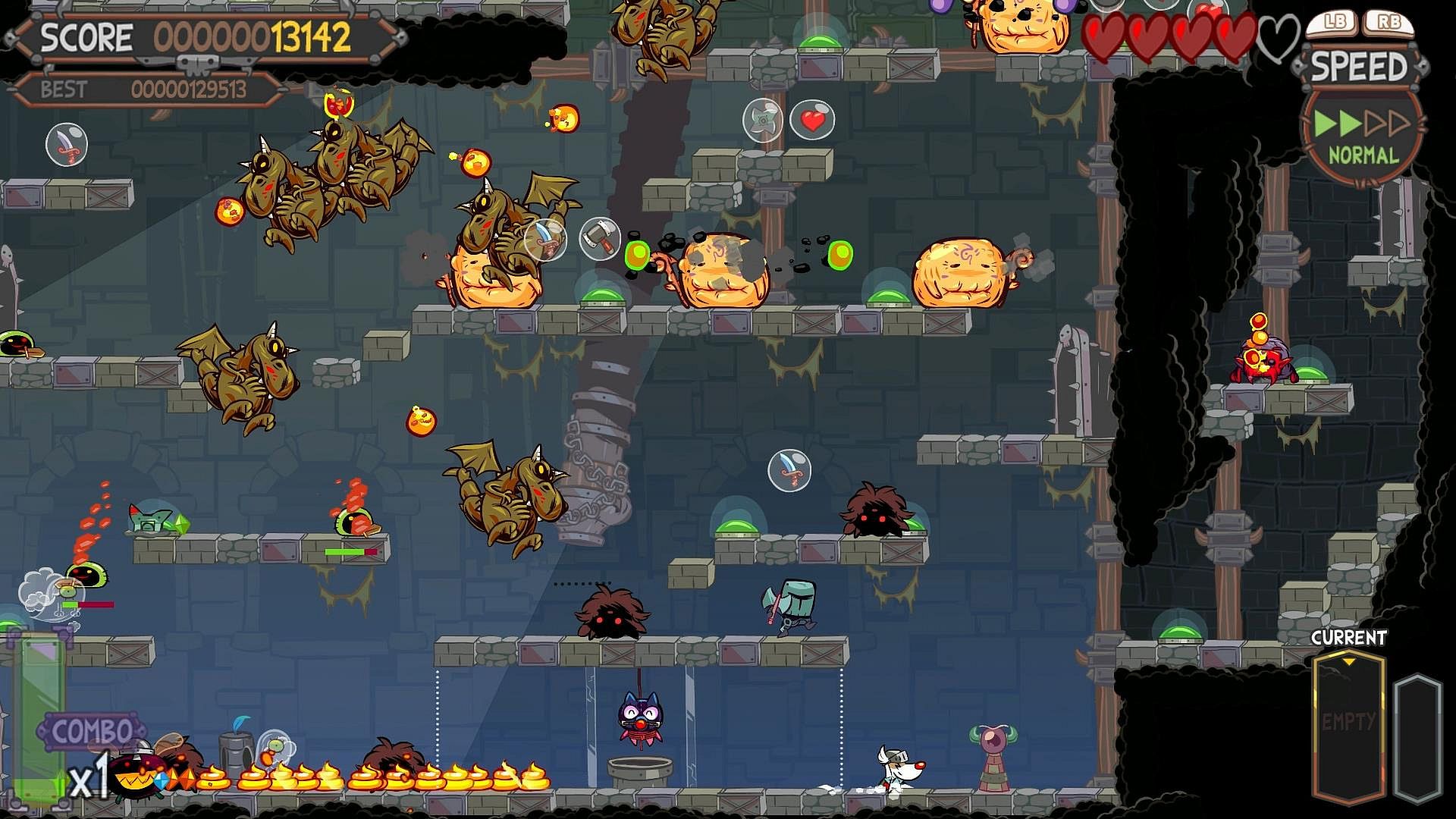
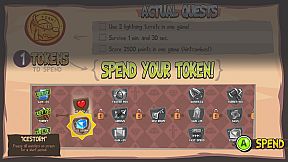
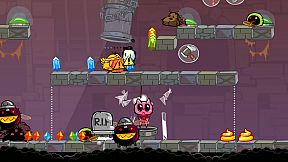
Upgrades form a key progression element, with 36 options spanning powers, weapons, enemy modifications, and other enhancements unlocked through mission completion. These choices let players adapt their approach to different threats, such as the 12 unique enemies that include ogres, ghosts, dragons, slug dogs, and gigantic flies. Random customization items appear during play, offering variations in backgrounds, music, and costumes for Poöf and the kitten. Controller support extends accessibility for those preferring gamepads over keyboard and mouse inputs.
Game Modes
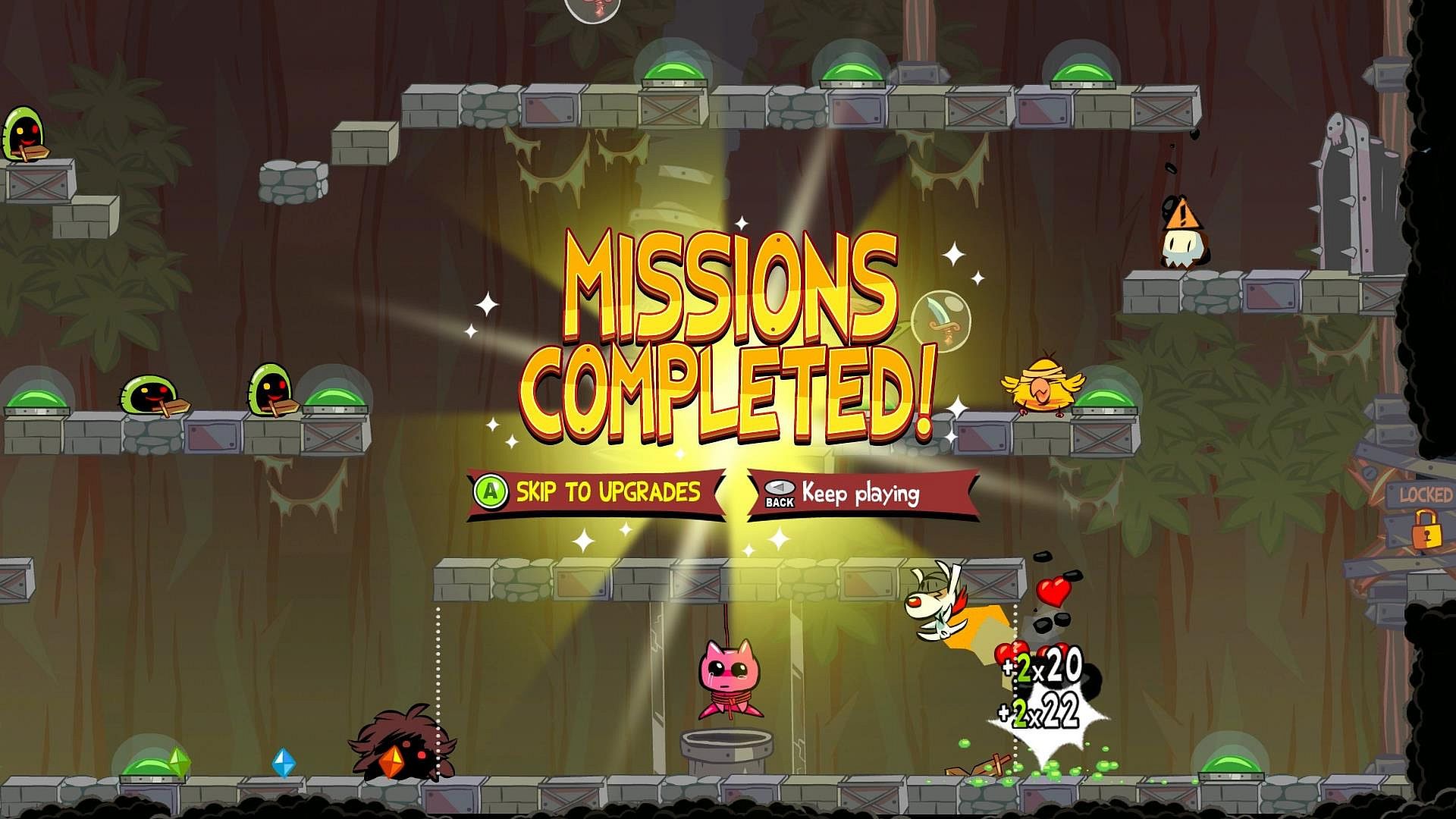
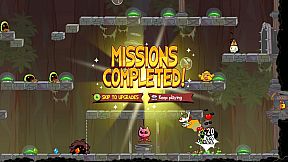
The experience centers on mission-based play, with 108 missions that serve as structured challenges to test survival skills and unlock further upgrades. Each mission involves defending against successive waves of monsters in platforming arenas where placement and timing prove critical. Leaderboards provide a competitive outlet, enabling players to compare performance globally and pursue higher scores through optimized runs. No separate multiplayer modes exist, keeping the focus on single-player endurance and mastery of the combined tower defense and action elements.
Key Mechanics and Progression
Progression ties directly to mission completion, which grants access to the full range of upgrades and customizations. The system encourages repeated attempts at the same missions to refine strategies and achieve better results under faster time settings. Original graphics pair with frenetic music to maintain intensity throughout longer sessions, while the exponential difficulty curve ensures that early successes give way to demanding later stages. Players manage resources implicitly through positioning and ability use rather than traditional currency systems, emphasizing reactive gameplay over long-term planning.
Is It Worth Playing?
Player reception stands at very positive based on available reviews, with 85 percent approval from 55 user ratings. The game suits those seeking challenging indie experiences that combine precise platforming with defensive strategy on PC. Its 2013 release means it runs on older hardware requirements, though modern systems handle it without issue. The absence of ongoing updates or seasonal content positions it as a complete, self-contained title focused on core mechanics rather than live-service elements. Individuals who enjoy tight controls, wave survival, and upgrade experimentation will find substantial depth in its 108 missions and varied enemy encounters. Those preferring modern visuals or extensive multiplayer features may look elsewhere, but the verified positive feedback highlights its appeal for hardcore single-player sessions.