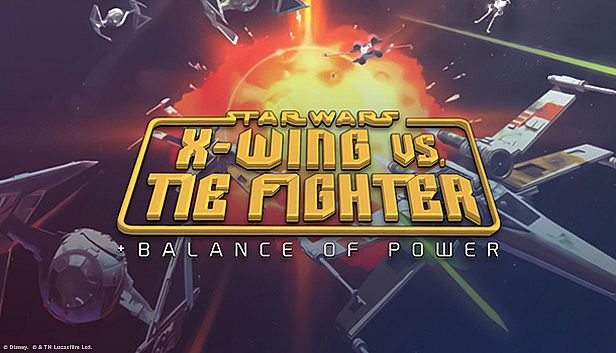















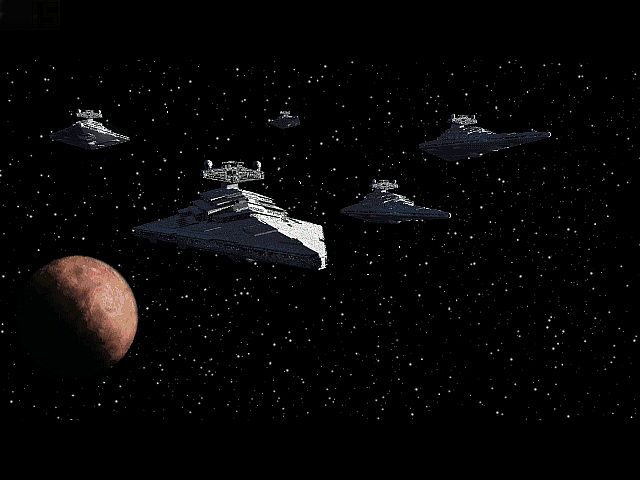
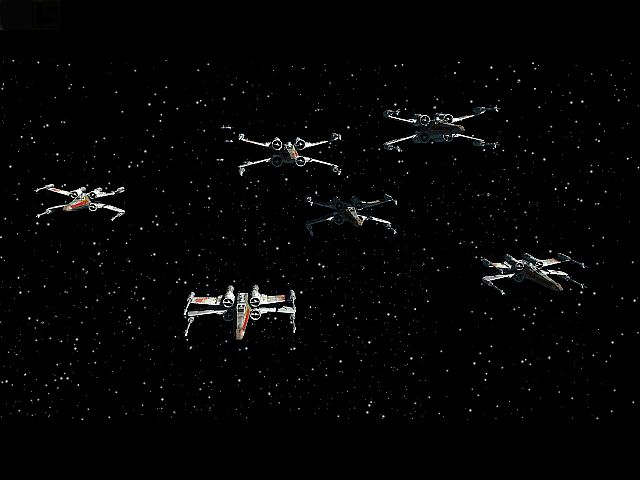
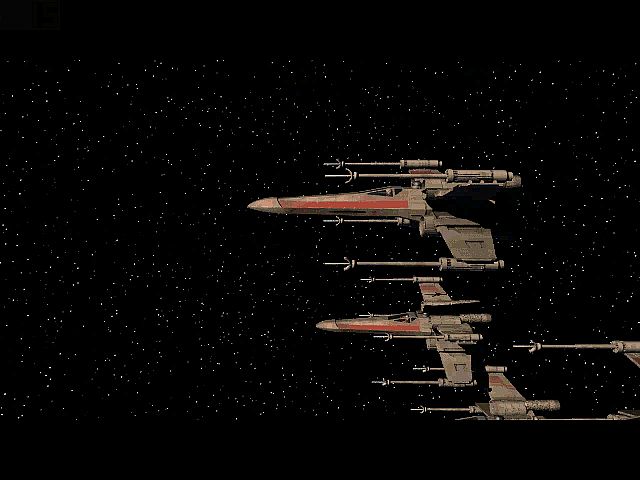
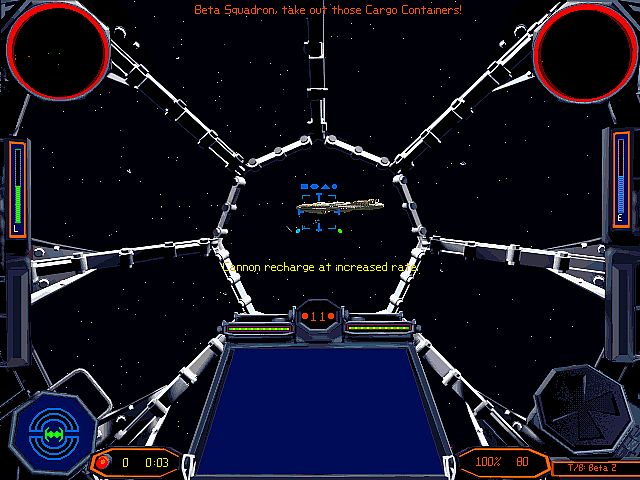
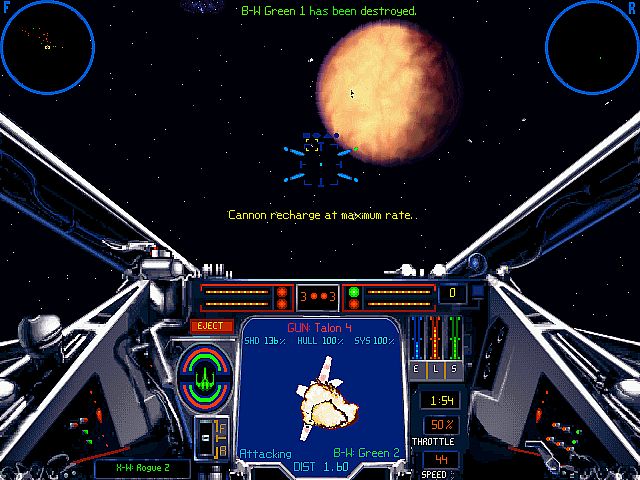
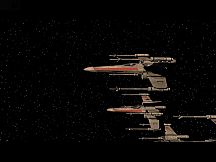
STAR WARS X-Wing vs TIE Fighter - Balance of Power Campaigns is a space combat simulation that places players in the cockpits of iconic Star Wars starfighters for real-time dogfights. Released in 1997 as an expansion to the original X-Wing vs TIE Fighter, the game emphasizes tactical flight and team coordination in a multiplayer environment. It supports both Empire and Rebel factions, allowing pilots to select from nine different spacecraft across more than 50 missions. The focus remains on authentic space combat mechanics where positioning, weapon choice, and wingmate support determine outcomes in fast-paced engagements.
Gameplay
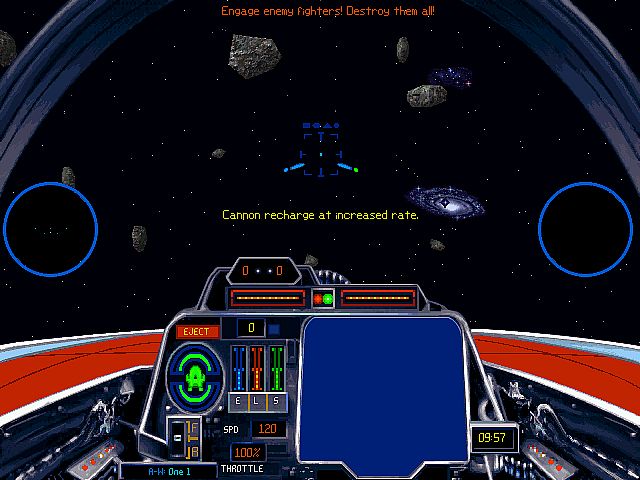
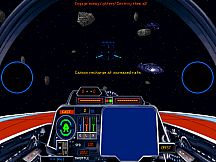
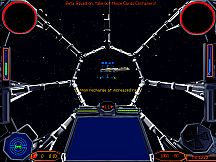
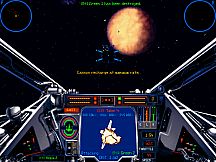
The core loop revolves around piloting starfighters in open space battles where speed, energy management, and targeting systems play central roles. Players adjust power distribution between engines, weapons, and shields while navigating asteroid fields or open sectors. Each craft handles differently, with distinct acceleration, turn rates, and armament options that reward familiarity and quick decisions. Combat occurs in real time without pauses, forcing constant awareness of surrounding threats and allied positions. Single-player missions provide structured scenarios against AI opponents, while the addition of Balance of Power introduces dedicated story-driven campaigns for both the Empire and the Rebellion, each consisting of fifteen missions that build on the base game's framework.
Weapon selection adds another layer, as pilots equip lasers, ion cannons, proton torpedoes, or concussion missiles depending on the mission objectives. Energy management becomes critical during prolonged fights, requiring players to divert power from shields to boost laser recharge or increase speed for evasion. The simulation aspects shine through in the detailed damage modeling, where hits to specific systems can disable engines or weapons mid-flight. Wingmate commands allow players to direct AI allies for cover fire or target priority, though success often hinges on choosing reliable partners in multiplayer sessions.
Game Modes
Multiplayer forms the heart of the experience, supporting up to eight participants over a local area network for cooperative or competitive play. Dogfights pit small teams against each other in direct confrontations, with victory going to the side that eliminates all opponents or completes secondary objectives. Melee modes open the field to free-for-all battles where every pilot competes independently, testing individual skill without team structures. Cooperative missions let groups tackle the campaign content together, sharing responsibilities for escort duties, base assaults, or capital ship defenses.
The game also includes skirmish options that let players customize match parameters such as craft selection, mission length, and victory conditions. These modes draw from the full roster of nine spacecraft, mixing Rebel and Imperial vessels in balanced or asymmetric setups. LAN connectivity ensures low-latency play for local groups, preserving the responsive controls essential for precise maneuvering in tight dogfights.
Campaign Structure
Balance of Power expands the single-player side with two parallel campaigns. The Imperial side focuses on suppressing Rebel activity through strikes on supply lines and hidden bases, while the Rebel campaign emphasizes hit-and-run tactics against larger Imperial forces. Each mission set incorporates escalating challenges, introducing new craft and objectives that build pilot proficiency. Missions range from straightforward intercepts to complex operations requiring coordinated attacks on multiple targets. The structure encourages replayability, as different craft loadouts and wingmate assignments alter the approach to the same scenario.
Is It Worth Playing?
Player reception on Steam stands at mostly positive, with 79 percent approval from 242 reviews, reflecting appreciation for the authentic flight model and multiplayer depth. The game suits enthusiasts of classic space combat simulators who value precise controls and tactical decision-making over modern graphical polish. Its LAN-based multiplayer remains functional for groups with compatible hardware, delivering the real-time dogfights described in the original design. Availability on PC platforms keeps the title accessible, though expectations should align with 1990s simulation standards rather than contemporary features. Those seeking straightforward Star Wars starfighter action with strong emphasis on team play and mission variety will find the core experience holds up for dedicated sessions.