































Terraforming Mars is a strategy game in which players guide corporations in a race to make the Red Planet habitable. Set on a detailed map of Mars, the experience centers on resource management, card play, and incremental environmental changes that benefit all participants while each corporation pursues its own path to victory through victory points.
Gameplay
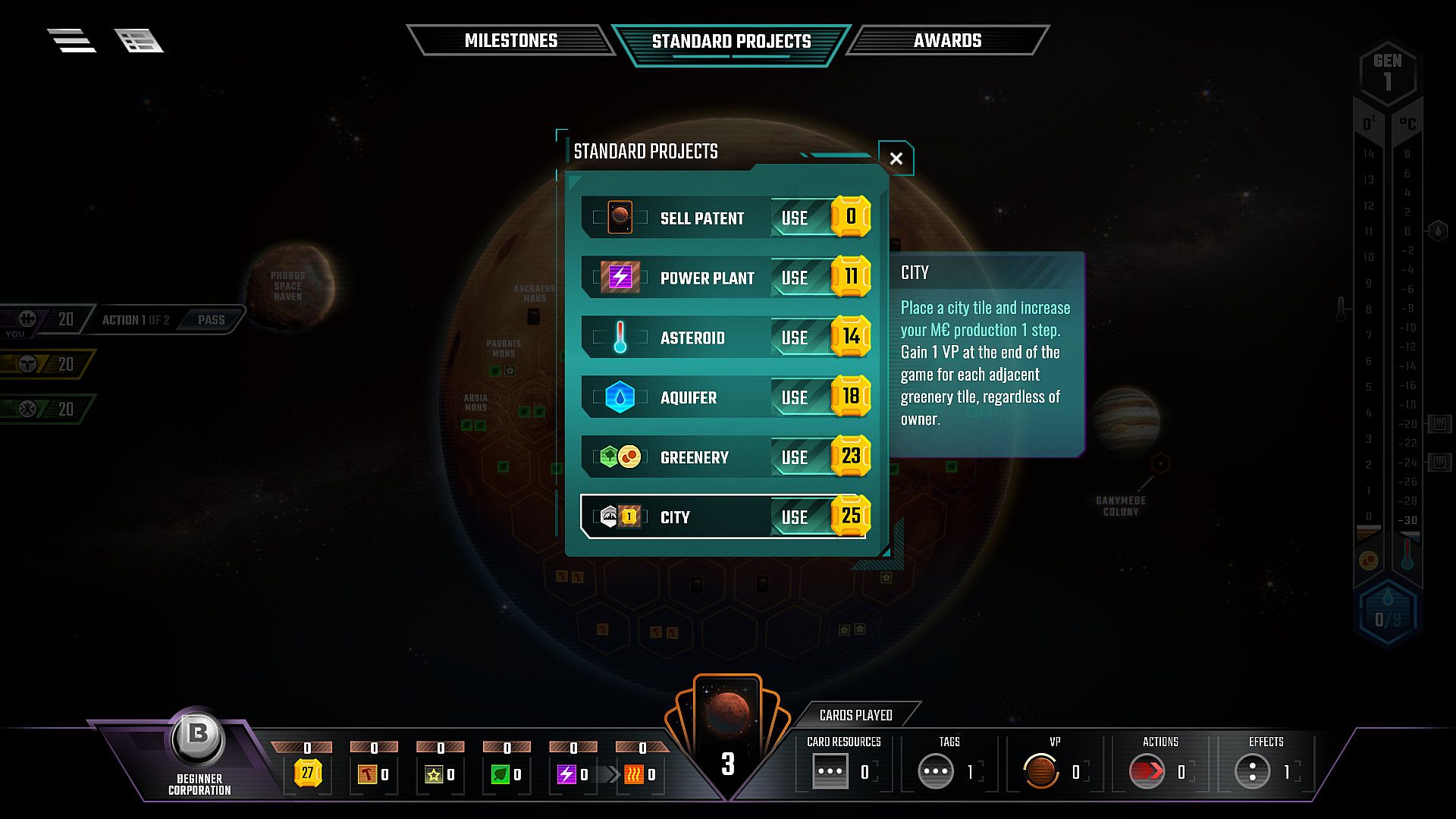
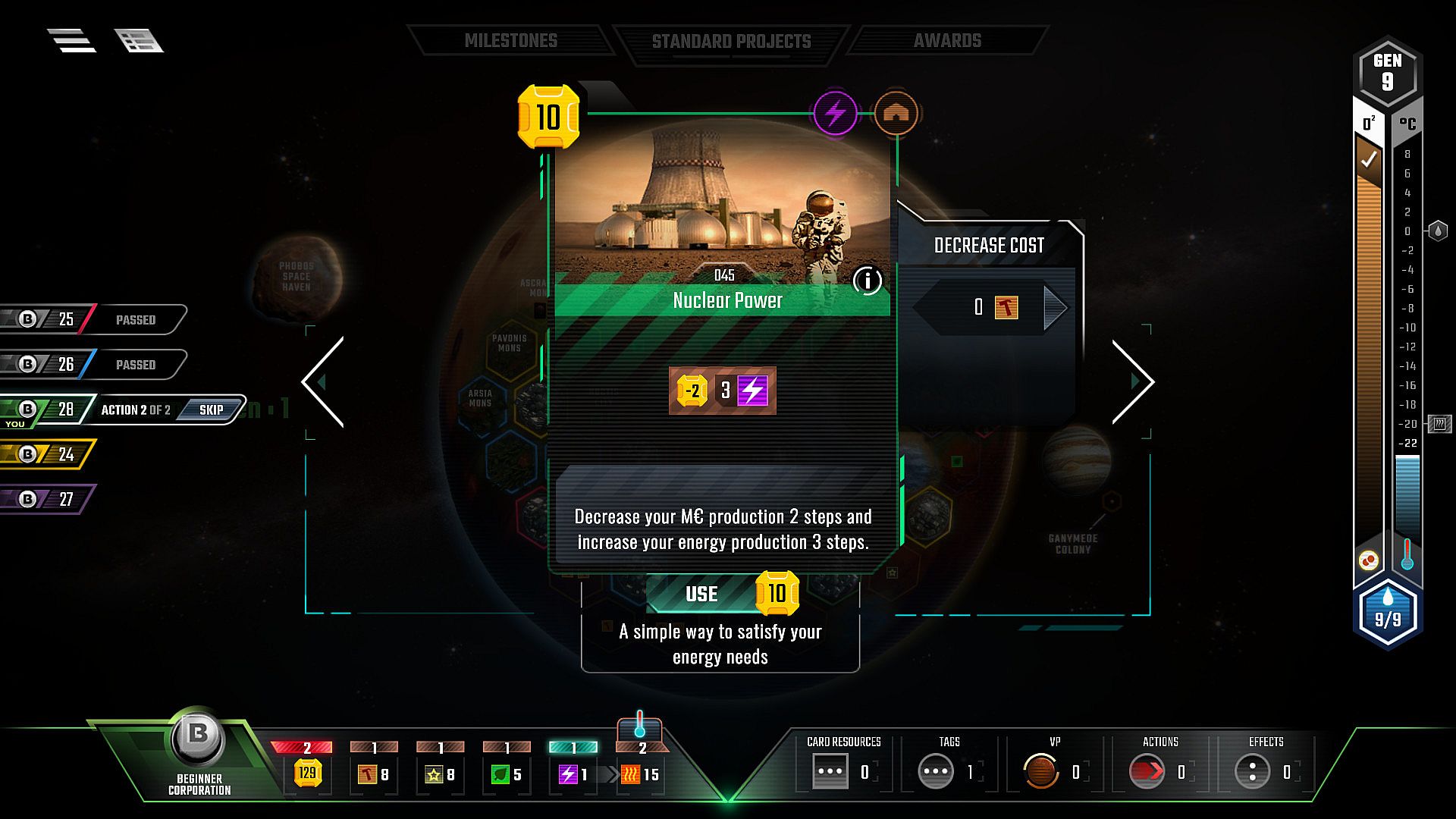
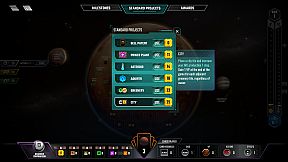
Each round, called a generation, follows a structured sequence of phases. Players first adjust turn order, then participate in a research phase where they draw and purchase new project cards using megacredits. The core action phase allows participants to take one or two actions per turn, cycling around the table until everyone passes. Actions include playing cards that provide ongoing effects or immediate benefits, claiming milestones, funding awards, executing standard projects, or converting resources such as plants into greenery tiles and heat into temperature increases.
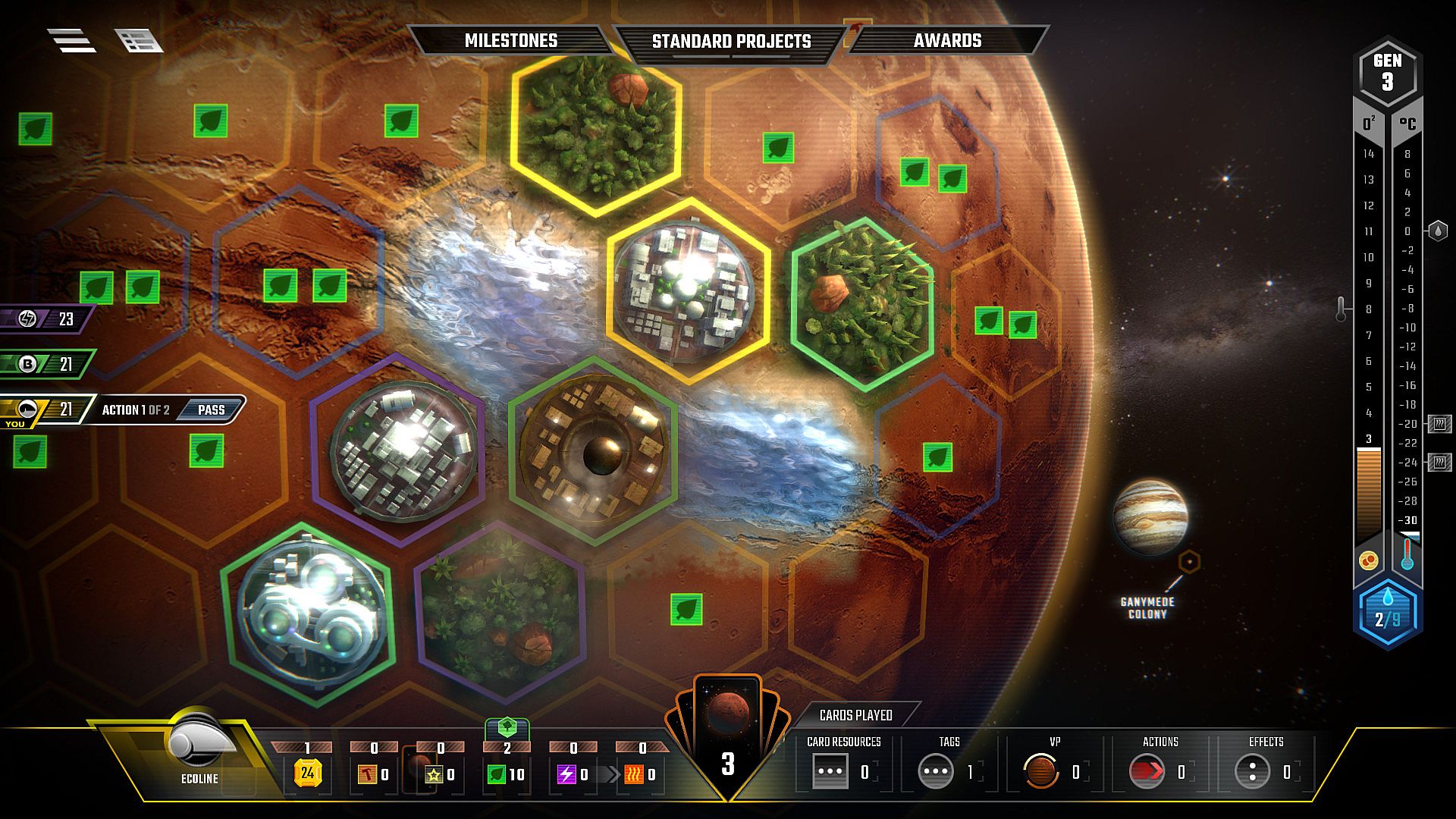
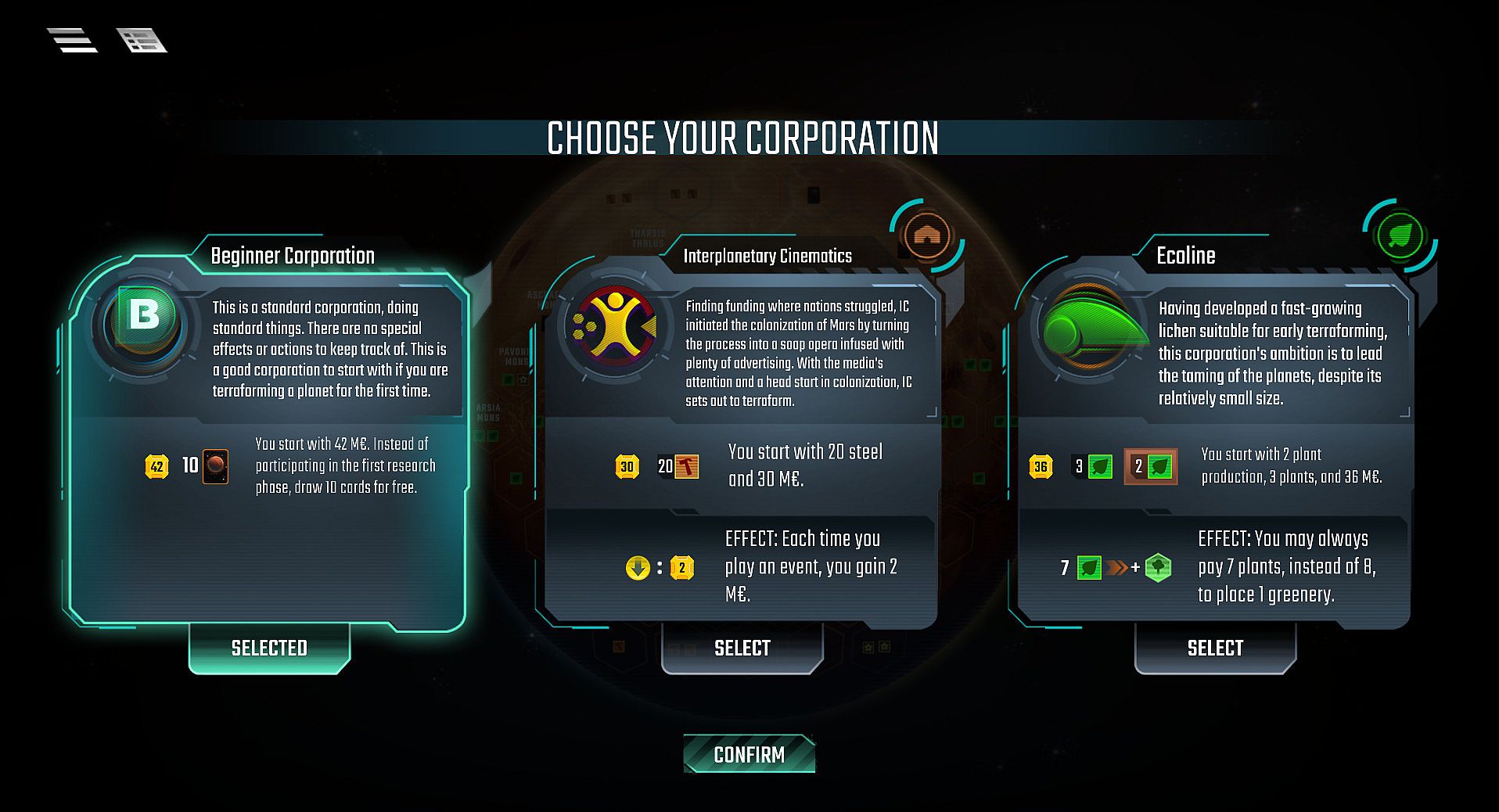
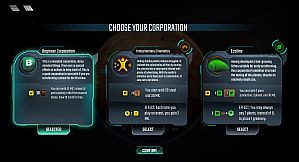
Production occurs at the end of each generation based on a corporation's current output levels across six resource types and its terraform rating. Raising global parameters temperature, oxygen, and ocean coverage directly boosts this rating, which in turn generates more income. Tile placement on the Mars map creates cities and green areas that interact with the board's special features, while engine building through card synergies drives long-term efficiency. Corporations each start with distinct profiles that influence starting resources and abilities, encouraging different strategic approaches.
Game Modes
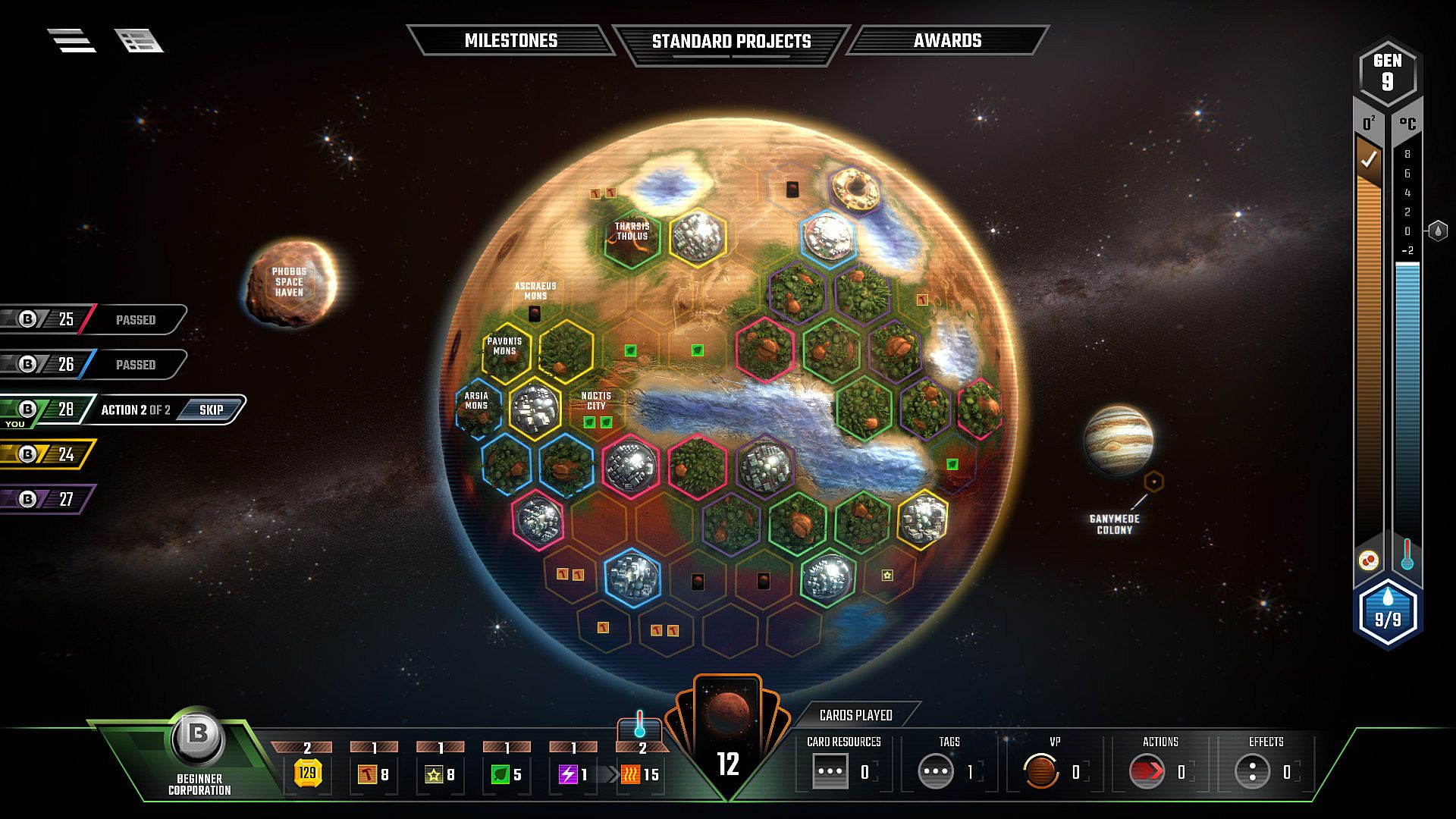
The game supports single-player sessions against artificial intelligence opponents, allowing practice or solo challenges where the objective is to complete terraforming before generation 14 ends. Multiplayer options include local shared or split-screen play as well as online matches for up to five participants. A Corporate Era variant introduces additional cards and two new corporations focused on economy and technology, increasing complexity for those seeking deeper strategic layers.
These modes accommodate both competitive head-to-head races and more relaxed sessions where players balance personal advancement with the shared goal of planetary transformation. The structure remains consistent across modes, with the same core phases and scoring systems determining the winner through accumulated victory points from cards, tiles, milestones, and awards.
Core Mechanics and Progression
Resource production forms the backbone of progression, with players balancing megacredits, steel, titanium, plants, energy, and heat to fund projects and accelerate terraforming. Cards often carry tags that interact with corporation abilities or other cards, creating chains of efficiency over multiple generations. The map itself offers placement bonuses and restrictions, rewarding careful positioning of cities and greenery to maximize points and parameter increases.
Victory points accumulate from multiple sources, including the terraform rating itself, placed tiles, and successful claims on milestones and awards. The game ends once all three global parameters reach their targets, at which point the player with the highest total points wins. This combination of collaborative environmental advancement and individual competition creates tense decisions throughout each generation.
Is It Worth Playing?
Terraforming Mars appeals to players who enjoy deliberate strategy, economic engine building, and moderate player interaction in a turn-based format. Its faithful adaptation of the original board game design preserves the depth of card synergies and long-term planning while streamlining physical components through digital automation of tracking and calculations.
Player reception highlights the satisfying progression of watching production ramp up and the planet transform over time, with strong support for both solo challenges and group sessions. The title remains available with ongoing compatibility features such as Steam Deck verification and achievement tracking. Those drawn to competitive yet thematic strategy experiences will find consistent engagement across multiple playthroughs due to the variety of corporations and card combinations.