
























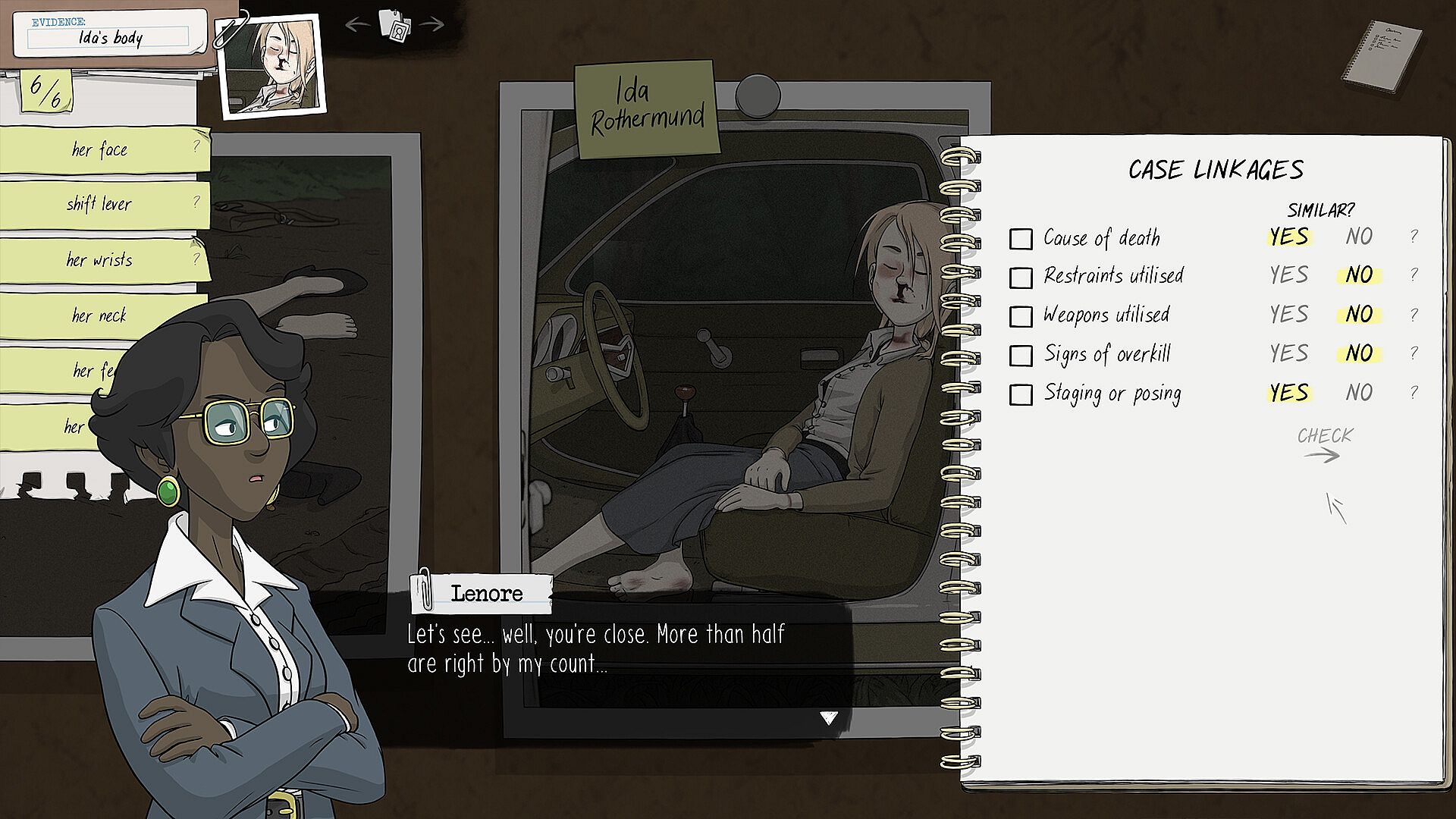








The Big Hollow: 1982 is an indie adventure game that places players in the role of Desmond, a trainee profiler working with the FBI's Behavioral Science Unit in 1982. This single-player point-and-click title focuses on deduction and criminal profiling within a compact murder mystery set in a small truck stop community in the American South. The experience centers on examining evidence, identifying psychological patterns, and linking details across cases to understand the motivations behind the crimes.
Gameplay
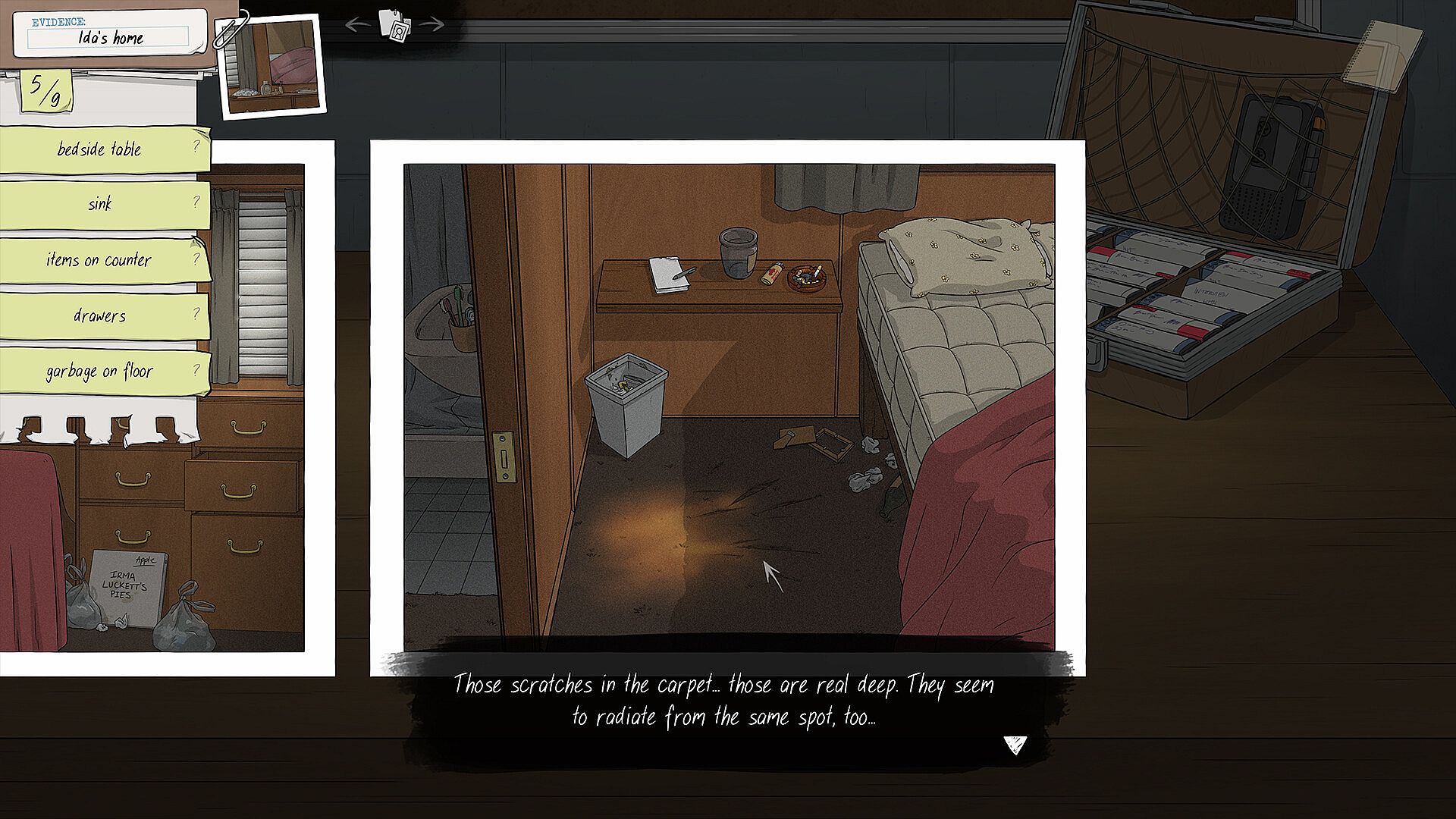
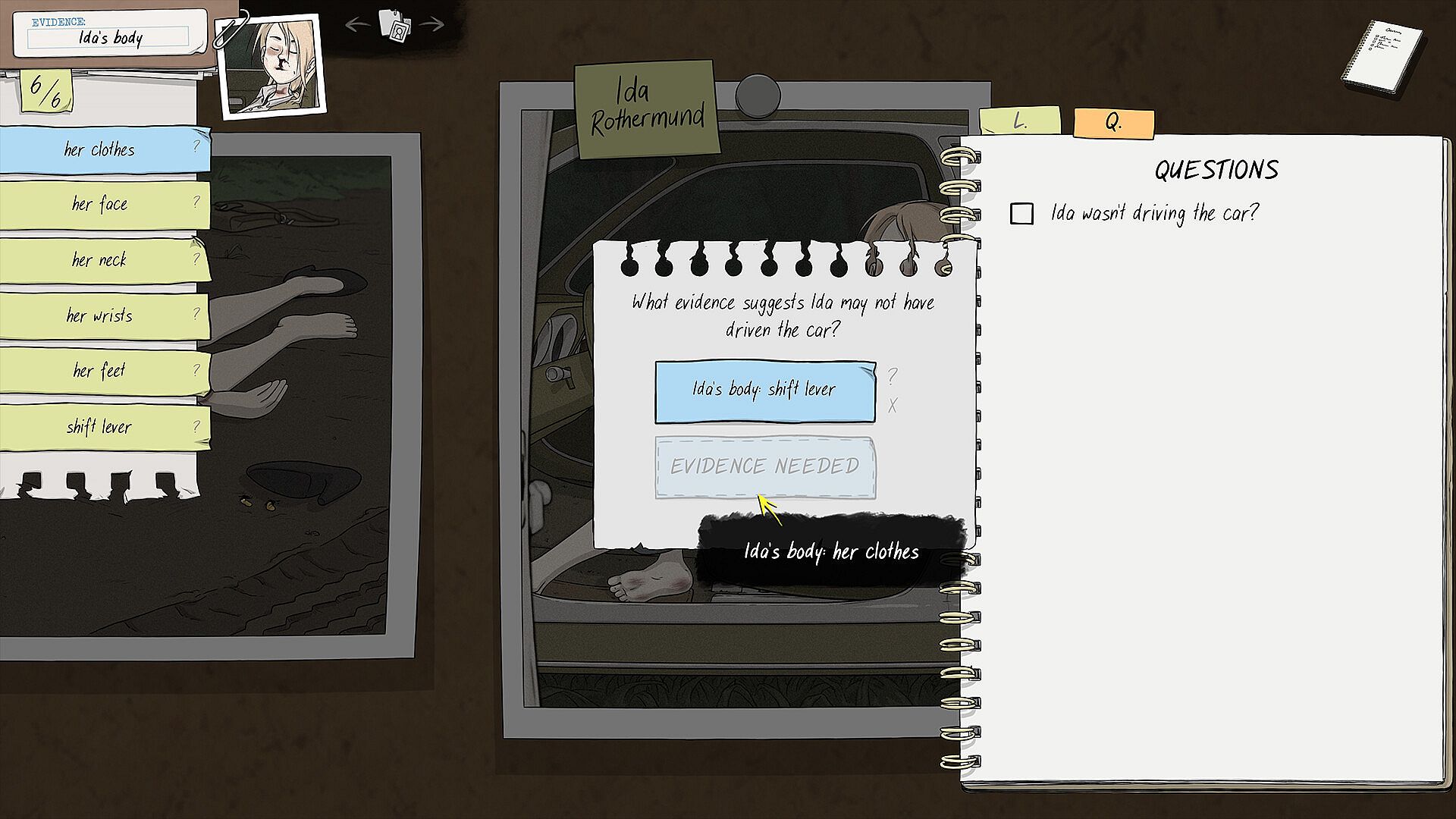
Core gameplay revolves around scanning photographs and documents for clues using methods drawn from early FBI profiling techniques. Players examine visual evidence to spot behavioral indicators, connect findings across different pieces of information, and build a coherent hypothesis about the perpetrator. The process emphasizes methodical observation over action, with interactions limited to selecting and interpreting elements within static scenes.
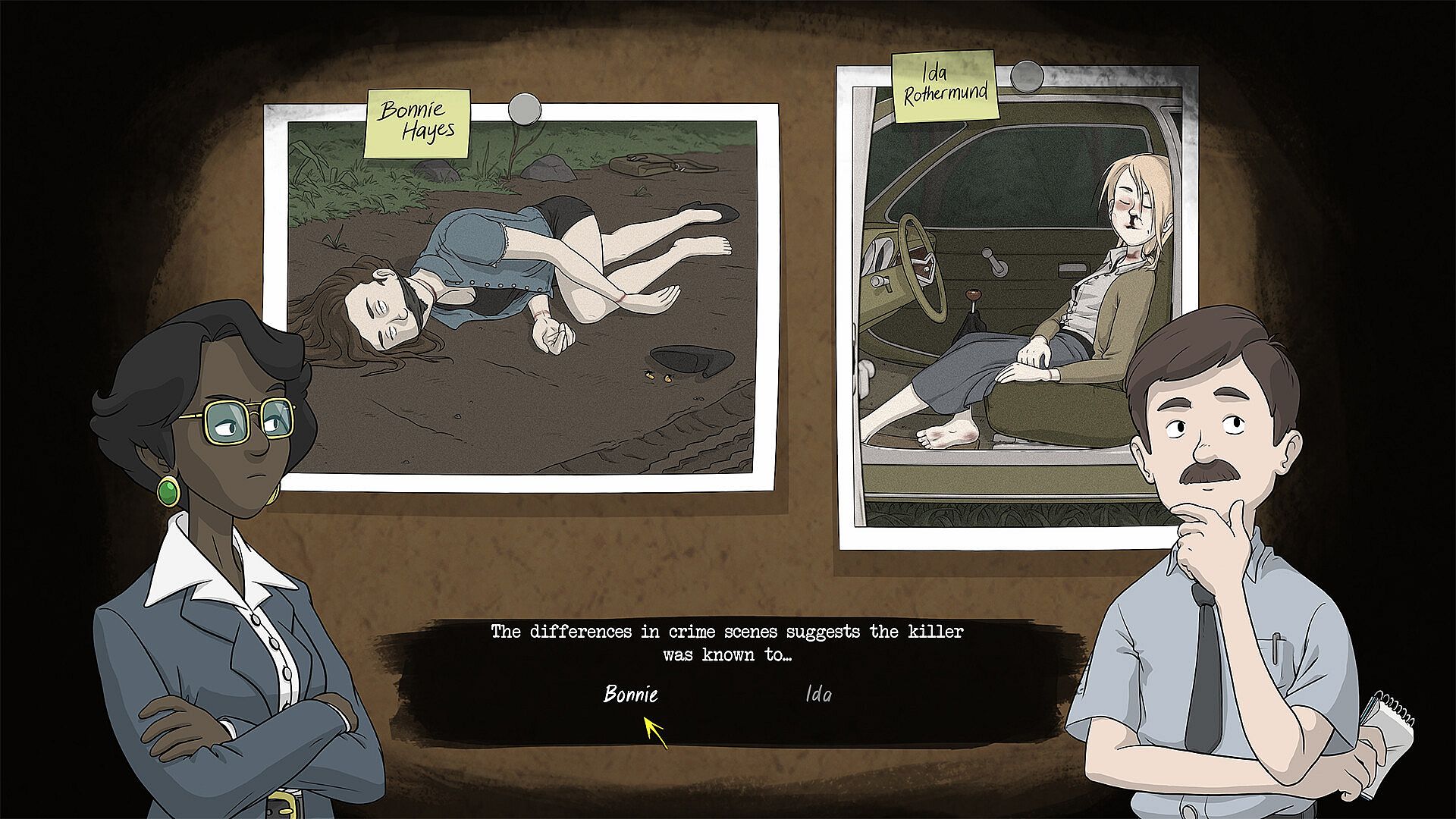
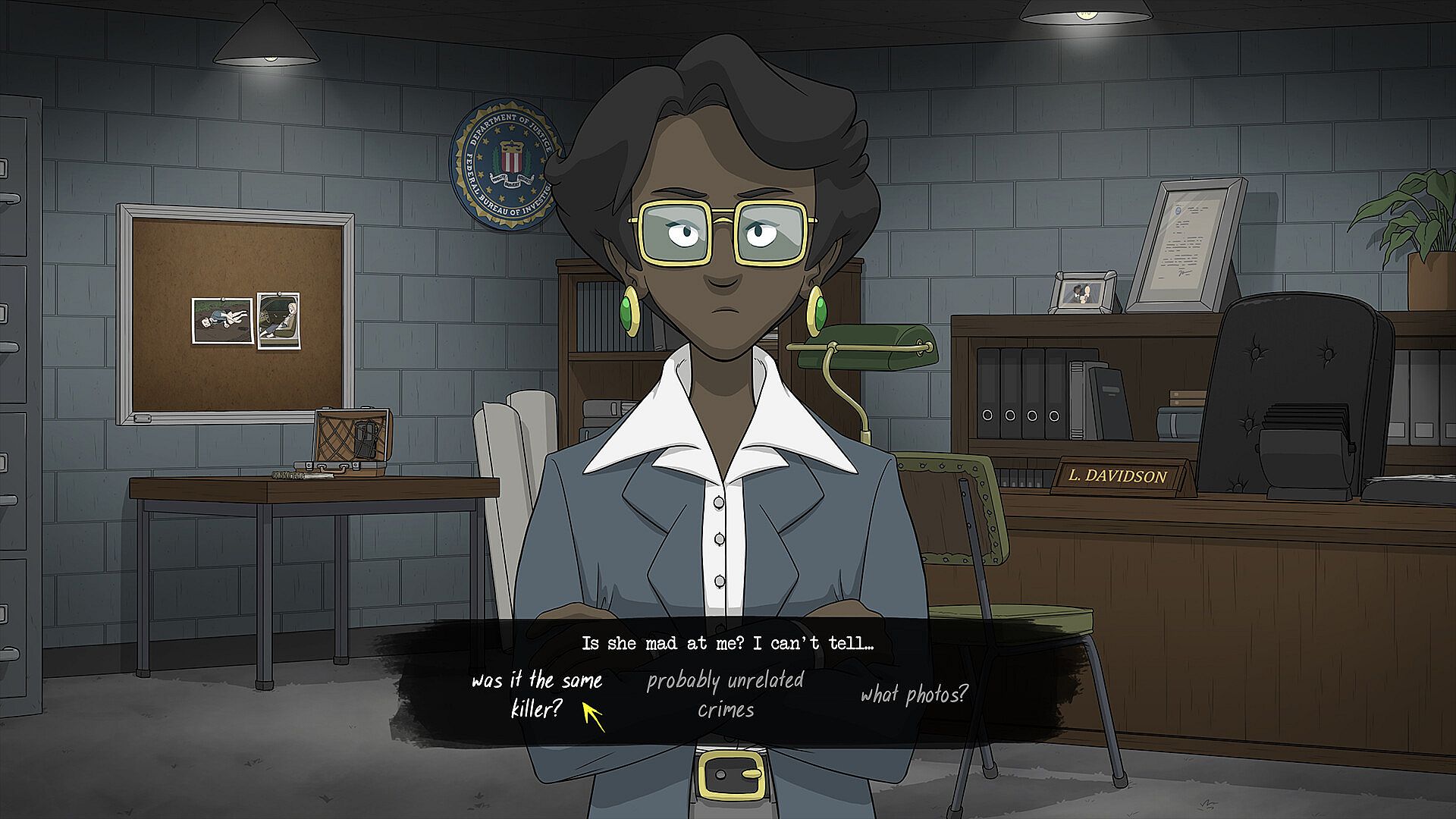
Progression follows a narrative structure where each discovery influences the impression formed by mentor Lenore Davidson. Players must decipher contradictions and fragments in the evidence to map the "why" behind the crimes. The mechanics reward careful attention to psychological details rather than speed or reflexes, creating a focused loop of investigation and reflection that unfolds over a contained story.
Atmospheric presentation supports the 1980s setting through detailed 2D artwork and a grounded tone that highlights the era's emerging understanding of serial offenders. Sound design and pacing reinforce the methodical nature of the work, keeping attention on the evidence itself.
Game Modes
The Big Hollow: 1982 offers a single, linear narrative case designed to be completed in one sitting. There are no separate game modes, multiplayer options, or branching campaigns. The entire experience consists of one tightly structured investigation that guides players through evidence collection, pattern recognition, and hypothesis presentation without additional variants or replay structures.
This approach keeps the focus on the core deduction process from start to finish. Players move through the case by building connections between clues and refining their understanding of the offender's mindset, with the mentor's feedback serving as the primary measure of progress. No alternative play styles or difficulty settings alter the central loop.
Story and Setting
Set in 1982, the game unfolds in a small Southern community where disappearances raise questions that locals avoid addressing. Players take on the perspective of Desmond, who learns profiling techniques under the guidance of Lenore Davidson, a representative of the newly formed Behavioral Science Unit. The story explores the challenges of applying systematic analysis to human behavior during a time when the concept of the serial killer was still emerging in official circles.
Fragments of evidence reveal contradictions and hidden connections that players must resolve. The narrative emphasizes the tension between intuition and procedure, as well as the personal stakes involved in proving the value of profiling methods. Atmospheric details ground the mystery in its historical period without expanding into unrelated subplots.
Is It Worth Playing?
Early player reception has been positive, with 86 percent of 22 reviews rating the game favorably on its primary platform. The short length makes it accessible for those seeking a complete story without a long commitment, while the emphasis on evidence interpretation appeals directly to fans of deduction-based adventures and true crime topics.
Those who enjoy modernized point-and-click experiences centered on observation and logical connections will find the mechanics align closely with that preference. The absence of ongoing updates or additional content reflects its design as a self-contained title released in May 2026. Players looking for a focused, atmospheric mystery that prioritizes psychological insight over action will likely appreciate the deliberate pacing and thematic consistency.















