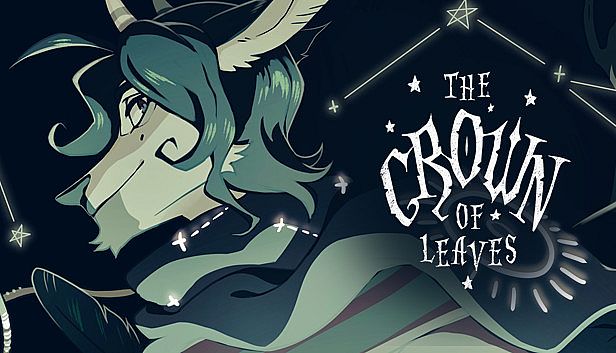









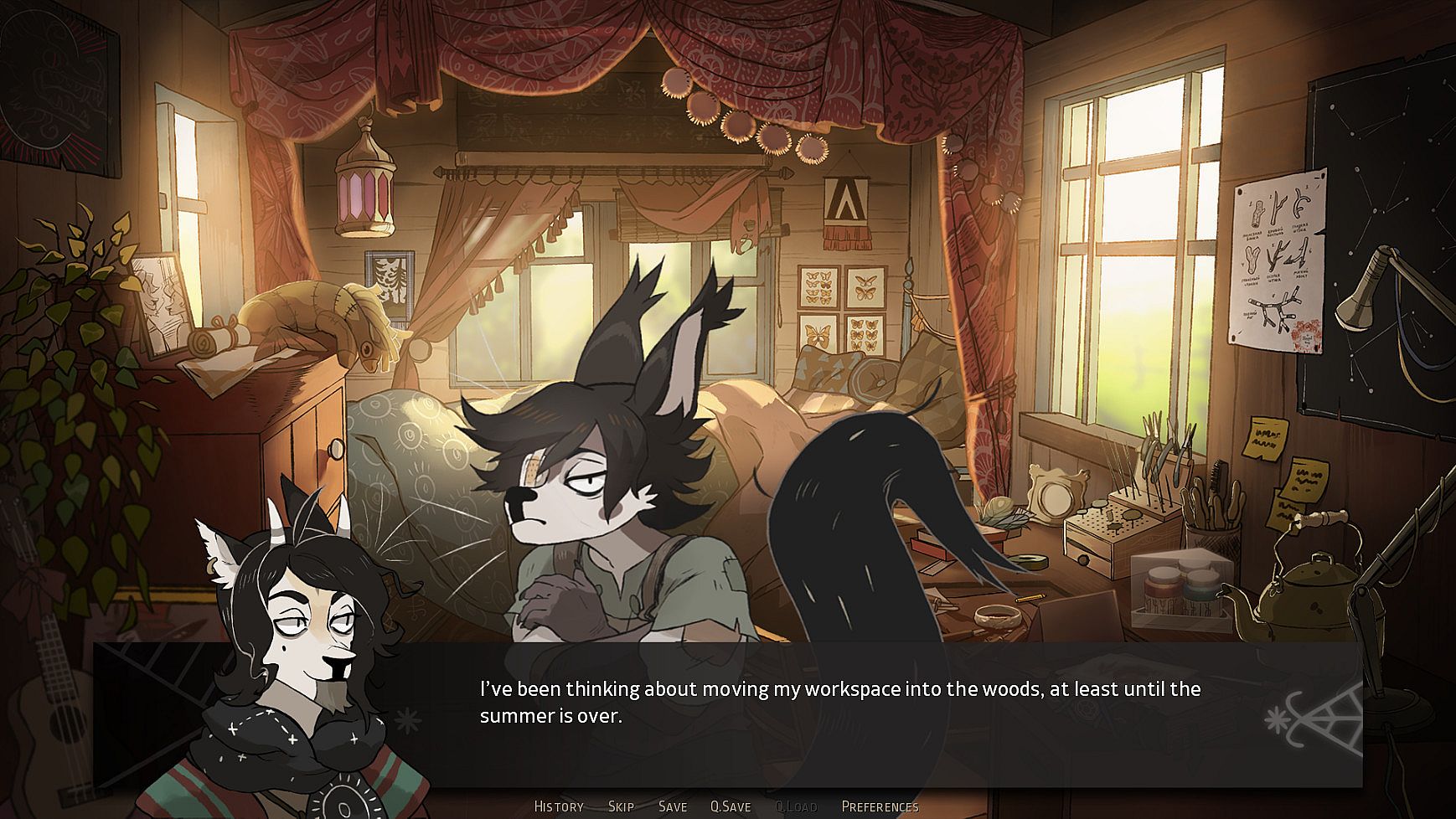
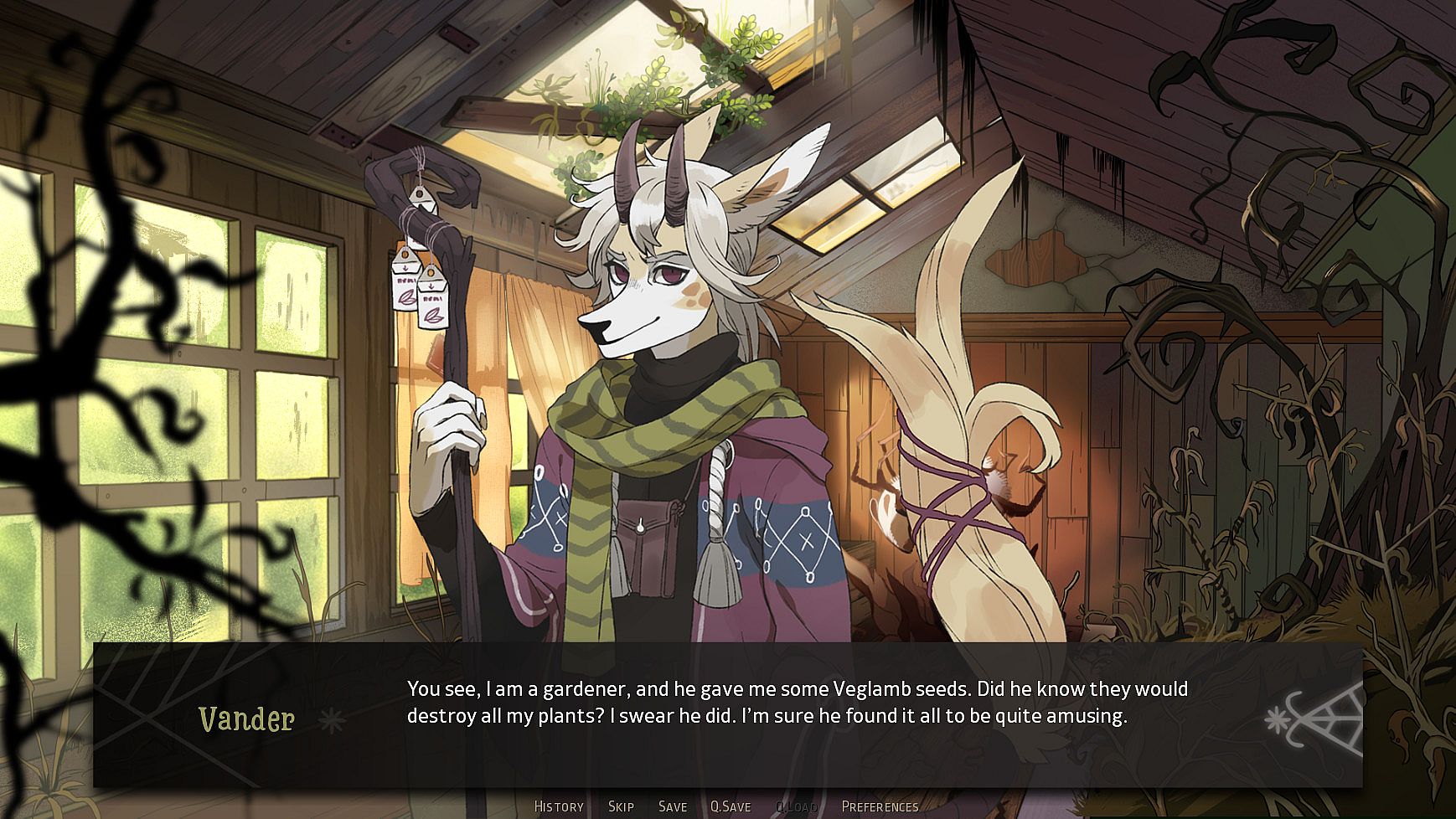
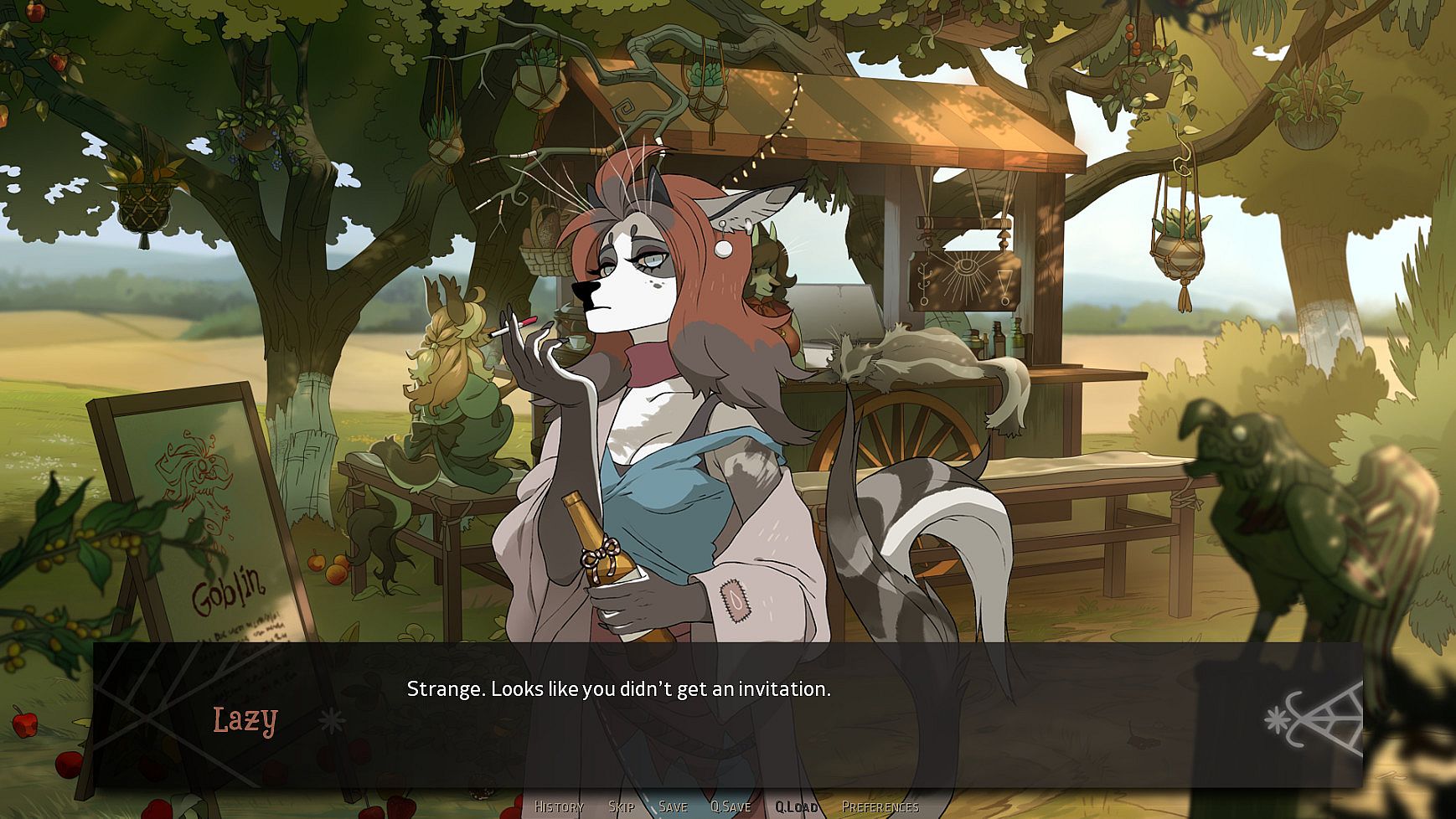
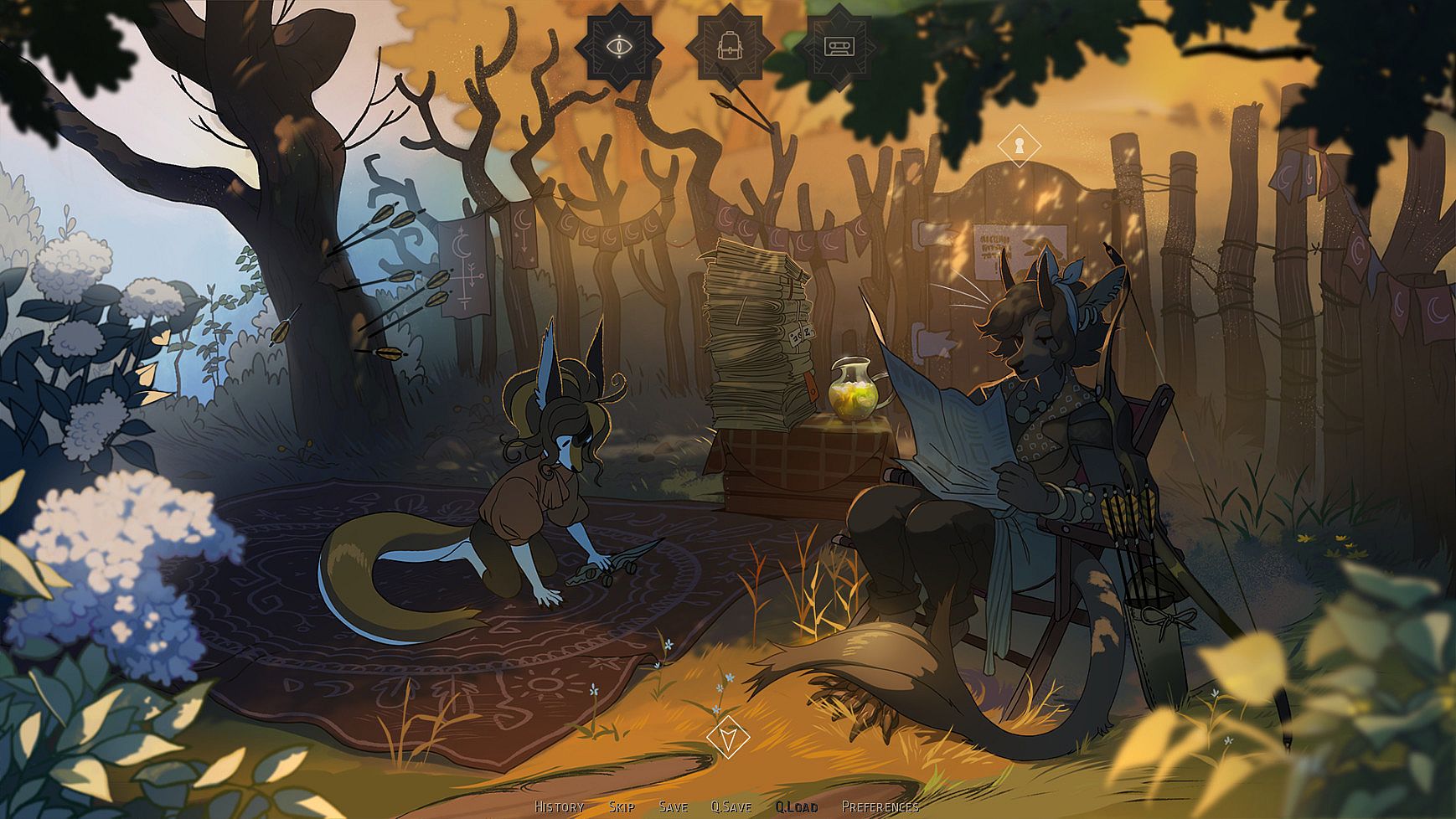
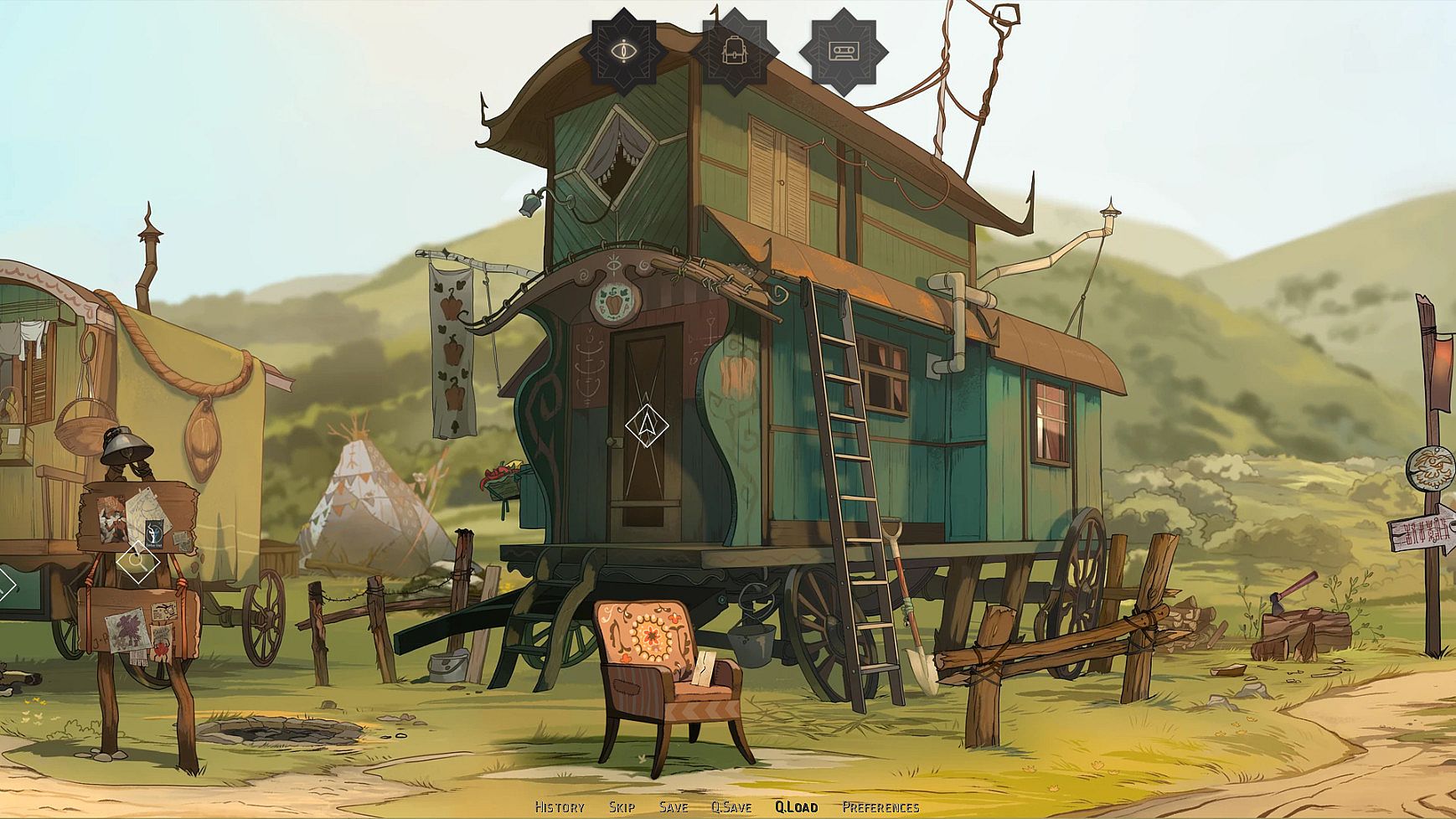
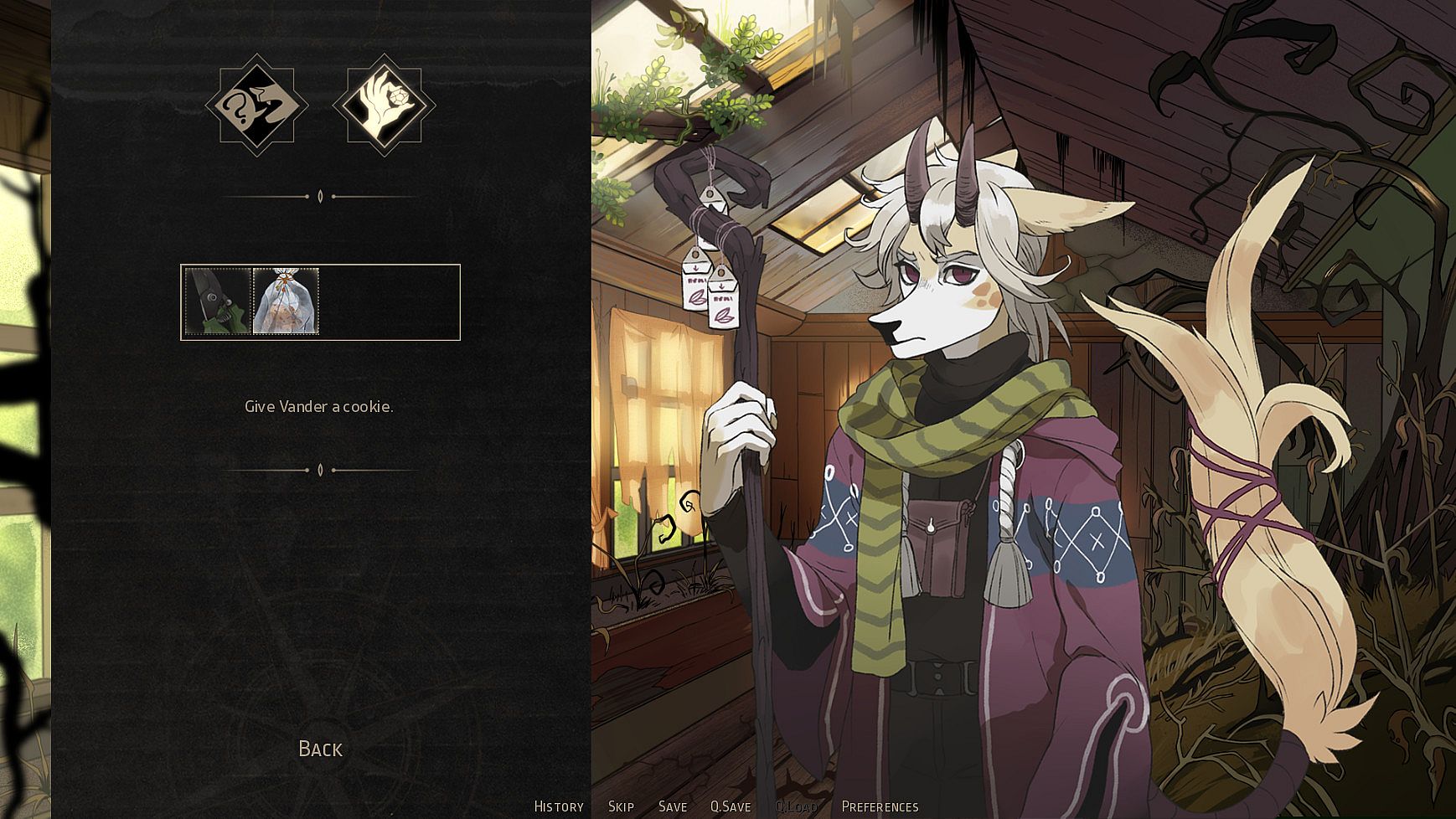
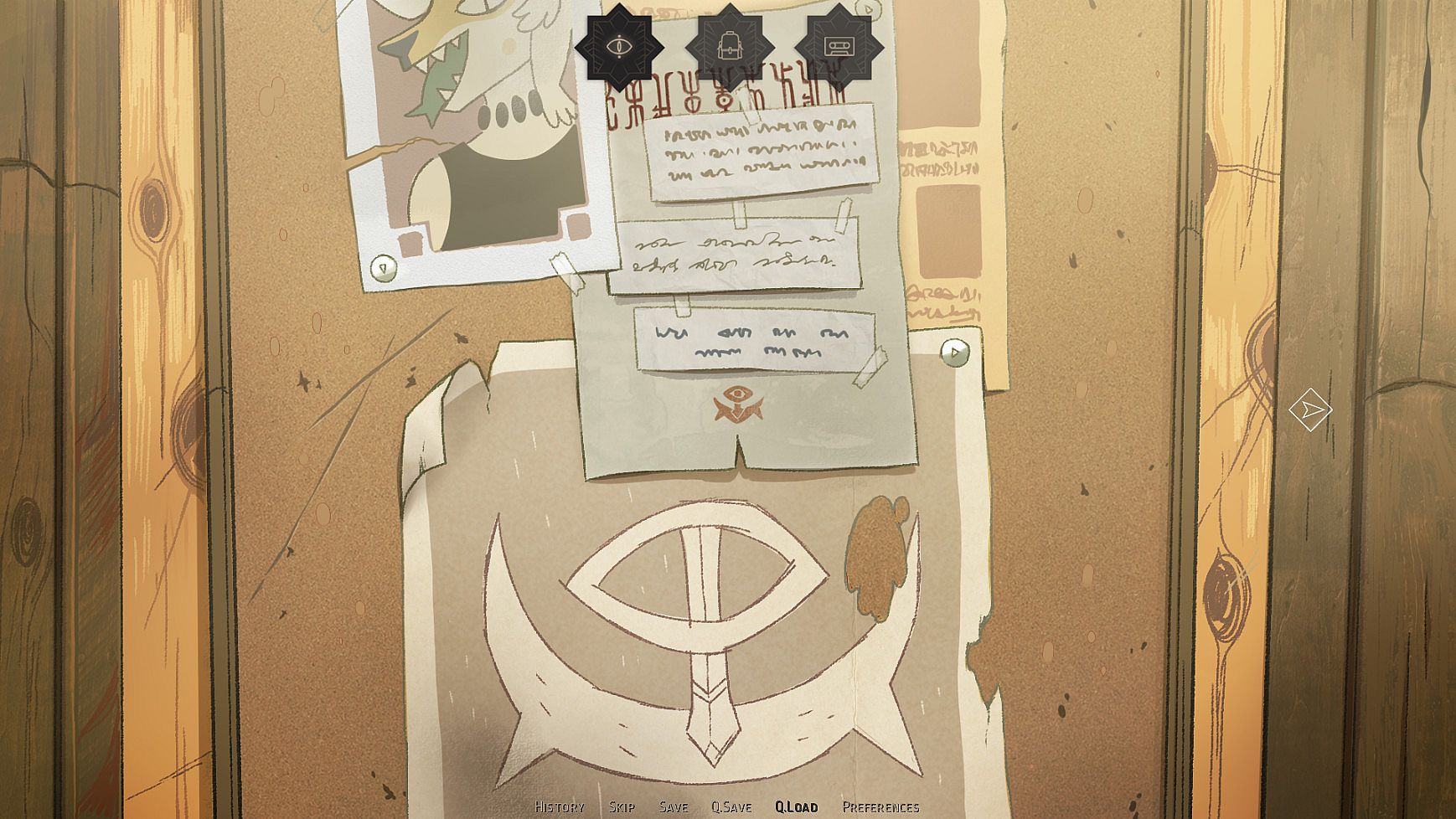
The Crown of Leaves is an indie adventure game that blends non-kinetic visual novel storytelling with point-and-click mechanics. Set in the fictional world of Shang-La, it follows Roui, a city dandy and jeweler who returns to his homeland of Latori after professional setbacks. There he encounters local mysticism, a commission from a baron, and interference from the Mad Rook, a trickster spirit with peculiar magic.
Gameplay
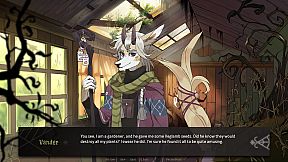
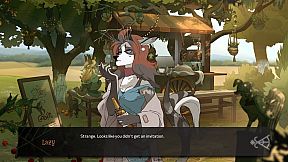
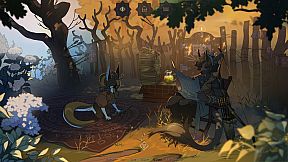
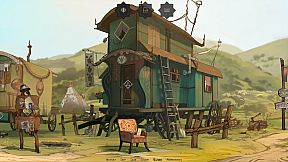
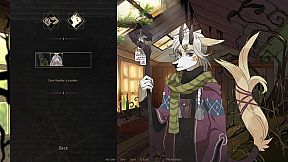
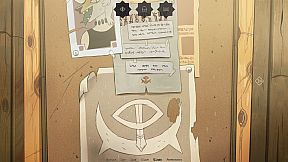
Players navigate environments by examining objects and locations for clues that advance the narrative or reveal character details. An inventory system supports item collection and crafting, which players use to solve puzzles or interact with the world. Dialogue choices shape relationships, allowing friendships to form or rivalries to develop across multiple characters. A journal tracks discoveries about the setting, its inhabitants, and unfolding events. Animated sprites bring scenes to life alongside an original soundtrack that underscores the atmosphere of old magic mixed with emerging ideas like electricity and radio.
The world features humans alongside the Sahash, an intelligent race divided into nations distinguished by physical traits such as horn shapes and muzzles. Each nation maintains distinct customs, laws, and preferences in fashion and cuisine. Exploration reveals these cultural layers while the story incorporates riddles, constellations, beasts, and ghosts. Different routes emerge from player decisions, leading to varied outcomes without kinetic action sequences.
Game Modes
The experience remains single-player throughout, centered on narrative progression rather than competitive or cooperative formats. Branching dialogue and exploration paths create replay value as players uncover hidden clues or pursue alternate character interactions. No separate modes alter core systems; the structure integrates visual novel conversation trees with point-and-click investigation in one continuous campaign divided across chapters.
Story and Setting
Shang-La blends mixed cultures and eras where science coexists with mysticism. Swords remain the primary weapons, yet glasses, phones, and radio appear alongside metal stars that conceal secrets. The Sun and Moon alternate in the sky over a continent ringed by ocean. Roui's journey begins with a bracelet commission that draws him into local beliefs he finds irritating, then escalates when the Mad Rook meddles in residents' lives. The tale emphasizes personal parallels to everyday struggles amid its unusual elements, encouraging players to reconsider assumptions through twisted developments.
Is It Worth Playing?
Reception varies by chapter. Chapter 1 draws praise for its art, music, and intriguing concepts from some players while others note its short length around one to two hours and occasional performance hiccups on certain hardware. Chapter 2 receives stronger feedback, with very positive ratings from over one hundred reviews highlighting story continuation and discoveries. The game suits those interested in anthro characters, worldbuilding focused on cultural tensions between humans and Sahash nations, and hybrid mechanics that reward careful observation over fast reflexes. Its incomplete status, with a planned third chapter unreleased, means the full arc remains unavailable. Players seeking a compact, decision-driven adventure with crafting and clue hunting may find value in the released content, particularly if drawn to its unique setting and non-professional development approach that prioritizes atmosphere over polished systems.