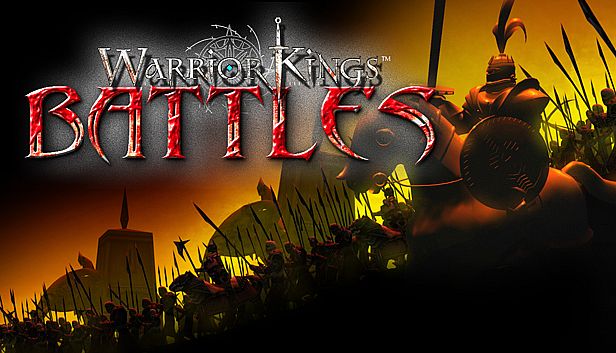













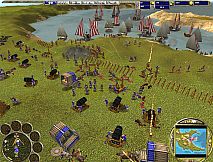
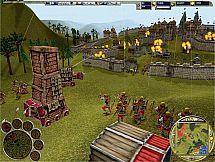
Warrior Kings: Battles is a real-time strategy game developed for the PC that emphasizes tactical combat and intelligent computer opponents in a 3D environment. Released in 2003 as a standalone title, it shifts focus toward direct battles while retaining core elements from the original Warrior Kings series. Players command armies across varied terrain, managing resources and units to outmaneuver rivals through careful planning rather than overwhelming force.
Gameplay
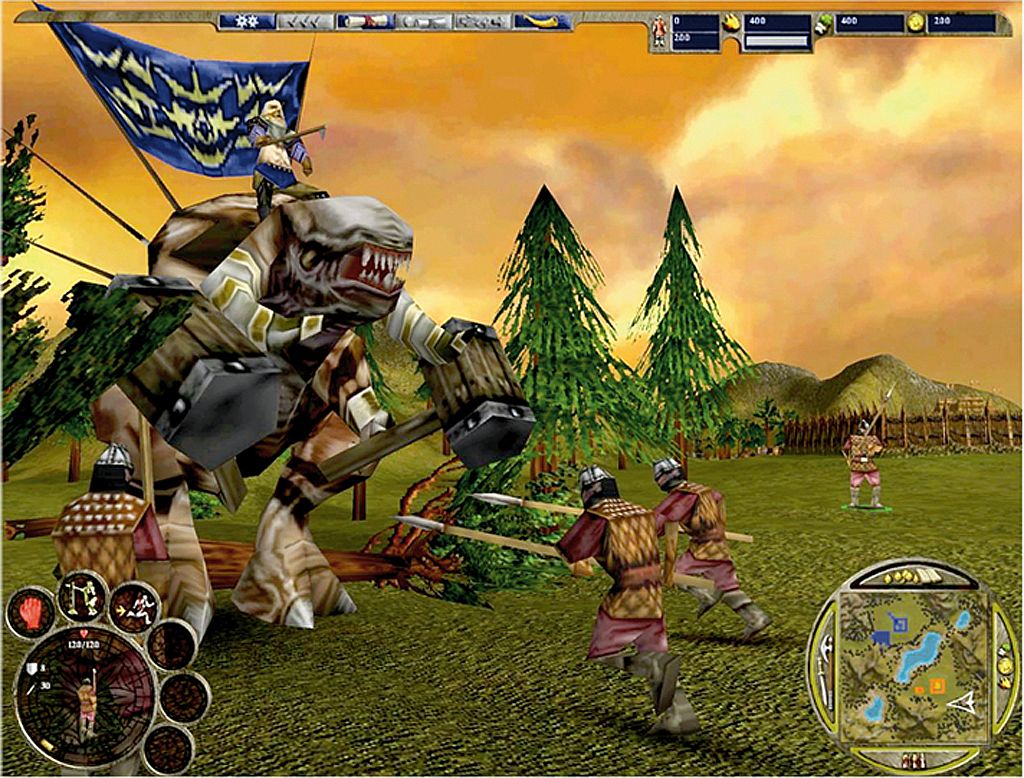
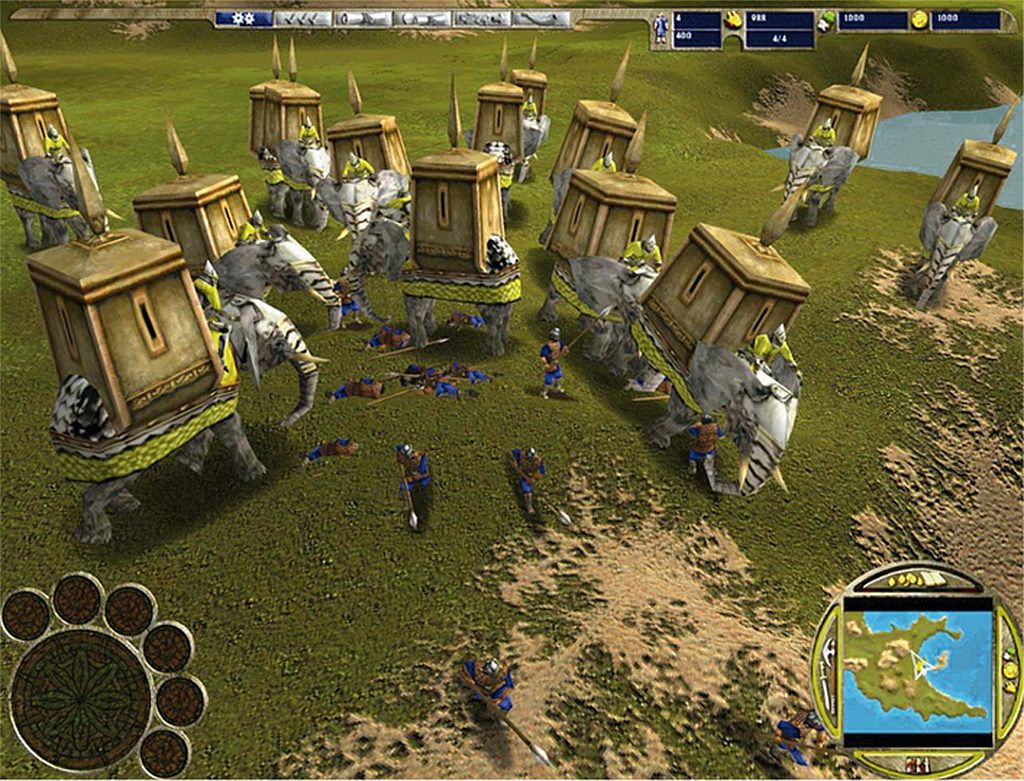
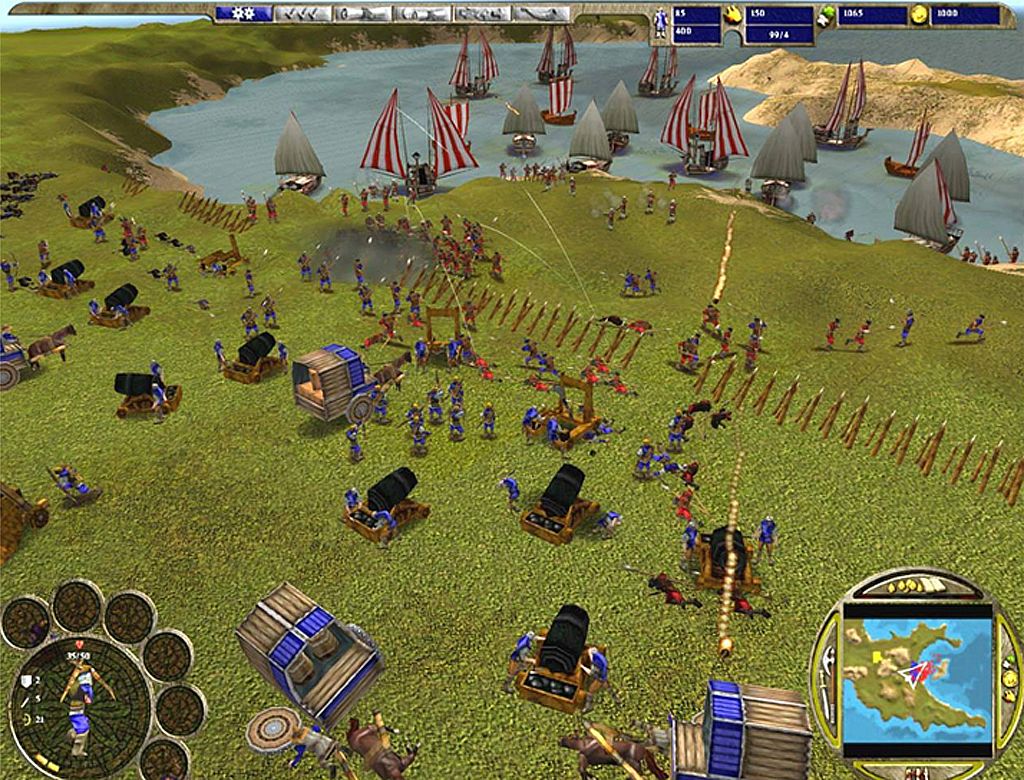
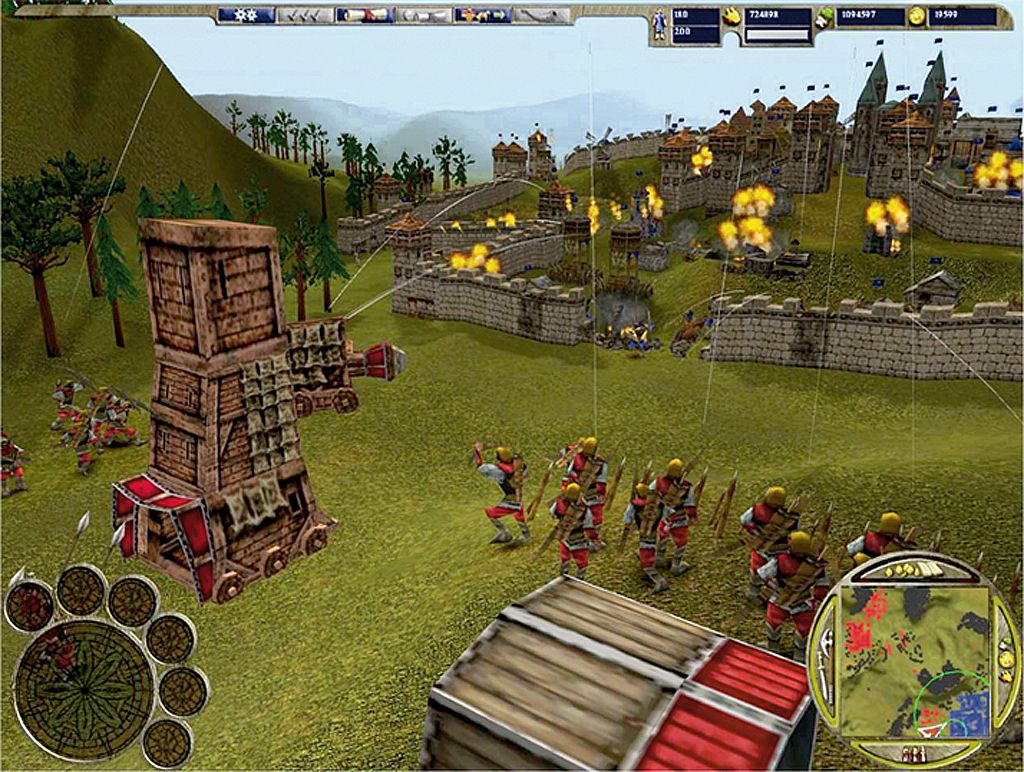
The core loop revolves around building and directing forces in real time while adapting to the landscape. Terrain plays a central role, with elevation, forests, and open fields influencing movement, line of sight, and defensive positions. Players select from a wide array of units including cavalry for rapid strikes, catapults and rocket launchers for siege work, war elephants for heavy impact, and specialized options such as spies, arch druids, elementals, golems, and summoned beings. Formations allow groups to maintain cohesion during advances or holds, while individual commands like guarding positions or skirmishing enable flexible responses to threats.
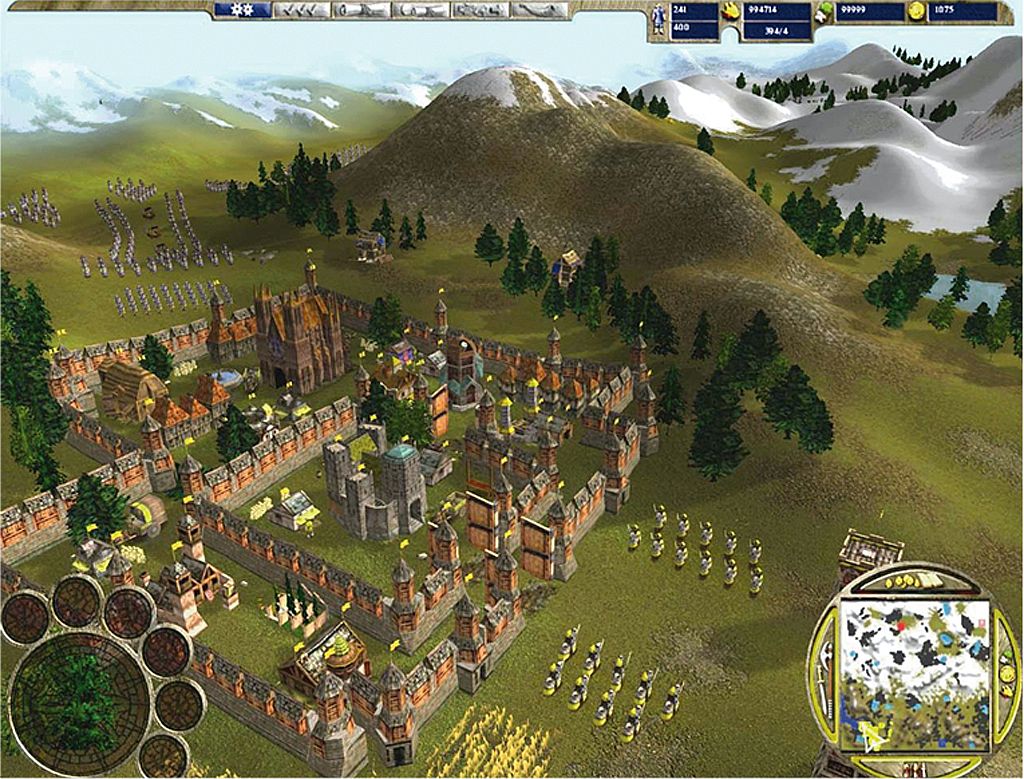
Economy management supports army growth through resource gathering and upgrades that unlock stronger variants or abilities. The 3D presentation renders provinces and cultural differences with distinct visual styles, helping players identify strategic opportunities at a glance. Combat rewards positioning and timing over raw numbers, as effective use of arms and terrain can turn the tide against larger forces.
Game Modes
Skirmish mode forms the centerpiece, delivering matches against computer-controlled opponents on customizable maps. In this mode, AI generals construct complete economies, assemble balanced offensive and defensive armies, maintain proper formations, and actively scout for vulnerabilities in player defenses. A dedicated AI diplomacy system adds layers by allowing computer factions to negotiate alliances, propose trades, or shift loyalties mid-conflict, creating interactions that mimic human decision-making.
Matches in skirmish can scale in complexity based on map size and starting conditions, encouraging repeated playthroughs to test different unit combinations and tactical approaches. The mode supports single-player sessions exclusively, with no verified multiplayer components.
Strategic Depth and AI Behavior
Advanced artificial intelligence sets the experience apart by simulating realistic opponent decision-making. AI forces do not simply rush forward; they probe lines, exploit gaps, and adjust strategies based on observed player actions. This extends to diplomatic overtures where computer realms may offer temporary pacts or attempt to isolate the player through coordinated pressure. Such systems encourage defensive preparation alongside offensive pushes, as static bases often fall to persistent AI scouting and reinforcement.
Unit variety supports multiple viable strategies, from cavalry-heavy mobile warfare to artillery-supported sieges or mixed forces incorporating magical or summoned elements. Terrain advantages become decisive when players position ranged units on high ground or use natural barriers to funnel enemies into kill zones.
Is It Worth Playing?
Warrior Kings: Battles appeals most to players who enjoy classic real-time strategy with strong emphasis on single-player challenges and opponent intelligence. The skirmish mode delivers consistent opposition that scales with map settings, while the diplomacy features introduce unpredictability absent in many older titles. User reviews on its primary digital storefront rate the game Very Positive based on hundreds of submissions, highlighting the AI and tactical options as standout elements.
Those seeking fast-paced action or modern multiplayer may find the 2003 design dated in interface and pacing. However, enthusiasts of deliberate, formation-based combat and AI-driven campaigns will find substantial replay value in experimenting with unit mixes and defensive setups. The game remains available for purchase and runs on contemporary Windows systems with minimal adjustments, preserving its original focus on strategic depth over graphical spectacle.