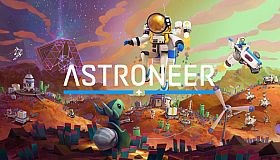












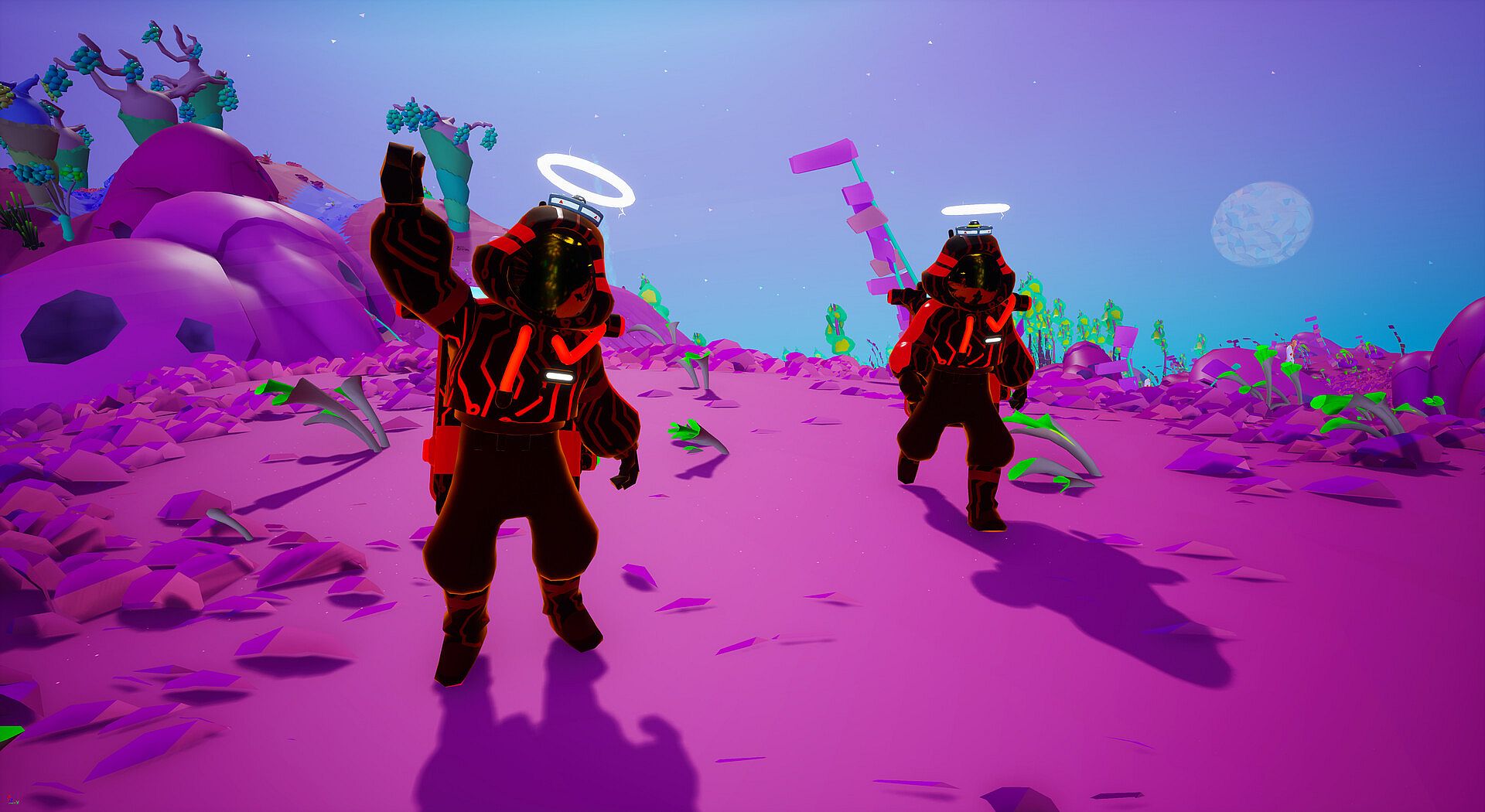
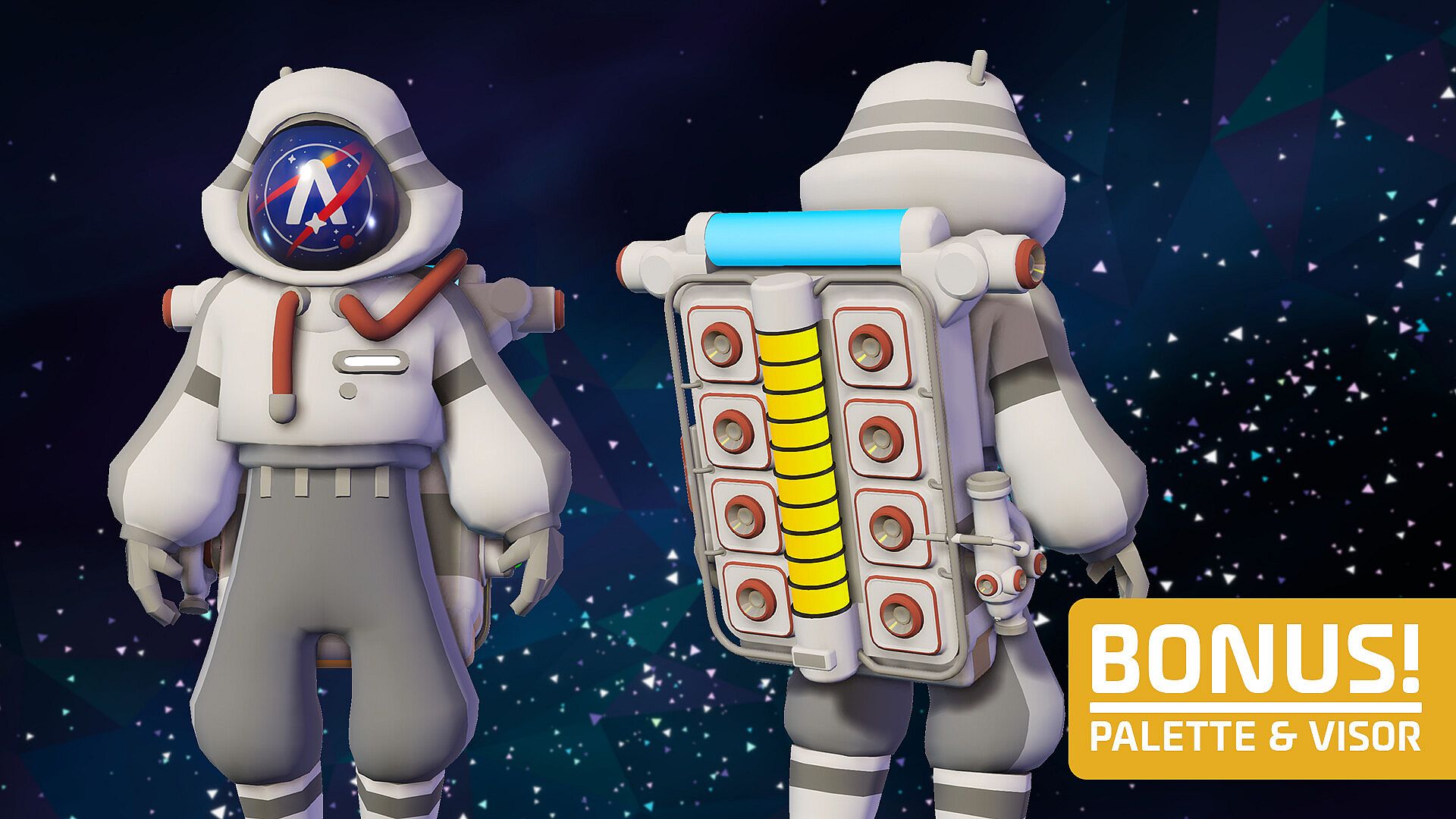

Astroneer is an indie simulation adventure game centered on space exploration and planetary engineering. Players take on the role of an Astroneer tasked with charting unknown worlds, gathering resources, and constructing functional outposts across multiple planets. The experience blends survival elements with creative building in a setting that emphasizes ingenuity over combat.
Gameplay
The core loop revolves around the Terrain Tool, which allows precise digging, collecting, shaping, and coloring of the environment. This tool serves as the foundation for all progression, enabling players to extract raw materials while simultaneously sculpting the landscape to suit their needs. Resource management forms another pillar, as players must process gathered items into usable components for crafting tools, vehicles, and structures.
Base building expands through modular construction and automation systems. Players design production lines that run independently once set up, freeing attention for further exploration. Vehicles provide mobility across varied planetary surfaces, each with distinct handling and capacity suited to different terrains. Multiplayer support lets up to four players collaborate on shared bases and expeditions, with seamless drop-in and drop-out functionality.
Planetary diversity drives discovery. Each world presents unique hazards, resources, and visual characteristics that influence strategy. Research stations scattered across surfaces yield new technologies, gradually expanding the available toolkit and encouraging repeated visits to previously explored areas.
Game Modes
Astroneer operates as a unified sandbox experience without separate named modes. The same systems support both solo play and cooperative sessions, allowing players to tackle objectives at their own pace or coordinate with others. Progression remains consistent regardless of group size, focusing on personal or collective advancement through exploration and construction.
Cooperative elements emphasize shared base development and joint expeditions rather than competitive structures. Players can divide tasks such as resource gathering, vehicle operation, and research, creating organic teamwork opportunities. Solo sessions highlight individual problem solving and creative freedom in shaping each planet.
Exploration and Progression
Progression centers on unlocking new technologies through research and experimentation. Players venture farther from starting locations as they acquire better equipment and vehicles, revealing deeper planetary layers and rarer materials. The absence of traditional leveling systems keeps focus on practical application of gathered knowledge.
Automation becomes increasingly important at later stages. Once basic infrastructure is established, players refine factories to handle routine production, shifting emphasis toward larger scale projects and interplanetary travel. This shift rewards thoughtful initial planning and iterative improvements to existing setups.
Current State and Updates
The game receives ongoing support with regular patches addressing stability and quality of life improvements. Development continues into 2026 with a monthly update schedule planned through the end of the year, alongside preparations for a major anniversary milestone. This sustained attention maintains the title's relevance for both new and returning players.
Is It Worth Playing?
Astroneer suits players who enjoy methodical exploration paired with hands on construction and automation. Those drawn to open ended survival crafting will find satisfaction in the tactile terrain manipulation and long term base development. The cooperative focus makes it particularly appealing for groups seeking collaborative projects without rigid objectives.
Ongoing monthly updates signal continued refinement and content stability, providing reassurance for anyone considering a long term commitment. The experience rewards patience and experimentation, delivering consistent depth for those who appreciate building systems that evolve through player creativity rather than scripted events.