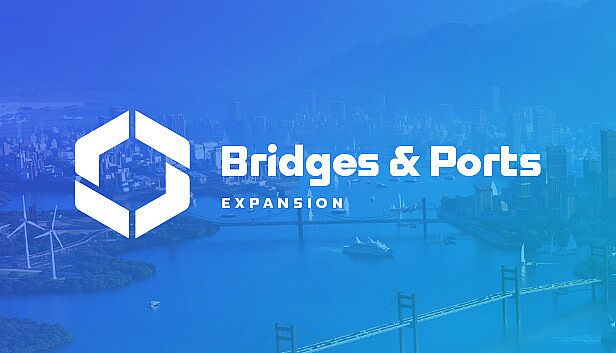




















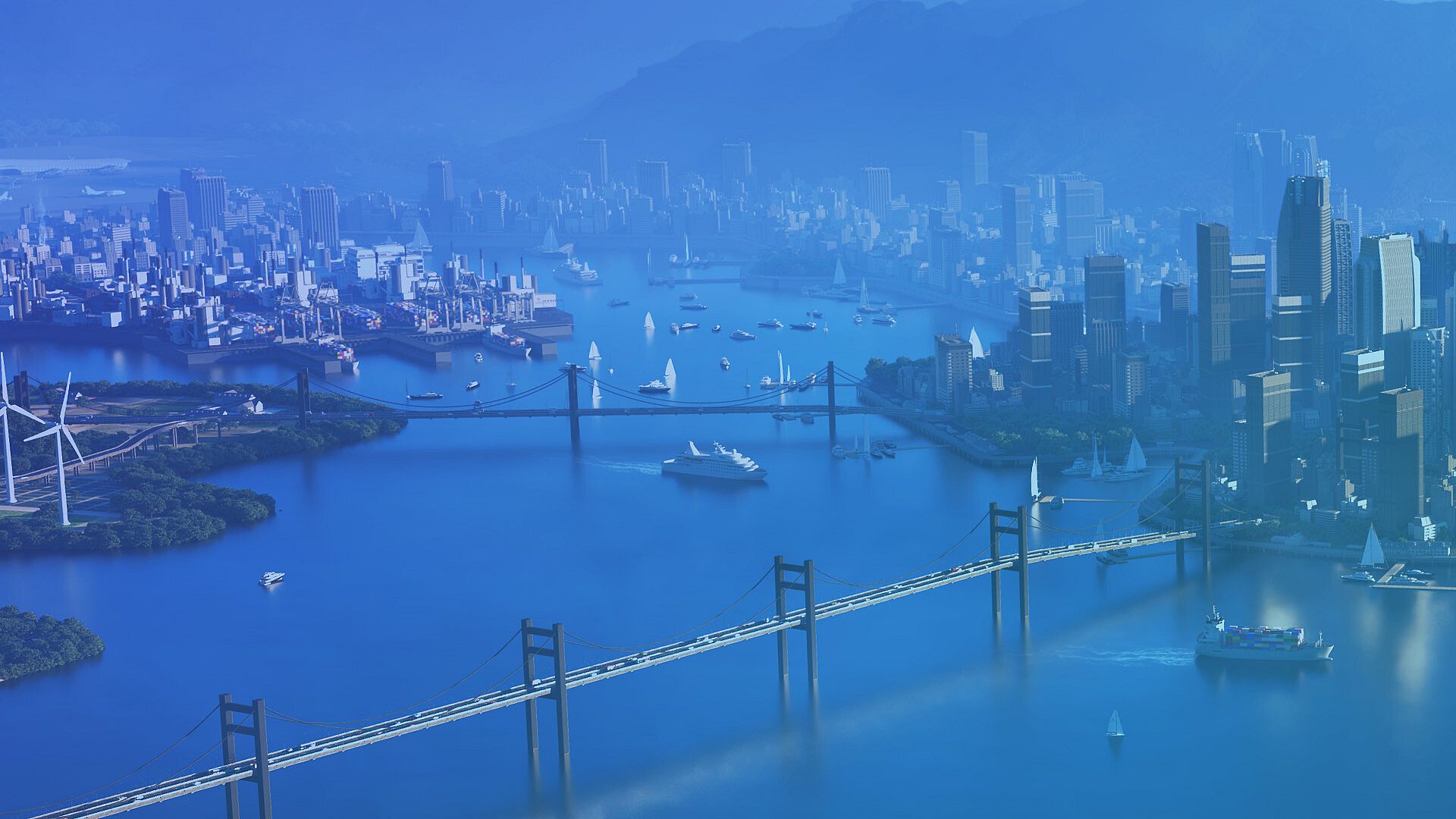
Cities: Skylines II - Bridges & Ports expands the core city-building simulation on PC by adding detailed maritime infrastructure and coastal development options. Players construct and manage urban areas with new emphasis on connecting land and water through functional bridges and active ports that influence traffic flow, industry, and daily routines.
Gameplay
The expansion centers on integrating water-based elements into city layouts. Twenty new bridges include drawbridges for vehicles and pedestrians alongside lift bridges that accommodate vehicles and rail traffic. These structures feature realistic movement, distinct styles across multiple sizes, and warning alarms that signal approaching ships. Traffic management becomes more involved as vehicles cross while seaways remain clear for vessels.
Ferries emerge as a practical transport solution once seaways improve, linking neighborhoods and supporting commuter patterns along the shoreline. Nine new parks and leisure piers of varying sizes combine with quays that support paths or multi-lane roads. Four lighthouses provide visual accents, with one serving as a tourist draw.
Harbor construction starts with one of three gate sizes that scale with traffic volume. Upgrades add storage facilities, ore yards, passenger terminals, a customs office, an emergency response unit, and an employee canteen. A maritime museum balances industrial growth with cultural appeal, while a conference center draws visitors. Inland fish farms and open-water options use fishing piers, designated areas, and offshore farms, supported by warehouses for storage before processing. Offshore oil operations include piers, pipelines, storage tanks, and rigs linked by tanker lines.
Game Modes
City development proceeds through ongoing management of growth, resources, and infrastructure in a single-player environment. The expansion layers new systems onto this foundation, requiring attention to waterway navigation alongside road networks and port efficiency. Players adjust harbor scale to match terrain and city needs without altering the realistic appearance of structures.
Marine industries introduce dedicated production chains for fishing and oil that tie into existing industrial zones. These additions create fresh decision points around land use, safety, and revenue generation while maintaining the simulation focus on balanced urban planning.
New Assets and Maps
More than one hundred assets arrive with the expansion, covering bridges, piers, quays, lighthouses, harbor components, and industry buildings. Five new maps provide varied coastal settings, including a peninsula, a bay, and expansive great lakes that support large-scale water features.
Achievements track progress with these additions, encouraging exploration of the new maritime tools and their effects on city operations.
Is It Worth Playing?
The expansion suits players who enjoy detailed city-building simulations and want to incorporate coastal and port elements into their designs. It adds mechanical depth through movable bridges and customizable harbors that affect traffic and industry without requiring separate play sessions. Ongoing support for the base game continues with patches that address visuals and mechanics, keeping the overall experience current. Those focused on land-only development may find the maritime focus less essential, while players interested in shoreline expansion gain concrete tools for new layouts and revenue streams.