

















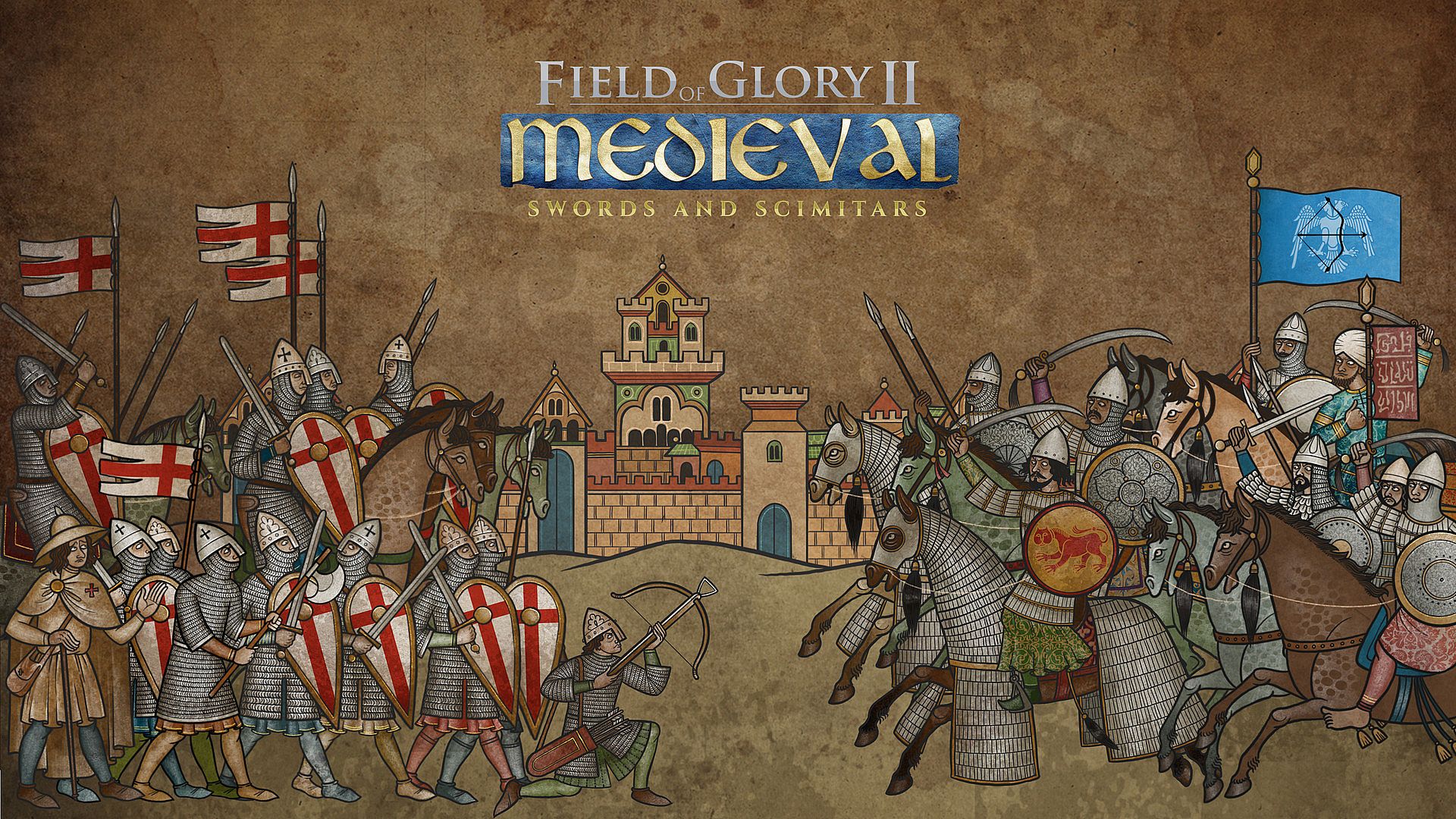
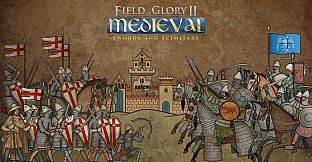
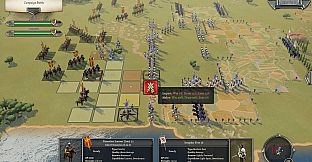
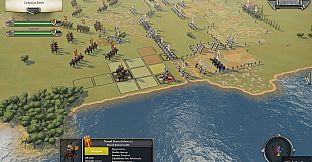
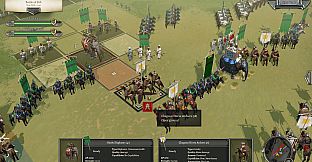
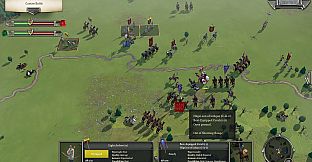
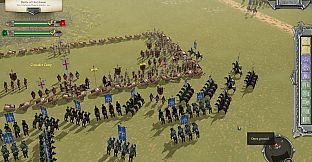
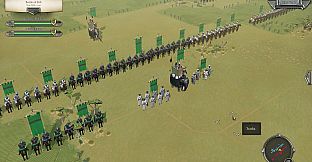
Field of Glory II: Medieval - Swords and Scimitars is a turn-based strategy and simulation game set during the High Middle Ages. It expands the core experience with new factions, units, and content focused on conflicts across South Eastern Europe and the Middle East from 1040 to 1270 AD. Players command armies in detailed tactical battles that emphasize historical accuracy in troop composition, banners, and matchups.
Gameplay
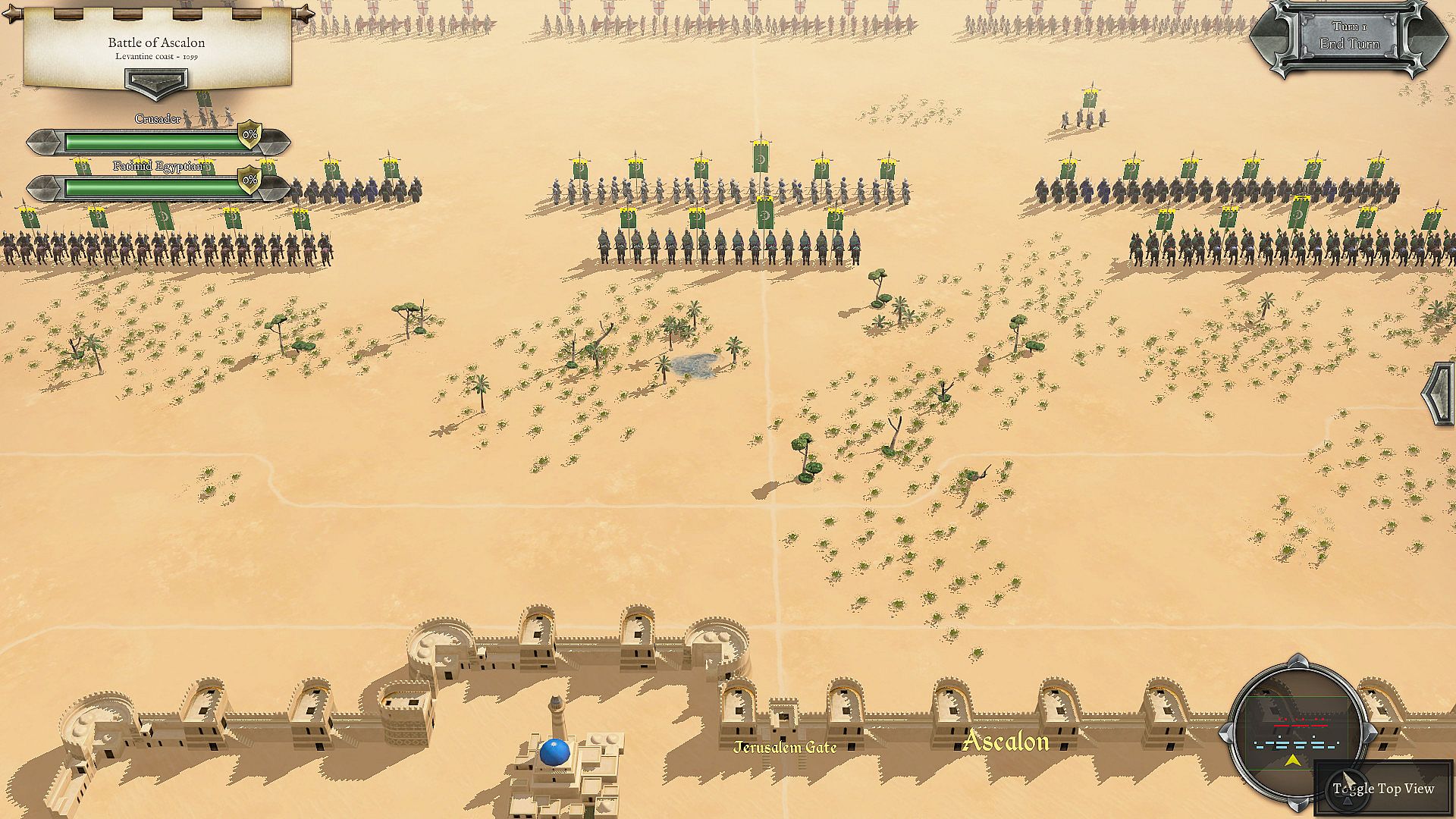
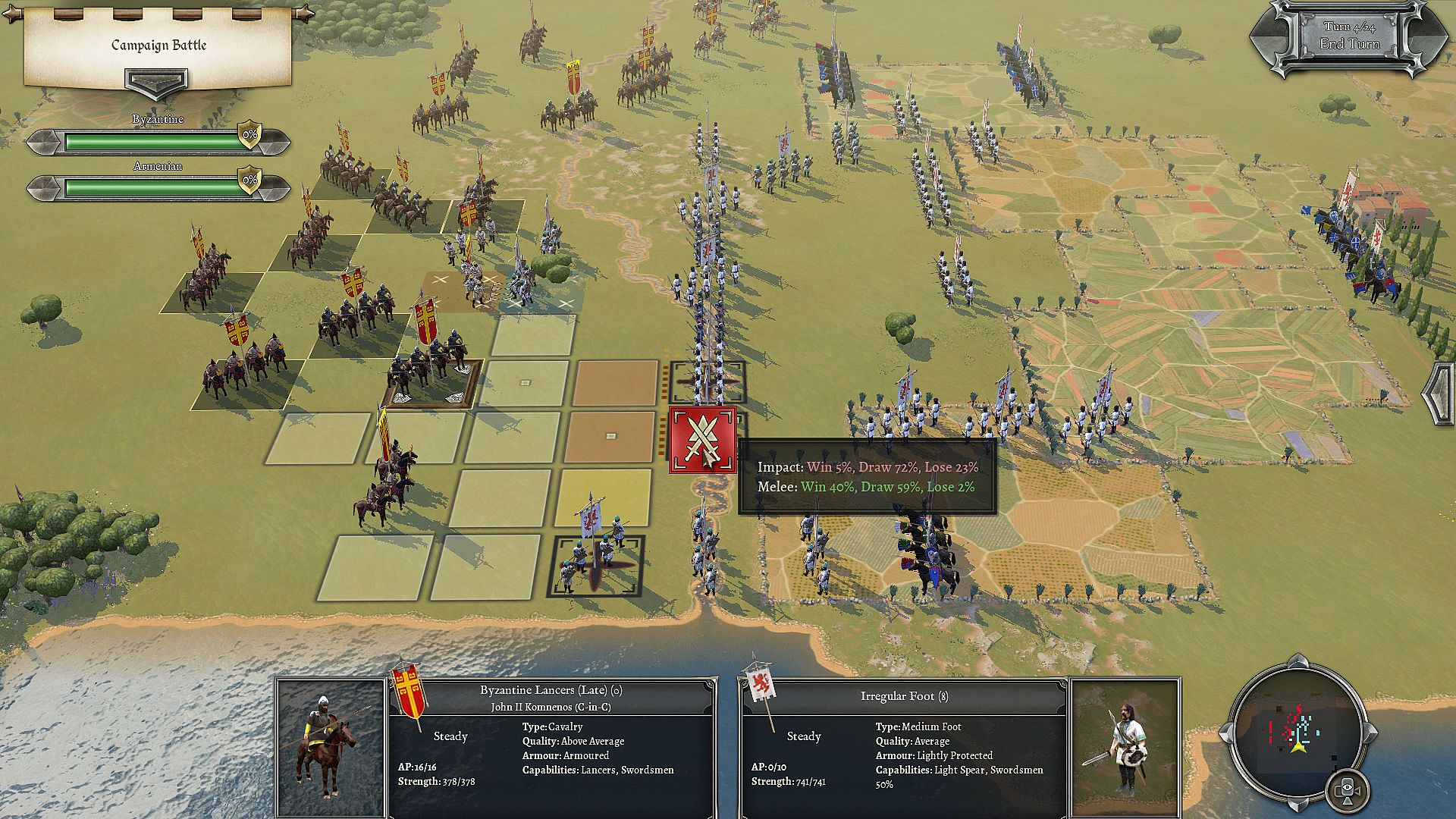
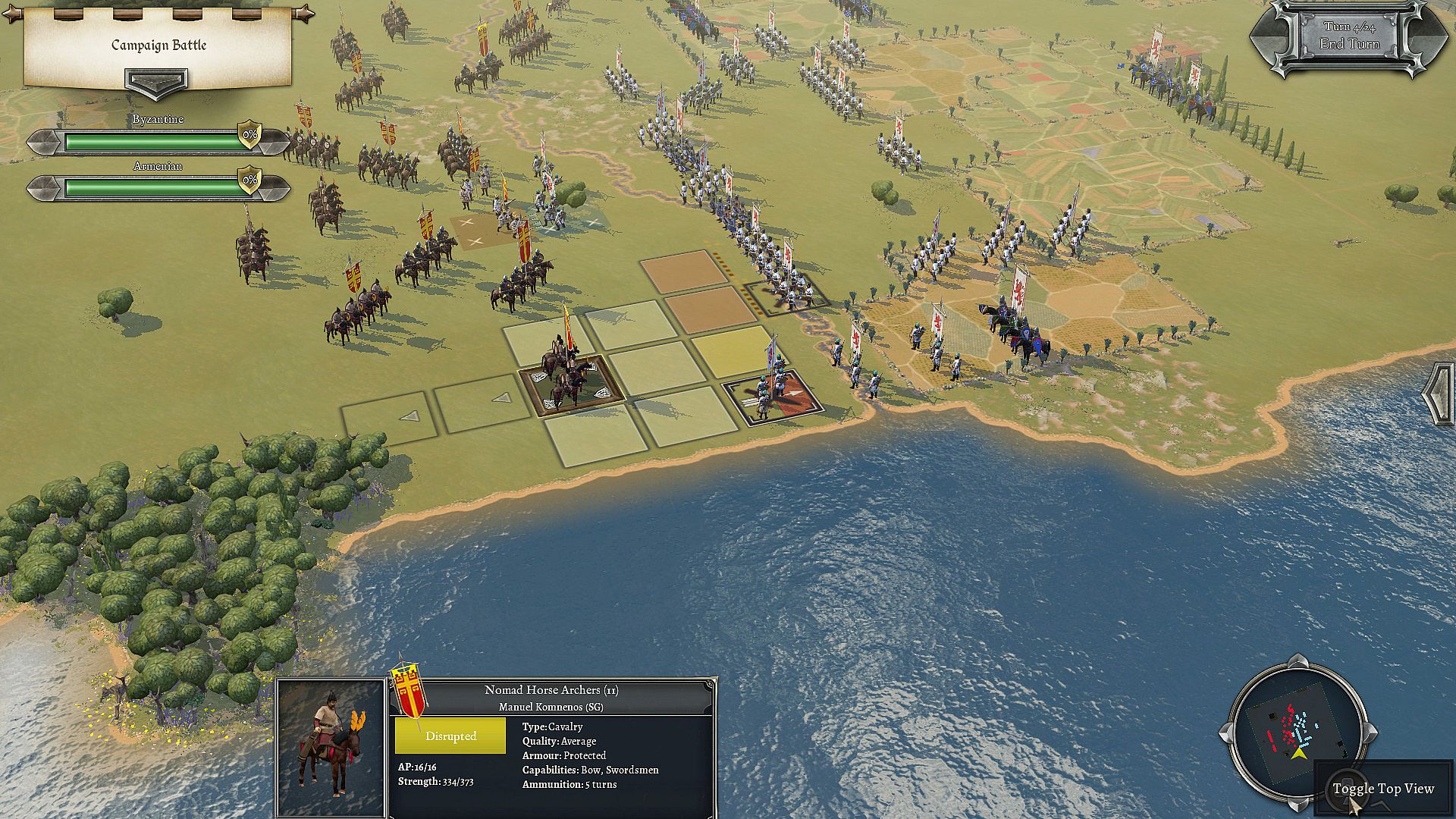
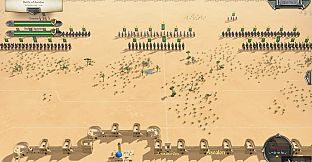
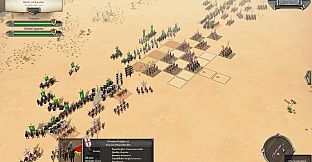
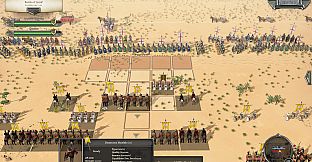
The core loop revolves around selecting historically accurate army lists for chosen factions and dates, then engaging in turn-based battles on varied maps. Each army draws from specific unit types that reflect the period, with options to include contingents from allied nations. Battles incorporate terrain effects, unit formations, and command decisions that influence outcomes in realistic ways. The system supports large-scale engagements while maintaining focus on individual unit performance and positioning.
Mechanics reward careful army construction and adaptation to different opponents. With dozens of new units added, players can field accurate representations of forces such as Seljuq Turks, Mamluks, or Crusader contingents. The emphasis remains on period-appropriate tactics rather than abstract power levels, creating matchups that feel grounded in the era's military realities.
Game Modes
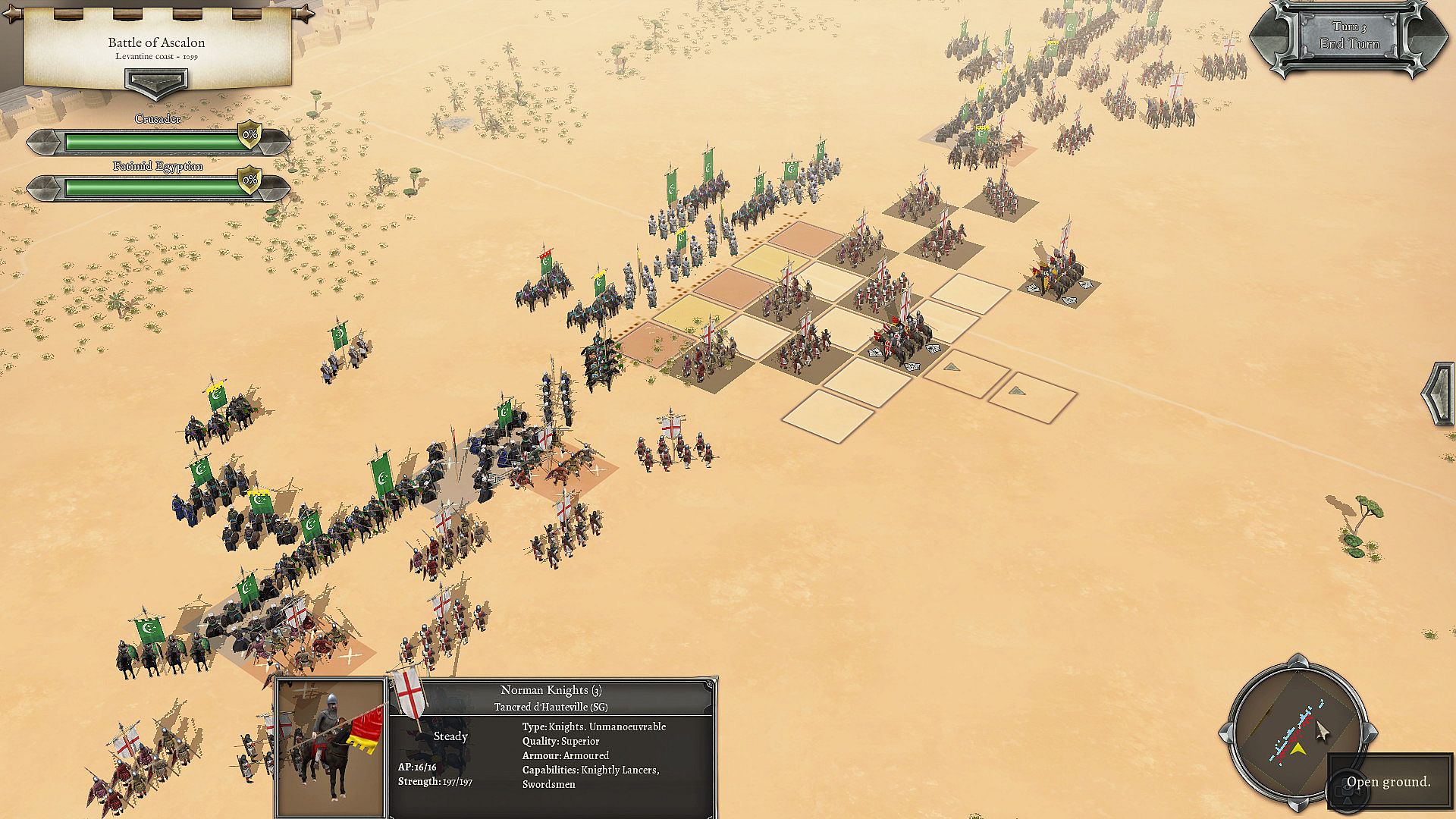
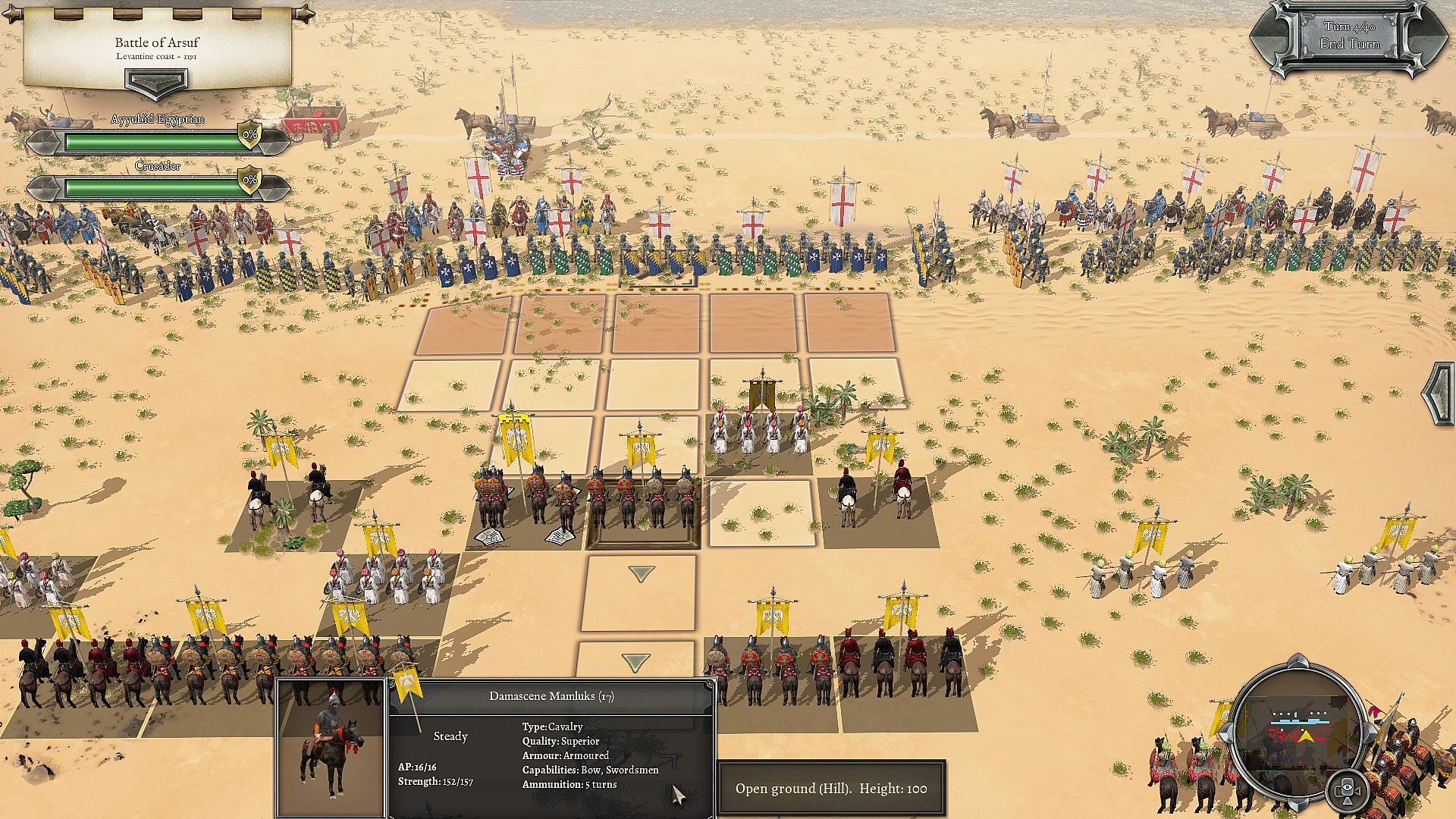
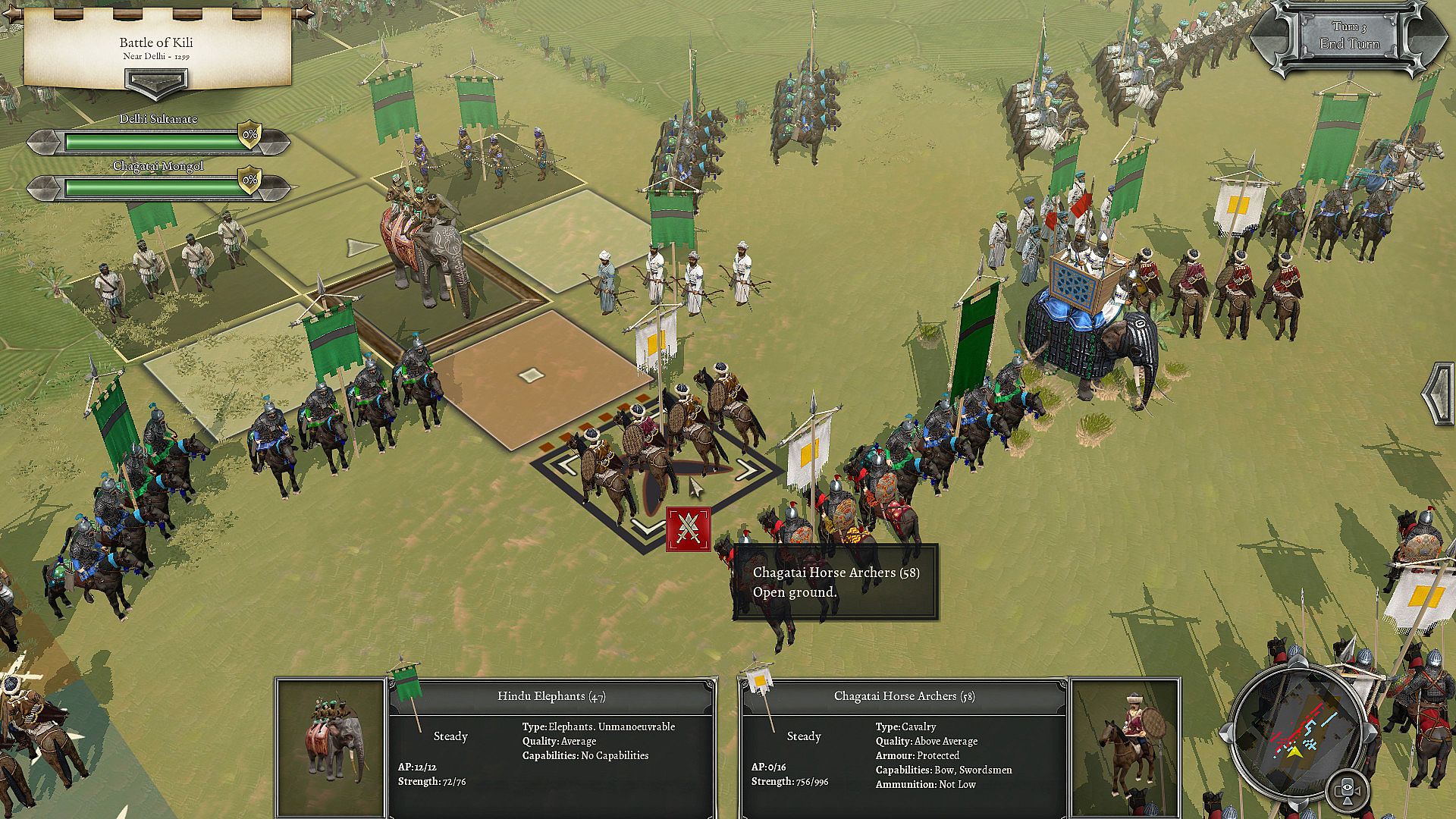
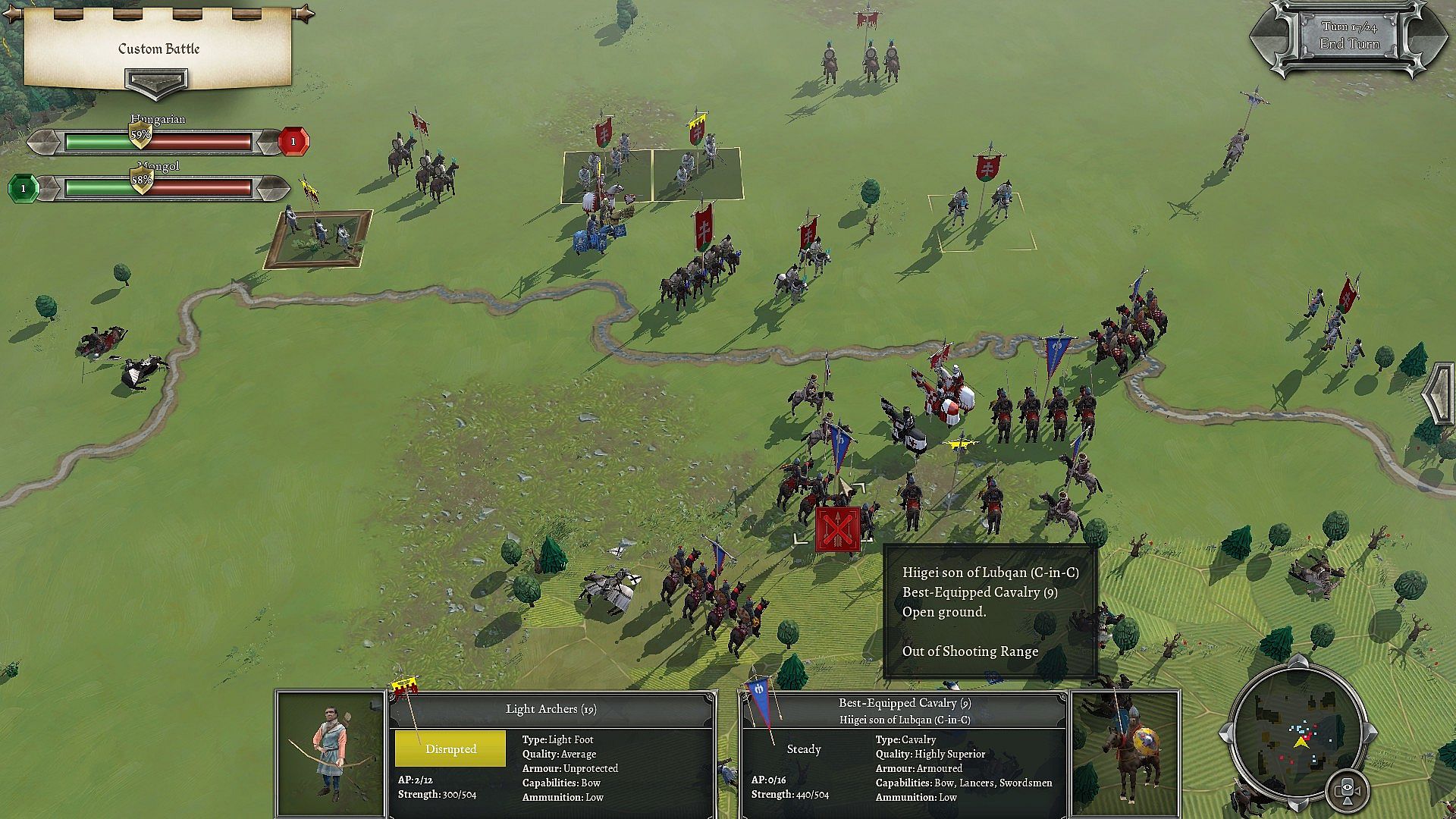
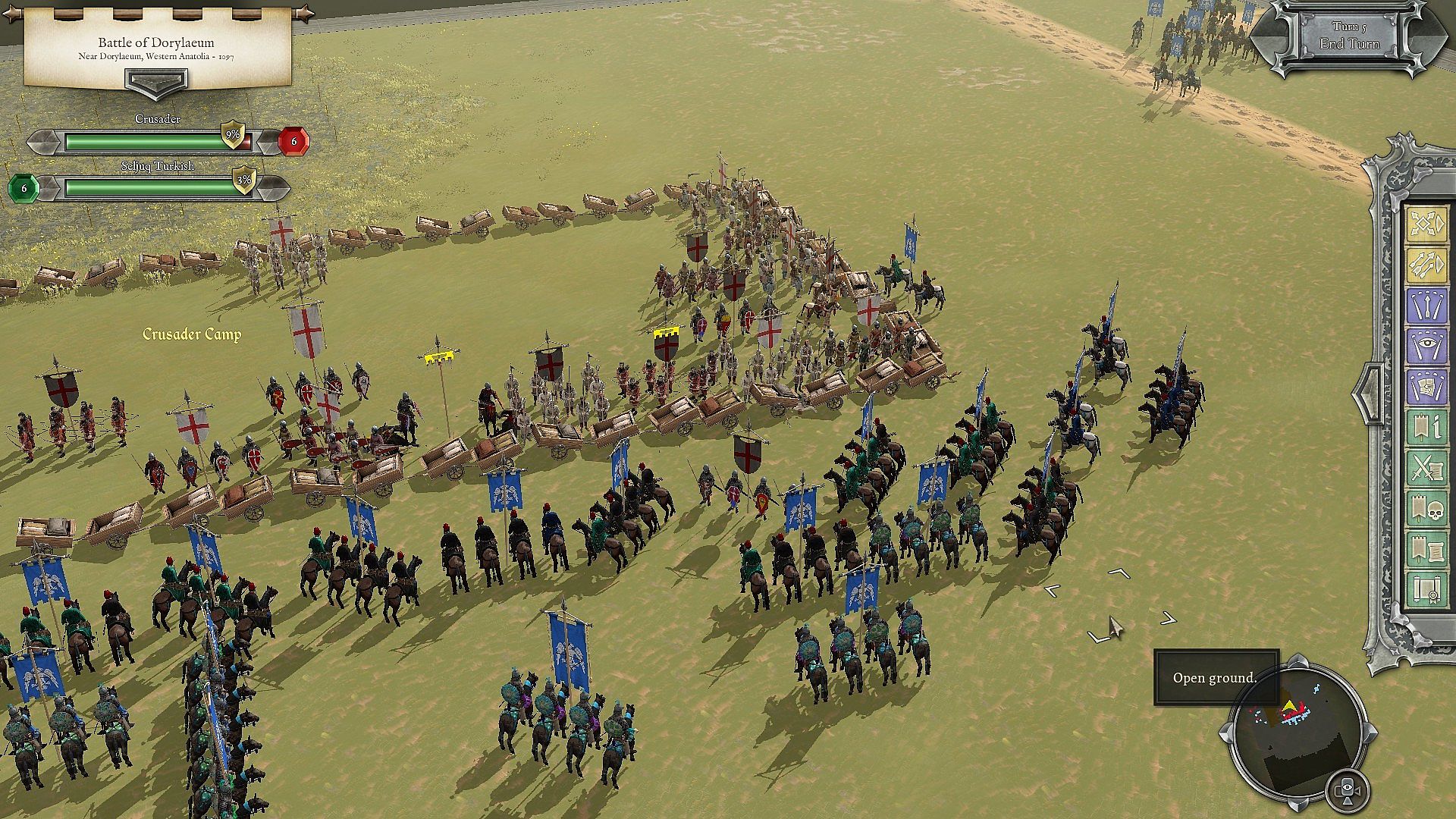
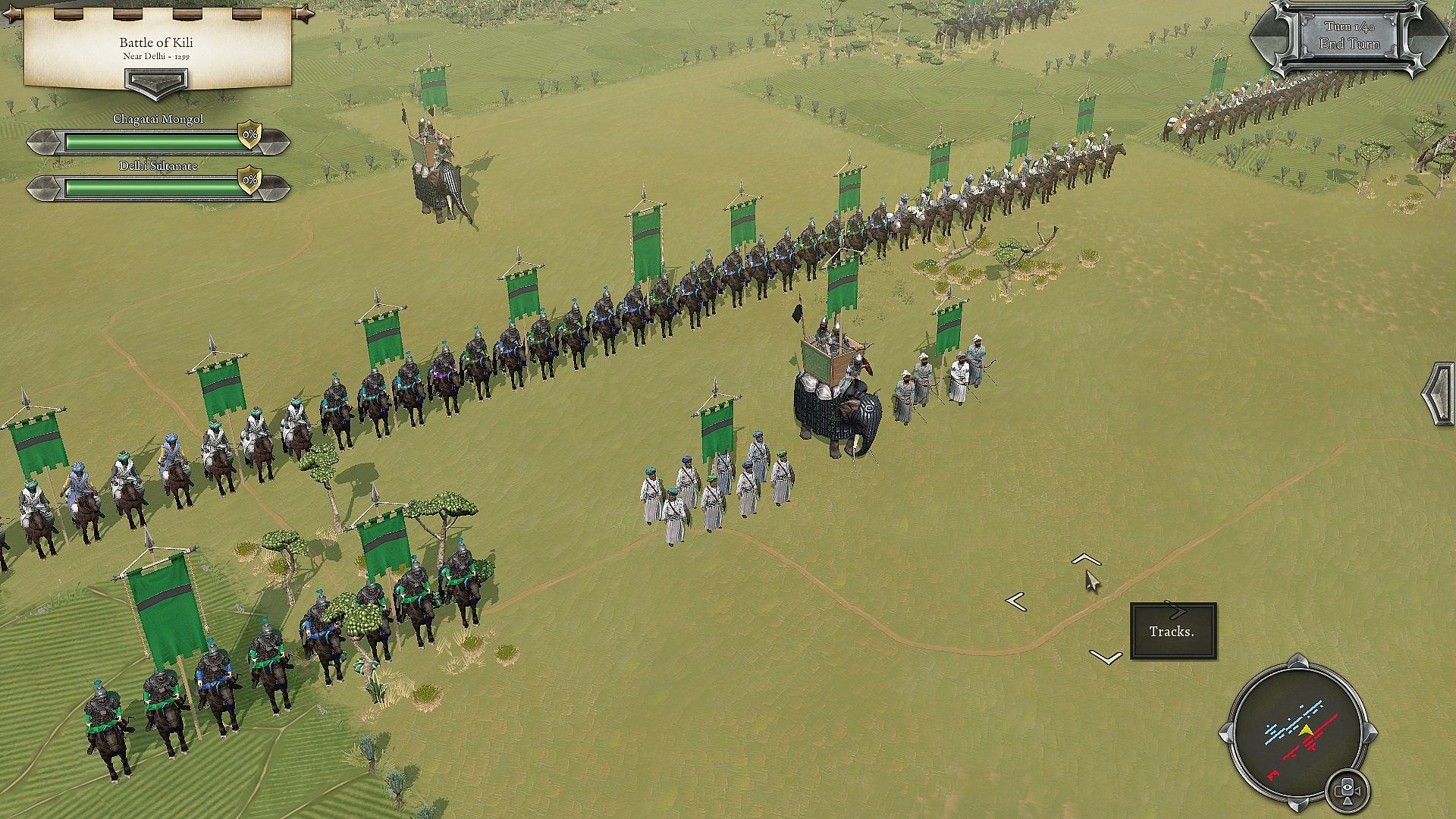
Custom battles allow selection from an expanded pool of army lists, with parameters for battle size, date range, and historical allies. Quick Battle mode includes dozens of additional historical matchups playable from either side, increasing variety without requiring manual setup. Historical scenarios recreate specific engagements on a large scale, including Manzikert in 1071, Dorylaeum in 1097, Ascalon in 1099, Sirmium in 1167, Arsuf in 1191, La Forbie in 1244, Homs in 1281, and Kili in 1299.
Preset campaigns follow the stories of key figures and events, such as the campaigns centered on Alexios Komnenos, the First Crusade, Manuel Komnenos, and Saladin. The sandbox campaign mode supports any combination of the new factions and their allies, generating thousands of possible conflicts across the timeline. Time Warp modules extend custom battle options to incorporate all added content.
Historical Content and Factions
The expansion introduces twenty additional nations and factions, each with dedicated banners and army lists. These cover groups including Arabs from Syria and Iraq, Armenians from Cilicia, Bulgarians, multiple Byzantine successor states such as Nicaea, Epiros, and Trebizond, Crusaders, the Lusignan Kingdom of Cyprus, Dailami, Fatimid Egyptians, Georgians, Ghaznavids, Ghurids, various Indian forces, Khwarazmians, Latin states in Greece, Mamluk Egyptians, Ilkhanid Mongols, Pechenegs, Seljuq Turks, Serbians, and Syrian states. Forty-one new army lists bring the overall total for the Medieval period to 146, with support for historical allies expanding possible combinations significantly.
Thirty-five additional units, including eleven entirely new types, ensure accurate depiction of these forces. The historical backdrop draws from events like the Battle of Manzikert, the fragmentation of the Seljuq Empire, the establishment of Crusader states, and the Mongol incursions that reshaped the region up to the Mamluk victory at Ain Jalut.
Is It Worth Playing?
This DLC suits players who enjoy deep historical strategy simulations with extensive replayability through army list permutations and varied battle setups. The added scenarios and campaigns provide structured experiences alongside open-ended sandbox options. Reception among strategy enthusiasts highlights the quality of the new content and its integration with the existing system. Availability on PC makes it accessible for those already familiar with the base game or seeking standalone tactical depth in a medieval setting. It delivers targeted expansion rather than broad changes, making it a strong choice for dedicated fans of the genre.