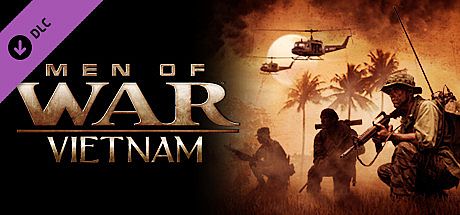


















Men of War: Vietnam is a strategy game set during the Vietnam War that places players in command of small groups of soldiers across jungle terrain and contested areas. The Special Edition Upgrade Pack expands the standard edition with additional content focused on specific engagements involving NVA soldiers, US troops, Vietcong forces, ARVN units, and Green Berets. This upgrade adds three multiplayer maps and five singleplayer scenarios that support cooperative play for up to four players, emphasizing tactical decisions in confined or asymmetric situations.
Gameplay
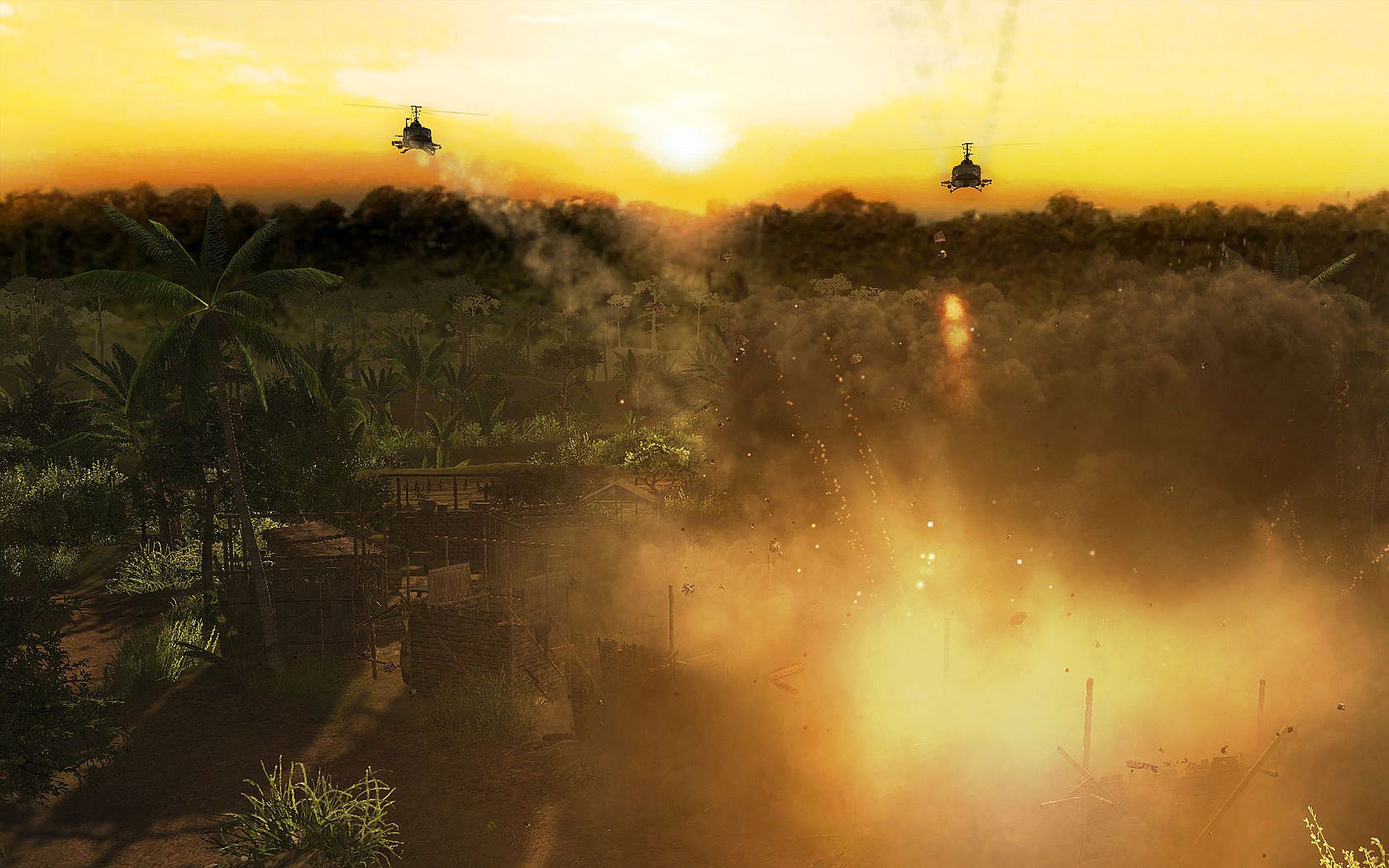
The core loop revolves around managing limited squads in real-time engagements where positioning, weapon choice, and timing determine outcomes. Players direct infantry equipped with standard rifles alongside specialized options such as silenced weapons or knives for stealth approaches. Tank platoons appear in certain scenarios, requiring coordination to assault fixed positions like field headquarters. Helicopter elements factor into some missions, though control remains restricted compared to ground units. Scenarios often incorporate timers that pressure players to complete objectives before reinforcements or enemy responses escalate.
Direct unit command forms the foundation, with emphasis on line-of-sight mechanics and cover usage amid dense foliage or ruined structures. One scenario involves four survivors from a downed helicopter navigating Vietcong territory, highlighting evasion and resource scavenging. Another places Vietcong operatives in an infiltration role against patrolled zones, restricting them to close-quarters or suppressed tools. These elements reward careful planning over large-scale maneuvers.
Game Modes
Singleplayer scenarios form the primary experience, each presenting a self-contained objective tied to historical or fictional border conflicts near Cambodia or church ruins converted into depots. Cooperative support allows up to four players to tackle the same missions together, sharing control of units across the map. Multiplayer maps focus on competitive control of sectors, pitting opposing forces in balanced or asymmetric layouts that mirror the singleplayer themes.
The five added scenarios cover distinct force compositions: NVA versus US troops in open sectors, downed helicopter crews escaping hostile territory, surrounded Vietcong holding a makeshift depot, knife-and-silencer infiltrations by subversive groups, and tank-led assaults on enemy headquarters. These modes integrate seamlessly with the base game structure without introducing new overarching systems.
Setting and Factions
Action unfolds in Vietnamese landscapes featuring jungle borders, ruined religious sites, and patrolled rural zones. Factions include NVA regulars launching armored pushes, US Army units conducting sweeps, Vietcong defenders in last stands, and combined ARVN with Green Beret patrols. Each group brings distinct unit types suited to their roles, such as stealth specialists or heavy armor crews.
Mechanics stay grounded in period-appropriate equipment, with no modern overlays or expanded tech trees. Players navigate these environments through repeated attempts, adapting to enemy patrols and terrain restrictions that limit visibility and movement options.
Is It Worth Playing?
Player feedback on the base game and its expansions highlights mixed reception, with praise for the series' tactical focus alongside frequent notes on AI inconsistencies, restrictive mission timers, and limited unit variety in some scenarios. The upgrade pack delivers targeted additions for those already invested in the Vietnam setting who seek extra maps and cooperative options.
Those drawn to deliberate, squad-level strategy in a historical conflict will find value in the specific scenarios and maps provided. The content suits players comfortable with older real-time strategy titles that prioritize direct control and repeated retries over broad campaigns or frequent updates. Availability remains through standard digital platforms for PC users seeking this niche expansion.