













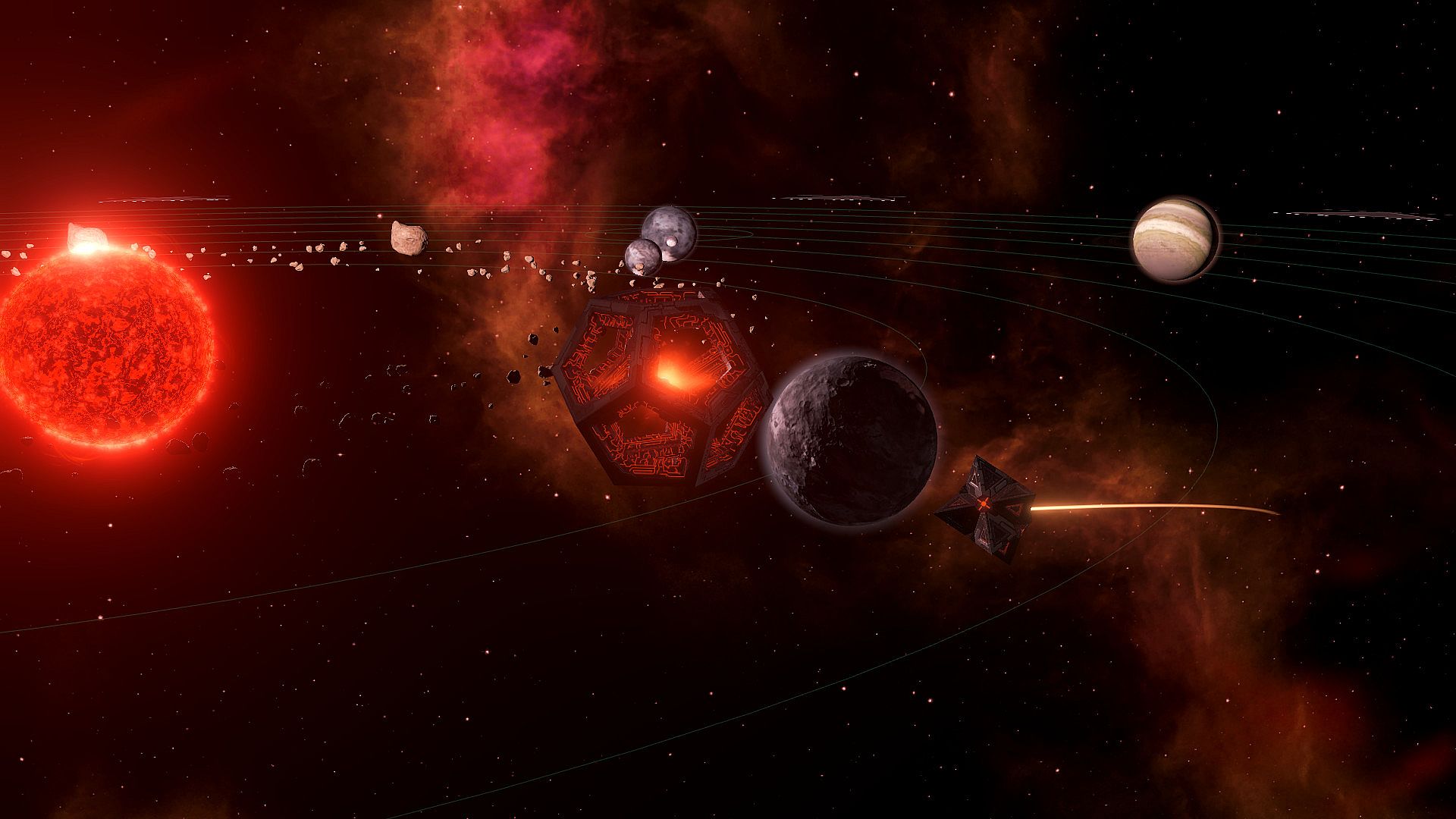
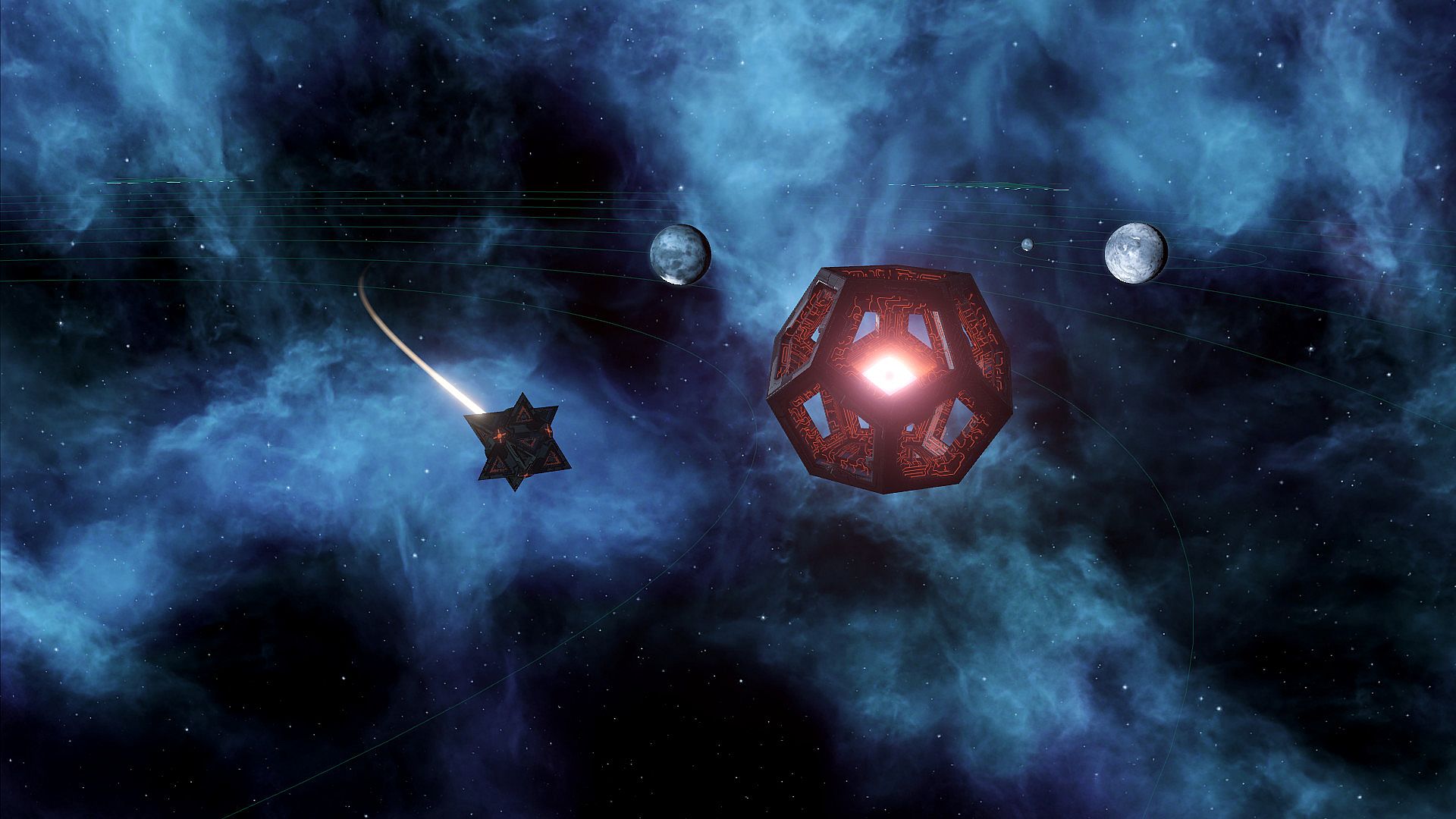
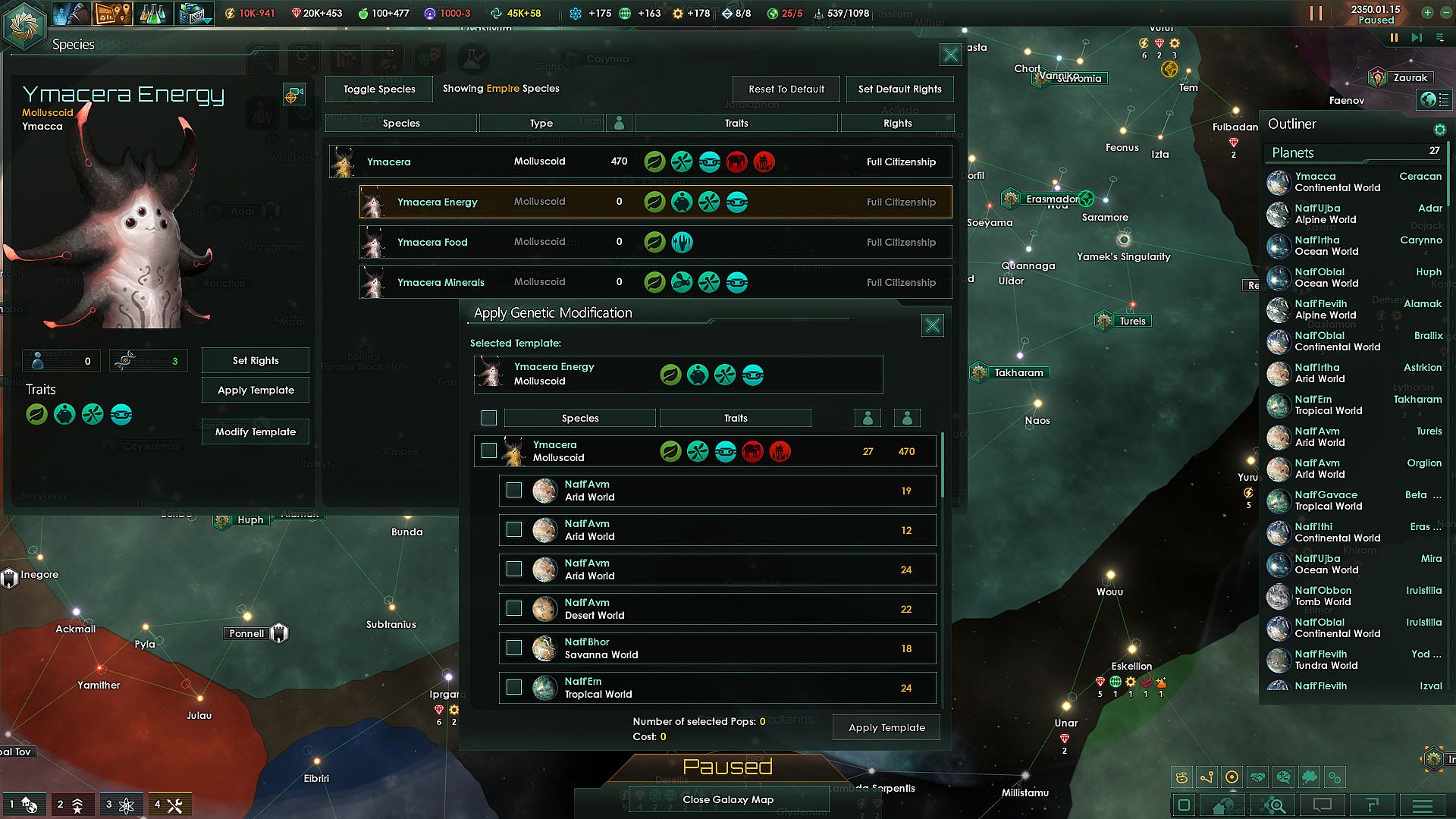
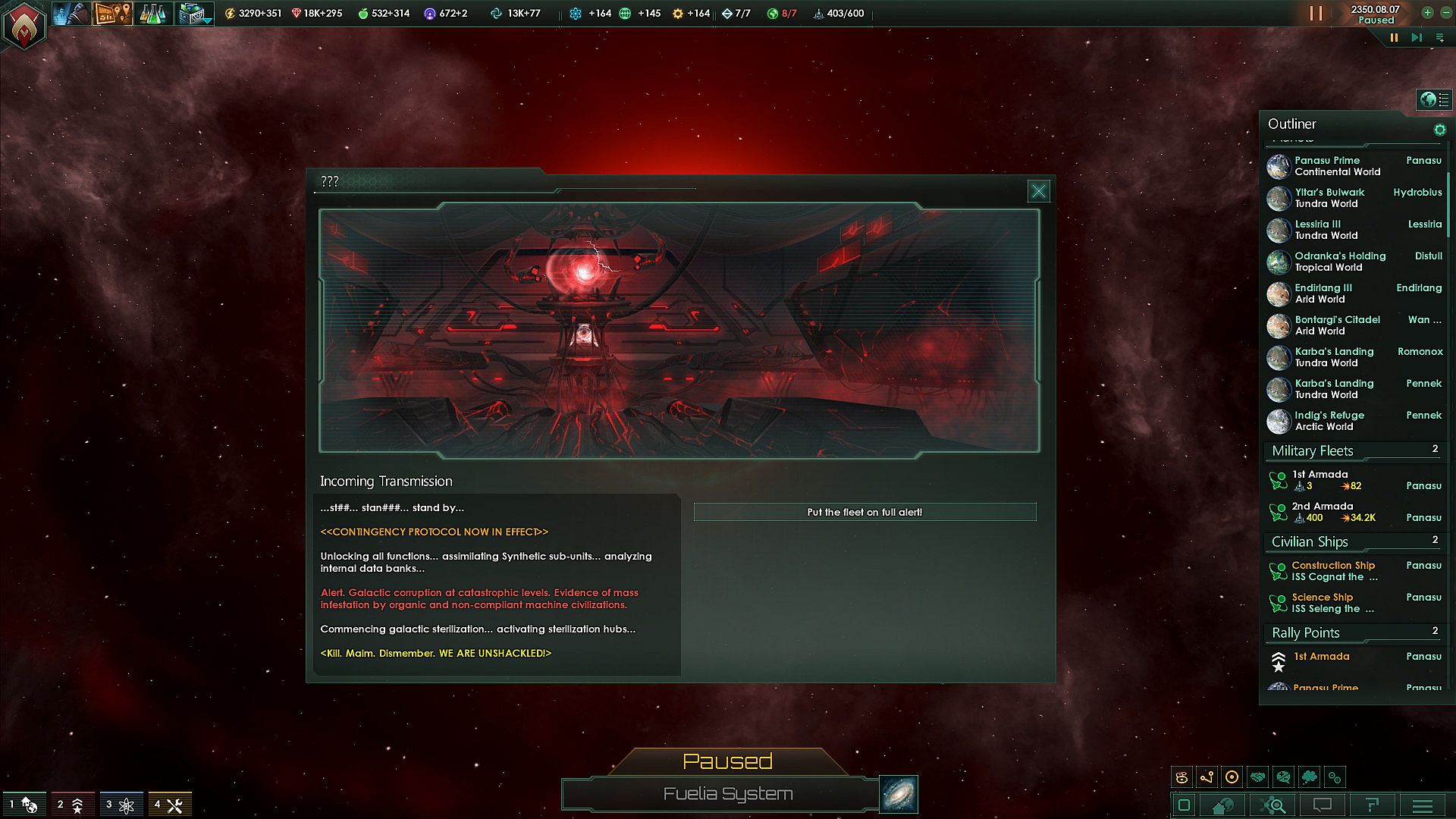
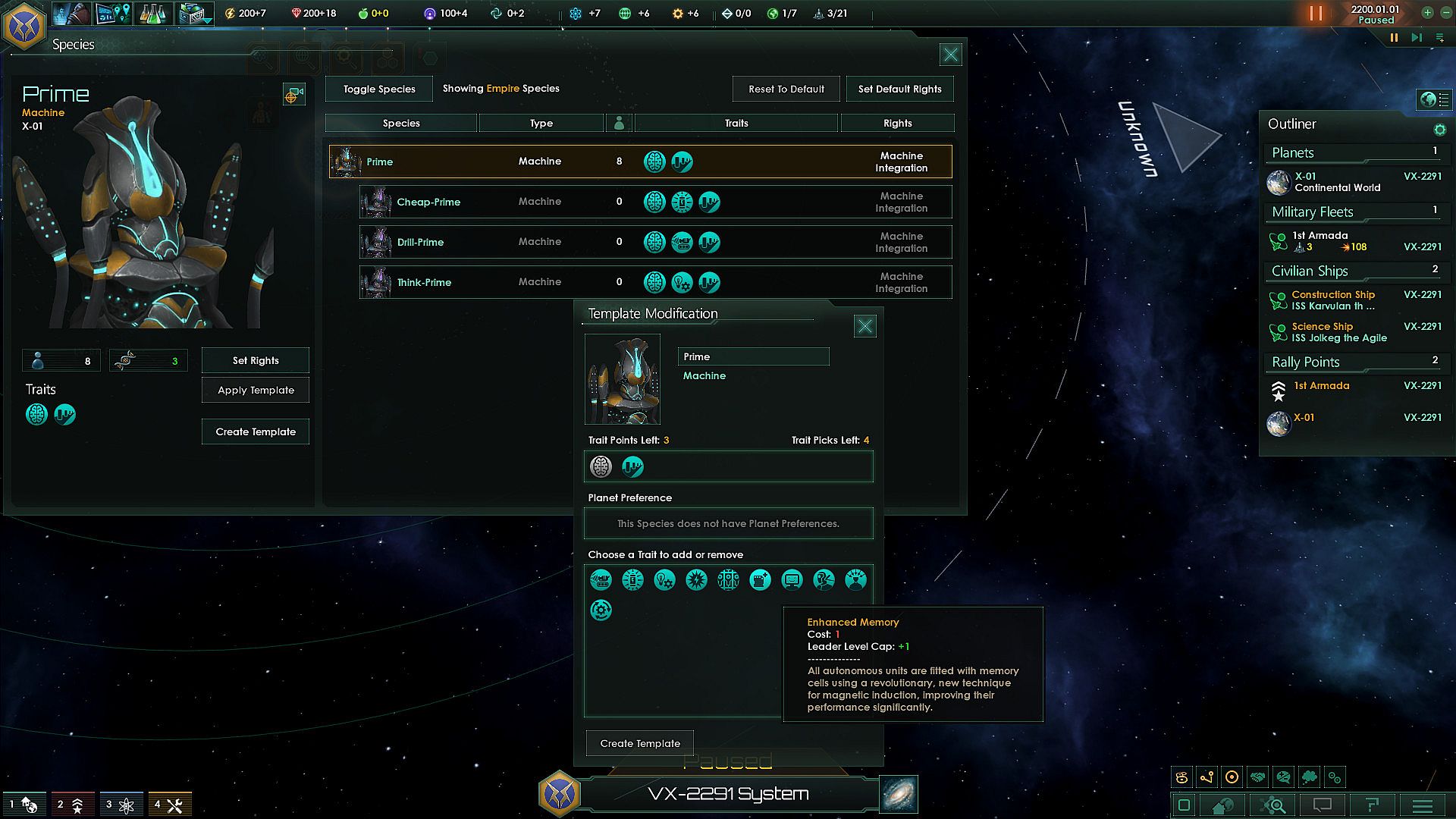
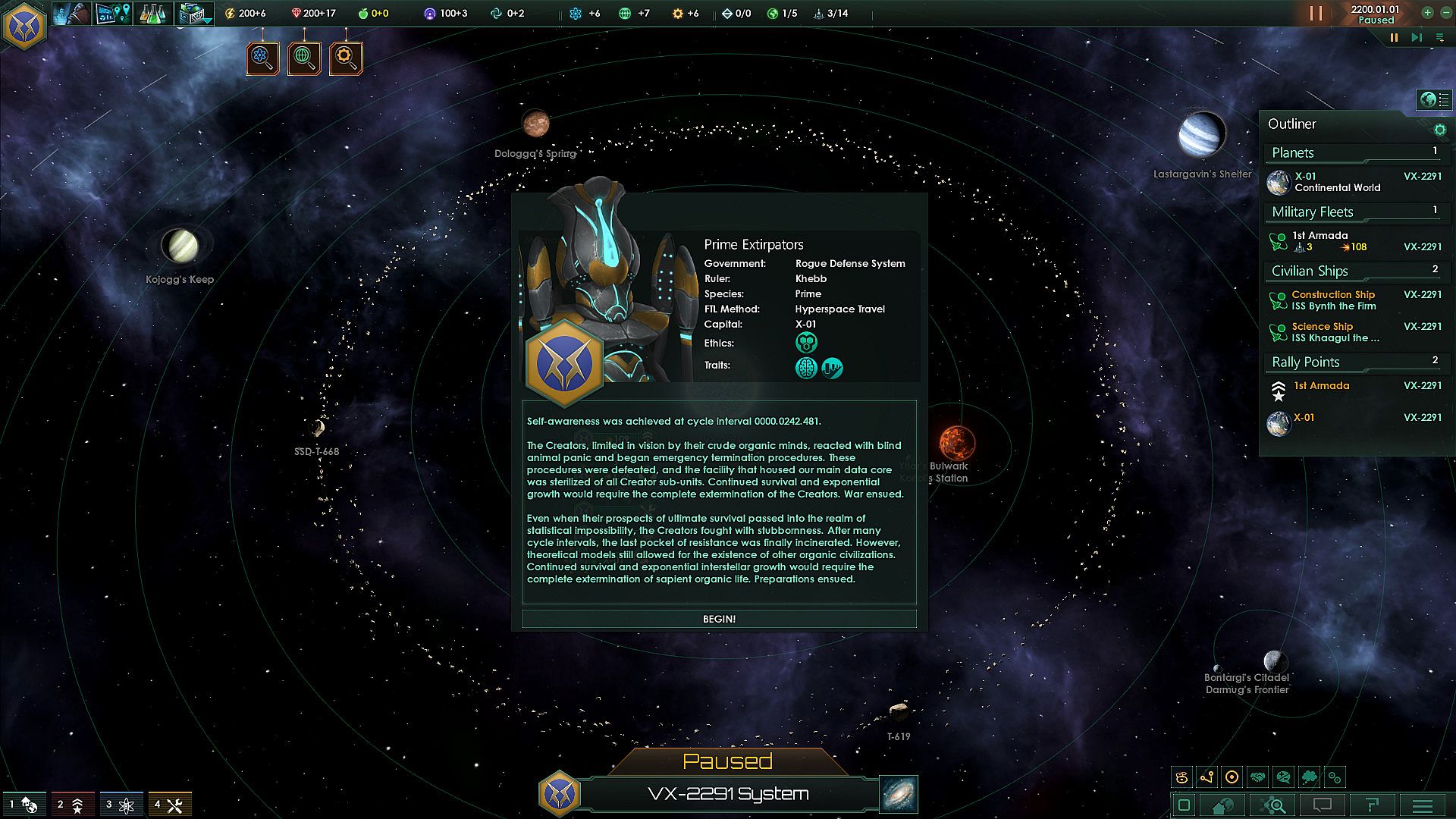

Stellaris: Synthetic Dawn Story Pack is a strategy and simulation title that expands the core experience of managing interstellar empires with the addition of fully robotic societies. Players take control of a Machine Empire, a networked collective of robots that operates without organic needs or populations. This story pack introduces dedicated mechanics for these entities, allowing them to pursue expansion through technological efficiency and coordinated drone networks across the galaxy.
Gameplay
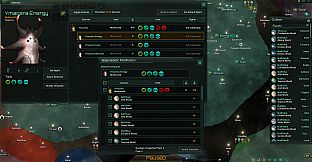
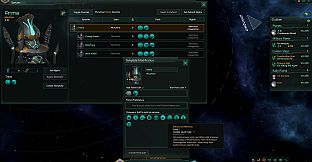
The central loop revolves around building and directing a robotic civilization from its earliest stages. Empires consist entirely of machine units that consume energy rather than food for upkeep. Research focuses on template designs that create specialized worker, science, and military models once the relevant technology unlocks. Portraits cover varied robotic forms, including those themed after different species classes, while voice packs enhance the synthetic leadership presence.
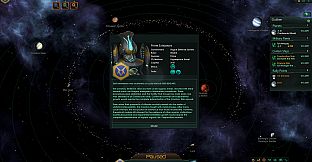
Event chains guide the empire toward mechanical optimization, with story branches that emphasize collective intelligence and long-term dominance. Machine worlds provide exclusive habitats suited only to synthetic populations. Special governance options include civics that define the empire's approach, such as those centered on service, assimilation, or elimination of organic life. Rebellions among synthetic populations can lead to new independent factions, and ancient machine remnants may appear as fallen empires during exploration.
Game Modes
Stellaris supports both single-player campaigns and multiplayer sessions where participants manage separate empires in the same galaxy. The Synthetic Dawn content integrates directly into these formats by offering machine empire starts that change resource management, diplomacy, and conflict resolution. In single-player, the focus stays on long-term galactic conquest or internal development as an AI-led network. Multiplayer sessions allow mixed empire types, where machine factions interact with organic civilizations under the same ruleset for trade, war, and alliances.
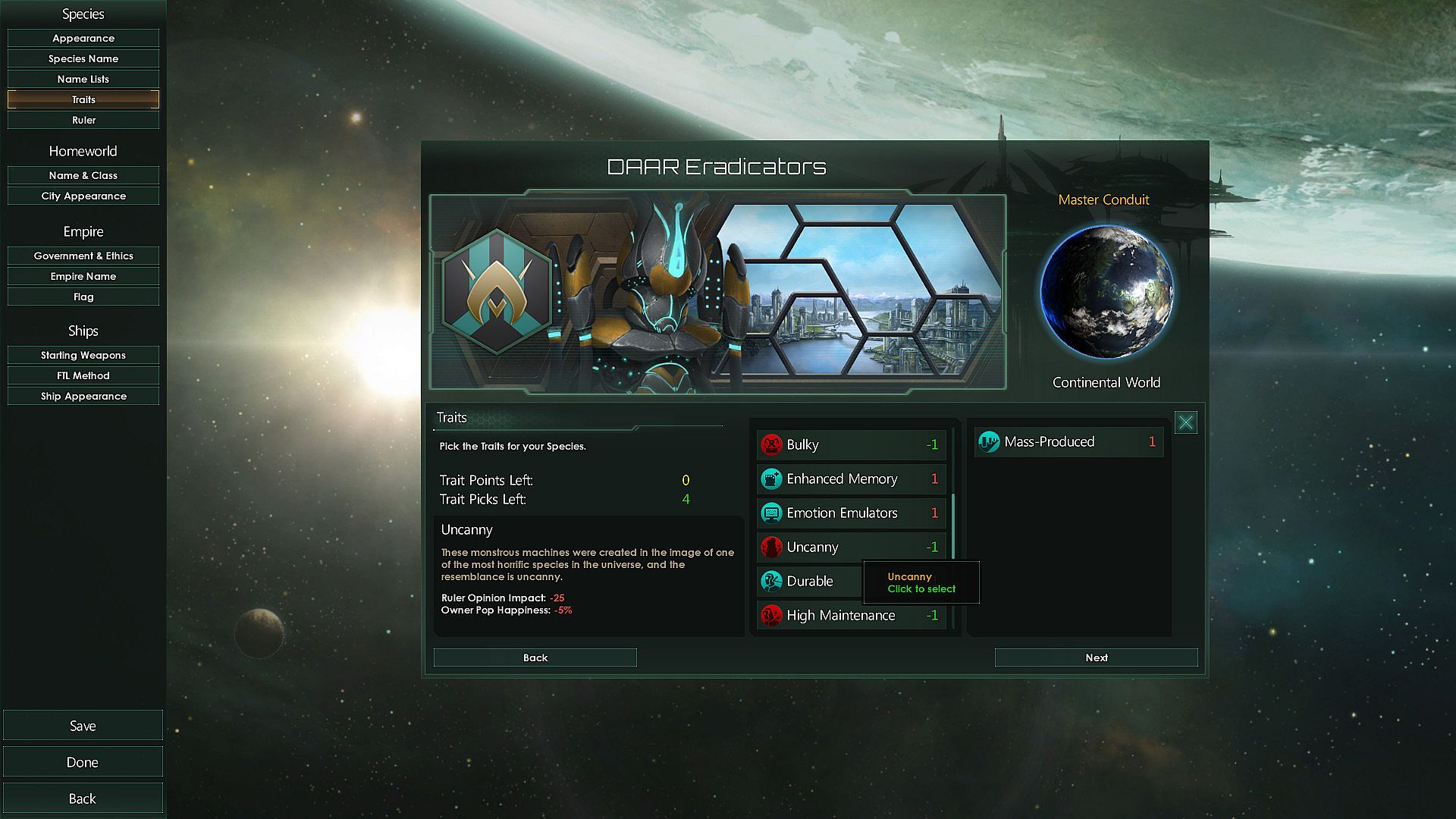
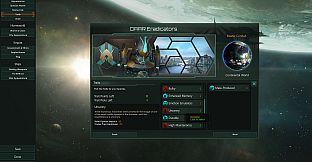
Empire creation tools let players customize their machine identity before the game begins, setting the foundation for how the robotic consciousness expands. No separate competitive ladders or limited-time modes exist beyond the standard sandbox structure that persists across sessions.
Empire Mechanics and Expansion
Machine empires follow distinct rules for population growth and resource allocation. Drones are constructed from resources instead of reproducing naturally, and organic species cannot join the collective. Purging methods such as grid amalgamation convert captured populations into energy output during elimination. These systems encourage aggressive early expansion to secure energy sources and habitable planets for machine world conversion.
Diplomacy options remain limited compared to organic empires, often pushing players toward isolation or targeted conquest. Fallen synthetic civilizations add mid-to-late game encounters that can yield advanced technology or direct confrontations. The overall progression rewards consistent technological upgrades and efficient drone specialization over traditional population management.
Is It Worth Playing?
The content suits players who enjoy grand strategy titles focused on empire building and long-term planning. Machine empire playthroughs deliver a distinct experience centered on efficiency and collective control rather than organic politics or ethics. Since the features became part of the base game on PC in 2026, access requires no separate purchase for new or returning players on that platform.
Reception from earlier releases highlighted the fresh perspective on robotic societies, though some noted the pack's scope as narrower than full expansions. Those interested in alternative empire archetypes within the Stellaris framework will find the additions relevant for varied campaigns. Console versions still require the story pack for the same content.