










































































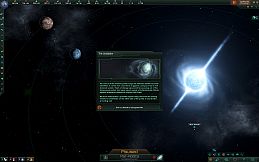
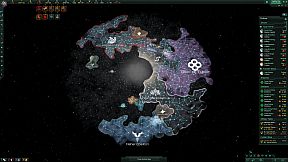
Stellaris stands out as a sci-fi grand strategy game where you guide an interstellar civilization through the vastness of space. Released in 2016 by Paradox Development Studios, it combines elements of strategy and simulation, letting you explore galaxies, manage empires, and engage in complex interactions with alien species. With its focus on procedural generation and deep customization, Stellaris appeals to those who enjoy building and evolving societies on a cosmic scale.
Gameplay
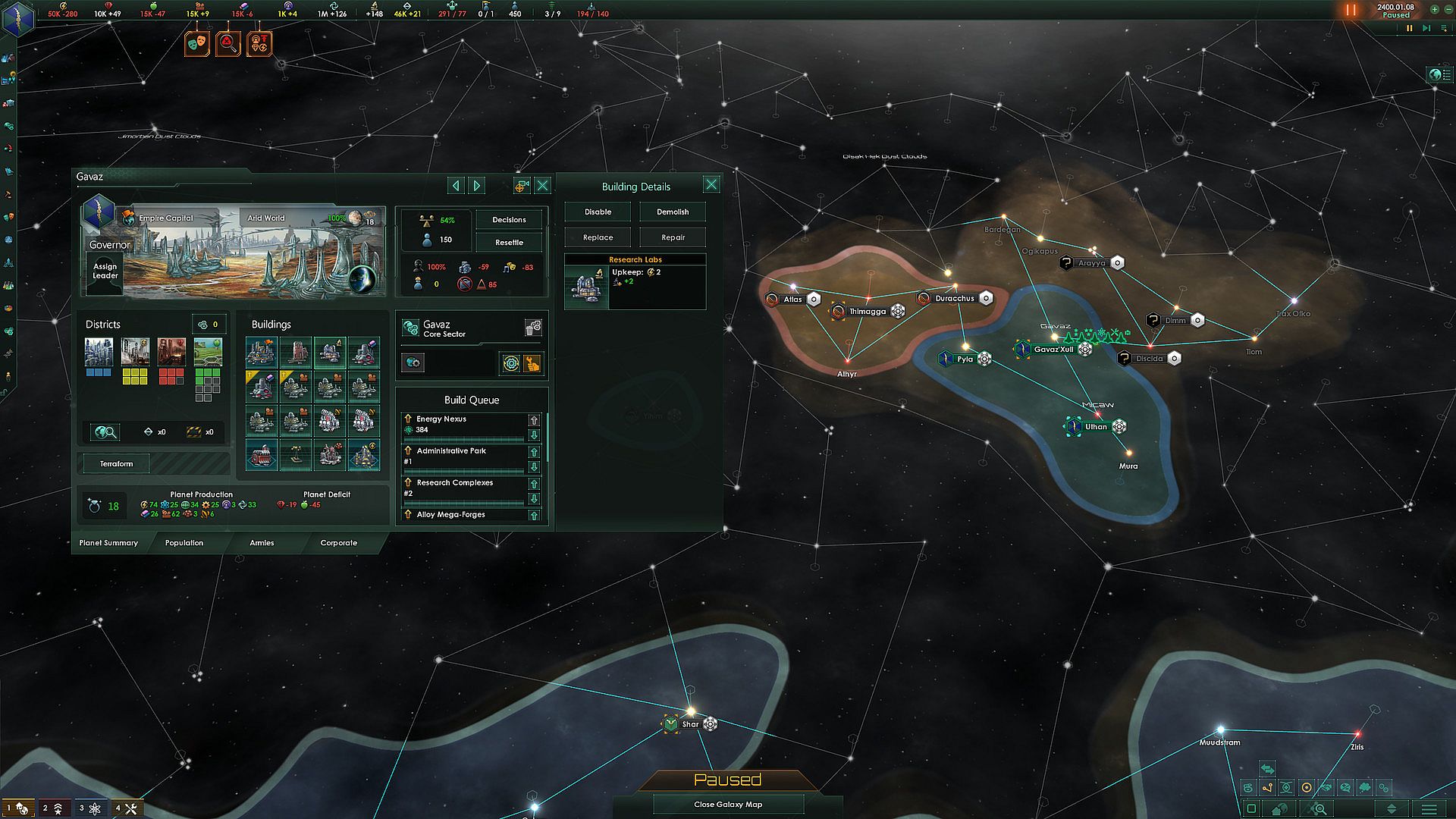
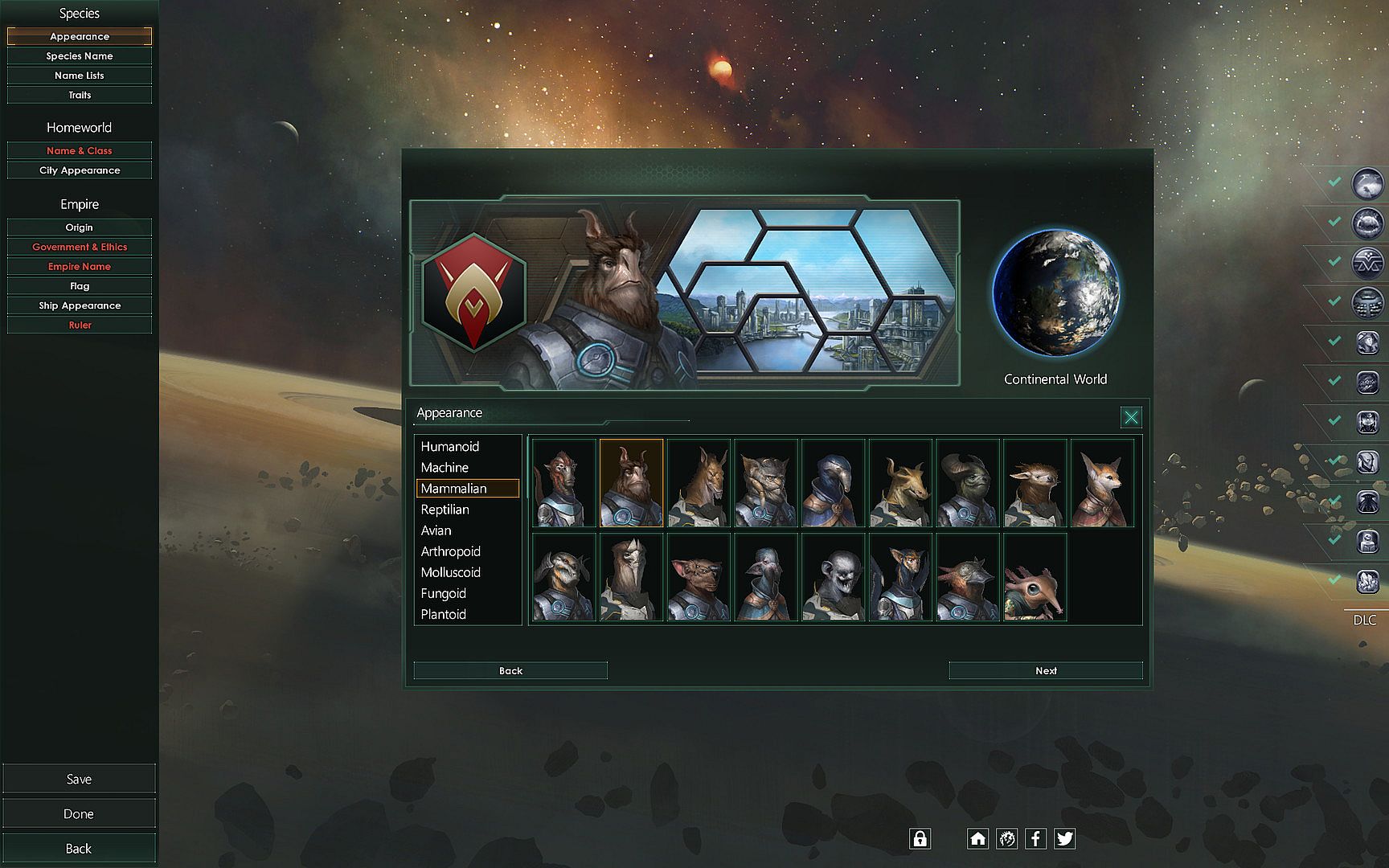
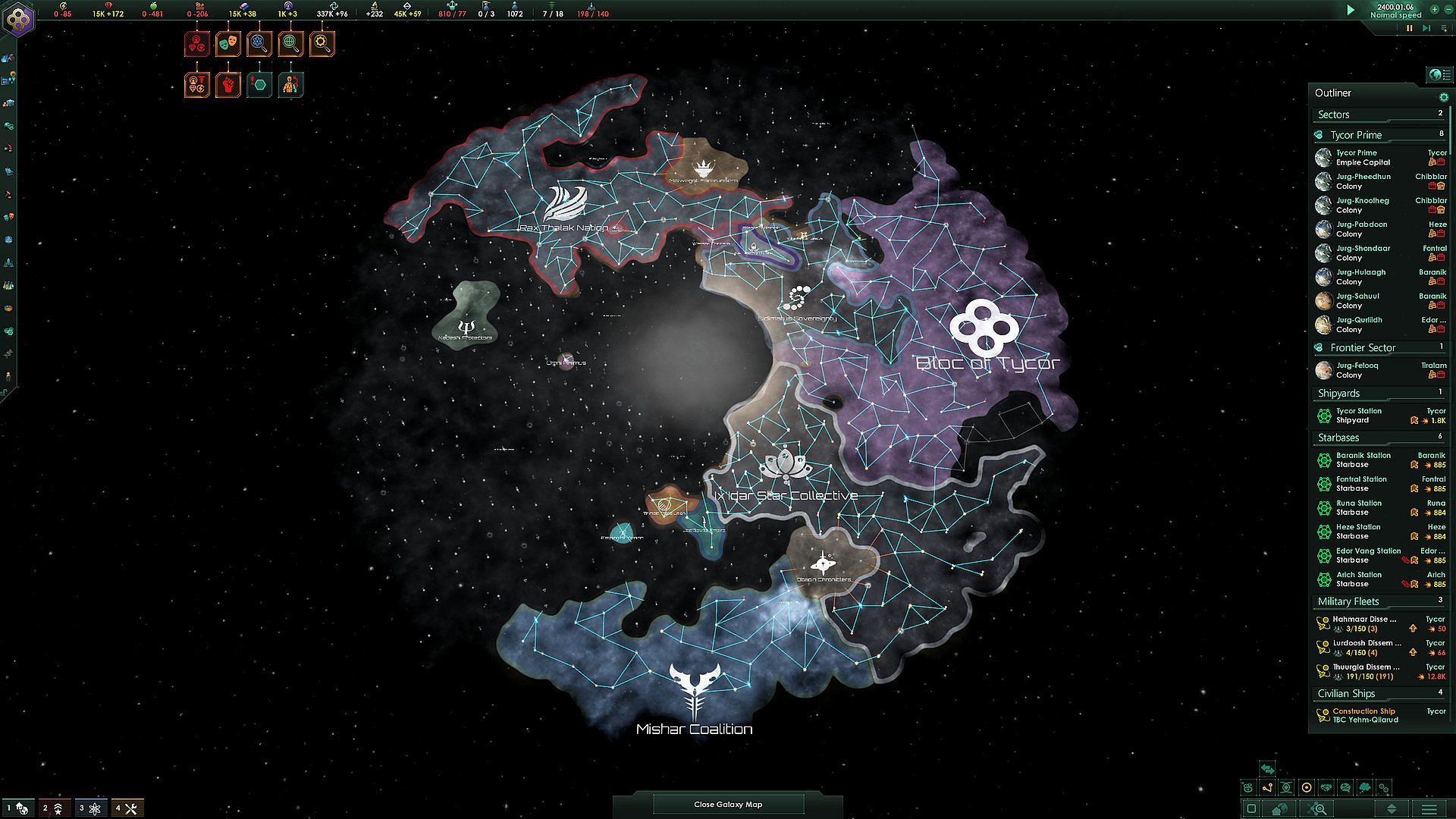
In Stellaris, the core loop revolves around exploration, expansion, exploitation, and extermination, often called the 4X model. You start with a home system and send science ships to survey anomalies, uncover quests, and reveal galactic wonders that can alter your empire's path. Construction ships establish outposts and stations, while you customize your species with traits, ethics, and technologies that shape gameplay. Diplomacy plays a central role, allowing negotiations, alliances, or rivalries with procedurally generated alien races, each with unique ideologies and behaviors.
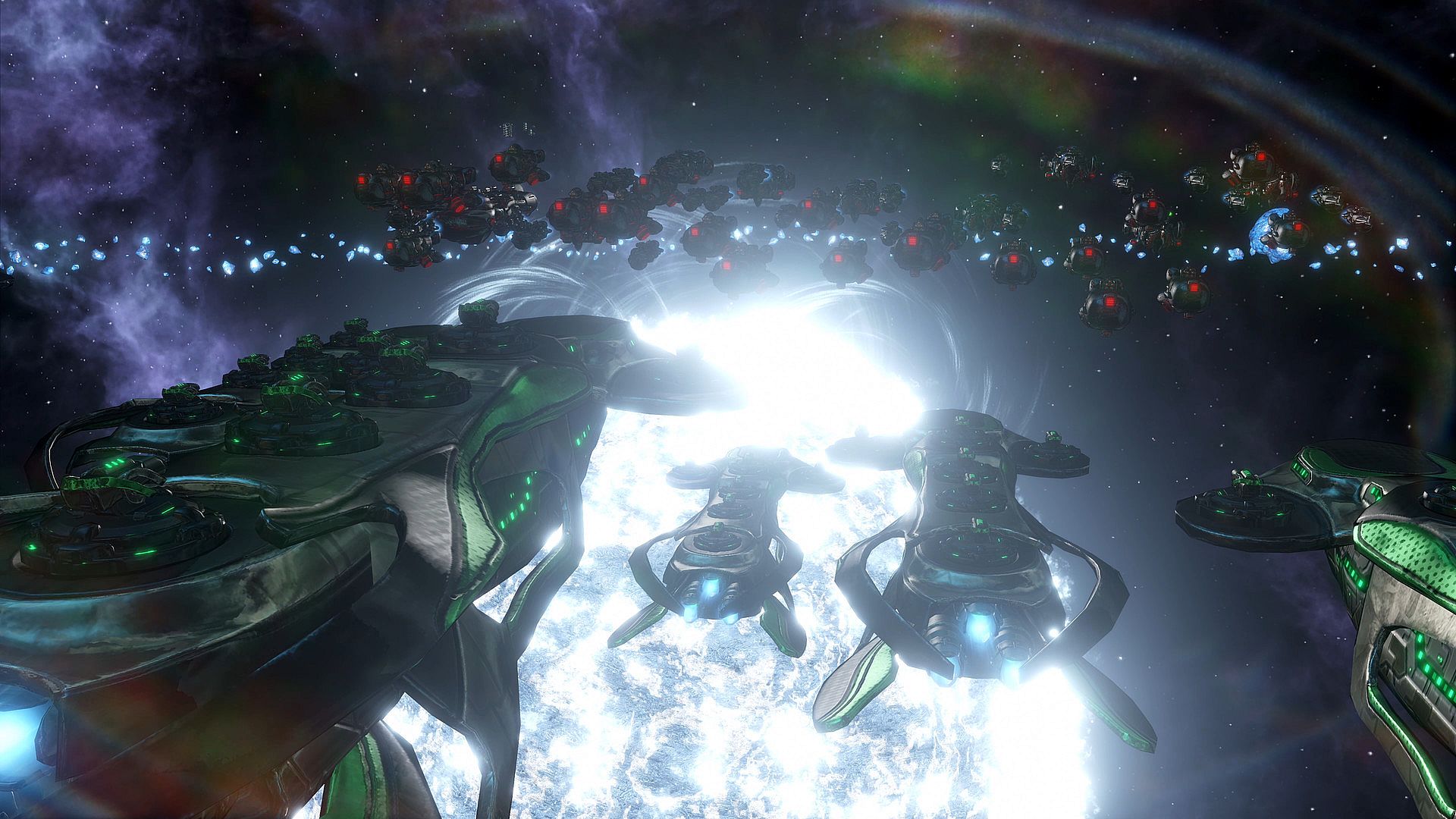
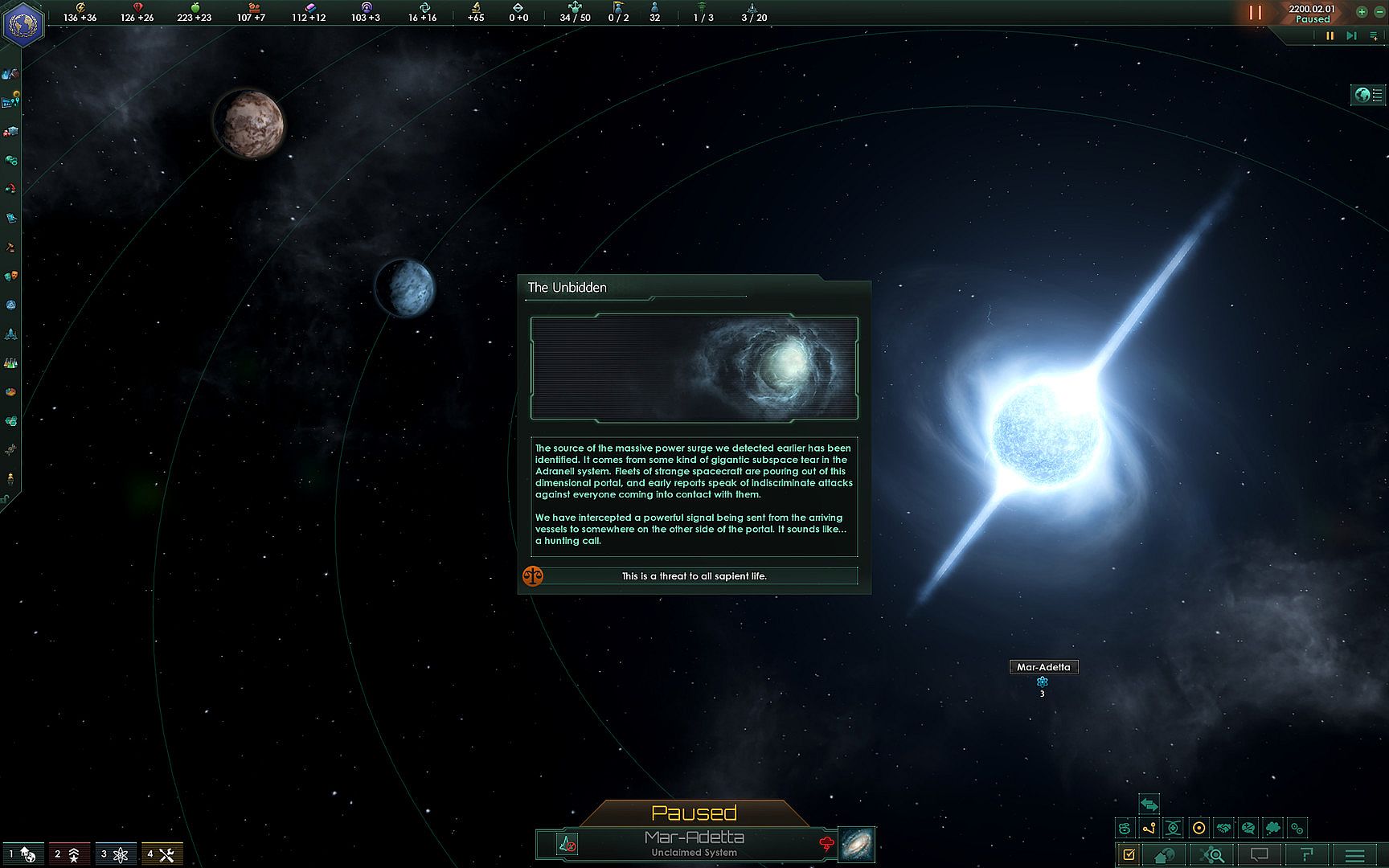
Warfare involves designing and deploying customizable fleets using a detailed ship builder, where you select components and technologies to counter threats. The game unfolds in real-time but can be paused for strategic decisions, emphasizing adaptation to random events, crises, and monster encounters in procedurally generated galaxies with thousands of planet types.
Game Modes
Stellaris primarily offers a single-player experience, where you control one empire in a vast, AI-populated galaxy. This mode supports extensive customization at the start, including galaxy size, number of AI empires, and difficulty settings, leading to replayable campaigns that can span dozens of hours.
Multiplayer mode allows up to 32 players to compete or cooperate in the same galaxy, sharing the real-time strategy elements. Sessions can be hosted with options for cross-platform play, though it requires coordination due to the game's pacing and potential for long games.
Updates and Current State
Paradox has maintained Stellaris with regular free updates, enhancing systems like economy, population management, and AI behavior. As of early 2026, the game is on version 4.3, which introduced balance adjustments, performance improvements, and refinements to core mechanics without overhauling them entirely. These patches ensure ongoing support, addressing community feedback on stability and gameplay flow.
Recent updates have focused on rebuilding older systems for better scalability, setting the foundation for future content. The game remains active, with a history of free expansions that add new technologies, events, and capabilities, keeping the experience fresh for returning players.
Is It Worth Playing?
Stellaris suits strategy enthusiasts who thrive on long-term planning and emergent storytelling in a sci-fi setting. Its depth in customization and procedural elements provides high replay value, especially if you enjoy tweaking empires and adapting to unpredictable galaxies. However, newcomers might find the learning curve steep due to complex systems and the need for tutorials, as highlighted in recent discussions.
Player reception shows a dedicated community, though recent Steam reviews have noted criticisms of DLC policies leading to some negative spikes. If you prefer grand strategy with exploration and diplomacy over fast-paced action, Stellaris remains a solid choice, supported by ongoing updates that improve accessibility and performance.