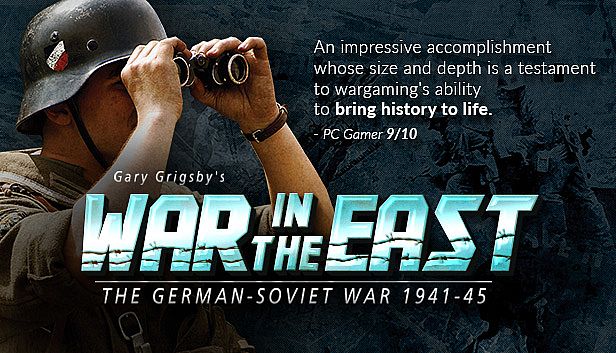



















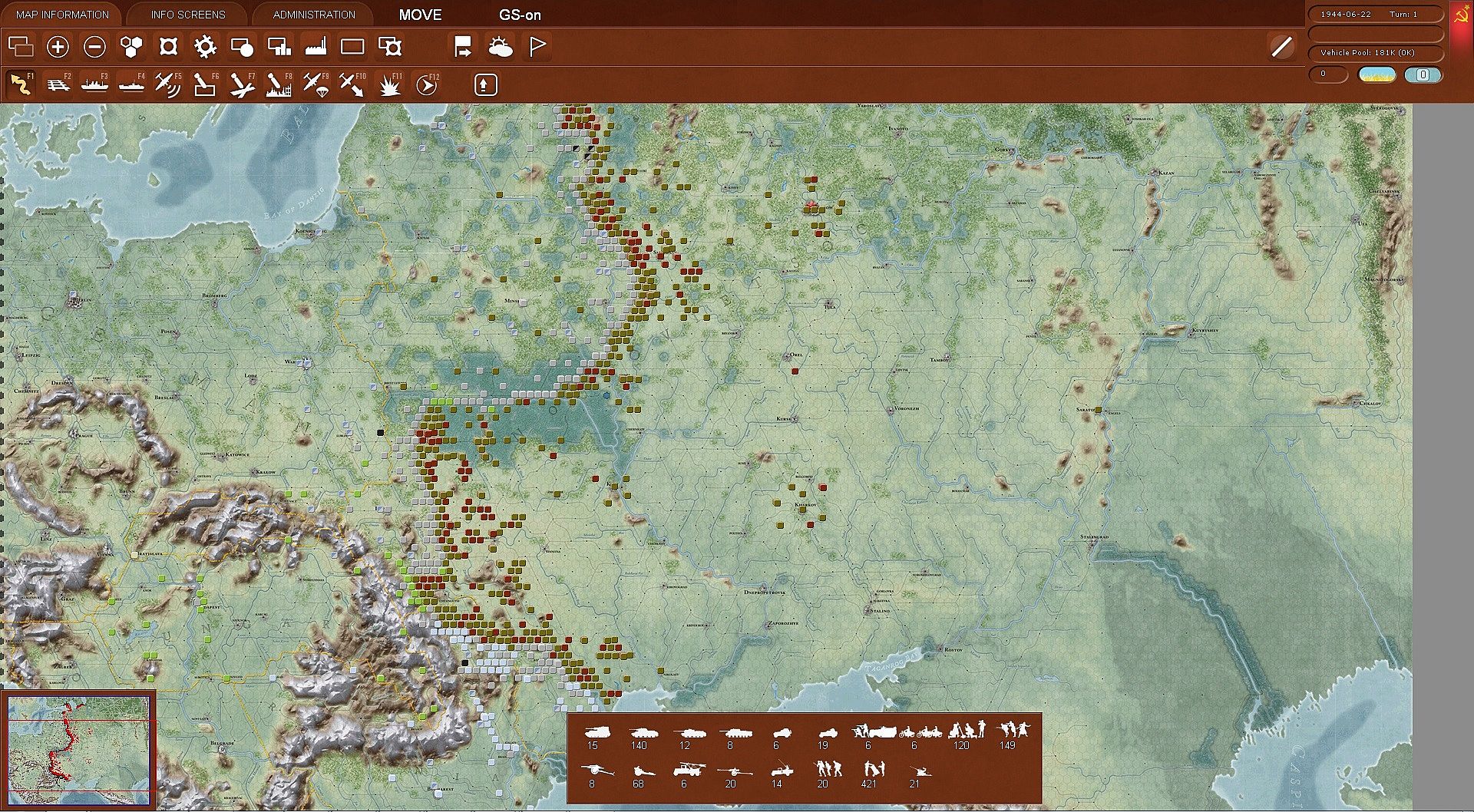
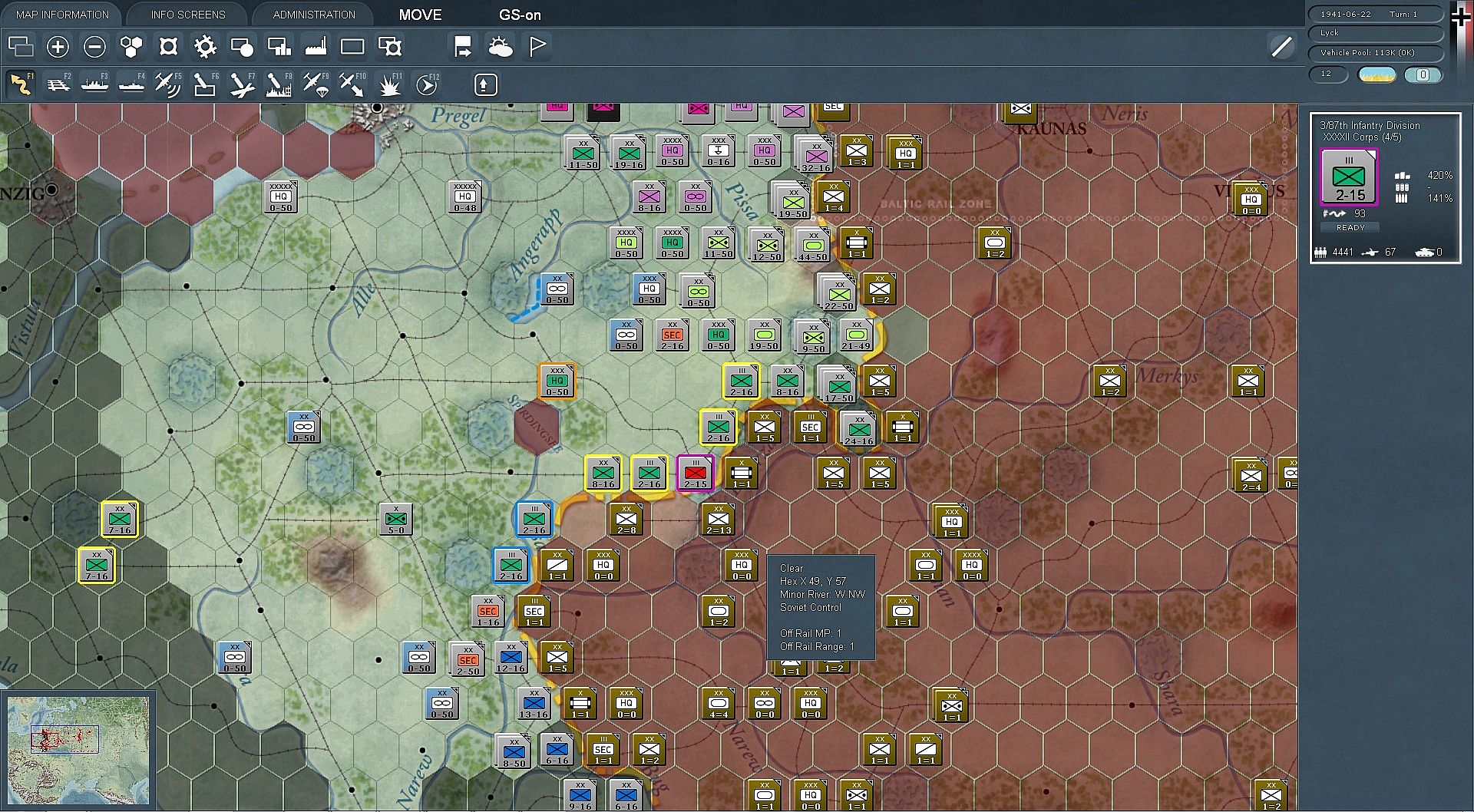
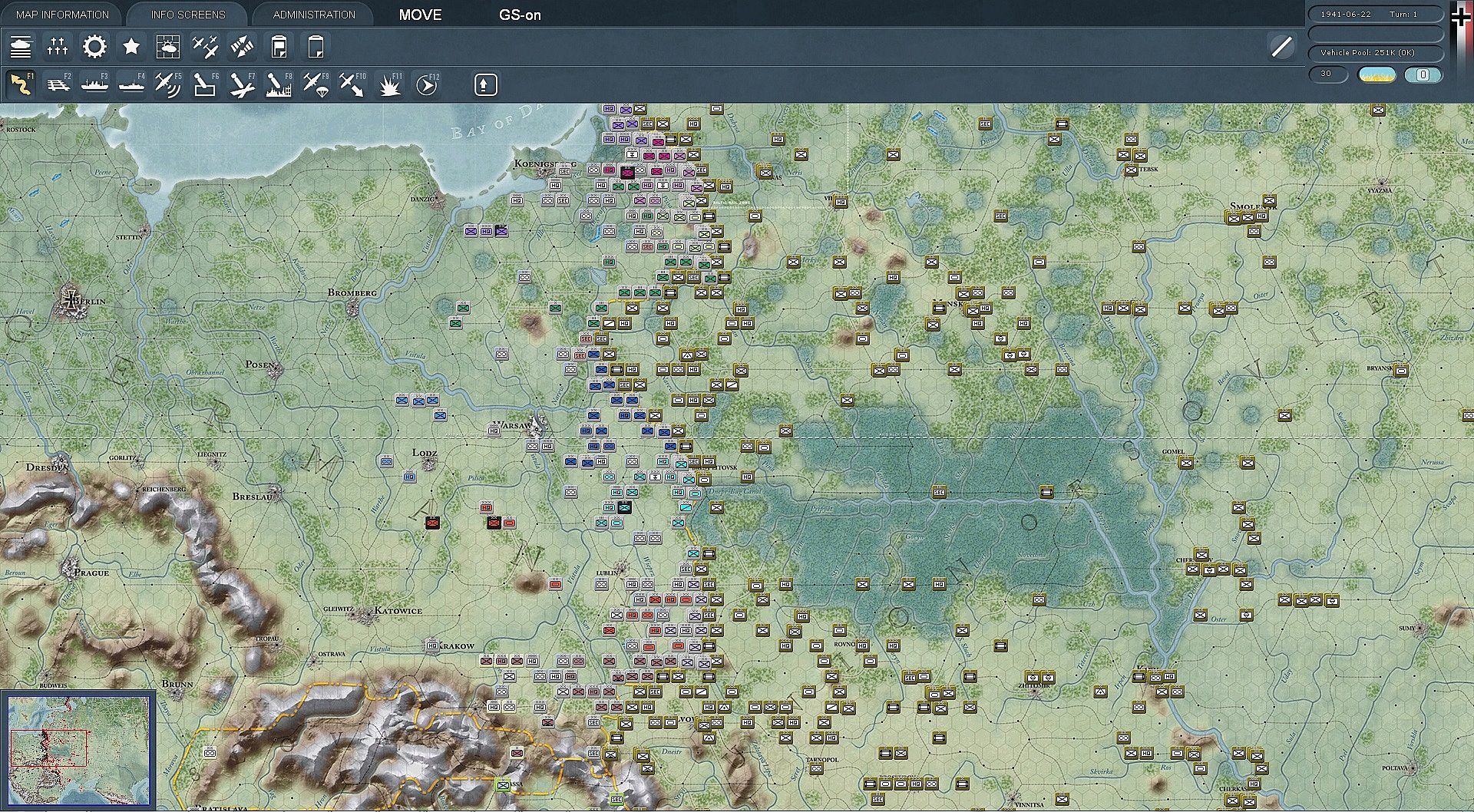
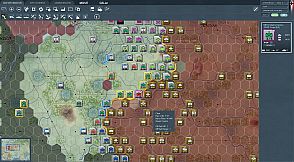
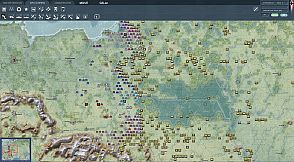
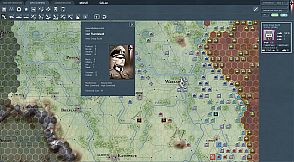
Gary Grigsby's War in the East is a turn-based strategy simulation game set during the German-Soviet War from 1941 to 1945. It places players in command of division and brigade sized units across a map that covers the entire Eastern Front at a scale of ten miles per hex. The game emphasizes historical accuracy in terrain, weather, orders of battle, logistics, and combat outcomes while tracking factors such as supply lines, unit fatigue, experience levels, morale, and the performance of individual commanders.
Gameplay
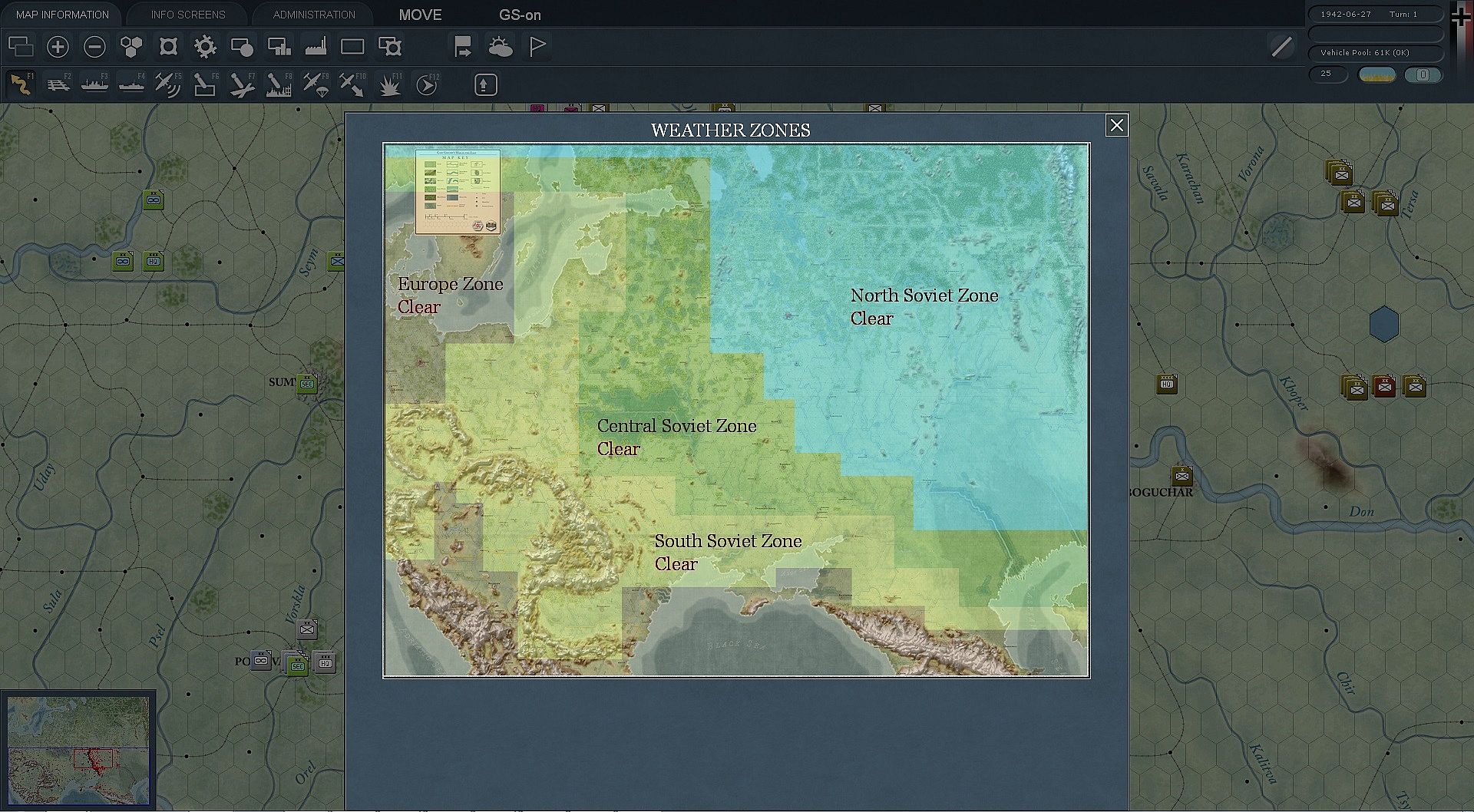
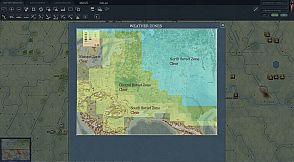
The core loop revolves around weekly IGOUGO turns where players issue orders to ground forces and air units. Division sized maneuver elements operate alongside thousands of smaller support units including artillery, engineers, ski troops, anti-tank teams, pioneers, and tank destroyers. Supply, fuel, and ammunition must reach the front through detailed logistics chains, with penalties applied for disruptions or shortages. Weather zones affect movement and combat, and river ice levels can change based on seasonal patterns or randomization settings.
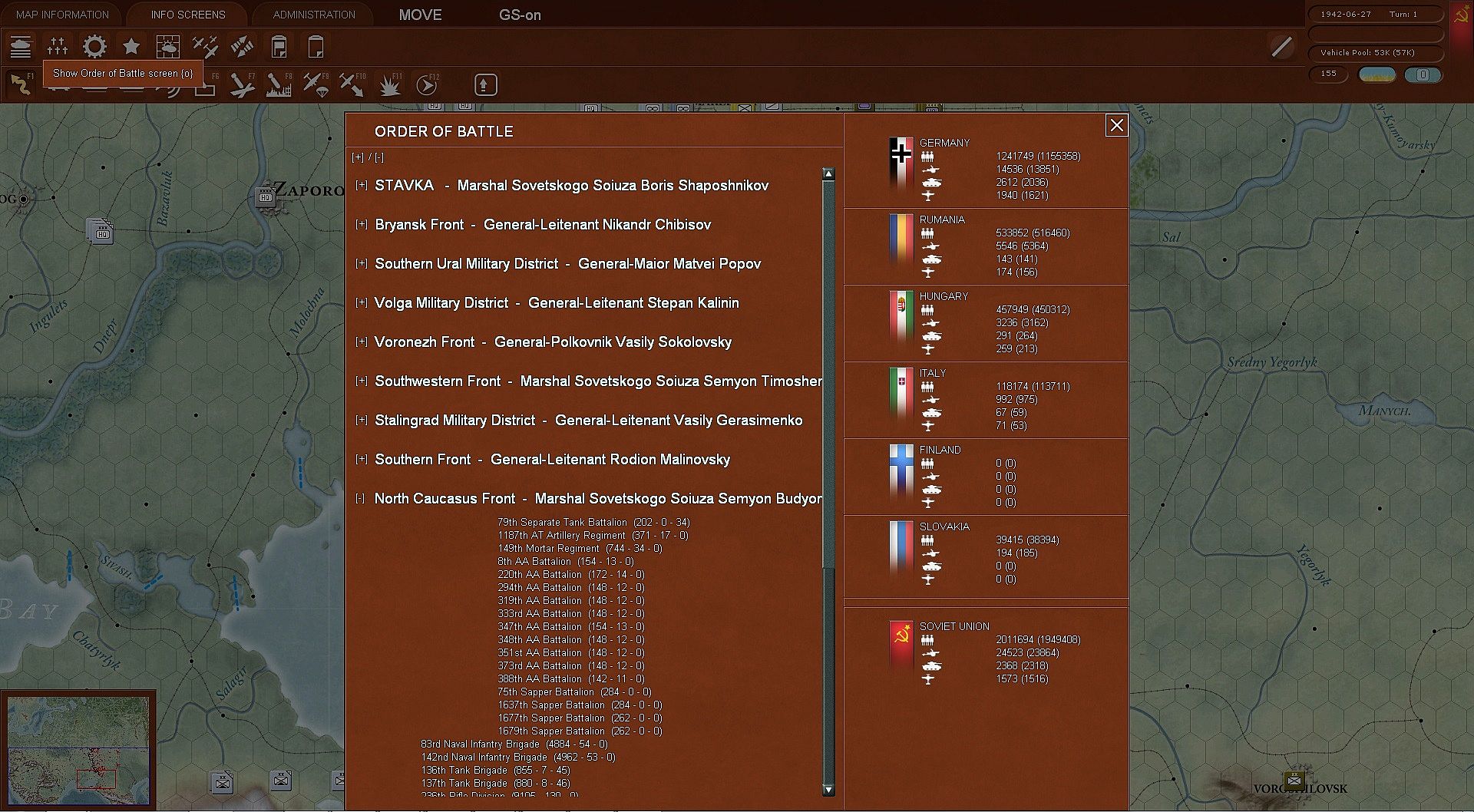
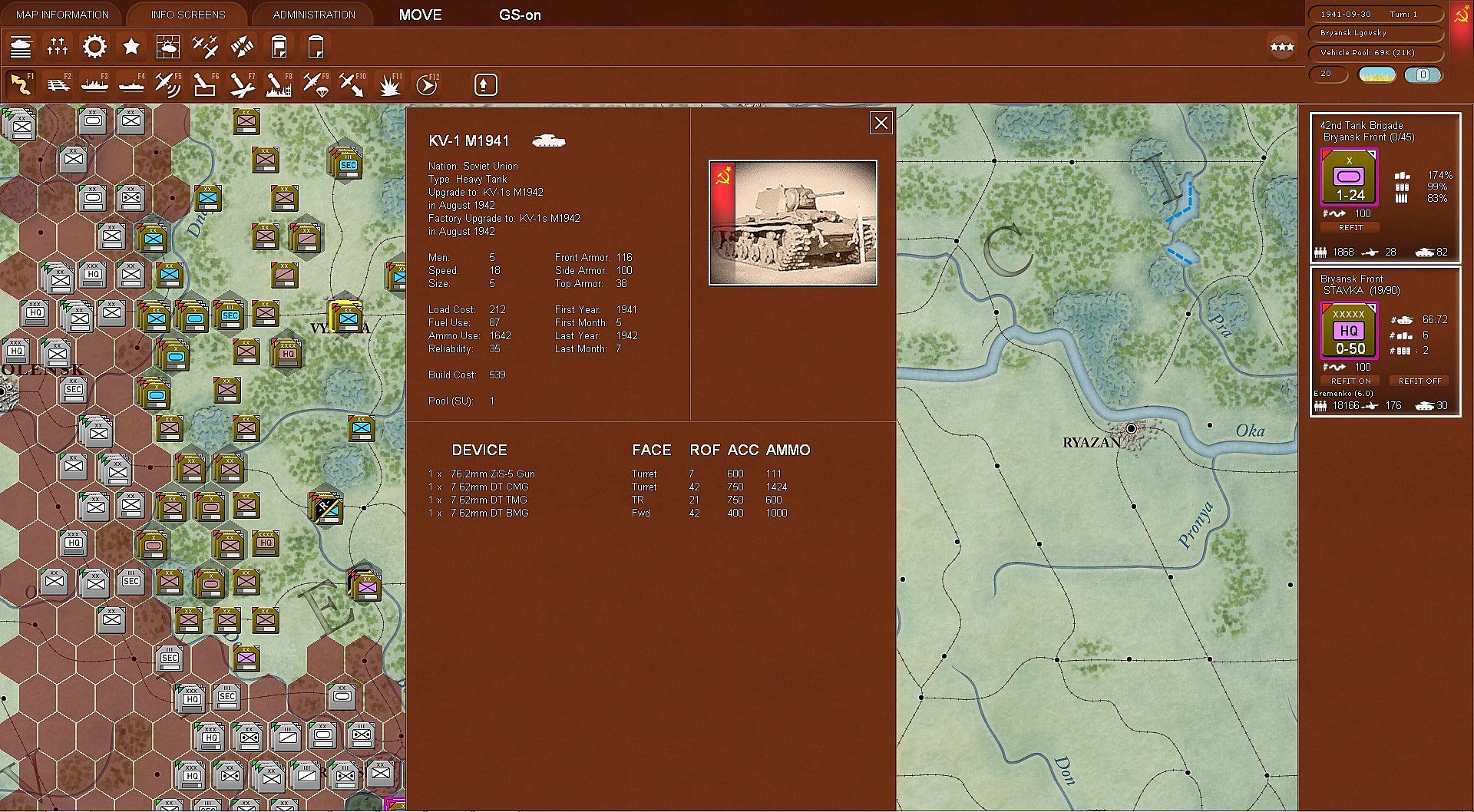
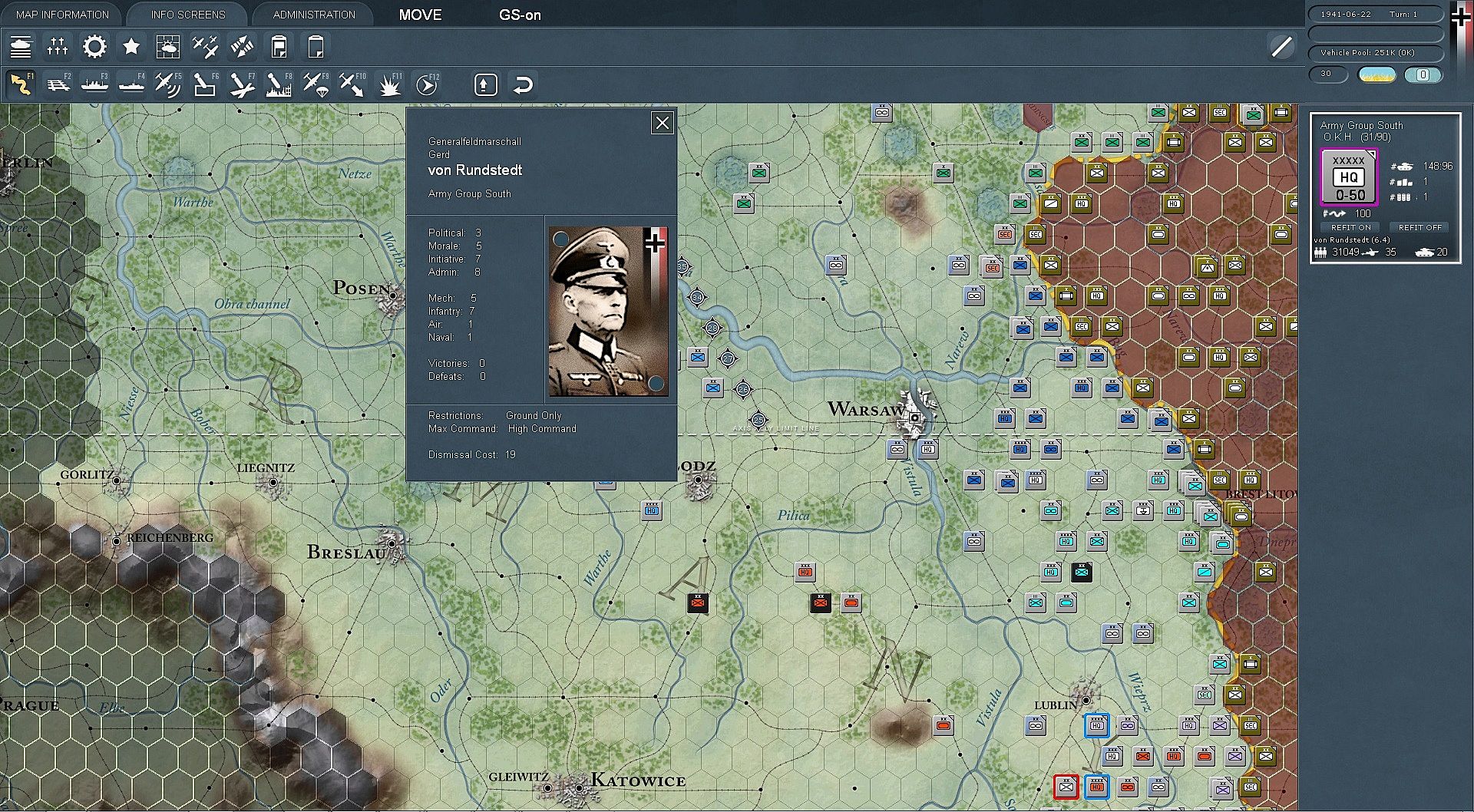
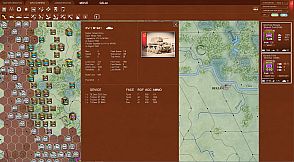
Air operations run separately for day and night missions, with options to assign night fighters or automate aircraft upgrades and allocations. Production modeling includes the historical evacuation of Soviet factories, complete with temporary output drops and recovery times. Over four thousand ground and air elements appear in the database, each with individual performance stats that influence combat results. Leaders receive ratings across eight attributes covering combat skill, political reliability, and other traits, and they can be promoted, dismissed, or lost in action.
Fog of war rules track unit concealment and detection capabilities, while optional settings adjust the impact of the first winter blizzard and Soviet combat doctrine. Fatigue, disruption, and training requirements for new units add layers of management that directly affect battlefield effectiveness.
Game Modes
Five major campaigns begin in 1941, 1942, 1943, 1944, or an alternate 1941 victory condition, each running through summer 1945. These large-scale operations present distinct strategic challenges tied to the historical progression of the war. Eleven smaller scenarios vary in length from ten to twenty-five turns and focus on specific operational problems.
Single-player options include matches against the AI on either side, with five adjustable help levels per faction to modify difficulty. The AI can also run the entire conflict autonomously. Multiplayer support covers traditional play-by-email exchanges as well as a server-based PBEM+ system. A full scenario and data editor allows creation of new content, with CSV import and export for custom modifications.
Historical Detail and Scale
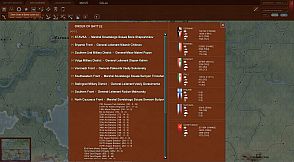
The map extends from roughly one hundred miles west of Berlin to the Ural Mountains and from north of Leningrad to Bulgaria and Baku in the south. Hundreds of historical commanders appear with promotion and rating systems that influence unit performance. Support personnel, vehicle losses, and squad-level tracking occur automatically yet remain visible through extensive reports and spreadsheets.
Players manage German corps, army, and army group headquarters alongside Soviet army and front headquarters. Air groups handle both offensive and defensive missions under realistic day-night cycles. These systems combine to create a simulation where small decisions in logistics or leadership can shift outcomes across thousands of units.
Is It Worth Playing?
This title suits players who seek deep, methodical control over large-scale World War II operations on the Eastern Front. Its strength lies in the interconnected mechanics for supply, weather, leadership, and unit condition that reward careful planning over multiple turns. The campaigns and scenarios deliver varied challenges without requiring external tools or additional content.
Those who enjoy detailed wargames with extensive reporting and optional rules for fine-tuning historical accuracy will find substantial replay value. The game remains available on PC with ongoing compatibility through its original platform. New players should expect a steep learning curve focused on systems rather than rapid action, but the editor and adjustable AI settings help tailor the experience once the basics are understood.