















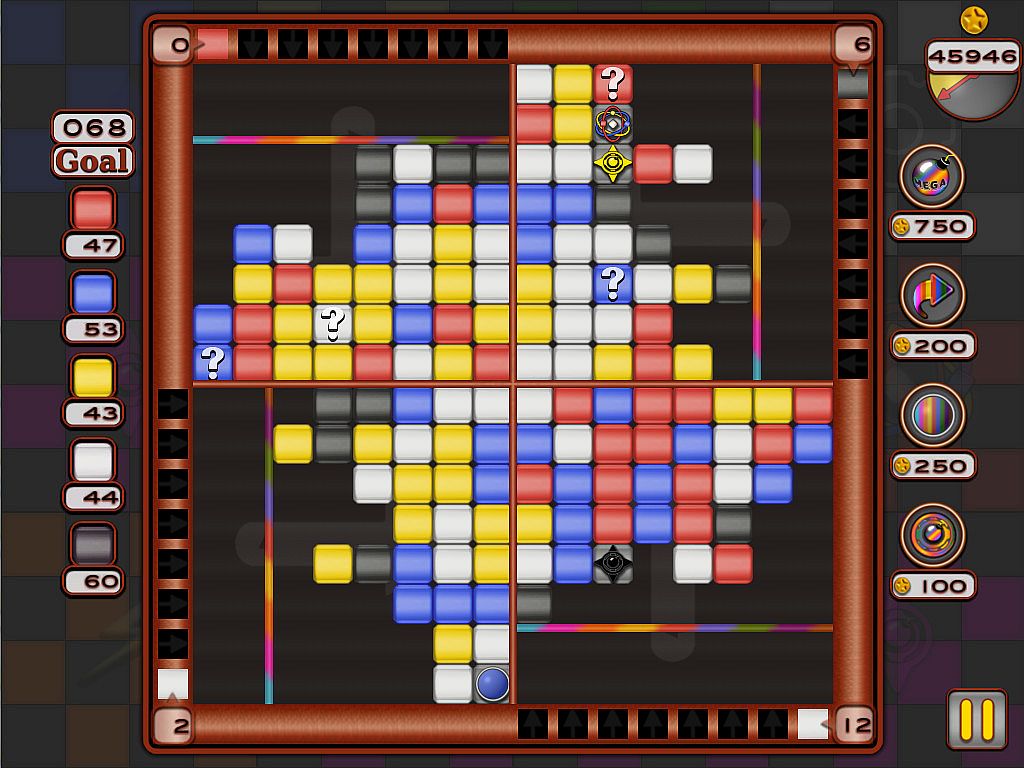
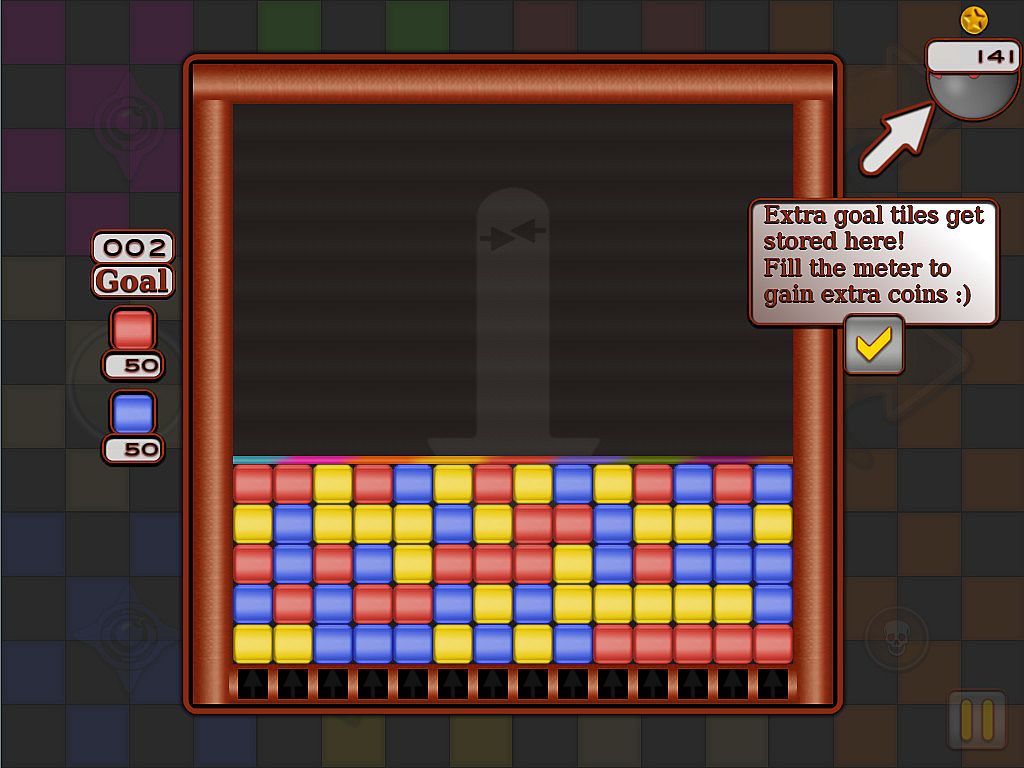
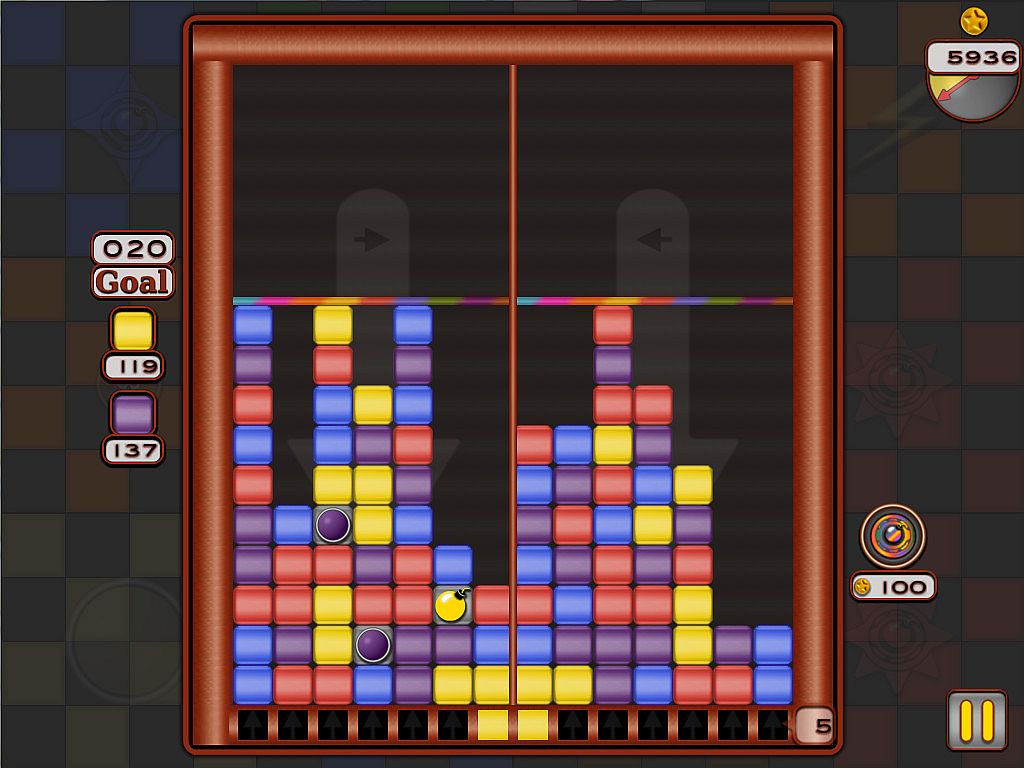
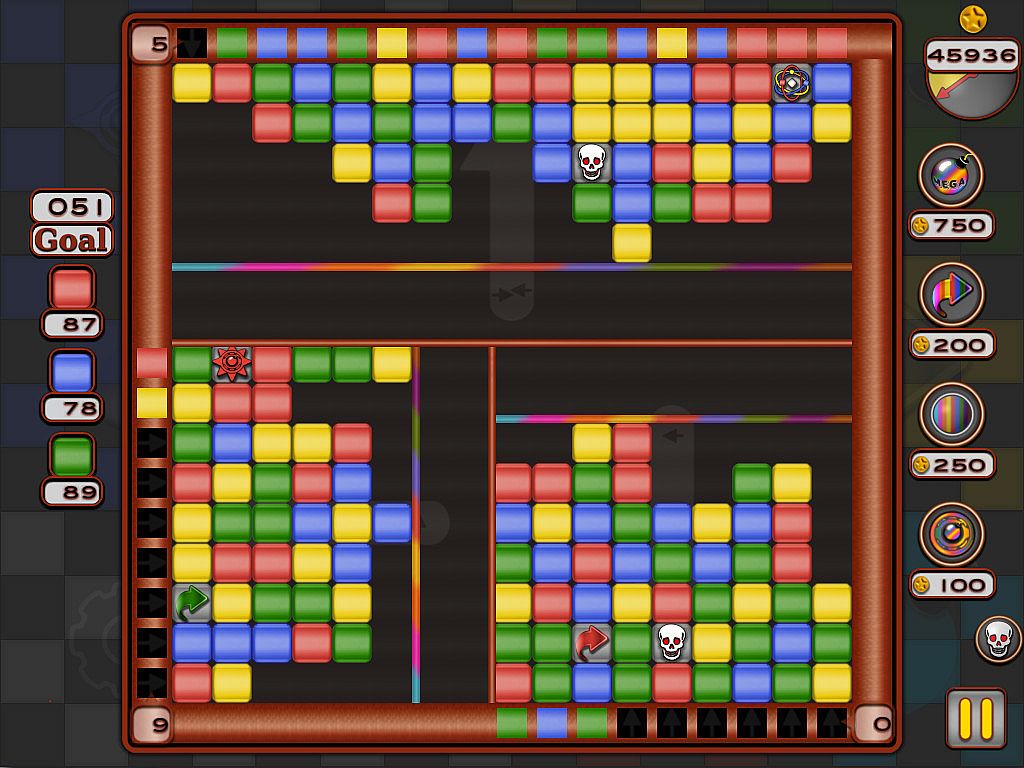
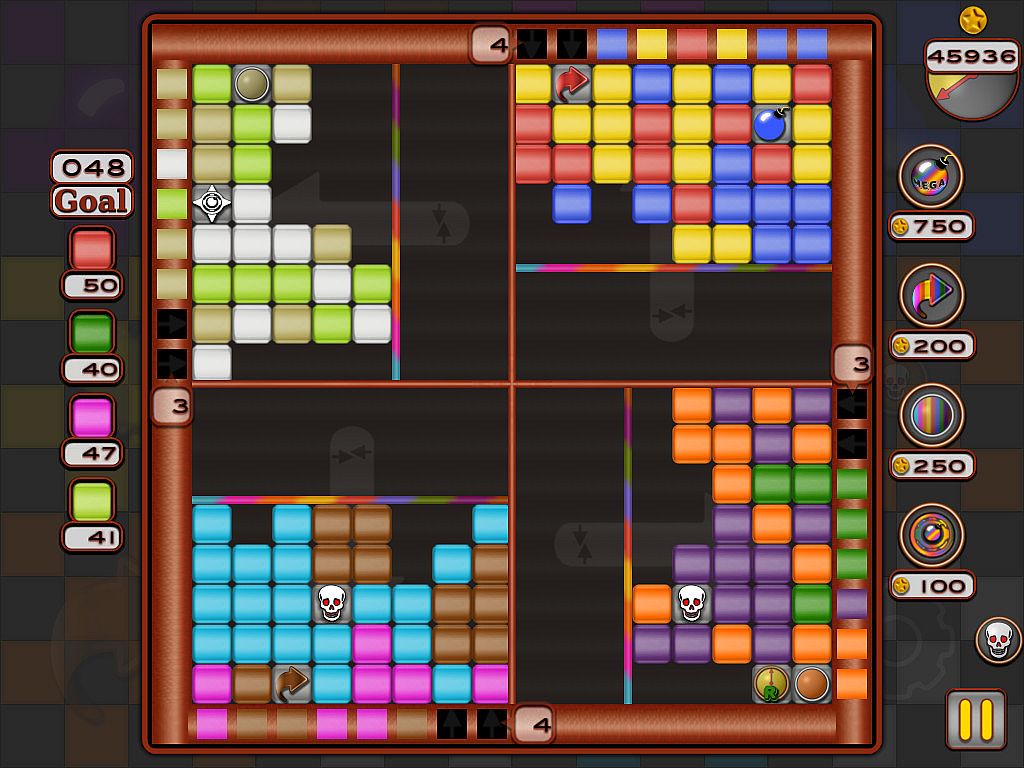
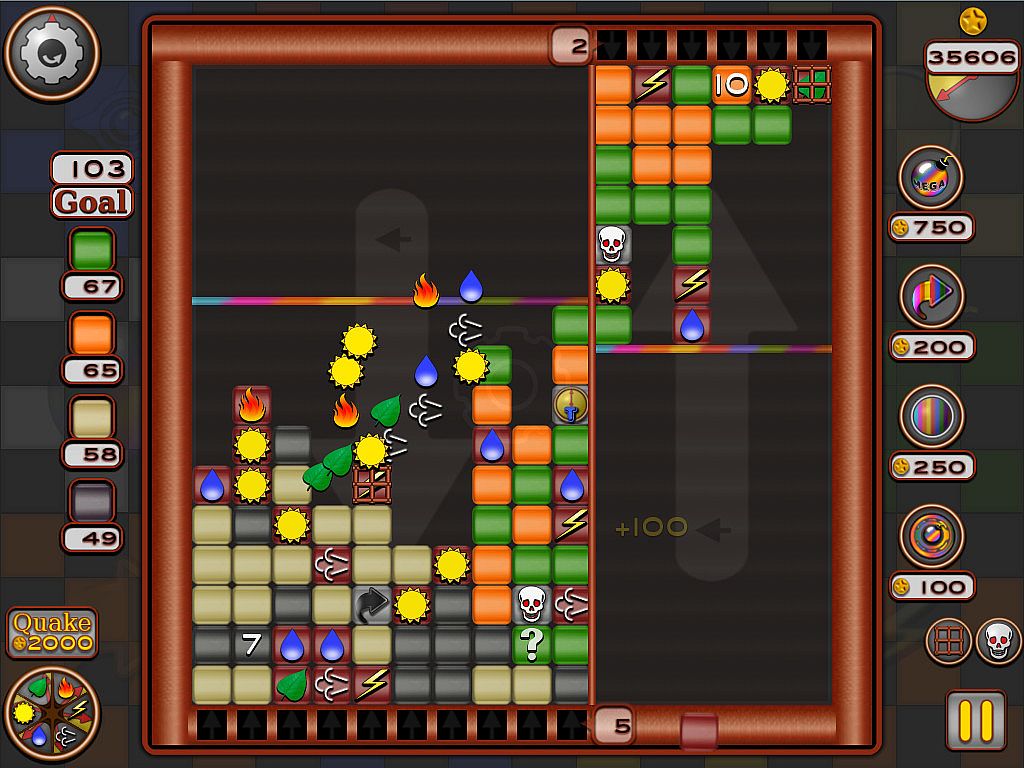
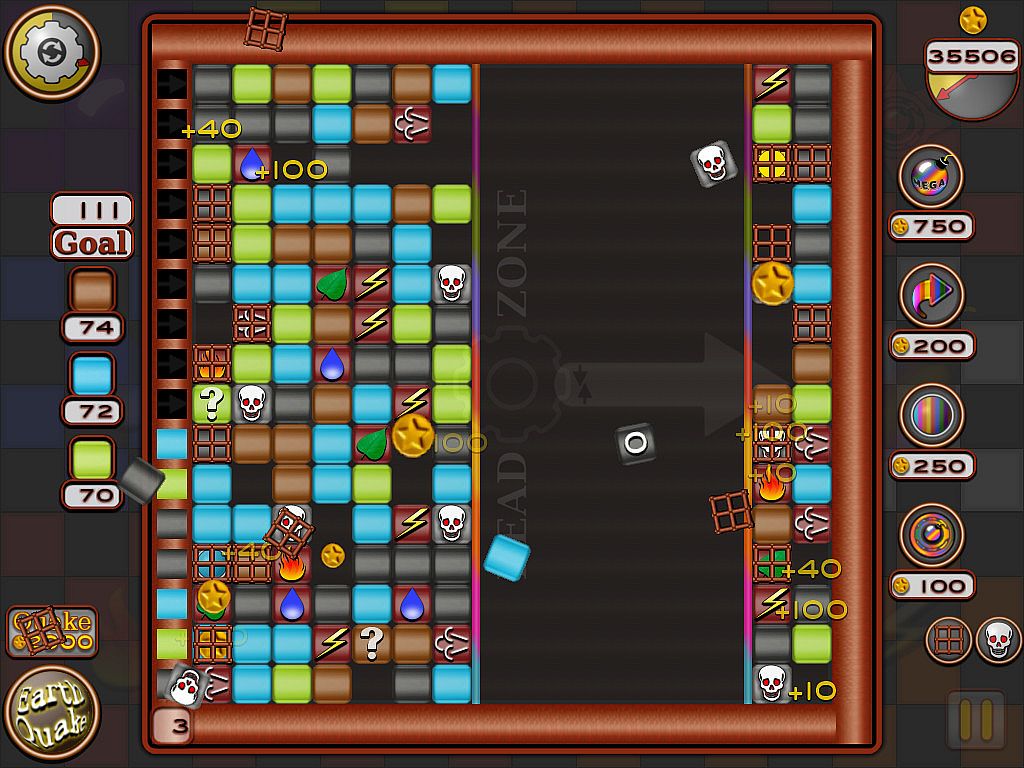
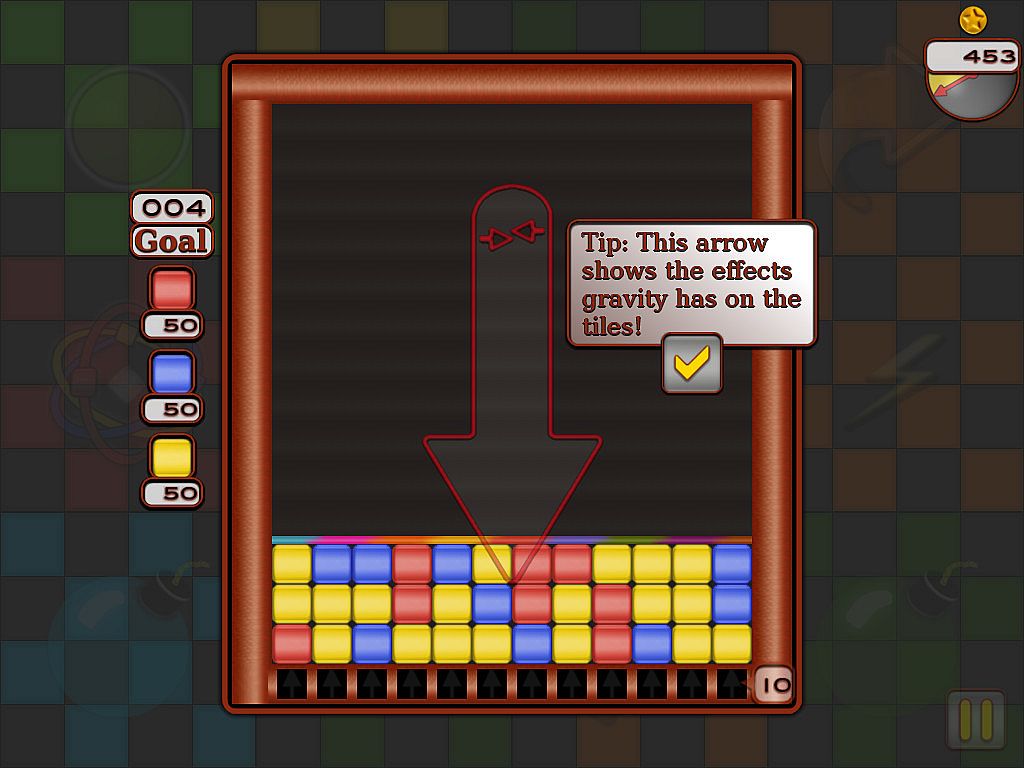
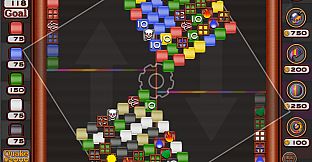
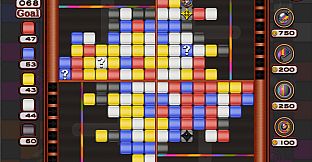
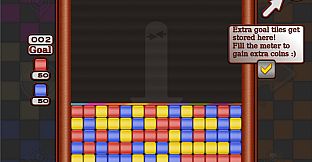
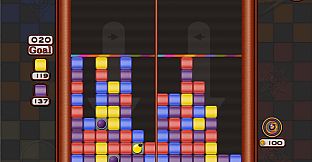
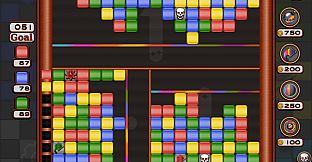
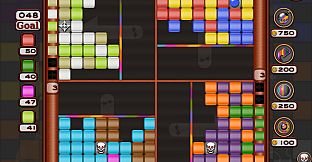
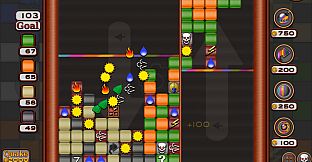
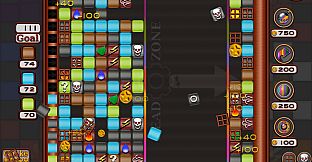
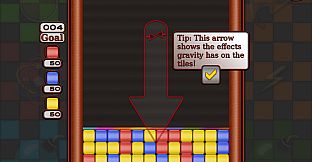
Tisnart Tiles is a casual indie match-3 puzzle game developed for PC. Players match tiles on boards that change direction and layout in unexpected ways across a campaign of 120 levels. The core loop revolves around clearing groups of three or more identical tiles while adapting to shifting gravity, rotating elements, and occasional hazards that alter the board mid-play.
Gameplay
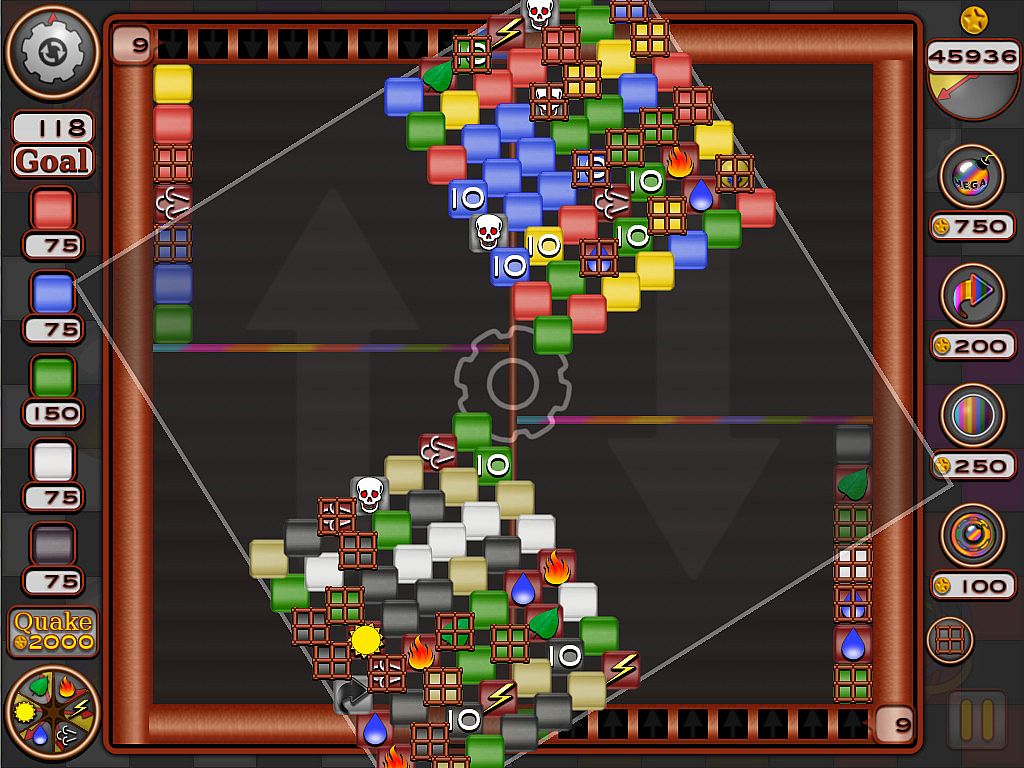
The match-3 action begins with standard tile swapping to form lines, but gravity can pull pieces in any of the four cardinal directions depending on the level design. Boards often split into separate sections or feature rotating tiles that require timing matches around their movement. Earthquakes triggered by collecting element tiles clear large portions of the grid at once, adding a layer of strategic planning to each stage.
Power-ups appear frequently to break up longer sessions. Tile Blasters eliminate groups in a line, Gravity Tiles redirect falling pieces, Tile Flips reverse orientations, and Gas Pods create chain reactions. Additional tools include the Rotator for spinning sections of the board and special items purchased with collected coins, such as the Multi Bomb or Multi Blaster for clearing multiple areas simultaneously. Mr. Skull occasionally appears to remove tiles if progress stalls, forcing quicker decisions.
Each level presents a unique configuration, with no two boards repeating the same layout or gravity pattern. Tutorials introduce the basics, yet many interactions with interactive title screen elements and level select screen secrets reward experimentation for extra coins.
Game Modes
Tisnart Tiles offers a single continuous campaign of 120 puzzle levels rather than separate named modes. Progression moves through increasingly complex boards that combine gravity shifts, split sections, rotating tiles, and quake events. The experience stays focused on solo puzzle solving without multiplayer components or competitive leaderboards.
Level design emphasizes variety within the match-3 framework. Early stages introduce basic gravity changes, while later ones layer multiple mechanics such as simultaneous board rotations and skull interference. Players advance by completing objectives on each board, with coins earned along the way to unlock or enhance power-up usage in subsequent stages.
Key Mechanics and Progression
Progression relies on mastering nine distinct power-ups that interact with the variable gravity and board alterations. Collecting coins allows repeated use of stronger variants like the Multi Bomb, encouraging efficient play to stockpile resources. Hidden elements on the level select screen provide optional coin bonuses for those who explore the interface thoroughly.
The game avoids narrative elements or branching paths, keeping attention on the mechanical twists. Boards never repeat exactly, which maintains freshness across the full set of levels. System requirements remain modest, supporting older Windows machines with basic graphics needs.
Is It Worth Playing?
Player reviews on the primary distribution platform show 91 percent positive feedback from a total of 36 ratings. Those who enjoy match-3 puzzles with frequent mechanical variations tend to appreciate the consistent surprises across the 120 levels. The small review volume reflects the game's age and niche appeal as a straightforward casual title.
Current player activity remains low, consistent with a release from 2015 that has not received ongoing seasonal content or major updates. It suits individuals seeking a compact single-player puzzle experience without time-limited events or social features. Fans of gravity-altered or rotating match-3 formats will find the core loop engaging for short sessions, while those preferring story-driven or multiplayer games may find the scope limited.