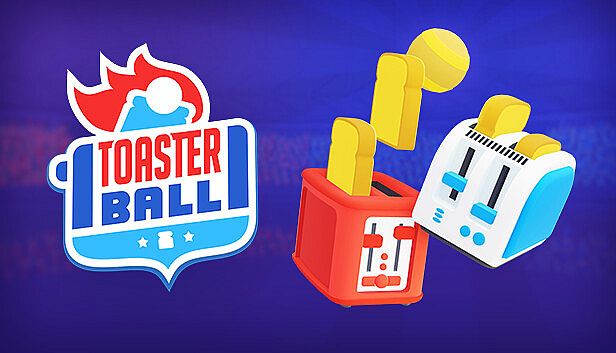
















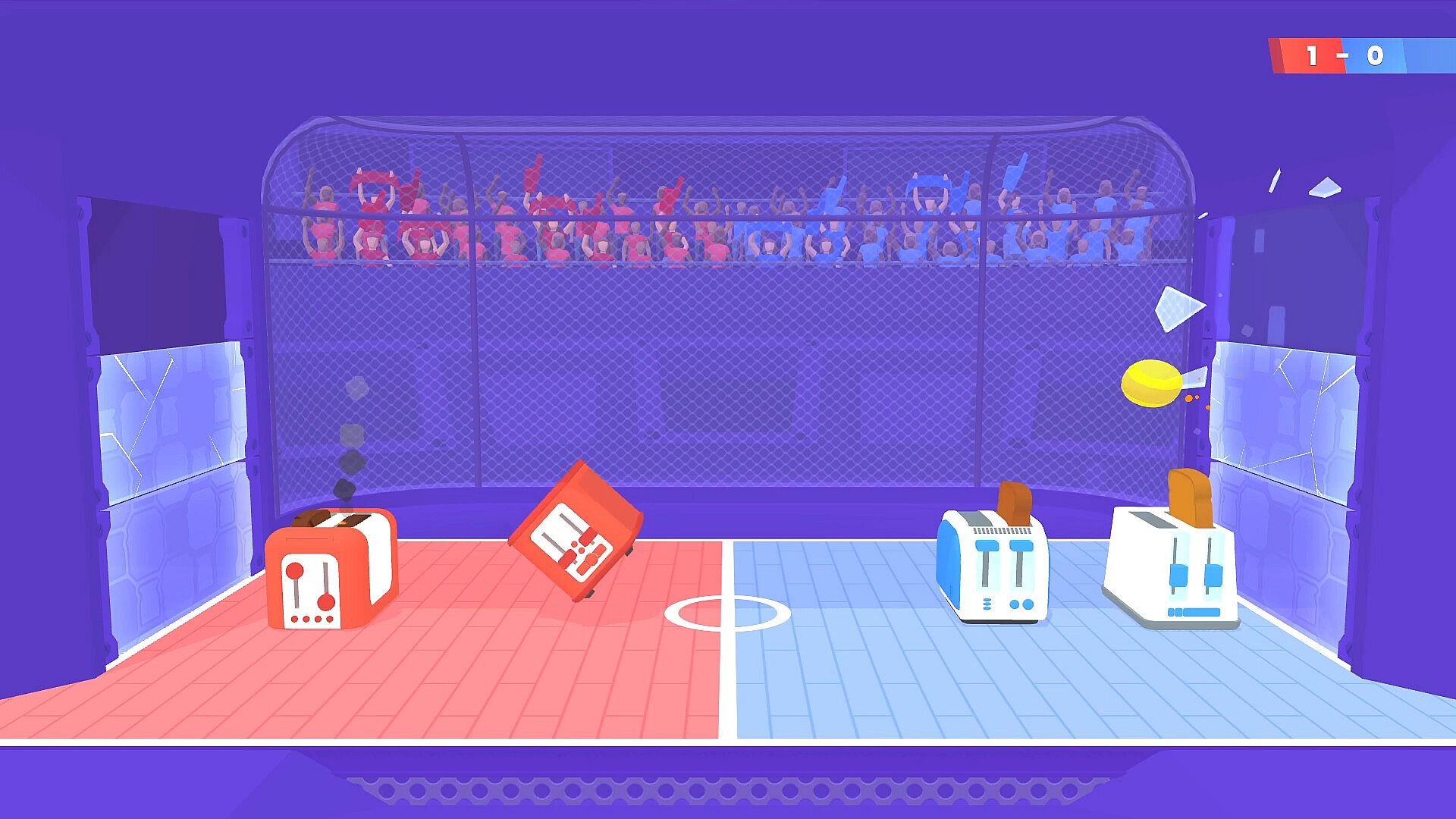
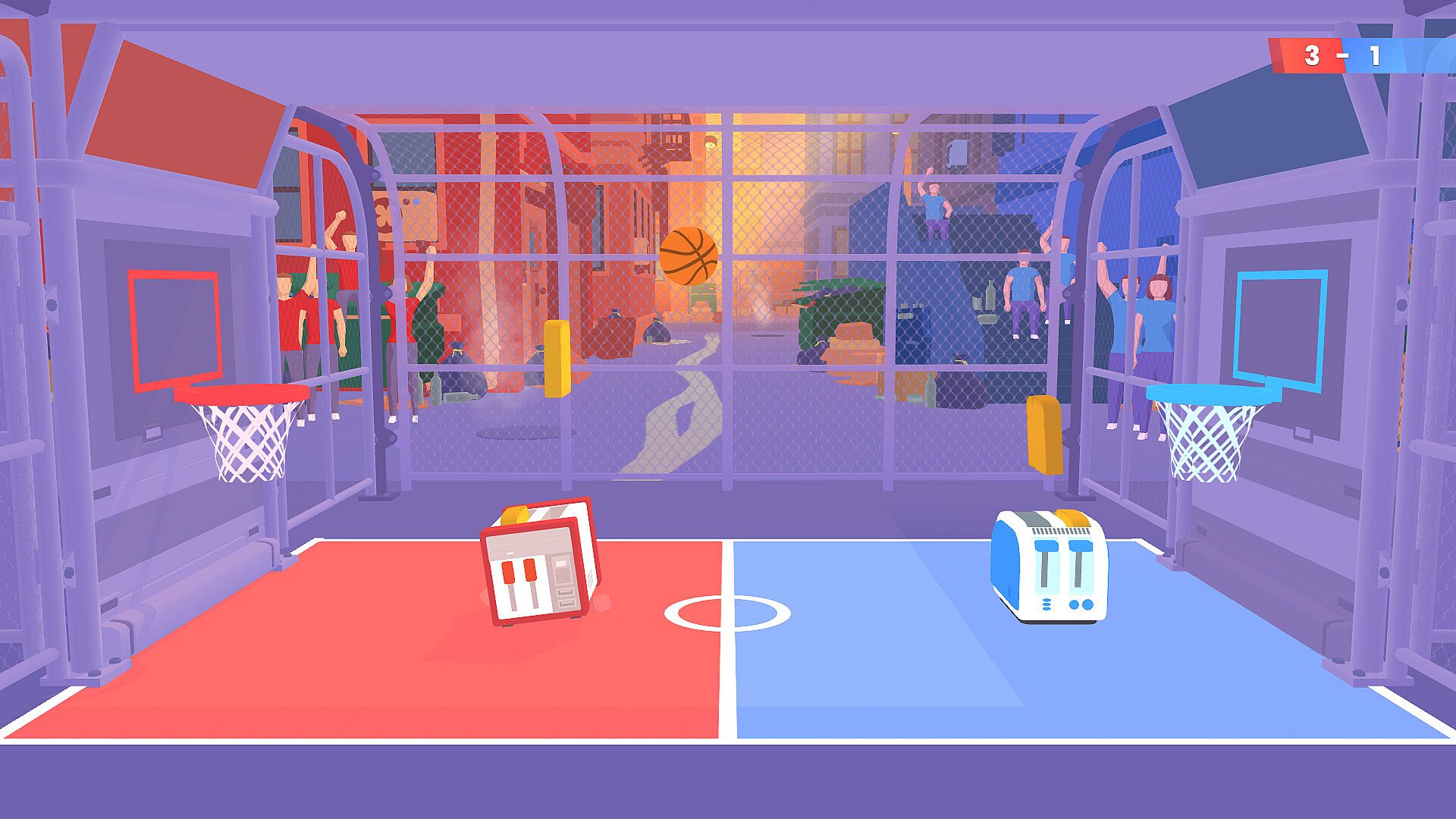
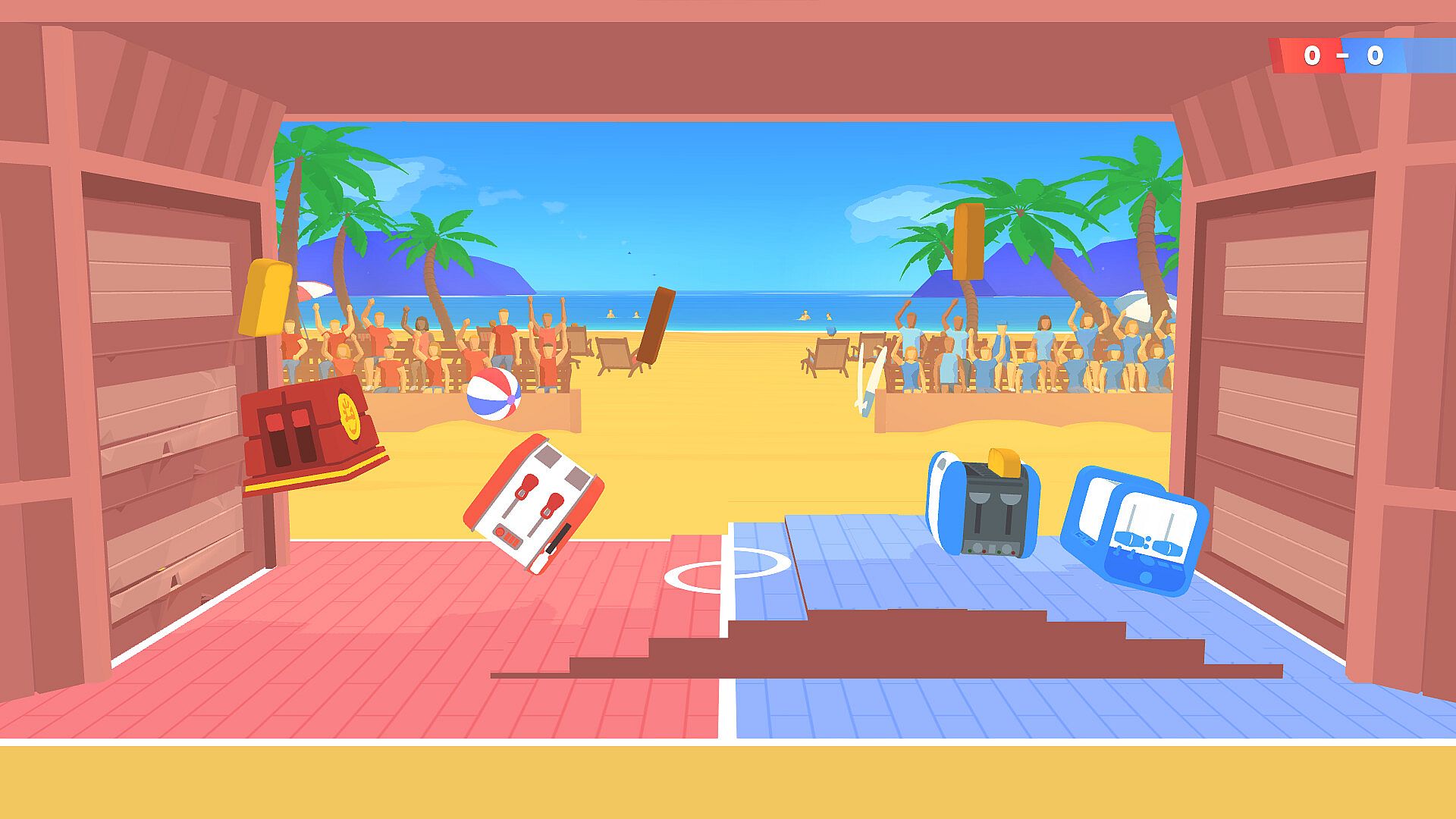
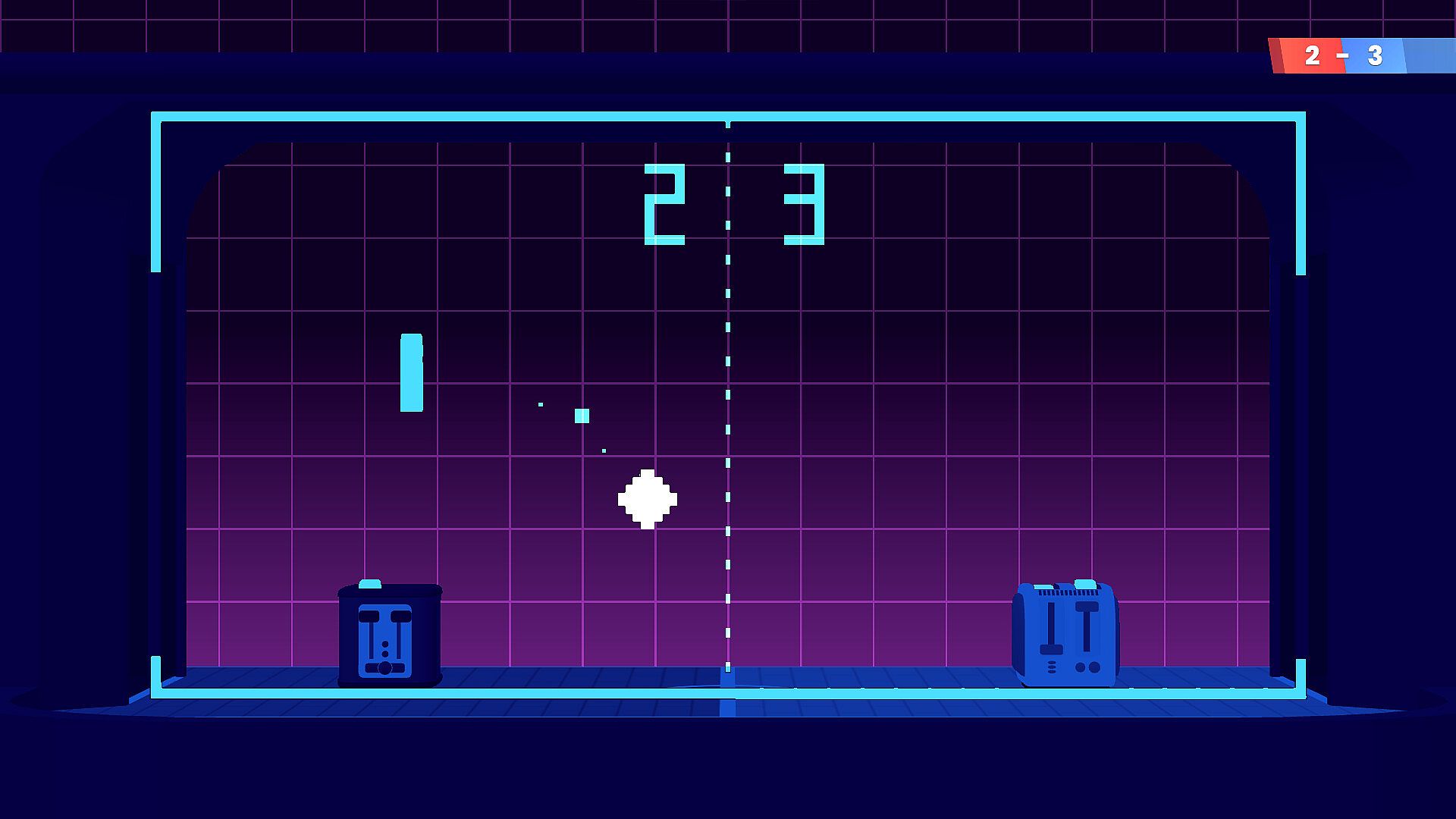
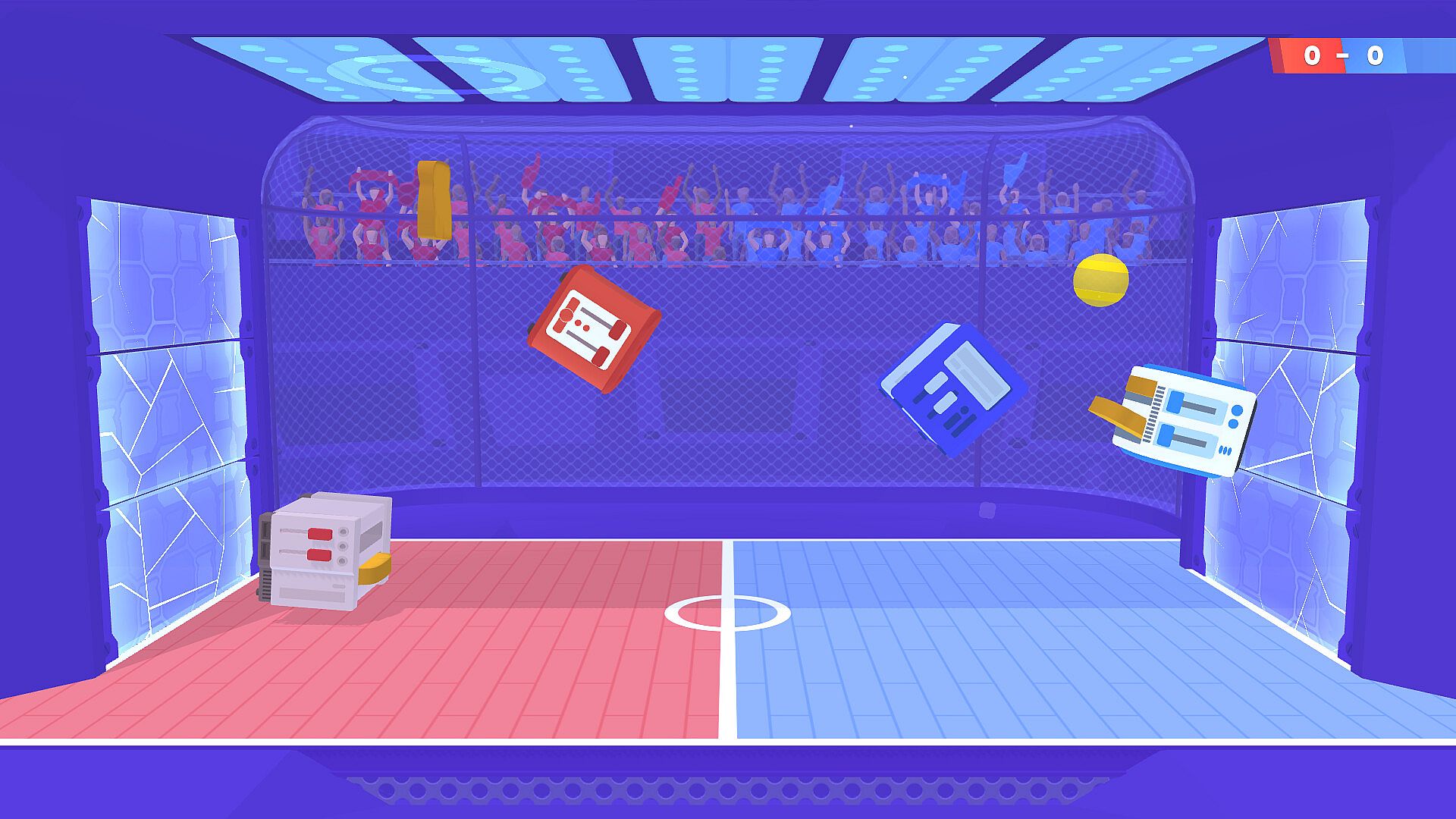
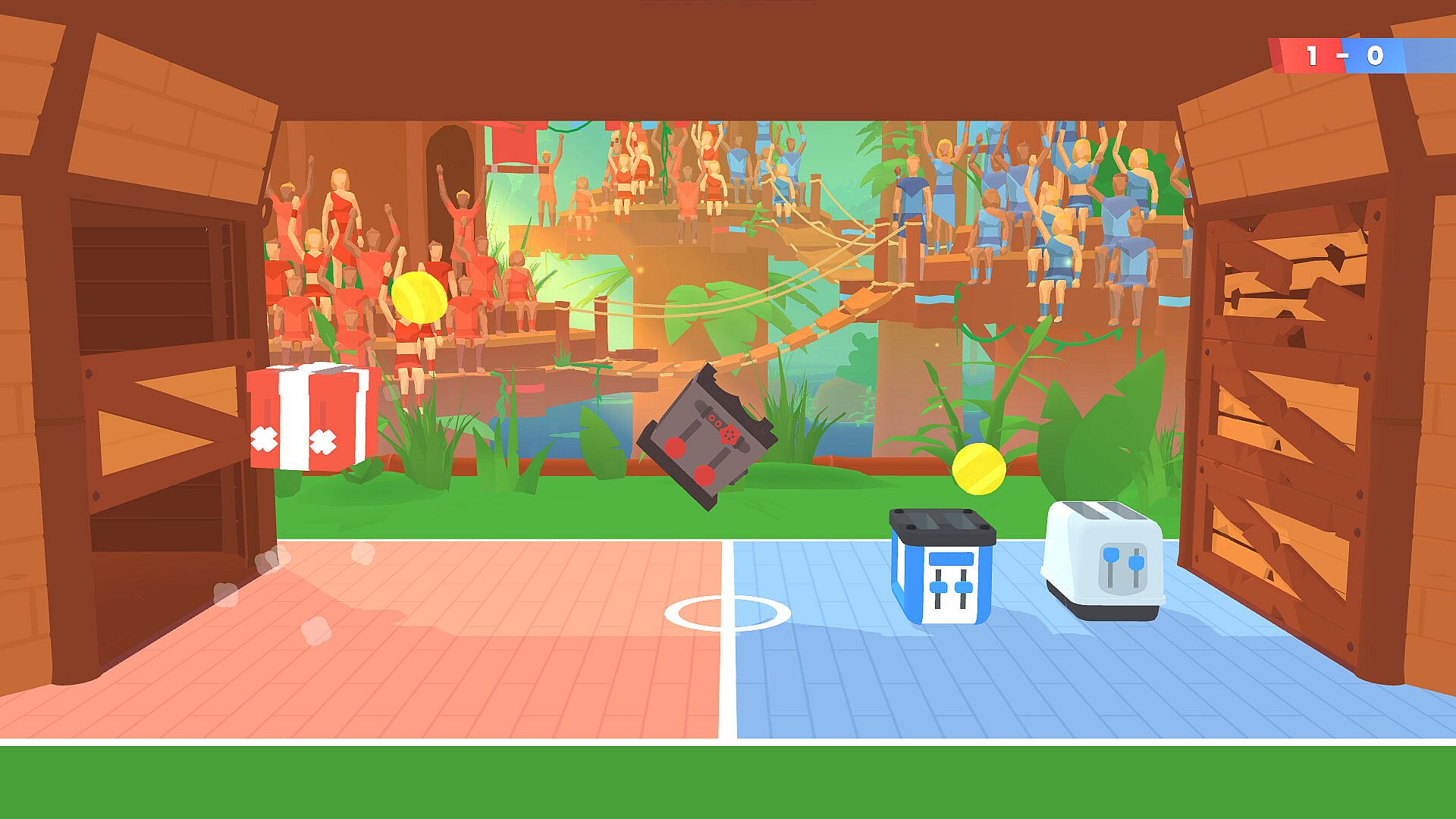
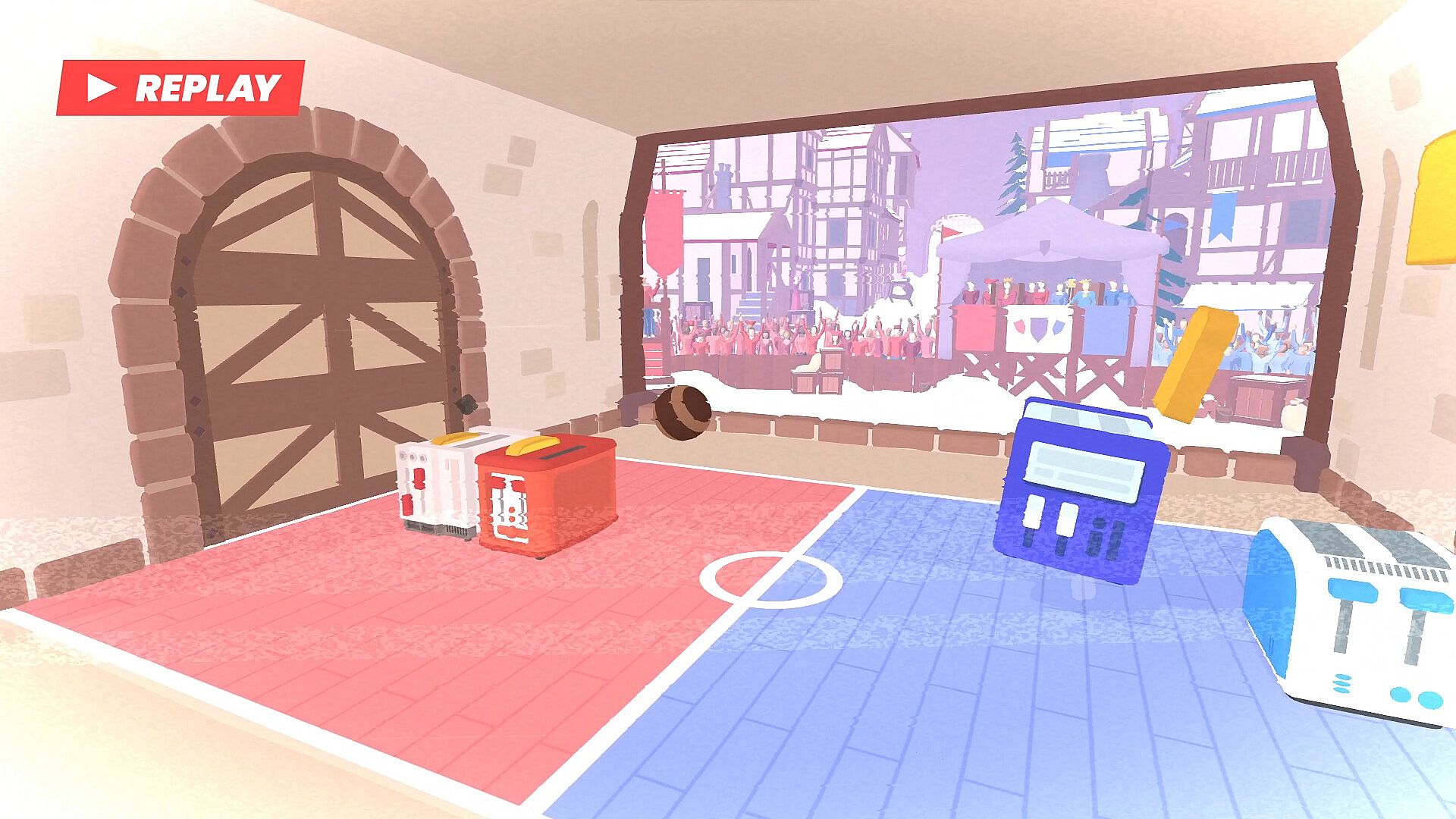
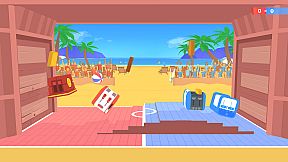
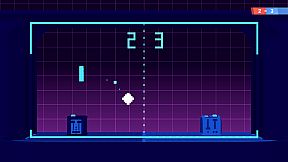
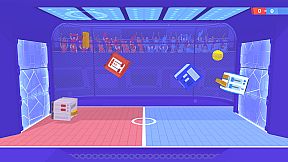
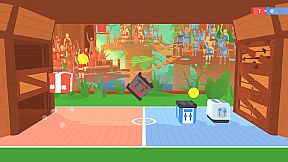
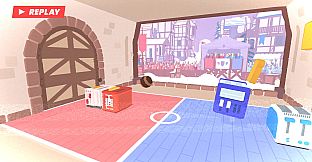
Toasterball is a physics-based indie sports game for PC where players control toasters in matches centered on a ball and opposing goals. The core loop revolves around ejecting toast to propel the ball while navigating the field through jumps and physical interactions. Local multiplayer supports up to four players on a shared screen, with options for solo play against AI opponents.
Gameplay
Controls center on two buttons that determine toast ejection height and trigger a corresponding jump for the toaster. Holding the button longer sends the toast farther, which also lifts the player character for aerial movement and positioning. This system creates opportunities for chaining actions, such as double jumps that extend reach or the TURBOFLIP maneuver for rapid directional changes and aggressive plays. Matches emphasize chaotic physics interactions, where toasters collide, push opponents, and deal with flying bread that can interfere with trajectories.
After every goal, a random variant activates and alters the match environment. These changes introduce new ball behaviors, environmental hazards like lava pits or explosions, and structural elements such as portals or moving platforms. The full set includes 24 distinct variants, with additional modifiers that adjust toaster size or toast quantity to further vary each round. The result is a progression where basic rules give way to advanced techniques as players adapt to shifting conditions.
Game Modes
Standard matches follow the core objective of scoring through the opponent's goal while managing toaster durability and impacts on breakable doors. Custom mode allows selection of specific variant sequences, arena choices, and rule tweaks including the number of impacts required to open a goal, damage thresholds for toasters, and point totals needed for victory. Single-player sessions incorporate AI-controlled toasters to fill teams or provide practice opponents.
Local play accommodates one to four participants in split-screen setups that support both competitive and cooperative team arrangements. AI options named Beep, Boop, and Bleep-Bloop integrate into matches for balanced team sizes or standalone challenges.
Arenas and Athletes
Five distinct arenas shape the playing field with unique layouts and visual themes. These include the central Toasterball Arena, the dense foliage of Panachado Forest, the urban layout of Breadington Square, the fortified grounds of Tartembourg village, and the open sands of Porto Rada. Each location influences movement and strategy through its geometry and obstacles.
Players select from 14 distinct toaster athletes divided between the Burners and Defrosters teams. Each athlete carries individualized traits reflected in appearance, animations, and details such as locker contents or entrance sequences. These differences add personality without altering core mechanics.
Is It Worth Playing?
Toasterball suits groups seeking short, repeatable sessions with physical comedy and escalating complexity. The learning curve rewards repeated play through discovery of advanced maneuvers and variant adaptations. Reviews on its primary distribution platform rate the experience as Very Positive based on hundreds of user submissions, highlighting consistent enjoyment in local settings. The game remains available with its full feature set intact since launch, including ongoing support for custom configurations that extend replay value. Those who enjoy accessible physics sports titles with unpredictable twists will find the mechanics hold attention across multiple matches.