




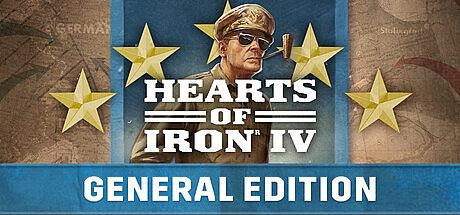
















Hearts of Iron IV: General Edition places players in command of any nation during the turbulent years leading into and through World War II. This grand strategy wargame emphasizes detailed management of national resources, political decisions, technological advancement, and armed forces across land, air, and sea theaters. The experience centers on directing a country's industrial output, research priorities, and diplomatic relations while navigating the global conflict that reshapes alliances and borders.
Gameplay
The core loop revolves around balancing production lines for equipment and supplies with the need to field and sustain military units. Players allocate factories to build tanks, aircraft, ships, and infantry gear while researching new technologies that unlock improved designs and doctrines. Political paths influence government stability, laws, and national focuses that grant bonuses or open alternate historical routes. Combat occurs on a detailed map where terrain, weather, and supply lines affect unit performance, requiring careful planning of fronts and encirclements to achieve breakthroughs.
Division templates allow customization of unit composition, incorporating support companies and specialized equipment to match operational needs. Logistics play a central role, as shortages in fuel, ammunition, or manpower can stall advances or lead to collapses. Naval and air operations add layers of complexity, with convoy raiding, strategic bombing, and fleet engagements influencing broader war efforts. The system rewards foresight in resource allocation and adaptation to shifting fronts rather than direct unit control.
Game Modes
Single-player sessions let users select any country and progress through the war from either the 1936 or 1939 start date. These campaigns focus on achieving national objectives through a combination of internal development and external conflicts. Multiplayer supports competitive or cooperative play, where participants control different nations in the same global scenario and interact through diplomacy, trade, and warfare.
Both formats operate in real time with the option to pause for planning. Scenarios emphasize long-term strategy over quick matches, with outcomes determined by sustained management of economies and armies rather than individual battles.
Factions and Diplomacy
Players engage with major power blocs such as the Axis, Allies, and Comintern, though these alliances break down into numerous smaller groups with their own goals and tensions. Diplomacy tools include trade agreements, non-aggression pacts, and faction membership that provide mutual benefits or obligations. Espionage elements allow interference in other nations through agents and operations that can sway internal politics or disrupt production.
Focus trees guide each country's unique development, offering choices that alter historical trajectories and grant specialized advantages. These systems encourage experimentation with different nations to explore varied paths to victory or survival.
Is It Worth Playing?
The game receives ongoing support through expansions that add new focus trees, mechanics, and content for specific regions or nations. Recent updates have refined faction interactions, introduced special projects for advanced weapons, and expanded options for naval and land combat. This continued development keeps the experience fresh for those invested in its systems.
Reception highlights its depth as a simulation that demands significant time investment to master production chains, supply management, and strategic decision-making. It suits players who enjoy intricate grand strategy titles centered on historical what-if scenarios and long campaigns. Those seeking fast-paced action or simpler mechanics may find the complexity overwhelming, while enthusiasts of detailed management and alternate history will find substantial replay value in experimenting with different countries and alliances.


