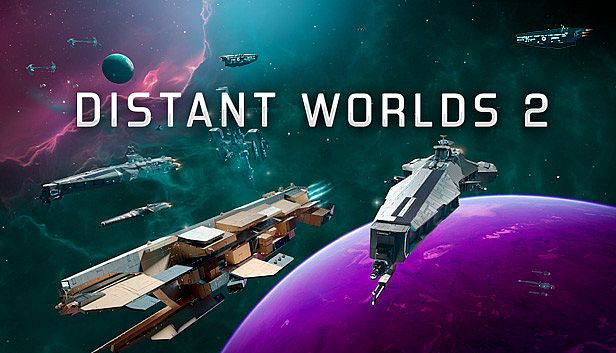


























Distant Worlds 2 is a pausable real-time 4X space strategy simulation game set across procedurally generated galaxies on PC. Players manage empires through exploration, resource exploitation, diplomacy, and conflict while deciding how much direct control to exercise over fleets, research, and colonies.
Gameplay
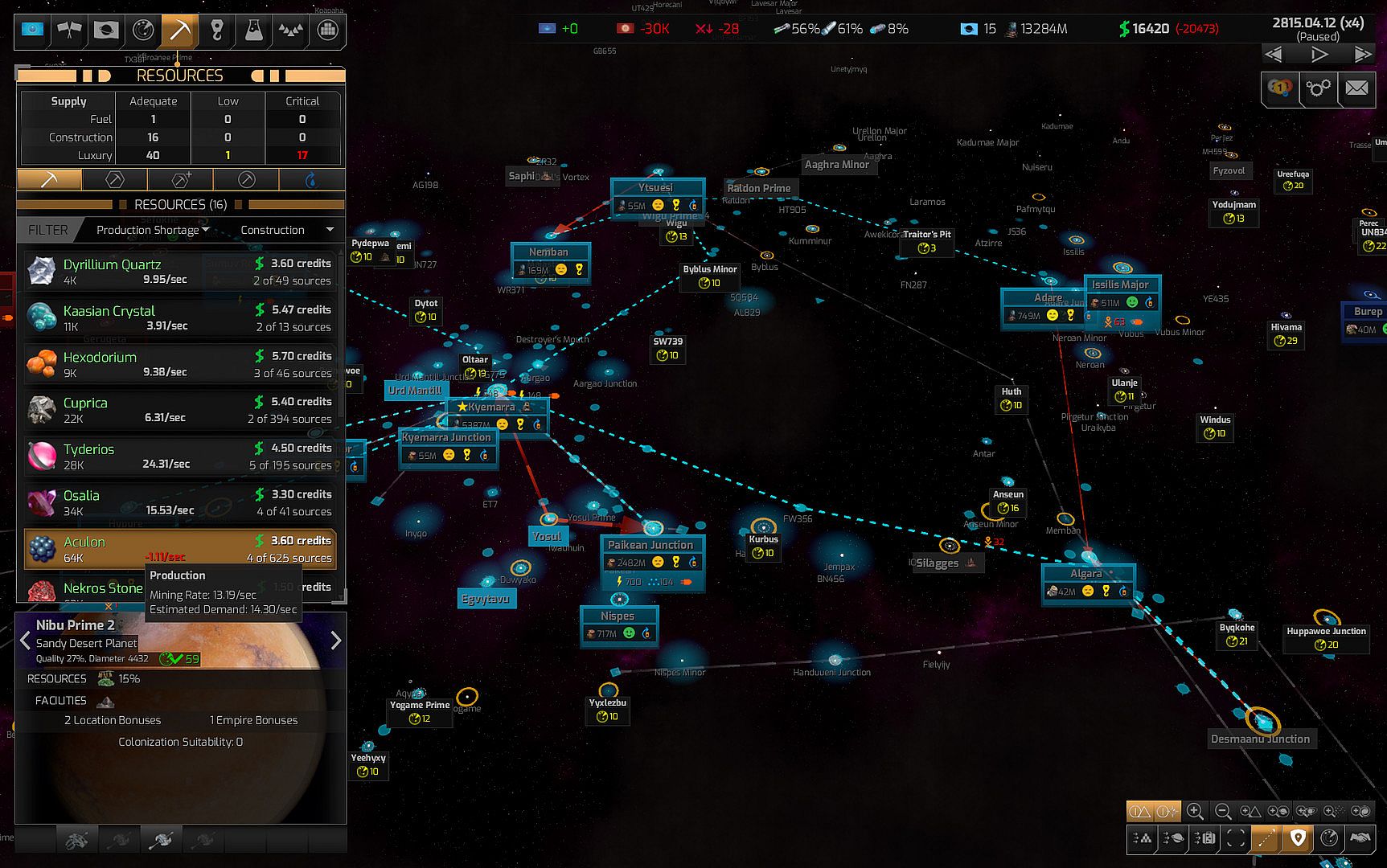
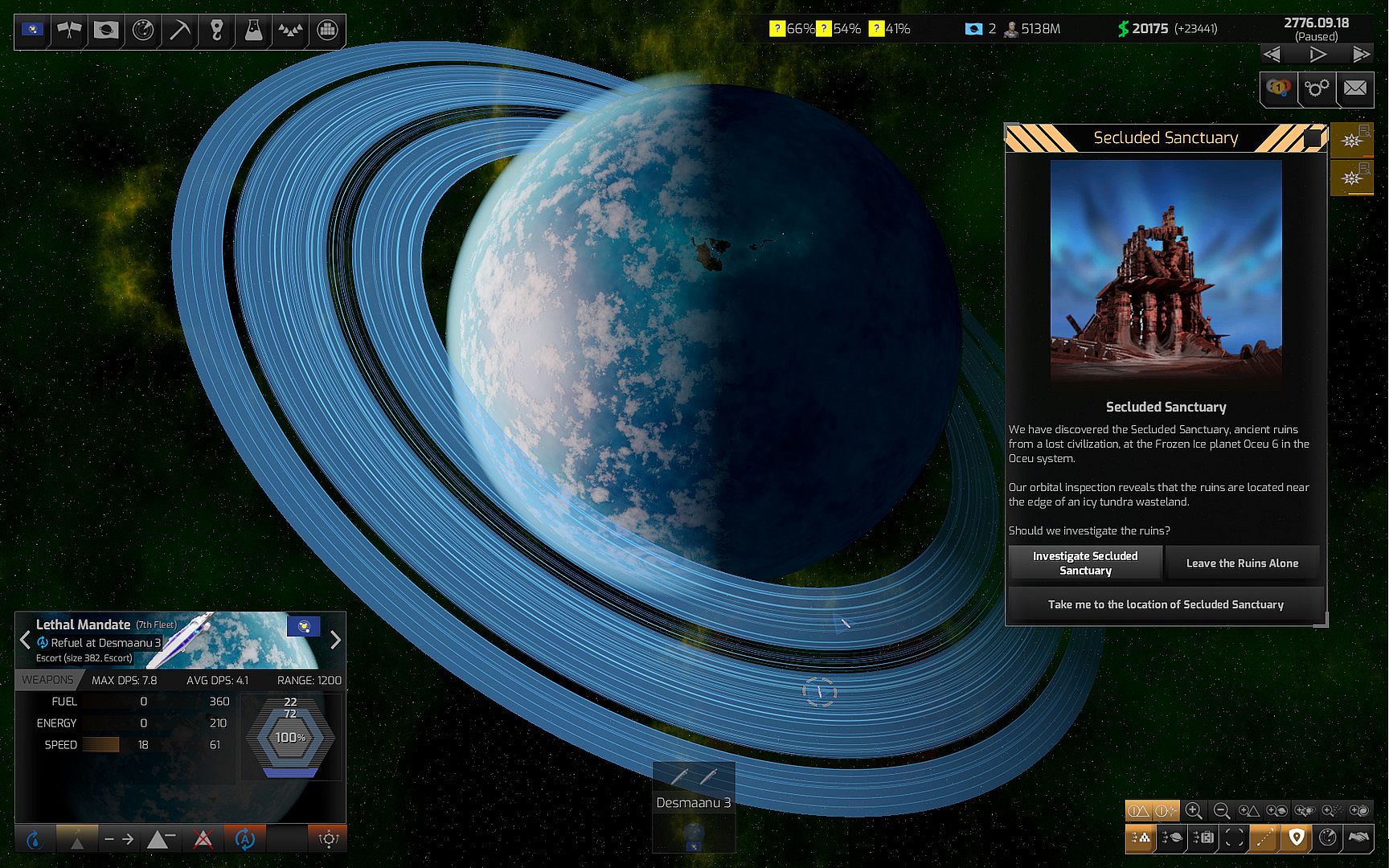
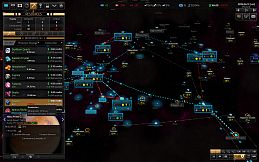
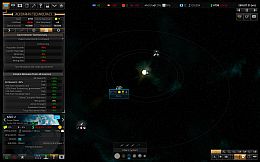
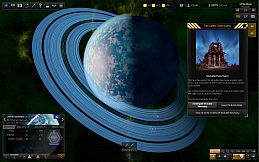
The core loop revolves around building and expanding an empire in galaxies that can contain up to 2,000 star systems along with tens of thousands of planets, moons, and asteroids. Galaxy generation creates unique layouts each time, with options to adjust size, density, and other parameters for tailored experiences. Exploration reveals star systems, asteroid fields, galactic storms, and black holes, along with remnants of past civilizations that provide historical context.
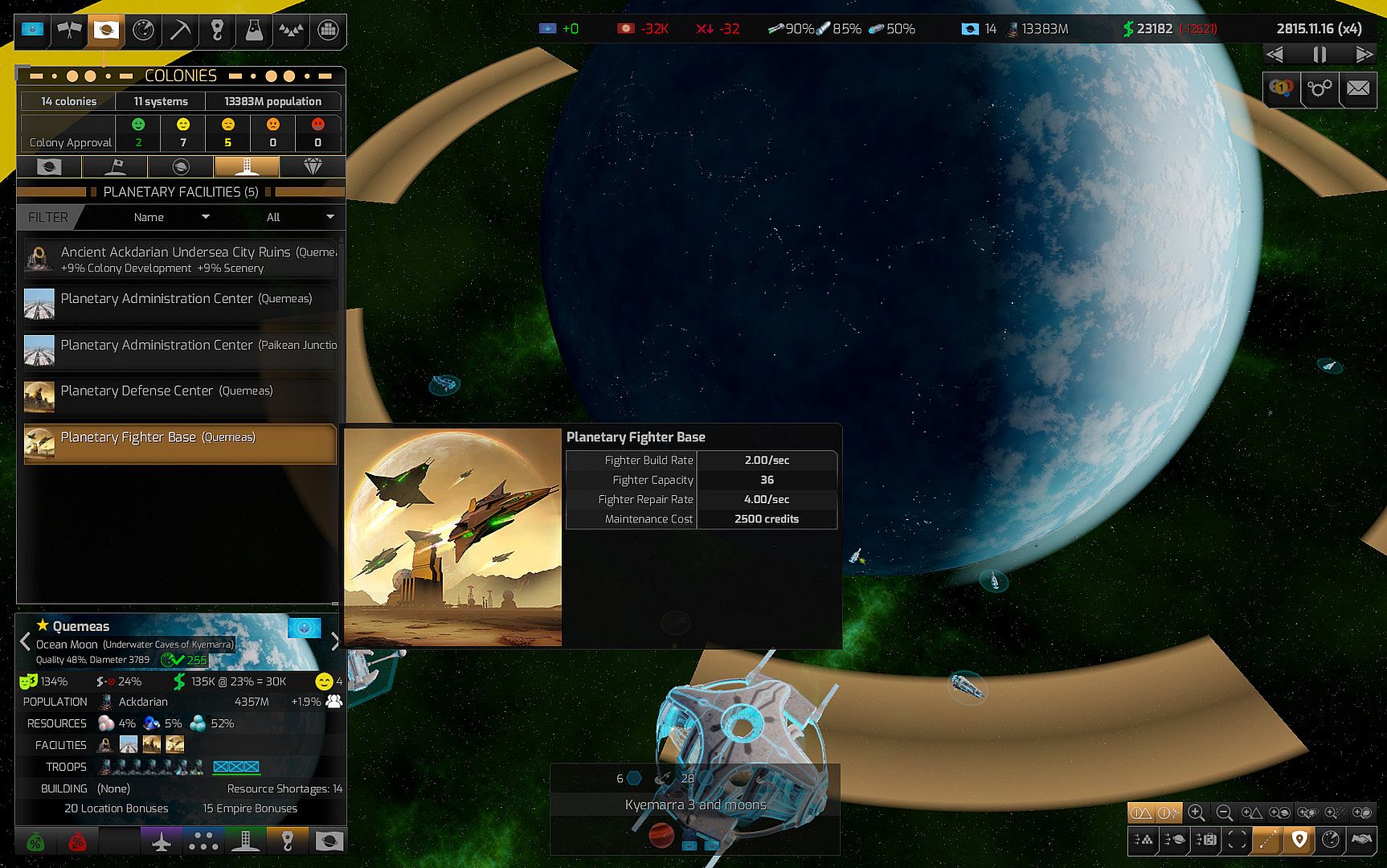
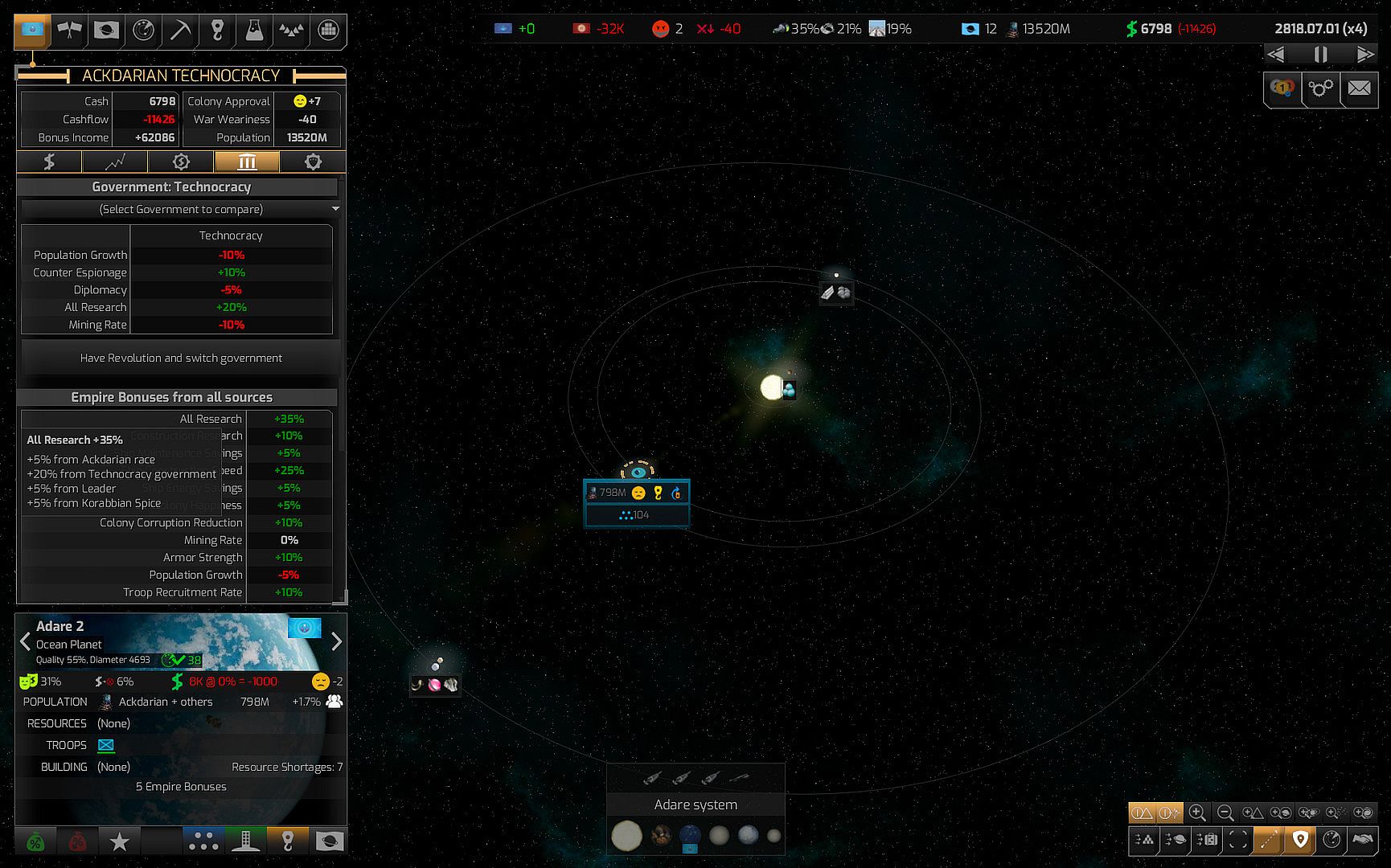
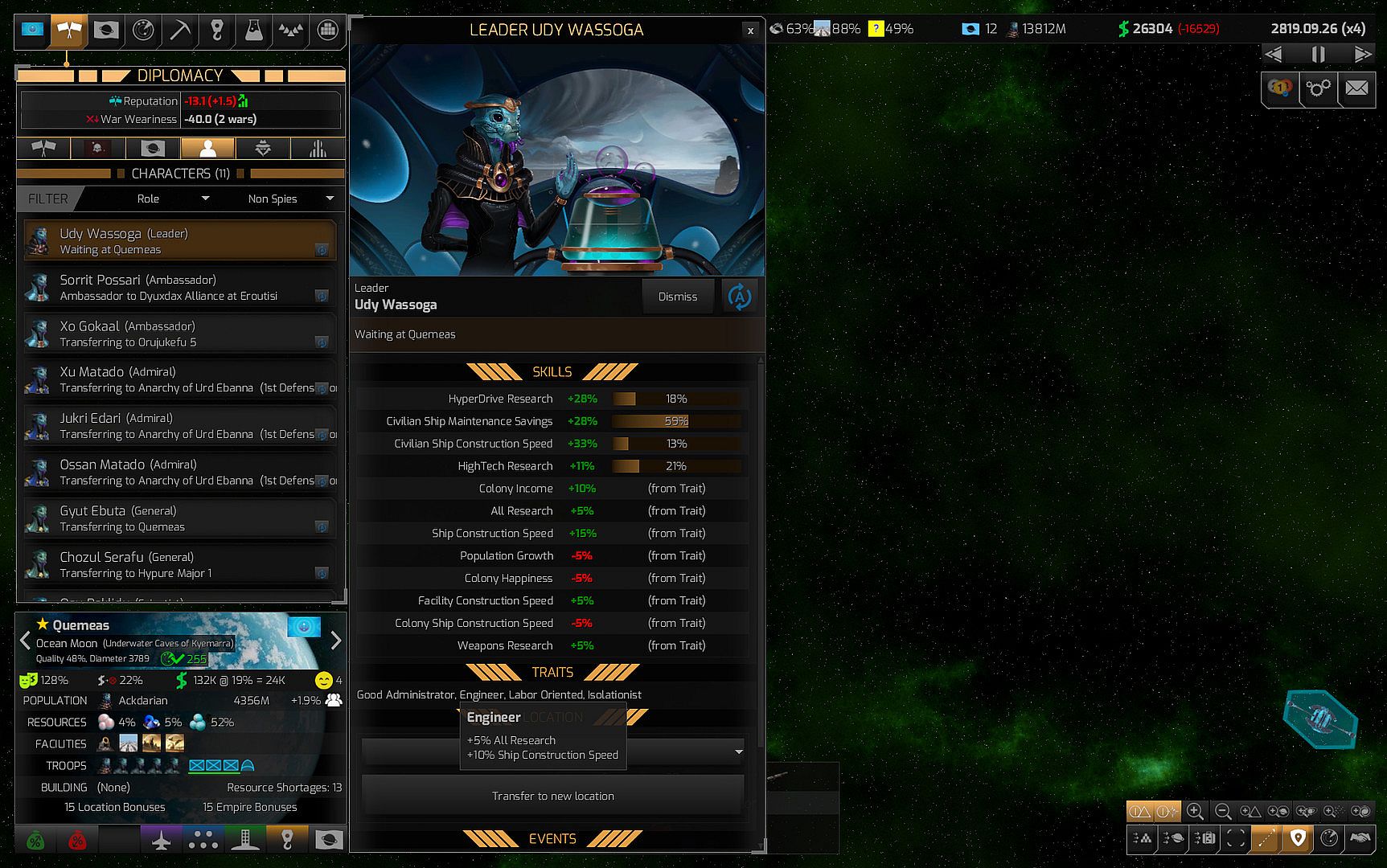
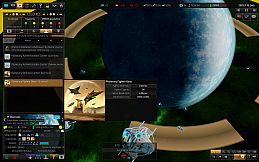
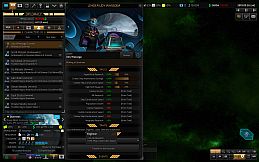
Empire development includes constructing infrastructure, improving colonies, and balancing military, economic, and research priorities. A private economy operates autonomously, with independent ships handling much of the mining and transport of resources that the player empire then uses. Intelligent automation handles routine tasks such as research selection, fleet movement, and colony management, with sliders and settings that let players adjust the level of oversight from full delegation to manual control of individual ships.
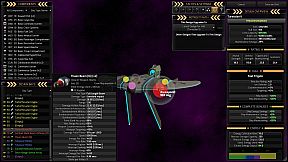
Combat occurs in real time on a two-dimensional plane, where fleets engage based on templates and standing orders rather than constant micromanagement. Encounters with other empires, independent colonies, traders, pirates, and space monsters add variety to interactions. A built-in editor allows modification of star systems, planets, ships, and empire attributes for custom scenarios.
Game Modes
Three primary approaches shape each session. Storylines guide players through narrative events and objectives tied to the galaxy's history. Victory conditions provide structured goals such as territorial control, economic dominance, or specific faction requirements. Sandbox mode removes these constraints for open-ended play focused purely on empire growth and galactic interaction.
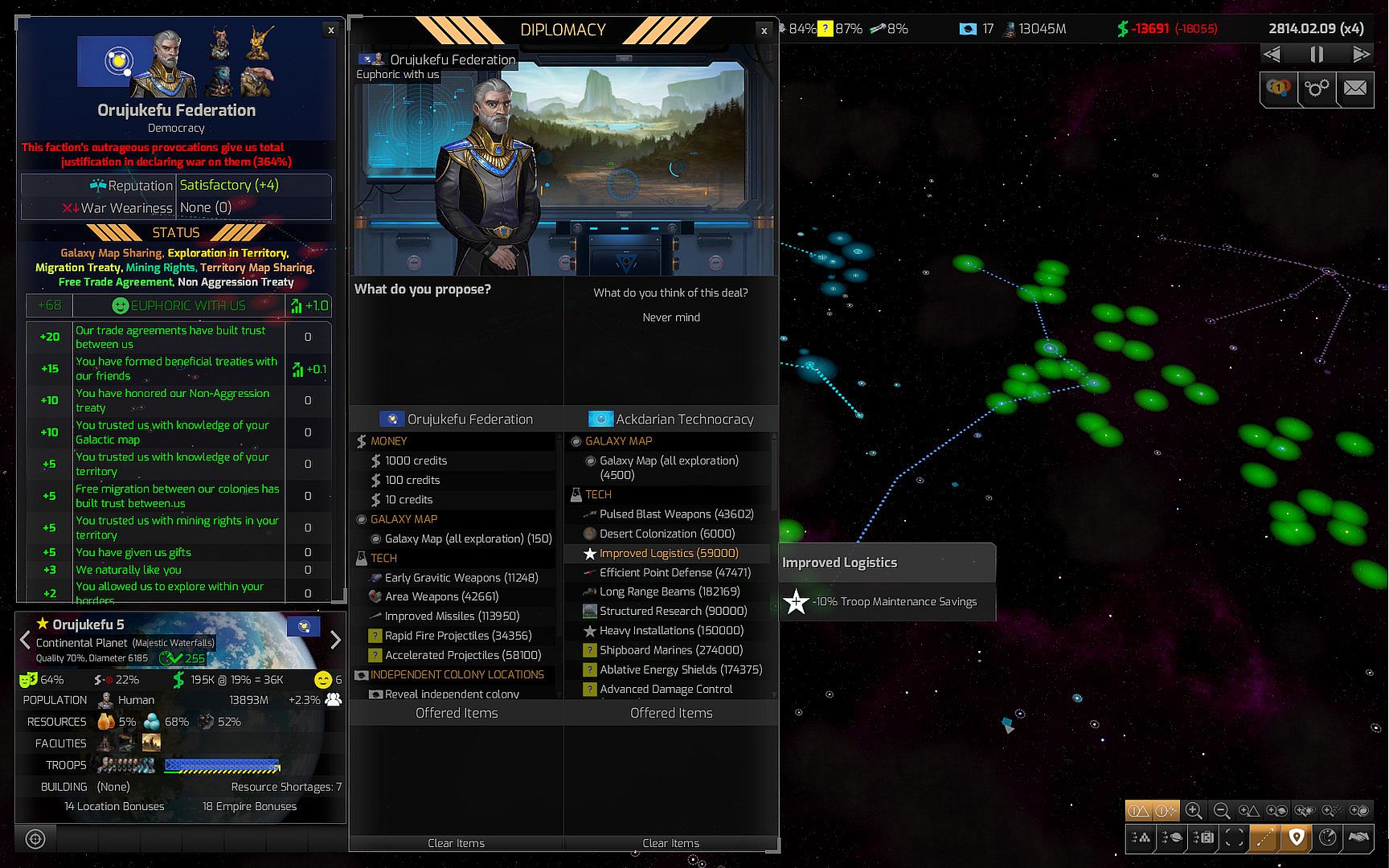
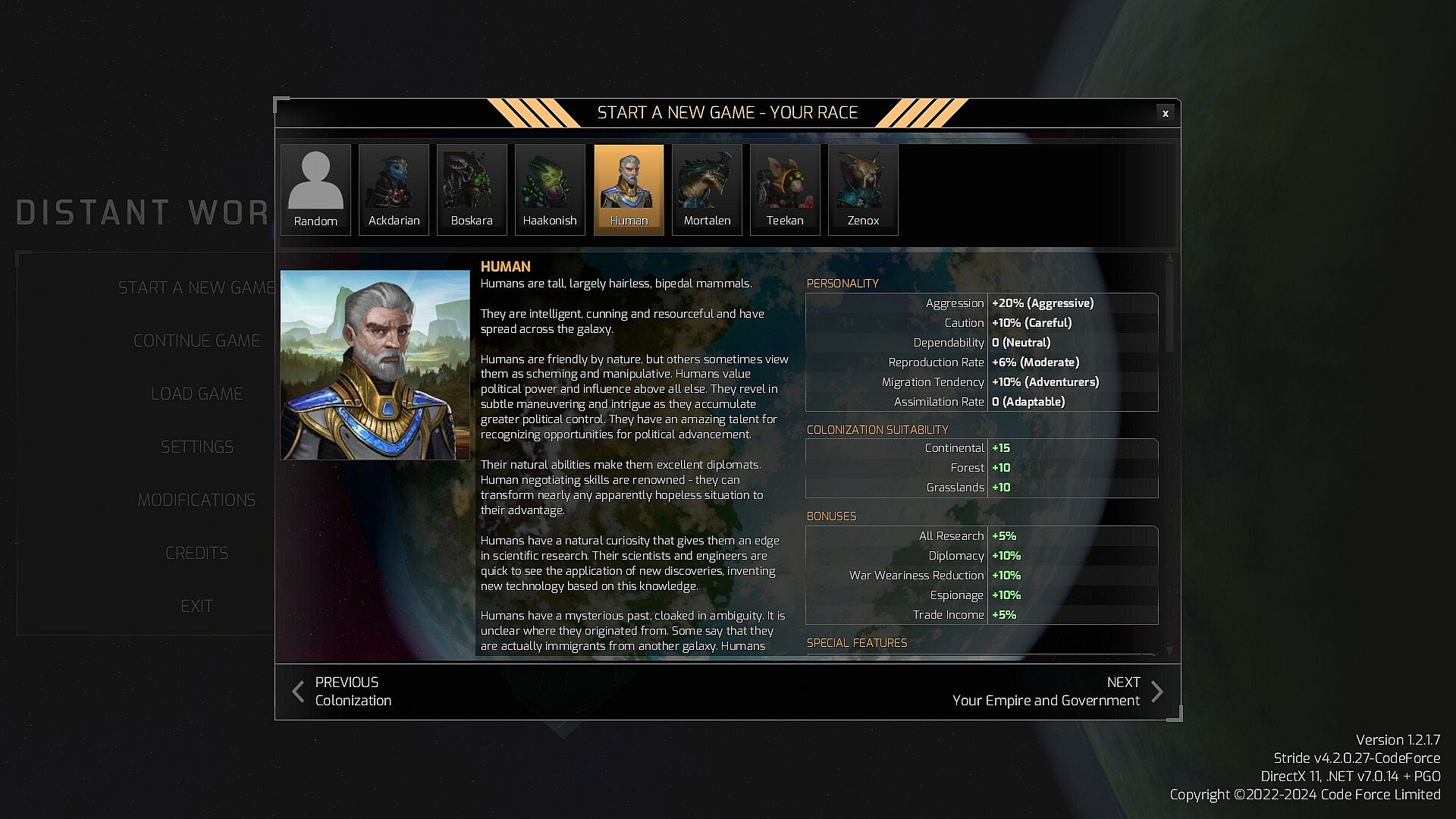
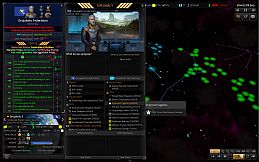
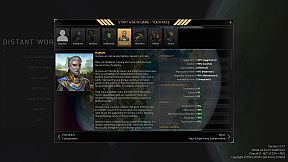
Setup options further customize each mode, including galaxy scale, faction selection, and threat levels. Seven base game factions offer distinct starting positions and playstyles that influence diplomacy, research paths, and military focus. Additional content expands the roster with specialized groups that introduce unique government types and end-game options.
Empire Management and Automation
Automation systems form a central feature that scales with empire size. Players set policies for ship construction, fleet behavior, and resource allocation, then let advisors execute them. This approach supports both small focused games and massive campaigns without requiring oversight of every detail. Context-sensitive help and a comprehensive Galactopedia provide explanations for every screen and mechanic, while tutorials cover core systems for new players.
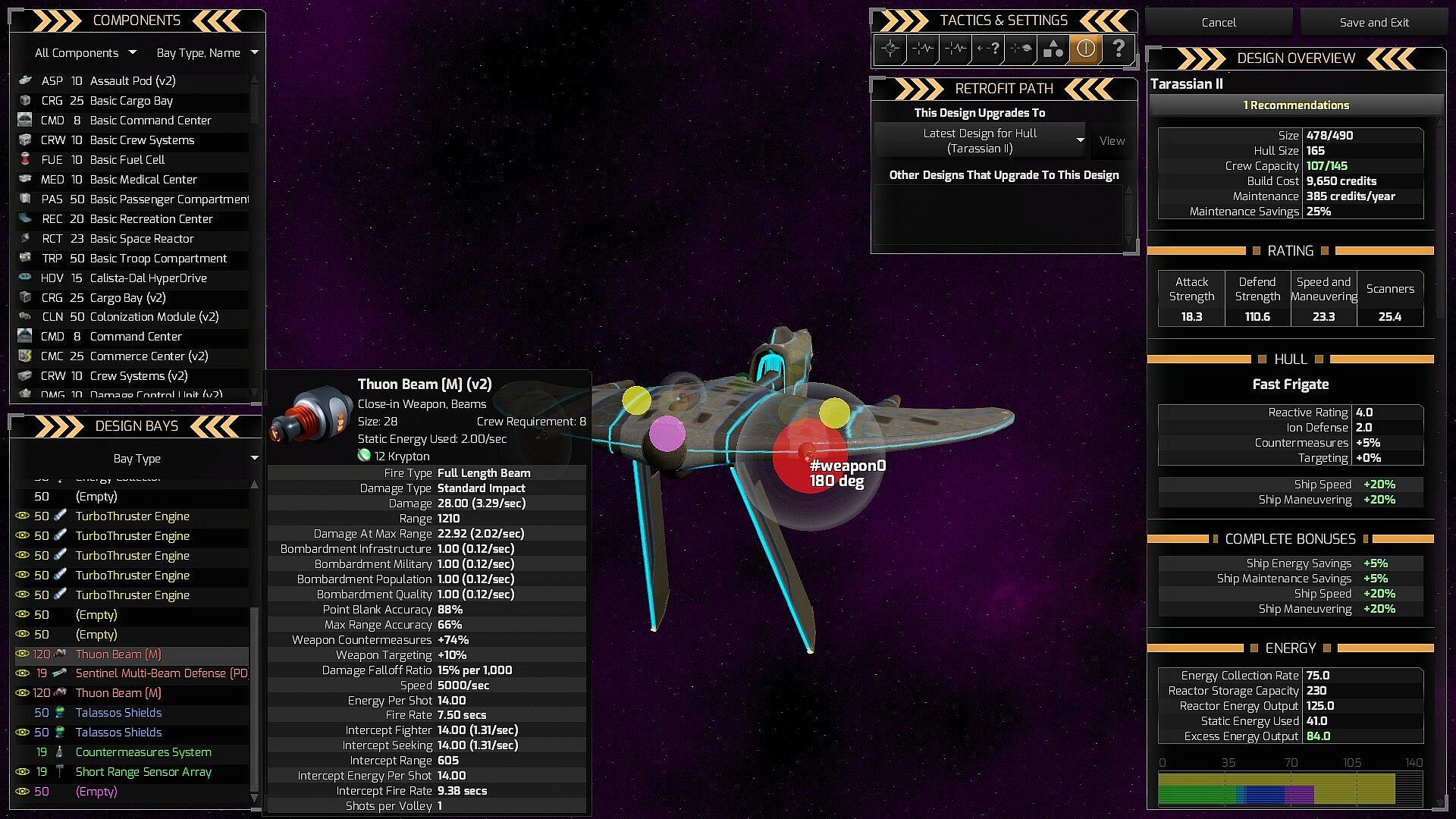
The editor extends customization beyond standard play, enabling precise adjustments to any element in the galaxy. Combined with the pausable real-time pace, this flexibility supports a range of preferences from hands-on tactical decisions to high-level strategic oversight.
Is It Worth Playing?
Distant Worlds 2 suits players who enjoy deep 4X strategy with strong automation tools and large-scale simulation. The pausable real-time format delivers turn-based depth without the waiting periods of traditional turns, while the private economy and fleet templates reduce micromanagement fatigue in expansive galaxies.
Early versions faced criticism for performance and incomplete features, but subsequent updates have refined fleet behavior, interface elements, and overall stability. Expansions have added factions and content that extend replayability. Those who value customization through the editor and adjustable automation will find the systems rewarding, particularly in longer sandbox sessions or when experimenting with different faction combinations.
Shorter games in denser sectors or extended campaigns across vast maps both work well depending on setup choices. The combination of procedural variety, automation depth, and multiple progression paths makes it a strong choice for dedicated strategy fans seeking control over scale and focus.